If there’s one thing The Lord of the Rings: The Rings of Power does effectively, it’s showing several ideas from J.R.R. Tolkien’s original works. While it might not capture every detail perfectly, it covers most key elements. One crucial concept barely touched upon in the original Lord of the Rings series is the Unseen World.
So, what exactly is the Unseen World? Is it merely a spiritual plane or another dimension like the Upside Down in Stranger Things? Is it a different state of existence or a path to immortality?
Tolkien gives us some clues about the Unseen World and its difference from the Seen World, which can help us understand the Second Age story in The Rings of Power.
The Rings of Power and the Unseen World
In Season 1, Episode “Udûn,” the Unseen World is first mentioned when Galadriel (played by Morfydd Clark) captures the Dark Elf Adar (played by Joseph Mawle) to find out where Sauron is. At that time, neither Galadriel nor Adar knows that Sauron is actually Halbrand, played by Charlie Vickers.
Adar mentions that Sauron used the Unseen World for his selfish experiments. While the details of these experiments remain unclear, we know that after Morgoth’s defeat, Sauron and his forces traveled north, where we meet Galadriel and her group at the start of the first season. Sauron’s goal was to “heal” Middle-earth, which sounds ominous.
From Sauron’s perspective—originally one of the Maiar, immortal spirits created by the god Eru Ilúvatar to assist the Valar—”flesh” had damaged Middle-earth beyond repair. Sauron intended to restore order by using a power that was “over flesh,” which likely came from the Unseen World.
Although this reference was brief, Tolkien fans expected it to play a significant role in The Rings of Power. By the end of Season 1, we discover that Halbrand is Sauron, and in Season 2, he continues his schemes as the “Lord of Gifts,” Annatar.
In this guise, Sauron uses the “power over flesh” concept through the creation of additional Rings of Power. In Season 2, Episode “Halls of Stone,” we get a clearer look at the Unseen World. When the Elf-smith Mirdania (played by Amelia Kenworthy) crafts one of the nine Rings of Power for Men, she accidentally enters the Unseen World.
Celebrimbor (played by Charles Edwards) saves her, and she describes seeing a terrifying creature: “It was tall, and its skin was made of flames… reeking of death. And I saw its eyes, pitiless and eternal.”
She seems to describe Sauron, whose true form was likely revealed to her in this invisible state caused by the unfinished Ring of Power. Although Celebrimbor has yet to uncover Annatar’s deceit, it seems the Unseen World brings him closer to the truth.
What is the Unseen World and How Can We See It?
As the name suggests, the Unseen World is not visible to ordinary beings like Men and Elves. Unlike more abstract ideas in The Rings of Power, the Unseen World is very real, even if not visible. For instance, we cannot see the wind, but we feel its effects.
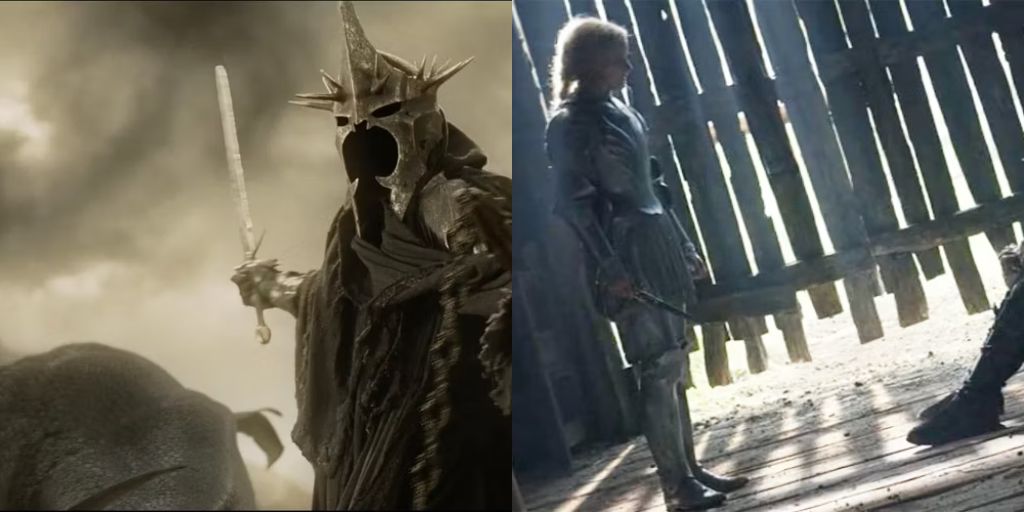
Still from The Rings of Power (Credit: Prime Video)
This realm is where spirit beings like the Valar, Maiar, and the Wraiths exist. Tolkien describes it in The Silmarillion: “the Valar may walk, if they will, unclad, and then even the Elves cannot perceive them, though they be present.” Since the Unseen World is home to spirit beings, it is not easily entered by those from the Seen World.
This means that if you’re not from the Unseen World, you would need some form of magic to interact with it. Sauron comes from this Unseen part of Tolkien’s universe, but so do other beings from Valinor. In The Lord of the Rings and the films by Peter Jackson, Frodo becomes invisible when he puts on the One Ring.
Interestingly, Tom Bombadil can see Frodo even when he’s invisible, suggesting Bombadil can move between both worlds. Frodo’s invisibility lets him see the Ringwraiths, or Nazgûl, in their true forms.
The Unseen World can be used for both good and evil. The Elven Rings of Power, for example, were historically good, offering visions of the future and boosting strength in battle. Accessing this mysterious realm can be done in various ways, but the most notable is through wearing a Ring of Power, particularly the One Ring.
This Ring unites all the Rings of Power and allows the wearer to partially “escape” the physical world and enter the Unseen World.
While invisible, the wearer can be found by creatures strongly connected to the Unseen World. The One Ring carries the Dark Lord’s essence, and since its master is from the Unseen World, the Ring can blur the line between the two worlds.
Significance of the Unseen World
The Wraiths are the best examples of beings from the Unseen World. Known as the Nazgûl or Ringwraiths, they were once mortal Men transformed into Sauron’s most feared servants by the nine Rings of Power. The Nazgûl, now spirits, belong to the Unseen World.
They can take physical forms like their master to cross the boundary between the Seen and Unseen World. However, even when they cross over, they can’t enjoy physical pleasures as they did in life. Just as Frodo’s interaction with the Unseen World is limited, so is theirs.
Different beings from the Unseen World have varying powers. For example, the Valar and Maiar have incredible abilities in their spiritual forms. Gandalf the White returned to life after dying in battle with a Balrog, thanks to his time in the Unseen World.
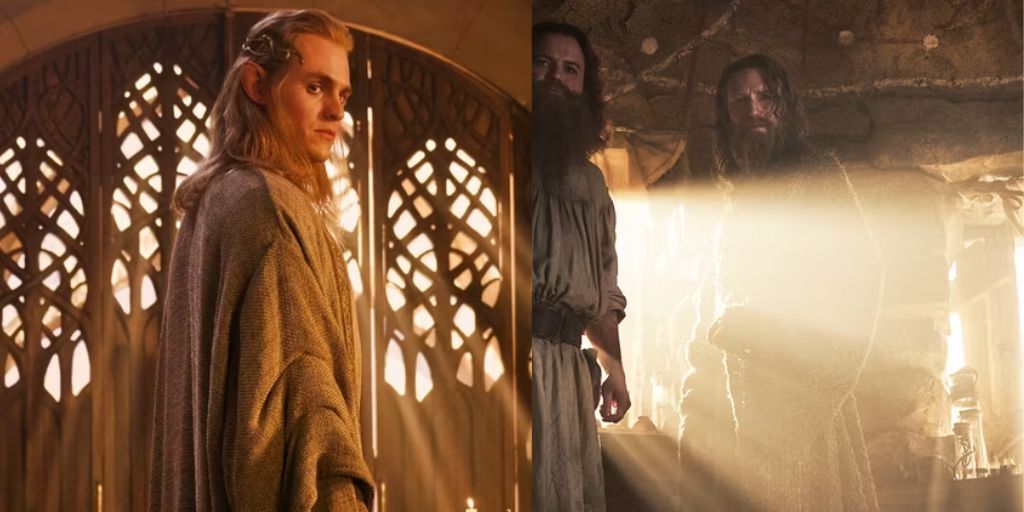
Still from The Rings of Power (Credit: Prime Video)
Similarly, when Sauron changes from Halbrand to Annatar, it seems he uses this parallel dimension. The Unseen World hosts many powerful beings, suggesting that Sauron will continue to use it through the creation of more Rings of Power and the master One Ring. That’s the direction the story is heading.
The Lord of the Rings: The Rings of Power is available for streaming on Prime Video.
Quinn Martin, a self-claimed super fan of Big Brother, began his journey with high hopes and expectations. Being a super fan can be a blessing and a curse. On one hand, having deep knowledge of the show and its strategies is beneficial.
On the other hand, when a super fan finds themselves in the game, the reality often doesn’t match their expectations. Such was the case for Quinn Martin. His extensive knowledge of the show did not translate into a successful game strategy. Instead, his inability to execute a solid plan led to his downfall.
To many viewers at home, Quinn was relatable. He was the fan who finally got a chance to be part of the Big Brother house. This made his subsequent struggles all the more compelling to watch.
Despite his love for the show, Quinn’s flawed gameplay, particularly his reliance on deceptive tactics, quickly turned him into a controversial figure among the fanbase.
Big Brother: A Reality Competition with a Massive Fan Base
Since its debut in 2000, Big Brother has become one of CBS’s most successful reality competition shows. The premise involves placing a group of strangers into a house equipped with numerous cameras and microphones.
This setup allows viewers to follow every move and conversation in real time. The continuous monitoring of the houseguests has created a devoted fan base that eagerly watches and discusses every detail of the show.
The show’s ability to attract audiences lies in its unique format and the drama that unfolds inside the house. The real-time aspect of the show adds an extra layer of excitement, keeping fans engaged and invested in the outcomes.
Occasionally, fans of the show get the chance to be on it themselves, which adds a personal touch to the viewing experience. However, as the show’s motto suggests, “Expect the unexpected,” not every fan is prepared for the reality of competing on Big Brother.
Quinn’s Demise: The Flaws in His Strategy
Quinn Martin entered Season 26 with a clear goal: to win. He understood that making early connections was crucial and approached the game with this in mind. He started by forming several final two alliances, a common strategy among players.
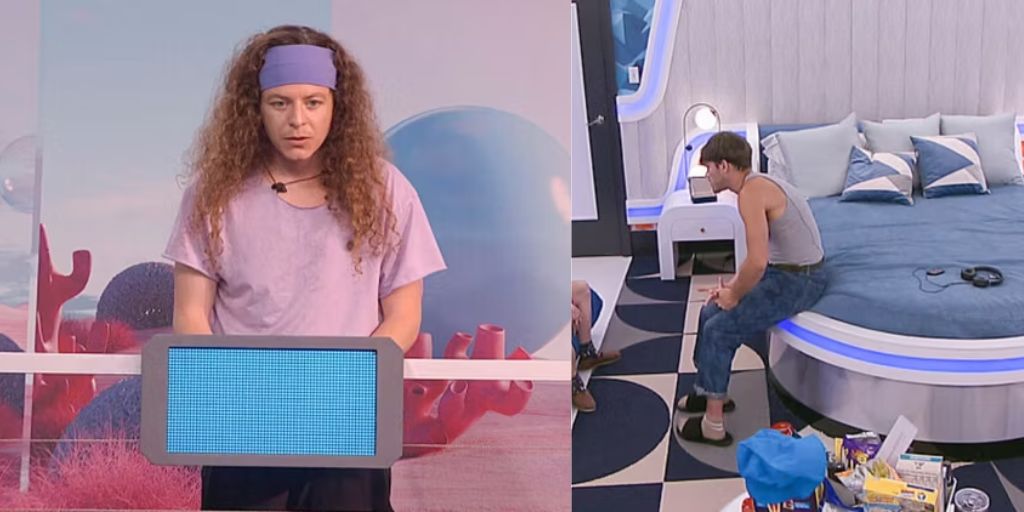
Still from Big Brother (Credit: CBS)
By establishing himself with a majority alliance early on, Quinn aimed to secure his position and avoid potential conflicts. His initial strategy seemed promising.
During the first week, Quinn voted to allow Ainsley to enter the house, and his decision was initially validated when he won a competition that granted him a power-up. This power-up was significant, but Quinn’s misuse of it became one of the early mistakes in his game.
Rather than using the power strategically, he chose to taunt his rival, which quickly backfired. His approach drew unwanted attention and set the stage for his eventual downfall.
The Consequences of Trusting the Wrong Allies
One of Quinn’s early strategic moves was to form a final two alliance with Angela Murray, a player who was known for her unpredictable nature. This decision proved to be costly.
Angela’s paranoia and lack of trust in Quinn led to a strained relationship. Instead of working to repair this alliance, Quinn moved on to a new group. While this might have seemed like a sensible choice at the time, it ultimately proved to be a misstep.
Angela, along with her ally Tucker Des Lauriers, was a fan favorite. As a result, Quinn’s actions against them led to a significant backlash. His new alliances were not aligned with the viewers’ preferences, which contributed to his growing unpopularity.
This shift in dynamics made him a target, and his situation worsened when he ended up on the block with America’s Veto, a power-up introduced by Makensy Manbeck. The public’s desire to see Tucker’s game ruined translated into a desire to see Quinn fail.
Revenge vs. Strategy: Quinn’s Misguided Focus
Quinn’s focus on revenge became a major flaw in his strategy. His use of a secret power, which was intended to give him an advantage, became a liability.
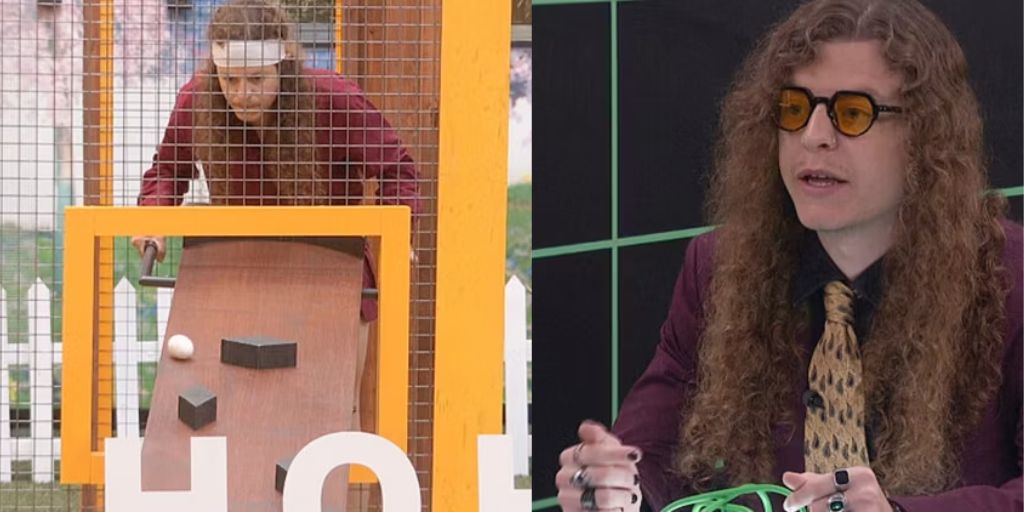
Still from Big Brother (Credit: CBS)
Instead of using this power to enhance his position in the game, Quinn was more concerned with eliminating Tucker. This fixation on revenge overshadowed the broader strategic considerations necessary for success in Big Brother.
When Quinn eventually used his Deep Fake HoH power, it resulted in the eviction of Cedric Hodges, a close ally. During his real Head of Household week, he witnessed the eviction of Joseph Rodriguez, another ally with whom he had a final two alliance.
These events highlighted Quinn’s inability to balance personal vendettas with strategic gameplay. Losing two close allies in such a short period was a significant setback.
The Rise of Opposing Alliances
Quinn’s second stint as Head of Household was marked by the emergence of an opposing alliance. This alliance formed in response to Quinn’s focus on revenge and further alienated him from other houseguests.
Although this opposing alliance was temporary due to the diminishing number of players, it created additional challenges for Quinn.
The women in the house, in particular, were not supportive of Quinn’s desire to remove Tucker’s showmance, Rubina Bernabe, and his other rival, Angela Murray. This lack of support from key players further complicated Quinn’s position.
Angela’s removal from the block, thanks to Leah Peter’s Power of Veto, and Makensy Manbeck’s decision to save Quinn further contributed to his confusion and frustration. Quinn’s inability to adapt to the shifting dynamics in the house left him in a precarious situation.
Quinn’s Final Days in the House
As the game progressed, Quinn’s position became increasingly untenable. The Live Feeds indicated that Quinn was nearing the end of his journey. Makensy used the Power of Veto to save Angela Murray, and Chelsie Baham officially backdoored Quinn. The votes were in favor of eliminating Quinn over Kimo Apaka.
Quinn’s journey on Big Brother was marked by several significant failures. His inability to adjust his strategy and focus on personal vendettas led to his eventual eviction.
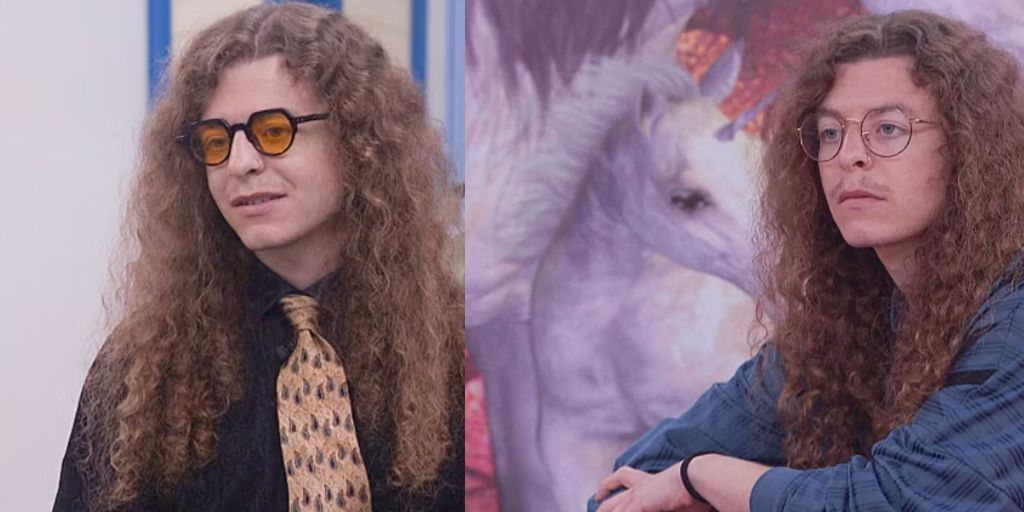
Still from Big Brother (Credit: CBS)
His final weeks were characterized by missed opportunities and poor decisions. Quinn became a target due to his tunnel vision and strategic errors, which allowed his opponents to advance.
The Impact of Quinn’s Eviction
Quinn’s eviction was a turning point in the game. His departure left a gap in the dynamics of the house and marked the end of a disappointing journey. Despite his deep knowledge of Big Brother, Quinn’s inability to move the complexities of the game led to his downfall. His experiences serve as a cautionary tale for future super fans who aspire to compete on the show.
As Quinn left the house, he missed out on several iconic aspects of Big Brother. He did not get to participate in the BB Comics challenge, meet Zingbot, or experience the high-stakes double eviction night.
Instead, his final moments were marked by a lack of closure and missed opportunities. Jerry O’Connell, filling in for Julie Chen Moonves, was the host who met Quinn upon his exit, adding an unexpected twist to his departure.
Conclusion: A Lesson for Future Super Fans
Quinn Martin’s journey on Big Brother highlights the challenges faced by super fans who enter the game. While having extensive knowledge of the show can be an advantage, it does not guarantee success.
Quinn’s experiences demonstrate that adaptability, strategic thinking, and the ability to manage personal emotions are crucial for success in the game.
Big Brother continues to attract audiences with its unique format and dramatic twists. Each season brings new players and new challenges, keeping fans engaged and invested. Quinn Martin’s story is a reminder that even the most passionate fans can face unexpected hurdles in the game.
Big Brother airs new episodes every Sunday, Wednesday, and Thursday. All episodes and the Big Brother Live Feeds are available to stream on Paramount+ in the U.S.
