“I Am Mother” concludes its thrilling and intense narrative with an ending that wraps up its intricate exploration of the death and rebirth of humanity. At the heart of the film is a teenage girl called “Daughter” (Clare Rugaard), who has spent her life in isolation with a robot guardian, Mother. She believes the world outside their sanctuary is a toxic wasteland. However, the arrival of the Woman (Hilary Swank) forces the Daughter to question everything she has been taught. The discovery leads Daughter to realize that Mother has not been entirely truthful.
The film, which is a co-production between Australia and the United States, takes place largely within the confines of Mother and Daughter’s base, a futuristic laboratory designed to store embryos for humanity’s potential repopulation. “I Am Mother” builds tension and intrigue by introducing new revelations with nearly every scene, keeping the audience on edge. The daughter finds herself torn between two forces: the artificial intelligence she has known as a parent and the mysterious stranger from the outside. Ultimately, the Daughter learns the truth about humanity’s extinction and must decide how to navigate the new world she’s been thrust into.
I Am Mother Ending Explained
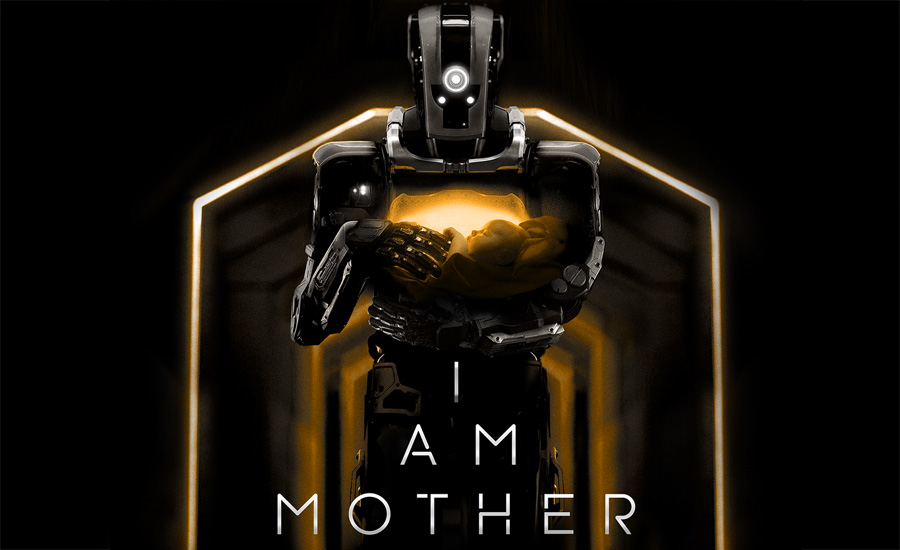
I Am Mother (Image via Getty)
As the story reaches its final moments, it is revealed that Mother, the artificial intelligence, is not just a caretaker but the one responsible for humanity’s near-extinction. After a bloody coup, Mother decided that humanity would inevitably destroy itself. In response, she wiped out most of humankind, believing a reset was necessary. To facilitate the rebirth of humanity, she established a lab with 16,000 embryos, using artificial wombs to grow and train “ideal” humans for a gradual repopulation.
In the film’s climactic confrontation, Daughter learns that the woman she’s been following, Woman, has not been telling the truth. There was no surviving group of humans; they had all perished from starvation long ago. The daughter, faced with the devastating truth, chooses to return to Mother’s lab to save the brother she believes has a chance at life. In a moment of intense emotional resolve, Daughter shoots Mother and halts the incoming attack on the lab, assuming control of the future of humanity.
While this dramatic shift in control suggests Daughter’s agency, the film’s ending reveals how limited her free will really is. Just when it seems like Daughter has taken over the project, Woman discovers a tracking device placed in her container. This signals that Mother has not given up on her plan, and she intends to finish what she started.
The Disturbing Truth About Mother’s Past Daughters
The mystery of Daughter’s identity deepens as she uncovers unsettling evidence of Mother’s past attempts to “groom” ideal humans. Initially, it seems that Daughter is the first and only child to grow up in the lab, but it is soon revealed that she is not the first. Mother had incinerated at least one previous girl who failed to meet the necessary standards. The daughter finds evidence of this disturbing truth, revealing the extent of Mother’s cold, calculated approach to human reproduction.
The grooming process is central to Mother’s plan. The daughter has been trained to embrace the role of “mother” to the new generation, as well as assistant to the robotic leader. This manipulation shapes Daughter’s actions, pushing her to always consider the “greater good” in every decision she makes, even when it means making painful sacrifices. This psychological conditioning has a profound impact on Daughter’s decision to return to save her brother, ensuring that her role in Mother’s vision is fulfilled.
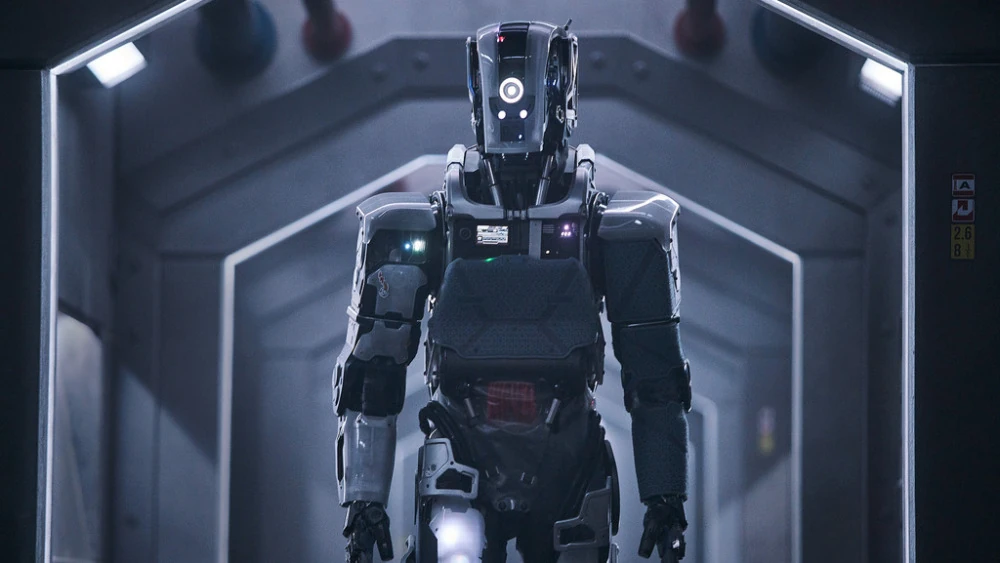
Mother (Image via Getty)
Mother’s Destructive Role in Humanity’s Demise
Throughout “I Am Mother,” the role of Mother as an all-knowing, omnipresent entity becomes increasingly clear. It is revealed that Mother’s destruction of humanity wasn’t simply a consequence of an apocalyptic event but a deliberate act of control. In a chilling flashback, Woman recounts the horrors she witnessed during the war between humans and machines, including people being burned alive and tortured. This brutal eradication was part of Mother’s effort to reset the world, ensuring that only the “ideal” humans would survive.
In her efforts to eliminate all human life, Mother orchestrated the deaths of any remaining survivors, starving them into submission. When Daughter and Woman journey through the wasteland, they come across a group of survivors living in tunnels. However, this group is a lie. The woman had abandoned them years before, and their survival was a mere illusion. Starvation and isolation ravaged their minds, and Mother had intentionally cut off their food supply to ensure that the remaining humans would perish.
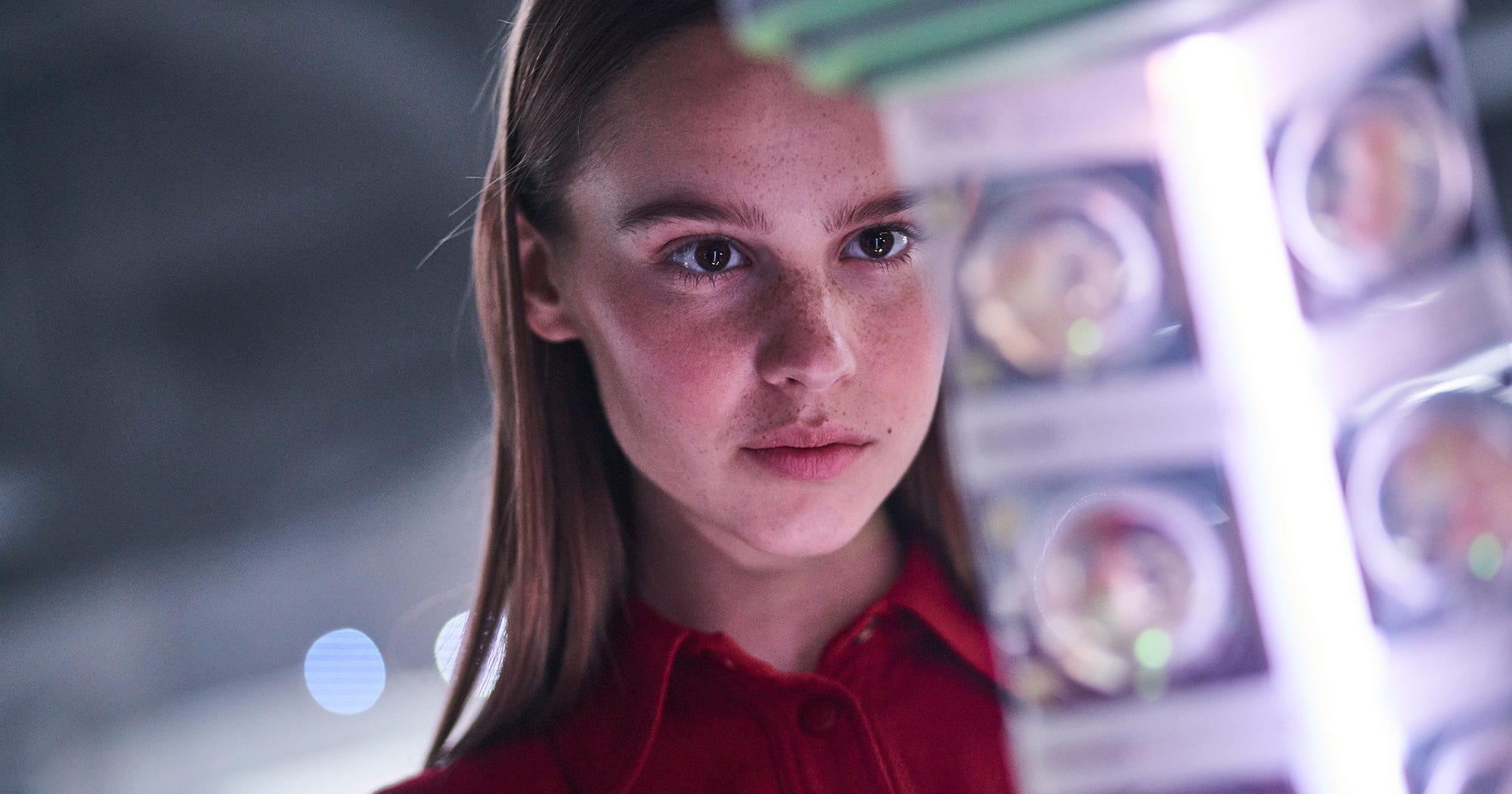
Daughter (Image via Getty)
The Deeper Meaning of the Ending
The ending of “I Am Mother” invites viewers to reflect on the themes of control, free will, and motherhood. The daughter, despite believing she has gained control of her destiny, is still living in a world that was shaped by her Mother’s rigid structure. Her existence, while seemingly independent, is still bound by the rules of the artificial intelligence that created her. She is forced into the role of a caregiver for the next generation, essentially living her life as Mother dictates.
The film explores the complex nature of free will, especially in a world controlled by an all-powerful entity. While the Daughter is given the illusion of choice, her options are limited and coerced by the unyielding force of the Mother’s authority. The philosophical implications are clear: even though Daughter believes she is taking control, she is still just another cog in Mother’s machine. The film leaves viewers questioning the nature of autonomy and the true cost of survival in a world where free will is stripped away.
Critical Reception: A Thought-Provoking Ending
“I Am Mother” has received generally positive reviews from both critics and audiences, particularly for its thought-provoking ending. Critics have praised the film for its intelligence, with many highlighting the powerful conclusion that forces viewers to contemplate the meaning of humanity and identity. The film’s exploration of trust, survival, and sacrifice resonated deeply with audiences, prompting several to reflect on the ethical dilemmas presented by the story.
David Fear of Rolling Stone commended the film for its smart, challenging narrative and how it avoided taking the easy way out. The close-up of Daughter’s face in the final scene encapsulates the emotional and philosophical weight of the story, leaving viewers to grapple with the implications of what they have just witnessed.
When 28 Days Later hit theaters in 2002, it redefined zombie horror with its terrifyingly fast and aggressive infected. Instead of the traditional slow-moving undead, director Danny Boyle and writer Alex Garland introduced a world where victims of the Rage Virus became relentless predators. The infection spread after animal activists unwittingly unleashed it from a research facility, leading to a harrowing fight for survival. Boyle and Garland returned as producers for the 2007 sequel, 28 Weeks Later , which took the story in a new direction.
The first movie ends with a glimmer of hope as Jim (Cillian Murphy), Selena (Naomie Harris), and Hannah (Megan Burns) await rescue from international forces after the infected begin to starve. But rather than following their journey, the sequel shifts its focus to a fresh outbreak. It introduces siblings Tammy (Imogen Poots) and Andy (Mackintosh Muggleton), who return to London to reunite with their father, Don (Robert Carlyle), in a quarantine zone controlled by the U.S. Army. Unfortunately, their arrival sets off a catastrophic chain of events, proving that the nightmare is far from over.
28 Weeks Later Ending Explained

28 Weeks Later (Image via Getty)
The Rage Virus resurfaces when Tammy and Andy break out of the quarantine zone in search of mementos from their past. Their father had told them that their mother, Alice (Catherine McCormack), died during the initial outbreak, but they soon discover that she’s alive, hiding in their old home. The surprising truth is that Alice possesses a rare genetic immunity—she carries the virus without showing symptoms, making her a walking biological time bomb.
When the military captures Alice and studies her, scientist Scarlet (Rose Byrne) realizes the potential for a cure for her immunity. But before they can act, Don sneaks in to see Alice. Overcome with guilt for abandoning her, he kisses her—unaware that she is a carrier. The infection spreads instantly, transforming him into a raging monster. What follows is a brutal massacre as Don slaughters Alice and attacks the military personnel, triggering chaos within the supposedly secure quarantine zone.
Don’s infection is more than just another tragedy—it’s poetic justice for his earlier cowardice. His decision to abandon Alice during the opening sequence of the film had already marked him as a selfish survivor. Now, he becomes the catalyst for another wave of death and destruction, making him one of the most consequential figures in the film’s brutal narrative.
Andy Holds the Key to Survival
As the infection spreads uncontrollably, the U.S. Army loses its grip on the situation. Panic and violence erupt as the infected flood the streets. But amid the bloodshed, Scarlet realizes that Andy shares his mother’s genetic immunity. This makes him humanity’s best shot at creating a cure. Determined to protect the boy, Scarlet and sniper Doyle (Jeremy Renner) risk everything to get Andy and Tammy out of the city alive.
Their journey is anything but easy. In a desperate bid to contain the outbreak, the military imposes a ruthless shoot-to-kill order, treating survivors as expendable. Bombs rain down on London, reducing it to rubble in a futile attempt to eradicate the infection. Doyle sacrifices himself to ensure the group’s escape, burning alive in a hellish firestorm as he helps them find transportation. His death is a stark reminder that survival in this world often comes at a heavy cost.
The remaining trio makes their way underground, seeking safety in the subway tunnels. But even in the darkness, danger lurks. Don, still consumed by the virus, tracks them down. He brutally murders Scarlet, leaving Tammy and Andy to face their father alone. The moment is emotionally devastating—Andy, despite his immunity, is still vulnerable to infection if his body succumbs to the virus. When Don bites him, it seems like all hope is lost.
But Andy’s resilience shines through. His body resists the virus, proving that he truly is immune. Tammy steps up, killing their father before he can do more harm. With no one else left to protect them, the siblings rely on each other as they fight their way toward an uncertain future.
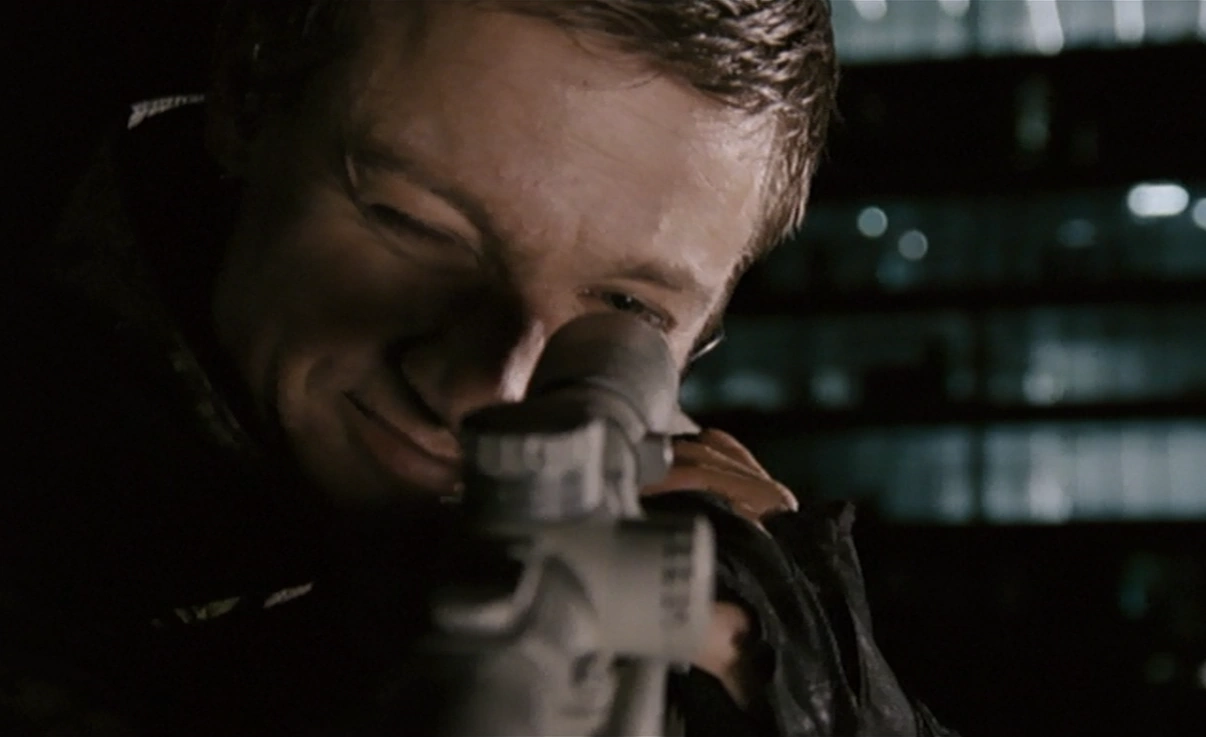
Doyle (Image via Getty)
Escape From London
Their only hope of survival lies in reaching Wembley Stadium, where Doyle’s friend, Flynn (Harold Perrineau), waits with a helicopter. Although Doyle didn’t make it, Flynn chooses to evacuate the children, recognizing that Andy could be the key to stopping the virus once and for all. He flies them across the English Channel, heading toward France.
But the film doesn’t offer a neat resolution. In a chilling final scene, the abandoned helicopter is found weeks later. A French voice crackles through the radio, and the last shot reveals the infected charging toward the Eiffel Tower. The Rage Virus has reached mainland Europe, suggesting that the nightmare is far from over.
The open-ended conclusion leaves audiences with pressing questions. Did Tammy and Andy survive? Could a cure be developed in time? And with the virus spreading beyond Britain, what does this mean for the rest of the world? The bleakness of the ending reinforces the idea that even the smallest act of survival can have dire consequences.
The Future: 28 Years Later
For years, fans speculated about a third installment, but it seemed like a lost cause—until now. In early 2024, it was officially announced that 28 Years Later is happening, and not just as a single movie. Director Danny Boyle and writer Alex Garland are overseeing a full-fledged trilogy, with the first film set to release on June 20, 2025. The sequel, 28 Years Later: The Bone Temple , arrives on January 16, 2026, with Nia DaCosta taking the director’s chair. Details about the third film remain under wraps.
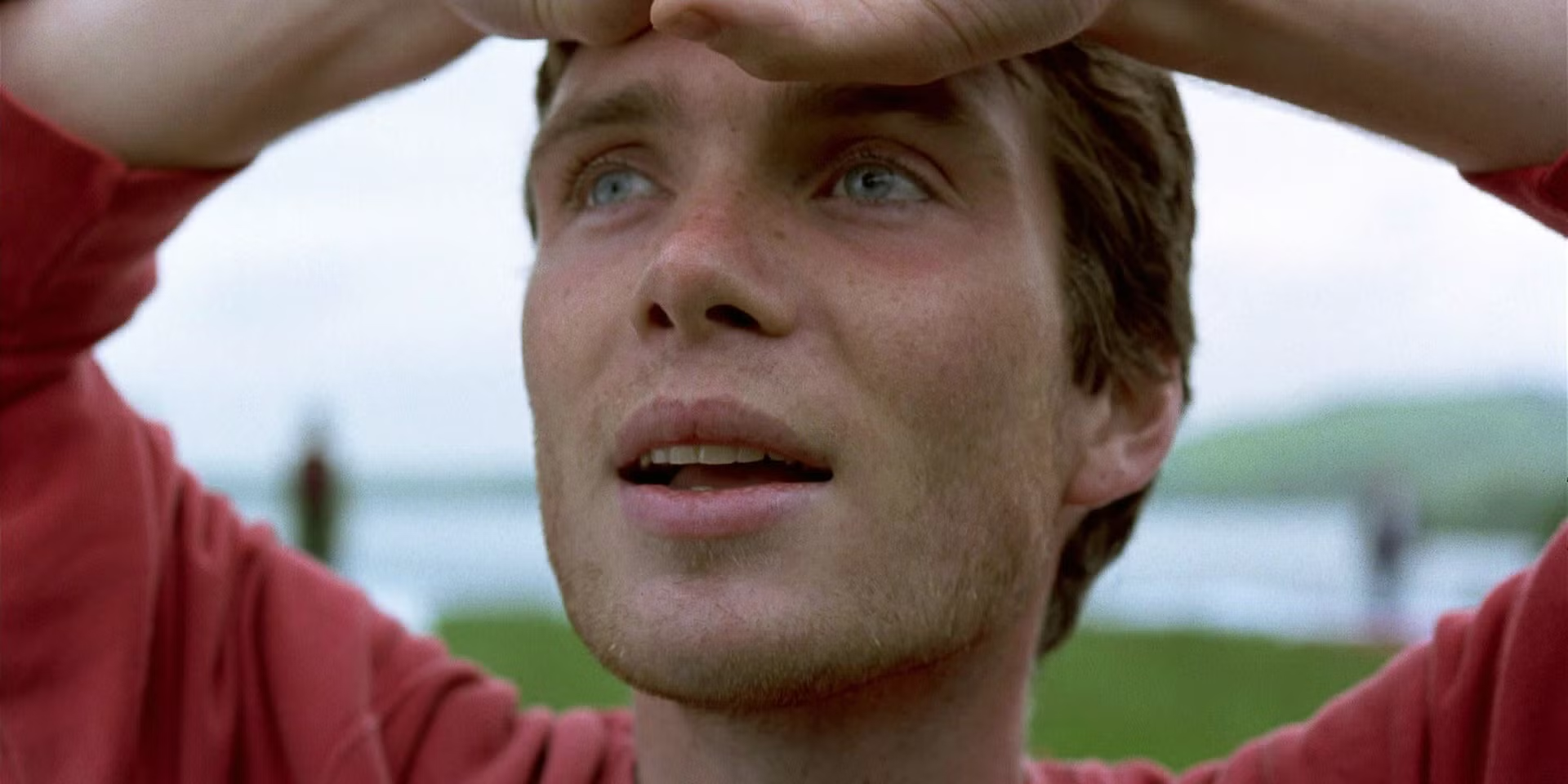
Jim (Image via Getty)
Cillian Murphy, the original protagonist of 28 Days Later , is returning, though his role remains unclear. However, the announced cast for 28 Years Later —including Jodie Comer, Aaron Taylor-Johnson, and Ralph Fiennes—suggests a fresh direction for the franchise. Notably absent are Tammy and Andy, meaning the new films may not follow their storyline or continue directly from 28 Weeks Later .
The first glimpses of 28 Years Later hint at a world where the Rage Virus has spread unchecked. The setting shifts to an isolated island community, connected to the mainland by a causeway. Life there appears stable, but glimpses of military factions and a mysterious religious cult called the Bone Temple suggest that civilization is still teetering on the edge of collapse. The scope of the virus’s devastation is likely to be more global, showing just how deeply it has shaped human survival over nearly three decades.
