In the movie Rumours, a unique story unfolds as seven world leaders find themselves acting like teenagers caught in a soap opera during a zombie apocalypse.
Charles Dance plays the U.S. President with a classic English accent. This film, created by Evan Johnson, Galen Johnson, and Guy Maddin, is nothing short of strange.
It is a blend of dark comedy, melodrama, and gothic horror themes, reminiscent of classic zombie films by George Romero. Throughout its runtime, the film delivers unexpected surprises, some of which land effectively while others fall flat.
The narrative takes a satirical aim at the foolishness and incompetence of elected officials, suggesting that they are no better at handling crises than the average person. As the story progresses, it veers too far into the bizarre, losing its direction by the climax.
However, the journey is filled with entertaining moments, making it worthwhile. The film’s greatest strength lies in its talented cast. Rumours may not appeal to everyone, but for those who enjoy a hefty serving of strangeness alongside biting political satire, there is much to enjoy.
What Is Rumours About?
The story begins with the G7 leaders meeting in Germany to address a mysterious ongoing crisis, which the film never explicitly defines.
The group consists of the Chancellor of Germany, Helga (played by Cate Blanchett), the President of the United States, Edison (played by Charles Dance), the Prime Minister of the United Kingdom, Cardosa (played by Nikki Amuka-Bird).
The Prime Minister of Canada, Maxime (played by Roy Dupuis), the President of France, Sylvain (played by Denis Ménochet), the Prime Minister of Italy, Antonio (played by Rolando Ravello), and the Prime Minister of Japan, Tatsuro (played by Takehiro Hira).
The film opens with Helga welcoming the leaders by revealing a two-thousand-year-old mummified body.
The scene is both humorous and macabre, as the leaders pose for pictures beside the corpse, which is a man with his severed penis wrapped around his neck. This darkly comedic moment sets the tone for the absurdity that will follow.
The leaders gather at a remote estate for a private dinner to discuss their provisional statement. This setting allows the dynamics between the leaders to develop. Maxime emerges as the “bad boy” of the group, a notorious flirt with a history of romantic entanglements with Cardosa.
Despite his charm, Helga also tries to flirt with him, creating a humorous love triangle. Cardosa, on the other hand, appears to be the most serious and professional among them. Meanwhile, President Edison seems more concerned with maintaining his British accent than addressing the crisis at hand.
As the evening progresses, the leaders find themselves cut off from the outside world—there is no phone service, and the waiters have mysteriously vanished. When Sylvain steps outside to retrieve some papers, he discovers that they have been completely abandoned. Suddenly, the group is attacked by “shady figures.”
The film humorously suggests a few possibilities: Have the mummies come back to reclaim their territory? Is it an alien invasion? These questions only add to the chaos as the leaders must unite to escape the estate and uncover what is happening, but not before Helga and Maxime sneak off for a quickie.
Rumours Is Camp Dark Comedy
Rumours shines when it focuses on its main characters acting like reckless fools. The film leans heavily into camp comedy, often feeling like an episode of an early 2000s teen drama.
Maxime, with his trendy hairstyle and laid-back attitude, becomes emotional as he recalls his numerous romantic conquests, while a lustful Helga is determined to become his next fling. The movie’s absurdity serves to bring powerful figures down to earth, showing them as silly and misguided.
A melodramatic score punctuates the film, amplifying its comedic elements. For example, when Maxime reminisces about a night spent with Cardosa, a sultry jazz tune enhances the scene’s romantic tension.
Conversely, when Sylvain expresses his fears about the unfolding horrors, a dizzying close-up of his face captures the frantic mood, reminiscent of classic 1960s British horror films.
As the leaders wander through the woods, enveloped by thick fog, the visuals evoke a nostalgic feel, reminiscent of old Scooby-Doo episodes or classic adaptations like The Hound of the Baskervilles. There is also a clear influence from Romero’s films, which adds to the eerie atmosphere.
While Rumours is not a traditional horror movie, it effectively conjures a sense of dread similar to the genre’s finest works. The directors’ unique style complements the wild script, which shifts between comedy, melodrama, satire, and horror at a moment’s notice.
The first half of the film thrives on the absurdity of the situation and the pure entertainment value of watching these world leaders behave foolishly.
However, things take an even stranger turn when a giant human brain appears, and a confused Alicia Vikander, portraying the secretary-general of the European Commission, warns of impending doom, yet no one can understand her message.
What starts as a well-executed and fun concept gradually loses its way as the plot becomes unfocused. The pacing falters, and the metaphor of bad leadership is overshadowed by the ridiculousness of “masturbating mummies.”
The silliness can overwhelm the viewer, making it challenging to appreciate the satire, even though the initial enjoyment of the film is undeniable.
Cate Blanchett Leads an Excellent Cast in Rumours
Despite the aimless plot, the cast of Rumours is what makes it worth watching. Cate Blanchett delivers an unforgettable performance as Helga, the German chancellor. She portrays a character who is both desperate and humorous, someone who lets her desires take over her decision-making.
Blanchett is known for her powerful dramatic roles, but in Rumours, she proves that she can also shine in comedic roles, creating a character that is hilariously relatable in her quest for affection.
Roy Dupuis also stands out as Maxime, making his character a swoon-worthy yet brooding figure. His portrayal is layered, showing a prime minister who writes poetic notes about life while struggling to fulfill his political duties. His character adds depth to the story, providing a contrast to the more outrageous behaviors of the other leaders.
Denis Ménochet, as Sylvain, plays the French President like a caricature of a classic detective, complete with exaggerated mannerisms. He delivers monologues about democracy while displaying a clear disdain for his Canadian counterpart, showcasing the film’s satirical edge. His performance is a highlight, as he embraces the campy elements without reservation.
The rest of the cast also fulfills their roles convincingly, with Nikki Amuka-Bird’s Cardosa serving as a level-headed British Prime Minister amidst the chaos. Her character adds a touch of reason and rationality, making her interactions with the other leaders even more entertaining.
While Charles Dance’s choice to don a British accent as the U.S. President raises questions, it does contribute to the film’s absurdity. The humor of the situation is enhanced by the exaggerated accents and performances of the actors, further immersing viewers in the Rumours world.
Themes of Absurdity and Political Commentary
Rumours uses its bizarre premise to show themes of absurdity and incompetence in leadership. The film cleverly mocks the political elite by showcasing their inability to deal with crisis situations.
As the G7 leaders face the threat of zombies, their reactions and interactions highlight their foolishness. The humor lies in how they approach problems, often prioritizing personal desires over the responsibilities of their positions.
The absurdity of the situations serves as a mirror to real-life political events, where leaders often seem disconnected from the issues affecting ordinary people.
By placing these powerful figures in ridiculous scenarios, the film emphasizes the gap between their actions and the needs of their citizens. The satire serves as a critique of political incompetence and the failure of those in power to address crises effectively.
In a world where real-life political leaders sometimes behave like characters from a soap opera, Rumours shines a light on the foolishness that can occur at the highest levels of government. The film suggests that, in times of crisis, these leaders are often just as lost and confused as anyone else. This message resonates with viewers, making the film both entertaining and thought-provoking.
A Mixed Bag of Humor and Horror
The blend of humor and horror is central to Rumours. While it starts strong with its comedic elements, the film eventually struggles to maintain that balance. The sudden shift from lighthearted camp to bizarre horror can leave viewers feeling disoriented. While the film manages to capture some of the tension and fear associated with classic horror films, it does so at the expense of the comedic narrative.
The moments of absurdity, such as the appearance of the giant brain and the mysterious warnings from Alicia Vikander’s character, disrupt the flow of the story.
These bizarre twists can alienate viewers who may have been enjoying the initial setup and humor. As the plot becomes more chaotic, the humor often feels overshadowed, leading to a lack of cohesion in the narrative.
Despite these flaws, Rumours still manages to entertain with its outrageous moments and humorous character interactions.
The film invites viewers to suspend their disbelief and embrace the strangeness. The enjoyment lies in the absurdity of the situation and the performances of the cast, who fully commit to their roles.
Conclusion: Embracing the Strange in Rumours
Ultimately, Rumours is a film that dares to be different. It embraces its strangeness and offers a unique take on political satire. While the plot may become disjointed and the pacing uneven, the film’s strengths lie in its performances and its willingness to push boundaries.
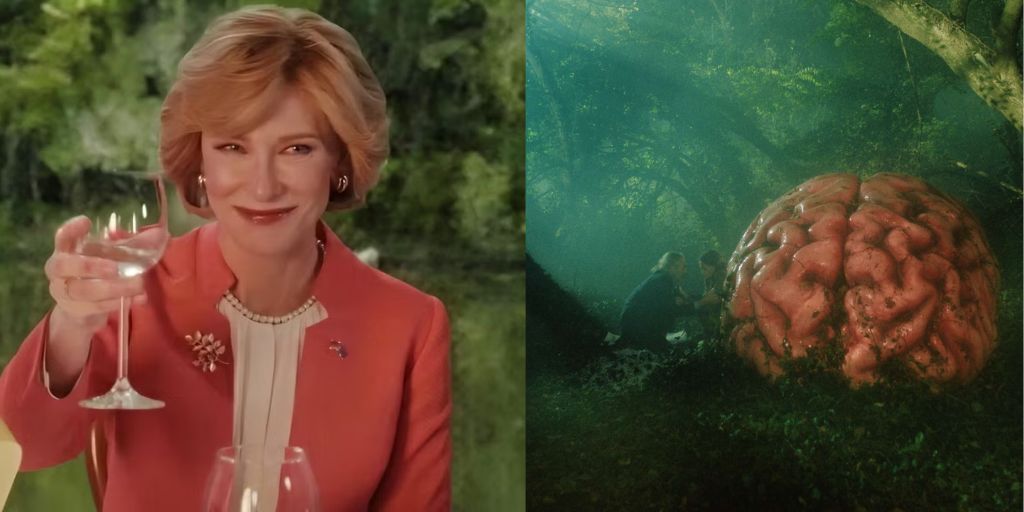
Still from Rumours (Credit: Bleeker Street)
The talented cast, led by Cate Blanchett, brings life to the absurdity of the story. Their comedic timing and commitment to their characters enhance the film’s full enjoyment.
Even though Rumours may leave viewers with a sense of confusion, it also prompts reflection on the nature of political leadership and the absurdity of those in power.
For those willing to take a journey into the bizarre, Rumours provides a wild ride filled with laughter, chaos, and thought-provoking commentary. It’s a film that challenges expectations and leaves audiences with the question: “What the hell just happened?”
Rumours is an offbeat comedy that combines the elements of political satire, melodrama, and horror. It showcases world leaders in absurd situations, highlighting their incompetence and foolishness.
While it may not satisfy everyone, its unique perspective on politics and its entertaining performances make it a noteworthy watch for fans of dark comedies and satire.
The second season of Pachinko concludes with its characters continuing their search for meaning, purpose, and, ultimately, happiness. However, this quest is not straightforward; the characters face numerous obstacles along the way, each driven by their personal struggles.
These challenges include the trauma and horror of war, conflicts in the pursuit of power, and the delicate, often painful, complexities of identity and family. At the heart of these journeys is a broader, universal theme—what it means to survive, especially in a world full of turmoil.
Sunja (played by Minha Kim in her youth and Youn Yuh-jung in her later years) is the emotional core of the story, her determination to keep her family safe and her unwavering resilience a testament to her strength. Despite decades of hardship, from war to loss and personal grief, she remains strong.
She knows, perhaps more than anyone, that life is full of suffering, and her true strength lies in how she stands back up after being knocked down. This theme of resilience is presented clearly in the final moments of Season 2, where the past, present, and future all collide.
In the 1951 timeline, Sunja and her son, Mozasu (Mansaku Takada), deal with the difficulties of survival, while in the 1989 timeline, Solomon (Jin Ha), Mozasu’s son, pursues success and power but is faced with choices that could threaten his family’s legacy. These two timelines mirror one another, presenting the enduring challenges faced by the Baek family as they find a world that has not always been kind to them.
1951 Timeline: A Mother’s Decision
The 1951 timeline takes us back to a pivotal point for Mozasu. At this time, Mozasu is still young, but the decisions made in this period have lasting consequences on his life and those around him. In the season finale, we see Mozasu, who has recently started working at a pachinko parlor, caught cheating in a game.
Mozasu and his friends have been using magnets to manipulate the pachinko machines and win unfairly. Goto-san, the owner of the pachinko parlor, catches them in the act.
Goto-san’s reaction to the situation is unexpected. Instead of punishing Mozasu for cheating, he shows mercy, but not without consequence. He tells Mozasu that he will not turn him over to the authorities because he likes Sunja’s noodles.
The way Goto-san handles the situation reflects his pragmatic approach to life. He understands that Mozasu is not like his older brother, Noa, who excels in academics and is bound for university. Goto-san sees Mozasu for who he is—a boy who is more streetwise than book-smart. He tells Sunja that Mozasu should stop attending school and start working at the pachinko parlor full-time.
This is a turning point for Sunja as well. For her, education is critical, and she dreams of her sons achieving success, especially through traditional means like schooling. But Goto-san’s suggestion forces her to confront a harsh reality: Mozasu is different from Noa, and perhaps his path lies outside the traditional academic world.
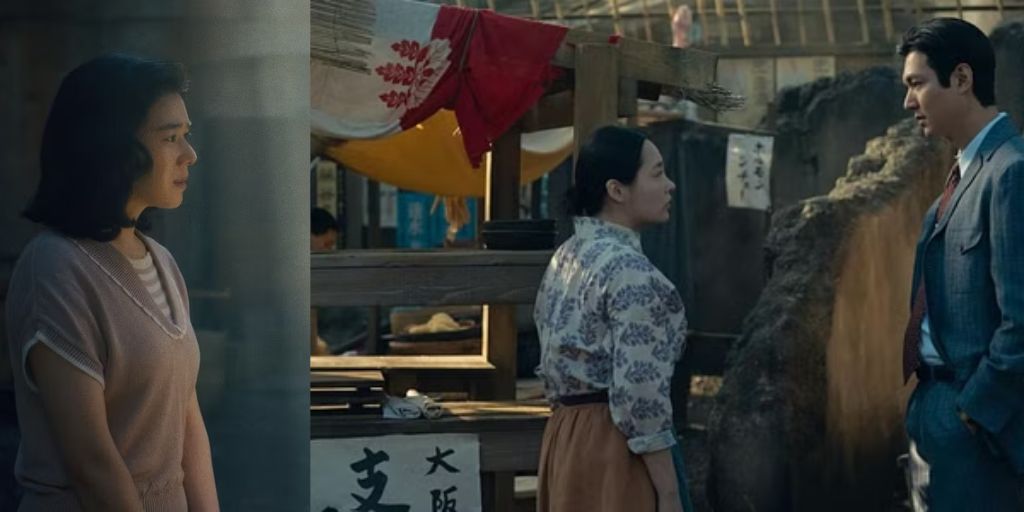
Still from the episode (Apple TV+)
While Sunja hesitates to make this decision, it is Kyunghee (Jung Eun-chae), Sunja’s sister-in-law, who is the most resistant.
Kyunghee worries about Mozasu working in a gambling parlor, fearing it will corrupt him. But after some deep reflection, Sunja recognizes that Mozasu’s future may not be the same as Noa’s, and she eventually allows him to pursue this new direction in life.
This moment is significant not just because it marks Mozasu’s entry into the domain pachinko but also because it shows Sunja’s evolution as a mother. Her willingness to let go of the conventional dream for her son reveals her deep understanding of Mozasu’s strengths and weaknesses.
She understands that his survival and success may come from following a nontraditional path. This decision, though painful for Sunja, is a reflection of her growth as a character who has always put her family first, even when it means sacrificing her own dreams for them.
A New Future for Mozasu
As Mozasu begins working at the pachinko parlor, we see a different side of him emerge. At just 15 years old, Mozasu already shows a strong work ethic
He is diligent, sweeping the floors of the parlor and doing whatever tasks are needed. During one of his shifts, Mozasu encounters a man with a young boy, around seven years old. This man, who we later learn is the same one who stabbed Hansu’s father-in-law in Episode 7, is accompanied by his son, Mamoru.
The interaction between Mozasu and this man might seem insignificant at first, but it gains importance in the 1989 timeline, where we see the consequences of these early interactions unfold.
In many ways, this scene foreshadows the choices Mozasu will face as an adult, as well as the kind of people he will interact with in his future business dealings.
Solomon’s Quest for Power in 1989
Fast forward to 1989, and we see Solomon Baek, Mozasu’s son, taking center stage. Throughout Season 2, Solomon has been portrayed as someone constantly searching for success, power, and validation. His ambition knows no bounds, but his desire for success is often at odds with the values his family holds dear.
While Sunja and Mozasu focus on survival and resilience, Solomon is driven by a different kind of pursuit—one that is focused on wealth, prestige, and recognition.
In the finale, Solomon is in the middle of a significant business deal involving a golf club. He is pitching the idea of an exclusive, members-only golf club, and the stakes are high.
During his presentation, he confidently declares that only 47 spots remain in the club, and construction is set to begin in just 90 days. Solomon’s pitch is designed to convey a sense of urgency and exclusivity, appealing to the wealthy and influential audience in attendance.
However, Solomon’s confidence is momentarily shaken when someone in the audience raises a critical question: what if the real estate market crashes?
The question causes Solomon to hesitate for just a brief moment, and it is in that moment that he notices his father, Mozasu, sitting in the audience, watching him.
Mozasu’s presence is both a source of strength and a reminder of the high stakes Solomon faces. Despite the pressure, Solomon quickly regains his composure and dismisses the concerns about a real estate crash.
He refers to the idea as an “amusing rumor,” explaining that land prices in Japan have never fallen since World War II.
In Solomon’s mind, real estate is a sure bet, and Japan’s economy is poised to overtake the United States as the largest in the world.
Solomon’s presentation is ultimately successful, but it is clear that he is walking a dangerous line. His pursuit of power and success comes at a cost, and there are hints that his relentless ambition could lead to trouble down the road.
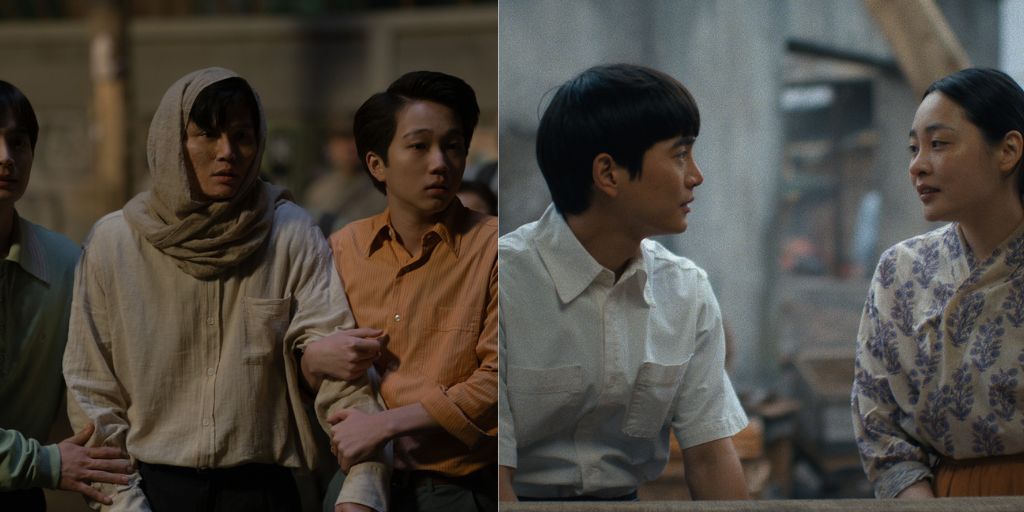
Still from the episode (Apple TV+)
Mozasu’s Warning to Yoshii
After the presentation, Mozasu meets with Mamoru Yoshii (Louis Ozawa), the same man he encountered as a child at the pachinko parlor in 1951. Their conversation is tense, with Mozasu making it clear that he does not want Yoshii anywhere near Solomon. Mozasu knows that Yoshii is not someone to be trusted, and he warns him to stay away from his son.
Yoshii, however, is unfazed by Mozasu’s warning. He responds with a chilling statement: “Your son is going to make a lot of money for me.” It is clear that Yoshii has plans for Solomon, and despite Mozasu’s attempts to protect his son, Solomon is already entangled in Yoshii’s web.
This confrontation between Mozasu and Yoshii highlights the dangers that Solomon faces in his quest for power. Mozasu, having lived through years of hardship and survival, understands the risks involved in associating with people like Yoshii. He has seen firsthand the kind of damage that can be done when greed and ambition are prioritized over family and integrity.
Mozasu’s final words to Yoshii are a veiled threat: “We both know I could’ve destroyed you back then. Instead, I showed you mercy. If you bring any harm to my son, there will be no more mercy from me. You know what I’m capable of.” Mozasu’s warning is clear—he will not hesitate to protect his family, no matter the cost.
Sunja’s Farewell to Kato
Meanwhile, in the 1951 timeline, Sunja meets with Kato (Jun Kunimura) in a coffee shop. Their conversation is one of the most emotionally charged moments of the finale, as it brings closure to Sunja’s relationship with Kato, a man who has been a significant figure in her life.
Throughout Season 2, Kato has served as a mentor and friend to Sunja. He introduced her to new experiences, such as taking her to a restaurant for the first time and helping her deal with the complexities of life in Japan.
However, their friendship is complicated by Kato’s past—specifically, his involvement in the massacre of American POWs during World War II.
In their conversation, Kato opens up about his experiences during the war. He explains that the Japanese soldiers were ordered to kill American POWs, and he was one of the soldiers who followed those orders.
The weight of this guilt has been with him ever since, and he reveals to Sunja that he has been living with a sense of shame and regret for his actions.
Sunja listens to Kato’s confession with compassion and understanding. She does not judge him for his past, recognizing that the war forced many people to make impossible choices. However, this conversation also serves as a turning point for Sunja, as she realizes that it is time for her to move on from Kato and focus on her family.
In a final gesture of farewell, Sunja thanks Kato for all he has done for her but makes it clear that their paths are diverging. She is ready to let go of the past and move forward, knowing that her future lies with her family.
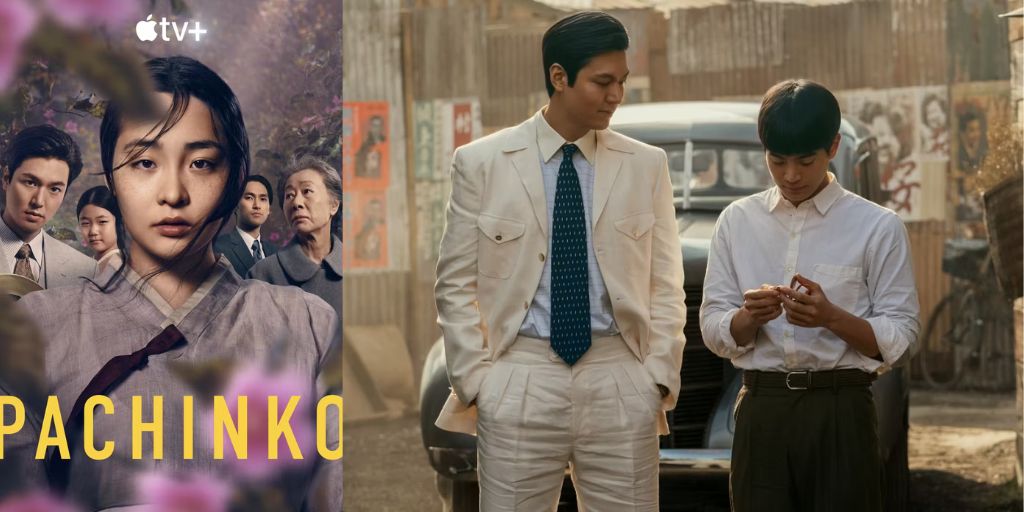
Still from the season (Apple TV+)
Noa’s Struggle with Identity
Noa, Sunja’s eldest son, faces his own challenges in the finale. Throughout Season 2, Noa has been grappling with his identity, particularly after discovering the truth about his biological father, Hansu (Lee Min-ho).
This revelation has shaken Noa to his core, as he has always believed that his father was Isak (Steve Sanghyun Noh), a kind and honorable man.
The discovery that Hansu, a powerful and morally ambiguous figure, is his real father creates a deep sense of conflict within Noa. He feels torn between the man he has always looked up to—Isak—and the man whose blood runs through his veins—Hansu.
This internal struggle is compounded by the societal pressures he faces as a Korean living in Japan, where discrimination and prejudice are rampant.
In the finale, Noa’s sense of identity reaches a breaking point. He feels lost, unsure of who he is or where he belongs.
This emotional turmoil is further exacerbated by the fact that he has been lying to his family about his involvement with the yakuza, a criminal organization. Noa has been secretly working for them, trying to make money to support his family, but this decision has only led to more complications and danger.
As Noa continues to spiral, he confides in his mother, Sunja, about his struggles. He tells her that he feels like a failure, that he is not the man she raised him to be.
Sunja, in turn, reassures Noa that she loves him no matter what and that he does not have to carry the weight of the world on his shoulders. She reminds him that he is her son, and that is all that matters.
This moment of vulnerability between Noa and Sunja is one of the most poignant scenes in the finale, as it highlights the deep bond between mother and son. Despite the challenges they have faced, their love for each other remains strong, and Sunja’s words provide Noa with a sense of comfort and hope.
Solomon’s Final Dance
As the finale comes to a close, we return to Solomon’s story in 1989. After his confrontation with Yoshii, Solomon attends a business event with his uncle Tom (Soji Arai) and Yoshii. The event is a lavish party, and Solomon is once again faced with the pressures of the business world.
During the party, Solomon notices that Yoshii is paying close attention to him. Yoshii’s presence serves as a reminder that Solomon is now deeply entangled in his web, and the stakes are higher than ever.
In a final, desperate attempt to prove himself, Solomon runs out onto the dance floor and begins dancing with reckless abandon. His actions are wild and erratic, a stark contrast to the composed and calculated businessman he has been presenting to the world. Solomon’s dance is a manifestation of his inner turmoil—a man caught between the pursuit of power and the desire for personal fulfillment.
As Solomon dances, Tom watches from the sidelines, laughing at his nephew’s display. It is unclear whether Tom’s laughter is one of amusement or disdain, but it is clear that Solomon’s actions have made an impression.
The finale ends with a sense of uncertainty. Solomon is still chasing success, but it is unclear whether his relentless pursuit will lead to happiness or destruction. Sunja and Mozasu, on the other hand, continue to forge ahead, their resilience and strength guiding them through the hardships they face.
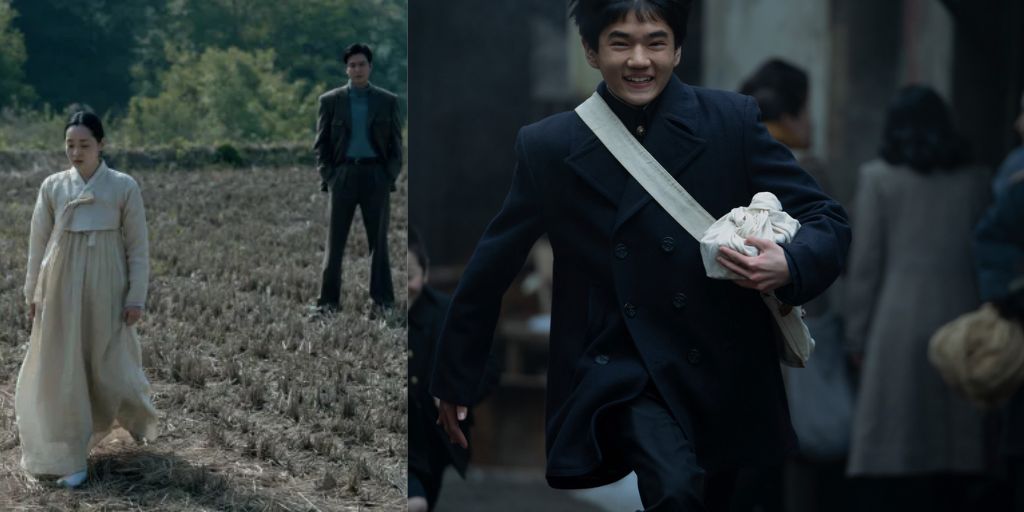
Still from the show (Apple TV+)
The Power of Family and Forgiveness
At its core, Pachinko is a story about family, survival, and the choices we make in the face of adversity. Season 2 has brought these themes in depth, showing how each character solve their own personal struggles while remaining connected to their family.
For Sunja, her family has always been her greatest source of strength. She has endured unimaginable hardship, but her love for her sons has kept her going. In the finale, we see Sunja’s unwavering commitment to her family, even as she faces difficult decisions and painful truths.
Mozasu, too, is guided by his love for his family. His desire to protect Solomon from the dangers of the business world reflects his deep understanding of the risks involved in the pursuit of power. Mozasu has lived through years of struggle and survival, and he is determined to ensure that his son does not make the same mistakes.
Solomon’s journey, however, is more complicated. His pursuit of success and power often puts him at odds with his family’s values, and the finale leaves us wondering whether Solomon will find a way to reconcile his ambitions with the love and support of his family.
Pachinko Season 2 concludes with a mix of hope and uncertainty. The Baek family has faced incredible challenges, but their resilience and love for one another have carried them through.
As the story moves forward, we are left with the sense that, no matter what lies ahead, the strength of family and the power of forgiveness will continue to guide them through the trials and tribulations of life.
Their enduring connection offers a beacon of hope, symbolizing how even in a world filled with hardship, love and unity have the power to heal, rebuild, and transform generations.
