Christopher Nolan’s Inception left many viewers puzzled, especially with the final scene that sparked numerous debates. From the moment the spinning top is shown in the closing seconds, audiences have been questioning what truly happened.
Was Cobb still dreaming, or did he finally make it back to his real life? That simple scene, quiet but filled with meaning, became one of cinema’s most talked-about endings.

Cobb’s final moments blur the line between dream and reality (Photo: Inception/Warner Bros. Pictures)
Many watched that final shot closely, looking for any small clue that could provide an answer. Nolan’s story weaves dreams within dreams, making it difficult to determine where reality ends and imagination begins.
Leonardo DiCaprio’s character, Dom Cobb, carries the burden of guilt and longing throughout the film. His motivations come from the desire to reunite with his children, which drives him to accept a risky job. The entire mission involves planting an idea into someone’s mind through shared dreaming.
This idea, or inception, becomes the foundation of the plot. Through various dream levels, the team faces mental projections and the unstable boundaries of human consciousness. Viewers are left to decide for themselves what parts reflect Cobb’s reality and which moments are only part of his imagination.
Cobb’s Emotional Struggles and Their Impact
Cobb is haunted by the memory of his late wife, Mal. Her presence in his dreams shows the deep emotional wounds he still carries. As the dream levels deepen, Mal’s appearances become more aggressive and threatening.
She represents Cobb’s unresolved grief and guilt. Every time she shows up, she disrupts the mission and endangers the group. These moments show that Cobb’s personal demons are tightly linked to the success of the inception plan.
One main point is that Cobb’s memories of Mal are not entirely accurate. He admits he altered the memory of her in his subconscious, which makes her less like the real Mal and more like a projection based on his guilt.
This small detail matters because it reveals that Cobb’s mind is an unreliable space. The dreams may look clear on the surface, but they are shaped by emotion and trauma. Cobb’s inner battles play out within the shared dreams, reminding the audience that even within an organized structure, emotion can change everything.
Layers Within Layers: Understanding the Dream Structure
The structure of the dream sequences is complex. The team builds dreams within dreams, and each level has its own rules of time and gravity. One minute in real life stretches into hours or even days within a deeper dream.
This design gives the film a unique tempo and tension. The deeper the team goes, the more difficult it becomes to tell what is real. This structure is what makes the final question so difficult to answer.
Each layer in the dream world mirrors a part of Cobb’s psyche. For example, the snowy hospital scene, which takes place in the third dream level, reflects a need for control and resolution.
The second level, in the hotel, is more chaotic and reflects inner conflict. The first level, in the city, still contains some logic but begins to break down. These layers do not just function as action stages. They are built from emotional and psychological fragments. As a result, the action feels deeply personal, especially for Cobb.
The Spinning Top and What It Could Mean
In Inception, the spinning top serves as Cobb’s marker to test whether he is in a dream or awake. If it spins forever, then he is still inside a dream. If it falls, then he is in the real world.
The film’s ending shows him spinning the top, then walking off to greet his children, and the camera cuts before we see whether the top falls. This moment created endless discussions, as some believe it gives enough signs to show he is awake, while others argue it leaves the answer deliberately open.
Some small clues make viewers wonder. Cobb no longer seems concerned about the top when he sees his children. This moment of emotional peace, where he focuses entirely on his family, could mean that he has accepted whatever reality he is in. Whether it is real or not becomes less important to him.
There is also the detail of his children’s clothes and posture. Earlier in the film, he remembers them in fixed positions, wearing the same outfits. But in the final scene, their clothes appear different, and they turn to look at him. Some interpret this change as a sign that he is seeing them in real life at last.
Christopher Nolan’s Intention and the Message Behind It
Director Christopher Nolan is known for leaving his films open to viewer interpretation. With Inception, he crafted a story that allows for multiple readings. He has mentioned that the real question is not whether Cobb is dreaming, but whether he has found peace.
Cobb’s growth comes from letting go of guilt, even if the answer to the dream question remains unclear. That makes the ending less about confirming reality and more about showing emotional closure.
This point changes how we view the spinning top. It is less a tool to detect dreams and more a symbol of Cobb’s obsession. By choosing to leave the top spinning and walk away, Cobb shows that he is no longer held down by guilt or fear.
Whether the world around him is real may not even matter. What matters is that he now accepts it, whatever it may be. For Nolan, this kind of emotional resolution takes priority over giving a fixed answer.
Dreams, Reality, and the Power of Belief
The film consistently plays with the question of belief. It suggests that perception can become more powerful than facts. If someone believes something strongly enough, it becomes their truth.

Memories of Mal haunt Cobb’s journey through layered dreams (Photo: Inception/Warner Bros. Pictures)
That idea lies at the heart of inception. By planting a simple idea into someone’s subconscious, the team changes that person’s life. Cobb himself is a product of this same logic. His belief in guilt created a version of Mal that lived in his mind. It was only after he changed that belief that he was able to let go.
This idea connects directly to the ending. If Cobb believes he is home, and if he accepts the love of his children as real, then his peace becomes real to him. Whether the spinning top falls or not becomes less urgent. Viewers are left with a final question: What do you choose to believe?
The Cast, Visuals, and Sound That Shaped the Film
Leonardo DiCaprio led a cast that included Joseph Gordon-Levitt, Marion Cotillard, Tom Hardy, Ellen Page (now Elliot Page), Ken Watanabe, and Cillian Murphy. Each actor brought depth to their role, and the chemistry among the team members added to the film’s emotional strength.
The visuals, created by a mix of practical effects and computer work, delivered some of the most memorable images in recent cinema. From the rotating hallway to the bending city streets, these scenes felt like natural parts of the dream world.
Hans Zimmer’s score added another level of intensity. The music carried weight and emotion, especially the track “Time,” which plays at the film’s end. It supported the final scene without overpowering it. The combination of sound and image helped make that final shot unforgettable.
Jackie Chan, the legendary martial arts superstar and Hollywood icon, has audiences worldwide with his death-defying stunts and comedic timing for over five decades. While his professional achievements are well-documented, his personal life remains a subject of intense curiosity among fans and media alike. Behind the action-packed facade lies a complex family story that includes a decades-long marriage, controversial affairs, and strained relationships with his children.
The Hong Kong-born actor’s romantic journey began in the early 1980s when he met Taiwanese actress Joan Lin, setting the stage for what would become one of entertainment’s most enduring yet complicated marriages. Their relationship has weathered numerous storms, including public scandals, infidelity, and the challenges of raising children in the spotlight. Chan’s personal life reflects the struggles many celebrities face when balancing demanding careers with family responsibilities, but his story carries unique cultural dimensions and moral complexities that have shaped public perception of the action star.
From secret weddings in Los Angeles coffee shops to public confessions of extramarital affairs, Chan’s marriage to Joan Lin represents both traditional values and modern celebrity challenges. Their union has produced one son while also being tested by Chan’s admission of fathering a child outside marriage. Understanding Jackie Chan’s personal life provides insight into the man behind the martial arts legend and reveals how personal choices can impact both family dynamics and public legacy in the entertainment industry.
Jackie Chan’s Marriage to Joan Lin: A Four-Decade Union

Jackie Chan and Joan Lin (Image via Getty)
Jackie Chan has been married to Taiwanese actress Joan Lin since 1982, marking over four decades of marriage that has endured despite significant challenges. The couple first met in January 1981, when Lin was actually more famous than Chan at the time. Their relationship quickly developed, leading to a secret wedding ceremony in Los Angeles in December 1982.
The circumstances surrounding their marriage were somewhat unconventional for the era. Joan Lin became pregnant with their child in 1982, and at his agent’s urging, the couple decided to marry in what Chan later described as a coffee shop ceremony in Los Angeles. Their son, Jaycee Chan, was born the day after their wedding on December 3, 1982.
In a candid 2015 interview with China Press, Chan admitted that he felt “forced to marry” when Lin became pregnant, stating, “It was an accident that conceived Jaycee. I had never thought of getting married, but I felt it was akin to being forced to get married.” This revelation mhas any fans who had viewed their marriage as a romantic union.
Joan Lin: From Taiwanese Film Star to Devoted Wife
Joan Lin, born Joan Fin Feng-jiao in Taipei on June 30, 1952, was an established actress in the Taiwanese film industry before her marriage to Chan. She achieved significant recognition for her acting abilities, winning the Best Actress award at the prestigious 16th Golden Horse Awards in 1979 for her performance in “The Story of a Small Town.”
Lin’s filmography includes notable works such as “Land of the Undaunted” (1975), “He Never Gives Up” (1978), and “My Native Land” (1980). However, following her marriage to Chan, she made the decision to retire from acting to focus on their family life. Her only return to the screen was a cameo appearance in Chan’s 2012 film “CZ12,” where she played his wife.
The transition from successful actress to supportive spouse was not without its challenges. In Chan’s autobiography “Never Grow Up,” he revealed that Joan once expressed her concerns about his career taking him away from their family, saying, “The movie business has already taken away my husband. I don’t want to lose my son, too.”
Maintaining Their Marriage: Rules and Challenges
Despite the unconventional beginning and numerous challenges, Jackie Chan and Joan Lin have developed strategies to maintain their marriage over four decades. In his memoir, Chan revealed that they established a weekly communication rule early in their relationship. He wrote, “We’d made a rule for our marriage early on that we would never sulk privately about little things, but just say outright whatever was bothering us. When I wasn’t away filming, we had a once-a-week standing date to do just that.”
This weekly practice allowed them to address issues openly and work on their individual shortcomings. Chan acknowledged that Joan handled household responsibilities and raised their son Jaycee largely on her own while he was away filming. Her silent management of family affairs and unwavering support became crucial to their marriage’s survival.
The Extramarital Affair and Its Consequences

Jackie Chan and Joan Lin (Image via Getty)
One of the most significant challenges to Chan and Lin’s marriage came in 1999 when Chan had an extramarital affair with former Miss Asia winner Elaine Ng Yi-Lei. This relationship resulted in the birth of Chan’s daughter, Etta Ng Chok Lam, on January 18, 1999.
The affair became public when Elaine Ng revealed Chan as the father shortly before Etta’s birth, creating a major scandal. Chan held a press conference where he expressed regret but controversially stated that he had “only committed a fault that many men in the world commit.” In his 2015 memoir, Chan described the affair as a “serious mistake” and admitted his uncertainty about how to explain the situation to Joan.
The consequences of this affair have been long-lasting. Chan has never met his daughter Etta since her birth, and she has publicly stated that she does not consider him her father. In 2015, Etta told Express, “He never existed in my life. I will never regard him as a father.”
Family Dynamics and Parenting Challenges
Chan’s relationship with his legitimate son Jaycee has also faced difficulties. In his memoir, Chan admitted to being a strict and often absent father due to his demanding work schedule. He confessed to hitting Jaycee “once, and was very heavy-handed” before promising never to do it again.
Jaycee Chan, now 40, followed in his father’s footsteps as an actor and musician but has experienced limited commercial success compared to his father. Their relationship was further strained when Jaycee was arrested in Beijing in 2014 for marijuana possession and sentenced to six months in prison. Chan publicly expressed his anger, shame, and disappointment while acknowledging his responsibility as a father.
Current Status and Legacy
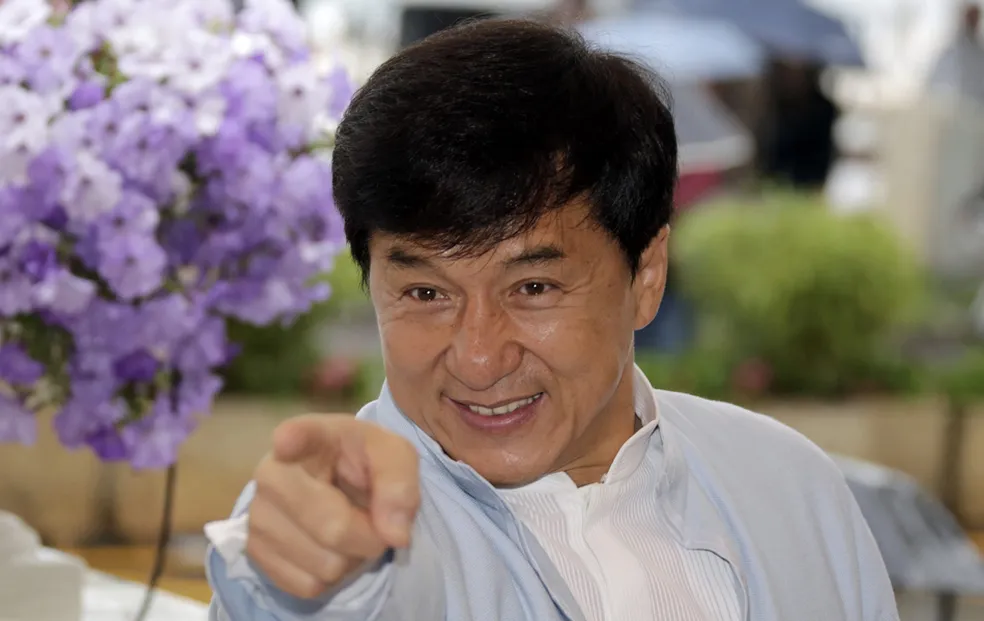
Jackie Chan (Image via Getty)
As of 2025, Jackie Chan and Joan Lin remain married after more than 42 years together. Despite the challenges they have faced, including infidelity, parenting struggles, and public scandals, their marriage has endured. Chan has publicly acknowledged his gratitude to Joan for her support and for making his life easier throughout his career.
Chan’s estimated net worth of $400 million as of 2024 reflects his successful career, and he has announced plans to donate half of his assets to charity upon his death. The couple continues to maintain a relatively private life, with Joan remaining largely out of the public eye since her retirement from acting.
Their marriage represents both the complexities of celebrity relationships and the possibility of overcoming significant challenges through commitment and communication. While not without controversy, Jackie Chan and Joan Lin’s four-decade union stands as one of the entertainment industry’s most enduring marriages, albeit one marked by both devotion and difficulty.
