The inauguration of Ram Mandir in Ayodhya represents a pivotal moment in the decades-long Ram Janmabhoomi movement, marking the end of the controversial Babri Masjid saga. For many, this historic event stirs feelings of triumph and pride, while for others, it is a painful reminder of deep-seated division.
This event has sparked a flurry of journalistic retrospectives, but one lesser-known story has been overshadowed by the political storm: the saga of the animated film Ramayana: The Legend of Prince Rama.
In 1992, the same year the Babri Masjid was demolished, India was on the verge of witnessing the release of an ambitious animated film adaptation of the ancient Hindu epic, the Ramayana. Co-produced by Indian and Japanese filmmakers, Ramayana: The Legend of Prince Rama was a feature-length anime that brought the story of Lord Ram, Sita, and Ravana to life in a unique fusion of animation styles.
Ram Mandir and the Banned Ramayana Film: A Story of Cultural and Political Tension
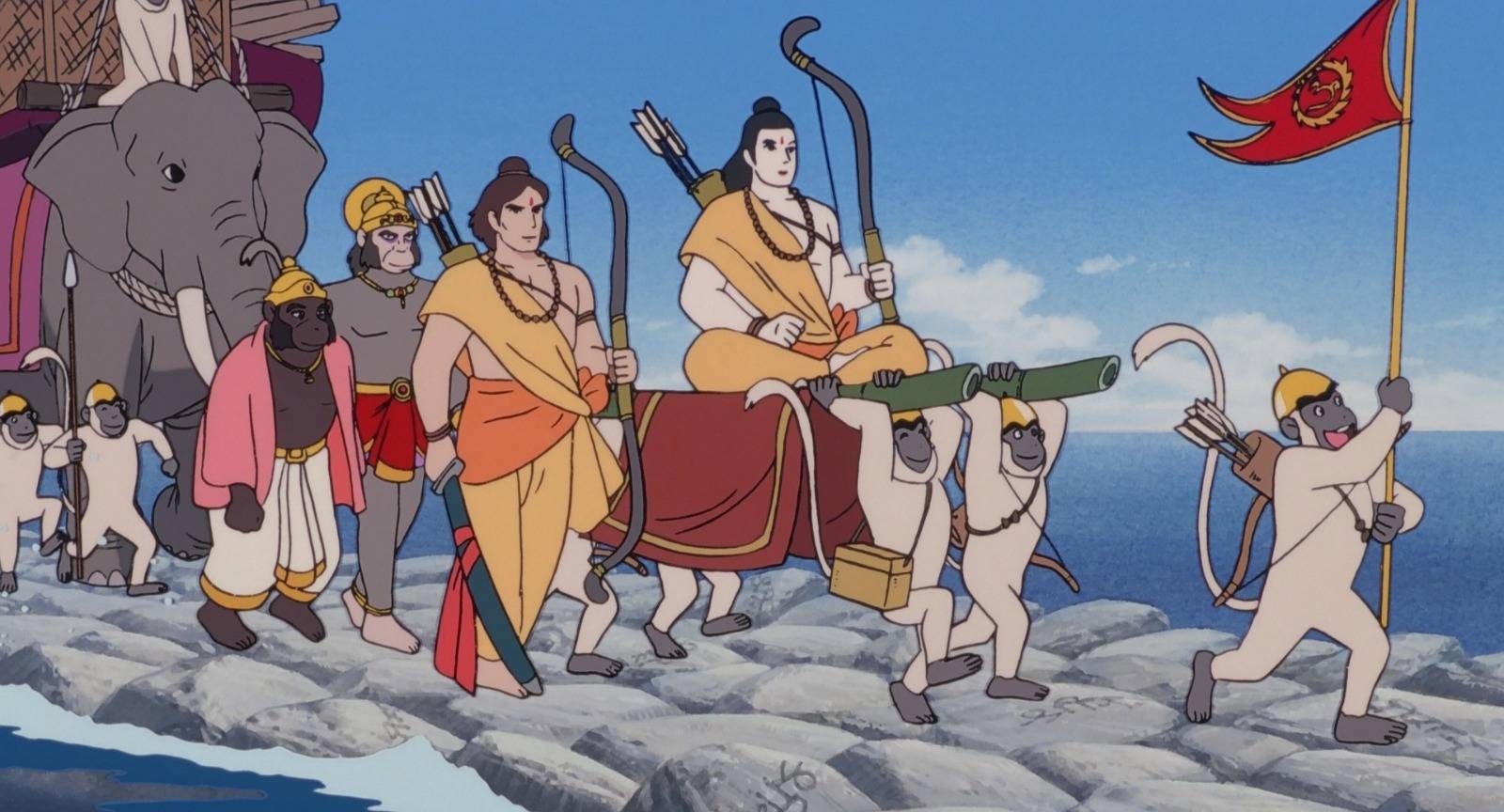
Ramayana
Directed by Yugo Sako, Ram Mohan, and Koichi Sasaki, the film combined influences from Manga, Disney, and Ravi Verma’s classical Indian art. However, the movie’s release was delayed, and it faced a three-year ban in India.
The primary reason for the ban was the already volatile communal atmosphere in the country. The demolition of the Babri Masjid had sparked widespread riots across major cities like Bombay and Calcutta, and releasing a film based on Hindu mythology, especially one that animated revered deities, was seen as highly provocative.
Conservative groups, led by organizations like the Vishva Hindu Parishad (VHP), fiercely opposed the film, claiming that the Ramayana was sacred to the Indian heritage and that no one had the right to “cinematize” it. The VHP even sent a protest letter to the Japanese Embassy in New Delhi, demanding that the film be pulled from release.
It wasn’t until 1995, three years after the initial controversy erupted, that the film was finally allowed to air on Indian television. Doordarshan, the state-run broadcaster, took the decision to premiere the movie, albeit with some adjustments, including dubbing it in Hindi.
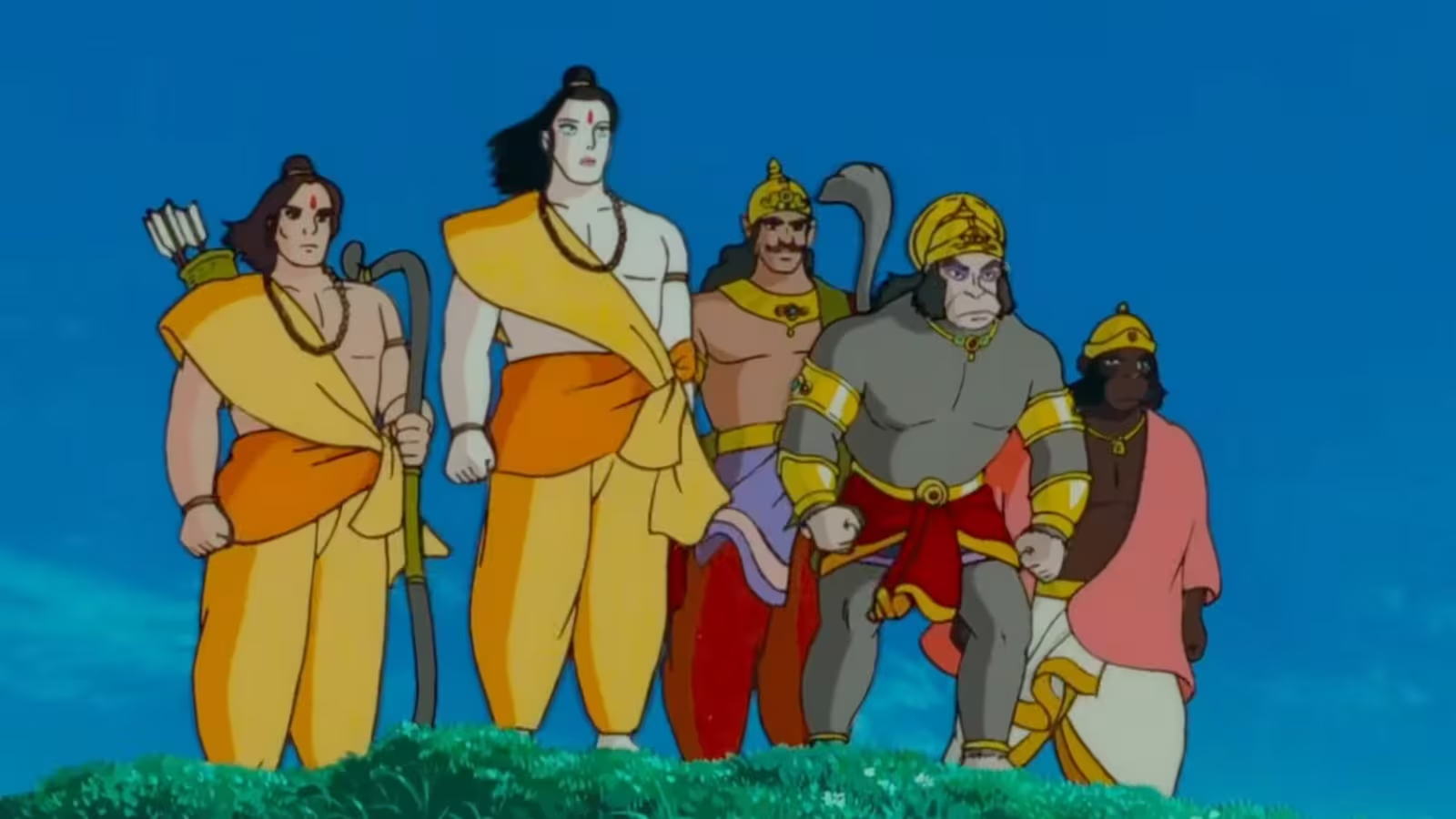
Ramayana
The film, which had already garnered a positive reception internationally, including in Japan, was embraced by Indian audiences. Arun Govil, the actor who famously portrayed Lord Ram in the 1987 television series Ramayan, voiced the character once more in this animated version. The film also featured the voices of Amrish Puri as Ravana and Shatrughan Sinha as the narrator, further cementing its cultural relevance.
Ramayana: The Legend of Prince Rama became a landmark achievement in the fusion of global animation styles and Indian mythology. The film’s delayed release reflects the complex relationship between media, politics, and culture in India, especially when it comes to sensitive religious themes.
The highly anticipated Attack on Titan – The Last Attack film premiered in Japan on November 7, 2024, and took fans by surprise with an anime-original post-credits scene. Rather than an entirely new twist, the scene adapted the manga’s end credits chapter titled Attack on Titan Casts, found in the 34th and final volume. This special scene brought beloved characters back to life in a way that was both nostalgic and thought-provoking for long-time fans.
Attack on Titan, created by Hajime Isayama, originally ran as a manga spanning 34 volumes. Over the years, it gained multiple editions, including the oversized Colossal Edition (7 volumes) and the condensed Omnibus Edition (12 volumes), as well as a Best of Attack on Titan: In Color collection. This unique story evolved into a cultural phenomenon, and the new film’s post-credit scene cleverly mirrored the manga’s emotional farewell to its characters.
Attack on Titan – The Last Attack: Anime Film Concludes with an Unexpected Post-Credits Scene
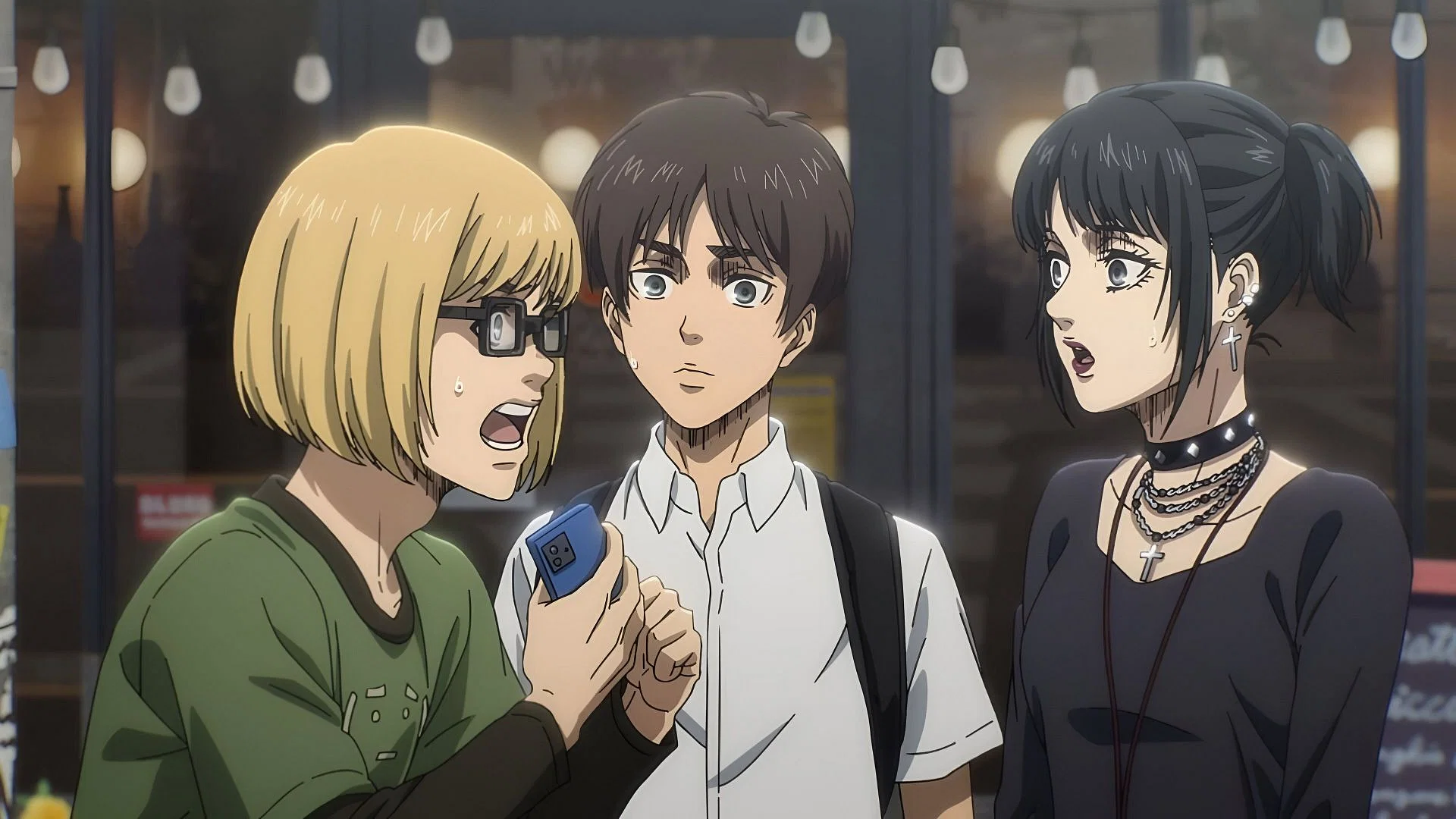
Attack On Titan post-credit scene (Mappa)Attack on Titan
The post-credits scene in The Last Attack echoes the Attack on Titan Casts chapter, where Eren Yeager, Armin Arlert, and Mikasa Ackerman—series’ protagonists—step out of the fictional world. Here, they watch their own story unfold in a cinema, akin to the real-life audience. The panel opens with the trio seated in a theater, joined by Marco, a supporting character whose appearance is unchanged from the time of his death, adding an eerie layer of nostalgia.
As the trio leaves the cinema, a reflective discussion ensues. Eren and Mikasa express satisfaction with the series finale, with Mikasa praising how every character received a proper send-off. However, Armin disagrees, citing fans’ criticisms of unresolved plot threads and arguing that a more definitive conclusion would have been beneficial. This lighthearted debate touches on real-world reactions to the manga’s controversial ending, with fans divided on whether its open-ended nature was satisfying or left too much unresolved.
HOLY SHIT NEW ATTACK ON TITAN END CREDIT SCENE CLIP #AttackOnTitan pic.twitter.com/5PkUOIA0dO — Luck🤞 (@Lucky_saini_ji) November 11, 2024
In the scene, Eren avoids directly commenting on the ending but nostalgically expresses how much he values spending time with Mikasa and Armin. He suggests that if a sequel were ever made, they should return to the cinema together, evoking a bittersweet sense of camaraderie. Mikasa and Armin share an awkward look, highlighting the complex bond between them and Eren, which resonated as one of the series’ emotional pillars.
The final panels of this post-credits scene leave the trio pondering the reality of their world and the mystery surrounding the Titans. With curiosity and irony, they debate the existence of Titans as a possible piece of real history, even joking about the idea of the trio themselves existing in reality. This meta-moment draws a parallel between the characters and the fans who have invested years following their journey, blurring the line between fiction and reality and closing out Attack on Titan in a uniquely self-aware way.

Attack on Titan is set in a dystopian world where humanity lives behind massive walls to protect itself from giant humanoid creatures known as Titans, who devour humans seemingly without reason. The story begins when a colossal Titan breaches one of the walls, destroying protagonist Eren Yeager’s home and triggering a violent chain of events.
