Season 3, Episode 6 of MGM+’s series From brings significant developments that deepen the mystery surrounding the town and the terrifying experiences it imposes on its inhabitants.
The season has primarily focused on Tabitha (played by Catalina Sandino Moreno) as she makes her return to the town, along with the dynamics of Fatima’s (Pegah Ghafoori) pregnancy status and Sheriff Boyd’s (Harold Perrineau) efforts to maintain order amid chaos. Despite these plotlines, the overarching scheme of how the characters can escape the clutches of the town continues to loom large.
Jade, a character who has been part of the series since its first season, has taken a backseat this season, often appearing disheveled and consumed by his struggles. He has become increasingly erratic, rarely seen without a bottle or flask in hand, and mumbling about new clues he thinks he has discovered.
This behavior has led to whispers among the townsfolk about Jade “losing it.” However, Episode 6 marks a pivotal moment for Jade, who may hold the key to unraveling the intricate mysteries of this surreal and terrifying town.
Jade’s Journey and Search for Clarity
At the start of Season 3, Jade is still reeling from the traumatic events he experienced at the conclusion of Season 2. During his descent into the tunnels while searching for a way to help Julie, he encountered the haunting “anghkooey” children on slabs of stone, with a mysterious “symbol” looming above them.
The symbol was not just a simple design but rather a hole in the ceiling, with roots clashing together, creating a chaotic image. In Episode 1, Boyd and Kenny find Jade in a bar, heavily intoxicated, attempting to recreate the symbol using scraps of fabric and string.
When he finally sobers up, he makes a foreboding remark to Boyd: “I don’t think we’re doing very well here, Sheriff.” This statement carries heavy implications, especially in light of how the episode ultimately unfolds.
The death of Tian Chen (Elizabeth Moy), a character Jade had grown close to, devastates him. In a moment of vulnerability, he opens up to Kenny (Ricky He) and Kristi (Chloe Van Landschoot) about the hallucinations that have been plaguing him, including visions of a man with a stake through his eye and drinking blood from a skull.
These experiences leave him haunted and perplexed. He confesses, “I thought I was smart enough to figure this place out,” while tears threaten to spill from his eyes. This moment is emotionally charged and signifies that Jade has reached a point of despair regarding his ability to unravel the town’s mysteries.
However, Jade’s determination is reignited upon hearing that Tabitha has returned to the town. Being a man of science and logic, he perceives this as concrete evidence that escape is indeed possible.
Tabitha’s husband, Jim (Eion Bailey), expresses skepticism, cautioning Jade that the town has a knack for distorting reality, making it difficult to discern truth from illusion. Nevertheless, Jade clings to the hope that the bottle tree might hold significant meaning.
At the bottle tree, Jade meticulously gathers the bottles, pondering whether the numbers inscribed inside them could represent dates. He shares his thoughts with Tabitha, stating that he feels connections starting to emerge.
He acknowledges that while he does not fully understand how everything fits together, it appears to be “only chaos until you understand the pattern.” This moment signals a tonal shift for Jade, hinting at a breakthrough in his quest for clarity.
A Surprising Encounter with Tom
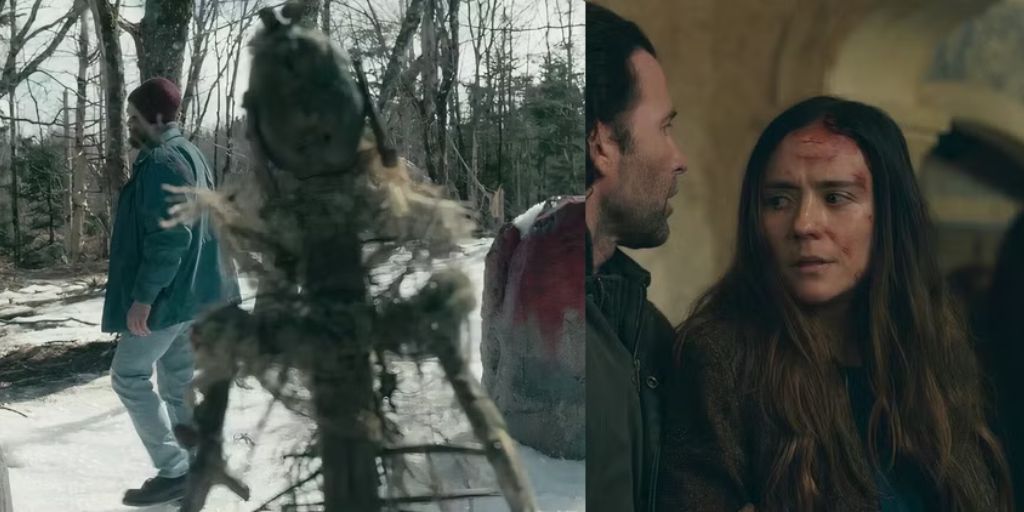
As the episode progresses, Jade learns of another bottle tree’s existence and ventures out to locate it alone. During his journey, he experiences a vision of Tom (Reid Price), who was killed by monsters in Season 2 after being trapped under a collapsed house.
Still from From Season 3 (Credit: MGM)
This isn’t the first instance where Jade encounters Tom; in Season 2, Episode 10, he believed his vision of Tom was a result of stress-induced psychosis. Even in a town rife with unimaginable horrors, Jade clings to a rational explanation for everything that occurs around him.
Now, for the second time, Tom appears to Jade, cleaning a glass at a bar, positioned in the middle of a snowy forest. This scene carries a humorous undertone, even managing to elicit laughter from Jade.
Yet, when Tom states, “A man does what a man does,” his words resonate with deeper significance directed toward Jade. Alone in the woods and clearly intoxicated, Jade grapples with his latest clues, feeling the weight of Tom’s challenge.
Tom reminds Jade of his past success as a businessman who built a multi-million dollar company despite widespread doubt from others. He suggests that Jade needs to regain his focus and resolve if he wants to solve the town’s mysteries.
While it’s evident that Jade has turned to substances to dull his pain and fears, Tom’s words seem to strike a chord. Jade’s expression reflects a growing realization that he must confront his struggles head-on.
Shifting Perspectives and New Discoveries
Later in the episode, Jade appears more sober and focused as he continues to work on deciphering the pattern using the numbers from both magic trees. When Tabitha and Ethan (Simon Webster) arrive at the bar, Jade is more patient and receptive to their help.
While Ethan works on the puzzle, Jade and Tabitha engage in a conversation about her recent vision of the “anghkooey” children. At this point, both Jade and Tabitha have encountered these children, leading Jade to declare, “You don’t have visions about things that don’t mean anything.” This assertion raises questions about the nature of their visions and what they may signify for their understanding of the town.
The next moment delivers a shocking revelation that will have profound implications for Jade’s investigation. Tabitha sees Jade’s sketches of the eerie statues that he believes were used for protection in the past, similar to how talismans currently shield residents from the town’s monsters.
Interestingly, Tabitha reveals that she experienced these statues in a recurring nightmare, suggesting she wasn’t the only one who had visions of the town before arriving. This revelation serves as a crucial clue for Jade, who has been striving to make sense of Miranda’s earlier visions and why she was the only one to witness them.
Now that they realize Tabitha has had similar experiences, they can begin to investigate the clues that were always present, even if they did not recognize their significance before.
The pressing question remains whether Jade can maintain a clear head long enough to piece together the clues that may lead to their salvation, or if the town will allow him to do so.
It is evident that Jade possesses the intelligence and motivation required to reveal the mystery, yet this season has also made it apparent that the monsters have a vested interest in psychologically tormenting the townspeople, taunting them with the possibility of escape. As the season progresses, viewers are left hoping that Jade can prove himself capable of understanding the twisted logic of the town.
The Characters and Their Struggles
Throughout Season 3, we see various characters grappling with their own fears and challenges. Each of their stories interweaves with the central mystery of the town, creating a rich scheme of narrative that deepens the viewer’s engagement.
Tabitha’s Resilience
Tabitha’s character is central to the emotional core of the series. Her return to the town serves as a beacon of hope for others, especially Jade. She embodies resilience and determination, traits that shine through as she faces the complexities of her situation. Despite her fears, she remains committed to uncovering the truth, not just for herself but for her family and friends trapped in the town.
Fatima’s Pregnancy
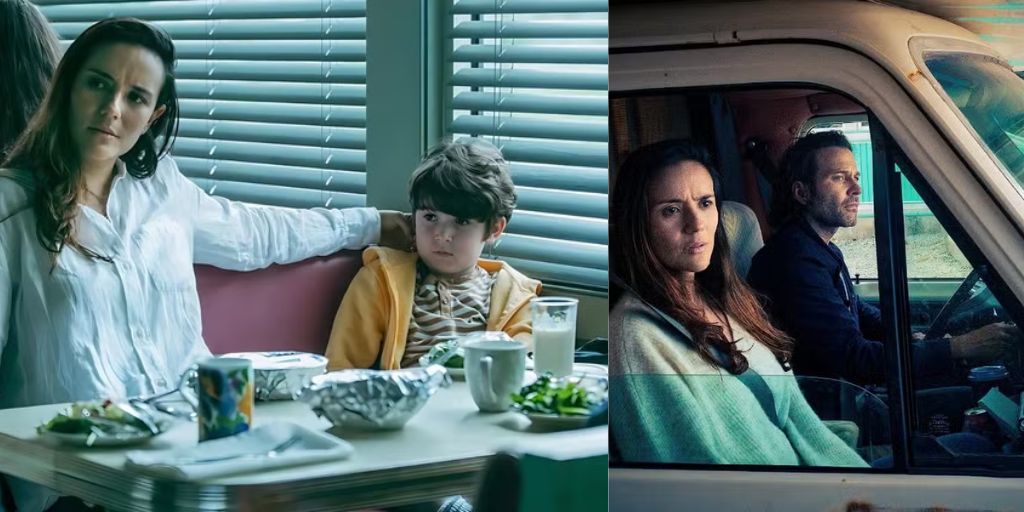
Fatima’s storyline adds another layer of complexity to the narrative. Her pregnancy—or the uncertainty surrounding it—reflects the broader themes of survival and hope in a bleak environment.
Still from From Season 3 (Credit: MGM)
The tension surrounding her condition raises questions about the future and what it means for her relationship with the other characters. Fatima’s struggle to cope with her situation resonates with many viewers, highlighting the theme of personal sacrifice amid a crisis.
Sheriff Boyd’s Leadership
Sheriff Boyd is portrayed as a figure of authority trying to hold the community together despite the increasing chaos. His character represents the struggle to maintain order in a world that feels increasingly out of control.
Boyd’s interactions with other characters reveal his sense of responsibility and the weight of the decisions he must make. As the season unfolds, viewers witness how the pressures of leadership affect him and the lengths he will go to protect his community.
The Town as a Character
The town itself functions almost as a character in From, with its own personality and rules that govern the lives of its inhabitants. The various locations, from the eerie woods to the chilling tunnels, contribute to the atmosphere of dread that permeates the series. Each setting holds secrets and horrors that are gradually revealed, compelling both characters and viewers to confront the unknown.
The intricate designs of the town serve to enhance the mystery, with hidden paths and symbols that suggest a greater purpose behind the madness. As Jade, Tabitha, and the others work to decode these signs, the town’s true nature begins to emerge. Viewers are drawn into the labyrinthine puzzle, eager to understand the logic behind the terror they face.
Themes of Hope and Despair
As the series progresses, themes of hope and despair become increasingly intertwined. Characters like Jade and Tabitha represent the struggle to find light in the darkness, while others grapple with the weight of hopelessness. The interplay between these themes creates a rich emotional view that resonates with the audience.
Jade’s journey from despair to a renewed sense of purpose exemplifies this theme. While he initially feels overwhelmed by the horrors of the town, the arrival of Tabitha sparks a flicker of hope. This shift in perspective is crucial, highlighting the importance of connections between characters in the face of adversity.
On the other hand, characters like Kenny and Kristi face their own battles against despair. Their responses to the town’s horrors reflect the varying ways individuals cope with trauma. While some find strength in community and shared experiences, others succumb to the weight of their fears. This contrast adds depth to the narrative, making the characters’ journeys relatable and compelling.
The Monsters: Manifestations of Fear
The monsters in From serve as powerful symbols of the characters’ internal struggles. They embody the fears and anxieties that plague each individual, forcing them to confront their darkest thoughts. The monsters are not just physical threats; they represent the psychological turmoil that the townspeople experience daily.
As the characters face their relationships with these creatures, viewers are invited to reflect on their own fears and vulnerabilities.
The monsters become a mirror, reflecting the characters’ emotional states and the consequences of their actions. This dynamic adds layers to the narrative, transforming the horror elements into a deeper commentary on the human experience.
As Season 3 continues, the question of whether Jade can maintain his clarity long enough to unravel the mysteries of the town looms large. The stakes are higher than ever, with the characters’ lives hanging in the balance. Each revelation brings new challenges, forcing Jade and his companions to confront their fears and insecurities head-on.
The developments in Episode 6 set the stage for exciting possibilities in future episodes. With Jade’s newfound determination and the support of Tabitha and Ethan, there is potential for breakthroughs that could lead to their escape. However, the psychological games played by the town’s monsters continue to pose significant obstacles.
The interplay between hope and despair will remain a central theme as the characters face the complexities of their reality. Viewers will be eager to see how Jade and the others respond to the town’s ever-changing view and whether they can finally break free from its grip.
Conclusion: The Ongoing Mystery of From
In From Season 3, Episode 6, the layers of mystery continue to unfold, revealing the intricacies of the characters’ lives and the chilling reality of the town. Jade’s journey from despair to renewed purpose, combined with the emotional resilience of Tabitha and the struggles of the other characters, creates a rich narrative scheme that attracts viewers.

Still from From Season 3 (Credit: MGM)
The series expertly weaves together themes of hope, fear, and the search for truth, leaving audiences on the edge of their seats. As Jade grapples with his sanity and the townspeople confront their own demons, the stakes continue to rise. The question of whether they can escape the horrors of the town remains unanswered, setting the stage for more thrilling developments in the episodes to come.
From Season 3 is available to stream on MGM+, and fans eagerly await the next chapter in this gripping tale of survival, mystery, and the human spirit.
Low-budget filmmaking is often seen as a challenge in the cinema world. Many believe that to create a great film, you need a large budget, high-end technology, and a team of experts. However, there are exceptions to this belief. One such exception is the film Coherence, released in 2013.
This movie is a shining example of how a small budget can still yield big ideas and meaningful storytelling. It proves that filmmakers can create engaging content without the need for major studio backing or expensive special effects.
The film’s director, James Ward Byrkit, adopted a resourceful approach similar to that of Robert Rodriguez, a filmmaker known for his ability to make movies on limited budgets. Rodriguez famously made El Mariachi with only $7,000, and Byrkit followed a similar path. He had a strong cast, a house to film in, and an interesting concept. With these elements, he crafted a film that resonates with audiences on many levels.
The Story of Coherence
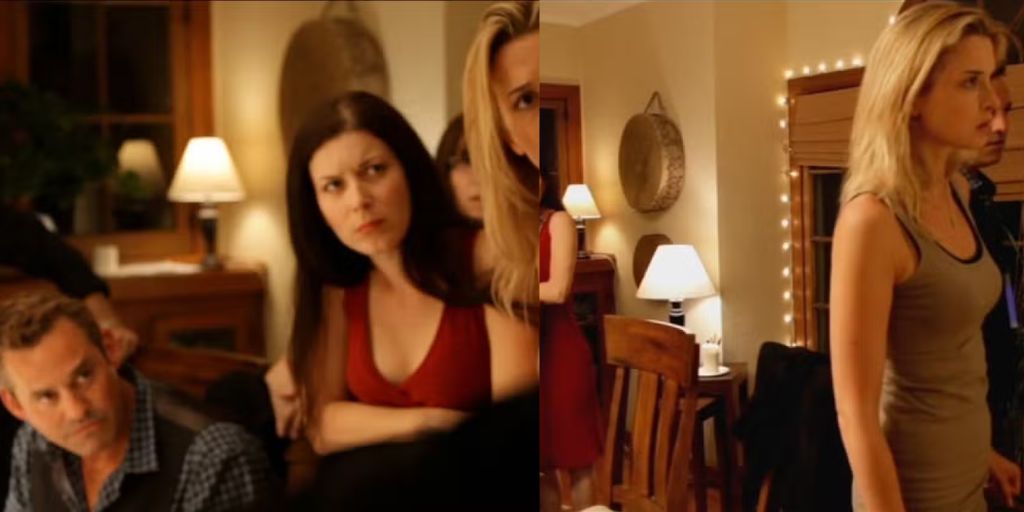
Coherence tells the story of a dinner party that goes horribly wrong. Eight friends gather for a seemingly normal evening, but as the night unfolds, strange and unsettling events occur. The film fits into the category of cosmic horror, a genre that emphasizes the fear of the unknown. In Coherence, the unknown is represented by the bizarre changes in reality that the characters experience.
The film begins with the characters interacting in their usual manner. Among them are Em and Mike, played by Emily Baldoni and Nicholas Brendon, respectively. Em is hesitant about her relationship with Mike, and their discussions highlight their complicated feelings. Other characters include Laurie, Lee, Amir, and Beth, each with their own backstories and relationships that add depth to the narrative.
As the story progresses, the characters face an unexpected challenge when the power goes out. This event triggers a series of strange occurrences, leading them to question their understanding of reality. The arrival of doppelgangers and the influence of Miller’s Comet add further confusion and tension.
The film skillfully combines elements of science fiction with the personal struggles of the characters, resulting in a rich narrative filled with suspense and intrigue.
Character Dynamics and Relationships
The characters in Coherence are not just random friends thrown together; they each have their own histories and relationships that shape the story. The dynamics among them are complex. Emily and Kevin are a couple, but their relationship is shaky.
Emily is hesitant to join Kevin on a work trip abroad, which creates tension between them. Adding to this complication is Laurie, Kevin’s ex-girlfriend, who tries to rekindle her relationship with him during the party. This love triangle introduces emotional depth and drama to the plot.
The film’s dialogue feels natural and improvised. The characters speak to each other as real friends would, which makes their interactions believable. As the story progresses, their discussions become increasingly frantic as they attempt to understand what is happening around them. The atmosphere becomes tense as the reality they knew begins to unravel.
This scheme of personal relationships is a key element of the film. The characters’ feelings, desires, and fears emerge in the midst of the chaos. As they confront the unknown, they are forced to deal with their own insecurities and relationships. The film expertly balances the cosmic horror elements with these personal struggles, creating a compelling narrative that keeps the audience engaged.
Improv and Minimalism in Filmmaking
One of the standout features of Coherence is its use of improvisation. Byrkit took a unique approach by casting actors known for their improv skills. He provided them with basic character motivations and a loose outline of the plot but allowed them to create their dialogue and interactions. This technique adds a sense of authenticity to the film and contributes to the feeling of spontaneity throughout the story.
Byrkit’s decision to embrace minimalism is also evident in the film’s production. With a small budget, he relied on a straightforward approach to filmmaking.
The film is shot in a single location, which adds to the claustrophobic feel. The lighting is simple, yet effective, reinforcing the sense of being trapped in a strange reality. The characters are confined to the house, creating an atmosphere of tension and uncertainty.
This minimalist style is reminiscent of the classic anthology series The Twilight Zone, which inspired Byrkit. The show often shows strange and unsettling themes, leaving audiences with more questions than answers. Similarly, Coherence raises philosophical questions about reality, identity, and the nature of existence.
The film’s narrative and visual style work together to create an experience that feels both fresh and reminiscent of classic sci-fi storytelling.
Philosophical Themes and Ideas
At its core, Coherence is not just a sci-fi thriller; it is a film that challenges the audience to think deeply about complex ideas. The themes presented in the film touch on personal identity, the nature of reality, and the implications of free will. These concepts are shown through the characters’ experiences as they face a world where the rules of reality seem to have changed.
One of the key philosophical ideas in the film is the concept of Schrödinger’s Cat, a thought experiment in quantum mechanics. This idea illustrates the uncertainty of reality, where a cat in a box can be simultaneously alive and dead until observed. In Coherence, the characters find themselves in a similar situation.
They are faced with multiple versions of themselves, leading to questions about identity and existence. The film challenges viewers to consider what makes us who we are and how our choices shape our reality.
The passing of Miller’s Comet serves as a catalyst for the characters’ existential crisis. Its influence disrupts their understanding of reality, forcing them to confront their fears and uncertainties. The comet symbolizes the unknown, a force that alters the fabric of their lives. As the characters grapple with the changes around them, they must also confront their own desires and motivations.
This scheme of big ideas is what sets Coherence apart from other sci-fi films. While it may not have the visual effects or elaborate sets of larger productions, it compensates with its thought-provoking themes and strong character development. The film challenges audiences to engage with its narrative on a deeper level, making it a memorable entry in the science fiction genre.
The Reception of Coherence
Despite its innovative approach and thought-provoking themes, Coherence has remained somewhat underappreciated. It did not receive the same level of attention as other indie films or major sci-fi releases. However, those who have seen it often praise its originality and depth. The film’s unique style and narrative structure have garnered a cult following among fans of independent cinema and science fiction.
Critics have noted that Coherence is a bold experiment in no-budget filmmaking. Its mix of sci-fi concepts with strong character dynamics creates a film that feels both unique and messy at times. While it may not be perfect, its ambition is commendable. The film’s short runtime of just under 90 minutes makes efficient use of its time, packing in numerous complex ideas and character moments.
Acting in Coherence is another aspect that has received positive feedback. The performances of the cast upgrade the material, bringing authenticity to their characters. The actors’ ability to improvise adds a layer of realism to the film, making the audience feel as if they are witnessing genuine interactions among friends. This commitment to character development is one reason why Coherence stands out among other low-budget films.
A Testament to Indie Filmmaking
Coherence serves as a testament to what indie filmmaking can achieve. It demonstrates that with creativity, resourcefulness, and a talented cast, filmmakers can create compelling narratives that resonate with audiences. The film shows that big ideas do not require big budgets; rather, they can emerge from simple yet profound storytelling.
Byrkit’s success with Coherence is significant not only for its contribution to the genre but also for its impact on independent filmmaking as a whole. It showcases the potential of small productions to tackle complex themes and engage viewers in meaningful ways. In an era when big-budget blockbusters often dominate the box office, Coherence reminds us that smaller films can deliver powerful messages and thought-provoking narratives.
The film’s legacy continues to inspire aspiring filmmakers and artists. It serves as a reminder that creativity can flourish in the face of limitations. Coherence encourages filmmakers to take risks, experiment with their craft, and embrace unconventional storytelling methods. Its influence can be seen in the growing number of indie films that tackle complex themes and push the boundaries of traditional narrative structures.
Conclusion: A Lasting Impact
Coherence stands out as a remarkable achievement in low-budget filmmaking. Its ability to blend high-concept science fiction with a genuine character scheme makes it a unique entry in the genre. The film’s minimalist approach, combined with its improvisational style, creates a sense of authenticity that resonates with viewers.
Still from Coherence (Credit: Prime Video)
The philosophical themes shown in Coherence challenge audiences to reflect on their own understanding of reality, identity, and the nature of existence. Despite its underappreciation, the film has garnered a loyal following and continues to inspire filmmakers and fans alike.
Coherence is a reminder that storytelling knows no bounds and that even the simplest of setups can lead to a profound scheme. It encourages viewers to embrace the unknown and to appreciate the beauty of creativity, no matter the budget.
Through its innovative approach and thought-provoking ideas, Coherence has secured its place in the pantheon of indie films that have successfully captured the imagination of audiences worldwide.
