A new anime movie set in the John Wick universe is in development, offering fans a fresh look at the story behind John Wick’s infamous impossible task, which led him to retire from his life as an assassin.
Director Chad Stahelski, who has helmed all four films in the John Wick series, confirmed that the upcoming film will serve as a prequel, explore events that occurred before the first movie.
He emphasized that the anime format will allow for a more creative approach, enabling the team to explore the John Wick world in a crazier, more exaggerated way that traditional live-action wouldn’t allow.
Stahelski wants the project to capture the fun and unique elements of the franchise, especially since the live-action films concluded with John Wick: Chapter 4.
Stahelski also discussed the importance of maintaining the core identity of the John Wick franchise as more spin-offs and projects emerge.
He and Keanu Reeves, who plays John Wick, have taken on the role of gatekeepers for the series, ensuring any new additions stay true to the original vision.
He shared that they’ve faced situations where outside voices questioned what fits within the John Wick universe, but he and Reeves remained committed to preserving the authentic feel of the character and his world.
This dedication to keeping John Wick grounded in its established tone is seen as important as the franchise expands into new formats like anime.
Hollywood’s recent push into anime reflects its efforts to connect with younger audiences who are increasingly amazed by the medium.
The John Wick anime joins a growing list of adaptations and original projects that North American companies are producing, trying to tap into the popularity of anime hits like Jujutsu Kaisen and My Hero Academia.
While live-action adaptations of anime like Death Note and Cowboy Bebop struggled to resonate, other ventures, such as Netflix’s live-action One Piece, have succeeded.
The shift towards anime adaptations and collaborations shows a broadening strategy, with companies investing in both animated and live-action formats to engage fans of anime and Western franchises.
Stahelski’s involvement in the anime world extends beyond John Wick. He is also part of the team behind Lazarus, an upcoming action anime series created by Cowboy Bebop’s Shinichiro Watanabe, which was highlighted at New York Comic Con.

John Wick’s ‘Impossible Task’ Comes to Life in Bold New Anime Prequel (Adult Swim)
Lazarus is set to debut in 2025, and Stahelski, a fan of classic anime series like Cowboy Bebop and Samurai Champloo, has taken a hands-on approach by helping produce several episodes.
The collaboration between Stahelski and Watanabe reflects a mutual admiration, with Watanabe appreciating the John Wick films and Stahelski being influenced by Watanabe’s anime.
The John Wick franchise has seen remarkable growth since its debut in 2014, becoming a major action series with a dedicated fanbase.
Although John Wick: Chapter 4 was initially considered the conclusion of the main storyline, the possibility of a fifth film remains open.
A spin-off titled Ballerina is set to expand the universe even further. As the series continues to evolve, its exploration into different formats, including anime, adds new dimensions to the John Wick saga while keeping the spirit of the original films alive.
Aside from his John Wick projects, Keanu Reeves is involved in various other roles, such as voicing Shadow the Hedgehog in Sonic the Hedgehog 3, set for release in December 2024.
He is also linked to a Constantine sequel, though updates on that project have been limited.
These roles demonstrate Reeves’ versatility as he continues to balance voice acting, live-action films, and franchise projects, further solidifying his status as a Hollywood icon.
In Episode 4 of Agatha All Along, the storyline about Alice Wu-Gulliver (played by Ali Ahn) and the mystery surrounding her mother unfolds. While for many, this episode seems like a mere continuation of trials within the coven, it resonates deeply with me. It serves as a reflection of a reality that is often not given enough attention – the immigrant struggle.
Specifically, it reminded me of the experiences of Overseas Filipino Workers (OFWs) and their families. For those of us who have gone through similar journeys, Alice’s trial is more than just a search of her mother’s journey; it echoes the sacrifices immigrant parents make to provide better opportunities for their children.
Alice’s journey, whether it was intentional by the show’s creators or not, mirrors the experiences many immigrant families go through. It illustrates how parents leave their home countries and face immense challenges to create a better life for their children.
While many films and television shows have touched on this topic from an Asian-American perspective—like Fresh Off the Boat, Ms. Marvel, and Everything Everywhere All At Once—the story in Agatha All Along brings to mind the specific struggles my family and many others have faced.
A Story of Generational Sacrifice
The episode “If I Can’t Reach You / Let My Song Teach You” goes deeper into Alice’s mother, Lorna (played by Elizabeth Anweis), and her selfless act of sacrificing herself on the Witches’ Road. She does this to protect her daughter from a generational curse that has been plaguing their family.
While my family’s situation doesn’t involve curses or supernatural elements, the parallel with Lorna’s story is easy to see. Just like Lorna, my parents—particularly my father—made sacrifices that allowed me and my family to have better opportunities.
In our case, it was the sacrifice of leaving the Philippines to seek a better life. Much like the struggle on the Witches’ Road, immigrant parents face countless challenges to create a brighter future for their children.
Lorna’s actions eventually take Alice by surprise, helping her realize how far her mother was willing to go to protect her and provide her with a better life. This revelation is a moment of clarity that many children of immigrant parents come to understand later in life.
When you’re younger, it’s easy to feel neglected or upset that your parents aren’t always there for you. But as you grow older, you begin to appreciate the magnitude of their sacrifices. Whether they’re working overseas or fleeing dangerous situations, parents will go to great lengths to ensure their children have opportunities they never had. My parents, and many others like them, go ahead on their own “Witches’ Road” of trials and hardships, all for the sake of their children’s future.
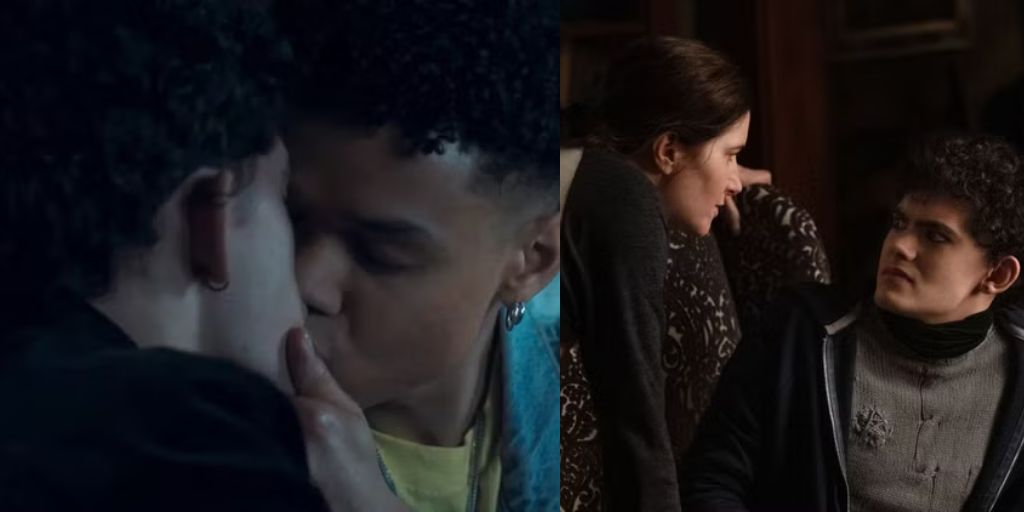
Still from Agatha All Along (Credit: Disney)
The Untold Journey of Immigrant Parents
There are many stories about the struggles that immigrant parents face, often highlighting the end result of their hard work: their children’s success. However, not enough attention is given to the journey that leads to that success. For many, including myself, it’s a story of becoming an OFW (Overseas Filipino Worker) and making significant sacrifices to support your family.
While several Philippine movies and television shows have addressed this topic, they often focus on either the abuse that OFWs face (A Mother’s Story) or romanticize the concept (Milan). For me, Lorna’s journey in Agatha All Along feels more authentic and relevant to the experiences of young Filipinos whose parents are OFWs.
Even when we feel neglected, we must remember that our parents are on difficult journeys, often far from us, so they can provide us with a better life.
I first heard about the details of my father’s journey back in 2014. Much like Alice, I initially thought it was just a story to guilt me into pursuing a specific career—becoming a nurse, in my case. But this was far from the truth. Watching Agatha All Along only deepened my appreciation for my father’s sacrifices and the journey he had to go through to give us a better life.
A Father’s Sacrifice: From Dreams to Reality
The story of how my family left the Philippines began with my father. He was an OFW nurse, working in multiple countries to provide for the family. His life, as I was told, was far from easy. He grew up in poverty, especially after his father passed away.
When Martial Law was declared in the Philippines in 1972, the political situation made life even more difficult for the working class. For my father, these hardships motivated him to seek a better future.
He made an important decision, one that would change the course of his life: he gave up his dream of becoming an engineer and instead pursued nursing. This was not an easy choice, but he knew that nursing offered better opportunities.
He studied hard and maintained his grades to keep his scholarship, a challenge that he tackled head-on. His “Witches’ Road” began in the early 2000s, a few years after I was born. Like the ballad in the episode, my father never wavered from his goal of getting our family out of the Philippines and into a country with better opportunities.
This path is not unique to my family. Many Filipinos face similar challenges in the hope of creating a better life for their families. According to the 2023 findings from the Philippine Statistics Authority, over 2.16 million Filipinos are working overseas.
Additionally, a report from Al Jazeera stated that many students studying nursing and healthcare plan to leave the country once they graduate because they believe the Philippines cannot offer them the life they want.
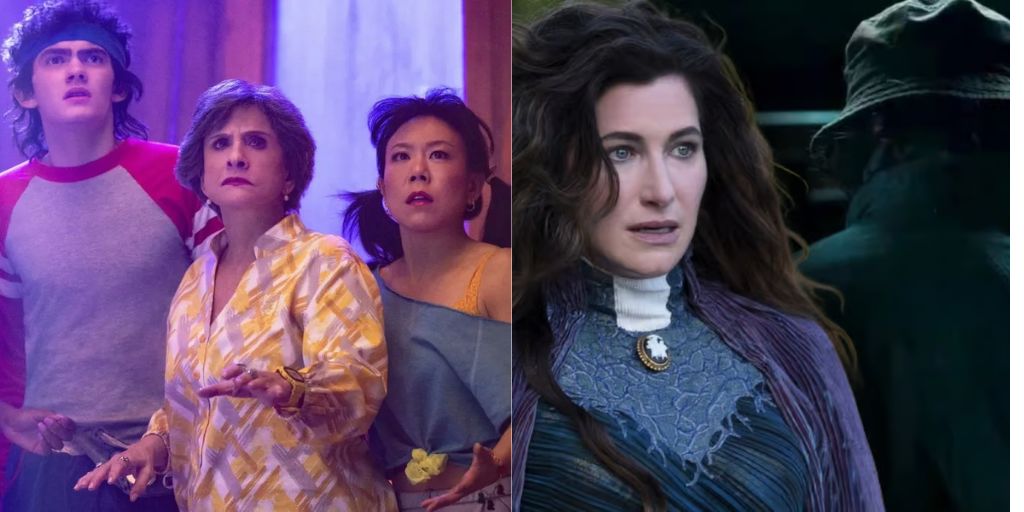
Still from the season (Disney+)
The Challenges of Being an OFW
Being an OFW is not easy. It’s often lonely, and the separation from loved ones can take a toll on mental health. Like Lorna Wu, who had to leave her daughter Alice to fulfill her mission, my father had to be away from us to achieve his goal. He formed close bonds with his fellow OFWs, much like forming a “coven” for emotional support during difficult times.
After over a decade of hard work, facing challenges that tested his mental strength, and showcasing his skills and expertise, my father succeeded in his mission. His story is one of perseverance and dedication, and it’s something that I now appreciate even more.
A Personal Connection to the Show
One moment that particularly stands out for me is when my father told me, during the process of sorting out our immigration papers, “You should feel lucky, as not everyone gets to do this.” This statement stuck with me, and watching Agatha All Along brought those words back to the forefront of my mind. Not every Filipino family gets the chance to leave the country, and even fewer can immigrate with their entire family.
After hearing about my father’s journey and visiting the places where he worked, I realized that being an OFW is not as glamorous as some might think. It’s a journey filled with hard work, trials, and immense sacrifice. Much like the show, you need to rely on your support system, your “coven,” to make it through the toughest challenges.
The song “If I Can’t Reach You, Let My Song Teach You,” which is featured in Agatha All Along, holds particular significance for me. The line “If I Can’t Reach You, Let My Song Teach You” reflects the love that parents have for their children, even when they are far away. The bridge of the song feels like a love letter from a mother to her child, reminding us of the bond between parents and their children, even when distance separates them.
Appreciation for Sacrifice
While it’s hard to fully comprehend everything my father went through—since my life today is a result of the opportunities he worked so hard to create—I can begin to understand his journey through Agatha All Along. Lorna’s story becomes a metaphor for the experiences of OFWs, and it’s a reminder that we should not take these sacrifices for granted.
Watching Episode 4 of Agatha All Along did something no other TV show or movie has done for me. It allowed me to reflect on my father’s sacrifices and the challenges he faced while pursuing a better life for our family. The episode also gave me a sense of reassurance that I’m not alone in feeling the way I do about my father’s absence during much of my childhood.
It has helped me to start appreciating everything he did to give us the opportunities we now have—something he himself did not have growing up. The journey of sacrifice and hardship that many OFW parents go through is not so different from the struggles depicted in Agatha All Along. The show serves as a powerful reminder that, while we may not always understand or appreciate it in the moment, our parents’ sacrifices shape the future they want for us.
While Agatha All Along may be a work of fiction, its themes resonate deeply with real-life experiences, especially for those of us who have witnessed or lived through the sacrifices made by our parents. Lorna’s journey on the Witches’ Road to save Alice is a powerful metaphor for the immigrant experience—specifically the journey of OFWs like my father.

Still from Agatha All Along (Credit: Disney+)
It’s a story of endurance, sacrifice, and love. Watching the show has not only given me a new perspective on my father’s life but also allowed me to reflect on my own role in this shared experience.
Many times, children of immigrant parents may not fully grasp the magnitude of what their parents have gone through until much later in life. It’s easy to feel resentment or frustration when your parent is absent for long periods.
For me, it took watching Agatha All Along to fully appreciate the weight of my father’s sacrifices. Seeing Lorna risk everything to protect Alice, knowing she might never see her daughter again, helped me better understand the emotional toll my father’s journey must have taken on him.
Like Lorna, my father had to make difficult decisions, often sacrificing his own desires and well-being for the sake of the family. His journey wasn’t just about providing financially; it was about ensuring we had a future, a chance to live a life with more opportunities than he had growing up.
The separation between Lorna and Alice in the show mirrored the emotional distance I sometimes felt from my father during his time working overseas. But, like Alice, I now realize that the physical distance didn’t lessen the love or commitment my father had for me and our family.
He was walking his own “Witches’ Road,” facing trials and challenges that I couldn’t fully comprehend as a child. Yet, every step he took was one that brought us closer to the life we now live—a life filled with the opportunities he worked so hard to create.
As I look back on the years my father spent as an OFW, I now recognize that his absence wasn’t a choice he made lightly. It was a sacrifice, much like Lorna’s, made out of love and a deep desire to give his children a better life. Watching the show allowed me to reflect on my father’s struggles in a way I hadn’t before.
It’s easy to take things for granted, especially when you don’t fully understand the reasons behind them. But Agatha All Along reminded me that love and sacrifice often go hand in hand, even when those sacrifices are made from afar.
My father’s journey was long and filled with obstacles, but like Lorna, he never wavered in his mission. Even when things were difficult, he stayed focused on his goal. He endured the loneliness, the challenges of working in foreign countries, and the emotional toll of being away from his family for extended periods.
But, much like Lorna’s journey, his story is one of perseverance and love. He, too, formed his own version of a “coven”—fellow OFWs who became his support system and helped him face the trials he faced along the way.
As I continue to reflect on the parallels between Agatha All Along and my own family’s experiences, I realize that the sacrifices made by immigrant parents are not always immediately understood by their children.
However, as we grow older and gain more perspective, we begin to see the immense love and dedication behind those sacrifices. For me, Agatha All Along served as a reminder that even when our parents are not physically present, their love and commitment are ever-present in the actions they take to secure our future.
In many ways, my father’s journey, like Lorna’s, is a testament to the resilience and strength of parents who are willing to sacrifice everything for their children’s well-being. It’s a reminder that the immigrant experience, particularly for OFWs, is not just about the pursuit of financial stability—it’s about love, hope, and the desire to create a better life for the next generation.
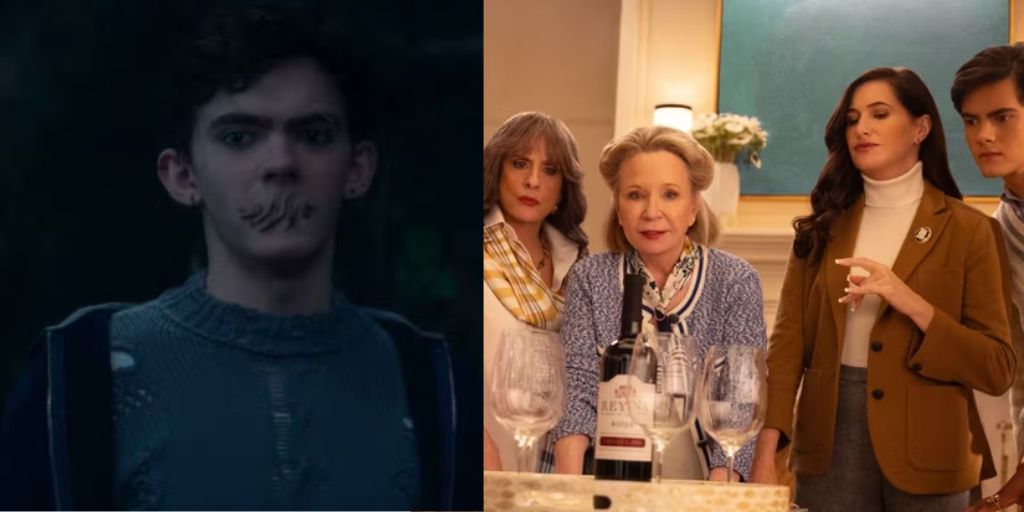
Still from Agatha All Along (Credit: Disney+)
Today, I have a deeper appreciation for the journey my father undertook. It wasn’t just about leaving the Philippines; it was about enduring hardship, loneliness, and emotional strain to give his children the opportunities he never had. His journey, much like Lorna’s, was filled with trials, but his love for us never faltered.
And while I can never fully repay him for everything he has done, I can honor his sacrifices by recognizing the depth of his love and the strength of his commitment to our family.
Watching Agatha All Along has not only given me a newfound appreciation for my father’s struggles but has also made me realize that his journey, like that of so many other OFWs, is a story of resilience, sacrifice, and unwavering love. The parallels between Lorna’s sacrifice for Alice and my father’s journey for our family are striking, and it’s a reminder that while the paths may be different, the destination is the same—a better life for the ones they love.
Agatha All Along has provided me with a profound lens through which to view my father’s journey as an Overseas Filipino Worker (OFW). The parallels between Lorna’s sacrifices for Alice and my father’s dedication to our family offer a reminder of the emotional toll and the strength required to create a better future.
Like Lorna, my father walked his own “Witches’ Road,” facing hardship and emotional distance, yet always motivated by love. His sacrifices, though not fully understood during my childhood, have shaped my life and provided me with opportunities he never had.
This reflection has deepened my appreciation for the immigrant experience, particularly the sacrifices made by OFWs. Their journeys are not just about financial stability; they are driven by hope, resilience, and unwavering love for their families.
While Agatha All Along is fictional, it speaks to the universal truths of love, sacrifice, and endurance that so many immigrant families understand. It has inspired me to honor my father’s journey and recognize the countless others like him who have made similar sacrifices, driven by the desire to build a better life for their children.
