The negative reviews and reactions surrounding Joker: Folie à Deux have severely impacted its performance at the box office. The expensive sequel to 2019’s hit film had a weak opening weekend, earning under $40 million domestically in its first three days.
This figure is only about a third of what the original Joker made in its opening weekend in 2019, before the pandemic. It is also lower than the opening weekend numbers of some of the biggest recent box office failures. Directed by Todd Phillips, the film stars Joaquin Phoenix, who reprises his role as the Joker, and Lady Gaga as Harley Quinn.
With only $40 million in its first weekend, Joker: Folie à Deux earned slightly more than Morbius, but fell short of The Marvels and The Flash, three well-known comic book movie flops. For comparison, A Star Is Born, which also starred Lady Gaga, opened with $42 million and went on to make more than $400 million globally.
In contrast, the first Joker earned nearly $100 million in its debut weekend and eventually brought in $335 million domestically and over $1 billion worldwide. The original film also won several awards, including a Best Actor Oscar for Phoenix, and was made on a modest budget of around $70 million.
However, Joker: Folie à Deux had a much higher production cost of around $200 million. It, too, played in competition at the Venice Film Festival like its predecessor, but the reviews were far less favorable. Currently, the film holds a low 33% critic rating on Rotten Tomatoes.
Audience reception has been even harsher, with viewers giving it a 31% rating on Rotten Tomatoes and a historically low D score on CinemaScore. This is the worst score ever for a comic book movie on CinemaScore, even worse than what controversial films like Megalopolis and Babylon received.
Warner Bros., which already saw a major loss this year with Furiosa: A Mad Max Saga, seems to be headed for another flop with Joker: Folie à Deux.
‘The Wild Robot’ and ‘Beetlejuice Beetlejuice’ Continue to Succeed
After leading the box office in its opening weekend, DreamWorks’ The Wild Robot dropped to second place, bringing in just under $20 million in its second weekend. The highly praised animated movie is close to surpassing the $65 million mark domestically.
Made with a budget of $80 million, The Wild Robot holds an impressive 98% critic score on Rotten Tomatoes, and its strong performance has benefited from Joker: Folie à Deux’s failure to draw large audiences.
Meanwhile, Beetlejuice Beetlejuice, another Warner Bros. hit, came in third place. It earned over $10 million in its fifth weekend, reaching a total of $265 million domestically.
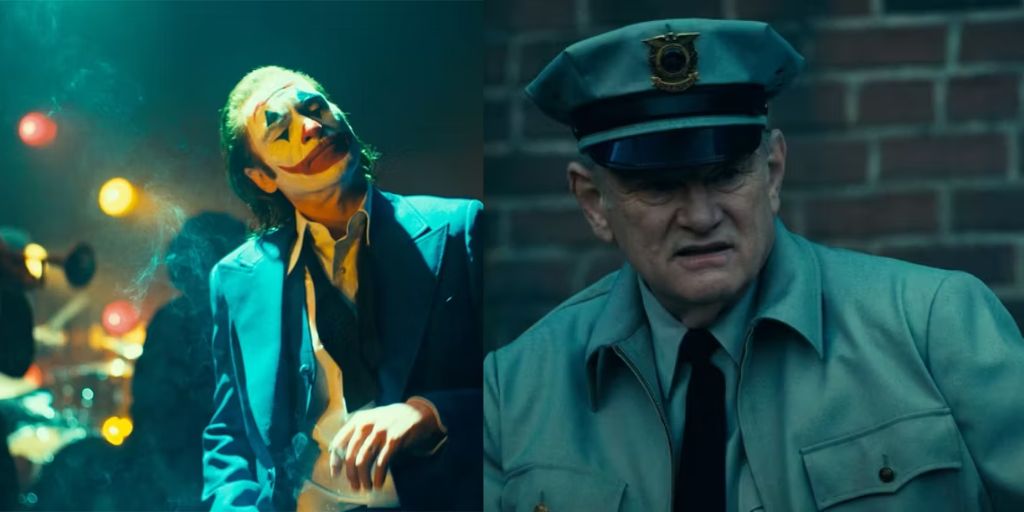
Still from Joker Folie a Deux (Credit: Warner Bros.)
In fourth place was Paramount’s Transformers One, which is still struggling to break the $50 million mark after two weeks in theaters. Despite receiving excellent reviews, the movie hasn’t attracted large crowds. It made just over $5 million this weekend and will likely find more viewers when it hits digital platforms.
Rounding out the top five was Universal’s horror film Speak No Evil. Although the remake hasn’t been a massive hit, it has consistently drawn audiences. Speak No Evil has now made over $32 million domestically, more than double its production cost.
The year 1996 was huge for goth girls with the release of The Craft. Directed by Andrew Fleming, this cult classic focused on a group of teenage witches. Even though it came out just a year after Clueless, it had a completely different vibe.
The Craft reignited an interest in witchcraft among younger people, while also shaping the dark, gothic fashion trends of the 1990s. What most people might not know is that the movie’s set also got a little witchy, marking an important moment for Hollywood.
The story of The Craft follows Sarah (played by Robin Tunney), a high school student who moves from the Bay Area to Los Angeles. There, she becomes friends with three outcast girls: Nancy (Fairuza Balk), Rochelle (Rachel True), and Bonnie (Neve Campbell), all of whom are involved in witchcraft.
Together, the four girls form a coven and begin using magic, casting spells for love, beauty, power, and revenge. However, things take a dark turn when Nancy, who leads the group, becomes too obsessed with gaining more power. This leads to a final conflict and a rather dark ending.
Although the movie is filled with magical elements, it also touches on serious topics, particularly Nancy’s mental health. This balance between fantasy and reality helped give the film a unique feel, especially in its portrayal of witchcraft.
Fleming Brought in a Wicca Priestess to Guide the Film
The 1990s saw the release of many famous witch-related films like Hocus Pocus, The Witches, and Practical Magic. These movies usually showed witches in a lighthearted, comical way, relying on common stereotypes. Fleming, however, wanted The Craft to feel more real and closer to how witchcraft is actually practiced today.
According to TIME, Fleming hired Pat Devin, a priestess from the Gardnerian Wicca tradition, to help guide the movie’s portrayal of witchcraft. Under her advice, the cast performed actual chants and spells, which were taken directly from Wicca books.
Wicca is a religion that has been around in its modern form since the early 20th century. Despite Fleming’s efforts to be respectful of Wicca, some practicing witches were not happy with the film, pointing out the inaccuracies and the exaggerated storyline.
When the sequel The Craft: Legacy came out in 2020, director Zoe Lister-Jones took things even further. She brought on three real witches, including Bri Luna, an astrologer and tarot reader, as well as Pam Grossman, a writer and podcast host who focuses on witchcraft.
Grossman not only wrote all the spells for the sequel but also helped write the script. Despite these efforts, the sequel did not do well with critics and couldn’t match the original film’s impact.
Still, Lister-Jones’ attempt to honor actual witchcraft was important, especially considering Hollywood’s often problematic history in how it portrays women, including witches.
‘The Craft’ Broke Hollywood’s Stereotypes About Witches
Witches in movies have always been symbols of female power, capable of using it for either good or bad. However, many films rely on stereotypes instead of realistic portrayals, often leaning on negative views of witches.
Older women are often shown as ugly or evil, while younger witches are portrayed as deceitful or seductive, similar to femme fatales.
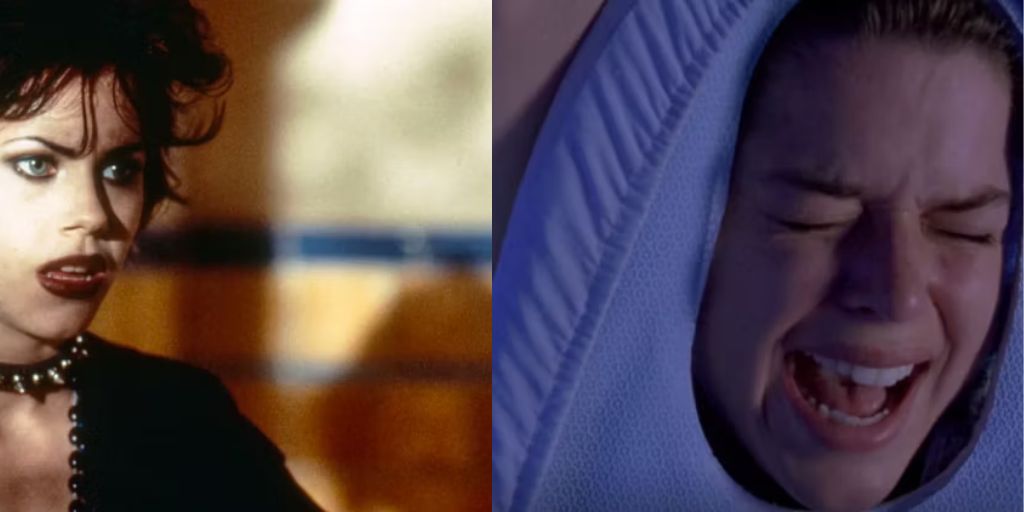
Still from The Craft (Credit: Peacock)
Since witchcraft has long been associated with female independence and control, it has been made into something taboo for these reasons. While it’s common to see a witch as a villain on screen, it’s rare to see her as a complex, well-rounded character, even today.
Although The Craft had some fantastical action scenes, particularly towards the end, it stood out for its more realistic and human performances. Fairuza Balk’s portrayal of Nancy Downs was wild, sometimes scary, but also deeply layered.
Neve Campbell’s character, Bonnie, was shy and struggling with issues around her appearance and social status. The movie’s effort to show fully developed female characters, along with its respect for real witchcraft, made The Craft a significant step forward in how Hollywood represents women on screen.
