The main appeal of Bar Rescue lies not only in the intense renovation of struggling bars but also in the strong presence of Jon Taffer.
Taffer, as the host, brings what many viewers describe as a “mob boss energy” that commands the room. He is tough, blunt, and usually unafraid to give a hard critique.
When Taffer walks into a failing bar, audiences expect he’ll deliver a no-nonsense scolding to the owners, the staff, or anyone else involved.
But this tough-love approach is usually what the struggling establishments need, and more often than not, Taffer’s strategies do lead to successful transformations. His methods may be controversial, but they generally work in the context of revamping bars.
What some fans might not realize is that Bar Rescue actually had an official spinoff called Marriage Rescue. This show attempted to apply the same formula to couples who were going through marital problems.
However, Marriage Rescue didn’t last nearly as long as its predecessor, and the reasons for its short run are worth showing.
Taffer’s strong-handed techniques didn’t translate as well to relationships, and the show struggled to find the right tone and approach.
Let’s look at how Marriage Rescue attempted to emulate the Bar Rescue formula, why it ultimately failed, and what it says about the limitations of using confrontational tactics in different situations.
Taffer’s Signature Style: Effective in Bars, Risky in Relationships
The setup of Marriage Rescue followed a similar formula to Bar Rescue. Each episode started with a couple who was going through difficulties in their marriage. However, the reasons behind each couple’s issues varied widely.
For instance, in the first episode titled “Maybe You’re Just a Horrible Wife,” a couple faced trust issues after one partner had cheated on the other. In another episode, “Your Wife Thinks You’re Boring,” the issue was that a wife felt less attracted to her husband after he quit drinking.
Right away, these topics illustrate how the stakes and seriousness of the issues on Marriage Rescue varied significantly. While infidelity is a serious matter with deep emotional implications, attraction issues related to lifestyle changes, while real, may not carry the same weight.
The range of problems made it harder for Marriage Rescue to establish a clear focus, and this difference likely contributed to its struggle to find an audience.
In each episode, Taffer’s role was to identify the root causes of the couple’s problems, just as he would assess what a bar needs to improve its business. Taffer would sit down with the couples, listen to their issues, and attempt to guide them toward better communication and understanding.
In some cases, he would organize activities, like skydiving, to get them to connect with each other in new ways. While this tactic mimicked the way Bar Rescue involves bar owners in hands-on tasks to learn about their operations, it was less effective in Marriage Rescue.
Relationship issues often require deeper, more nuanced interventions than a one-time experience or exercise can provide. While skydiving might bring some excitement to the relationship, it does not necessarily address the emotional roots of a couple’s struggles.
Conflict-Driven Format: Great for TV, Not for Marriage Counseling
One of the main elements that Marriage Rescue borrowed from Bar Rescue was Taffer’s confrontational style. Bar Rescue fans know that Taffer isn’t shy about shouting when he feels someone is failing in their responsibilities. His harsh critiques often bring bar owners back to reality and help them see the problems they need to fix.
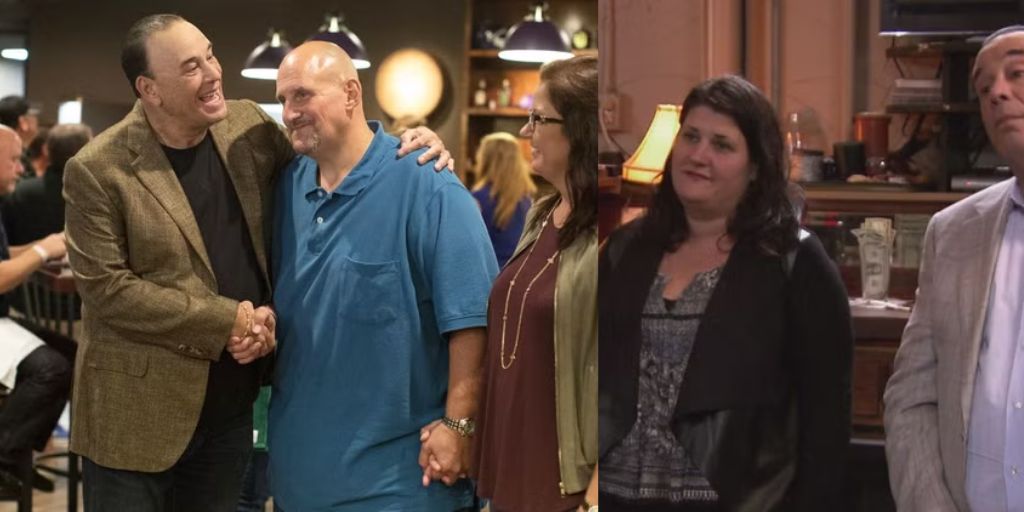
Still from Marriage Rescue (Credit: Paramount+)
However, using that same approach with couples was a gamble. In Marriage Rescue, Taffer would often get into shouting matches with the couples he was supposed to be helping. Instead of diffusing conflicts, his aggressive style sometimes escalated them.
One example of this dynamic is in the episode “You Married a Fool.” Here, Taffer meets Bill and Luna, a couple struggling with power imbalances in their relationship, largely due to how Bill manages their shared business.
Taffer starts by pointing out the imbalance and suggests that Luna deserves a greater say in their business matters. When Luna begins to agree with Taffer’s perspective, Bill becomes angry, which soon leads to a heated argument. Taffer calls Bill out on his behavior, leading Bill to respond angrily and challenge Taffer.
This exchange turns into a loud, chaotic confrontation, which some viewers might find entertaining but doesn’t really offer productive help for the couple involved.
Watching Marriage Rescue, it becomes clear that Taffer’s methods are designed for high-stakes, action-packed entertainment, rather than the sensitive approach that marriage counseling often requires.
While Taffer’s outbursts might be constructive in a bar setting, where owners often need a wake-up call to realize their business is failing, couples with personal, emotional conflicts need a more delicate touch. People go to marriage counseling hoping for solutions, emotional support, and guidance.
An approach that feels more like a confrontation can feel intimidating and might even make the couple more defensive. It’s no surprise that Taffer’s tough-love method didn’t have the same impact on relationships as it does with business owners on Bar Rescue.
Lacking the Right Support: Why Marriage Rescue Needed More Than Taffer’s Guidance
One reason Bar Rescue works is that Taffer has a team of experts to support him. He’s not alone in his efforts to revitalize failing bars; he has chefs, mixologists, and other professionals on hand to help implement the changes needed to turn things around.
This allows him to focus on his strength – managing the bar owners and pushing them to improve – while his team handles specialized areas like food quality, cocktail preparation, and atmosphere design. In Marriage Rescue, however, Taffer didn’t have the same kind of backup.
Relationships are complex, and while Taffer can offer his personal insights, a real marriage counseling setup would ideally include trained professionals with expertise in relationship dynamics.
To address this gap, Marriage Rescue did have Dr. R. Sean Hogan, a psychiatrist with experience working on reality shows like Top Chef and Survivor, as a “couples’ consultant.” However, Dr. Hogan’s role was largely behind the scenes.
Having him appear on the show might have provided a balance to Taffer’s intensity and offered the couples a more professional perspective.
Dr. Hogan’s expertise in psychology could have given the couples insights they needed but may not have been able to hear in the midst of a shouting match with Taffer.
Adding a professional counselor on-screen would have also helped the show feel more legitimate as a form of relationship intervention, rather than just a reality TV spectacle.
Additionally, the choice to make a marriage-centered spinoff was a bit of a surprising direction for Taffer. Given his background in bar and restaurant consulting, a more natural transition might have been a Restaurant Rescue format, where he could continue applying his expertise in hospitality.
Most of Taffer’s critiques on Bar Rescue focus on food service, customer experience, and bar management, all of which align with the restaurant industry.
A pivot into relationship counseling, however, seems out of place and relies heavily on his personal charisma rather than professional knowledge in this area.
Why Marriage Rescue Wasn’t a Lasting Format
Ultimately, Marriage Rescue only ran for a single season, and there are clear reasons why it didn’t continue. The show was an experiment, and while the idea was interesting, it revealed the limitations of applying a high-conflict, confrontational approach to personal relationships.
The Bar Rescue format is successful because bars are public-facing businesses with clear, tangible goals – they need to serve quality drinks, attract customers, and turn a profit.
Relationships, however, don’t have such straightforward goals, and problems in a marriage can be deeply personal, emotional, and even traumatic.
Fixing these issues requires an empathetic, gentle approach that gives couples the space to work through their feelings without the added stress of being yelled at or publicly criticized.
Despite having a skilled psychiatrist on staff, Marriage Rescue missed the opportunity to showcase a balance between Taffer’s intensity and a more traditional counseling approach.
The show’s brief run suggests that viewers may have felt that the method didn’t quite fit the format. People turn to shows like Bar Rescue for entertainment but might have been looking for more genuine, empathetic guidance in Marriage Rescue.
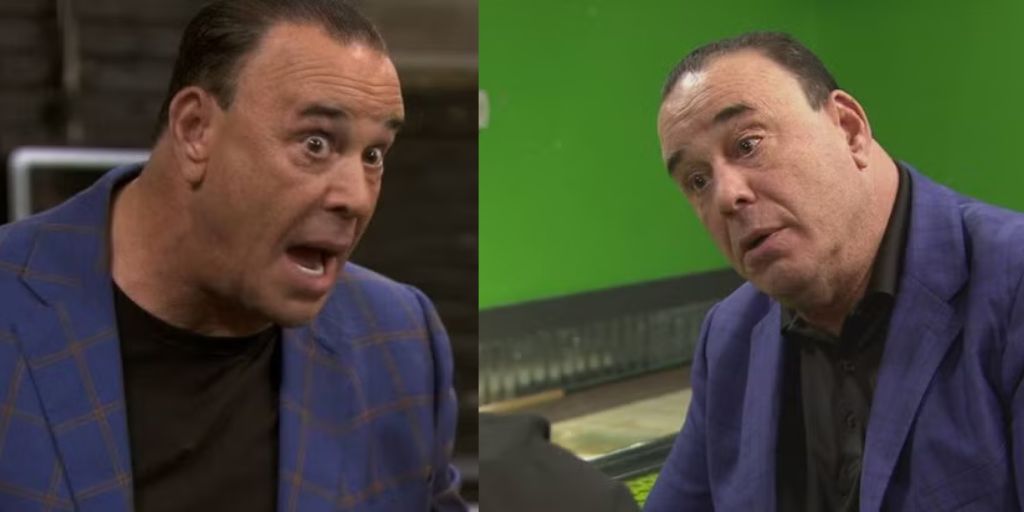
Still from Marriage Rescue (Credit: Paramount+)
While Marriage Rescue didn’t achieve the lasting success of its predecessor, it serves as a reminder that certain approaches only work in specific settings. Taffer’s blunt style has made Bar Rescue a hit, but it wasn’t enough to solve the complex, delicate issues that couples face.
Marriage problems don’t always respond well to a “fix it fast” mindset, and Marriage Rescue shows that sometimes, entertainment and personal transformation don’t mix.
For those interested in seeing Taffer’s iconic style at its best, Bar Rescue remains a staple of reality TV, available to stream on Paramount+.
It seems that 2024’s most popular witch series, Agatha All Along, is aiming high for awards season. This week, Disney announced it would be submitting Marvel Studios’ Agatha All Along for several major awards.
The series is being put forward in the category of Comedy Series, with hopes to be recognized at events like the Golden Globes, Emmys, and SAG Awards.
However, Agatha All Along will face stiff competition in this category, going up against well-regarded shows like Abbott Elementary and Hacks.
Perhaps the most surprising part of Disney’s announcement is that Agatha All Along is being submitted as a regular series, rather than a limited one. Originally, the show was viewed as a miniseries, a single-season story.
Even Debra Jo Rupp, one of the show’s stars, had compared it to American Horror Story, suggesting it would follow an anthology format.
This choice by Disney and Marvel has raised some big questions, including whether they plan to bring Agatha All Along back for a second season.
Agatha All Along: The Middle of the WandaVision Trilogy
According to The Hollywood Reporter, Agatha All Along is actually the middle part of a three-part story that began with WandaVision. The third and final chapter is expected to be a series focused on Vision, titled Vision Quest, featuring Paul Bettany as the character.
This aligns with Rupp’s statements about Agatha All Along’s style being like an anthology. While WandaVision started the trilogy with its unique blend of mystery and superhero drama, Agatha All Along continues this story with a focus on magic, witches, and Agatha’s dark, mischievous side.
Meanwhile, Vision Quest is anticipated to show more advanced themes, particularly the deep, complex issues connected to Vision and his existence.
However, blending these storylines in a trilogy could be challenging because Vision Quest is expected to be much more focused on science and philosophy.
In WandaVision, the story ended with two versions of Vision confronting each other. One version of Vision was created entirely by Wanda (Elizabeth Olsen) and held the “soul” of Vision.
The other was the “White Vision,” rebuilt by the organization S.W.O.R.D. from Vision’s original parts, but without his memories or personality.
This White Vision had the real body of Vision but lacked the memories and emotions that made Vision who he was. It is expected that Vision Quest will go deep into White Vision’s new journey, as he tries to understand who he is and what his purpose is.
Adding to the intrigue, Marvel has confirmed that James Spader will return as Ultron, the villainous robot who is essentially one of Vision’s creators.
This could lead to interesting conflicts, as Ultron’s dark goals often clash with Vision’s moral path. Given these story elements, Agatha All Along’s magical themes might feel out of place if they mix too closely with the technological focus of Vision Quest.
What Could Happen in Agatha All Along’s Second Season?
When creator Jac Schaeffer first created Agatha All Along, it was planned as a limited series. However, the ending of the show was open-ended, leaving many questions unanswered. If Marvel and Disney do decide to make a second season, they would have a great chance to expand on Agatha’s story and relationships.

Still from Agatha All Along (Credit: Disney)
For example, the relationship between Agatha (played by Kathryn Hahn) and Rio (Aubrey Plaza) was only briefly shown in the first season. While we did get a sense of why Agatha resents Rio, we didn’t see much of their past together.
The strong chemistry between Hahn and Plaza could make this storyline especially interesting, as their past could reveal much about Agatha’s character and motivations.
To maintain its focus, a second season of Agatha All Along should center on Agatha herself, rather than veering too far into other characters’ stories. This approach would differ from shows like The Mandalorian, which expanded its story to include many supporting characters.
Instead, keeping Agatha as the main character would allow the show to dive deeper into her personality and abilities. Agatha’s mentorship of Billy (Joe Locke), for instance, could be an intriguing plot point.
This version of Agatha, complete with her haunting appearance and gray hair, would closely resemble the comic book version of the character. This connection to the comics might please fans who want to see Agatha’s story told in a familiar way.
Other plotlines could also bring excitement to a second season. Sasheer Zamata’s character, Jen, is the only witch left from Agatha’s original coven. Jen discovering that Billy was responsible for creating the Witches’ Road illusion could lead to tense moments.
Additionally, Agatha and Billy’s search for Tommy could be another major storyline. Introducing a grown-up version of Wanda’s other twin, Tommy, would add more layers to the story and connect it to the larger Marvel Cinematic Universe (MCU).
The Appeal of Extending Agatha’s Story
While the original plan for Agatha All Along may have been a single season, the potential for a second season is quite appealing. The series combines spooky themes with genuine emotional stakes, and it features unique characters that audiences have grown attached to.
Agatha’s character, with her mix of humor, darkness, and complexity, has quickly become a fan favorite. Giving her a second season would allow for deeper storytelling, offering fans a chance to see more of her character’s development.
Expanding Agatha All Along also aligns with Marvel’s current approach to its TV shows. Marvel and Disney have recently shifted their focus toward creating series that are less costly and more in line with what audiences truly want.
Agatha All Along fits this model perfectly, as it has proven to be popular without requiring a huge budget. Additionally, if the Vision series, Vision Quest, hasn’t yet begun filming, there may still be time to adjust the storyline to include elements that could link it to Agatha All Along’s potential second season.
Another aspect that supports the possibility of a second season is the awards recognition Agatha All Along is seeking.
Disney and Marvel’s decision to submit the show for awards, especially in the Comedy Series category, might indicate they see a long-term future for Agatha’s character. Award nominations and wins could increase the show’s popularity, giving Marvel more motivation to continue Agatha’s story.
Agatha All Along as a Key Part of Marvel’s Future
Agatha All Along seems to be more than just a side story in the Marvel universe. As part of a trilogy that includes WandaVision and Vision Quest, the show adds depth and variety to Marvel’s storytelling.
It shows themes of magic, mystery, and dark humor, offering a refreshing change from Marvel’s typical superhero narratives.
By continuing Agatha’s story, Marvel has the chance to build a rich, interconnected storyline that keeps fans engaged. This also allows Marvel to expand its universe in new and creative ways, giving the audience a wider range of stories and genres to enjoy.
A second season could let Agatha All Along build on its spooky, intriguing themes while adding layers to Agatha’s character and her connections with others. Agatha’s relationship with Billy, for example, could open up new plot possibilities.
It also provides a great way to show Agatha’s growth and evolution, showing how her interactions with other characters influence her choices and beliefs. Additionally, the series could introduce more supernatural elements, adding a unique flavor to the MCU.
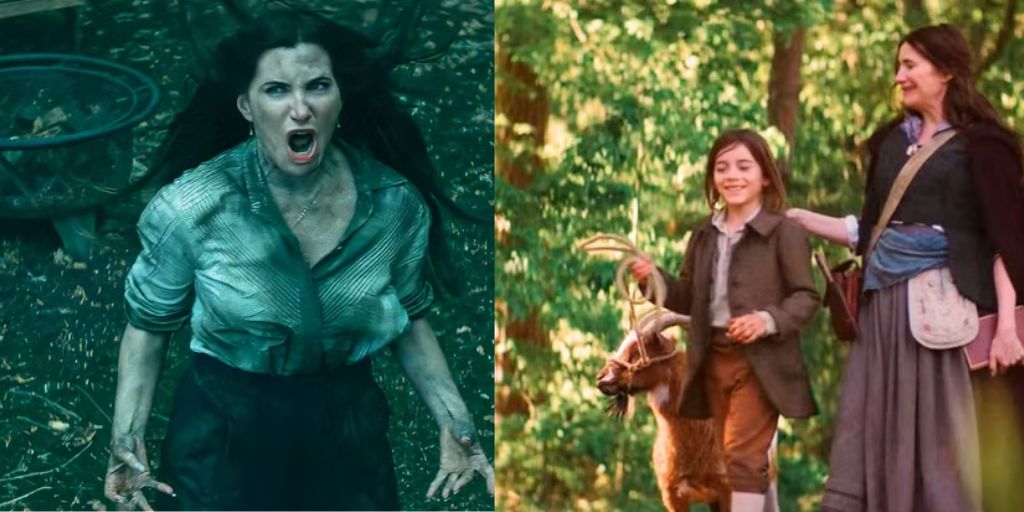
Still from Agatha All Along (Credit: Disney)
With Disney and Marvel considering a second season, it’s clear they see potential in expanding Agatha All Along’s story.
The show’s unique blend of humor, mystery, and dark magic has struck a chord with fans, who would likely welcome more episodes. By following the lives of characters like Agatha and her allies, the MCU can continue to offer fresh, exciting stories that go beyond the typical superhero fare.
Final Thoughts
Whether or not Agatha All Along gets a second season, it’s already made a significant impact within the MCU. The decision to submit the show for awards hints that Disney and Marvel see it as more than a one-time project.
Agatha All Along could easily become a recurring series, adding depth to the Marvel universe and keeping audiences attracted with its magical, mysterious storytelling.
Marvel fans will be watching closely to see what happens next – both for Agatha and for the rest of the WandaVision trilogy.
