At the 2025 Venice Film Festival, Julia Roberts found herself at the center of a heated debate following the premiere of her new film, After the Hunt.
The psychological drama, directed by Luca Guadagnino, delves into the murky waters of academic politics, power, and sexual misconduct.
But rather than being celebrated as a thought-provoking narrative, the film has stirred controversy over its ambiguous portrayal of a campus sexual assault allegation- a topic still deeply sensitive in the #MeToo era.
As critics and audiences weighed in, Roberts stepped forward to defend the project, arguing that its purpose is to spark dialogue rather than deliver moral certainty.
Plot Overview: A Moral Minefield
In After the Hunt, Roberts plays Alma Olsson, a distinguished Yale philosophy professor whose carefully ordered world is upended when one of her students accuses a colleague of sexual assault.
As the scandal unravels, Olsson finds herself questioning her beliefs, her loyalties, and the ethical frameworks she has spent her career teaching.
The film situates its drama within an elite academic environment- a setting rife with ambition, rivalry, and ideological tension.
As Roberts’ character becomes entangled in the fallout, After the Hunt explores how power and privilege intersect with truth, justice, and perception.
According to director Guadagnino, the film’s intention is not to render a verdict but to expose the complex collision of perspectives that often define public and private reckonings with misconduct.
Julia Roberts’ Defense: “We’re Asking People to Think”
During a press conference at Venice, Julia Roberts addressed the growing criticism head-on.
Many viewers accused the film of blurring the line between empathy and doubt, claiming its ambiguity risks undermining survivors’ voices.
Roberts, however, countered that ambiguity is precisely the point.
“We are challenging people to have a conversation and to be excited by that or to be infuriated by that. It’s up to you,” she said.
For Roberts, After the Hunt represents a return to the kind of emotionally charged and morally complex storytelling that cinema has long excelled at- even when it provokes discomfort.
She emphasized that the film is not about taking sides but about forcing audiences to grapple with uncertainty, especially in an age where moral polarization has become the norm.
Director Luca Guadagnino’s Vision: Competing Perspectives
Acclaimed for films such as Call Me by Your Name and Bones and All, Luca Guadagnino is no stranger to controversy.
His latest work, co-written with frequent collaborator David Kajganich, is described as an “intellectual thriller” that deconstructs moral clarity in an era of ideological warfare.

Julia Roberts (Credit: YouTube)
Guadagnino explained that After the Hunt examines “the collision of competing perspectives and the pursuit of power within a politically charged academic environment.”
In other words, the film is not a straightforward story about guilt or innocence, but about the politics of interpretation- how institutions, media, and individuals shape truth to fit their own narratives.
The director defended the film’s nuanced approach as necessary for mature discourse.
“Cinema should challenge people, not comfort them,” he remarked, aligning the project with a long tradition of art that provokes as much as it entertains.
The Venice Backlash: #MeToo Resonances
The controversy surrounding After the Hunt echoes earlier film festival debates in the wake of the #MeToo movement.
Critics have accused several recent projects of weaponizing ambiguity in cases involving sexual misconduct — an approach some see as undermining survivors’ credibility.
Roberts’ film appears to tread that delicate line.
Early reviews from Venice noted that while the film is intellectually daring, it may leave audiences uneasy about where their sympathies should lie. For others, this discomfort is exactly what makes the film vital.
Observers noted that the timing of the film’s release — amid renewed public attention to institutional accountability and gendered power dynamics — amplifies its impact.
Its setting at Yale, a real-world symbol of elite academia, further intensifies the sense of realism and relevance.
Critical Divides: Bold Art or Tone-Deaf Provocation?
Reactions to After the Hunt have been sharply divided. Some critics praised it as one of Guadagnino’s most daring works, highlighting Roberts’ restrained yet riveting performance.
They argue that the film’s refusal to moralize allows viewers to confront uncomfortable truths about bias, ethics, and the limits of empathy.
Others, however, contend that the film risks muddying a crucial social message.
They point out that ambiguity in stories about sexual violence can unintentionally mirror societal tendencies to doubt victims.
In this view, After the Hunt is less a conversation starter than a step backward.
Still, Roberts’ defense- and Guadagnino’s reputation for layered, complex storytelling- may shield the film from outright rejection.
Instead, it seems poised to become a flashpoint for cultural debate, much like Ridley Scott’s The Last Duel (2021), which explored similar themes through multiple perspectives.
The Broader Conversation: Art, Responsibility, and Provocation
The uproar over After the Hunt reflects a larger tension in contemporary filmmaking: the balance between creative freedom and social responsibility.
Should art about trauma seek clarity, or can it afford to dwell in moral gray areas?
For Roberts, the answer is clear.
“We’re not trying to make anyone comfortable,” she suggested, urging viewers to confront their own biases rather than relying on easy resolutions.
This approach resonates with Guadagnino’s artistic ethos- his films often leave audiences unsettled but contemplative, challenging them to question emotional and ethical assumptions.
A Controversy That Won’t Fade Quickly
Whether viewed as an act of bravery or insensitivity, After the Hunt has already achieved what Roberts and Guadagnino claim they wanted: it has made people talk.
Its Venice premiere ensured that the film will remain a focal point of awards-season debates about the role of art in a post-#MeToo world.
Julia Roberts, an Oscar winner long celebrated for her charm and intelligence, has proven once again that she’s unafraid to wade into difficult territory.
By defending the film’s ambiguity, she has positioned herself not just as an actor, but as a participant in a much larger conversation- one about truth, power, and the limits of moral certainty in modern storytelling.
Al Pacino stands as one of America’s most revered actors, celebrated for his unforgettable performances in iconic films like The Godfather and The Irishman. His ability to bring depth and intensity to any role has cemented his status as a true legend in the industry.
Known for his portrayal of tough and gritty characters, it’s surprising to learn that Pacino was once considered for a very different role from Hollywood leading lady Julia Roberts.
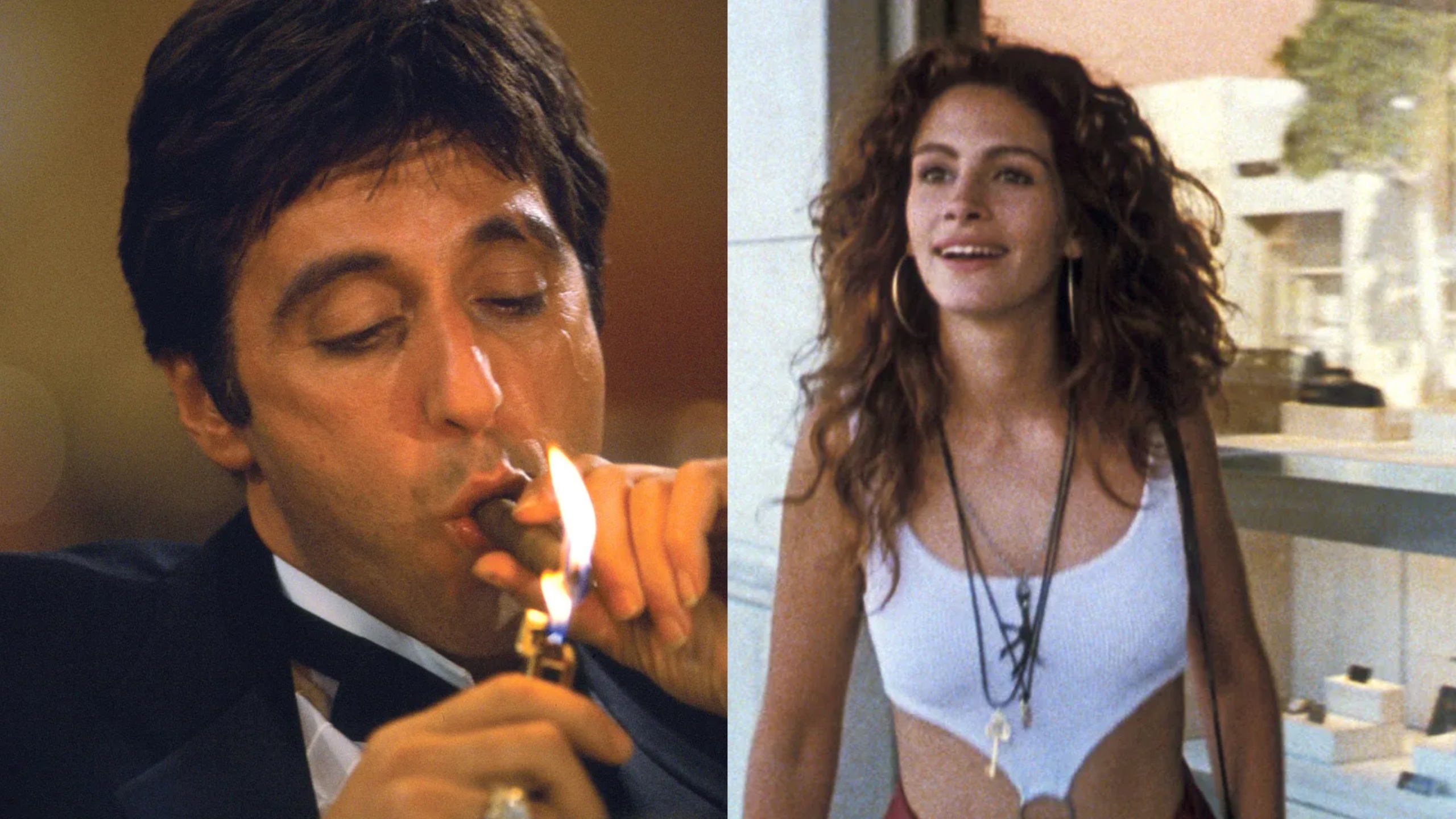
Al Pacino (Left) in ‘Scarface’ (Brian De Palma), Julia Roberts (Right) in ‘Pretty Woman’ (Garry Marshall)
Pacino was offered the lead role in Pretty Woman, the romantic comedy that defined Julia Roberts’ career. Despite being impressed by Roberts’ talent during the table read, Pacino ultimately decided to pass on the opportunity.
While the thought of seeing Pacino alongside Roberts in such an iconic film is intriguing, fans can only imagine how different the movie would have been with him in the lead role.
Reflecting on the experience, Pacino admitted that he knew Pretty Woman would become a hit, and he was right. The movie became a beloved classic despite initial controversy over its portrayal of a forbidden romance.
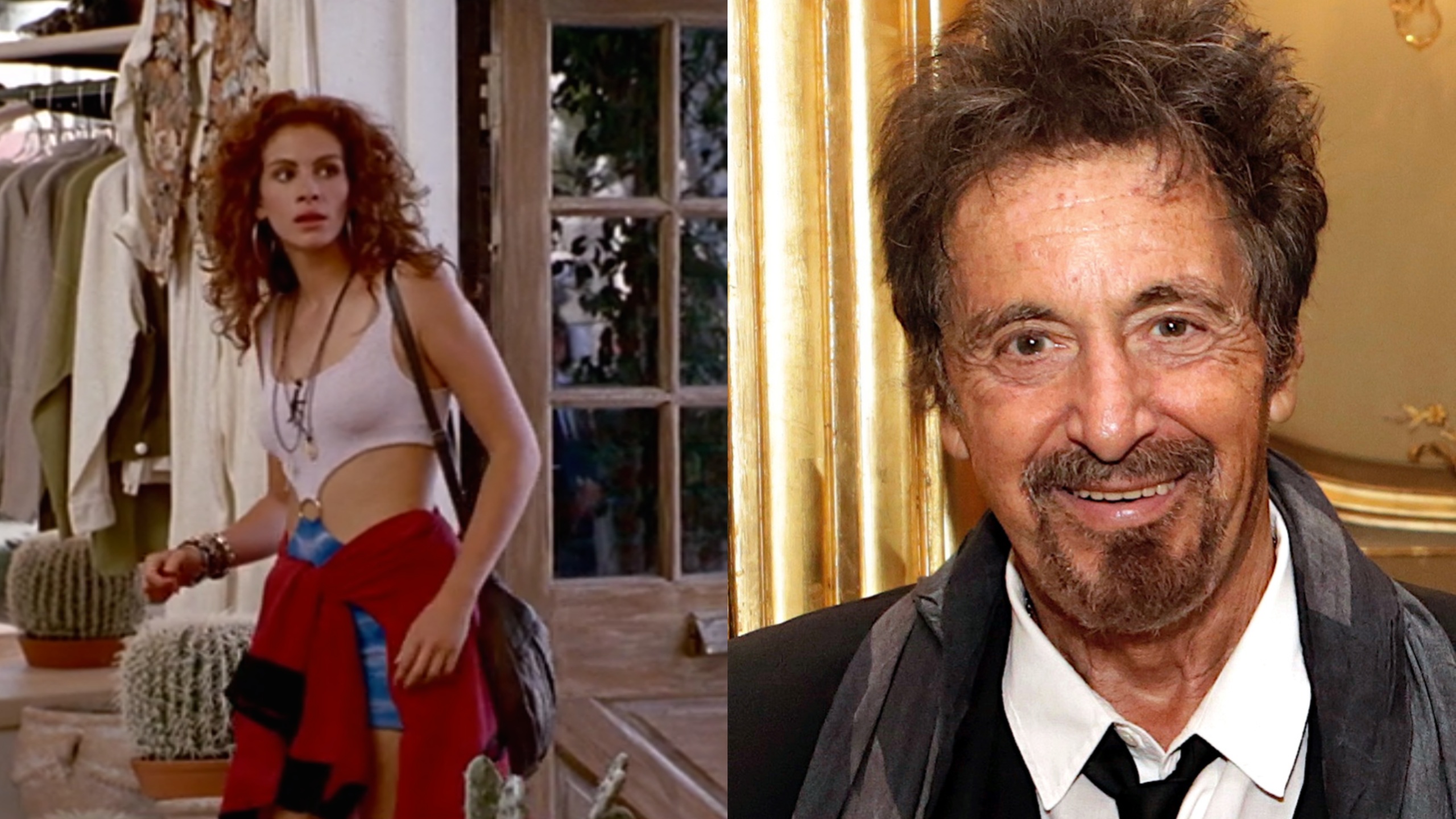
Al Pacino (Right) opens up about his thoughts on Julia Roberts (Left) when he first saw her
Pacino later collaborated with Roberts in the Ocean’s movies, but the idea of them starring together in Pretty Woman remains a missed opportunity that could have been.
Nevertheless, Al Pacino’s impact on cinema is undeniable. His legacy as a timeless icon will continue to inspire and entertain audiences for generations to come. While we can only wonder what could have been, Pacino’s decision not to take the role ultimately shaped the cinematic history we know today.
Reality TV star and beauty mogul Kylie Jenner is set to make her first major acting debut in the upcoming A24 film The Moment, based on an original concept by singer Charli XCX.
Announced on October 9, 2025, via social media posts shared by both Jenner and Charli XCX, the movie is slated for release in 2026 and marks a significant step in Jenner’s career beyond her reality television persona and cameo appearances.
The Story and Concept of The Moment
The Moment, directed by Aidan Zamiri, will follow the life of a rising pop star navigating the pressures of fame, personal ambition, and the demanding entertainment industry, all while preparing for her arena-tour debut.
The film promises a blend of music, drama, and the behind-the-scenes struggles of stardom, exploring both the glamour and the emotional challenges faced by young artists in the pop music world.
The concept originates from Charli XCX, who will also co-produce the film under her Studio365 banner, alongside other producers including David Hinojosa, Brandon Creed, Mikey Schwartz-Wright, and Zach Nutman.
Charli XCX is actively involved in shaping the project and is expected to contribute to the film’s music, ensuring that the soundtrack aligns with her distinct pop sensibilities.
Star-Studded Cast and Collaborators
In addition to Kylie Jenner, the film will feature Rachel Sennott and Kate Berlant, alongside a supporting ensemble that includes notable names such as Alexander Skarsgård, Rosanna Arquette, Jamie Demetriou, Arielle Dombasle, Hailey Benton Gates, Trew Mullen, Mel Ottenberg, Richard Perez, Isaac Powell, Rish Shah, Tish Weinstock, Michael Workéyè, Shygirl, and A.G. Cook, who will also contribute to the music.
The cast reflects a mix of seasoned actors and emerging talents, promising a dynamic on-screen energy that complements the music-driven narrative.
Jenner will be acting alongside Charli XCX, which adds another layer of authenticity to the story, as the film is inspired by real-world pop music experiences.
Kylie Jenner’s Career Beyond Reality TV
While Jenner is best known for her appearances in Keeping Up with the Kardashians and her role in the reality series The Kardashians, she has previously appeared briefly in films such as Ocean’s 8 in 2018.
However, The Moment represents her first substantial acting role, signaling a transition from reality television personality and entrepreneur to a performer in scripted cinematic storytelling.
This move aligns with a growing trend of influencers and social media personalities crossing over into mainstream acting, allowing them to leverage their existing public profiles while exploring new creative avenues.
Significance of the Project and Anticipation
The collaboration between Kylie Jenner, Charli XCX, and A24, a studio known for its unique and critically acclaimed films, positions The Moment as a high-profile entry in the upcoming 2026 movie slate.
Fans of both Jenner and Charli XCX are highly anticipating the film, with social media buzz growing around the project’s release.
Charli XCX’s involvement as both conceptual creator and producer ensures that the story reflects contemporary pop culture while maintaining artistic credibility.
The combination of a music-driven narrative and a rising star making her acting debut makes The Moment a notable project that could redefine Kylie Jenner’s career trajectory in Hollywood.
