During the highly anticipated Jump Festa 2017, Masashi Kishimoto, the renowned creator of Naruto , sat down to discuss the future of Boruto: Naruto Next Generations . Kishimoto’s thoughts were eagerly awaited by fans of both Naruto and its sequel, Boruto , as they looked for clues on how the legacy of the beloved characters would continue to evolve.
In this, we explore Masashi Kishimoto’s thoughts from Jump Festa 2017 and what they reveal about the future of Boruto . This discussion also touches on how the legacy of the original Naruto series influences the newer generation’s journey.
The Future of Boruto: What Kishimoto Shared
At Jump Festa 2017, Kishimoto made it clear that Boruto was not simply a continuation of Naruto but rather a fresh take on the ninja world, focusing on a new generation with their unique struggles, personalities, and ambitions. Although Boruto carries forward many aspects from the original series, including familiar characters and settings, Kishimoto emphasized that its success lies in developing a storyline that stands apart and offers new challenges and emotional stakes.

Boruto (Image via Getty)
One of the most intriguing aspects of Kishimoto’s interview was his acknowledgment of the challenges Boruto faces as a character. Unlike Naruto, who had to fight for recognition, Boruto begins his journey with considerable privilege, being the son of the Seventh Hokage, Naruto Uzumaki. Kishimoto discussed how this difference in background would affect Boruto’s growth, highlighting the theme of personal struggle and identity.
The New Generation of Ninjas
Boruto’s struggle with his identity and his relationship with his father, Naruto, became a focal point for Kishimoto’s discussion. In Naruto , the protagonist’s primary motivation was to gain recognition and become Hokage, but Boruto already enjoys a level of status and respect due to his father’s position. Kishimoto noted that this creates a unique dynamic for Boruto’s character. Instead of seeking recognition, Boruto must now grapple with the pressure of living up to his father’s legacy, while also trying to carve out his own path.
Kishimoto also touched on the role of Boruto’s friends, such as Sarada and Mitsuki. He stressed that each of them would face their own challenges, adding depth to the story as the series explores how the next generation of ninjas will grow and find their place in the world. This team dynamic will likely be crucial in shaping the plot, providing opportunities for character growth and exploration of themes like friendship, rivalry, and duty.
Boruto’s Struggles: Legacy vs. Personal Identity
One of the most significant themes Kishimoto teased for Boruto was the exploration of legacy. Boruto’s relationship with his father, Naruto, is central to the narrative. While Naruto was once a lonely child yearning for recognition, Boruto’s issues are more complex. As the son of the Hokage, Boruto feels overshadowed by his father’s reputation, which creates a sense of resentment and alienation.
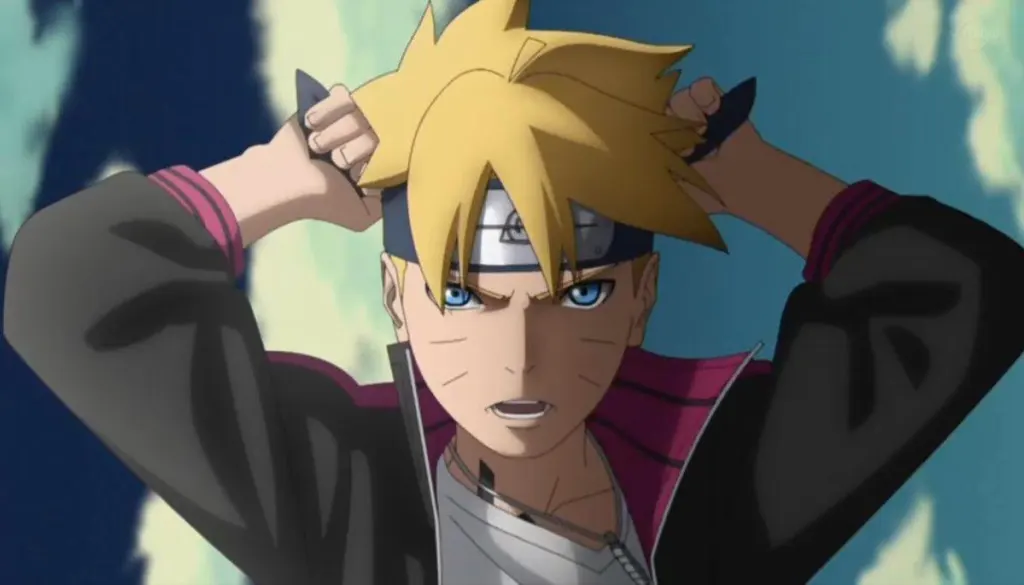
Boruto (Image via Getty)
Kishimoto explained that this emotional conflict would be a driving force in Boruto’s development. As Boruto comes to terms with his father’s role as Hokage and his own desire to step out of his shadow, he will experience moments of rebellion, growth, and self-discovery. Kishimoto hinted that Boruto’s journey will involve him learning to understand the weight of his legacy while discovering what it means to forge his own path.
The Evolution of Ninja Society
Kishimoto teased that while the Hidden Leaf Village may be more peaceful, this does not mean there are no challenges left to face. The peace is fragile, and new threats could emerge, presenting unique challenges for the next generation of ninjas. Kishimoto’s reference to evolving societal norms suggests that the narrative may tackle contemporary issues, such as the impact of technology on traditional values, as well as how the new generation of ninjas adapts to a world that is rapidly changing.
Boruto’s Connection to the Legacy of Naruto
While Boruto is carving his own path, Kishimoto confirmed that the series would maintain a strong connection to the Naruto legacy. Naruto’s presence and influence in the series will be felt, but he will not overshadow Boruto’s growth. Kishimoto spoke about balancing the legacy of the older generation with the potential of the new one.
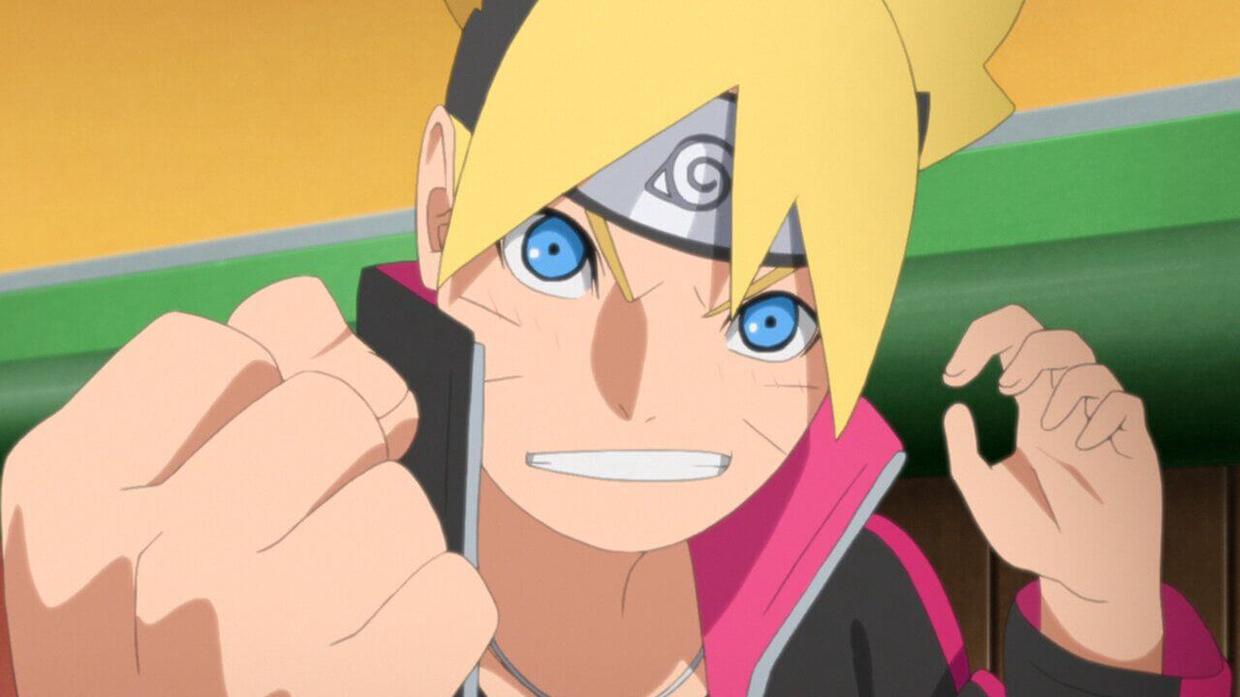
Boruto (Image via Getty)
Fans of Naruto can expect to see familiar faces, such as Sasuke and Sakura, but Kishimoto assured viewers that the focus would remain on the next generation. This approach ensures that Boruto feels like its own story while still honoring the past. Kishimoto’s careful balance between nostalgia and innovation allows Boruto to stand on its own while still offering a sense of continuity for long-time Naruto fans.
What Kishimoto Wants for Boruto’s Future
Masashi Kishimoto expressed his hope that Boruto would resonate with fans by exploring new themes while preserving the spirit of the original series. He emphasized that he wanted Boruto to offer a fresh perspective on the ninja world, with new challenges, deeper character development, and an exploration of the changing dynamics within society.
Masashi Kishimoto’s insights at Jump Festa 2017 shed light on the direction Boruto: Naruto Next Generations is headed. Fans can expect a story that is deeply rooted in the legacy of Naruto , but with its own distinct voice. Boruto’s personal struggles, the evolving ninja society, and the continuation of his father’s legacy will create a compelling narrative for the next generation of fans. As Kishimoto continues to guide Boruto , there is much to look forward to in this new chapter of the ninja world.
[Updated: 04/20/2025]

Boruto: Naruto Next Generations follows Boruto Uzumaki, the son of the Seventh Hokage, Naruto. Struggling to step out of his father’s shadow, Boruto navigates life as a young ninja in a peaceful but rapidly modernizing world. As new threats emerge from both technology and ancient forces, Boruto and his friends must grow into the next generation of shinobi while uncovering hidden truths about their village, their families, and themselves.
Ryomen Sukuna, the infamous character from Jujutsu Kaisen , is a powerhouse that has gained international popularity in recent years. As fans continue to engage with the series, many are curious about the roots of this powerful figure and his connection to ancient Japanese mythology. While the character in Jujutsu Kaisen has been reimagined for modern storytelling, the mythological Ryomen Sukuna has a much older legacy that ties back to the legends and folklore of Japan.
This explores the key references to Ryomen Sukuna in Japanese mythology, shedding light on the origins of this fearsome being and how his mythological counterpart has evolved into the contemporary figure in anime and manga.
Ryomen Sukuna: Mythological Origins
The figure of Ryomen Sukuna is deeply embedded in Japan’s historical and mythical narratives. While many might only know him as a dark sorcerer and cursed spirit in Jujutsu Kaisen , his mythological roots trace back to the Nihon Shoki (Chronicles of Japan) and the Kojiki (Records of Ancient Matters), two of the oldest and most important sources for understanding early Japanese history and religion.

Sukuna (Image via Getty)
Ancient Connections Ryomen Sukuna’s mythological form is often associated with the fearsome nature of ancient deities and demons. According to these early texts, Sukuna was a powerful and malevolent being, whose dual faces and incredible strength made him both a terror and an object of reverence. While Sukuna’s exact mythological details vary across regions and interpretations, he is most commonly depicted as a monstrous, multi-faced creature, often with four arms, symbolizing his strength and dominance.
The Dual Nature of Sukuna One of the most compelling aspects of the Ryomen Sukuna myth is his dual nature. The character’s name, “Ryomen,” translates to “two-faced” or “dual nature.” This reflects Sukuna’s ambiguous existence — he is both a protector and a destroyer, a god and a demon, traits that are common in Japanese mythology. This duality makes him a figure that is not easily categorized, blurring the lines between good and evil.
Sukuna in theKojikiandNihon Shoki
In the Kojiki and Nihon Shoki , Sukuna is portrayed as an antagonist to the gods, often opposing them in various battles. One prominent tale involving Sukuna appears in the Nihon Shoki where he is described as a being of immense power who waged war against the gods of the Japanese pantheon. Despite his strength, Sukuna’s ultimate fate is often portrayed as tragic or destructive, further emphasizing his chaotic and unruly nature.
The Connection with the Izumo Region The Izumo region of Japan, known for its spiritual and mythological significance, plays a vital role in the stories of Ryomen Sukuna. In these myths, Sukuna is sometimes linked to the Izumo-no-Okuni-nushi , a deity who plays a key role in the creation of Japan. Sukuna’s involvement in these tales suggests that his influence was widespread, with implications for both human society and the spiritual world.
Ryomen Sukuna and the Concept ofJujutsu Kaisen
The character of Ryomen Sukuna in Jujutsu Kaisen is heavily influenced by these ancient stories. In the anime, Sukuna is a cursed spirit and a former sorcerer of immense power, whose reign of terror left a deep scar in jujutsu sorcery. His resurgence in the form of a curse tied to the protagonist, Yuji Itadori, echoes his mythological roots, where powerful and dangerous entities often find a way to return to the mortal.
Jujutsu as a Means of Containment In the Jujutsu Kaisen series, the concept of jujutsu (cursed techniques) is used to contain and fight curses, similar to how spiritual rituals and exorcism have historically been employed to control and neutralize mythical beings like Sukuna. This mirrors the traditional role of priests and shamans in Japanese folklore, who were often tasked with warding off malevolent spirits and gods. Sukuna’s enduring power and resilience in both the anime and mythology show his complex relationship with humanity — he is both a destroyer and a figure that can never be fully eliminated.

Sukuna (Image via Getty)
The Influence of Ryomen Sukuna in Japanese Culture
The myth of Ryomen Sukuna has transcended centuries, influencing not only religious texts but also popular culture. He has appeared in various forms of Japanese literature, art, and theatre. In ancient Japan, stories about Sukuna were passed down through oral traditions, where his feats of strength and acts of destruction were woven into the fabric of folklore.
Sukuna in Kabuki and Noh Theatre The stories of Sukuna’s power and chaos also found their way into Kabuki and Noh theatre, two of Japan’s most renowned traditional performing arts. In these performances, Sukuna’s mythological character would often be portrayed as a tragic figure, torn between his destructive impulses and his desire for order. His physical appearance, often depicted as having multiple faces and limbs, would be exaggerated for theatrical effect, highlighting his supernatural nature.
Sukuna in Art and Literature Sukuna’s influence is also evident in ancient Japanese art, particularly in the ukiyo-e genre. Artists often depicted him as a fearsome, multi-faced demon, a visual representation of his mythological attributes. These artworks, passed down through generations, contributed to the creation of Sukuna’s image as a being who is both revered and feared. Even today, this visual representation has been carried forward in modern adaptations like Jujutsu Kaisen , where his appearance remains similarly monstrous.
Comparing Mythological and Modern Sukuna
The adaptation of Ryomen Sukuna into modern media, particularly anime and manga, has introduced him to a new generation of fans. However, despite the reimagining of his character, there are several parallels between the mythological and modern versions of Sukuna.
Power and Influence In both mythology and modern media, Sukuna is portrayed as an overwhelmingly powerful being. In the Jujutsu Kaisen series, Sukuna’s cursed energy and combat prowess make him one of the strongest and most feared figures in the jujutsu world. Similarly, the mythological Sukuna is depicted as a being whose strength and ability to wreak havoc were unmatched, highlighting the timelessness of his power.

Sukuna in Jujutsu Kaisen | Crunchyroll
Duality of Character Another key similarity between the two versions of Sukuna is his duality. In ancient mythology, Sukuna’s nature as both a god and a demon reflects the complexity of his character. In Jujutsu Kaisen , Sukuna’s dual nature is manifested in his ability to act as a protector or destroyer, depending on his motivations and circumstances. This continuity of character shows how the ancient legends of Sukuna have been preserved and adapted over time.
Ryomen Sukuna, a figure from Japan’s ancient mythology, remains one of the most enduring and fascinating characters in both traditional and modern Japanese culture. From his role as a powerful and destructive deity in early texts to his reimagining as the King of Curses in Jujutsu Kaisen , Sukuna’s character has evolved, but his essence remains the same: an unstoppable force of nature, whose duality and strength continue to capture the imagination. Understanding Sukuna’s mythological origins provides a deeper appreciation of his character in contemporary media, showing that even the most fearsome figures from the past can leave a lasting legacy.
[Updated: 04/20/2025]
