The seven Rings of Power for Dwarves appear in The Lord of the Rings: The Rings of Power Season 2. However, problems for Khazad-dûm may continue.
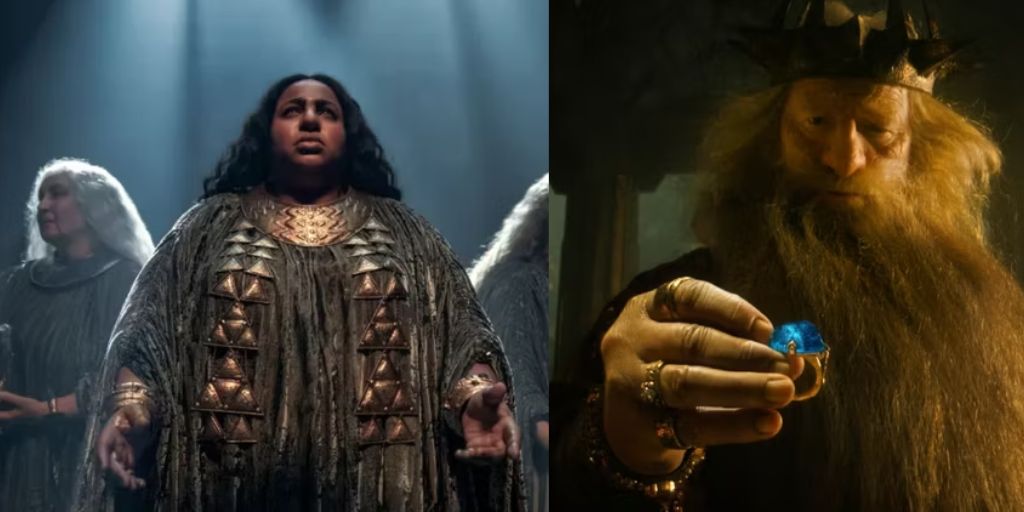
King Durin III (Peter Mullan) puts on his ring for the first time. With this ring, he solves the sunlight issue in the show and finds many veins of gold deep under the mountain.
But these veins might be too deep. Before this, Dwarves found such treasures by using stone-singing, an ancient practice of singing to the mountain. Can Durin the Elder’s Ring of Power be safer and more effective than this centuries-old method?
Stone-Singing Connects Dwarves to the Mountain
We first see stone-singing in The Rings of Power Season 1, Episode 4, titled “The Great Wave.”
In this episode, Elrond (Robert Aramayo) seeks help from the Dwarves of Khazad-dûm to build Celebrimbor’s (Charles Edwards) new forge in Eregion.
This project will lead to the creation of the three Elven Rings of Power. Elrond, a skilled diplomat, visits his friend, Prince Durin IV (Owain Arthur).
He is surprised by Durin’s attitude because they have not spoken for twenty years. As an Elf, Elrond feels time differently and misses many important events in Durin’s life, including his wedding to Disa (Sophia Nomvete).
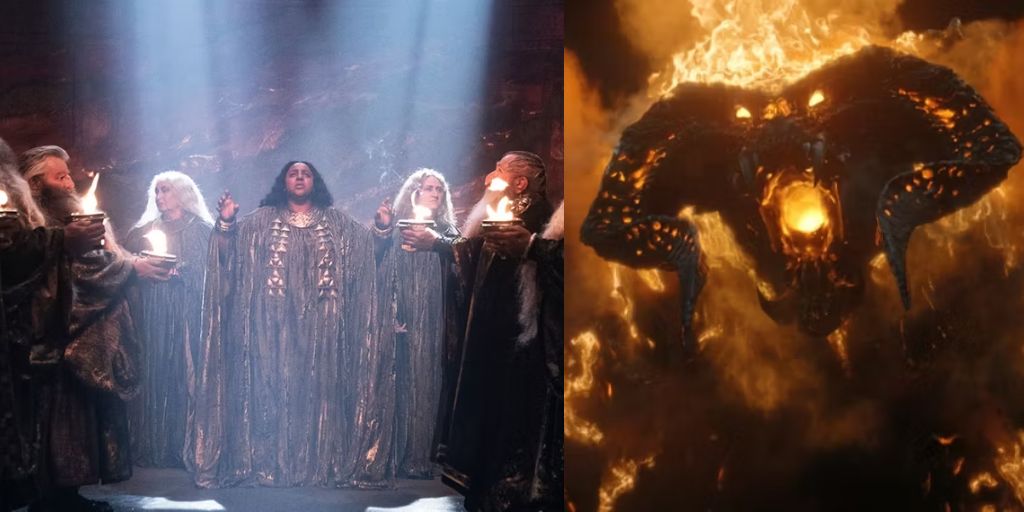
Disa, a caring and sensitive wife, invites Elrond to watch her stone-singing ritual. This ritual shows how powerful the Dwarves’ connection to the mountain is.
Disa explains that stone-singing involves singing to the mountain. Also known as “resonating,” this practice helps Dwarves find hidden objects in the mountain, such as ore and tunnel routes.
Disa calls this process a “mutual respect.” It helps them recognize areas of the mountain that should remain “untouched.” For example, mining mithril can be dangerous, so the Dwarves take their time to produce small amounts.
Interestingly, stone-singing is a new idea in The Rings of Power. J.R.R. Tolkien’s original lore provides little detail about Dwarven culture, leaving many gaps.
Still from Rings of Power (Credit: Prime Video)
However, the connection between people and nature is an important theme in Tolkien’s works, making stone-singing feel like something he would have created. Mining resources can become violent towards nature, but resonating allows both people and nature to work together.
Darkness Affects Stone-Singing in Season 2
In Season 2, darkness spreads across Middle-earth. The Elves may have found a way to keep the Light of the Eldar from fading. Still, Sauron (Charlie Vickers) grows stronger, and figures like Adar (Sam Hazeldine) pose dangers to peaceful peoples.
At the end of Season 1, Adar causes the eruption of Orodruin, also known as Mount Doom. This event changes the Southlands into the land known as Mordor. Although this happens far from Khazad-dûm, it affects all of Middle-earth.
In Episode 2, “Where the Stars Are Strange,” Narvi (Kevin Eldon) explains that the eruption sent waves through the land and rocks. These waves collapse the sun-shafts of Khazad-dûm, leaving the great Dwarven realm in darkness.
Disa and the stone-singers suggest singing to the mountain again to reopen the sun-shafts through their vibrations. King Durin the Elder allows them to try, but it does not work. Instead of reopening the shafts, the mountain collapses the small holes that still let in light.
Disa works harder than usual, but she still cannot reach the mountain. Durin the Elder praises the stone-singers, who have supported Khazad-dûm for nine centuries. Now, the bond between them and the mountain seems broken, and he notes that “the hand of darkness has closed around Khazad-dûm.”
In the next episode, “The Eagle and the Scepter,” Celebrimbor and Annatar (who is actually Sauron in disguise) reveal to Prince Durin the Younger and Disa their project for the seven Dwarven Rings of Power. This project may offer a solution for Khazad-dûm, though it may not be safe.
King Durin’s Use of the Ring Contrasts with Disa’s Stone-Singing
Desperate times lead to desperate measures, and Khazad-dûm is in a dire situation.
In “Halls of Stone,” King Durin the Elder receives his Ring of Power and immediately uses it to solve the sun-shaft issue. In an unnatural way, he spots places to dig tunnels and create new sun-shafts.
He also begins planning deeper digs to mine gold and other treasures, abandoning safety measures he had established long ago. He believes the ring has given him the ability to “see the mountain.”
The problem is that while stone-singing offers a safe method to dig in harmony with the mountain, the ring’s power does not.
Even though Durin the Elder can see through the mountain while wearing his ring, the lure of endless wealth often outweighs the risks of digging too deep.
The Rings of Power impact the Dwarves in this way. While they may resist Sauron’s direct influence, his malice still corrupts the ring, making its users extremely greedy. Stone-singing respects the mountain and its needs, while the ring encourages violations.
Still from Rings of Power (Credit: Prime Video)
In “Halls of Stone,” Disa buys a tuning crystal, a round gem that helps her adjust her voice to its vibrations.
She quickly loses the crystal but finds it in a pond inside the mountain. When she sings to locate it, she hears the growl of the Balrog lurking deep in the mines.
Meanwhile, Durin the Elder ignores his son’s warnings and tells Narvi to dig deeper for gold and other precious ores.
Thus, the ring not only provides an unnatural way to show the mountain but also risks awakening ancient evil.
Season 2 of The Rings of Power is available for streaming on Prime Video in the U.S. New episodes air weekly on Thursdays.
After some mixed Disney+ series, Marvel Television is back where it started, and its new series is truly magical. Kathryn Hahn returns as the carefree Agatha Harkness, and the audience returns to Westview from WandaVision. “Agatha All Along” brings back the fun and strange spirit of the previous series.
This week, it features a thrilling two-episode premiere with a charming cast. One highlight is the wonderful chemistry between Hahn and Aubrey Plaza, who plays Rio Vidal. The series also excels in revisiting Westview’s famous Marvel songs with its catchy tune, “The Ballad of the Witches’ Road.”
Created by the songwriters of Frozen, Kristen Anderson-Lopez and Bobby Lopez, this song connects to the series and celebrates magic at the end of Episode 2, titled “Circle Sewn With Fate / Unlock Thy Hidden Gate.”
Agatha gathers three fellow witches and Debra Jo Rupp’s unsuspecting neighbor with help from Joe Locke’s character, Teen. She leads her new group in a song to unlock the Witches’ Road and regain her lost powers from WandaVision.
However, as Marvel’s scary Salem Seven attacks Agatha’s house, it becomes hard to see all the details of the witches’ ceremony. So, what is really happening in the latest adventure of the MCU?
“The Ballad of the Witches’ Road” as a Plot and Lore Device
“The Ballad of the Witches’ Road” serves as both a key part of the plot and a standalone piece of the story in “Agatha All Along.” The song’s performance is the only way known to unlock the Witches’ Road. Ali Ahn’s character, Alice Wu-Gulliver, dismisses it as a song linked to a cult her mother helped make popular with her earlier version.
This gives viewers a sense that the ballad has a rich cultural history while also explaining the basic facts about the path to Agatha’s powers.
The first verse promises “glory shall be thine” to the true coven that walks the path. The second verse stresses the need to keep moving forward despite losing coven members. The third verse highlights the “wild and wicked” dangers ahead, similar to those that reportedly took Alice’s mother’s life.
Each verse reinforces what Agatha and Teen say in Episode 2. The road gives power to those who walk it—something Agatha is said to have done before—but it can only be traveled with fellow witches and can take the lives of those who fail to “many showmiles of tricks and trials.”
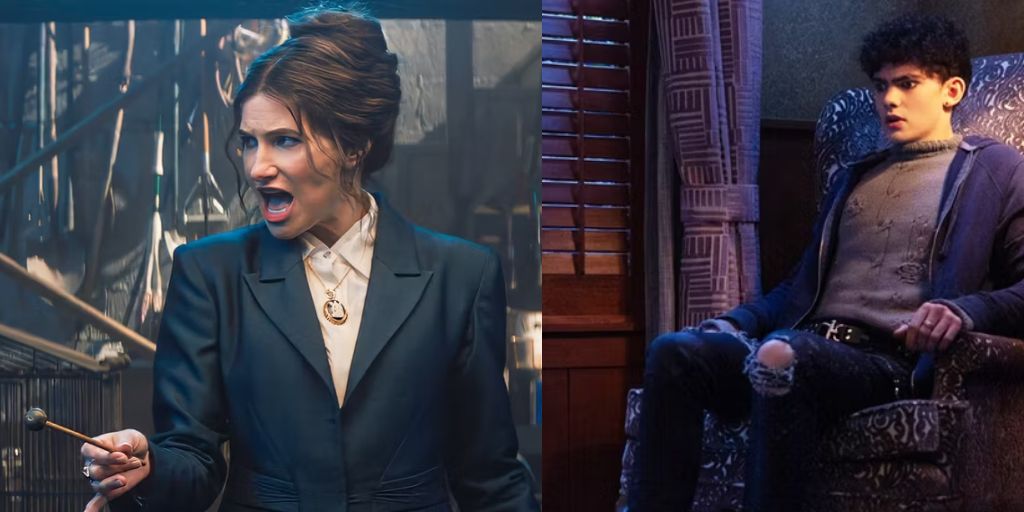
The first verse calls to “Gather sisters fire, water, earth, and air,” showing that covens need witches with different skills to walk the road.
Still from Agatha All Along (Credit: Disney+)
This concern arises after Agatha excludes Vidal’s green witch in favor of Rupp’s character, Mrs. Hart. The song’s repetitive chorus builds the theme of supernatural sisterhood, making it the catchiest example of how “Agatha All Along” expands Marvel’s magical history.
Hints of Greater Mythology in “Agatha All Along”
In addition to its significance to Agatha’s story, the ballad includes references and hints about what might come next in the series. The mention of “Mother, Maiden, Crone” in the second chorus is a strong reference to Hecate, the Greek Goddess of magic, often shown in those three forms.
This theme appears earlier in a pendant Agatha finds at the start of Episode 1. The connection to this triple theme is enhanced by the fact that the ballad has three verses and three choral sections, while its visual descriptions remind viewers of the eerie aesthetic often linked to witchcraft.
The song’s dark woods, wooden shrines, ominous fate, and the idea of right and wrong being reversed suggest that “The Ballad of the Witches’ Road” may lead Agatha All Along into darker magic than Marvel has shown since WandaVision.
The second verse also hints at interesting possibilities for the show’s mysterious characters. The line “I hold death’s hand in mine” could suggest that Aubrey Plaza’s character, Vidal, might be Mephisto’s daughter, especially given the tension between Rio and Agatha.
Meanwhile, “Familiar by thy side” refers back to Locke’s mysterious character, Teen, who is described as secretive in Episode 2. Regardless of the theories about Teen’s identity, the ballad in “Agatha All Along” adds a new layer to Marvel’s supernatural storytelling while supporting the show’s full plot and mythology.
The melody provides insight into the lore behind the Witches’ Road while hinting that its characters must face their fears to survive, setting up many challenges for Marvel’s newest coven in the coming weeks.
Marvel Television returns triumphantly with “Agatha All Along,” bringing back Kathryn Hahn as the delightful Agatha Harkness and revisiting the beloved Westview from WandaVision.
The series starts with an exciting two-episode premiere featuring a charming cast showcasing the chemistry between Hahn and Aubrey Plaza’s character, Rio Vidal.
A standout element is the addictive song “The Ballad of the Witches’ Road,” created by Frozen songwriters Kristen Anderson-Lopez and Bobby Lopez.
Still from Agatha All Along (Credit: Disney+)
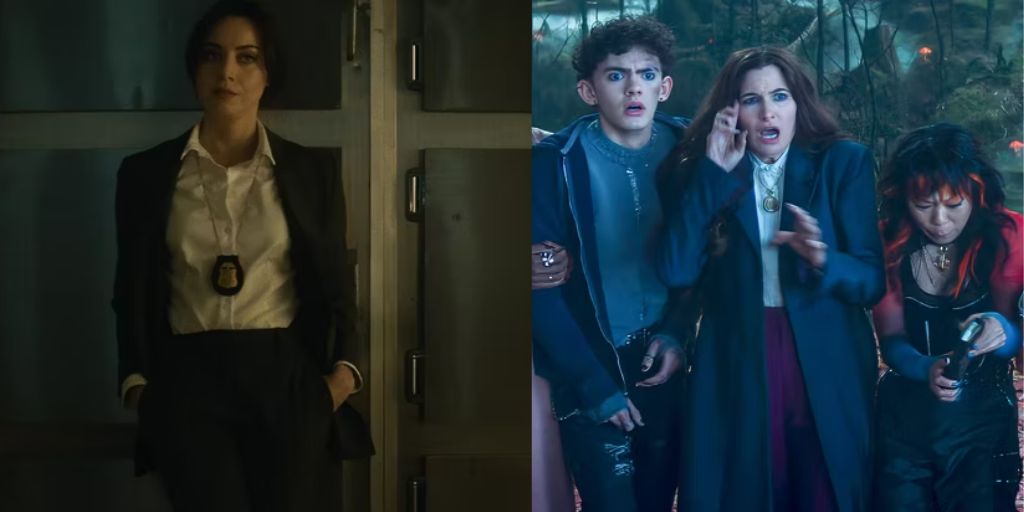
This song serves as both a plot device and a piece of lore, revealing the importance of a coven and the dangers of the Witches’ Road. It emphasizes themes of sisterhood and the need for witches of different skills to walk this mystical path.
Additionally, the lyrics hint at a deeper mythology, referencing Hecate, the Greek goddess of magic. The second verse suggests intriguing possibilities for characters, particularly with lines hinting at connections to powerful entities like Mephisto.
“Agatha All Along” enriches Marvel’s supernatural narrative while setting the stage for future challenges and adventures, leaving viewers eager for what lies ahead for Agatha and her coven.
