South Korea has gained major recognition in the entertainment industry in recent years. In 2019, Parasite became the first non-English-language film to win Best Picture at the Oscars. Then in 2021, Squid Game became a massive hit, surpassing Bridgerton as Netflix’s most-watched series debut.
However, Netflix had already begun building its fanbase for Korean dramas before Parasite’s big win at the 2020 Oscars, starting with the zombie-themed series Kingdom. Released in 2019, Kingdom stars Bae Doona, Ju Ji-hoon, and Kim Sang-ho as they battle a zombie outbreak and a political power struggle in 17th-century Korea.
Though it wasn’t the first period piece to include zombies, it was one of the first from Korea. More than that, Kingdom successfully mixes political drama with gruesome zombie horror, making it one of the top Korean shows on Netflix.
‘Kingdom’ Is Netflix’s First Korean Original Series
Korean dramas have become extremely popular on Netflix. In 2022, co-CEO Ted Sarandos mentioned that over 60% of Netflix users watched at least one K-drama. The viewership for Korean content has increased sixfold since 2018.
The world is also eagerly waiting for the second season of the global hit Squid Game, all of which has happened in the last few years. Although Netflix had previously offered Korean films and shows, it wasn’t until 2019 that they began producing original Korean content.
Kingdom was the first Netflix original series from South Korea. This horror and political drama mix received glowing reviews, quickly rising to become one of the top shows of the year thanks to its excellent writing, stunning visuals, and talented cast.
The show features many well-known actors familiar to fans of K-dramas and Netflix shows alike. One of the main characters, Seo Bi, is played by Bae Doona, who is also known for her role in Netflix’s Sense8 series and the recent Rebel Moon films. Kim Sang-ho, another lead in the show, can be seen in the final season of Sweet Home.
What Is Kingdom About?
One of the main attractions of Kingdom is its historical setting, as it’s rare to find a zombie story that isn’t set in modern times.
Although historical zombie tales have been done before, like in Pride and Prejudice and Zombies, set in Regency-era England, or the 2018 film Overlord, which is set during WWII, Kingdom stands out with its unique Korean backdrop. The series takes place 400 years ago, offering viewers a view into Korean history, which is something Western audiences don’t often see.
Kingdom treats its historical context seriously, using it to enhance the zombie storyline rather than for comedic effect. Ju Ji-hoon plays Lee Chang, the only son of the King of Joseon, which would later become Korea, through a concubine.
Despite Lee Chang’s many supporters, the Queen Consort is pregnant, and if she gives birth to a boy, he would have a stronger claim to the throne. The Queen Consort and her allies will stop at nothing to make sure her child takes the throne, instead of Lee Chang.
Kingdom Combines Politics and Zombies in a Historical Setting
The political storyline in Kingdom is well-written and intricate, earning praise for its strong characters and strategic power plays. The politics in Kingdom are on par with well-received shows like Shōgun, known for its complex characters and political maneuvers.
But for fans of zombie thrillers, there’s still plenty of excitement. The Queen Consort’s political schemes are what trigger the zombie outbreak, blending the horror and political plots seamlessly.
The zombies in Kingdom are fast and relentless, similar to those in 28 Days Later, resulting in plenty of intense chase scenes throughout the show.
When the characters face off against the zombies directly, the show doesn’t hold back on the gore. From a horde of zombies tearing apart victims to zombies being shot with arrows, Kingdom delivers just as much horror as it does political intrigue.
Ultimately, Kingdom offers something for every viewer. K-drama fans will recognize familiar faces and enjoy the classic storytelling elements. Those who love political dramas will appreciate the sharp social commentary. And for fans of zombie horror, the show delivers enough scares and suspense to rival any classic zombie movie.
Kingdom is available for streaming on Netflix in the U.S.
If you’re not watching City of God: The Fight Rages On, you’re missing something exciting. The series on Max continues the story of the 2002 Brazilian classic City of God.
Set 20 years after the events of the original movie, it continues to show the complicated life in the City of God community in Rio de Janeiro.
Residents still find themselves caught between rival gangs and Rio’s violent police force. Before each episode, a notice states that the series is fictional, but it reflects the real issues of public safety in Rio.
Much of the Original City of God Movie Is Based on True Stories
Many stories in the original City of God movie are based on true events. The movie is inspired by Paulo Lins’ book, which is about his childhood in the City of God community. Rocket (Alexandre Rodrigues) represents Lins, a boy dreaming of getting an honest job outside the community.
In real life, Lins became a famous writer, but Rocket became a photographer in the movie. However, it is said Rocket’s character is actually based on a friend of Lins, who wanted to be a photographer.
The conflict between Lil’ Zé (Leandro Firmino) and Knockout Ned (Seu Jorge) is based on a real war between two crime bosses in the 1970s and 1980s. The movie’s end credits even show an interview with the real Knockout Ned after his release from prison.
He speaks about how Lil’ Zé kills everyone connected to him. It is believed their rivalry began after Lil’ Zé kidnapped and raped Ned’s girlfriend, Cinthia (Sabrina Rosa), although no historical proof supports this. Ned joined the army at 18, which helped him during the conflict.
In his interview, he mentioned the police targeted only his gang when they raided City of God, suggesting they had some kind of agreement with Lil’ Zé.
Another real character from City of God is Carrot (Matheus Nachtergaele), who was based on real drug trafficker Aílton, known as “Potato.” In the movie, Carrot is Lil’ Zé’s rival after Knockout Ned joins his gang for revenge. He was the only survivor of the real-life conflict and later wrote a memoir about his time as a drug lord.
He confirms many of the movie’s details, such as Zé always having Benny (Phellipe Haagensen) by his side and being violent. However, he denies that children were involved in the drug business like the movie’s Runts.
Some witnesses have also complained that the movie isn’t completely accurate. These criticisms are valid, but the film is meant to be a fictional piece, not an exact historical account.
The Fight Rages On Continues as a Fictional Story
The focus is on continuing the lives of characters from the movie, showing that there’s always more to tell about communities like City of God.
Director Fernando Meirelles is now the executive producer, while Braulio Mantovani returns as the writer. Aly Muritiba directs the series and is known for his work on New Bandits, another Brazilian series on Prime Video.
At the end of City of God, the Runts kill Lil’ Zé and plan to take over the drug trade. In the series, they fall under the influence of a new drug lord, Bullfinch (Marcos Palmeira). He informally adopts Bradock (Thiago Martins), the leader of the Runts, who now works for the crime machine in the community.
The story begins with Bradock’s release from jail, thanks to his mysterious girlfriend, Jerusa (Andreia Horta). However, he quickly finds out that he has lost his position as Bullfinch’s right-hand man.
Rocket is now a successful photographer for a major newspaper in Rio, but he struggles with his daughter, Leka (Luellem de Castro). She accuses him of building his career by exploiting the suffering of the community and black people.
On the other hand, Rocket’s best friend, Lil’ String (Edson Oliveira), along with Cinthia and Berenice (Roberta Rodrigues), have become respected leaders within the community, working to make it a better place. Yet, another conflict looms over the City of God.
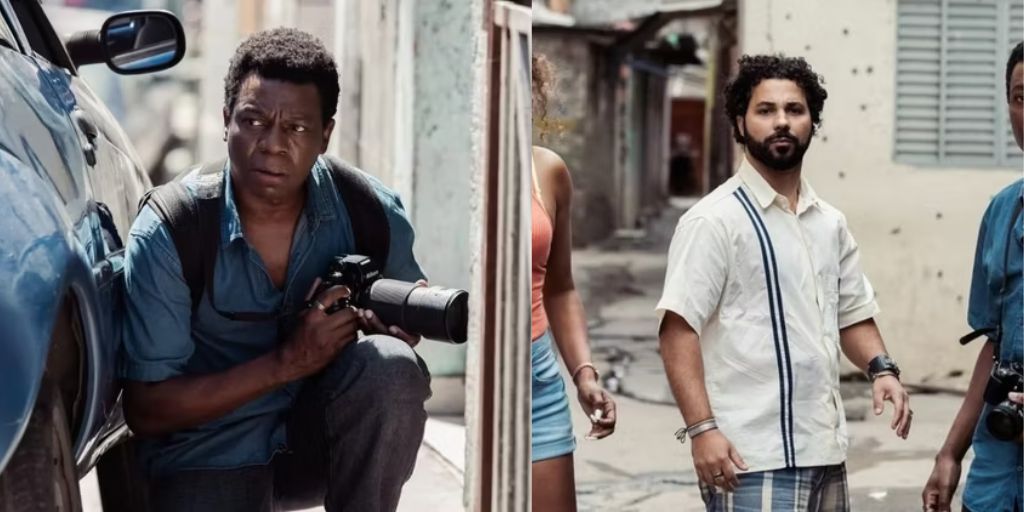
Still from City of God The Fight Rages On (Credit: HBO)
This time, the Rio state government has realized the community is profitable, thanks to Reginaldo (Kiko Marques), who was known as “Melonhead” in the movie and is now the Secretary of Public Security.
Public Safety in Rio Has Become More Complicated Since the 1970s
Even though The Fight Rages On is fictional, it touches on real aspects of life in the City of God community. These large communities have Residents’ Associations that are respected and promote legal businesses. They help NGOs operate and are the starting point for anyone wanting to open a business.
The president of the association acts as a middleman between the drug lord and the residents, ensuring safety without confrontation. Many people, including myself, have seen how effective these associations are, as I spent years teaching English in Paraisópolis, another Brazilian community.
One of the scariest parts of the series is how it portrays militias. These are paramilitary groups that began rising in Rio in the mid-2000s. Initially, off-duty police officers and soldiers formed these groups to protect communities from drug trafficking.
Over time, though, militias grew stronger and became criminal organizations. They began controlling the drug trade and expanded into other crimes like arms and human trafficking.
In the early 2000s, militias were quite popular. Many people supported them, as violent TV programs praised the massacres carried out by the state military police’s “death squads.”
This public support is shown in The Fight Rages On, where the mayor even calls the militias the “lesser evil.”
However, by the 2010s, militias had grown too powerful. They were responsible for the deaths of left-wing politicians and community leaders and even won public offices.
By 2020, militias controlled 41 neighborhoods in Rio, home to over 2 million people. Today, they are as big a threat to Brazil’s public security as the drug factions.
City of God: The Fight Rages On is a gripping continuation of the 2002 Brazilian classic City of God. Set 20 years later, the series follows the ongoing conflicts within Rio de Janeiro’s City of God community. Rival gangs and corrupt police continue to clash, while new drug lords rise to power.
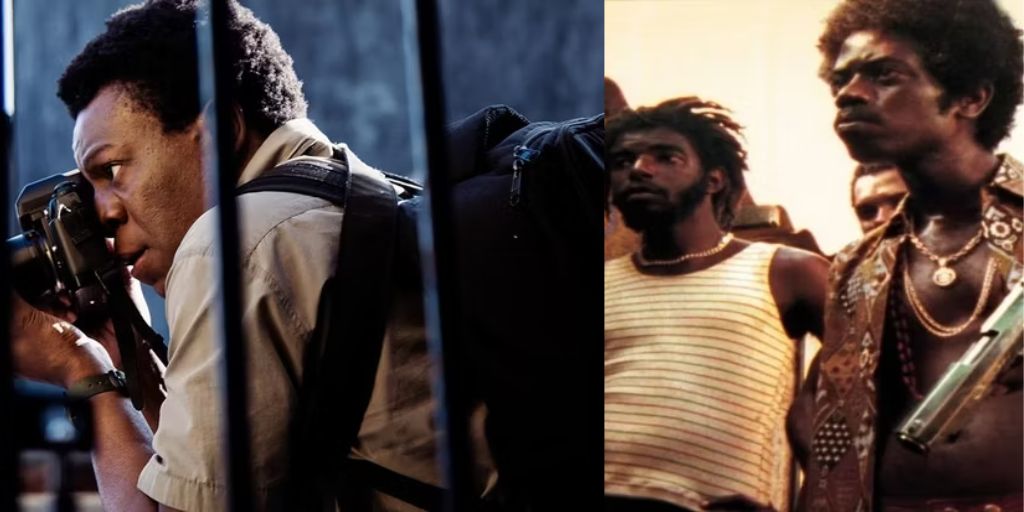
Still from City of God The Fight Rages On (Credit: HBO)
Characters like Rocket, now a successful photographer, struggle with personal and community issues. The series touches on real challenges in Rio, including the rise of dangerous militias.
Though fictional, it reflects the harsh realities of public safety and crime in Brazil, offering intense drama and powerful storytelling.
New episodes of City of God: The Fight Rages On air weekly on Sundays on Max.
