Filmmaking is a field that requires a lot of creativity, experimentation, and, above all, a clear vision. Directors often try new ideas to push boundaries and engage audiences.
However, not every experiment turns out well. One recent film that exemplifies this is Krazy House, directed by Steffen Haars and Flip van der Kuil.
This Dutch action-horror comedy was supposed to be a unique and entertaining addition to the genre. Instead, it stands out as a major failure.
What could have been a fun and engaging short film became a long, painful viewing experience that left audiences confused and disappointed.
The film’s concept revolves around blending comedy with horror, drawing inspiration from various sources, including popular sitcoms from the 1990s.
The filmmakers aim to roast these shows, taking familiar tropes and turning them on their heads. Unfortunately, the execution falls short.
Krazy House tries to tackle heavy themes, such as religious zealotry and family dynamics, but does so without any real depth or clarity. Instead, viewers are treated to a disjointed narrative filled with cringe-worthy jokes, absurd situations, and a lack of coherence.
The Premise
Krazy House stars Nick Frost as Bernard “Bernie” Christian, an obsessively religious stay-at-home father. He wears self-knitted sweaters adorned with Christian symbols and believes deeply in living according to God’s rules.
This character is the central figure in a sitcom also called Krazy House, which the film presents in a way that mimics watching a television program from our childhoods. This concept offers a nostalgic feel, but it quickly devolves into chaos.
Bernie’s family consists of his wife, Eva, played by Alicia Silverstone, their daughter Sarah, portrayed by Gaite Jansen, and their son Adam, played by Walt Klink.
Eva works a vague corporate job, while Sarah is desperate for a boyfriend. Adam has chosen science over religious beliefs, setting up a clash of values within the household.
This family dynamic serves as the basis for the film’s comedy, echoing the lessons and humor found in classic sitcoms like Family Matters and Full House.
Bernie’s character embodies the humorous yet earnest traits of sitcom protagonists, complete with his own catchphrase: “Oh gosh, what a mess!” However, the humor feels forced, and the character’s naiveté quickly becomes grating rather than endearing.
Main Conflicts and Humor
The central conflicts in Krazy House arise from Bernie’s inability to effectively support and empower his family. The film attempts to create humor through Bernie’s absurd ideas and interactions with his family.
For instance, there are moments where his wife tries to accommodate his bizarre “invention” of attaching scrubbing brushes to his shoes. These moments are meant to be humorous but often come off as awkward and unoriginal.
Another source of humor stems from Adam’s mockery of his father’s faith. Bernie often responds to Adam’s skepticism with Bible verses, creating a comedic tension.
However, this humor falls flat, especially when the narrative shifts dramatically with the sudden arrival of Russian workers. These moments seem disjointed and lack the finesse needed to create a cohesive comedic experience.
As the film progresses, Bernie inadvertently destroys his family’s kitchen, setting the stage for the unexpected arrival of a trio of Eastern European workers. This sudden shift in tone is jarring and feels out of place within the established narrative.
Pjotr, played by Jan Bijvoet, along with his sons Dmitri and Igor, played by Chris Peters and Matti Stooker, respectively, begin demolishing Bernie’s house without any resistance from him. This situation further emphasizes Bernie’s passive nature and inability to protect his family.
Misguided Satire
One of the film’s significant missteps is its attempt to use satire. Haars and Kuil appear to confuse absurdity and stupidity, mistaking the latter for effective satire. Nick Frost’s performance, particularly his American accent, comes across as forced and distracts from the story.
While the filmmakers aim for a comedic critique of family sitcoms, they fail to deliver anything of substance. The set design draws inspiration from iconic sitcoms like Married With Children and Everybody Loves Raymond, but the humor is ten times sillier than anything those shows presented.
Haars and Kuil’s portrayal of sitcoms as silly and absurd may have potential, but it quickly deteriorates into an incoherent narrative.
The film’s humor, rather than being sharp and insightful, becomes a nonsensical collection of jokes that do not land. Frost’s portrayal of Bernie becomes a comedic black hole, pulling the humor into a void of confusion and discomfort.
Tone and Pacing Issues
The tonal shifts in Krazy House are abrupt and confusing. The film starts with a light-hearted, if not somewhat ridiculous, premise.
However, it quickly transitions into a dark and chaotic environment that leaves viewers disoriented. Haars and Kuil attempt to inject shocking elements into the film, hoping to elicit strong reactions from the audience. However, the lack of balance makes the storytelling feel reckless and disjointed.
Early scenes feature subliminal shots of a bloodied Bernie, teasing viewers about the chaos that is to follow. While this could have been a clever storytelling device, it instead feels like an attempt to manipulate audience expectations without any real payoff.
The filmmakers seem to aim for a shock factor akin to Adult Swim’s more experimental programming, but they do not possess a compelling story to justify their aggressive approach. Instead, viewers are left with a string of confusing events that fail to connect.
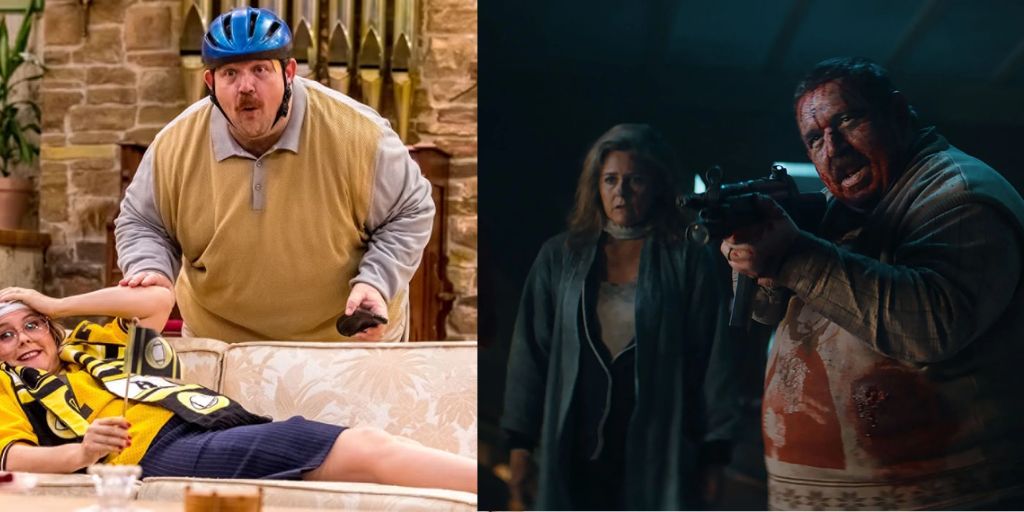
Still from the movie (Sundance)
Failure to Establish a Coherent Story
One of the most significant issues with Krazy House is its inability to establish a coherent and engaging storyline. The film lacks direction and clarity, leaving audiences frustrated and confused.
As the narrative progresses, it becomes increasingly challenging to follow the characters’ motivations and the overall plot. The comedy fails to feel organic, and the absurdity of the situations overshadows any potential for genuine humor.
The introduction of the Russian workers adds a layer of chaos, but it does not contribute meaningfully to the story. Instead, it feels like a forced attempt to inject tension and conflict.
The film’s reliance on shock value rather than coherent storytelling is detrimental to its overall effectiveness. As the audience, we are left wondering what the filmmakers were trying to convey and whether they had any real message to share.
Poor Execution of Themes
Krazy House also attempts to tackle heavier themes, such as the conflict between faith and science and the struggles of modern family life.
However, these themes are executed poorly and lack depth. Instead of engaging with these complex ideas, the filmmakers settle for shock tactics and exaggerated humor. The result is a film that feels shallow and unfulfilled.
While there are chances of potential within the character dynamics and family conflicts, these elements are overshadowed by the film’s chaotic tone and lack of focus.
The moments that could have been meaningful are instead lost in a barrage of absurdity. The film ultimately fails to provide any real commentary on the issues it seeks to address.
Missteps in Humor and Satire
The humor in Krazy House often misses the mark. The filmmakers aim for satire but end up relying on tired jokes and clichés that fail to resonate with audiences.
The comedic moments that are supposed to highlight the absurdity of sitcoms instead come off as forced and unoriginal. The film’s reliance on shock value over clever humor only serves to alienate viewers.
The filmmakers attempt to play with the audience’s expectations by presenting a familiar format only to subvert it in increasingly bizarre ways.
However, this approach feels more like a desperate attempt to be edgy rather than a thoughtful critique of the genre. The humor lacks the necessary wit and insight to make it effective, resulting in a disjointed viewing experience.
The film’s characters, particularly Bernie, lack the depth and development needed to engage viewers. Nick Frost’s portrayal of Bernie is meant to be humorous and relatable, but instead, it feels one-dimensional.
The character’s obsessive religiosity comes across as a mere gimmick rather than a meaningful aspect of his personality. This lack of character development makes it challenging for audiences to invest in the story.
The other family members, while providing some comedic moments, also lack depth. Eva’s corporate job is vague, and her character does not grow throughout the film.
Sarah’s desperation for a boyfriend becomes a running joke rather than a meaningful subplot. Adam’s choice to pursue science over faith is briefly mentioned but not covered in any meaningful way.
The introduction of the Russian workers further complicates the character dynamics without adding any real depth.
Pjotr and his sons serve as chaotic forces in the film, but they lack individual personalities or motivations. As a result, the film feels crowded with characters who do not contribute to a coherent narrative.
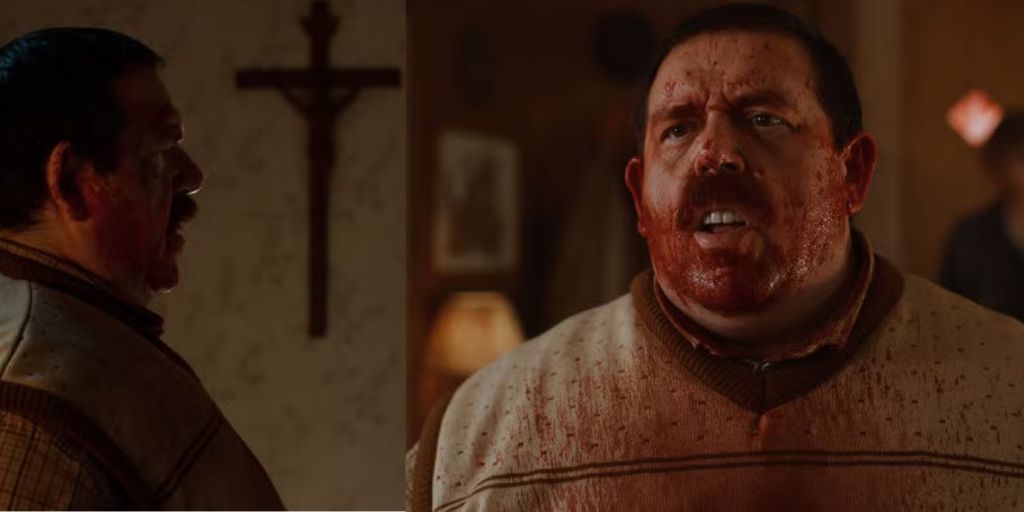
Still from the movie (Sundance)
Chaotic and Confusing Structure
The overall structure of Krazy House is chaotic and confusing. The filmmakers throw a series of random events at the audience without establishing a clear connection between them. This lack of coherence makes it difficult for viewers to follow the story, leading to frustration rather than amusement.
As the film progresses, it becomes apparent that Haars and Kuil are more interested in shocking their audience than in creating a cohesive narrative.
The chaotic structure ultimately detracts from any potential message the film might have had. Instead of a meaningful exploration of family dynamics or societal norms, viewers are left with a disjointed series of events that feel hollow.
Krazy House stands as a prime example of a film that fails to deliver on its ambitious premise. While the concept of blending comedy and horror holds potential, the execution falls flat.
The film’s disjointed narrative, lack of character development, and misguided humor result in a viewing experience that is more painful than enjoyable.
Haars and Kuil’s attempt to critique family sitcoms and find heavier themes ultimately lacks the depth and coherence necessary for a successful film.
Rather than engaging audiences, Krazy House leaves them bewildered and unsatisfied. While experimentation is essential in filmmaking, it is equally important to maintain a clear vision and direction.
In the end, Krazy House serves as a cautionary tale for filmmakers looking to push boundaries. Creativity and innovation are important, but without a solid foundation, even the most ambitious ideas can falter.
For audiences, this film is best approached with caution, as it represents a misguided attempt to blend genres in a way that fails to resonate. While there may be moments of potential, they are overshadowed by the film’s chaotic execution, leaving viewers wondering what went wrong.
In reflecting on Krazy House, it becomes evident that the film’s failure lies not just in its execution but also in its overall approach to storytelling.
The filmmakers, Steffen Haars and Flip van der Kuil, seemed to have a vision that could have resulted in a clever and entertaining film, yet they allowed the chaotic structure and forced humor to overshadow their intentions.
One important aspect that the film neglects is the opportunity for character growth and development. The potential for exploring the complexities of family relationships and individual beliefs exists within the narrative framework but is never fully realized.
Bernie’s journey, which could have been a poignant exploration of faith clashing with modern values, instead turns into a series of poorly executed gags. This lack of depth extends to the supporting characters, whose stories remain largely hidden, leaving the audience without relatable connections or emotional investment.
Moreover, the tonal inconsistencies detract from any message the filmmakers might have hoped to convey. The sudden shifts from light-hearted comedy to dark and chaotic scenarios create a disjointed viewing experience that feels more jarring than engaging.
This haphazard approach ultimately undermines the film’s ability to resonate with its audience. Viewers may find themselves questioning the film’s intentions rather than enjoying the absurdity of the situations presented.
The attempt to satirize familiar sitcom tropes is commendable in theory but fails in practice due to the reliance on shock value rather than genuine humor.
The filmmakers miss the mark in providing a thoughtful critique of family dynamics and societal norms, resulting in a film that feels empty rather than insightful.
This misstep serves as a reminder that satire requires careful consideration and sharp wit to be effective, neither of which are present in Krazy House.
Krazy House is a film that represents a series of missed opportunities. The ambition to blend comedy and horror within the framework of a family sitcom is commendable, but the lack of coherence, depth, and engaging storytelling ultimately leads to a disappointing experience.
For aspiring filmmakers, this film serves as a cautionary tale about the importance of a clear vision, strong character development, and a coherent narrative structure. It highlights that creativity should be balanced with substance to create a film that resonates with audiences.
While the concept may have shown promise, the final product is a convoluted mess that fails to deliver any meaningful commentary, leaving viewers with more questions than answers.
As a result, Krazy House stands as an example of what can happen when ambition outpaces execution, and it will likely be remembered as a cautionary tale in the domain of contemporary cinema.
In Sunday’s third episode of Tracker Season 2, titled “Bloodlines,” the show mixes biohacking, baseball, and the opioid crisis. This episode has the second intense reunion of the season for Colter Shaw (played by Justin Hartley).
This reunion follows Jensen Ackles’ return to the CBS series last week. Sofia Pernas, Hartley’s real-life wife, is back as Colter’s rival rewardist Billie Matalon.
This episode promises to keep viewers on the edge of their seats as it combines thrilling elements with engaging storytelling.
Colter’s New Job
The episode begins with Colter meeting Billie at a bar in Nebraska. The bar has a small-town feel, filled with locals who seem to know each other well.
Billie is eager to talk to Colter. She has a job for him, but she also reveals some surprising background about herself and the town.
Billie wants Colter’s help collecting a reward for a missing high school pitcher named Eric Dobbs (played by Tyler Lawrence Gray). Initially, Colter thinks the job is straightforward. It seems simple enough that he begins to question Billie’s motives.
Billie then opens up about her past in this small town. She explains that she grew up there but left under difficult circumstances. She believes that the locals might be more willing to talk to Colter because of her connection to the place.
Colter, who had thought Billie was from Miami, now sees things differently. The new information changes his perspective on working with her.
Although they have a history of rivalry, the chance to solve a big mystery and share a reward of $50,000 motivates him to team up with her. Billie promises to provide insider knowledge about the town, while Colter will visit the families who may hold important information.
The dynamic between Hartley and Pernas adds an interesting layer to the episode. Viewers know that the actors are married in real life, which creates a fun atmosphere as their characters spar. However, their chemistry on screen does not fully capture the essence of their real-life relationship.
This often happens with real couples, as they may feel too comfortable with each other, making their on-screen interactions less intense. In this case, it works out well because Colter Shaw doesn’t need any additional romantic tension.
A Creepy Discovery
As the episode progresses, the tone shifts dramatically. The story takes a darker turn when Colter and Billie make unsettling discoveries while investigating Eric Dobbs’ disappearance.
The plot thickens as they go deeper into his family’s background. The investigation leads them to a shocking revelation about Eric’s life.

Still from Tracker (Credit: Paramount+)
While snooping around Eric’s family, Colter uncovers some troubling details. He learns that Eric’s parents disapproved of his older girlfriend, Ashley.
This adds an element of conflict, as relationships often lead to complicated situations. Additionally, Colter finds a large amount of cash and prescription pills in the process. This raises questions about Eric’s lifestyle and whether he had been involved in something more dangerous.
After speaking with Eric’s coach and a teammate, Colter gains confidence that the missing pitcher was not addicted to drugs.
This suggests that there may be more to the story than what first appears. As Billie uses her connections to help track down Ashley’s cell phone, they locate it near some abandoned train cars.
Billie informs Colter that this area is a local spot where teenagers often go to hang out. It has a reputation as a make-out spot, which makes it even more intriguing.
Inside one of the train cars, they discover a shocking scene. There is a lot of blood present, and a trail leads to Ashley’s barely conscious body.
The sight is alarming and suggests that something terrible has happened. The police are now involved, and Colter has to show his way through the chaos of the investigation.
Colter meets Detective Penny Bullard (played by Khalilah Joy), who is skeptical of him. She is an old classmate of Billie’s, which adds another layer of complexity to the situation.
As the detective examines the crime scene, Colter finds an empty blood donation bag, which raises more questions. He starts to wonder what really happened in that train car.
Since Eric has now become a suspect in Ashley’s assault, Colter finds himself in a tricky position. Detective Bullard does not fully believe his theory that a third person may have been present during the incident.
However, the large amount of blood in the train car certainly piques her curiosity. As the detective sends a sample of the blood to the lab for testing, Colter continues to investigate. He enlists his friend Bobby (played by Eric Graise) to help track down the serial number on the blood bag.
Uncovering a Hidden Agenda
While this investigation unfolds, Billie faces her own challenges. She runs into a local diner owner who seems to have questionable motives.
He implies that he wants sexual favors in exchange for information about Ashley, which puts Billie in a tough spot. Instead of giving in, she twists his arm, literally, to get the information she needs. This act of defiance shows Billie’s determination to uncover the truth.
During their conversation, the diner owner reveals that Ashley struggles with opioid addiction. This information adds a new layer to the investigation.
It turns out that Ashley was trying to save up $10,000 for rehab. The pieces of the puzzle are starting to come together. Eric’s donations of blood might have been his way of helping Ashley get the treatment she needed.
However, even with this new understanding, not everything adds up. Billie points out that the payment rate for plasma donations typically ranges from $50 to $75.
This raises the question of how long it would take Eric to save enough money for Ashley’s rehab. Colter and Billie’s teamwork begins to shine as they connect the dots and investigate further.
Bobby works diligently to track the serial number on the blood donation bag. What they discover sends chills down their spines.
Instead of leading to a hospital or a blood donation center, the serial number links to an office building belonging to a company called Everlife. This revelation turns their investigation in an unexpected direction.
When Colter and Billie break into the Everlife office, the atmosphere is instantly creepy. The office is filled with empty spaces and an eerie silence that adds to the tension.
As they show, they come across a hidden room with several reclining chairs illuminated by harsh LED lights. Shelves are lined with blood bags, and in the corner lies a teenage boy’s dead body, preserved in a container filled with silica beads.
The scene is shocking, and Colter realizes that the boy is not Eric. However, he has been completely drained of blood. Colter and Bobby quickly put together a theory about the situation.
They suspect that the people behind Everlife are biohackers and anti-aging enthusiasts. They believe that they can “reverse the clock” on aging by using blood transfusions from young people. The potential implications of this revelation are chilling.
The Villain Emerges
As the plot thickens, viewers are introduced to Shane Nile (played by Patrick Fabian), the college booster who posted the reward for Eric’s return.
His first appearance on screen gives off a villainous vibe. He comes across as too wealthy, too polished, and too tan to be trustworthy. From the moment he appears, it’s clear that he is the antagonist of this episode.
Shane begins to ask Colter questions about Ashley’s condition. His line of questioning raises red flags for viewers, hinting that he may have ulterior motives.
Although Billie seems unaware of Shane’s true intentions, it becomes clear that he is probing for information that could benefit him.

Still from Tracker (Credit: Paramount+)
In a shocking turn, Shane pulls the reward money and tries to send Billie off with only $10,000.
He uses the university’s public relations concerns as an excuse, claiming they don’t want to be associated with a teenager who is now considered a person of interest in the assault of a young woman. Shane’s actions are suspicious, and it becomes evident that he hopes to bury the situation.
At this point, Billie is ready to walk away from the job. She feels disheartened and eager to leave a town that brings back painful memories.
However, just as she decides to leave, a car crashes into her, and she finds herself kidnapped. This sudden twist of events is a common trope in thrillers, but it serves to heighten the stakes for Colter as he continues his search.
Even though Billie has been captured, she manages to uncover some important details about Eric during her ordeal.
Luckily for both of them, Colter does not share Billie’s professional boundaries. He is determined to find Eric and keep searching for answers.
While speaking with the police, Colter learns that Billie did not drop off the files she promised before leaving town. This information compels him to look for her, setting off a race against time.
The Rescue
Colter decides to confront Shane, putting the pieces together in the process. He quickly realizes that Shane is the one buying Eric’s blood and is the mastermind behind the school’s reward posting. The urgency of the situation intensifies as Colter understands that he must act quickly to save both Billie and Eric.
In a dramatic showdown, Colter faces off against Shane’s henchman. The physical altercation escalates, leading to a tense hostage situation.
The stakes are high, and viewers are left wondering if Colter will succeed in rescuing them. In a gripping moment, Colter manages to rescue both Eric and Billie from their captors.
After the intense rescue, the episode shifts to a more heartwarming moment. Colter gets to toss a baseball around with Eric and his father, showcasing the bonds that can form even in chaotic circumstances.
This scene offers a sweet conclusion to a harrowing ordeal. It provides a much-needed moment of levity and connection after the intense drama.
Colter’s relationship with Billie takes an interesting turn as well. They share a moment of understanding, and Colter learns more about Billie’s complicated childhood.
She reveals that she is the daughter of a con artist, adding depth to her character. Their conversation ends on a platonic yet meaningful note, suggesting that their rivalry may shift into a more complicated partnership in the future.
The episode wraps up, leaving viewers eager for the next installment of Tracker. Colter and Billie’s lives are bound to take them into new adventures and challenges, especially in their roles as rewardists. As the credits roll, the anticipation for future episodes grows.
Tracker Season 2: What’s Next?
Tracker Season 2 continues to deliver excitement and intrigue, keeping fans hooked with every episode. The series shows complex themes, such as the impact of addiction, the lengths people will go for love and loyalty, and the dark side of biohacking.
As Colter and Billie faces the dangers of their profession, viewers are sure to be attracted by their journey.
With each episode, the series builds on its themes while introducing new characters and challenges. The story is layered with suspense, emotion, and drama. As Colter Shaw tackles his cases, he also grapples with his personal relationships, making him a relatable and compelling protagonist.
Fans of Tracker can look forward to more thrilling storylines as the season progresses. The characters will likely face greater obstacles and complex moral dilemmas as they continue to chase rewards while uncovering dark secrets.

Still from Tracker (Credit: Paramount+)
In the thrilling episode of Tracker Season 2, titled “Bloodlines,” Colter Shaw and Billie Matalon show a dangerous investigation that intertwines biohacking, baseball, and the opioid crisis.
Their quest to find missing pitcher Eric Dobbs reveals dark secrets and a creepy organization exploiting vulnerable individuals.
As Colter uncovers the truth, he faces a powerful villain while building a deeper understanding of Billie’s past. The episode successfully blends suspense, emotional depth, and action, keeping viewers eagerly anticipating the next installment.
With their lives forever changed, Colter and Billie’s journey as rewardists promises to deliver even more excitement ahead.
