La La Land ends in a way that subverts traditional romantic expectations, reinforcing the importance of following one’s dreams, even at the cost of a relationship. The film’s protagonists, Mia and Sebastian, both achieve their dreams—Mia becomes a famous actress, and Sebastian opens a jazz club—but the cost of these successes is their breakup. This bittersweet ending highlights their individual growth, emphasizing how their relationship, while significant, ultimately could not survive the sacrifices necessary for their personal fulfillment.
La La Land shows Mia and Sebastian, despite their deep love, parting ways to follow their dreams. Initially, their breakup seems temporary, but as Mia heads to Paris for an acting opportunity, it’s clear their romantic relationship can’t continue. Each character pursues their personal goals, leading to personal growth and fulfillment, but at the cost of their relationship. The theme of prioritizing dreams over romance is central to the film, as both must move forward independently, shaped by their time together.

La La Land (Image via Getty)
La La Land Ending Explained
Director Damien Chazelle explained in an interview that the film’s ending was always meant to be this way, with no version where Mia and Sebastian have a traditional happy ending. Chazelle believes the greatest love stories often don’t culminate in a “happily ever after,” and that La La Land conveys that love can transcend time and circumstance. The film’s ending reflects that, even if their romantic relationship is over, their love for each other endures in different forms.
According to Chazelle, the film’s resolution emphasizes that the love between Mia and Sebastian doesn’t vanish just because they part ways. Instead, it lingers in their lives, shaping their individual successes and leaving a lasting emotional impact, a testament to the depth of their bond despite the breakup.
The Dream Sequence and Its Surreal Significance
The dream sequence in La La Land offers an alternate reality where Mia and Sebastian stay together. It reflects a more traditional Hollywood ending, showing how their lives could have unfolded differently if they hadn’t sacrificed for their dreams. Sebastian turns down Keith’s band offer, and Mia’s play is a success with him present. This imagined reality highlights the cost of pursuing their passions—showing that they couldn’t have both love and career. The sequence emphasizes the film’s theme of sacrifices made in the pursuit of artistic ambitions.
In the final scene, Seb plays the opening notes of their theme song when he spots Mia in his jazz club. This leads into a dream sequence before returning to reality, where Seb plays the last note as Mia smiles sadly. Their silent exchange marks a bittersweet end to their relationship, filled with mutual respect and affection. Though they are no longer together, their love has transformed into a cherished memory that continues to impact their lives as they move forward separately.

Sebastian and Mia (Image via Getty)
The Significance of Sebastian’s Club
A crucial detail in La La Land’s ending is the name and logo of Sebastian’s jazz club, both of which are inspired by Mia. Earlier in the film, Mia designed the logo for Sebastian’s club, symbolizing their profound influence on each other’s lives. This subtle touch underscores the idea that their relationship, even though it did not last, played an essential role in helping them realize their dreams. The club’s success and its connection to Mia highlight the enduring impact they had on one another’s aspirations.
The Emotional Complexity of La La Land’s Ending
While some viewers may find La La Land’s ending heartbreaking, there’s a sense of fulfillment and hope for the characters. Although Mia and Seb don’t end up together, they are successful and fulfilled in their own right. Their relationship, though short-lived, has helped them grow, and they leave the film in better places than they started. The ending challenges expectations, as audiences often hope for a romantic reunion, but La La Land instead delivers a more complex emotional conclusion.
The film’s ending acknowledges the harsh realities of life—the pursuit of dreams comes with sacrifices, and not all love stories are meant to last. However, it also suggests that even in the absence of a perfect ending, there is beauty in personal growth and achievement. La La Land leaves its audience with a bittersweet, yet ultimately uplifting message about the unpredictability of life and love.
Chanelle’s Consistent Theme Across Films
Chazelle’s work, including Whiplash and First Man , consistently explores the theme of sacrifice in the pursuit of one’s dreams. In Whiplash , the protagonist’s obsession with achieving greatness in jazz leads to a damaging relationship with his teacher. First Man focuses on Neil Armstrong’s mission to the moon, which comes at the cost of his family life. Similarly, in La La Land , the character’s pursuit of their artistic goals necessitates personal sacrifices, reinforcing Chazelle’s broader narrative about the costs of ambition.
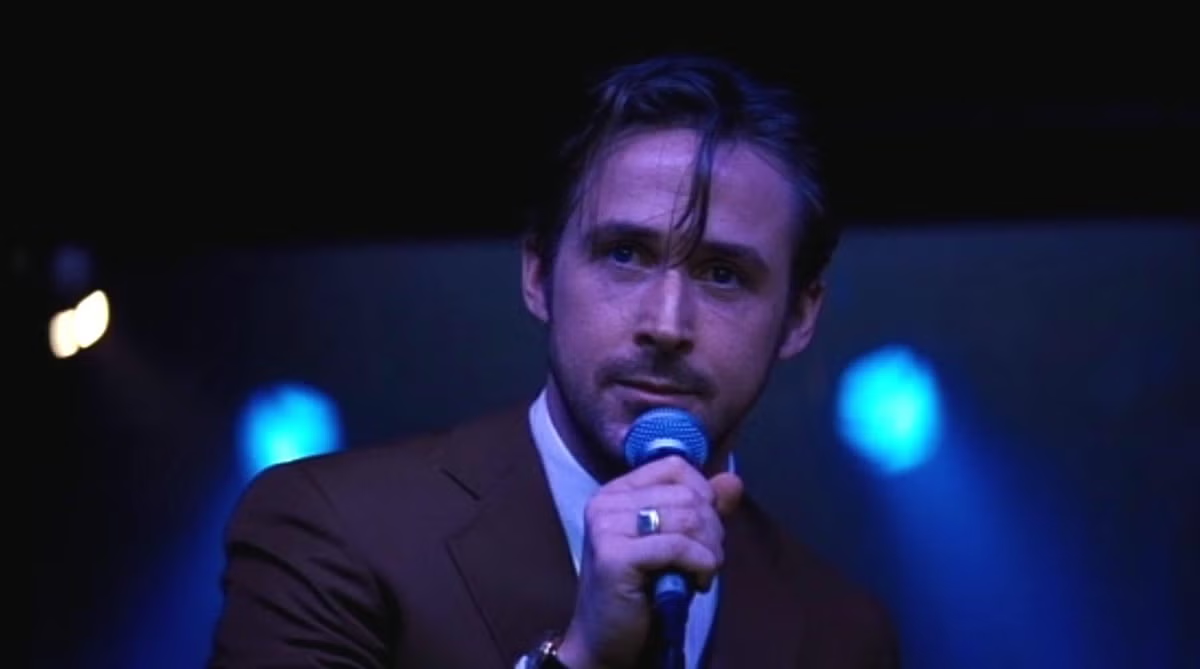
Sebastian (Image via Getty)
In La La Land , Chazelle explores the idea that, while pursuing one’s passion can lead to success, it often involves painful compromises. The characters may not have a romantic ending, but their personal achievements offer a form of fulfillment, making the movie’s bittersweet conclusion all the more impactful.
La La Land’s Bold Ending: A Modern Masterpiece
La La Land is widely regarded as a modern masterpiece, and its ending is one of the key reasons for its lasting impact. The film’s bold choice to have Mia and Sebastian not reunite, despite the romantic tension, sets it apart from conventional Hollywood romances. This decision, rooted in realism, makes the film’s conclusion more powerful and resonates with viewers long after the credits roll. The ending highlights the unpredictability of life and love, while also affirming that dreams and personal growth are worthy pursuits, even at the cost of romance.
Emma Stone’s Take on the Ending
Emma Stone, who plays Mia, has described the ending as bittersweet but realistic. She believes that the conclusion reflects the reality of life, where dreams don’t always unfold as expected. Stone contrasts the film’s ending with the often idealized portrayals of life on social media, suggesting that La La Land captures the messy, imperfect nature of achieving one’s dreams. For her, the film’s ending offers a reflection of the challenges and rewards of pursuing personal aspirations, even when the journey doesn’t turn out as imagined.
A Real Pain, directed by Jesse Eisenberg, is a film that blends comedy and drama to explore complex emotions. The movie focuses on David Kaplan, played by Eisenberg, a reserved and anxious man who travels to Poland with his charismatic yet troubled cousin Benji Kaplan, portrayed by Kieran Culkin. The cousins took a Holocaust tour, intending to visit their grandmother’s childhood home. The film offers a thoughtful exploration of family dynamics, grief, and self-discovery.
The film premiered at the 2024 Sundance Film Festival, where it received widespread critical acclaim. Eisenberg’s directorial debut has been praised, with his portrayal of David earning significant recognition. Kieran Culkin’s performance also stood out, earning him a Golden Globe Award for his role. The movie delves deeply into the strained relationship between David and Benji, which becomes even more complicated during their journey. The film’s conclusion is deliberately open-ended, leaving viewers to interpret the characters’ emotional state and the future of their relationship.

A Real Pain (Image via Getty)
A Real Pain Ending Explained
One of the film’s most poignant moments occurs at the end when Benji is seen sitting alone at an airport. After returning from Poland, David offers to share a taxi or have Benji come home with him, but Benji declines and chooses to remain. The final shot shows him observing strangers, leaving the audience to wonder about his emotional state. Benji’s decision to stay suggests he feels displaced, uncertain, and unable to move forward, needing more time to process his emotions.
There are multiple interpretations of Benji’s presence at the airport. At the start, he is already there, implying he might be homeless. His phone is unreachable when David calls, emphasizing his disconnection from the world. Culkin offered an interesting interpretation during the 2024 SCAD Film Festival, suggesting that the final scene could be something David imagines, reflecting his fear of what Benji might do next. This opens up various emotional interpretations about Benji’s fate.
A Grandmother’s Home: Unfulfilled Expectations
David and Benji’s trip to Poland includes a visit to their grandmother’s childhood home. After spending time with their Holocaust tour group, the cousins separate to visit the house in Krasnystaw, where their grandmother lived. Neither David nor Benji knows what to expect from the visit, but the house turns out to be unremarkable. However, the visit sparks a memory for Benji of their grandmother slapping him once, an event he recalls as “the best thing that ever happened to him.” This reveals the complexity of their family relationship and their differing memories.
David suggests a sentimental gesture of placing a rock on the stoop of the house, a Jewish tradition to honor graves. However, their simple act of remembrance is interrupted by a neighbor who doesn’t speak English. He calls in his son to translate, and the cousins explain that the rock placement is a meaningful tribute. The son, however, informs them that the rocks are a tripping hazard and should be moved. This encounter emphasizes the disconnect between the cousins’ emotional intentions and the practical realities of the world around them. Much like other moments in the film, this visit does not provide the closure they hoped for, nor does it offer the emotional resolution they expected.

Benji and David (Image via Getty)
The Strained Relationship Between David and Benji
David and Benji’s relationship was once close, but over the years, they drifted apart. As children, they were inseparable, but as they grew older, their lives took different paths. David became absorbed in his family life, focusing on his wife, child, and career, while Benji struggled to find his place in the world. The emotional gap between them widened, especially after Benji’s suicide attempt, which occurred six months before their trip to Poland. Benji’s overdose on sleeping pills left David deeply shaken, and he could not bring himself to visit or check in on his cousin.
David’s memories of Benji lying unconscious after the overdose haunted him, and he struggled with an overwhelming sense of guilt and fear. This guilt left him unable to reconnect with Benji, leading to months of distance. However, the trip to Poland becomes an attempt to mend their relationship. By the end of their journey, there is a moment of emotional reconciliation between them. They share a heartfelt hug, signaling that their bond has been somewhat repaired, but it is clear that both still have significant emotional work to do. Their relationship is on the mend, but unresolved pain lingers.
Benji’s Impact on the Holocaust Tour
During their time in Poland, David and Benji join a Holocaust tour led by James (Will Sharpe). As the group visits historical sites, Benji grows frustrated by how the tour treats the Holocaust as a mere list of facts. He criticizes James for not focusing on the emotional connection and significance of history, arguing it deserves a more heartfelt approach.
Benji’s feedback deeply affects the tour. When the group visits the Majdanek concentration camp, James takes Benji’s criticism to heart, reducing factual information and encouraging a more reflective, quiet experience. This change highlights the importance of emotional engagement with history, rather than treating it as a distant subject. James expresses gratitude for Benji’s honest feedback and plans to apply it in future tours.
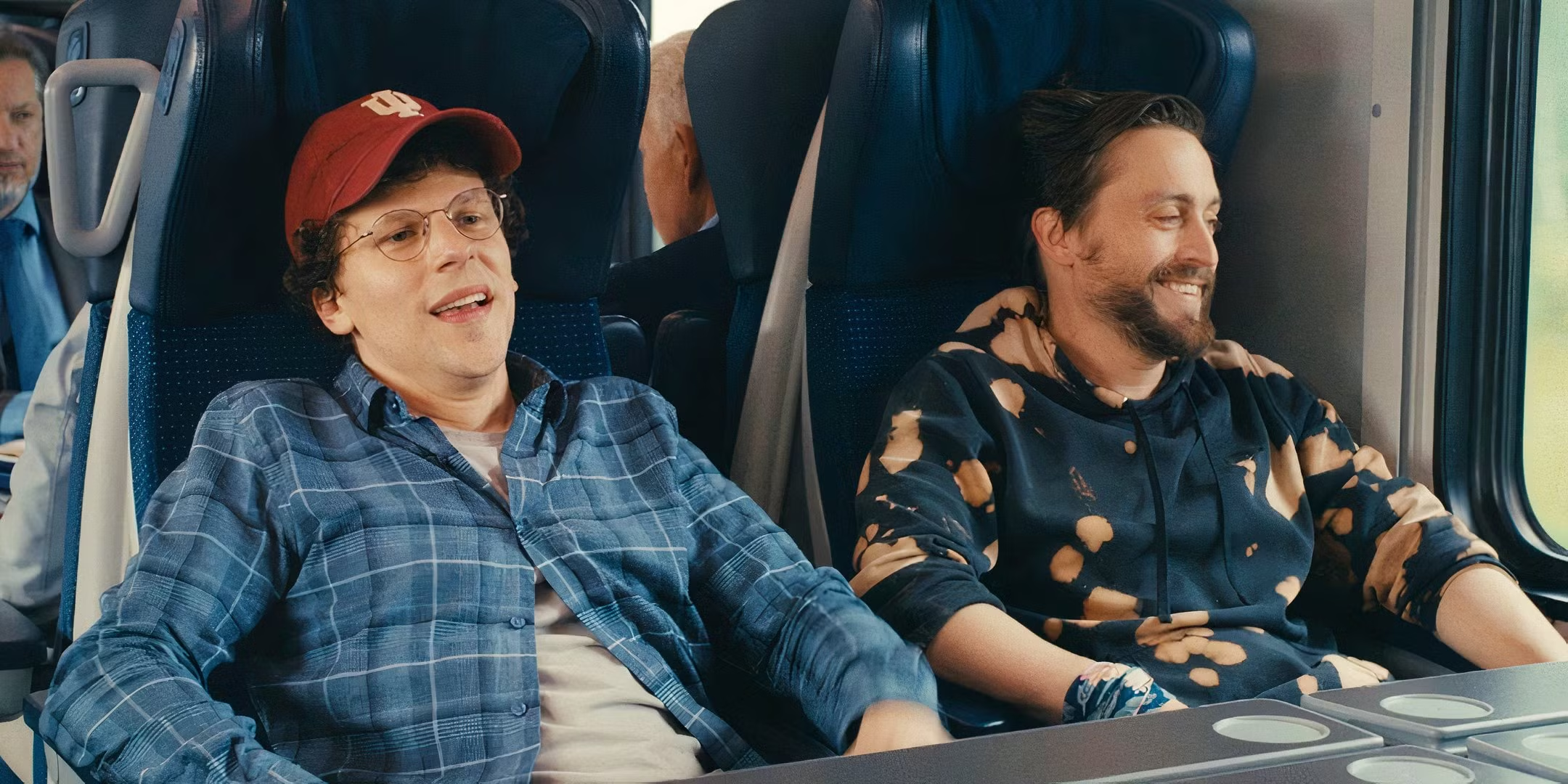
David and Benji (Image via Getty)
Exploring the Deeper Meaning of A Real Pain
A Real Pain is more than a story about two cousins on a journey of self-discovery. The film raises significant questions about identity, grief, and the complexities of the human condition, especially the Holocaust’s impact on contemporary life. Benji’s frustration with the Holocaust tour critiques Holocaust tourism and its risk of reducing tragedy to facts and statistics.
The film also tackles both collective and personal grief. As the cousins process their grandmother’s death, they each navigate pain. David suppresses his emotions, focusing on his family and responsibilities, while Benji’s pain is more visible and self-destructive. They struggle to reconcile their identities, especially with their Jewish heritage. Their visit to their grandmother’s home represents their attempt to connect with their roots, but their expectations remain unmet.
Ultimately, A Real Pain challenges viewers with difficult questions and no easy answers. It explores the human capacity for pain, the complexities of relationships, and the search for meaning in life and history. The film leaves the audience reflecting on its layers, offering a deep examination of identity, grief, and the ways we process pain.
