Park Chan-wook is a filmmaker who often delivers shocking, thought-provoking films. When he directed Oldboy, the world was taken by its intense storyline and unexpected twists. However, his next film, Lady Vengeance, released in 2005, is just as powerful, if not more.
This neo-noir film stands out not just for its shocking plot, but for the emotions it shows. Lady Vengeance tells the story of Lee Geum-ja, a woman who was wrongfully imprisoned for 13 years for a crime she did not commit. Despite her kind appearance and demeanor, Geum-ja harbors a deep need for revenge, aimed at the person who truly committed the crime.
The film did not win the highest awards at the 62nd Venice International Film Festival, but it was still highly recognized. Lady Vengeance earned the Cinema of the Future Award, the Young Lion Award, and the Best Innovative Film Award, among others.
The movie’s story touches on important questions about justice, revenge, and redemption. It shows how far someone is willing to go to right a wrong and the ethical challenges they face along the way.
What Is Lady Vengeance About?
Lady Vengeance begins with the story of Lee Geum-ja. She is introduced through the eyes of different characters, including a church pastor and her fellow prisoners. Her angelic beauty grabs everyone’s attention, reminding people of the famous actress Olivia Hussey.
During her murder trial, her appearance caught the nation’s eye. She looked young and innocent, which made the brutal crime she was accused of even more shocking. Geum-ja has a fair complexion, long flowing hair, and a calm and peaceful attitude, which made her seem pure.
While in prison, she earned the nickname “Miss Geum-ja, the Kind-Hearted.” She comforted new inmates, helped elderly prisoners, and even donated a kidney to a fellow inmate who had chronic kidney failure. Her kindness helped her earn the respect of other prisoners and even reduced her sentence, allowing her to be released after 13 years.
But Geum-ja’s kindness was not genuine. It was all part of a plan. As soon as she was released from prison, she left behind her innocent image and transformed into a much darker and more determined woman. She replaced her modest appearance with bold red eyeshadow, red lipstick, and high heels.
This new look represented her true, vengeful self. She was no longer the kind-hearted woman everyone thought she was. Geum-ja had spent 13 years carefully planning her revenge.
Every good deed she did in prison was a way to win favors from people who could help her once she was free. Now, after years of waiting, she was ready to take her revenge on the person who had framed her for murder.
Lady Vengeance Balances Brutality and Beauty
Every scene in Lady Vengeance feels like it was carefully designed, almost like a painting. The cinematography, the use of color, and the way scenes are framed all help tell the story in a visually striking way. The film uses many close-up shots and unique angles, which bring the audience uncomfortably close to the characters.
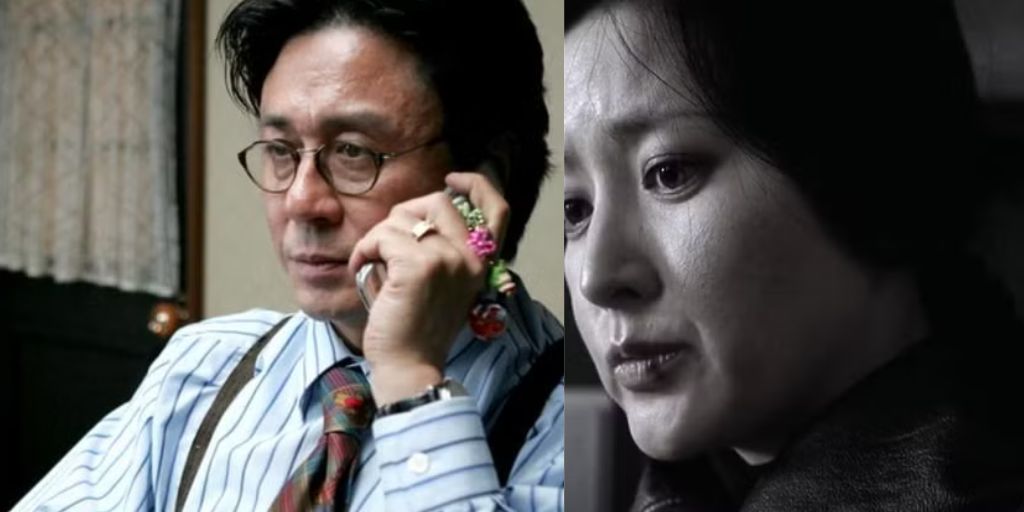
Still from Lady Vengeance (Credit: Netflix)
This technique forces viewers to look closely at the characters and decide how they feel about them. Should they feel sympathy or disgust? This is one of the central questions of the film, as each character is complex and flawed.
One of the defining visual features of Lady Vengeance is its use of white and red. Many scenes take place in winter, with snow covering the ground. The white snow represents purity, as does the white tofu that appears in the film. In one scene, a line from the film speaks to this idea: “Live as white snow and never sin again.”
But against this white, the bold red of Geum-ja’s makeup and her surroundings stands out. The red symbolizes the opposite of purity — it represents blood, anger, and the dark side of her character.
Geum-ja’s transformation from the innocent woman she once appeared to be into the vengeful person she becomes is shown through these colors.
While Lady Vengeance is not as openly violent as Park Chan-wook’s earlier film Oldboy, it still contains moments of brutal violence. The movie does not shy away from showing the dark, violent side of revenge. In the early part of the film, Geum-ja carefully keeps up her innocent act, even as she starts to show her darker nature.
She goes as far as quietly killing an inmate who had been bullying others, without revealing her true self to those around her. But the most shocking and violent part of the movie comes in its final act.
Set in an abandoned schoolhouse in the countryside, this part of the film shows a group of ordinary people carrying out acts of revenge on the murderer who ruined their lives.
None of these people have a history of violence, yet they are driven to brutal acts because of the pain and loss they have experienced. The fact that the violence comes from regular people makes it even more disturbing, leaving a lasting impact on viewers.
The Thin Line Between Revenge and Redemption
At the beginning of Lady Vengeance, Geum-ja’s goal is simple: she wants revenge on the real killer who framed her. After spending 13 years in prison for a crime she didn’t commit, she is cold, focused, and determined to make the person responsible pay.
Geum-ja is driven by hatred, and nothing seems to shake her from her mission. She is willing to do whatever it takes to get her revenge. But everything changes when she is reunited with her long-lost daughter.
Her daughter had been adopted by a family in Australia after Geum-ja went to prison, and the reunion between mother and daughter marks a turning point in the story.
When Geum-ja meets her daughter again, she starts to rethink her reasons for wanting revenge. In a tearful conversation, she tells her daughter that she doesn’t just want revenge — she wants redemption. Geum-ja blames herself for what happened 13 years earlier.
She had the chance to stop the real murderer and save future victims, but she was too scared to act. Now, she sees her revenge as a way to fix that mistake and make up for her past. While she is clearly seeking forgiveness for her past choices, her methods raise moral questions.
Is it right to seek redemption through violence? Should someone who has been wronged use revenge to find peace? These are questions the movie leaves for the audience to answer.
The movie’s final scenes show how revenge can be a double-edged sword. The people who carry out revenge on the real killer may find temporary relief, but they are left with the heavy burden of what they have done.
Geum-ja, too, finds that revenge does not bring the peace she was hoping for. The film suggests that the line between revenge and redemption is not always clear, and that seeking justice can sometimes lead to even more pain.
Geum-ja’s Transformation: From Kindness to Cruelty
One of the most interesting aspects of Lady Vengeance is the transformation of its main character, Lee Geum-ja. When we first meet her, she appears to be kind-hearted and pure. Her fellow inmates admire her for her good deeds, and her gentle appearance makes it hard to believe she could ever commit a crime.
Even during her trial, the public is shocked not just by the murder she’s accused of, but by how innocent she seems. She becomes a symbol of kindness, and people start to see her as a good person who made a mistake.
But this image of Geum-ja is only skin deep. In reality, her kindness is just part of a carefully planned act. She uses her time in prison to build relationships and gain favors, knowing that these connections will help her when she is released. Every good deed she performs is a step in her larger plan for revenge.
When she is finally released, Geum-ja sheds her innocent image and reveals her true self. She trades her modest clothing for bold fashion, with red makeup and high heels to symbolize her transformation. From this point on, she is no longer the kind-hearted woman people thought she was. She is now focused only on getting revenge.
Geum-ja’s transformation is a central theme in the film, and it raises important questions about identity and morality.
Is Geum-ja truly a bad person, or is she simply someone who was pushed to her limits by the injustice she suffered? The movie doesn’t provide easy answers, instead allowing the audience to wrestle with these complex ideas.
Visual Storytelling: Color and Symbolism
Park Chan-wook uses visual storytelling to add depth to the themes in Lady Vengeance. The use of color, in particular, is significant throughout the film. White and red are the dominant colors, each symbolizing different aspects of Geum-ja’s journey.
White symbolizes purity, innocence, and forgiveness, prominently featured in the film’s winter scenes, where snow blankets the ground. This color also connects to Geum-ja’s past, notably through the appearance of tofu in early moments. The notion of living as “white snow” and never sinning again is intertwined with themes of redemption and forgiveness.
In contrast, red represents anger, violence, and vengeance. Geum-ja’s bold red makeup, as well as the red elements in her home and surroundings, symbolize the shift in her character. The red also foreshadows the bloodshed that follows as she carries out her plan for revenge.
The contrast between white and red shows the duality in Geum-ja’s character — the innocence she once had and the darker side that emerges as she seeks justice.
The Moral Complexity of Revenge
Lady Vengeance is a film that does not offer easy answers. While the story centers on Geum-ja’s quest for revenge, it also shows the moral complexities of seeking justice through violence. The characters in the film are not simply good or evil; they are complex individuals with conflicting emotions and motivations.
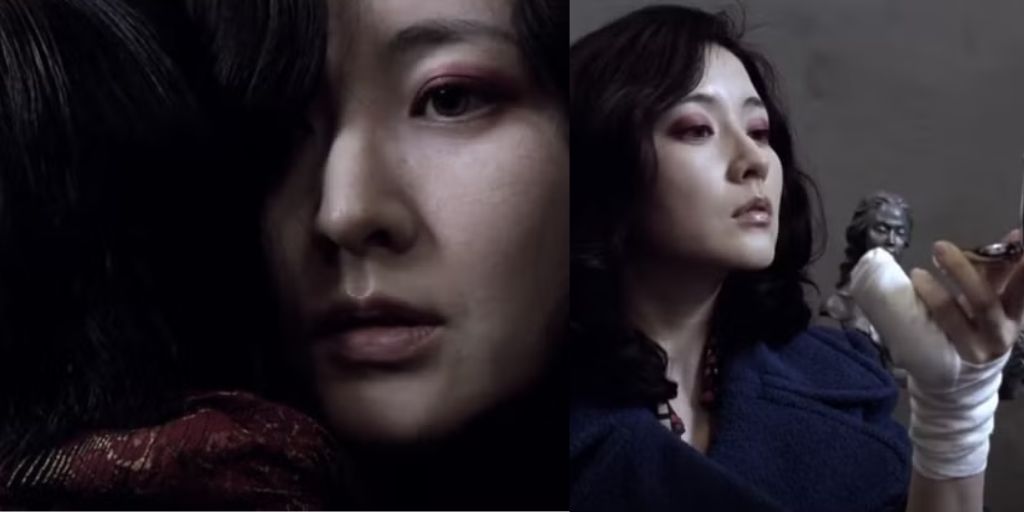
Still from Lady Vengeance (Credit: Netflix)
Geum-ja herself is both a victim and a perpetrator, a woman who was wronged but who also commits terrible acts in her search for revenge.
The film challenges the idea that revenge can bring closure or healing. While Geum-ja’s actions may seem justified on some level, the film shows that violence only creates more pain.
The people who help Geum-ja carry out her plan for revenge are left deeply affected by what they have done, and Geum-ja herself is left questioning whether her actions were truly the right way to seek redemption.
In the end, the film suggests that revenge is not a simple solution to the problems caused by injustice, and that the line between right and wrong is often blurred.
In 2024, CBS launched a new show called Tracker, which became a hit among viewers. It stars Justin Hartley, who many know from shows like This Is Us and Smallville. He plays Colter Shaw, a man who helps people find things or loved ones who have gone missing, but he charges for his services.
Hartley not only plays the lead role but also works as an executive producer on the show. Tracker isn’t your typical crime show, and it doesn’t follow the usual storyline of a lone hero solving crimes in one city. Instead, each episode takes Colter to different places, where he faces new problems and helps solve them.
The series uses a mixture of standalone plots and ongoing mystery. While each episode has its own case to solve, there are hints throughout that point to a larger story, especially about Colter’s family. As fans eagerly await the arrival of Season 2, it’s a good time to reflect on the key moments of Season 1 and recall where Colter’s story left off.
Colter Shaw’s Search for Truth in Tracker Season 1
From the very beginning of the show, we learn that Colter Shaw is a man with a mission. Actually, he has many missions, because he’s always helping people find things or loved ones that have gone missing. He often says, “We’re all looking for something,” which shows just how dedicated he is to getting the job done.
Colter makes it clear that he won’t stop until his clients get the answers they need. While most of Colter’s cases are standalone, meaning each episode has its own story, there is a larger mystery running in the background of the show, which involves his own family.
Colter’s reasons for helping others aren’t just about money—there’s something deeper going on. Over time, we discover that Colter is driven by events from his past.
When Colter was a teenager, his father, Ashton Shaw, moved their family off the grid. Ashton believed that the government was conspiring against them and took extreme measures to protect his family. They lived in isolation, away from the rest of society.
One day, during a thunderstorm, Ashton died unexpectedly, leaving his family in shock. Looking back on it, Colter thought his father might have lost his grip on reality.
He also believed that his older brother, Russell, might have been responsible for their father’s death. This tragedy left a deep impact on Colter and his siblings, and it’s a key part of why Colter is so focused on solving other people’s problems.
Early in the series, we see that Russell, who hasn’t spoken to Colter in years, tries to reach out. He calls Colter several times, but Colter doesn’t answer. Colter’s mother, Mary Dove Shaw, tells him to ignore his brother and stay away from him.
She had told him to leave Russell behind about 20 years ago, and Colter seemed fine with following that advice—at least for a while. But things begin to change when Colter’s sister, Dory, encourages him to let Russell back into his life. Dory believes that it’s time for the family to reconnect and that Russell has something important to share.
When Colter finally decides to meet with Russell, he learns that Russell didn’t kill their father after all. Russell reveals that many things were going on during their childhood that neither of them fully understood at the time. Dory also seems to have her own theories about what happened.
In one episode, “Beyond the Campus Walls,” Dory suggests that their father’s obsession with the government may not have been as far-fetched as it seemed. She hints that there was more to the story and that their father’s death might not have been as simple as they thought. These conversations leave Colter wondering who is telling the truth and who might be hiding something.
In the season finale, “The Storm,” Colter learns a shocking truth from a family friend, Lizzie Hawking. She tells him that his mother had been having an affair with her father. This revelation changes everything for Colter and offers a possible explanation for Ashton Shaw’s sudden death.
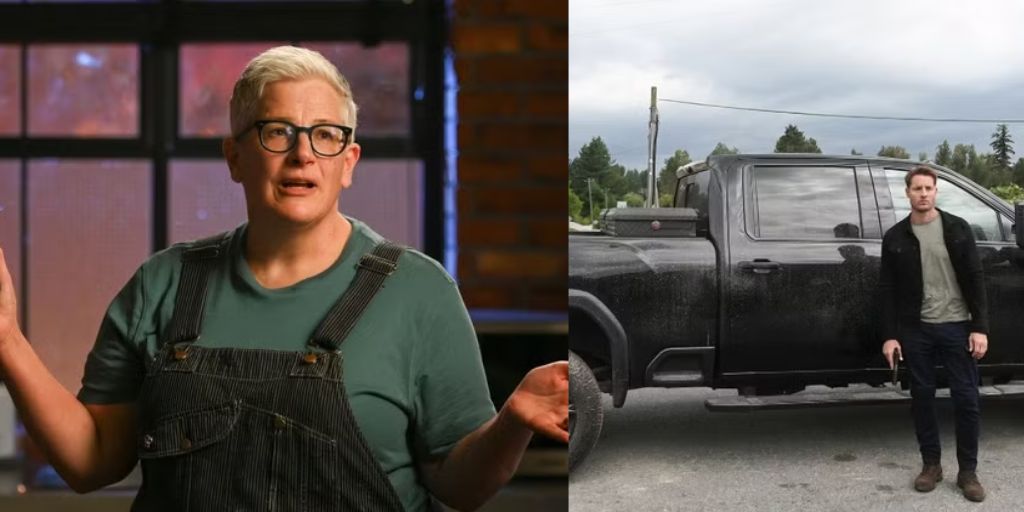
Still from Tracker (Credit: Paramount+)
However, the story doesn’t end there. Russell’s involvement with some questionable military figures raises even more questions. Could Ashton’s death have been linked to something much bigger than just a family affair?
As the season wraps up, we are left with more questions than answers. But one thing is clear: Colter’s family history is far more complicated than he ever realized. With Russell and Dory set to return in Season 2, it seems likely that we will see more family reunions and perhaps more secrets coming to light.
Colter’s Struggles With Keeping His Life Separate
One of the things that makes Colter Shaw such an interesting character is how he manages to keep his personal and professional lives separate. Even though he works closely with a group of co-workers, including Teddi Bruin, Velma Bruin, Bobby Exley, and Reenie Greene, Colter doesn’t share much about his family or his past with them.
He has built walls around himself and prefers to keep others at a distance. This can make him seem mysterious, but it also shows how deeply affected he is by his past.
Reenie’s growing involvement with Colter may play a significant role in the next season, especially as Colter continues to deal with his complicated family dynamics.
Colter Shaw and Reenie Greene’s Relationship: Will It Turn Romantic?
From the early episodes of Tracker, there is a noticeable connection between Colter Shaw and Reenie Greene. While the show hasn’t officially made them a romantic couple yet, there are plenty of moments that suggest they have feelings for each other.
They share longing looks, exchange witty remarks, and Colter often puts himself in danger to protect Reenie. He’s willing to go the extra mile for her, and not just because it’s part of his job.
Reenie’s role in the show has grown significantly throughout the first season. As the series’ main female lead, Reenie is involved in many of the key episodes.
Fiona Rene, who plays Reenie, has great on-screen chemistry with Justin Hartley, and the show’s creators seem to be holding off on fully developing their relationship until the right moment. Fans are hopeful that we’ll see more of their dynamic in Season 2, perhaps with their relationship taking a more serious turn.
But there is an in-universe reason why Colter and Reenie haven’t started a romance yet: Colter has a hard time with commitment. He doesn’t like being tied down and prefers to live a life of independence. His job requires him to constantly be on the move, and his lifestyle reflects his need for freedom.
He lives in a camper, and this mobile lifestyle symbolizes his internal need for isolation. He doesn’t let people in easily, not even his own family.
One scene in particular highlights Colter’s reluctance to stay in one place. After helping Bobby Exley’s friend in the episode “Chicago,” Bobby offers to buy Colter and Reenie lunch. Rather than sticking around for a simple meal, Colter quickly leaves for Sioux Falls.
This pattern of leaving without saying goodbye happens several times throughout the season. Colter has a habit of making sudden exits, which shows how uncomfortable he is with forming deep connections. Even with his handlers, Teddi and Velma Bruin, Colter keeps some emotional distance.
Reenie has her work cut out for her if she wants to break down Colter’s walls. But she’s not the only potential love interest in Colter’s life.
Billie Matalon: Another Love Interest for Colter Shaw?
While Tracker has a relatively small main cast, one guest character made a big impression on fans: Billie Matalon, played by Sofia Pernas. Billie is another reward-seeker, much like Colter. She first appears in the episode “Lexington,” but it’s clear that she and Colter have a history.
They worked together on a job in Miami, but things didn’t end well. Billie betrays Colter during that job, which has created some tension between them.
Despite the betrayal, Billie and Colter have undeniable chemistry. Their interactions are filled with sparks, and Billie could serve as a romantic foil to Reenie. This is made even more interesting by the fact that Sofia Pernas, who plays Billie, is Justin Hartley’s real-life wife.
The two actors met while working together on The Young and the Restless and eventually got married. Their real-life connection adds an extra layer of intrigue to their on-screen relationship.
It will be interesting to see how the show balances Colter’s potential relationships with Reenie and Billie in Season 2. Will Colter finally open up to Reenie, or will Billie’s reappearance cause more complications in his personal life? Either way, fans are eager to see how these dynamics play out in future episodes.
What to Expect in Tracker Season 2
As Season 2 of Tracker approaches, fans are excited to see what’s next for Colter Shaw. The first season ended with many unanswered questions, especially about Colter’s family. But Tracker is known for its episodic nature, where each installment features a standalone plot.
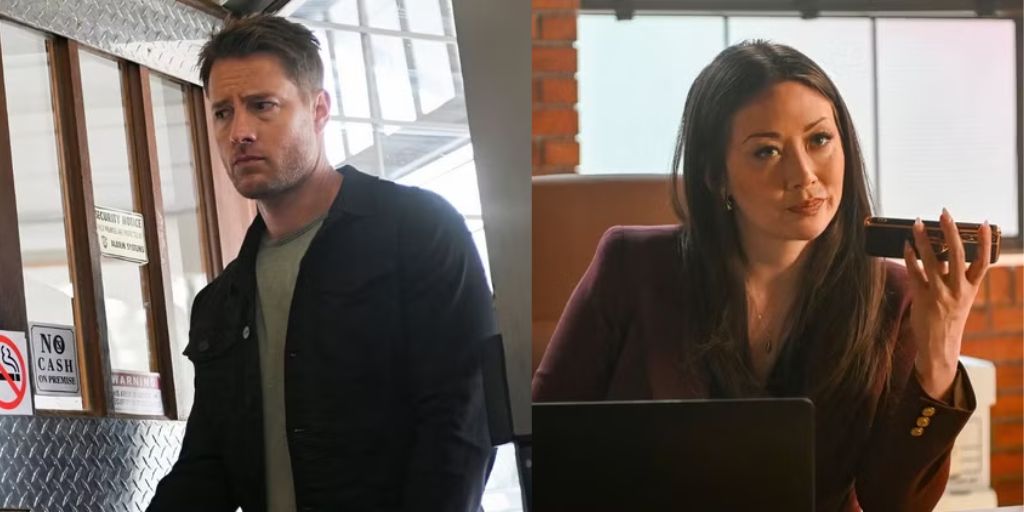
Still from Tracker (Credit: Paramount+)
This structure allows the show to focus on different cases each week, which keeps the storytelling fresh and exciting. However, it can also push the larger story arcs, like Colter’s family mystery, to the background.
Some standout episodes from Season 1 include “Missoula,” which centers on a dangerous cult, “Aurora,” a horror-themed missing person case, and “Into the Wild,” which features the talented Peter Stormare. These episodes are examples of Tracker’s ability to balance intriguing standalone cases with the overarching mystery surrounding Colter’s past.
As for Season 2, we know that there will be some changes to the team. Robin Weigert, who played Teddi Bruin, won’t be returning for the new season. Her character’s departure means that Reenie Greene will likely take on a more prominent role within Colter’s team.
Reenie, who was previously Colter’s go-to lawyer, will now be working closely with Velma Bruin on a new business venture. This new job will not only help Colter financially but will also allow him to continue helping people who need skills that go beyond the law.
In the upcoming season, Colter’s first case will involve searching for a missing mother who has ties to organized crime in Arkansas. This storyline is expected to feature both Russell Shaw and Billie Matalon, who will return in the first few episodes.
As Colter continues to tackle new challenges, fans are eager to see how the remaining family secrets will be revealed and what new twists await him in Season 2.
