Lisa McGee’s popular show Derry Girls, which first aired on Channel 4 and later came to Netflix, tells the story of Northern Irish teenagers Erin Quinn (Saoirse-Monica Jackson), Orla McCool (Louisa Harland), Claire Devlin (Nicola Coughlan), Michelle Malon (Jamie-Lee O’Donnell), and their English friend James Maguire (Dylan Llewellyn).
The show follows their teenage years in Derry during the time of the Troubles. In its final season, Derry Girls featured several notable guest stars, including Fatboy Slim, Conleth Hill from Game of Thrones, and Chelsea Clinton. But the biggest surprise came in the first episode of Season 3 when Liam Neeson appeared as a Royal Ulster Constabulary officer, leaving viewers shocked.
Neeson also appeared briefly in the final episode of Derry Girls, but this time his character took on a much more serious tone compared to the humorous interrogation scene in the episode “The Night Before.” In the finale, Neeson’s character was shown voting on the Good Friday Agreement. His emotional expression left viewers wondering about the importance of his return and what it meant for the story.
Who Does Liam Neeson Play in Derry Girls?
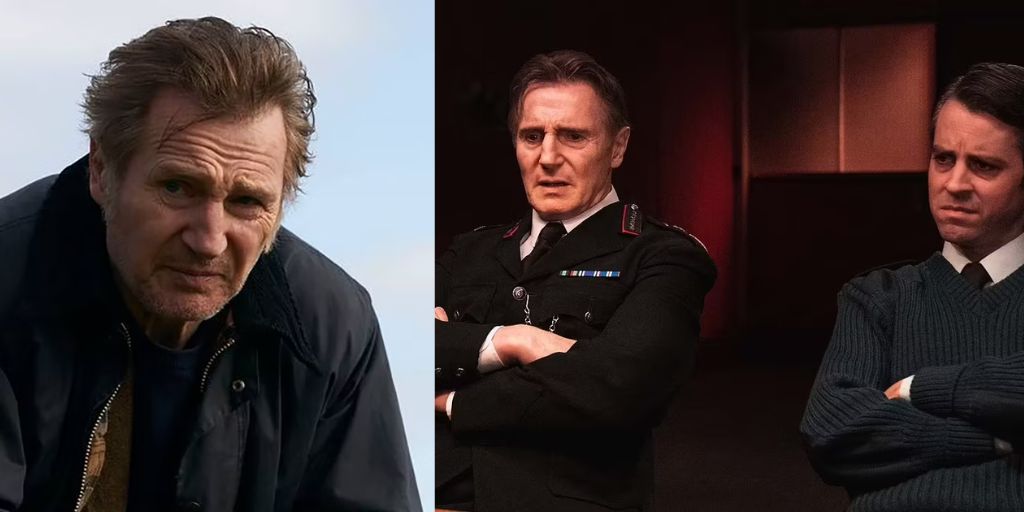
In the episode “The Night Before,” Neeson plays Chief Inspector Byers, a Royal Ulster Constabulary officer. He interrogates the group of girls after they accidentally break into their school while searching for their GSCE results.
According to The Guardian, Neeson was nervous about filming his scene, and his appearance was kept secret by referring to him on set as “the big fella.”
During the interrogation, Byers is worn down by Uncle Colm (played by Kevin McAleer), whose long, boring stories cause both him and his partner to grow frustrated. Eventually, they release the girls after realizing they aren’t responsible for the burglary.
Though the scene is funny, it takes a more serious turn when Erin accuses the officers of discriminating against them because they are Catholic.
Neeson’s character responds that this is a serious accusation. He also reveals that the RUC only has three Catholic officers, showing the discrimination in the police force at the time. This moment ties the scene to the larger context of the Troubles, which affected everyone in Northern Ireland, including these teenage girls.
Neeson’s Return in the Derry Girls Finale
In the last episode of Derry Girls, titled “The Agreement,” Neeson’s character returns during a crucial time in Northern Ireland’s history — the Good Friday Agreement. This agreement, introduced in 1998, aimed to end the violence of the Troubles.
Still from Derry Girls (Credit: Netflix)
It focused on police reform, the disbanding of paramilitary groups, and the return of self-government to Northern Ireland. As the characters in Derry Girls debate the moral implications of the agreement, they are shown casting their votes in a public referendum.
One of the most memorable moments in the finale is when Neeson’s character, Chief Inspector Byers, is seen voting.
The scene is set to the song “Dreams” by The Cranberries and is intertwined with footage of historical moments, including UK Prime Minister David Cameron’s apology for the Bloody Sunday massacre of 1972, where 26 unarmed Catholic protestors were killed by British soldiers.
Byers is shown removing his RUC officer’s hat before he votes, a subtle but powerful gesture that carries deep significance.
Why Does Neeson’s Character Remove His Hat?
To understand the importance of this moment, it’s essential to know about the Troubles, a conflict that began in the late 1960s and ended with the Good Friday Agreement in 1998.
It was a violent conflict between unionists, mostly Protestants who wanted Northern Ireland to remain part of the UK, and nationalists, mostly Catholics who wanted to join the Republic of Ireland.
Over 3,800 people died during the Troubles, and Catholics faced significant discrimination, especially from the RUC, which was often accused of siding with unionist paramilitary groups against Catholics.
Neeson’s character appears conflicted as he votes. Part of this inner struggle could stem from the fact that, during the Troubles, around 300-400 RUC officers were killed.
The Good Friday Agreement allowed for the release of some prisoners responsible for these deaths, which might have been weighing on Chief Inspector Byers’ mind. By removing his hat, he could be acknowledging the many lives lost and choosing to vote not as an RUC officer, but as a person affected by the violence of the Troubles.
The removal of his hat could also symbolize the burden of his role in the RUC. Neeson’s character might have been voting with the weight of the institution on his shoulders. By taking off the hat, he may have been freeing himself from that responsibility to vote based on his conscience.
Neeson’s Connection to His Role
Though Neeson plays a Protestant RUC officer in Derry Girls, he is a Catholic who grew up in Ballymena, Northern Ireland, during the Troubles. He has spoken openly about Ireland’s unification and has praised the Good Friday Agreement.
Neeson’s role in the show likely held deep personal significance for him, and his emotional performance in the final scene may reflect his feelings about the conflict and the peace process.
Still from Derry Girls (Credit: Netflix)
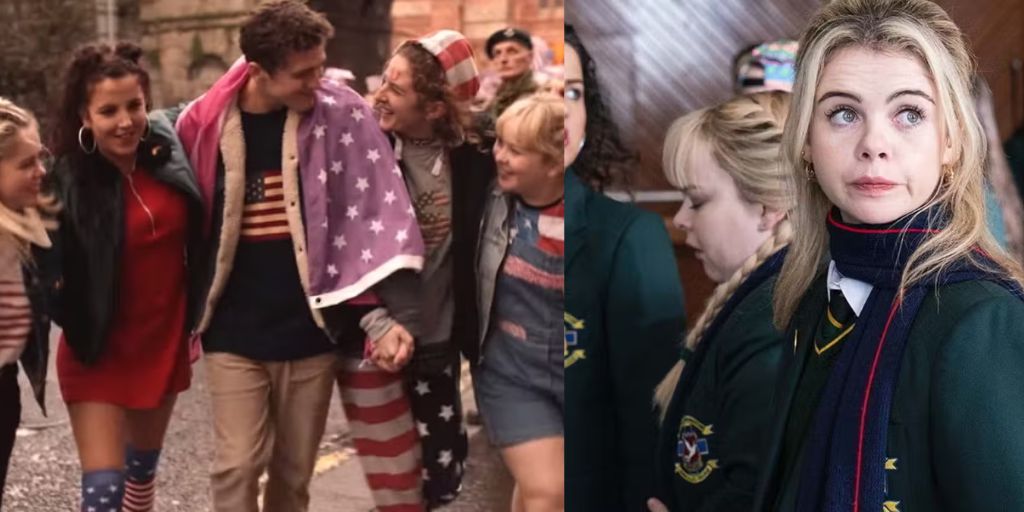
Derry Girls has been praised for its authentic portrayal of mid-1990s Northern Ireland, and Neeson’s silent but impactful performance in the finale served to highlight the lasting effects of the Good Friday Agreement.
Liam Neeson plays a Royal Ulster Constabulary officer in Derry Girls, first appearing in a humorous scene and returning for a serious moment in the finale. His character’s emotional vote on the Good Friday Agreement reflects the internal conflict tied to Northern Ireland’s Troubles, a theme deeply personal to Neeson himself.
Derry Girls is currently available to stream on Netflix in the U.S.
In 2021, the classic science fiction novel Dune by Frank Herbert was brought to life. Director Denis Villeneuve made it happen with his film, Dune. Villeneuve’s version became a great success, capturing the story’s depth, something previous attempts had failed to do.
One of the smartest things Villeneuve did was split the book into two movies. This gave the story and characters enough time to develop properly. Dune: Part Two became one of the top movies in 2024, and soon after, a third movie, Dune: Messiah, was announced.
The first spin-off from Dune will be a prequel series on Max called Dune: Prophecy. This series, originally titled Dune: The Sisterhood, will focus on the rise of the Bene Gesserit, a powerful group in the Dune universe. Here’s everything we know about the series.
When and Where Will Dune: Prophecy Come Out?
A Dune spin-off has been in the works at HBO since 2019, even before the 2021 release of the Dune movie. On November 22, 2022, former director Johan Renck said that production had started, stating: “Through events that happened thousands of years before the story you all know, we look into the group that will one day be known as the Bene Gesserit.”
Since then, Renck left the project and was replaced by Anna Foerster. However, the series is still scheduled to be released in November 2024.
Does Dune: Prophecy Have a Trailer Yet?
The story of Dune: Prophecy is set many years before Paul Muad’dib Atreides was born. It focuses on a sisterhood that aims to change the future. The first trailer for the series shows us Frank Herbert’s Dune in a new way, unlike anything we’ve seen before.
What Is the Plot of Dune: Prophecy?
The universe of Dune is incredibly vast, with stories spreading across the universe and covering thousands of years. Frank Herbert’s novels created one of the most detailed fictional worlds, similar to J.R.R. Tolkien’s Middle Earth.
Still from Dune Prophecy (Credit: Max)
The story of Dune: Prophecy takes place around 10,000 years before the events of Dune and the birth of Paul Atreides, the prophesied Kwisatz Haderach.
The story follows Griffin and Valya Harkonnen, the eldest children of the Harkonnen family, as they work to rebuild their family name and fortune. Eventually, they help form the Bene Gesserit, the powerful group known throughout the universe.
In Dune, the Bene Gesserit is a major force. They are a secretive group that carefully plans and manipulates events to control their future and have a big influence on politics and power in the universe.
In the first Dune movie, we see Villeneuve’s portrayal of the Bene Gesserit through the characters of the Reverend Mother (played by Charlotte Rampling) and Paul’s mother, Lady Jessica (played by Rebecca Ferguson). The new series will show the origins of the Bene Gesserit and expand their story.
Here is the official synopsis of the show released by Max:
“Set 10,000 years before the rise of Paul Atreides, the hero of the 1965 novel Dune, the series follows two Harkonnen sisters as they fight against forces threatening humanity’s future and form the legendary group known as the Bene Gesserit.”
Who Is in the Cast of Dune: Prophecy?
One of the biggest strengths of the Dune movie was its talented cast, and Dune: Prophecy is continuing with a similar approach by assembling an impressive cast.
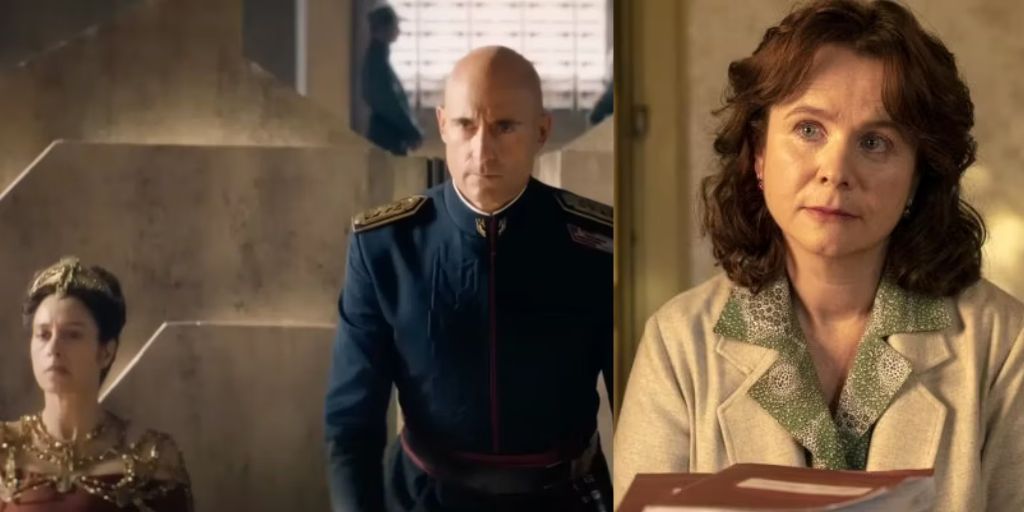
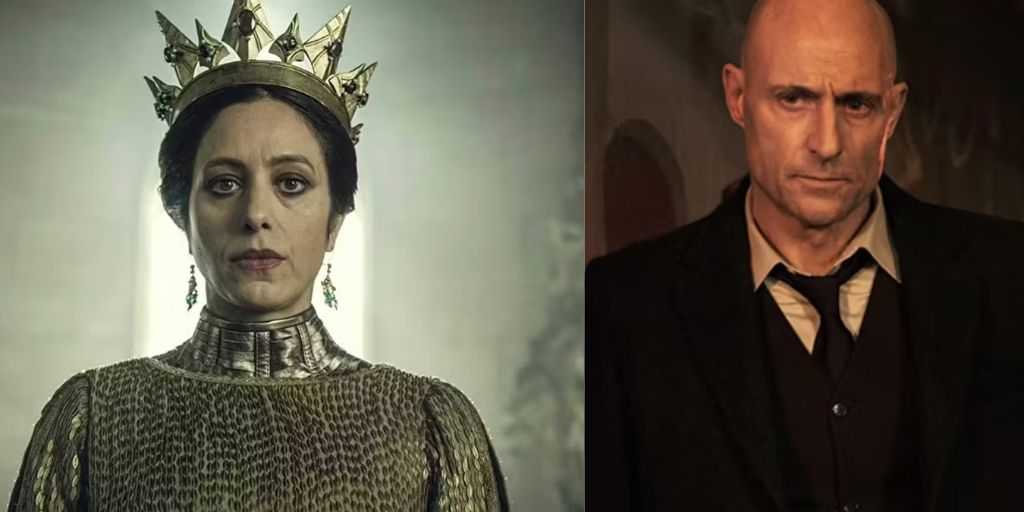
Emily Watson, known for her roles in Chernobyl and Punch-Drunk Love, will play Valya Harkonnen, a strong woman rising in power within the Bene Gesserit. Jodhi May (The Witcher) will play Empress Natalya, who unites thousands of worlds through her marriage to the Emperor.
Mark Strong (Shazam! and Sherlock Holmes) will play Emperor Javicco Corrino, a ruler descended from powerful European leaders who govern the Imperium during a period of unrest. Travis Fimmel (Vikings) will portray a charismatic warrior who seeks to gain the Emperor’s trust, even if it means going against the Sisterhood.
Olivia Williams (The Sixth Sense) will play Tula Harkonnen, an early member of both the Harkonnen family and the Bene Gesserit.
Other actors like Jade Anouka, Chris Mason, Sarah-Sofie Boussnina, Shalom Brune-Franklin, Faoileann Cunningham, Aoife Hinds, and Chloe Lea will also have important roles in the series.
Shirley Henderson (Star Wars: The Rise of Skywalker) and Indira Varma (Game of Thrones) were originally cast to play Tula Harkonnen and Empress Natalya, but both left the project in early 2023.
Who Is Making Dune: Prophecy?
Denis Villeneuve’s vision for Dune is remarkable. His influence will continue with Dune: Prophecy, as he will return as an executive producer on the show. Production on the series has seen some challenges, with several people leaving the project.
Diane Ademu-John (Empire, The Originals) and Alison Schapker (Lost, Westworld) initially led the project as showrunners. However, Ademu-John left the show in November 2022, leaving Schapker as the only showrunner. Johan Renck (Chernobyl, Breaking Bad) was originally supposed to direct the first two episodes but left in February 2023.
Still from Dune Prophecy (Credit: Max)
HBO provided the following statement about Renck’s departure to Variety:
“There are some creative changes being made to the production to ensure the best series possible and to stay true to the source material. Johan Renck has completed his work on the series, and a new director will be brought on. By mutual agreement, Johan is moving on to pursue other projects.”
We don’t know yet how much of Renck’s work will be used in the final series, but we do know that Anna Foerster is directing several episodes. The series is now in post-production and is still on track to be released later this year.
