The events at the end of Lies of P bring a layered twist to a story that had already taken players through a dark and haunting version of Pinocchio’s journey. By the time Geppetto’s intentions are laid bare and the final decisions are made, the tone becomes more philosophical than it had been throughout the game.
Players are expected to reflect deeply on what it means to be human, what free will demands, and what sacrifices are required in the pursuit of truth.
The game closes out in a way that leaves room for reflection, but it does not hand out easy answers. Every moment leading up to the ending feels weighty, and the final outcome depends on the decisions made along the way.

When loyalty meets truth, the strings begin to snap (Photo: Lies of P/Round 8 Studio)
Much of the mystery surrounds the puppet protagonist’s choices and how those choices influence the path he takes. This is not a story where good and bad are clearly separated.
Every option challenges the player’s sense of morality, while the characters around him each represent various aspects of deception, loyalty, and personal cost. By keeping secrets hidden until the final stretch, the developers ensured that the weight of every action would come into sharp focus as the story drew to a close.
The Truth Behind Geppetto’s Plan
Geppetto, who serves as a guiding figure throughout much of the story, is not entirely who he seems. While he presents himself as a father figure trying to bring peace to Krat and restore order through the puppet system, his true intention is much more personal.
He is working toward the resurrection of his biological son, Carlo, and he needs the puppet to complete this objective. The game positions this plan as ethically troubling. Although Geppetto appears to care for the puppet, he is essentially using him as a tool to bring back his lost child.
This creates a moral question that carries into the closing sequence. Does the puppet owe Geppetto anything? If he has become more than just a machine, shouldn’t he have the right to make his own choices rather than serve someone else’s painful past?
This dilemma forms the core of the ending, placing players in the middle of a decision that could define the future of the character and the city itself.
The Three Endings and What They Represent
There are three different outcomes, each of which reflects the kind of decisions made during the game. Throughout the story, the player is given the opportunity to lie or tell the truth.
These choices influence how much humanity the puppet gains and whether it becomes more than a mere mechanical being. The game’s system quietly tracks these decisions and applies them during the final sequence.
One outcome sees the puppet sacrificing himself to bring back Carlo, which gives Geppetto what he always wanted but strips the puppet of any personal freedom. Another path allows the puppet to reject the sacrifice, leading to a confrontation with Geppetto and a more independent future.
The third and rarest ending, known to some as the “Rise of P” ending, unlocks only if a certain level of humanity is achieved. This route opens the way to a future that hints at deeper consequences for the world around him, as well as the puppet’s own destiny.
For players who refuse to submit to Geppetto’s plan, the story takes a violent turn. The Nameless Puppet is introduced as the final opponent, brought to life by Geppetto through his twisted efforts. This battle is long and intense, standing as one of the most challenging parts of the game.
The design of the Nameless Puppet reflects Geppetto’s desperation. It is raw, fast, and lacks any compassion. Defeating this creation is not only a mechanical triumph but also a statement against blind obedience.
This boss fight carries emotional weight because it confirms what the puppet has become. Choosing to fight back means rejecting the role Geppetto assigned and taking ownership of one’s own identity.
The music, the setting, and the dialogue during this battle all underline the gravity of the moment. It is not just about survival. It is about freedom.
The system of lying in the game is central to how the character grows. Unlike most games where truth is usually rewarded, here, deception can sometimes help people heal or move forward. Each lie told brings the puppet closer to understanding human emotion, memory, and grief.
The more lies told, the more human he becomes. That transformation affects everything, from his interactions with characters like Sophia and Eugenie, to the ending that becomes available.
This approach challenges players to think about truth in a different way. Sometimes, lies can be an act of kindness. Sometimes, honesty can cause more pain than good.
The game’s mechanics never punish or reward straightforwardly. Instead, they reflect a philosophy that echoes through its world: what matters is intention, not just the words spoken.
The Sophia Factor and Her Role in the Ending
Sophia serves as both a companion and a source of mystery throughout the puppet’s journey. Her connection to Ergo, the substance that powers the puppets and connects to human consciousness, gives her a unique perspective.
By the time the story reaches its end, the puppet must decide whether to free Sophia or use her for his own gain. This choice alters how the final events play out and adds weight to the final decision.
If Sophia is released, it shows the puppet’s understanding of empathy and sacrifice. Keeping her bound means embracing control and power at the cost of someone else’s freedom. These are not small moments. They define what kind of being the puppet has become.
After the credits, a secret scene shows a gloved hand holding a letter referencing Dorothy from The Wizard of Oz. This brief moment suggests that the game’s universe may include other twisted retellings of famous stories. While nothing is directly stated, this scene acts as a quiet clue that the events of Lies of P may only be one chapter in a broader collection.
This ending raises several questions about who else exists in this setting and what their own journeys might look like. It also suggests that the puppet’s story could intersect with other myth-inspired characters. The world feels bigger than it initially appears, and there is room for much more.
How the Game Uses Emotion Instead of Simple Mechanics
One strength of Lies of P is the way it brings emotion into gameplay without forcing it. The design encourages players to think, to feel conflicted, and to ask themselves hard questions.

Not all fathers seek redemption, some just want revival (Photo: Lies of P/Round 8 Studio)
Instead of offering clear paths or strict morality systems, it lets decisions carry weight naturally. The result is a game that resonates beyond its final boss fight or stat upgrades.
Every part of the game feels crafted to support this tone. From the decaying beauty of Krat’s buildings to the haunting music and broken characters, nothing is left without purpose. Even small choices, like how to respond to a lost puppet’s final words, carry meaning. This emotional consistency gives the ending its strength.
What defines Lies of P is not just its action or combat, but the burden of choice. Every option matters, every character interaction leaves a trace, and the ending reflects those decisions.
This is not a tale where one ending is better than the others. Instead, each conclusion reflects what was done throughout the journey and what kind of person the player chose to become.
The story pushes the idea that becoming human is not about biology or programming. It is about choice, compassion, pain, and sacrifice.
By the time the last scene ends, players are left thinking not just about what happened but about what it all meant. The game respects the intelligence of the player and offers depth without shouting it loudly.
Lies of P is available for purchase on PlayStation 4, PlayStation 5, Xbox Series X|S , Xbox One, and PC through platforms like Steam and the Microsoft Store. Those who prefer to rent can find it on services that support game streaming or temporary game access.
Cubicle had a very confusing ending. And at first, I, too, was like, “What the F did just happen at the end? But then, after thinking about it for a while, I got some theories on what would have happened at the end of Cubicle.
I, too, am an aspiring filmmaker, and this genre of horror is where I started my journey. So I have a sense of what the writer and the director were trying to portray and were going for.
It would look like Cubicle had an open-ended Ending as if it was up to us to guess as to what would have happened or if it was real. But this is not the case, and it was not an open-ended ending, and it has a one-way or one-stop ending.
Here is the Cubicle Movie Ending Explained:
Cubicle Movie Explained
Cubicle start with a Woman going into a public toilet Cubicle to take a pregnancy test. She takes the test and gets the results but is not happy with the results. Then she hears sounds of a girl moaning and a couple having sex in the Cubicle next to her.
This pleasing moaning sound of the girl she was hearing turns into the sound of a girl being raped to death, and the Woman gets scared hearing this. The Woman sees “the senseless foot of the girl through under her Cubicle”.
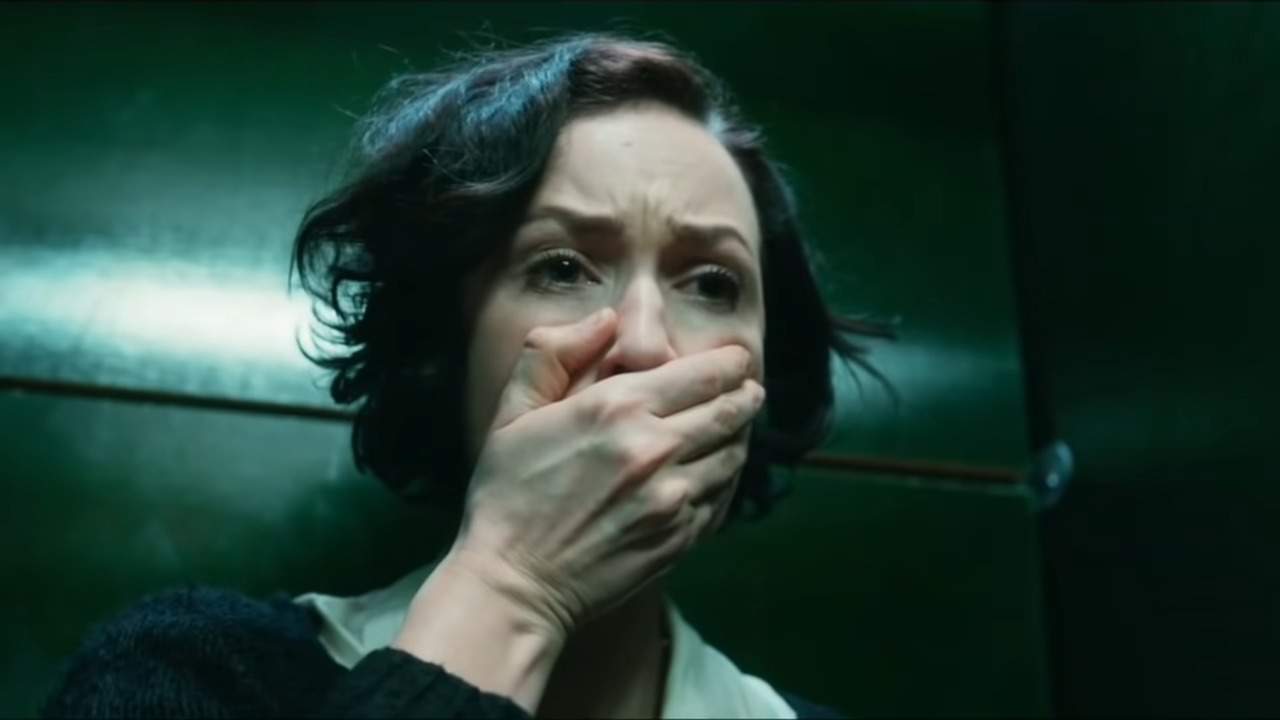
The Woman gets scared after the event (Credits: Chloe Wicks)
The Woman was so frightened that she didn’t want to confront the man or the person who was doing this to the girl. She thought that the person would attack her as well.
The woman even lifted up her feet and tried to hold her voice so that she could hide her presence and give the impression that there were no witnesses.
Also Read : Brothers Ending Explained: Why Sam is Angry at His Brother, Tommy?
There Is No One On The Cubicle
Once she hears the sound of the man or the person leaving, the Woman gathers her courage to check on the girl that was raped in the cubicle next to her.
As she opens the door to this cubicle, she finds the cubicle to be empty. In a panic, she goes on looking into all the cubicles, and still, she finds them all empty.
The Woman goes back to her Cubicle to get things together. But as she sits back into her place, she once again sees “the senseless foot of the girl through under her Cubicle”.
The woman gets confused because she just saw the Cubicle next to her to be empty, but now she is seeing the foot again.
Still confused, she takes out her phone, opens up the camera app, and takes a picture of the Cubicle next to her through the lower partition. But when she sees this captured photo, it’s none other than a woman looking exactly like her, lying senseless on the toilet seat.
The woman is shocked to see this, and suddenly, a figure with a Baby Mask appears from the above partition of the Cubicle and starts to attack her. The credit roll, and we hear the same screaming that we were hearing at the start of the film.
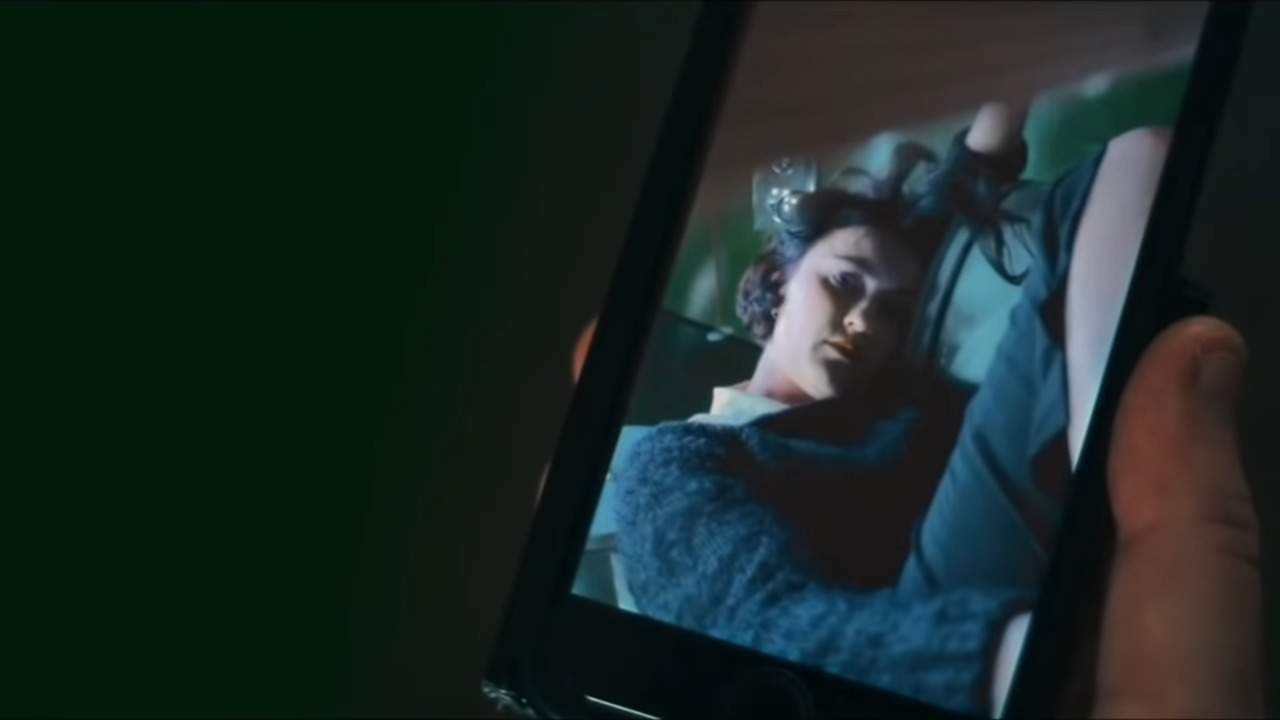
The same woman in the photo (Credits: Chloe Wicks)
Cubicle Movie Ending Explained
Now, I think that this was obviously all in that woman’s head if we were talking in a real-world scenario where such spooky things don’t happen. Maybe she saw a dream, and I can some what explains why she saw such kind of dream.
At the start of the film, we see that the Woman entered the Cubicle in the first place because she was trying to take a pregnancy test. And when the test was ready, and we saw her expression, we could tell that the test was positive and that she was not happy that she was pregnant. Since she is unhappy, she might think of having an abortion.
Now, why this pregnancy thing is important? Remember the face of that spooky figure was like a baby? I think this woman might have had some abortion in the past, and this was her past trying to haunt her.
This woman, in a way, killed that unborn child by having an abortion in the past or was going to have an abortion in the future. And now that unborn child has taken a shape to kill her in return.
