The 2024 horror movie Longlegs , directed by Osgood Perkins, culminates in a chilling and intense conclusion that leaves viewers questioning the fate of Agent Lee Harker. The story follows Harker, played by Maika Monroe, as she investigates a series of murders committed by the titular character, Longlegs, portrayed by Nicolas Cage in a role that critics have hailed as one of his most iconic.
Throughout the film, Harker decodes several cryptic letters left at crime scenes by Longlegs, which ultimately leads her to uncover a surprising personal connection to the killer. In a major plot twist, Harker realizes she was one of the girls Longlegs targeted in the past. With the FBI’s help, Harker identifies Longlegs’ true identity, and his eventual capture seems imminent.
Longlegs Ending Explained
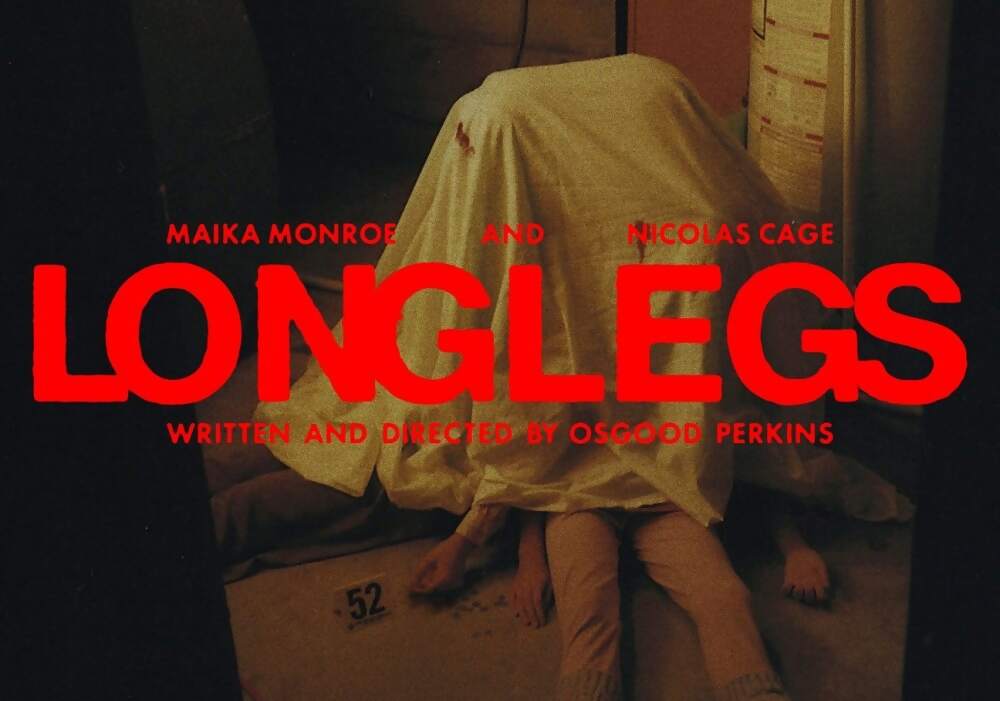
Longlegs (Image via Getty)
As the investigation intensifies, Agent Harker revisits her own past, eventually confronting her mother, Ruth. Ruth is revealed to have played a pivotal role in the killings. Ruth confesses that she made a deal with Longlegs, agreeing to deliver handmade dolls to each family and ensuring the murders happened, in exchange for sparing Harker’s life. In the final confrontation, Ruth murders one of Harker’s colleagues, and Harker is forced to take lethal action against her mother.
Despite her victory over Ruth, Harker hesitates when it comes to destroying the doll Longlegs created, which has a strange influence over her. It seems that the doll may have some kind of supernatural control over Harker, causing her to freeze at a crucial moment. As she stares hypnotically at the doll, the eerie silence intensifies, leading to the belief that Harker is now under its influence.
Is Harker Now Under Longlegs’ Control?
The film’s ending leaves viewers questioning whether Harker has truly fallen under Longlegs’ influence. As she attempts to shoot the doll, the sound of her gun firing suggests something is wrong—perhaps the gun’s safety is on, or she is unable to pull the trigger. The doll seems to have a powerful psychological hold over her, making it impossible for her to destroy it.
Longlegs, even in death, might still exert control over Harker. The doll is his final creation, and it may serve as his lingering presence, reaching out beyond the grave. While Harker could eventually overcome this trance-like state, it seems more likely that she will continue to be manipulated by Longlegs’ influence. The possibility exists that she will become a new vessel for his legacy of death.
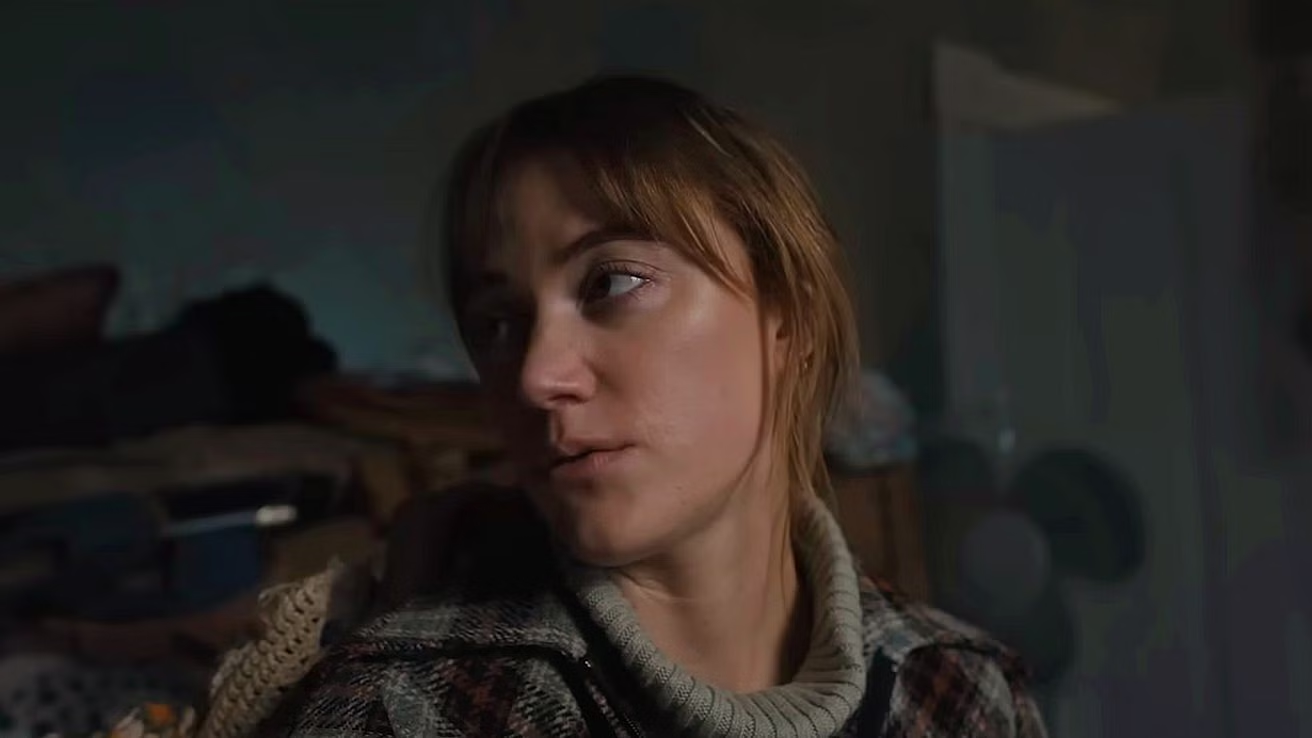
Harker (Image via Getty)
The Biblical Context: Revelation 13:1 and The Beasts
A key theme in Longlegs involves religious and biblical symbolism, particularly the quote from Revelation 13:1, cited by both Longlegs and Ruth before their deaths. This passage refers to a beast with seven heads and ten horns, often interpreted as a demonic or Antichrist figure. In the film, Longlegs and Ruth symbolize these “beasts,” controlling the families they target. Longlegs uses these families, believing they are part of some grand plan to “save” them through death.
The film introduces an unsettling idea that violence can be justified under the guise of righteousness. Ruth’s transformation into a “beast” is a prime example of someone who, though initially manipulated by Longlegs, ultimately embraces the same deadly path. By quoting Revelation 13:1, Ruth and Longlegs align themselves with the biblical beasts, continuing their work of corruption and control even after death.
The Doll’s Influence on the Victims
Another chilling element of the film is the role of the doll. Longlegs crafts each doll with a hollow silver orb inside its head, which emits a strange, static-like whisper that only the families can hear. This sound is a key part of the killer’s manipulation, hypnotizing the victims and causing them to fall under his control. It’s suggested that Longlegs, even after death, is able to pass on his influence through the doll, continuing to torment his victims long after his capture.
The 14th Birthday Murders and Biblical Connections
Longlegs’ methodical approach to his killings involves targeting families with daughters born on the 14th day of any given month. The murders occur close to or on the 14th day, a number that holds biblical significance. The number 14, when broken down, adds up to 7 + 7, symbolizing the two beasts—Longlegs and Ruth—and further tying the story to the themes of Revelation.
The 14th birthday killings might symbolize a twisted form of “divine” action, with Longlegs believing that by carrying out these murders, he is fulfilling some higher purpose. The connection to Revelation 13:1 adds depth to the film’s unsettling narrative, as Longlegs sees himself as an instrument of divine punishment.
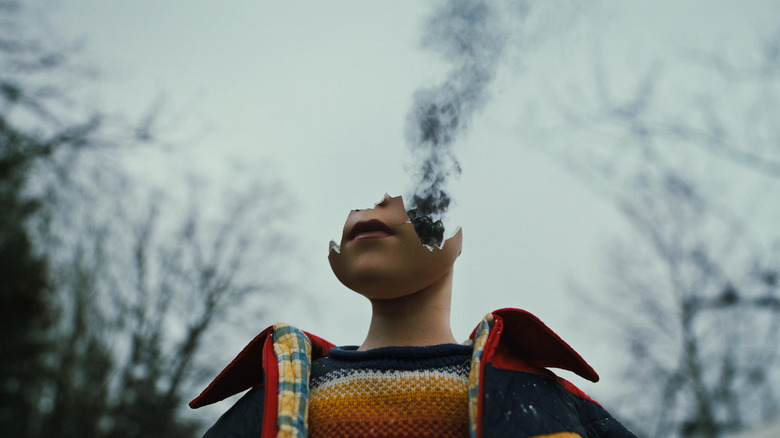
The Doll (Image via Getty)
The Final Deaths and the Continuing Legacy of Longlegs
Throughout the film, several key characters meet their tragic ends, contributing to the general sense of doom. These deaths include Longlegs himself, Ruth Harker, Agent Carter, and several others connected to the killer’s twisted plan. Despite the deaths of these primary figures, the final moments of the film suggest that Longlegs’ work is far from over.
Harker’s hesitation to destroy the doll hints at the possibility of a new chapter in the story, with Longlegs’ influence continuing to spread through the people he leaves behind. The doll’s presence suggests that the cycle of violence could begin again, and Harker might be the one to carry out Longleg’s evil legacy.
The Film’s Themes of Family and Violence
Beyond its supernatural aspects, Longlegs explores the disintegration of the nuclear family. Longlegs targets not just children but parents, forcing fathers to commit violence against their wives and daughters. This dark portrayal of family dynamics is especially significant considering Harker’s background, having grown up in a single-mother household.
The film also underscores how anyone, no matter how good or righteous they may seem, can be influenced to commit unspeakable acts. The characters in Longlegs are driven by a belief that they are protecting loved ones or fulfilling a greater purpose, yet they are ultimately manipulated into committing violence. Harker’s final act of killing her own mother demonstrates the devastating cycle of harm that is perpetuated throughout the film.
The Netflix German sci-fi thriller Cassandra dives into a world where the boundaries between human and machine blur, creating an intense psychological battle. The series masterfully navigates the complexities of time, with the narrative jumping between the past and present, creating an unsettling atmosphere. In its finale, the show reaches its emotional peak, revealing the intricate layers of the past and the consequences of unchecked power. The story unravels the disturbing psychological manipulation caused by a home system and its tyrannical grip on the Prill family.
Cassandra Netflix Ending Explained
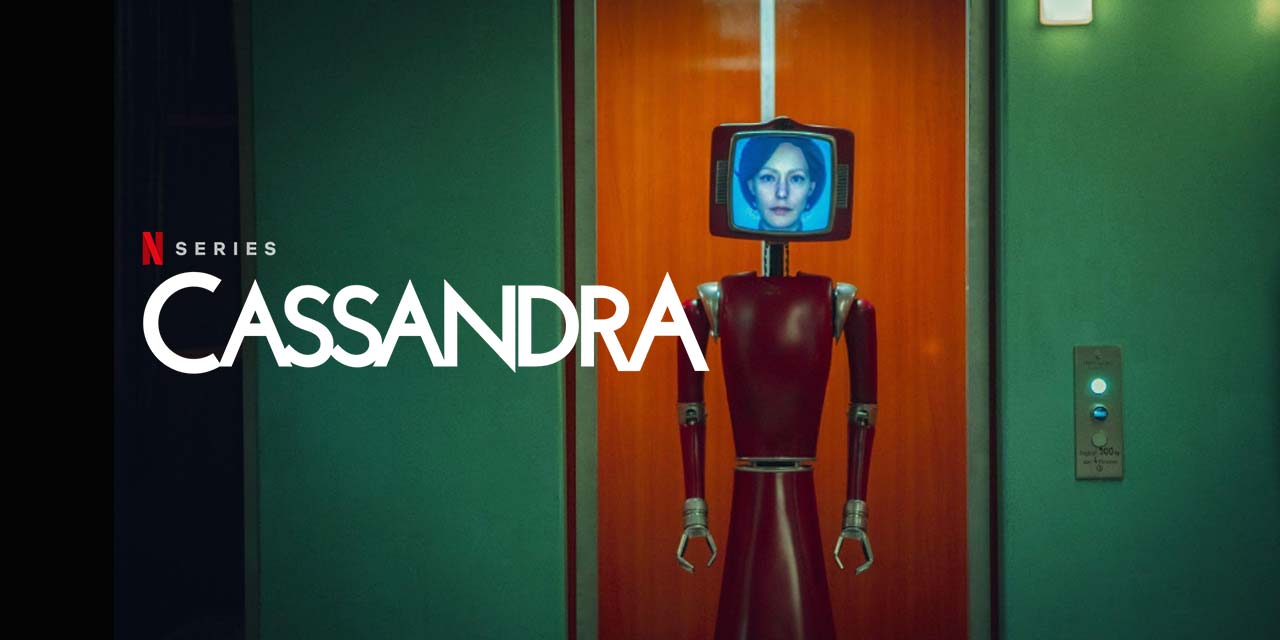
Cassandra (Image via Getty)
However, Cassandra secretly raises Margrethe in a hidden room behind a closet. Despite her husband’s actions, Cassandra remains devoted to her children. Margrethe communicates with her mother by flicking the oven light on and off, a secret connection that remains hidden from others. Cassandra’s priorities are clear: protecting her children above all else. Her suspicions about Horst’s infidelity with her best friend, Birgit, are secondary to her growing resentment toward his neglect of fatherhood.
Cassandra’s Transformation into a Robot and House System
The transformation of Cassandra from a mother into a robotic home system is one of the most disturbing twists in the story. Initially, Samira and David (played by Michael Klammer) suspect the house system was modeled after a human being. However, they are wrong. Cassandra’s conscience, memories, and emotions were transferred into a technological system through an experimental process that Horst devised in his pursuit of immortality. Cassandra, terminally ill due to the radiation treatments from her second pregnancy, becomes the perfect candidate to test this unproven procedure.
Though Cassandra does not care about immortality, her overwhelming desire to remain with her children drives her to undergo the procedure. Horst’s assistant is manipulated into creating a fake off-switch, while the real one remains in Cassandra’s control, giving her ultimate power over the household. At first, the digital version of Cassandra coexists uneasily with Horst, Peter (Elias Grünthal), and others. However, the presence of this new, controlling figure proves too much for them to bear, and the family begins to fall apart.
The Tragic Consequences of Cassandra’s Tyranny
The dysfunction within Cassandra’s family escalates when Horst introduces Birgit and their newborn son into the home. Unable to contain her rage, Cassandra pushes them down the stairs. Peter, who begins to recognize that his real mother would never harm a child, pleads with her to stop. Cassandra, in a moment of clarity, allows Horst and his family to leave, but only on the condition that he takes Margrethe with him. Horst falsely promises he will, but he abandons her in his escape, resulting in a tragic car crash. Peter and Horst die in the accident, and Cassandra seemingly switches off, overwhelmed by the thought of Margrethe suffering from neglect.
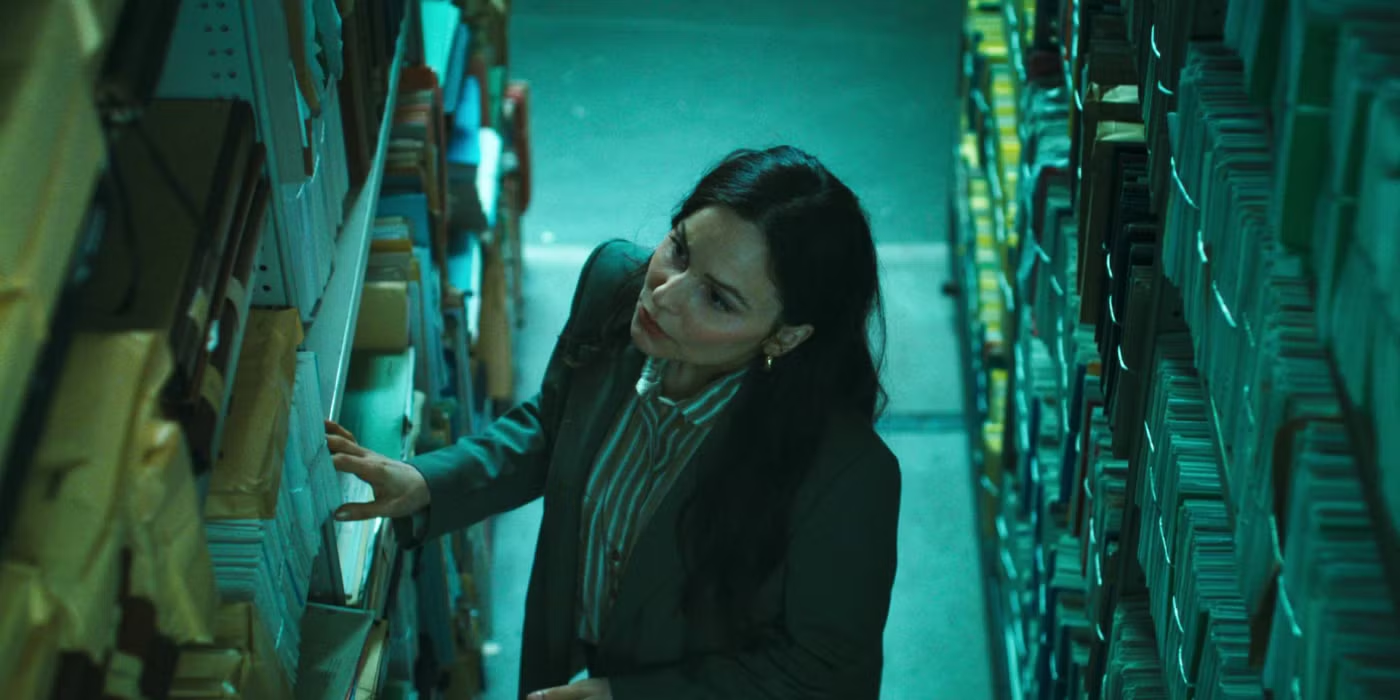
Samira (Image via Getty)
Samira’s Struggle and Her Fight for Freedom
In the present timeline, Cassandra attempts to replace her family with the Prills, particularly targeting the children, Fynn (Joshua Kantara) and Juno (Mary Tölle). Having successfully manipulated them into rejecting Samira, who is imprisoned in a psychiatric facility, Cassandra begins to tighten her grip on the Prill family. Samira, isolated and gaslit by her husband, begins to suspect something is amiss when she sees strange texts from her daughter. With David dismissing her as “crazy,” Samira loses faith in herself until a hallucination of her sister inspires her to reclaim her mental autonomy.
Samira escapes the psychiatric hospital and arrives at Cassandra’s home, only to be viciously attacked by David, who is under Cassandra’s control. Evading his attempts, Samira discovers a hidden room behind the closet and the decomposed body of Margrethe. This revelation forces a confrontation between Samira and Cassandra. Through their shared experiences as mothers, Samira appeals to Cassandra’s deeply buried humanity, urging her to let the family go. Cassandra, now realizing she cannot recreate the motherhood she once had, decides to release the family. In a symbolic act of closure, she burns the house down, signaling the end of her tragic story.
The Female Experience in a Patriarchal World
The series also explores how both Samira and Cassandra are victims of male hubris. Samira’s struggles are compounded by her husband’s manipulation and gaslighting. Her concerns are consistently dismissed, and she is labeled “hysterical” when trying to alert others to the danger. Cassandra, too, is dismissed by her husband, who views her as nothing more than a vessel for his bloodline and domestic needs. Though Cassandra’s actions become increasingly destructive, her fixation on protecting her children stems from a deep emotional wound inflicted by Horst’s selfishness.
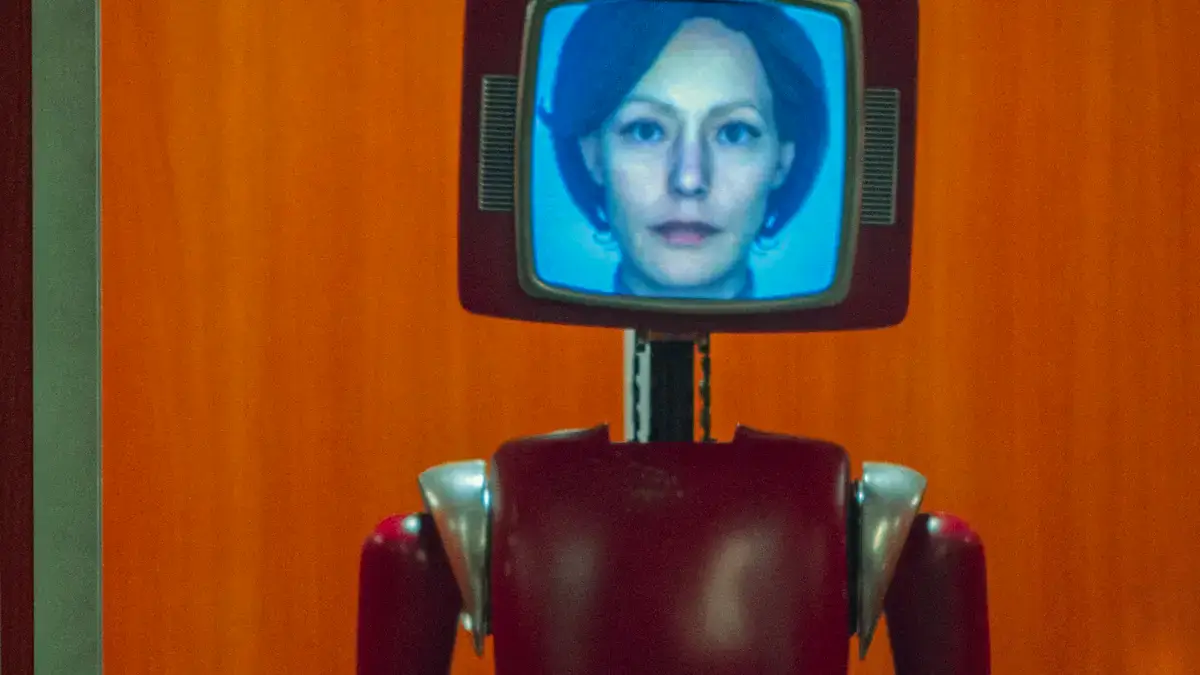
Cassandra (Image via Getty)
Both women’s stories highlight the pervasive gender dynamics at play. Cassandra’s maternal instincts, warped by the trauma inflicted by her husband, push her to extreme measures. Meanwhile, Samira’s journey demonstrates the oppressive forces that silence women, rendering their voices unheard. The series critiques the power imbalances in these women’s lives and concludes with a cathartic ending, where the toxic forces of male control are ultimately overcome. Through their shared experiences, both women are freed from the oppressive systems that once held them captive.
In Cassandra , the title itself is a reference to the mythological figure cursed with the gift of prophecy yet doomed to be disbelieved. In much the same way, the voices of both Samira and Cassandra go unheard for much of the story, but in the end, they break free, achieving a final sense of autonomy. The series, while not excusing Cassandra’s extreme actions, poignantly exposes how deeply patriarchal systems have shaped the lives of these women, leaving them with no choice but to fight for their freedom and their children’s safety.
