Love Is Blind has always attracted attention for its unique approach to finding love. By keeping couples apart until they commit, the show presents a dramatic and emotional journey for its participants. Season 7, however, has left viewers frustrated.
Many key moments, especially conflicts and breakups, have happened off-camera, leaving fans in the dark. In earlier seasons, viewers had clear insights into what went wrong with the couples.
But in this season, the show has failed to provide those crucial moments on screen. This has left fans disappointed, confused, and even suspicious about how much they are seeing.
From the very start, Season 7 was filled with drama. However, instead of providing the usual transparency, the show skipped over many important scenes. This is a significant shift from earlier seasons, where the audience could see the full emotional journey of the couples, from their ups to their downs.
The sense of reality that viewers once relied on has been diminished this season. By omitting key moments, the show has taken a turn that feels less genuine and has left many fans dissatisfied.
Messy Relationships and Off-Camera Drama
The relationships in Season 7 have been chaotic from the beginning. Of the six couples who formed in the pods, several lacked real chemistry or compatibility.
This lack of connection naturally led to conflicts. But unlike in previous seasons, viewers were not allowed to witness the majority of these arguments as they unfolded. Instead, fans were left to piece things together based on brief conversations after the fact, often with little context.
In earlier seasons of Love Is Blind, the fights and issues between couples were shown clearly. This allowed viewers to understand the dynamics of each relationship and form their own opinions about who was right or wrong. However, this season, nearly every major conflict took place off-camera. This change has left viewers feeling cheated out of the full experience of the show.
Fans don’t just watch Love Is Blind for the happy moments or the romantic connections. Part of the draw is watching how couples handle challenges and disagreements. These moments allow the audience to see the reality behind the relationships and determine which couples are likely to succeed.
Without these key moments, it becomes harder to root for anyone. It also makes it difficult to see who is truly compatible and who might be hiding red flags.
The Disappearance of Key Conflicts: Tim Godbee and Alex Byrd’s Fight in Mexico
One of the most significant examples of this frustrating new approach happened early in the season. When the couples traveled to Mexico, a major fight broke out between Tim Godbee and Alex Byrd. The fight was so severe that Tim even considered leaving the show.
But instead of showing this conflict as it happened, viewers were only given a view of a conversation the morning after the fight. The couple hinted at some of the details, including a moment where Byrd covered Godbee’s mouth with her hands, but no real explanation was provided.

Still from Love Is Blind (Credit: Netflix)
The lack of footage from this fight made it impossible for viewers to form a clear opinion on the couple. Without knowing what caused the argument or how they reacted in the heat of the moment, it became difficult to get a true sense of their relationship.
Watching Love Is Blind is supposed to be about rooting for certain couples to make it to the altar, and recognizing which individuals might not be ready for marriage. But in this season, viewers are left in the dark, unable to fully understand who is right or wrong in these situations.
When fans watch a reality show, they expect to see the drama unfold. They want to know the reasons behind breakups and disagreements.
But in Season 7, viewers have been forced to guess what happened, relying only on the limited information given in post-conflict conversations. This method has led to frustration, as the audience feels like they are missing out on key moments.
Why Important Details Were Kept Hidden
Another example of off-screen drama that left fans scratching their heads involved Stephen Richardson and Monica Davis. Their relationship ended because Richardson was caught cheating, but the full details were only revealed after the show aired.
The episode showed a conversation between the couple, where Davis mentioned catching Richardson sending inappropriate messages to another woman. But viewers didn’t get the full story until Davis later revealed to the media that she had discovered Richardson’s actions while he was away on a sleep test.
Once again, the lack of transparency robbed viewers of a more complete understanding of the couple’s dynamic. Why wasn’t this crucial moment filmed?
Fans had to wait for interviews and media appearances to get the whole story, which seemed like a missed opportunity for the show. It left many asking why these significant details were being kept from the audience.
Chris Coelen, the show’s creator, later defended the decision not to show every conflict on-screen. He argued that the show is meant to give couples space to show their relationships without being constantly filmed.
While this explanation makes some sense, it doesn’t excuse the fact that Love Is Blind is, at its core, a reality show. Fans tune in to see real-life drama and emotions play out, and when important conflicts are hidden from view, it feels like the show is withholding crucial information.
Viewers have always appreciated Love Is Blind for its raw emotional moments. The decision to avoid filming key conflicts this season goes against the essence of the show.
Instead of being fully immersed in the couples’ journeys, fans are left trying to piece together events that should have been shown in their entirety. This has led to a lack of trust in what is being presented on screen.
Transparency and Reality TV: What Went Wrong in Season 7?
Transparency has always been a key element in reality TV. Fans want to see both the good and bad moments in a relationship, so they can form their own opinions about what is happening.
In earlier seasons of Love Is Blind, the audience could watch as couples faces difficult situations and made tough decisions. But in Season 7, this transparency has been severely lacking.
For instance, when Tim Godbee broke up with Alex Byrd later in the season, viewers had no clear understanding of what led to the split. Without seeing the full conflict play out, it was hard to know who to sympathize with.
Would the couple have had a better chance if they had communicated more openly? Could they have worked through their issues if the cameras had shown more of their relationship?
The lack of transparency in Season 7 has made it difficult for viewers to fully engage with the show. Instead of feeling connected to the couples, fans are left guessing about what really happened behind the scenes.
This takes away from the full experience of watching Love Is Blind, which is supposed to be about seeing real people make real decisions about their relationships.
The Impact of Missing Footage on Viewer Opinions
One of the main issues with not showing important moments on camera is that it leaves too much room for speculation. When fans don’t have all the facts, they are forced to fill in the gaps with their assumptions. This can lead to unfair judgments about the contestants and their actions.
For example, in Episode 10, viewers learned that Taylor Krause and Garrett Josemans fought off-camera after Garrett responded to a text from his ex.
The couple’s miscommunication was a major storyline, but without seeing the actual argument, fans were left to interpret the situation on their own. This kind of ambiguity can be dangerous in reality TV, as it allows viewers to create their own narratives based on incomplete information.
Reality TV thrives on providing clear, decisive moments that allow fans to form opinions about the contestants. When these moments are missing, it weakens the show’s impact.
In earlier seasons, when couples had big arguments, viewers could easily identify who was in the right and who was in the wrong. But this season, the lines have been blurred, making it difficult to root for any of the couples.
The one couple whose conflicts were shown more clearly, Ramses Prashad and Marissa George, also suffered from ambiguity by the end of Episode 11.
Despite having more of their issues showcased on screen, their storyline still left many questions unanswered. This inconsistency in how conflicts are presented has been one of the most frustrating aspects of Season 7.
Fans Frustrated by Lack of Continuity
Another common complaint about Season 7 is the lack of continuity in the way conflicts are handled. In previous seasons, arguments and disagreements were shown from start to finish, allowing fans to see the full picture. But this season, viewers have only been given view of conversations after the fact, without any real context.
This breadcrumbing approach has been particularly problematic for fans who enjoy picking apart the details of the show. Love Is Blind has always been a show where viewers analyze every moment, from the initial pod conversations to the final decisions at the altar. But in Season 7, fans are left with more questions than answers.
One of the reasons fans feel so strongly about the lack of transparency this season is because Love Is Blind has built its reputation on being a “real” reality show.
The whole premise is based on the idea that love can be blind and that people can form deep connections without seeing each other. But when key moments are hidden from view, it undermines the authenticity of the show. It leaves viewers wondering what else is being kept from them.
The Backlash from Fans and the Media
The frustration felt by fans has not gone unnoticed by the media. Multiple articles have been written about the issues with Season 7, with many critics pointing out that the show’s decision to hide key moments goes against the core of what makes Love Is Blind so appealing.
Fans don’t want to be left guessing about what happened behind closed doors. They want to see the full story unfold in front of them.
One theory about why the show has chosen to hide more conflicts this season is that it might be trying to protect the contestants from negative public perception.
Love Is Blind has faced criticism in the past for creating a toxic environment during filming. Some former contestants have even filed lawsuits against the show, citing issues like inhumane working conditions and excessive pressure from producers.
Briana Holmes, a former contestant, shared that she was once followed by the camera crew to her trailer when she was having a panic attack.
This kind of treatment has led some to believe that the show is now trying to create a more comfortable environment for its participants by giving them more privacy. But this decision has come at a cost, as the lack of transparency has alienated many fans.

Still from Love Is Blind (Credit: Netflix)
While the desire to protect contestants is understandable, it doesn’t excuse the fact that Love Is Blind is still a reality show. Fans watch these shows because they want to see real emotions, real conflicts, and real resolutions. By hiding important moments, the show is failing to deliver on its promise of providing an authentic look at relationships.
The Future of Love Is Blind
As Season 7 comes to a close, fans are left wondering whether the show will return to its original format in future seasons.
The backlash from viewers has been significant, with many expressing their disappointment in how this season has been handled. If Love Is Blind wants to maintain its status as one of the most popular reality shows, it will need to address these concerns moving forward.
Fans want to see real, unfiltered moments that show the ups and downs of relationships. They want to be able to form their own opinions based on what they see on screen, not what is hinted at off-camera. If the show continues to withhold important conflicts and conversations, it risks losing the trust of its audience.
Ultimately, Love Is Blind needs to find a balance between protecting its contestants and providing the transparency that viewers expect.
The show has always been about taking risks and pushing the boundaries of what it means to find love. But in Season 7, the biggest risk has been not showing enough of the journey. If the show can return to its roots and give fans the full story, it has the potential to regain its former glory.
Who knew that Julia Louis-Dreyfus, armed with a pair of garden shears, battling Death in the form of a bird, could create such a touching and emotional experience? Tuesday, released in 2024, stands as one of the most beautifully shot and magical films of the year.
Unfortunately, it didn’t get the recognition it deserved upon release. Directed by Daina O. Pusić, the movie features British actor Lola Petticrew as Dreyfus’ terminally ill daughter, and Arinze Kene as the voice of Death.
The film, produced by A24, received high praise from critics for its surreal and visually striking portrayal of death, as well as Dreyfus’ deeply moving performance as a mother facing her own fears of dying.
While it didn’t draw much attention at the box office, Tuesday remains one of 2024’s most beautiful and profound films. Dreyfus delivers a powerful performance under Pusić’s direction, creating a film that is unexpectedly hopeful and thoughtful about death.
What is Tuesday About?
Tuesday tells the story of Zora, an American businesswoman living in London, played by Julia Louis-Dreyfus. Zora lives with her 15-year-old daughter, Tuesday (Lola Petticrew), who is terminally ill with cancer. Instead of spending time with her dying daughter, Zora chooses to avoid her.
She spends her days sitting in coffee shops or on park benches, keeping herself as far away as possible from Tuesday. Meanwhile, a nurse named Billie (Leah Harvey) has been hired to take care of Tuesday. As Zora keeps herself distracted, Billie forms a close bond with the sick teenager.
The film takes a turn when Tuesday nears the end of her life. Death arrives to take her, but not in the form we usually imagine. In Tuesday, Death takes the shape of a parrot, with Arinze Kene providing the voice of this unusual Grim Reaper. Surprisingly, Tuesday and the parrot become friends.
Death agrees to wait for Zora to return home before he takes Tuesday. But when Zora finally comes home and discovers Death in their house, she reacts in a way only a desperate mother would. Instead of facing the reality of her daughter’s impending death, Zora tries to kill Death itself.
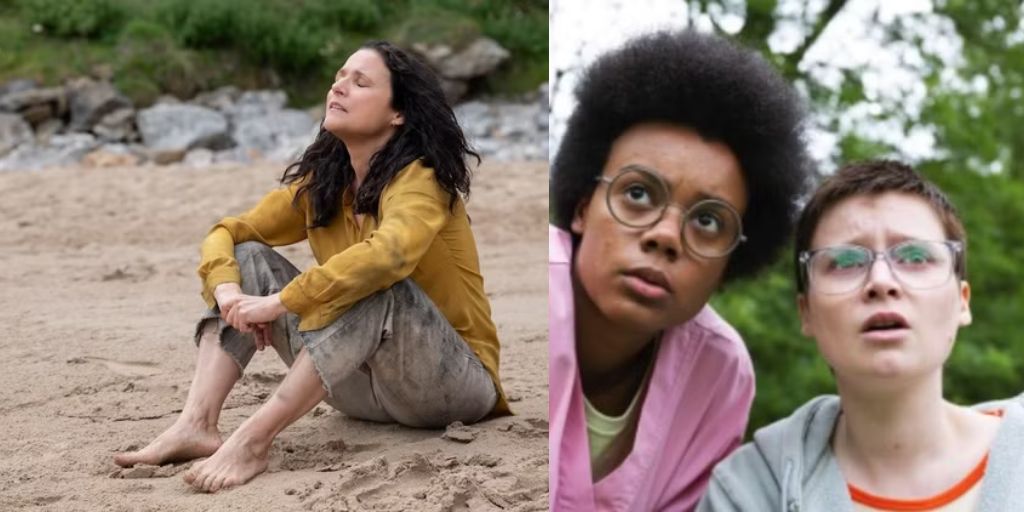
Still from Tuesday (Credit: A24)
Armed with whatever she can find, including garden shears and a shovel, she battles the bird, attempting to destroy it and save her daughter. However, things don’t go as planned, and Zora ends up facing the consequences of her actions, having to take on Death’s duties for a day.
Julia Louis-Dreyfus Delivers a Stunning Performance
Julia Louis-Dreyfus is known for her iconic roles in comedy, from her portrayal of Elaine Benes in Seinfeld to her award-winning role as Selina Meyer in Veep. In Tuesday, she steps away from her usual comedic roles to deliver a deeply emotional and raw performance.
As Zora, Dreyfus plays a woman who is lost in her misery. She is afraid of death, yet she can’t bring herself to face life either. The character is filled with unease, and her sadness is evident in every scene. With a permanent grimace and slouched posture, Zora walks through the streets of London like a ghost, avoiding any connection with the world around her.
Dreyfus’ performance is striking in its subtlety. She doesn’t rely on dramatic gestures or loud outbursts. Instead, her portrayal of Zora is quiet and controlled, showing the pain of a woman who has forgotten how to live but is terrified of dying.
This marks a significant shift from the energetic and often sarcastic characters Dreyfus has played in the past. In Tuesday, she strips away much of her comedic persona to reveal a mother who is numb, disconnected, and full of regret.
The emotional peak of the film comes in a scene on the beach, where Zora finally allows herself to feel the weight of everything she has been holding inside. After spending the majority of the film trying to avoid her emotions, Zora breaks down and faces the reality of her daughter’s illness.
In this powerful scene, Zora confronts Death and is finally able to face her daughter, reassuring her that she will be okay after she passes. This moment is beautifully filmed by Pusić, using a series of close-up shots to capture every tear and expression on Dreyfus’ face. It’s a heart-wrenching scene and one of Dreyfus’ most memorable performances on screen.
Tuesday Combines Dark Comedy and Fantastical Elements
While Tuesday is a film about death and loss, it also contains elements of dark comedy. Daina O. Pusić, the director, masterfully balances the heavy themes of the film with moments of absurdity and humor. This blend of tragedy and comedy makes the film stand out, offering viewers a unique and surreal take on death.
One of the most memorable scenes is Zora’s battle with Death in her garden. Armed with garden tools, Zora tries to defeat the parrot, setting it on fire, beating it with a shovel, and even swallowing it whole.
The scene is absurd and over-the-top, but it works because of Dreyfus’ impeccable comedic timing and the cleverness of Pusić’s script. What should feel tragic becomes strangely humorous, as Zora’s desperate attempt to fight off Death becomes almost slapstick in its execution.
Dreyfus was the perfect choice for this role because of her natural ability to balance comedy and drama. In an interview with The New Yorker, Dreyfus spoke about the emotional weight of the role and how it pushed her as an actor.
“You have to flirt emotionally with stuff in a very real way to give authenticity to a performance, and it was a hard thing to do. And it was a hard thing to recover from after,” she said. Dreyfus’ ability to tap into both the humor and sadness of the situation gives the film a unique tone, where viewers can laugh even in the face of death.
Pusić’s direction is a key element in the film’s success. She handles the delicate balance of tragedy and comedy with care, ensuring that the film’s emotional moments are never overshadowed by its more humorous ones.
The fantastical elements of the story, such as the personification of Death as a parrot, add a layer of surrealism to the film.
But instead of making the story feel disconnected from reality, these fantastical elements help to deepen the emotional impact. The parrot’s friendly yet foreboding presence becomes a symbol of the inevitable, and Zora’s battle against it is both absurd and meaningful.
Tuesday Is a Beautiful and Thoughtful Reflection on Death
Tuesday takes on a subject that many films shy away from—death. Instead of presenting death as something to fear, the film portrays it in a way that feels both comforting and hopeful. Through its surreal imagery and unique narrative, the film encourages viewers to think about death not as an end, but as a part of life.
The relationship between Tuesday and Death is one of friendship, showing that even in the face of something as final as death, there can be connection and understanding.
Zora’s journey throughout the film is one of self-discovery. She starts the film in denial, unable to face the reality of her daughter’s illness or her own fears of death. But by the end, she is forced to confront her deepest fears. Her battle with the parrot is a metaphor for her fight against accepting the inevitable.
Through this surreal and often humorous battle, Zora begins to come to terms with her daughter’s fate and her own mortality. The film ends on a hopeful note, with Zora finally able to connect with her daughter and assure her that everything will be okay, even after she’s gone.
The visuals in Tuesday are another standout aspect of the film. The cinematography captures both the gray, lifeless world that Zora moves through and the magical, surreal elements that come into play as the story unfolds.
The use of color, light, and framing helps to convey the emotional tone of the film. Pusić’s use of close-ups during key emotional moments allows viewers to feel the intensity of the characters’ emotions, drawing them deeper into the story.
Why Tuesday Deserves More Attention
Despite its critical acclaim, Tuesday struggled to gain widespread recognition at the box office. This could be due to its unconventional approach to storytelling or the fact that it deals with a heavy and often uncomfortable subject.
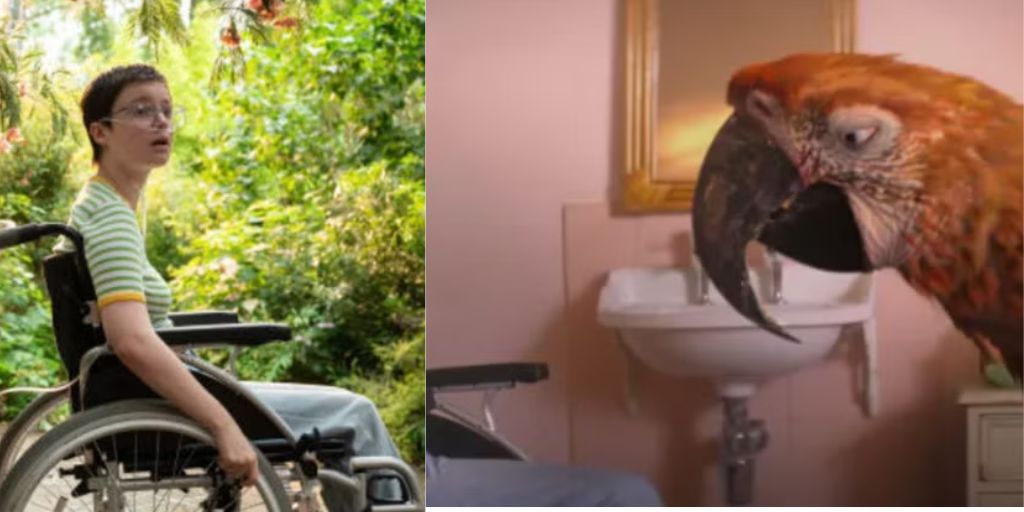
Still from Tuesday (Credit: A24)
However, for those who take the time to watch it, Tuesday offers a deeply moving and thought-provoking experience. It’s a film that stays with you long after the credits roll, prompting reflection on life, death, and the relationships we leave behind.
Julia Louis-Dreyfus’ performance alone makes Tuesday worth watching. Her ability to shift from comedy to drama easily shows her range as an actor. Under Pusić’s direction, Dreyfus gives one of her most powerful performances. The film’s unique blend of dark comedy and surreal imagery creates a viewing experience unlike any other.
For those who appreciate films that tackle difficult topics with both heart and humor, Tuesday is a must-see. It’s a film that challenges viewers to think about life and death in a new way, offering a message of hope and acceptance in the face of loss.
