Season 7 of Love Is Blind introduced Marissa George, who connected with two men in the pods before choosing Ramses Prashad. Ramses proposed, and Marissa happily accepted. Their chemistry made them one of the show’s strongest couples in Mexico, with both claiming they were on the path to marriage.
But things changed when they returned to reality, and Ramses had a sudden change of heart. Just before they were set to tie the knot, he pulled back, saying he felt they needed more than love to sustain a marriage.
Marissa was left shocked by Ramses’ decision and struggled to understand what went wrong. Ramses expressed his doubts about whether he could handle Marissa’s energetic personality long-term, a revelation that hurt her deeply. Fans shared in her heartbreak as they watched the emotional finale, where she openly expressed her pain.
In the reunion episode, Marissa reflected on her experience and the pain she felt from Ramses’ last-minute change of heart. She got emotional while discussing the breakup and the disappointment of not finding lasting love on the show. But she also hinted that her journey didn’t end there—she had found someone new who appreciated her for who she is.
Finding New Love After Love Is Blind
Marissa surprised fans by announcing that she was dating someone new. She told Us Weekly, “I’m currently dating someone right now, and he has those qualities that Ramses didn’t have for our relationship.”
On November 2, Marissa shared her new relationship publicly in an Instagram post where she appeared with her boyfriend in a Halloween costume. Her caption reflected her excitement: “Life has a funny way of surprising you. I never expected to fall in love again, let alone with someone who embraces all my energy and flaws.”
Taking Time to Heal Before Moving On
In her interview, Marissa shared that her new boyfriend had been understanding of her experiences on Love Is Blind. The two met at Barcelona, a popular spot in Washington, D.C., and started dating casually.

Marissa George (Credit: Netflix)
However, Marissa needed time to work through her emotions from her breakup with Ramses, so they took a short break but remained friends. They reconnected and officially started dating again in April.
A Supportive Relationship Built on Understanding
Marissa’s boyfriend even watched her season of Love Is Blind and supported her despite her public breakup. She described her new relationship as “going very well,” appreciating how her boyfriend embraced her personality without hesitation. So far, she has chosen to keep her boyfriend’s name and identity private, not tagging him on social media or sharing many personal details about him.
Embracing a Brighter Future
Marissa’s story reveals her resilience as she moves forward from heartbreak and finds a partner who appreciates her energy and personality. Her journey on Love Is Blind may not have led to marriage, but it brought her valuable life lessons and a relationship that feels more aligned with her authentic self.
My Heart Can’t Beat Unless You Tell It To is a unique take on the vampire genre, bringing a powerful story about family and survival. Jonathan Cuartas’s 2020 film looks like a horror movie but tells a deeper, sad story about a family dealing with the dark reality of their lives.
This film follows three siblings who live together in a modest home, struggling to keep things together while dealing with their brother’s vampirism. The movie centers on Thomas, the youngest brother (played by Owen Campbell), who has a condition that requires him to drink blood to survive.
Jessie (Ingrid Sophie Schram), the older sister, has taken charge of the household and controls her brother’s life, while their older brother Dwight (Patrick Fugit) helps maintain the family’s routine in disturbing ways.
The siblings have a clear routine, but it’s far from normal. Jessie sends Dwight to find homeless people to kill so that Thomas has blood to drink. This routine is both horrifying and heartbreaking as it shows the extreme lengths they are willing to go to keep Thomas alive.
This is no glamorous vampire life; Thomas’s condition creates a difficult life for the family. Jessie and Dwight do what they can to survive, but the pressure builds and cracks form in the family dynamic.
The film has its share of blood and intense scenes, but what makes it truly haunting is the broken family dynamic. Rather than being about vampires in the traditional sense, My Heart Can’t Beat Unless You Tell It To is a look at addiction, abuse, and the strain these issues put on families.
The horror comes from watching the siblings’ twisted relationships with each other as they do whatever they can to survive. The film uses supernatural elements as a support to show its real theme, making it feel grounded and raw. My Heart Can’t Beat Unless You Tell It To does not try to dazzle the audience with flashy vampire elements but instead hits hard with emotional intensity.
A New Take on Vampirism and Addiction
Vampirism in fiction often represents addiction, and My Heart Can’t Beat Unless You Tell It To builds on this idea in a way that feels gritty and real. Throughout film and TV history, vampires have often been shown to struggle with drinking blood in a way that parallels alcoholism or other addictions.
Examples include the character Dracula, Angel from Buffy the Vampire Slayer, and Riley Flynn in Midnight Mass. In Twilight, Edward’s struggle with his vampire nature represents addiction in some way. Thomas’s condition in My Heart Can’t Beat Unless You Tell It To is treated similarly.
Thomas’s appearance gives clues about his condition. He looks very thin and pale, often wrapped in blankets or lying down. This look recalls the “heroin chic” style in a fashion that’s sometimes used to suggest addiction without words. The film uses this style to highlight Thomas’s need for blood, presenting it as an illness rather than something glamorous or desirable.
Unlike many vampire films, Thomas’s condition is not made to look cool or flashy. He wears plain clothes like sweatpants and rarely has anything fancy. In one scene, Dwight even shops for Thomas at a second-hand store. Instead of wearing designer clothes, Thomas looks sick and tired, with none of the elegance seen in other vampire characters.
In this film, vampirism is treated as a burden, and Thomas’s life feels more like a sad routine than an adventure. His condition adds to the family’s struggles rather than lifting them out of poverty or offering any kind of power. This approach makes it clear that vampirism here is a metaphor for addiction.
It shows how addiction, whether it’s to drugs, alcohol, or something else, can affect not only the person suffering from it but also their entire family. By stripping away any glamour, My Heart Can’t Beat Unless You Tell It To focuses on the sadness and pain involved in the siblings’ lives.
The Setting Adds to the Realism
The setting of My Heart Can’t Beat Unless You Tell It To is simple and plain, which makes the story even more grounded. The family lives in a worn-out, small house, not a large castle or fancy apartment that we often see in vampire films. The colors inside the house are dull, mainly shades of brown and yellow.
Outside, the world appears gray and lifeless. The siblings are poor and constantly struggle to make ends meet. Unlike wealthy vampires such as Dracula or Lestat from Interview with the Vampire, these siblings live a harsh, humble life.
At Christmas, they give each other small, poorly-fitting gifts. They even have to sell items from their victims to get some money. This life is far from the glamorous, eternal life associated with vampires. By showing the vampire family as a struggling, working-class household, the movie turns the idea of vampirism on its head.
It isn’t something anyone would aspire to in this story; instead, it’s just a burden. This approach makes the viewer focus on the tragic effects of addiction, as we see how the family’s lives are limited and controlled by Thomas’s needs.
Owen Campbell’s Unique Performance as Thomas
Owen Campbell’s performance as Thomas brings something new to the portrayal of vampires. Thomas isn’t like the usual vampire in most horror stories. While many vampires are shown as troubled by guilt or regret over harming humans, Thomas’s sadness comes from his lack of freedom and the strict control his sister Jessie has over him.
Jessie’s rules keep Thomas inside most of the time, and he’s not even allowed to go outside for fresh air. Thomas isn’t upset about drinking blood or losing his humanity, as many vampire characters are. Instead, he feels lonely and frustrated by his isolation.
Thomas is desperate for companionship, but his sister doesn’t allow him to leave the house. In one scene, he begs Dwight to let him go outside just to feel the fresh air. Dwight eventually sneaks him outside, but only briefly.
In a heartbreaking moment, Thomas folds a paper airplane with “help me” written on it, showing just how trapped he feels. He may be a vampire, but he’s far from a powerful one. In his own home, Thomas is not in charge; instead, he follows Jessie’s orders.
The usual power dynamic of vampires and humans is reversed here. Jessie makes decisions for Thomas and controls his life, while Dwight goes along with Jessie’s wishes. Thomas does not come across as a threat.
Owen Campbell’s portrayal of Thomas shows his helplessness, as he keeps his eyes down and his shoulders slouched. His posture and expressions make Thomas seem weak and submissive, unlike the typical confident, fearsome vampire character.
The film also reinforces this image by avoiding scenes where Thomas drinks directly from his victims. Instead, Jessie and Dwight store blood for Thomas in a large sweet tea dispenser. Thomas then drinks from bowls and cups, making the act of feeding less monstrous and more like an everyday routine.
This detail adds sympathy for Thomas, making him appear more like a sad figure trapped in a bad situation than a dangerous predator.
Family Tension Creates the Real Horror
Despite the presence of blood-drinking and violence, the most disturbing part of My Heart Can’t Beat Unless You Tell It To is the tension within the family. The relationships between the siblings are strained and often dark.
Thomas, Jessie, and Dwight each have their own personalities and motives, leading to constant friction. In one scene, Thomas shyly asks if he can go outside, maybe for a short drive, only for Jessie to slam the table and snap at him. Jessie also uses her power over Dwight by choosing the targets he has to kidnap, showing how far she is willing to go to protect Thomas’s survival.
Jessie’s actions can be cruel, yet she dedicates herself to caring for Thomas. She acts as his teacher since he cannot attend school and spends most of her time looking after him. Despite her cold behavior, Jessie is fiercely committed to her brother’s well-being.
She takes on the responsibility of Thomas’s survival without ever hesitating, showing both her harshness and her loyalty. Jessie’s character is complex, keeping the viewer uncertain of her true intentions and emotions. Each scene she’s in feels tense, as it’s hard to know if she will act as a caring sister or a ruthless figure.
Dwight, on the other hand, is caught between loyalty to his family and his own desire for freedom. He frequently expresses his wish to leave, yet he remains, helping Jessie feed Thomas out of a sense of duty.
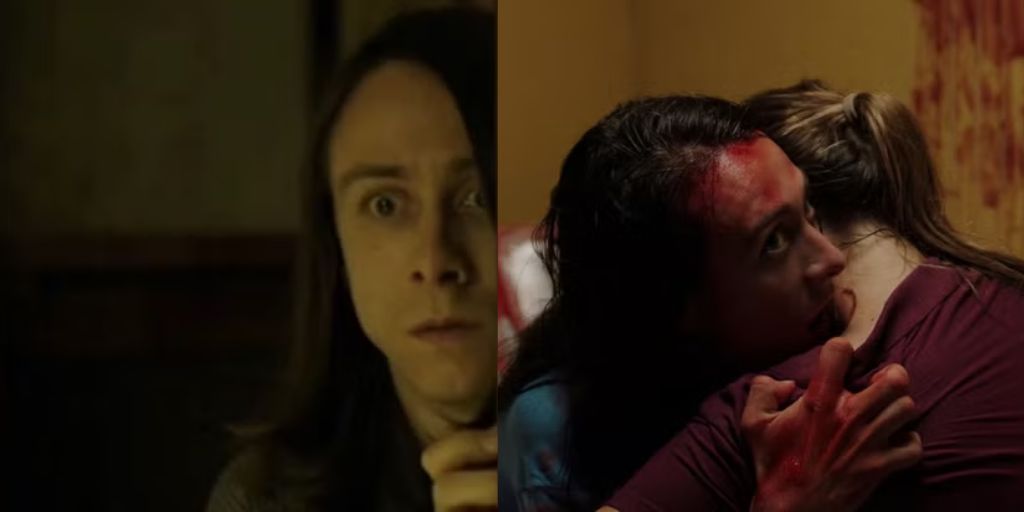
Still from My Heart Can’t Beat Unless You Tell It To (Credit: Dark Sky Films)
Dwight’s character may seem simple at first, but he has depth. Like Jessie, he loves his brother but also feels the weight of their situation. The siblings’ conflicting feelings make them feel real, as they balance love, duty, and personal needs.
The film doesn’t separate the scenes of blood drinking from scenes of family tension; instead, both aspects are presented with the same tone, creating a powerful emotional impact. This combination of horror and family drama gives My Heart Can’t Beat Unless You Tell It To a unique place among vampire movies, making it a memorable and haunting story.
My Heart Can’t Beat Unless You Tell It To is available to stream on Pluto TV.
