Marrowbone (2017) stands as a deeply psychological horror film that explores intense themes of memory, trauma, and isolation, all communicated through a layered metaphor. Directed by Sergio G. Sánchez, this Spanish-language psychological horror film captures audiences with its compelling atmosphere and complex characters, despite receiving mixed reviews. The cast, including Anya Taylor-Joy, Mia Goth, George MacKay, and Charlie Heaton, delivers memorable performances, but it is the movie’s underlying message that leaves the most lasting impact.
The story is set in 1968 and follows the Fairbairn family, who move from England to Maine, taking up residence in the Marrowbone House, a grand mansion from the past. Led by matriarch Rose (Nicola Harrison), the family hopes to start over, but their peace is disrupted when Rose dies unexpectedly. This leaves the eldest son, Jack (MacKay), responsible for his siblings, all while he navigates a romance with local girl Allie (Taylor-Joy) and uncovers dark secrets hidden within their new home.
Marrowbone Ending Explained
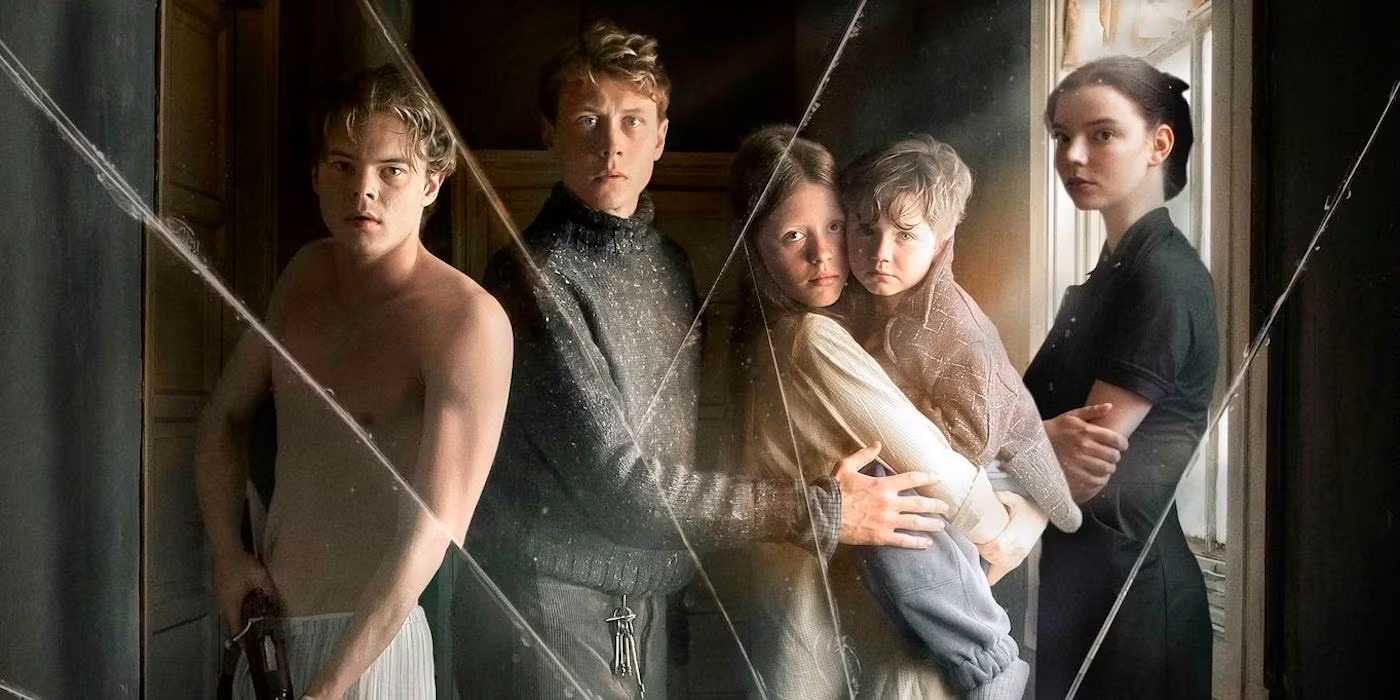
Marrowbone (Image via Getty)
The haunted house trope is hardly novel in horror films, having been explored in numerous classics since 1959’s House on Haunted Hill . Yet, in Marrowbone, the house transcends its typical role as merely a location. It becomes a living, breathing entity that reflects the turmoil of the characters inside. The mansion is initially depicted as a sanctuary—a place of retreat and safety after the Fairbairn family flees from an abusive patriarch in England. In this sense, it offers refuge, sheltering the family from their painful past.
However, as the story unfolds, it becomes clear that this sanctuary can also serve as a prison. The house gradually transforms into a place of confinement, as the characters’ own fears and traumas seep into its walls. The deeper metaphor emerges when considering how the house absorbs the emotions and histories of its inhabitants, becoming a vessel for their unresolved pain. This unspoken tension, hidden beneath the surface of the story, grows more apparent as the film progresses.
Jack and his siblings begin to sense a malignant force in the house, referring to it as a “ghost”—an embodiment of their collective fears and anxieties. However, these ghosts are not simply figments of their imagination. Jack’s decision to cover the mirrors in the house is symbolic of his effort to shield himself from his own reflection, his identity, and the disturbing truths that lie within. The mirrors, symbols of self-awareness and duality, are hidden in an attempt to avoid confronting the painful reality of their circumstances.
The Heartbreaking Truth Behind Marrowbone’s Ending
The true meaning of Marrowbone is revealed in its surprising twist, changing everything that the audience has witnessed up until that point. The plot takes a sharp turn when the town lawyer, Tom Porter (Kyle Soller), blackmails Jack to secure his family’s inheritance, threatening to reveal their secrets if Jack doesn’t comply. As Jack’s siblings learn of Tom’s intentions, they plan to meet with Allie in secret to expose the truth, but when she arrives, she finds only a diary—one that holds the key to understanding the horrifying past of the Fairbairn family.
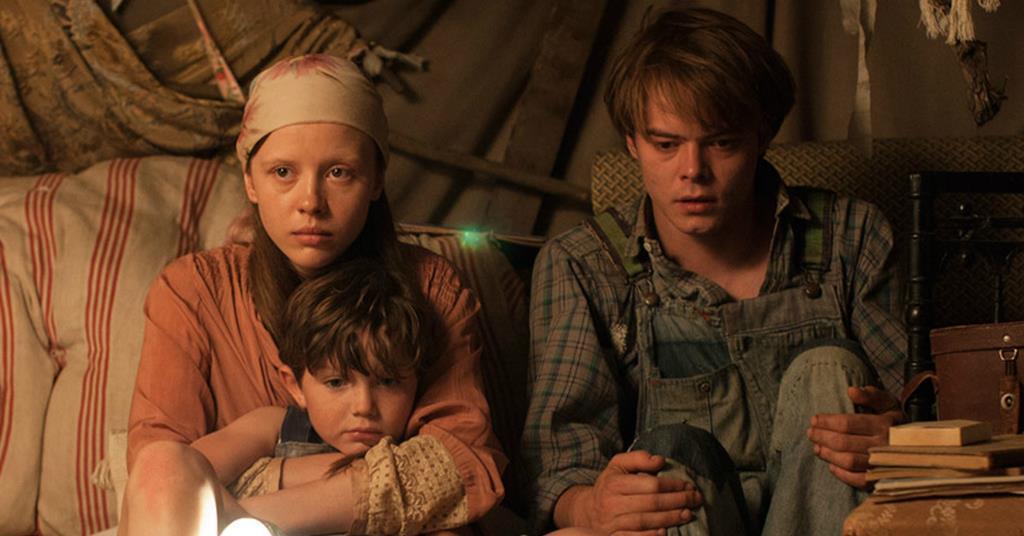
Marrowbone cast (Image via Getty)
The diary reveals that Jack’s father, Simon Fairbairn (Tom Fisher), a convicted serial killer, had returned to the Marrowbone house after their relocation. Jack, in an effort to protect his siblings, locked them away in the attic—a place that had remained boarded up throughout the film. Jack then confronts his father, but Simon determined to reclaim his family’s wealth, knocks Jack unconscious, returning to murder his children. Jack, traumatized by these events, seals both his father and his deceased siblings in the attic, constructing a new, delusional reality to cope with the unbearable loss.
Jack’s mental deterioration becomes a pivotal part of the film, as his trauma manifests through multiple personalities. These personalities, which include his deceased siblings, are what the audience has been witnessing. This explains why Allie has never met any of Jack’s siblings—because they are figments of his mind. To avoid facing the truth, Jack continues to hide the mirrors, sealing his painful memories in the Marrowbone house. The film culminates in a confrontation where Allie helps Jack snap out of his delusion, but not without a harrowing moment where Jack, in his altered state, allows his “Billy” personality to emerge and take control, ultimately killing his still-living father.
As the film reaches its conclusion, Jack is released from psychiatric care, and Allie is told to ensure he takes his medication. However, in a moment of silent defiance, Allie decides to leave Jack’s reality intact. She understands that he finds solace in believing his siblings are still alive, and it’s this acceptance of his delusion that offers him peace, even at the cost of truth. This revelation shifts the narrative and casts new light on the importance of the house, which is more than just a location—it is a symbolic container of Jack’s memories and trauma.
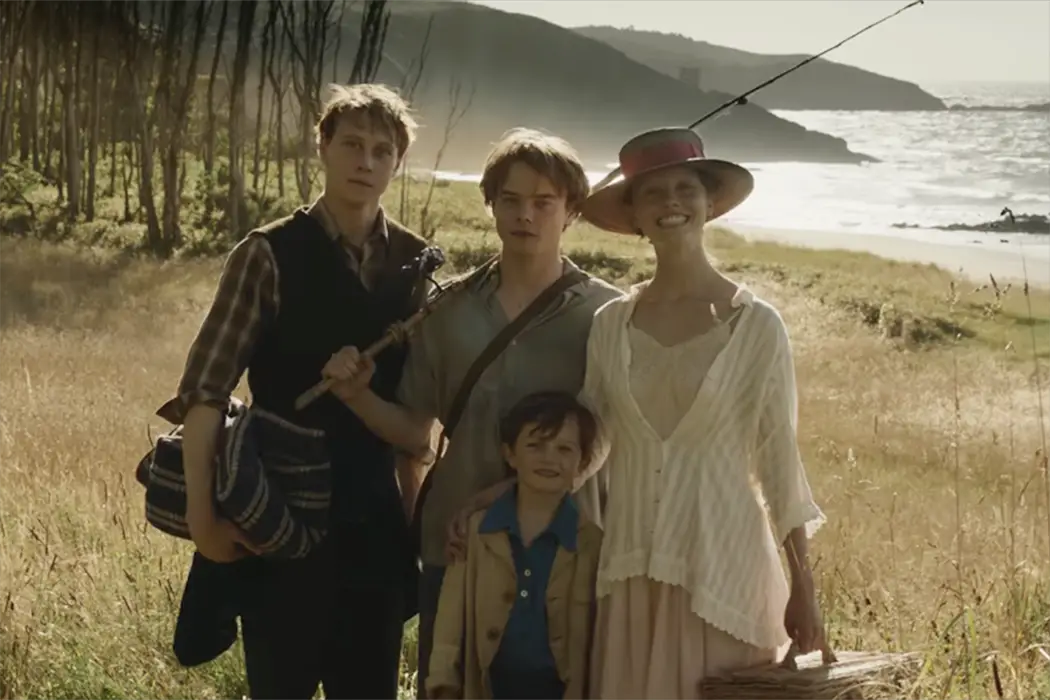
Marrowbone cast (Image via Getty)
A Love Story Hidden in the Shadows of Horror
While Marrowbone is often categorized as a psychological horror film, director Sergio G. Sánchez sees it primarily as a love story, with elements of both romantic and fraternal love driving the narrative. He explains that love is a central theme of the film, one that balances against the dark, horrific events unfolding around the characters. The film explores how love, in its many forms, is both a healing force and a source of resilience, allowing individuals to face their deepest fears and traumas.
At the heart of the film is the blossoming romance between Jack and Allie. Their relationship begins with misunderstandings, but their connection deepens as Allie becomes a guiding force in Jack’s journey to confront his past. Despite the tragedy that surrounds Jack, Allie remains steadfast by his side, working through his grief and trauma to understand the man he is beneath the layers of delusion.
Equally significant is the love between Jack and his siblings. This fraternal bond is so profound that Jack cannot bear to accept their deaths. Instead, he constructs a new reality, one in which his siblings are alive and with him. In Jack’s memory, they continue to exist, helping him navigate the overwhelming weight of their loss. This complex dynamic reveals that even in the depths of mental turmoil, the love between family members can transcend the boundaries of life and death, offering both comfort and conflict.
Irrational Games’ BioShock series has long been known for bending the minds of players and challenging their perception of reality. In BioShock: Infinite , this concept is taken even further, exploring themes of fate, time travel, alternate realities, and quantum entanglement. The ending of the game is intricate and thought-provoking, often leaving players with more questions than answers. We will now break down the key components of BioShock: Infinite ’s ending and explain how all the pieces fit together.
Quantum mechanics is a notoriously difficult concept to explain, even for experts. However, the game presents a simplified version of quantum theory to help players understand its relevance. Imagine walking down the street and deciding to cross to the other side. Under traditional thinking, your choice shapes your reality, but quantum mechanics suggests that every decision creates parallel universes. This interpretation, popularized by physicist Hugh Everett, proposes that every decision we make spawns an alternate reality where the opposite choice is made. While this theory remains a subject of debate, the game’s ending aligns perfectly with Everett’s “many-worlds” interpretation. Elizabeth, one of the central characters, describes the stars in the sky as not stars at all, but rather “worlds” — an analogy that reflects the quantum nature of the universe and the multiverse theory.
BioShock Infinite Ending Explained

BioShock Infinite (Image via Getty)
In BioShock: Infinite , Rosalind Lutece, a brilliant physicist, and her “brother” Robert are key players in the narrative. The twins are not ordinary siblings, but rather versions of one another from different parallel realities. They introduce Booker DeWitt to the Columbia, and their presence acts as a constant commentary on the events unfolding throughout the game. In fact, many of their interactions with Booker hint at the larger plot twist that becomes clearer as the story progresses.
Their observations about Booker, such as his uncanny ability to flip a coin heads-up every time, reveal their knowledge of his fate and the realities of Columbia. Robert, in particular, demonstrates the “many-worlds” interpretation when he explains that he has experienced the same events as Booker. Their presence in the game shows how they manipulate events across parallel worlds, guided by their own experiments in quantum mechanics.
Elizabeth: A Bridge Between Realities
Elizabeth, another central character, has the unique ability to interact with and manipulate tears in reality. These tears allow her to peer into other parallel worlds, and at times, even travel between them. As the game progresses, we learn that Elizabeth’s powers are linked to the circumstances of her birth and the manipulation of her reality by Comstock. Her powers, however, are initially restricted by the Siphon, a device that limits her abilities.
Throughout the game, Elizabeth shows signs of being more than just a passive observer. She actively seeks ways to break free from the constraints placed on her by Comstock, using her abilities to influence the course of events. By the end of the game, Elizabeth becomes instrumental in understanding the quantum mechanics that govern the multiverse. She learns how to destroy the Siphon, unlocking her full potential, and enabling her to see the infinite realities that shape her existence.

Elizabeth (Image via Getty)
The Baptism and Its Significance
One of the most important moments in BioShock: Infinite is the scene where Booker DeWitt undergoes a baptism. The significance of this event extends beyond its religious symbolism. The baptism represents a critical point in Booker’s life where he made a choice that would shape his future. In one reality, Booker rejects the baptism and continues his life as a private investigator. In another, he accepts the baptism and becomes Zachary Hale Comstock, the founder of Columbia.
This divergence creates two distinct paths for Booker, and the consequences of these choices ripple through the game’s narrative. Comstock, now aware of his alternate self’s actions, seeks to manipulate Booker and ensure that his future aligns with the prophecy. The baptism is not only a pivotal moment in Booker’s personal journey but also the defining event that triggers the conflict at the heart of the game.
The Role of Comstock and the Destruction of the Cycle
Throughout the game, Comstock emerges as the antagonist, manipulating events in Columbia to achieve his vision of a utopian society. However, it is revealed that Comstock is a version of Booker from a parallel reality. Comstock’s inability to have children leads him to seek out Booker’s daughter, Anna, who is later revealed to be Elizabeth. The conflict between Booker and Comstock becomes deeply personal, as Booker attempts to reclaim his daughter, who has been kidnapped and manipulated by Comstock for his own purposes.
The key to breaking the cycle that binds Booker and Comstock lies in the baptism scene. Elizabeth explains that in order to truly eliminate Comstock from existence, neither Booker nor Comstock can survive. In a tragic moment, Booker accepts this truth and allows both himself and Comstock to drown simultaneously. This act of self-sacrifice erases Comstock and the destructive cycle he created.

Booker (Image via Getty)
Unanswered Questions and Final Thoughts
While the game’s ending provides closure to the central conflict between Booker, Elizabeth, and Comstock, there are still many lingering questions that remain unanswered. One of the biggest mysteries revolves around Elizabeth’s journey to Rapture, the setting of the original BioShock game. How does Elizabeth know about Rapture, and why is she able to access it through tears? This unexplained moment adds a layer of intrigue and leaves room for speculation.
Additionally, the game’s final scene raises questions about Booker’s fate. The ambiguous ending suggests that Elizabeth’s sacrifice may not be as final as it seems. The closing shot shows Booker back in his office, wondering if Anna has been returned to him, but it is unclear whether this is a continuation of the story or a different timeline altogether.
Despite these unanswered questions, BioShock: Infinite remains a masterful exploration of alternate realities, quantum mechanics, and the impact of choice. The game’s complex narrative challenges players to think deeply about the nature of fate and the consequences of their actions. While the ending may not provide all the answers, it leaves players with plenty to ponder, ensuring that BioShock: Infinite will remain a topic of discussion for years to come.
