It seems that 2024’s most popular witch series, Agatha All Along, is aiming high for awards season. This week, Disney announced it would be submitting Marvel Studios’ Agatha All Along for several major awards.
The series is being put forward in the category of Comedy Series, with hopes to be recognized at events like the Golden Globes, Emmys, and SAG Awards.
However, Agatha All Along will face stiff competition in this category, going up against well-regarded shows like Abbott Elementary and Hacks.
Perhaps the most surprising part of Disney’s announcement is that Agatha All Along is being submitted as a regular series, rather than a limited one. Originally, the show was viewed as a miniseries, a single-season story.
Even Debra Jo Rupp, one of the show’s stars, had compared it to American Horror Story, suggesting it would follow an anthology format.
This choice by Disney and Marvel has raised some big questions, including whether they plan to bring Agatha All Along back for a second season.
Agatha All Along: The Middle of the WandaVision Trilogy
According to The Hollywood Reporter, Agatha All Along is actually the middle part of a three-part story that began with WandaVision. The third and final chapter is expected to be a series focused on Vision, titled Vision Quest, featuring Paul Bettany as the character.
This aligns with Rupp’s statements about Agatha All Along’s style being like an anthology. While WandaVision started the trilogy with its unique blend of mystery and superhero drama, Agatha All Along continues this story with a focus on magic, witches, and Agatha’s dark, mischievous side.
Meanwhile, Vision Quest is anticipated to show more advanced themes, particularly the deep, complex issues connected to Vision and his existence.
However, blending these storylines in a trilogy could be challenging because Vision Quest is expected to be much more focused on science and philosophy.
In WandaVision, the story ended with two versions of Vision confronting each other. One version of Vision was created entirely by Wanda (Elizabeth Olsen) and held the “soul” of Vision.
The other was the “White Vision,” rebuilt by the organization S.W.O.R.D. from Vision’s original parts, but without his memories or personality.
This White Vision had the real body of Vision but lacked the memories and emotions that made Vision who he was. It is expected that Vision Quest will go deep into White Vision’s new journey, as he tries to understand who he is and what his purpose is.
Adding to the intrigue, Marvel has confirmed that James Spader will return as Ultron, the villainous robot who is essentially one of Vision’s creators.
This could lead to interesting conflicts, as Ultron’s dark goals often clash with Vision’s moral path. Given these story elements, Agatha All Along’s magical themes might feel out of place if they mix too closely with the technological focus of Vision Quest.
What Could Happen in Agatha All Along’s Second Season?
When creator Jac Schaeffer first created Agatha All Along, it was planned as a limited series. However, the ending of the show was open-ended, leaving many questions unanswered. If Marvel and Disney do decide to make a second season, they would have a great chance to expand on Agatha’s story and relationships.
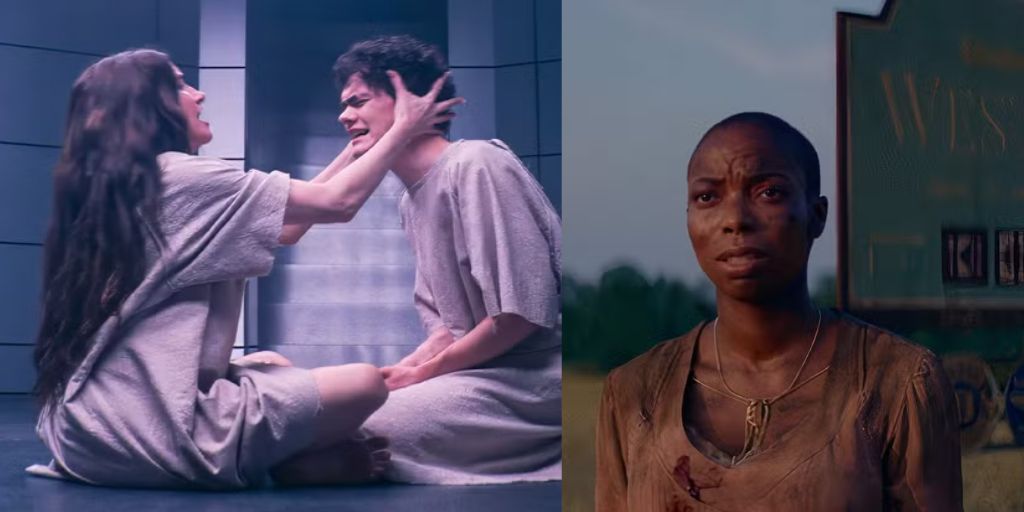
Still from Agatha All Along (Credit: Disney)
For example, the relationship between Agatha (played by Kathryn Hahn) and Rio (Aubrey Plaza) was only briefly shown in the first season. While we did get a sense of why Agatha resents Rio, we didn’t see much of their past together.
The strong chemistry between Hahn and Plaza could make this storyline especially interesting, as their past could reveal much about Agatha’s character and motivations.
To maintain its focus, a second season of Agatha All Along should center on Agatha herself, rather than veering too far into other characters’ stories. This approach would differ from shows like The Mandalorian, which expanded its story to include many supporting characters.
Instead, keeping Agatha as the main character would allow the show to dive deeper into her personality and abilities. Agatha’s mentorship of Billy (Joe Locke), for instance, could be an intriguing plot point.
This version of Agatha, complete with her haunting appearance and gray hair, would closely resemble the comic book version of the character. This connection to the comics might please fans who want to see Agatha’s story told in a familiar way.
Other plotlines could also bring excitement to a second season. Sasheer Zamata’s character, Jen, is the only witch left from Agatha’s original coven. Jen discovering that Billy was responsible for creating the Witches’ Road illusion could lead to tense moments.
Additionally, Agatha and Billy’s search for Tommy could be another major storyline. Introducing a grown-up version of Wanda’s other twin, Tommy, would add more layers to the story and connect it to the larger Marvel Cinematic Universe (MCU).
The Appeal of Extending Agatha’s Story
While the original plan for Agatha All Along may have been a single season, the potential for a second season is quite appealing. The series combines spooky themes with genuine emotional stakes, and it features unique characters that audiences have grown attached to.
Agatha’s character, with her mix of humor, darkness, and complexity, has quickly become a fan favorite. Giving her a second season would allow for deeper storytelling, offering fans a chance to see more of her character’s development.
Expanding Agatha All Along also aligns with Marvel’s current approach to its TV shows. Marvel and Disney have recently shifted their focus toward creating series that are less costly and more in line with what audiences truly want.
Agatha All Along fits this model perfectly, as it has proven to be popular without requiring a huge budget. Additionally, if the Vision series, Vision Quest, hasn’t yet begun filming, there may still be time to adjust the storyline to include elements that could link it to Agatha All Along’s potential second season.
Another aspect that supports the possibility of a second season is the awards recognition Agatha All Along is seeking.
Disney and Marvel’s decision to submit the show for awards, especially in the Comedy Series category, might indicate they see a long-term future for Agatha’s character. Award nominations and wins could increase the show’s popularity, giving Marvel more motivation to continue Agatha’s story.
Agatha All Along as a Key Part of Marvel’s Future
Agatha All Along seems to be more than just a side story in the Marvel universe. As part of a trilogy that includes WandaVision and Vision Quest, the show adds depth and variety to Marvel’s storytelling.
It shows themes of magic, mystery, and dark humor, offering a refreshing change from Marvel’s typical superhero narratives.
By continuing Agatha’s story, Marvel has the chance to build a rich, interconnected storyline that keeps fans engaged. This also allows Marvel to expand its universe in new and creative ways, giving the audience a wider range of stories and genres to enjoy.
A second season could let Agatha All Along build on its spooky, intriguing themes while adding layers to Agatha’s character and her connections with others. Agatha’s relationship with Billy, for example, could open up new plot possibilities.
It also provides a great way to show Agatha’s growth and evolution, showing how her interactions with other characters influence her choices and beliefs. Additionally, the series could introduce more supernatural elements, adding a unique flavor to the MCU.
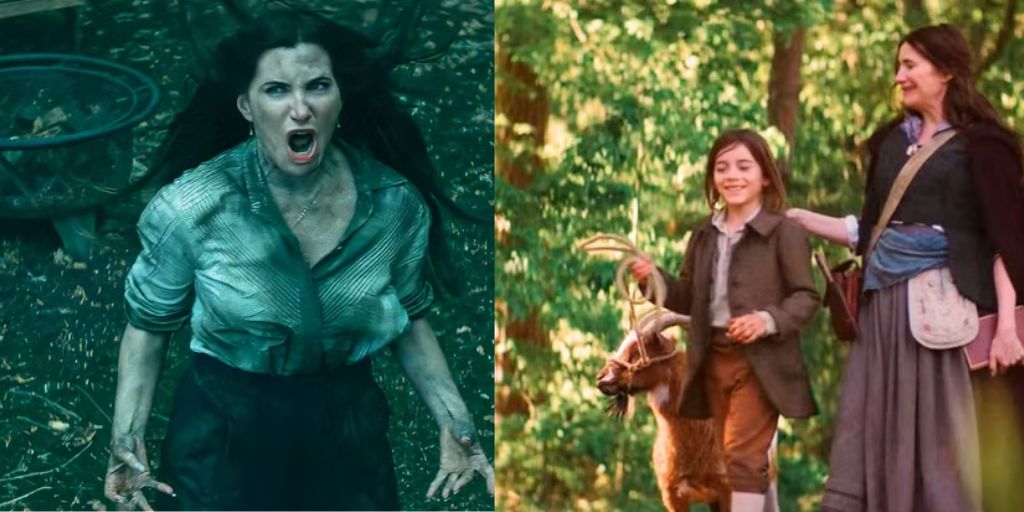
Still from Agatha All Along (Credit: Disney)
With Disney and Marvel considering a second season, it’s clear they see potential in expanding Agatha All Along’s story.
The show’s unique blend of humor, mystery, and dark magic has struck a chord with fans, who would likely welcome more episodes. By following the lives of characters like Agatha and her allies, the MCU can continue to offer fresh, exciting stories that go beyond the typical superhero fare.
Final Thoughts
Whether or not Agatha All Along gets a second season, it’s already made a significant impact within the MCU. The decision to submit the show for awards hints that Disney and Marvel see it as more than a one-time project.
Agatha All Along could easily become a recurring series, adding depth to the Marvel universe and keeping audiences attracted with its magical, mysterious storytelling.
Marvel fans will be watching closely to see what happens next – both for Agatha and for the rest of the WandaVision trilogy.
The Simpsons has become an iconic show that many fans associate with the Halloween season, mainly because of its long-running Treehouse of Horror specials.
These annual episodes, which have been a part of the series since Season 2 in 1990, are typically filled with spooky tales, references to classic horror, and, of course, the trademark Simpsons humor.
Over the years, these Halloween specials have evolved into a fan favorite, often standing out as the highlight of the season, no matter how the rest of the episodes fare.
One of the most recent Treehouse of Horror episodes, “Treehouse of Horror XXXV,” continues this trend, offering a particularly strong entry in a season that has generally been more good than bad.
Among the three segments of this episode, “The Fall of the House of Monty” stands out as the most notable.
While it is an excellent segment full, what makes it even more exciting for fans is the subtle Easter egg that connects it to the very first Treehouse of Horror from Season 2.
This moment not only serves as a nostalgic callback but also bridges two episodes in a way that will likely please longtime Simpsons fans.
The Callbacks to “The Raven”
As the segment “The Fall of the House of Monty” begins, the scene opens with a sweeping view of Victorian-era Springfield, eventually settling on the Burns & Co. Excellent Corn Syrup factory. As the camera pans, sharp-eyed fans may spot a familiar figure in the distance—a raven, perched ominously on top of the factory.
For fans who have watched the show for years, this sight will instantly call back memories of the very first Treehouse of Horror episode from Season 2.
In the segment “The Raven,” which is a direct adaptation of Edgar Allan Poe’s famous poem, the bird in question is portrayed by Bart Simpson (voiced by Nancy Cartwright).
The raven appears in the background of “The Fall of the House of Monty” as a clear nod to this classic Simpsons moment.
In the original segment from Treehouse of Horror I, the raven is a central figure in a retelling of Poe’s poem “The Raven.”
Homer Simpson (voiced by Dan Castellaneta) takes on the role of the narrator, a man grieving the loss of his love, Lenore (Marge, voiced by Julie Kavner), while Bart’s raven torments him with the ominous refrain “Nevermore.”
This segment is one of the rare instances where The Simpsons leans into genuine horror rather than humor. The haunting atmosphere, combined with the voice of James Earl Jones as the narrator, made the segment especially memorable for fans.
This eerie vibe is something that fans will also find in “The Fall of the House of Monty,” and the raven Easter egg acts as a bridge between these two “Treehouse of Horror” moments.
It’s a clever way for The Simpsons to acknowledge the long history of its Halloween specials while still keeping the spirit of Poe’s work alive in the 35th iteration of the show.
The raven, with its dark, mysterious energy, helps connect “The Fall of the House of Monty” to “The Raven” in a way that feels both nostalgic and fresh, and the connection to Poe’s work serves to heighten the eerie atmosphere of the episode.
“The Fall of the House of Monty”—A Nod to Poe and More
While “The Fall of the House of Monty” clearly draws from Edgar Allan Poe’s writings, it doesn’t limit itself to just one work. In fact, the title and full setup of the segment are a direct reference to one of Poe’s most famous stories, The Fall of the House of Usher.
In this tale, the Usher family is slowly driven to madness by a curse that haunts them, and their home—just like Monty Burns’ own mansion in the Simpsons segment—becomes a symbol of their inevitable doom.
In “The Fall of the House of Monty,” Monty Burns, Springfield’s wealthy and unscrupulous factory owner, faces a similar fate. Burns’ fortune, amassed from his corn syrup empire, mirrors the Usher family’s pharmaceutical riches in Poe’s tale.
Both families are warned by ominous spirits that the lives they have taken to gain their wealth will eventually come back to haunt them.
The corn syrup factory explosion, which causes the deaths of several workers, becomes a haunting reminder of the human cost of Burns’ empire.
While the segment directly references The Fall of the House of Usher, it also draws from other works by Poe, including The Masque of the Red Death, The Cask of Amontillado, and The Haunted Palace.
Each of these works features themes of doom, death, and the consequences of human actions, which are all present in the Simpsons segment. However, “The Fall of the House of Monty” doesn’t just play it straight.
It also includes elements of horror from other sources, notably the Netflix series The Fall of the House of Usher, a show created by Mike Flanagan.
This series features grotesque and disturbing imagery, much like the explosion in the corn syrup factory in “The Fall of the House of Monty,” which results in the deaths of workers.
The similarities between these two works highlight just how The Simpsons is able to blend multiple references from different horror sources into a single cohesive segment.
The factory explosion and the subsequent haunting of Burns by the spirits of the dead workers is a direct homage to the kind of eerie, unsettling atmosphere that Poe and Flanagan both excel at evoking.
“The Fall of the House of Monty” and Winchester
The homage to horror doesn’t stop there. While The Fall of the House of Monty is heavily influenced by Poe, it also includes a reference to a completely different story—one that comes from real life.
The segment takes inspiration from the 2018 film Winchester, which is based on the true story of Sarah Winchester (played by Helen Mirren).
In Winchester, Sarah is haunted by the ghosts of those who died due to her family’s wealth, which was made through the creation of the famous Winchester rifle.
In order to keep the spirits at bay, Sarah continuously builds a mansion with strange features: staircases that lead nowhere, doors that open into walls, and rooms that are sealed off with nails.
This concept of a house constantly under construction is echoed in “The Fall of the House of Monty,” where Burns’ mansion has also been under construction for years.
As Lenny (voiced by Harry Shearer) points out, Burns’ father and grandfather both died while building the mansion.
This construction is not just a metaphor for the decay of the Burns family—it’s also a physical representation of the house’s haunted nature, with Burns being tormented by the spirits of those who died in his factory.
The inclusion of these elements from Winchester further emphasizes the Simpsons writers’ ability to blend multiple horror influences into one segment.
By combining Poe’s tales of doom and madness with a more contemporary horror story like Winchester, the show creates a segment that is both a tribute to the past and a nod to modern horror storytelling.
More Poe References in The Simpsons
“The Raven” and The Fall of the House of Usher are not the only references to Edgar Allan Poe found in The Simpsons. Throughout the show’s long history, there have been multiple homages to the iconic writer.
One of the most notable examples comes from the Season 6 episode Lisa’s Rival, in which Lisa Simpson (voiced by Yeardley Smith) is driven to confess her sabotage of Allison’s (voiced by Winona Ryder) diorama.
Lisa’s behavior mirrors that of Poe’s protagonist in The Tell-Tale Heart, who is similarly haunted by the sound of a beating heart that drives him to madness.
However, despite the multiple references to Poe’s works, one thing was missing from “The Fall of the House of Monty”—no Bart as the raven. It’s a small but noticeable detail, especially since the raven has become such a defining image in The Simpsons’ Halloween history.
Still, the segment does an excellent job of blending Poe’s themes with a Simpsons-style twist, making it both a tribute to the writer and a standalone piece of horror storytelling.
Treehouse of Horror XXXV is a great example of how The Simpsons continues to be a cultural touchstone for fans of both comedy and horror.
With its clever references to Edgar Allan Poe’s work and the inclusion of nods to modern horror stories like Winchester, the episode manages to blend humor with genuine scares.
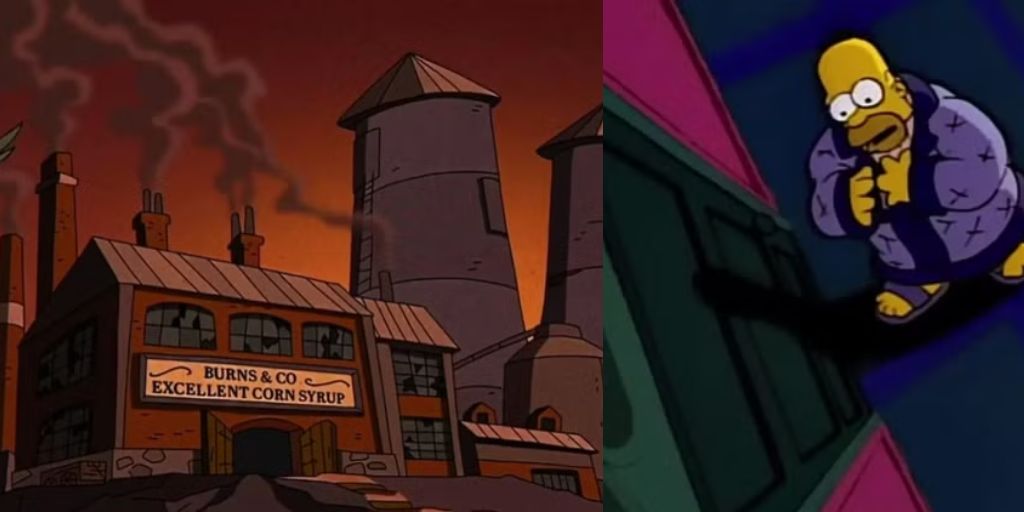
Still from The Simpsons (Credit: Fox)
The Easter egg of the raven from the first Treehouse of Horror episode serves as a reminder of the show’s long history of Halloween specials and its ability to pay homage to its roots.
Whether you’re a longtime fan of The Simpsons or a newcomer to the series, “The Fall of the House of Monty” is a standout segment that showcases the show’s versatility and its knack for weaving together classic and contemporary horror influences in a way that is uniquely Simpsons.
