Abbott Elementary is a beloved television show that has impressed audiences with its unique characters and humorous stories. The series takes place in a public school in Philadelphia and focuses on teachers who are dedicated to making a difference in their students’ lives. The show has received praise for its witty writing and relatable characters, as well as for highlighting the challenges of working in an underfunded school system.
The main characters in Abbott Elementary each bring something special to the show. They face various challenges and grow as individuals throughout the series. Each character has their own personality, struggles, and triumphs, making them relatable to viewers. The show balances humor with heartfelt moments, showing the importance of education and the dedication of teachers.
One character that stands out in this ensemble is Melissa, played by Lisa Ann Walter. Melissa is known for her tough and straightforward demeanor. She is a seasoned teacher who has strong opinions and does not hesitate to share them. Throughout the series, viewers have seen her character develop and change in surprising ways. Melissa has always been complex, and her personality adds depth to the storylines in which she is involved.
Melissa’s Strong Personality
Melissa’s strong personality is one of the defining features of her character. She is tough, outspoken, and unafraid to stand her ground. This trait makes her both a commanding presence in the classroom and a formidable colleague among her peers. Many of her students respect her for her honesty and straightforwardness. However, her tough exterior often hides a softer side that viewers get to see as the series progresses.
In the latest episode titled “Class Pet,” Melissa showcases a surprising new layer of her character. This episode does not change who she fundamentally is, but it reveals an unexpected aspect of her personality that fans have not seen before. Melissa has always been known for her strong will and her ability to assert herself. The writers have done an excellent job of finding her complexity, making her character even more interesting.

Still from the season (Hulu)
The Class Pet Episode
The episode “Class Pet” begins with the school district sending money for teachers to buy class pets. Each teacher is encouraged to choose a pet that they think will benefit their students. When Melissa receives a guinea pig, she is initially unhappy. She expresses her displeasure, saying she never liked pets growing up. Melissa mentions that she did not have pets in her childhood and does not see the point of having one now.
However, as the story unfolds, Melissa’s feelings begin to change. The guinea pig, which she names Sweet Cheeks, slowly captures her heart. As she spends more time with Sweet Cheeks, she develops a strong bond with him. This transformation is fun to watch, as it showcases a different side of Melissa’s character. The audience enjoys seeing her go from being indifferent to caring deeply about the little creature.
Melissa’s attachment to Sweet Cheeks grows so intense that she goes to great lengths to protect him. In a humorous twist, she lies to her class, telling them that Sweet Cheeks has died so she can take him home with her. This is surprising behavior for Melissa, who is known for being honest and straightforward. Her willingness to lie shows just how much she cares for the guinea pig and emphasizes her protective nature.
Melissa’s Relationships with Others
Throughout Abbott Elementary, Melissa’s relationships with her colleagues and students highlight her character’s depth. She may appear tough on the outside, but she has always shown a caring side to those she is close to. For example, despite her differences with Jacob, she allows him to move into her home when he needs a place to stay. This act of kindness demonstrates that she is capable of great generosity and compassion.
Her relationship with Janine also develops over the course of the series. Initially, Melissa does not like Janine and finds her annoying. However, as they work together and get to know each other, Melissa begins to see Janine’s potential. She becomes a mentor to Janine, guiding her and helping her grow as a teacher. This change reflects Melissa’s ability to connect with others and her willingness to invest in their success.
Melissa’s dedication to her students is one of her most admirable traits. During a read-a-thon event, she goes out of her way to help a struggling student find success. She stays late, offers extra support, and encourages her students to keep trying. Her commitment to her students shows that she genuinely cares about their education and well-being.
Protectiveness and Loyalty
One of the standout aspects of Melissa’s character is her protectiveness. She is fiercely loyal to her school, her students, and her friends. Even when she feels frustrated or annoyed, she always puts their needs first. Melissa often goes above and beyond to ensure her students are cared for, even if it means working with difficult circumstances.
When she takes Sweet Cheeks home, her actions are driven by love. She believes it is the best choice for the guinea pig’s well-being, showing her maternal instincts. Her decision to lie to her students about Sweet Cheeks highlights her determination to keep him safe. Melissa feels she cannot trust her students to care for him properly after observing their less-than-stellar handling of classroom pets in the past.
Despite her decision to deceive her class, Melissa eventually comes clean. She carefully explains to her students that Sweet Cheeks has a twin, rather than revealing the truth. This approach shows her thoughtfulness and understanding of how to handle sensitive topics with children. Melissa wants to protect her students’ feelings while still being honest, showcasing her deep sense of responsibility.

Still from the season (Hulu)
Character Consistency
The new side of Melissa that emerges in the “Class Pet” episode aligns perfectly with her character throughout the series. From the very beginning, Melissa has exhibited a fierce loyalty to her students and friends. Her actions regarding Sweet Cheeks highlight this protective trait that has been a constant part of her character.
As the show progresses, it becomes clear that this fierce dedication is what makes Melissa such a great teacher. She is loyal not only to her students but also to her friends and colleagues. The love she develops for Sweet Cheeks serves as a reflection of her nurturing side, reminding viewers that there is more to her than meets the eye.
Melissa’s tough persona is balanced by her underlying warmth and compassion. The contrast between her exterior and her true feelings is what makes her character relatable. Viewers appreciate seeing her grow and rise while remaining true to herself. The show does a fantastic job of showcasing this balance, allowing the audience to connect with Melissa on a deeper level.
Melissa’s Growth Throughout the Series
Melissa’s growth as a character is evident as the series progresses. In earlier episodes, she is more focused on maintaining her tough image and asserting her authority. However, as she interacts with her colleagues and students, she learns to embrace her softer side. The journey of self-discovery allows her to become a more well-rounded individual.
Her relationship with Sweet Cheeks represents this growth. By allowing herself to care for a pet, she opens up emotionally and shows that she is capable of love and tenderness. This change not only impacts her character but also influences her relationships with others. As she becomes more in touch with her emotions, she is able to connect more deeply with her students and colleagues.
Additionally, Melissa’s willingness to take risks, such as lying to her class to protect Sweet Cheeks, shows her growth as a character. She learns that sometimes, showing love and care means making difficult choices. This realization adds another layer to her character, illustrating that she is not afraid to step outside of her comfort zone.
Vulnerability is an essential aspect of character development in Abbott Elementary. Melissa’s willingness to show vulnerability is significant in the “Class Pet” episode. By allowing her students to see her care for Sweet Cheeks, she demonstrates that it is okay to express emotions and connect with others on a personal level.
This moment of vulnerability not only strengthens her bond with Sweet Cheeks but also helps her students understand the importance of empathy and compassion. When they see their tough teacher caring for a pet, it encourages them to embrace their feelings and express love as well. Melissa becomes a role model for her students, showing them that strength can coexist with vulnerability.

Still from Abbott Elementary (Credit: ABC)
Furthermore, Melissa’s vulnerability enhances her relationships with her colleagues. As she becomes more open, she allows her friends to see her true self. This openness fosters deeper connections, making her friendships more meaningful. By embracing her vulnerability, Melissa enriches her character and adds depth to the show’s overall narrative.
In the “Class Pet” episode, the humor surrounding her attachment to Sweet Cheeks adds a lighthearted touch to the storyline. The absurdity of her actions—lying to her class and taking the guinea pig home—creates funny moments that resonate with the audience. This humor allows viewers to connect with Melissa while also highlighting her more serious traits.
Moreover, the balance between humor and emotional depth makes Melissa’s character relatable. Viewers appreciate seeing her funny side while also witnessing her struggles and growth. The comedic elements in the show serve as a reminder that life can be both funny and challenging, reflecting the real-life experiences of teachers.
The themes of love and care run deep throughout Abbott Elementary, especially in relation to Melissa’s character. Her journey with Sweet Cheeks symbolizes the transformative power of love. By caring for the guinea pig, she learns more about herself and what it means to be a compassionate individual.
Melissa’s affection for Sweet Cheeks extends beyond just a pet; it reflects her dedication to nurturing relationships in her life. As she cares for the guinea pig, she also continues to care for her students and friends. This theme emphasizes the importance of love and compassion in creating strong connections with others.
The show effectively portrays how love can inspire personal growth. Melissa’s evolution showcases that it is possible to embrace vulnerability and care for others while maintaining strength. Her journey is a reminder that love comes in many forms, and each one plays an important role in shaping who we are.
Abbott Elementary masterfully reveals the complexity of Melissa’s character. The latest episode “Class Pet” showcases her growth as she learns to embrace her nurturing side. She is not just a tough teacher; she is also a person capable of love and compassion.
Melissa’s journey highlights the importance of vulnerability and the power of love in personal development. As she connects with Sweet Cheeks and opens up to her students, she becomes a more relatable and admirable character. The series does an excellent job of finding these themes while maintaining its humor and charm.
As Abbott Elementary continues, viewers can look forward to more moments of growth and discovery for Melissa and the other characters. The show remains a delightful coverage of education, friendship, and the complex nature of human relationships.
Through Melissa’s story, audiences are reminded that everyone has different layers to their personalities and that love and care can lead to significant personal transformation.

Still from the show (ABC)
Abbott Elementary masterfully reveals the complexity of Melissa’s character. The latest episode “Class Pet” showcases her growth as she learns to embrace her nurturing side. She is not just a tough teacher; she is also a person capable of love and compassion.
Melissa’s journey highlights the importance of vulnerability and the power of love in personal development. As she connects with Sweet Cheeks and opens up to her students, she becomes a more relatable and admirable character. The series does an excellent job of finding these themes while maintaining its humor and charm.
As Abbott Elementary continues, viewers can look forward to more moments of growth and discovery for Melissa and the other characters. The show remains a delightful find of education, friendship, and the complex nature of human relationships.
Through Melissa’s story, audiences are reminded that everyone has different layers to their personalities and that love and care can lead to significant personal transformation.
Moreover, the depiction of teachers dealing with their challenges while forming meaningful connections serves as an uplifting reminder of the importance of compassion in educational environments. The relationships that develop among the characters not only enrich the narrative but also reflect the real-world experiences of educators who strive to make a difference.
In 1999, Colin Farrell became a well-known actor when he starred in the movie Tigerland. This film was directed by Joel Schumacher, a director known for his work in Hollywood. Before Tigerland, Farrell had not acted in many films, but this role made him a star.
Tigerland is about a training camp in Louisiana where soldiers prepare for the Vietnam War in 1971. The film shows the tough experiences of young men who do not want to go to war. They find themselves in a difficult situation as they train for combat.
Colin Farrell did not know much about Tigerland when he first heard about the auditions in London. He learned about the film’s story only later. However, he decided to go to the audition anyway. His charm and natural acting ability impressed the casting directors.
Farrell was called back for a second audition, which is often a sign that the directors liked what they saw. He was chosen to play the character Roland Bozz, a rebellious draftee. Bozz is an interesting character because he does not follow orders like the other soldiers. Instead, he questions authority and stands up for what he believes in.
The story of Tigerland is different from other films about the Vietnam War. Most Vietnam War movies show the fighting in Vietnam, but Tigerland focuses only on the training in the United States. The action takes place at Fort Polk, Louisiana, where soldiers prepare for their deployment. The film tells the story of the soldiers’ struggles during training and the harsh treatment they receive from their superiors.
The screenplay for Tigerland was based on true experiences. Co-screenwriter Ross Klavan wrote the script along with Michael McGruther. Klavan served in the Army Reserves and completed his Advanced Infantry Training at Tigerland. He based the character of Bozz on a fellow soldier he met during his training.
This personal connection gave the film a sense of authenticity. Director Joel Schumacher found the screenplay interesting because it told a small, personal story about rebellion in a crazy situation. He felt it was important to show the experiences of soldiers who were facing an uncertain future.
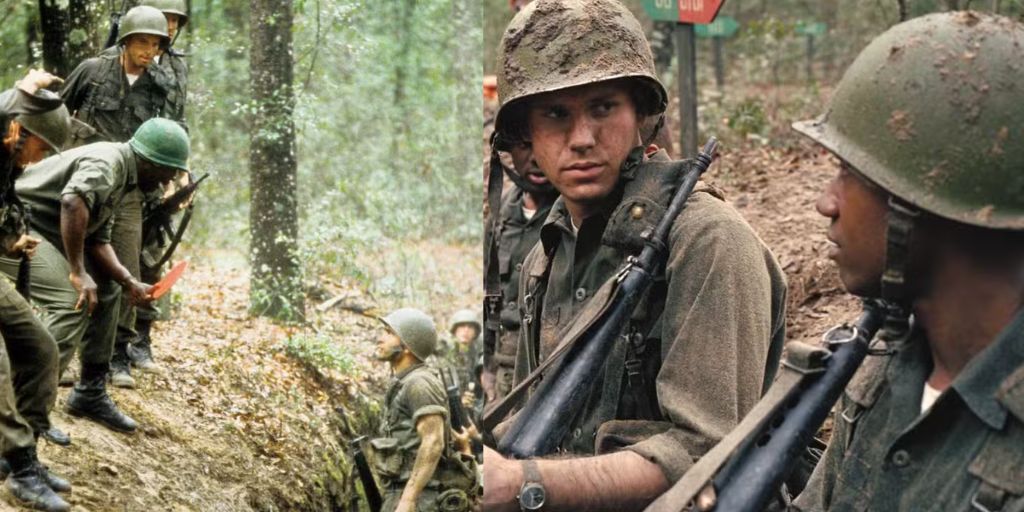
Still from the movie (New Regency Productions)
Filming for Tigerland took place over twenty-eight days in Florida. The crew chose a military base as the location to give the film a realistic feel. Cinematographer Matthew Libatique worked hard to capture the intense emotions and experiences of the characters. The cast participated in two weeks of infantry training before filming started. This training helped them understand what their characters would go through.
To make the film feel even more authentic, the actors did not have trailers or amenities during the shoot. They lived like real soldiers to capture the true spirit of military life. This commitment to realism made the final product more powerful. The film was released in 2000 and received attention for its unique approach to the Vietnam War story.
The plot of Tigerland begins in September 1971, at Fort Polk. The young men in the platoon are mostly draftees who do not want to be there. Many of them are frightened and confused. They have just completed boot camp, where they learned the basics of being a soldier.
Now, they must face Advanced Infantry Training before they are sent to Vietnam. The training is difficult, and the soldiers feel the pressure from their sergeants and commanders. The way the sergeants treat the young men can be very harsh. Sometimes, their treatment is cruel. The situation is similar to what prisoners experience, which makes the soldiers feel dehumanized and powerless.
The story is narrated by Jim Paxton, played by Matthew Davis. Paxton is a young man who dreams of becoming a writer. He believes that going to war will give him valuable experiences to write about. He is idealistic and wants to document what he sees during his time in the army.
Paxton becomes friends with Bozz, who is different from the other soldiers. Bozz is an iconoclastic character who does not believe in the ideals that the army represents. He is a pacifist who questions the purpose of the war. He often gets into trouble because he refuses to follow orders. He is determined to leave the army on his own terms, which makes him a unique character in the story.
Bozz is also very clever. He acts as a barracks lawyer, helping other soldiers find ways to get discharged. He cares about the men around him, especially those who feel overwhelmed and helpless. Ironically, he does not try to help himself escape.
Instead, he challenges authority and stands up against those who believe in the army’s ideals. One of his main adversaries is Wilson, a soldier played by Shea Whigham. Wilson is racist and has a violent personality. He is not fond of Bozz and often tries to provoke him.
As the story progresses, many of the other soldiers begin to admire Bozz. They see him as a symbol of rebellion and hope in a hopeless situation. This admiration angers the platoon commander, Saunders, played by Nick Searcy.

Still from the movie (New Regency Productions)
Saunders represents the strict authority of the army, and he does not like Bozz’s influence on the other men. When Bozz is temporarily appointed as the platoon leader, he shows strong leadership and impressive shooting skills. This makes Wilson and Saunders even more angry.
One notable scene occurs on the firing range, where Wilson threatens Bozz with a loaded gun. However, the gun jams, which saves Bozz’s life. Bozz tries to persuade Saunders to take action against Wilson, but Saunders promises to handle the situation himself. This lack of action shows the challenges faced by the soldiers. They often feel powerless against the authority figures who are supposed to protect them.
For their final week of training, the platoon is sent to Tigerland, a location designed to simulate Vietnam. The training ground is hot, humid, and uncomfortable. It represents the harsh conditions that the soldiers would face in real combat. During the war games, Wilson pretends to be an enemy soldier, further complicating the already tense situation.
Paxton, who is eager to prove himself, realizes that Saunders has lied to them about dealing with Wilson. He understands that Saunders placed Wilson against him and Bozz in a dangerous duel. This realization brings the story to a critical point. Paxton’s idealism is challenged, and he must confront the harsh realities of the situation he is in.
Colin Farrell’s portrayal of Bozz is compelling. He brings charisma and strong emotions to the role. His intense eyes and confident demeanor make him fascinating to watch. After Tigerland, Farrell’s career took off. He starred in Phone Booth in 2002, also directed by Schumacher, and later appeared in Minority Report with Tom Cruise.
Since then, he has acted in nearly fifty films, showcasing his range as an actor. As of 2023, many critics agree that while Farrell has been in a few bad movies, he has never given a bad performance.
Screenwriter Klavan explained the mindset of the soldiers during that time. He said, “After six years of American involvement in Southeast Asia, few of the men held any illusions about their prospects. There was a lot of fatalism about the war. There wasn’t a lot of patriotism.
Guys went because they had no choice.” This statement highlights the feelings of despair and resignation among the soldiers. Most of them were young men, often drafted against their will, who faced a future filled with uncertainty.
Tigerland focuses on the doomed and helpless soldiers, but it also tells the story of one man who refuses to accept his fate. Bozz’s rebellion, whether successful or not, is his way of asserting his identity and feeling alive. His struggle against the army’s authority becomes a central theme in the film.
The U.S. ended the draft in 1973, transitioning to an all-volunteer military. This change occurred partly because the draft had many failures during the Vietnam War. The majority of draftees were 18 and 19 years old, poor, uneducated, and often non-white.
As the war progressed and public support diminished, the draft became desperate, accepting anyone who could be sent to serve. The film tells the stories of some of these young men who faced these difficult circumstances.
Despite the powerful storytelling and strong performances, Tigerland has its downsides. Some viewers find the film hard to follow, especially in the first third. The dialogue is often rushed, making it difficult to catch every word. Additionally, the chaotic and disjointed action can be confusing.
The soldiers’ identical appearances also create a challenge for viewers. With their shorn heads and matching uniforms, it is sometimes hard to tell them apart. The film does not always provide names or close-ups, which could help clarify who is who.

Still from the movie (New Regency Productions)
For instance, if a viewer does not recognize Private Cantwell, played by Tom Guiry, it is challenging to understand why Sergeant Thomas, played by James Macdonald, beats him up in a later scene.
On the positive side, Tigerland feels authentic. It may be an ugly film to watch, but the performances are remarkable. The actors convey the raw emotions of young men facing a difficult situation. Their struggles resonate with audiences, adding depth to the film’s message.
Despite receiving positive reviews for its outstanding performances and realistic portrayal of military life, Tigerland did not do well at the box office. This initial failure could have ended Farrell’s career before it truly began. However, it actually marked the beginning of a successful journey for him in Hollywood. The film is currently recognized for its unique take on the Vietnam War story and has earned a 77% rating on Rotten Tomatoes.
Tigerland remains an essential film that finds the themes of rebellion, authority, and the experiences of soldiers during a turbulent time in American history. It captures the struggles and fears of young men facing the unknown as they prepare for war.
The film’s powerful storytelling and character development resonate with audiences, making it a significant part of Colin Farrell’s career and a notable entry in the war film genre.
Tigerland is a film that combines powerful storytelling with strong performances. Colin Farrell’s portrayal of Bozz stands out, making him a memorable character in film history. The movie covers themes of rebellion and authority, showing the struggles of young soldiers in a difficult time.
Even though it did not perform well at the box office, Tigerland has gained recognition over the years for its authenticity and depth. It tells an important story about a challenging period in American history and captures the spirit of rebellion among soldiers facing their fate.
Tigerland serves as a poignant finding of the lives of young soldiers during a tumultuous time in American history. Through Colin Farrell’s compelling performance as Roland Bozz, the film highlights the themes of rebellion and authority, illustrating the internal and external struggles faced by those drafted into military service.
The unique setting of Fort Polk, Louisiana, provides a backdrop for the harsh realities of army training, where the characters grapple with fear, disillusionment, and a sense of helplessness. The film captures the emotional depth of its characters, especially Bozz, who embodies the spirit of defiance against an often oppressive military system.
Despite its initial lack of commercial success, Tigerland has earned critical acclaim over the years for its authenticity and raw portrayal of the Vietnam War experience. The narrative not only reflects the personal stories of the soldiers but also addresses broader issues regarding the morality of war and the consequences of forced conscription.
By focusing on the training phase rather than combat, the film offers a fresh perspective on the Vietnam War, reminding viewers that the psychological battles fought by soldiers often begin long before they reach the battlefield.
Tigerland stands out as a significant film that continues to resonate with audiences. Its coverage of rebellion, the quest for identity, and the harsh realities of military life contribute to its lasting impact. As a defining moment in Colin Farrell’s career, Tigerland not only launched his rise to stardom but also remains an essential piece of cinema that encourages reflection on the sacrifices made by those who serve.
The film’s powerful message and memorable performances ensure its place in the canon of war films that challenge viewers to confront the complex nature of duty, courage, and resistance.
