Christopher Nolan’s Memento offers a narrative structure that immerses viewers in the protagonist’s perspective, intensifying the noir atmosphere. By combining black-and-white and color sequences, Nolan allows the past and present events to unfold in a manner that adds depth, complexity, and suspense to the story. These contrasting sequences highlight the protagonist’s fragmented memory, drawing the audience deeper into the unraveling mystery.
Memento Ending Explained
Memento delves into the power of trauma and self-deception, prompting viewers to question their own identities and actions. Nolan weaves an intricate tale, encouraging the audience to confront difficult questions about memory, identity, and perception. His exploration of memory’s fragility and how it influences one’s understanding of reality adds layers to the narrative and reinforces the film’s unsettling and profound themes.
Nolan’s second feature film, Memento (2000), stars Guy Pearce as Leonard Shelby, a man with anterograde amnesia—a condition that prevents him from forming new memories. After two men attack Leonard, resulting in his wife’s death and his memory loss, Leonard embarks on a mission to find the man responsible for his wife’s murder. The timeline is deliberately fragmented to reflect Leonard’s disorienting experience of living without memory.
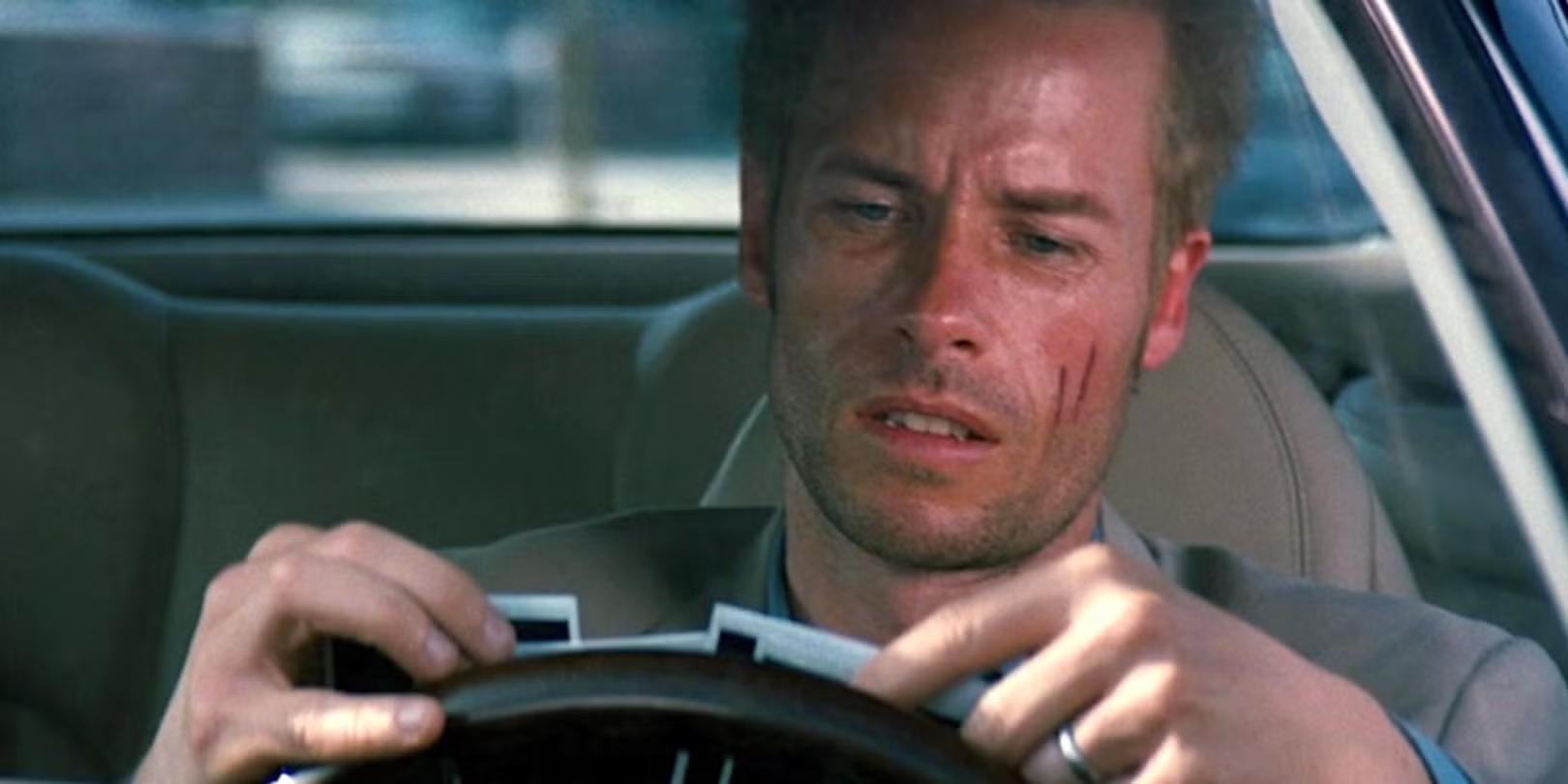
Leonard Shelby (Image via Getty)
Memento’s Visual Contrast
The movie presents two parallel sequences: one in black-and-white, which moves forward chronologically, and the other in color, which unfolds in reverse order. These timelines meet in the final scenes of the film. This innovative storytelling approach mimics Leonard’s experience, where he constantly struggles to understand his reality and remember key details of his life.
In Memento , the black-and-white scenes are the earliest events in the film’s narrative, while the color sequences represent the most recent moments. This arrangement plays with the viewer’s expectations and challenges their understanding of the film’s timeline. The intersection of these sequences creates a profound moment of revelation, forcing viewers to reconsider everything they’ve witnessed up to that point.
Memento’s Unique Structure: A Gimmick or Genius?
At first glance, the non-linear structure of Memento might seem like a gimmick. However, it is an effective technique that places the audience directly in Leonard’s shoes. By structuring the plot in reverse, Nolan allows viewers to experience the confusion and disorientation that Leonard faces daily. As the timelines converge, the film gradually reveals its complex narrative and the devastating truth behind Leonard’s quest for vengeance.
The movie’s approach to memory plays a crucial role in shaping the story’s unfolding. Leonard, unable to retain new memories, relies on Polaroid photographs, handwritten notes, and tattoos as reminders of the people and events he encounters. The contrast between the black-and-white and color sequences visually reflects Leonard’s fragmented understanding of time and reality. As Leonard’s world shifts, so too does the audience’s perception.
Leonard’s Quest for Revenge and the Impact of Memory Loss
At the core of Memento is Leonard’s relentless pursuit of the man responsible for his wife’s death. However, due to his condition, Leonard can’t form lasting memories, forcing him to rely on external reminders and brief moments of clarity. This presents a major twist at the film’s conclusion when it’s revealed that Leonard has been trapped in a cycle of self-deception, unable to escape the consequences of his actions.
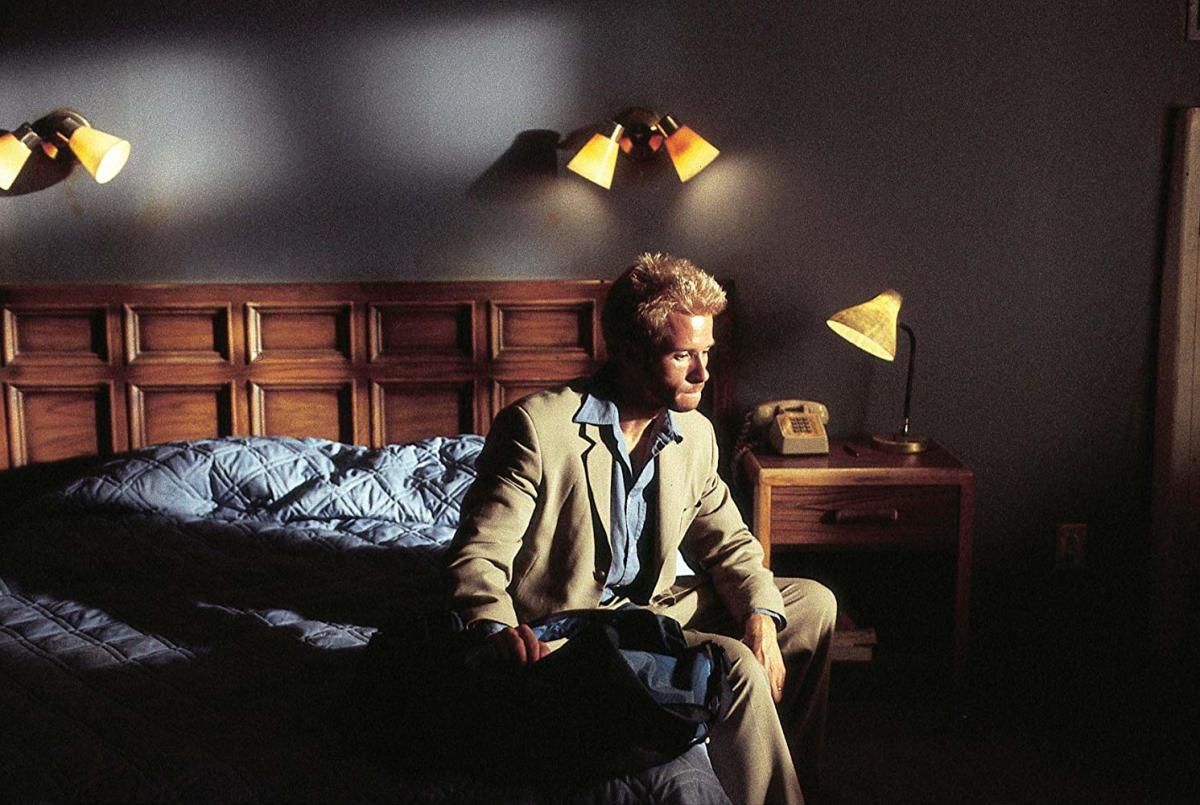
Leonard Shelby (Image via Getty)
As Leonard struggles with his condition, he clings to the belief that his wife, Catherine, was murdered during the home invasion. However, Memento reveals the surprising truth: Catherine survived the attack. Her death was caused by a tragic accident where Leonard, believing it was his duty to help her with an insulin shot, inadvertently killed her. This revelation deepens the emotional weight of Leonard’s actions and the consequences of his memory loss.
Teddy’s Role in Leonard’s Journey
Joe Pantoliano plays Teddy, a police officer who has been aiding Leonard in his quest for vengeance. Teddy’s involvement in the plot becomes increasingly complex, culminating in a stunning confession. He reveals that Leonard has already killed the real attacker, but due to his memory condition, Leonard remains stuck in his obsessive search for the man. Teddy’s revelation serves as the key to unlocking Leonard’s tragic cycle of self-deception.
The film’s climax reveals that Teddy has been using Leonard to kill various men, all with the name “John” or “Jimmy G,” in a twisted effort to give Leonard a sense of purpose. Leonard, unwilling to confront the painful truth, burns the photographs of the second attacker and frames Teddy for the murder. By doing so, Leonard creates a new narrative for himself, choosing to believe that his quest for vengeance remains unresolved.
Teddy’s Confession and Leonard’s Self-Deception
In the final scenes, Teddy admits to Leonard that the name “John/Jimmy G” is so common that it even applies to him. Leonard, in his desire to maintain his sense of purpose, kills Teddy, believing he has finally avenged his wife. This tragic moment underscores the power of memory and self-deception, as Leonard constructs a false narrative to give his life meaning. His inability to break free from this cycle suggests that his actions will continue to haunt him.
Leonard’s story is intricately linked to that of Sammy Jankis, a man with a similar memory condition. As Leonard recounts Sammy’s tragic tale, it becomes clear that Sammy’s experience mirrors his own. Sammy’s wife, like Catherine, tested his condition, resulting in a fatal incident where Sammy inadvertently killed her. Leonard’s guilt over his role in Catherine’s death distorts his perception of the past, leading him to repress and rewrite his own memories.
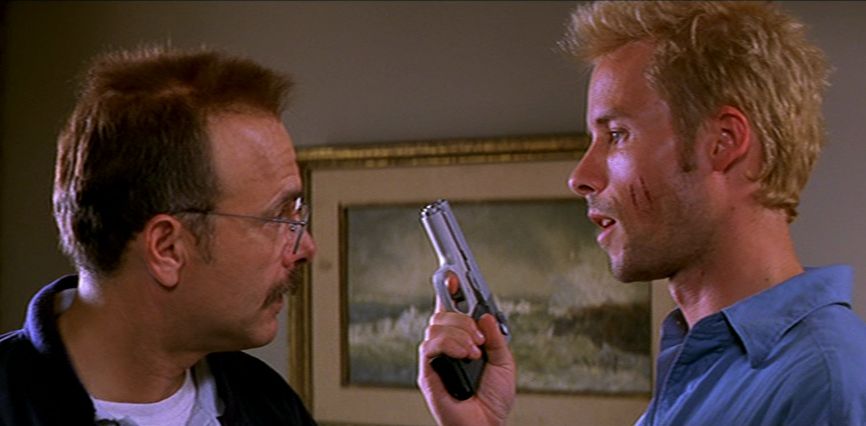
Teddy Gammell and Leonard Shelby (Image via Getty)
The Power of Trauma in Shaping Identity
Memento explores how trauma shapes the way people understand themselves. Leonard’s experience with memory loss becomes a metaphor for the broader human experience. As Teddy points out, everyone lies to themselves in some way, and Leonard’s struggle with his own memory is an extreme example of this. Rather than facing the painful truth, Leonard creates a new narrative for himself, one that allows him to continue his quest without confronting the consequences of his actions.
Guilt and the Distortion of Memory
The film emphasizes how guilt can lead to the distortion of memory. Leonard’s inability to accept the truth about his wife’s death and his role in it causes him to fabricate a new story that suits his emotional needs. This psychological complexity adds depth to the film’s themes and challenges the audience to reflect on their own tendencies to distort or repress painful memories.
The film’s conclusion is both dark and tragic. Leonard frames Teddy for the murder of the second attacker, creating a narrative where he can believe he is still seeking justice. This act of self-deception allows Leonard to avoid facing the truth about his actions and the consequences of his past. The film ends with Leonard firmly ensnared in a cycle of memory loss and self-deception, trapped by his inability to accept the reality of his situation.
The Final Message of Memento
In the end, Memento leaves viewers with a profound question: can one ever truly escape the past? Leonard’s journey suggests that, for some, the truth may be too painful to face. By constructing a false narrative, Leonard attempts to regain control over his life, but in doing so, he remains trapped by his own lies. The film ultimately explores the power of trauma and memory, raising unsettling questions about identity, perception, and the consequences of our actions.
Donald Trump, an American politician, real estate developer, entrepreneur, author, and television personality, has an estimated net worth of $8 billion. In November 2016, he made history by defeating Hillary Clinton to become the 45th President of the United States. After losing his bid for re-election in 2020 to Joe Biden, Trump won back the presidency in November 2024, defeating Kamala Harris to become the 47th president.
Before his presidency, Trump was widely known as the owner of The Trump Organization, a vast real estate and licensing conglomerate. The Trump Organization owns numerous commercial and residential properties worldwide, including golf courses in the U.S., Scotland, and Ireland. Some of his most recognizable assets, however, are not directly owned by Trump. For instance, the Trump International Hotel & Tower in New York City is owned by General Electric and the Galbreath Company, but Trump’s name was licensed for the building’s prestige. Trump’s actual ownership here includes a condo, a parking garage, lobby bathrooms, a restaurant, and the room service kitchens servicing the building. Trump also owns the retail and commercial parts of Trump Tower in New York City, although most of the residential units are privately owned condos, including Trump’s 10,000-square-foot, gold-plated penthouse.
In terms of his wealth, Trump owns about 60% of the publicly traded entity that owns his social media platform, Truth Social. When his tech company went public through a Special Purpose Acquisition Company (SPAC) in March 2024, his holdings were valued at approximately $5 billion on paper. Additionally, Trump has earned hundreds of millions since 2000 from licensing his name to various products and real estate development projects globally.
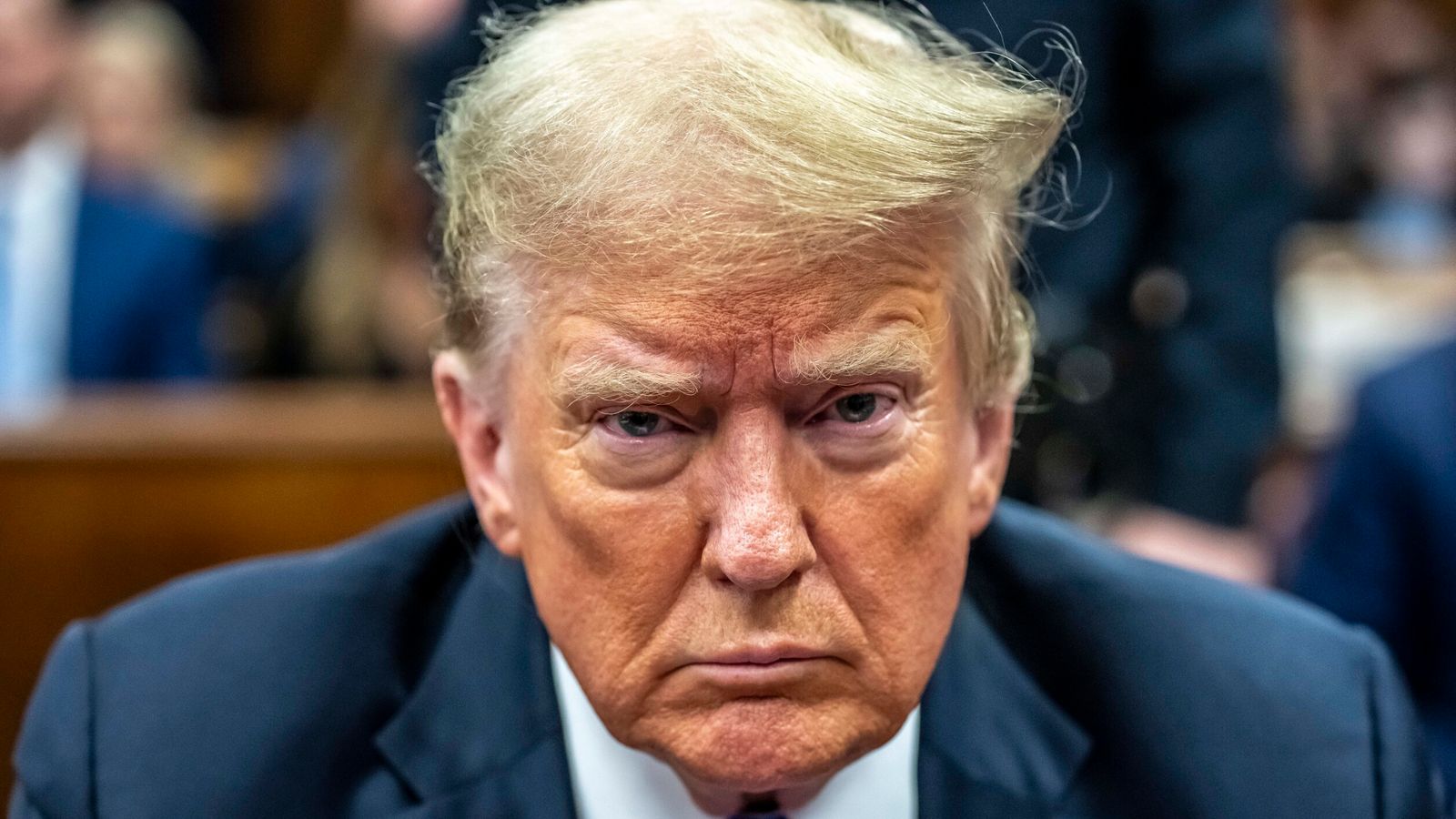
Donald Trump (Image via Getty)
Trump Media and DWAC Stock Holdings
After being banned from Twitter in January 2021, Trump launched his own social media platform, Truth Social, under his newly established company, Trump Media & Technology Group (TMTG). In October 2021, TMTG announced a merger with the publicly traded Digital World Acquisition Corp (DWAC). Despite several regulatory delays, the merger was finally approved in March 2024. At that time, Trump’s stake was valued at $3 billion.
Under the terms of the merger, Trump’s stock was locked up for six months, with the lockup expiring in September 2024. Another key detail of the merger allowed Trump to receive 36 million additional shares as a bonus if the company maintained a stock price above $17.50 for 20 days in a 30-day period. This milestone was reached in April 2024, and Trump’s stake in the company soared. His shares were valued at $5.4 billion at one point, making him one of the 500 richest people globally.
However, the company’s stock value has fluctuated dramatically. By mid-April 2024, the stock’s value halved, and by September 2024, the price dropped to under $18, reducing Trump’s stake to just above $2 billion.
Earnings from ‘The Apprentice’
Trump’s fame skyrocketed with the reality television show The Apprentice , which began airing in 2004. This partnership with producer Mark Burnett was highly lucrative for Trump, as he received 50% of the show’s profits. In 2005, his earnings peaked at nearly $48 million. Between 2000 and 2018, Trump earned a total of $197.3 million from The Apprentice .
His television success allowed him to leverage his fame into endorsement and licensing deals, adding another $230 million to his fortune. The show’s success also earned Trump two Emmy Awards.
Presidential Salary and Benefits
During his time as President, Trump was entitled to a salary of $400,000 per year. However, he donated all but $1 of that salary annually to charity. As a former president, he is entitled to an annual pension of $211,000. Ex-presidents also receive benefits, including up to $1 million annually for travel expenses, Secret Service protection for life, and a staff allowance of $150,000. For office space, ex-presidents receive reimbursements, with Bill Clinton’s office space costing taxpayers over $500,000 annually.
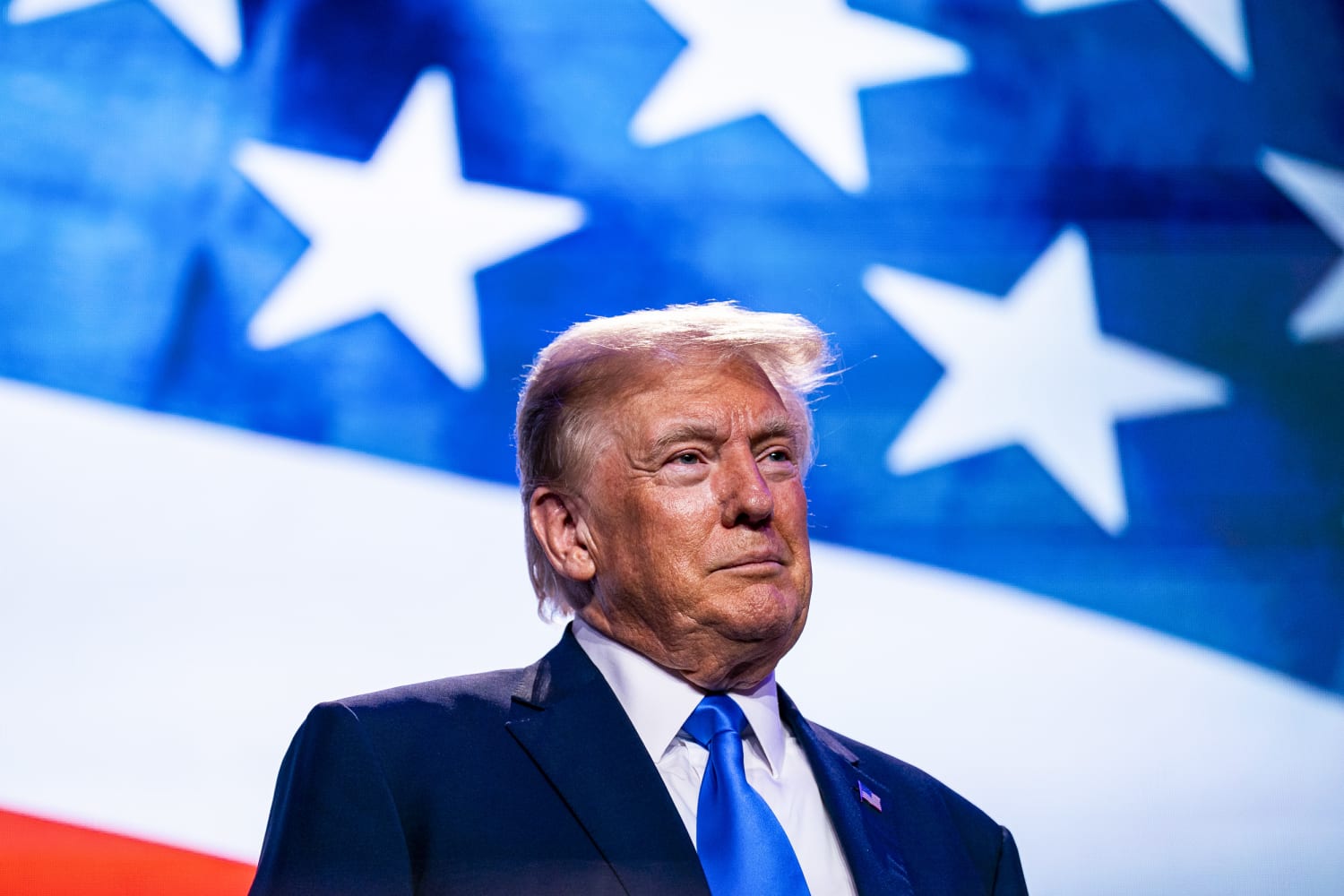
Donald Trump (Image via Getty)
Donald Trump’s Most Valuable Assets
Trump’s most valuable real estate holdings include 40 Wall Street, Trump Tower, and Trump International Hotel and Tower, among others. Here is an overview of his notable assets:
- 40 Wall Street (New York City): Estimated value of $500 million. Ownership: 100%.
- Trump Tower (New York City): Estimated value of $555 million. Ownership: 100%.
- Trump International Hotel and Tower (Chicago): Estimated value of $350 million. Ownership: 30%.
- Trump National Doral (Miami): Estimated value of $250 million. Ownership: 100%.
- Mar-a-Lago (Palm Beach, Florida): Estimated value of $160 million. Ownership: 100%.
- Trump International Golf Club (Various U.S. locations): Estimated value of $200 million. Ownership: 100%.
- Trump Park Avenue (New York City): Estimated value of $400 million. Ownership: 30%.
- 555 California Street (San Francisco): Estimated value of $1.9 billion. Ownership: 30%.
Early Life and Beginnings
Donald John Trump was born on June 14, 1946, to Fred Trump, a millionaire real estate tycoon. Fred Trump, alongside Donald’s grandmother Elizabeth, founded a company in 1927 called Elizabeth Trump & Son, which developed and sold homes, eventually managing over 27,000 rental units along the East Coast.
Trump briefly attended the Kew-Forest School in Queens before being sent to the New York Military Academy at 13. He later went on to Fordham University and graduated from the Wharton School of Finance at the University of Pennsylvania with an economics degree in 1968.
After graduating, Donald joined his father’s company, which was later renamed The Trump Organization. Throughout the 1970s, the Trumps amassed a fortune by owning and renting middle-class housing in New York City’s outer boroughs.
At eight years old, thanks to family trust funds, Donald was technically a millionaire. In 1976, Fred Trump established $1 million trust funds for each of his five children and three great-grandchildren, worth around $5 million today.
Early Independent Success
Trump’s first major independent venture was in 1976 when he took a loan from his father and his own trust fund to invest in the renovation of the Commodore Hotel. By 1996, he sold his 50% stake in the property for $142 million.
In 1982, Trump began construction on Trump Tower, a 58-story skyscraper in Manhattan. Trump Tower today houses residential units, restaurants, and retail businesses, with Trump personally residing in a triplex apartment occupying the top floors.
By the late 1980s, Trump expanded his portfolio to Atlantic City, building several casino properties, including the Trump Taj Mahal Casino, which opened in 1990. Unfortunately, his casinos frequently required bailouts from Fred Trump, and they filed for bankruptcy multiple times.
Trump’s other notable assets include Trump Winery in Virginia, Trump Doral in Miami, Trump Chicago, and additional golf courses in locations like Scotland, Ireland, New Jersey, and Dubai. As of 2016, Trump had $1.4 billion in assets, $300 million in income from golf courses and resorts, and $100 million from rentals.
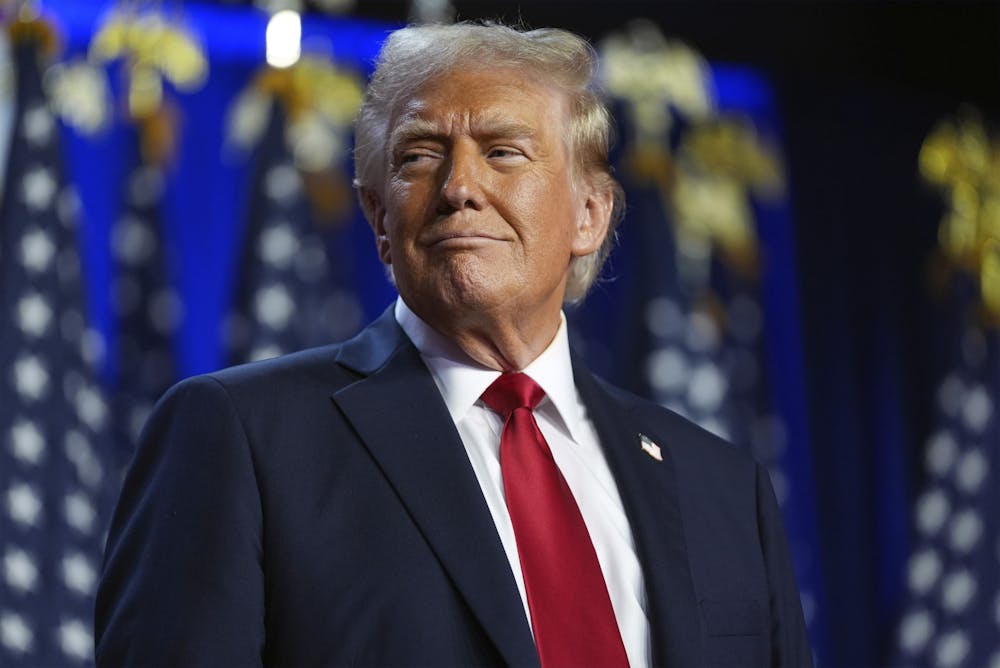
Donald Trump (Image via Getty)
Books, TV Shows, and Earnings
Trump has authored several books, including The Art of the Deal , Trump 101: The Way to Success , and The America We Deserve . His television career also helped boost his income, especially with The Apprentice , which earned him $60 million per season. Trump received a star on the Hollywood Walk of Fame in 2007 for his contribution to television.
Family and Relationships
Trump’s first marriage was to Ivana Zelnickova, with whom he had three children: Donald Jr., Ivanka, and Eric. They divorced in 1992. He married Marla Maples in 1993, and they had a daughter, Tiffany, before divorcing in 1999. Trump’s third marriage, to Melania Knauss, took place in 2004, and they had a son, Barron, in 2006.
Trump’s Net Worth – $3 Billion, $9 Billion, or More?
In 2015, Trump estimated his net worth at $8 billion to $10 billion. The key discrepancy in his net worth estimates arises from how he values his personal brand, which Trump pegged at $3.3 billion, though analysts often place it much lower, around $50 to $100 million.
Trump’s net worth fluctuated over time, peaking at $4.5 billion in 2017 before falling to $3 billion in 2019, according to Forbes. Celebrity Net Worth initially estimated his fortune at $1.5 billion in 2009.
Personal Real Estate Holdings
Trump’s primary residence before moving to the White House was a 30,000-square-foot penthouse at Trump Tower, which is estimated to be worth at least $100 million. He also owns a 213-acre estate in Westchester County, New York, called Seven Springs, and the Mar-a-Lago estate in Palm Beach, Florida.
Mar-a-Lago
Mar-a-Lago, Trump’s primary residence, was purchased for $7 million in 1985. Originally constructed by cereal heiress Marjorie Merriweather Post, it was donated to the government but declined due to maintenance costs. Trump renovated the property, which now serves as a private club.
Impeachment and Legal Issues
Trump is the only U.S. president to be impeached twice. The first impeachment occurred in December 2019 for abuse of power, and the second came in January 2021 for inciting an insurrection. He was acquitted both times. In 2023, a grand jury indicted Trump on charges related to the mishandling of classified documents.
In November 2022, Trump announced his candidacy for the 2024 presidential election. His legal battles continue, including ongoing investigations stemming from his actions during his presidency.
