Only a few movies can successfully play with ideas of perception and reality. God’s Crooked Lines is one of those films that not only captures these themes but also delivers an engaging story that keeps viewers on the edge of their seats.
With its mind-bending narrative and intense atmosphere, this film leaves a lasting impression. Directed by Oriol Paulo, known for his talent in creating suspenseful stories, God’s Crooked Lines unfolds in a 1970s psychiatric hospital, where tension and paranoia reign supreme.
The Plot Unfolds: A Disturbing Investigation
The story centers on Alice (played by Barbara Lennie), a private investigator who goes undercover as a patient at a mental health facility to look into a suspicious death.
This intriguing setup immediately captures the audience’s attention. Alice is determined to uncover the truth behind the mysterious circumstances surrounding the death, but her journey becomes much more complicated than a simple murder investigation.
When Alice enters Our Lady of the Fountains Hospital, she finds herself surrounded by uncertainty and fear. The atmosphere is thick with tension, and it is clear that the hospital is not a typical mental health facility.
From the very beginning, viewers sense that something is deeply wrong. The unsettling environment serves as a backdrop for Alice’s investigation, and her efforts to blend in as a patient become increasingly dangerous as the story progresses.
As Alice interacts with the other patients and the hospital staff, the lines between reality and illusion begin to blur. She starts to question her own perception of what is happening around her.
The plot unfolds in a way that challenges the audience to keep up with the twists and turns, making it difficult to predict what will happen next. This uncertainty keeps viewers engaged and wanting to know more.
An Atmosphere of Paranoia and Uncertainty
The film effectively creates an atmosphere of paranoia and uncertainty, making viewers feel as if they are part of Alice’s experience. The hospital’s eerie setting, combined with the mysterious characters, adds to the feeling of dread.
Each scene is filled with subtle hints that something is not quite right, leaving audiences guessing and on edge. The direction by Oriol Paulo plays a crucial role in establishing this mood.
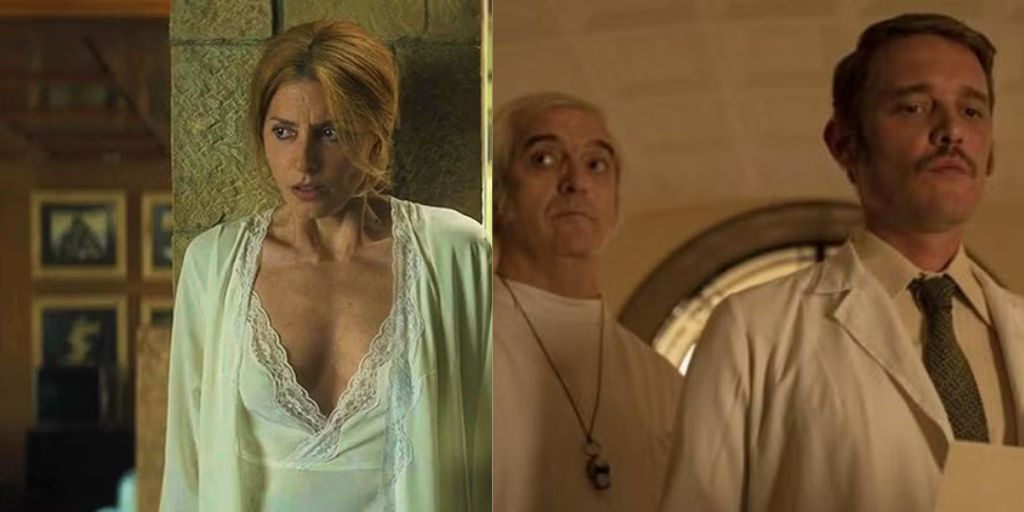
Still from God’s Crooked Lines (Credit: Netflix)
Paulo expertly uses visual storytelling to convey the psychological tension within the hospital. Shadows loom large, and the camera often lingers on characters’ expressions, capturing their fear and confusion. This visual style enhances the full experience, drawing viewers into the story and making them feel the weight of Alice’s struggles.
One of the film’s strengths is its ability to plant tiny clues and visual details that make viewers question everything they see. For example, in one scene, Alice has a lunch meeting with Dr. Donadio (played by Lluís Soler).
While they seem to have an ordinary conversation, the food and drinks on the table mysteriously disappear. This subtle detail raises questions about Alice’s perception of reality and hints at the mental games being played around her.
Characters and Their Dualities
The characters in God’s Crooked Lines are complex and multi-dimensional, contributing to the film’s sense of unease. Friends turn into foes, and motives seem to shift constantly. This makes it hard for Alice—and the audience—to know who to trust. The film’s portrayal of these characters adds depth to the narrative.
Dr. Alvar (Eduard Fernández) is one character who embodies this complexity. At first, he appears to be a trustworthy figure, but as Alice learns more about him, he becomes increasingly suspicious.
The revelation that Alice’s husband gave Dr. Alvar a large check adds layers of doubt not only to him but also to the entire medical team. As Alice uncovers more information, the trustworthiness of those around her is called into question.
Similarly, Alice’s husband seems like a caring partner, but once it is revealed that he took her fortune, the audience’s perception of him shifts dramatically.
This twist complicates Alice’s already precarious situation and deepens the themes of betrayal and mistrust. Just when viewers believe they have figured out who is in the right, new information surfaces, forcing them to reconsider everything.
This constant shifting of trust creates a mental maze for both Alice and the audience. Each new revelation adds to the suspense, as viewers must face the tangled web of relationships and motives. The film masterfully keeps the audience guessing about the truth, making it difficult to settle on a definitive answer.
Bárbara Lennie’s Attractive Performance
At the heart of God’s Crooked Lines is Bárbara Lennie’s outstanding performance as Alice. Lennie brings a unique blend of vulnerability and strength to her character, making her portrayal both engaging and relatable. From the moment she steps into the hospital, there is a quiet intensity about her that keeps viewers invested in her journey.
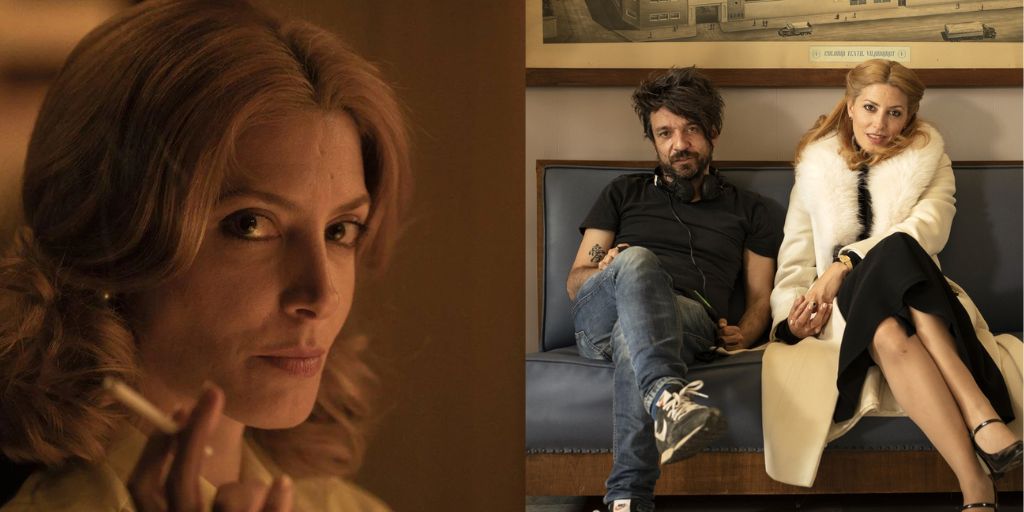
Still from God’s Crooked Lines (Credit: Netflix)
Lennie skillfully captures the complexities of Alice’s character. She conveys a sense of fragility that allows audiences to empathize with her struggles. However, as the story progresses, Lennie also reveals Alice’s resilience and determination to uncover the truth. This duality is crucial to the film’s narrative, as it mirrors the themes of trust and deception present throughout.
One of the most striking aspects of Lennie’s performance is her ability to convey Alice’s growing self-doubt. Rather than making it obvious, she gradually allows cracks to appear in Alice’s confidence.
This nuanced approach adds depth to the character and enhances the tension within the film. As viewers witness Alice’s mental state deteriorate, they cannot help but question her reliability.
For instance, in a tense moment when Dr. Alvar confronts Alice about her motives for checking into the hospital, Lennie delivers her lines with a calm yet icy demeanor. However, there is a flicker of uncertainty in her eyes that reveals her internal struggle. This subtle acting choice illustrates the character’s fragility and keeps viewers guessing about her true intentions.
The Role of Memory and Perception
God’s Crooked Lines goes into the complex relationship between memory and perception. As Alice investigates the suspicious death, she must confront her own memories and question their accuracy. The film poses important questions about the reliability of memory and how it can be influenced by external factors.
Throughout the story, Alice’s recollections become increasingly muddled. She struggles to piece together the events surrounding the death she is investigating, leading her to doubt her own mind. This theme resonates with audiences, as it reflects the real-life challenges many individuals face in processing their memories.
The film also shows how perception can be manipulated. As Alice shows the hospital, she encounters various characters who may have their own agendas. The tension between what is real and what is a construct of her mind creates a attractive narrative that keeps viewers engaged. Each interaction raises further questions about trust and authenticity.
One of the film’s most compelling elements is how it portrays the psychological impact of being in an environment where trust is scarce. Alice’s mental state deteriorates as she grapples with her perception of reality. This emotional turmoil adds depth to her character and makes her journey even more gripping.
Cinematic Techniques and Storytelling
The film employs various cinematic techniques to enhance its storytelling. Paulo uses lighting, sound design, and camera angles to create a sense of unease. The dimly lit corridors of the hospital, the haunting score, and the close-ups on characters’ faces all contribute to the full atmosphere of paranoia.
Lighting plays a crucial role in shaping the mood of the film. Dark shadows and stark contrasts create a sense of foreboding, reflecting the uncertainty that permeates the story. The careful use of light and shadow helps to establish the film’s psychological tension and keeps viewers on edge.
Sound design also adds to the film’s unsettling nature. The haunting score complements the visuals, heightening the emotional impact of key scenes. Subtle sound effects, such as echoes or whispers, enhance the feeling of being trapped in the hospital, intensifying the sense of isolation that Alice experiences.
Camera angles and framing choices further enhance the storytelling. Paulo often uses close-ups to capture the characters’ emotions, allowing audiences to connect with their experiences.
The use of wide shots in certain scenes emphasizes the vastness of the hospital, creating a feeling of entrapment. These visual choices work together to immerse viewers in Alice’s world and heighten the suspense.
Themes of Trust and Betrayal
God’s Crooked Lines shows profound themes of trust and betrayal. As Alice faces the complex relationships within the hospital, she must constantly reassess whom she can trust. The film raises important questions about loyalty and the nature of human connections.
Alice’s journey is marked by a series of betrayals that challenge her understanding of those around her. The shifting loyalties and hidden agendas create an atmosphere of mistrust, making it difficult for her to determine who is truly on her side. This theme resonates with audiences, as it reflects real-life experiences of betrayal and deception.
The scheme of trust extends beyond Alice’s relationships with others. As the plot unfolds, Alice must also grapple with her own ability to trust herself. Her self-doubt intensifies as she questions her memories and perceptions. This internal struggle adds a layer of complexity to her character and heightens the emotional stakes of the story.
The film’s portrayal of betrayal is multifaceted. Characters who initially seem trustworthy reveal hidden motives, and those who appear to be enemies may have deeper reasons for their actions. This complexity adds depth to the narrative and challenges viewers to consider the nature of trust in their own lives.
The Climax and Resolution
As the story reaches its climax, the tension escalates. Alice uncovers shocking truths that force her to confront her deepest fears and insecurities. The twists and turns lead to a thrilling resolution that keeps viewers on the edge of their seats until the very end.
Without giving away any spoilers, the climax of God’s Crooked Lines is a masterclass in suspense. The revelations come at a rapid pace, and the stakes are raised as Alice races against time to uncover the truth.
The film skillfully balances moments of high tension with quieter, introspective scenes that allow audiences to reflect on the implications of Alice’s discoveries.
God’s Crooked Lines leaves viewers with lingering questions about perception, reality, and trust. The resolution challenges audiences to think critically about the nature of truth and the complexities of human relationships. This thought-provoking conclusion ensures that the film stays with viewers long after the credits roll.
Conclusion: A Riveting Experience
God’s Crooked Lines is a film that masterfully weaves together themes of perception, trust, and betrayal. With its intense atmosphere and mind-bending narrative, it delivers a riveting experience that keeps audiences engaged from start to finish. Bárbara Lennie’s powerful performance as Alice adds depth to the story, making her journey both relatable and compelling.
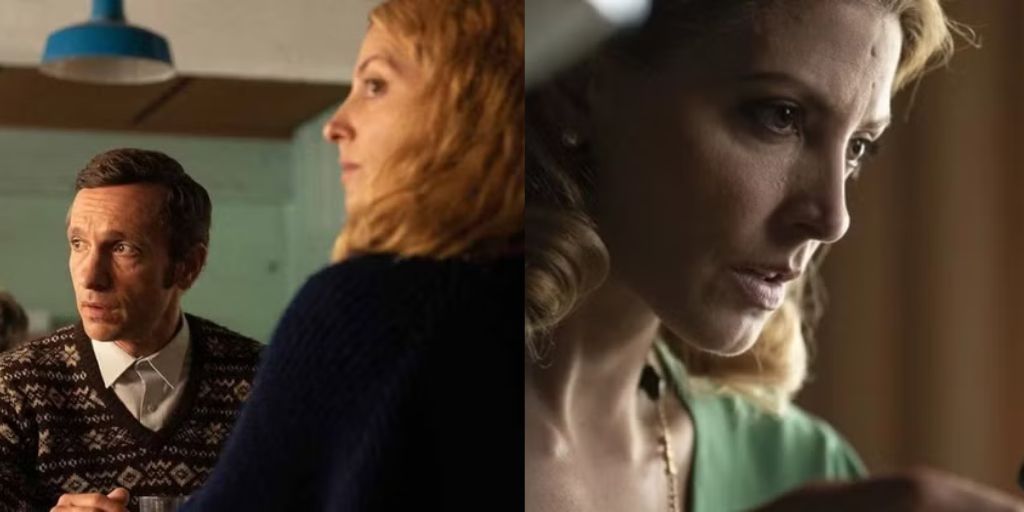
Still from God’s Crooked Lines (Credit: Netflix)
Oriol Paulo’s direction enhances the film’s psychological tension, utilizing cinematic techniques that immerse viewers in Alice’s world. The carefully crafted characters and their shifting loyalties create an atmosphere of paranoia that lingers throughout the film.
Ultimately, God’s Crooked Lines challenges viewers to question their own perceptions and consider the complexities of truth and trust.
It is a thought-provoking thriller that leaves a lasting impression, reminding audiences of the fine line between reality and illusion. As the credits roll, viewers are left reflecting on the intricacies of human relationships and the nature of the mind.
Back in 2023, Citadel premiered with high hopes, featuring Priyanka Chopra Jonas and Richard Madden in lead roles. The series, produced by the Russo Brothers, known for their work on the Marvel franchise, promised a thrilling ride filled with espionage, action, and complex characters.
However, it received mixed reactions from audiences and critics alike. While some appreciated its ambitious storyline and high production values, others felt it fell short of expectations.
Despite the divided opinions, Prime Video greenlit a second season and approved the creation of international spin-offs, indicating the company’s confidence in the Citadel franchise.
One of these spin-offs is Citadel: Diana, set in Italy. This new installment expands the Citadel universe, introducing a storyline that runs parallel to the original series. Although I wasn’t particularly impressed by Citadel, I found its strong cast and a few unexpected twists made it an engaging watch.
While it did not reach the thrilling heights of Mission Impossible, it still had some noteworthy aspects worth discussing. However, Citadel: Diana feels much less like a blockbuster.
It does not increase the stakes or present a fresh take on the spy genre. If viewers were disappointed by Chopra Jonas and Madden’s series, they may find Citadel: Diana even more underwhelming.
What Is ‘Citadel: Diana’ About?
Citadel: Diana is set in Milan in the year 2030. The main character, Diana Cavaleri, portrayed by Matilda De Angelis from The Undoing, is deep undercover at Manticore’s headquarters.
Eight years before the events of the show, Diana was recruited as a Citadel agent, driven by her desire for revenge after her parents died in a plane crash that Manticore orchestrated. This tragic event set the course for her life, as she sought justice against the organization responsible for her family’s suffering.
Manticore’s efforts to destroy their competition led to Citadel fading into obscurity, leaving only one person behind to carry on the mission of protecting the world from corruption. This backstory sets the stage for Diana’s character and her motivations throughout the series.
As the story unfolds, we see Diana struggling with the weight of the Citadel legacy. She is diagnosed with a chronic illness, making her mission feel even more burdensome.
Exhausted and wanting a way out of her dangerous lifestyle, Diana finds a chance to leave the world of espionage behind. To gain her freedom, she hands over a weapon as leverage, hoping to escape the life that has consumed her for so long.
In her new life, Diana connects with Edo Zani, played by Lorenzo Cervasio, who is next in line to lead Manticore. Their relationship develops against a backdrop of tension and intrigue. Diana faces an internal battle, torn between her desire for freedom and her attraction to Edo.
This attraction raises the stakes, as Edo’s potential influence on Manticore could change the organization for the better. Diana must ultimately decide where her loyalties lie and what kind of future she wants for herself and her remaining family.
‘Citadel: Diana’s Greatest Strength Is its Stuntwork’
As a spy drama, Citadel: Diana follows a familiar structure. It features a protagonist involved in a secret mission who also finds herself romantically involved with the enemy. While the genre does not require a complicated storyline, it typically demands a higher level of action.
Unfortunately, this series falls short in that regard. There are only two major stunt-driven sequences in the entire show, which is surprisingly low for an espionage series.
However, the action scenes that are present are brilliantly choreographed and executed. In one standout moment, Diana manages to chase someone down using a zipline, showcasing her skills and determination.
The camera angles and precise direction by Arnaldo Catinari enhance these action sequences, making them the greatest strength of the series.
The tension and excitement of these moments could have been expanded, creating a more thrilling viewing experience. If more intricate and engaging action scenes were included, the spin-off might not have felt like such a missed opportunity.
Alongside the action, other details in the show also stand out, although they remain underexplored. The design of the weapons and Diana’s exotic hairstyle are particularly noteworthy.
Manticore’s advanced technology and weaponry are attributed to Edo, who wants to prove to his father, Ettore (Maurizio Lombardi), that he has the skills to upgrade the organization. Manticore Italy faces sanctions from their European counterparts in France and Germany, adding another layer of complexity to the story.
Edo’s technological prowess is evident, especially in Episode 5, where he showcases his talent in crafting high-tech gear. However, the series misses a valuable opportunity to go deeper into how his inventions relate to his brother’s death during an attack on Citadel. This connection could have added emotional depth to his character and the storyline.
Similarly, Diana’s appearance and hairstyle could have been used to reflect her persona as a mole within Manticore. Her look should connect with her efforts to maintain a low profile while carrying out her treacherous mission. More scenes of these visual elements could have enhanced the storytelling.
‘Citadel: Diana’ Does Little to Further the Russos’ Global Franchise
Despite its potential, Citadel: Diana does not succeed in making a mark on the larger Citadel franchise. The series lacks character development and relies heavily on familiar spy tropes.
Additionally, it does not fully utilize its setting to enrich the narrative. The Italian espionage headquarters could offer a unique cultural perspective, yet we are left questioning how it differs from other locations around the world.
As more international spin-offs are produced, there is a growing need for each series to stand apart in terms of cultural significance and storytelling. While Citadel: Diana tries to expand the universe, it ultimately feels like a missed chance to create something unique and compelling.
While the series does have promising moments, such as its action sequences and weapon designs, these aspects do not lead to a satisfying experience. Although it consists of only six short episodes, the lack of substance prevents it from making a lasting impression on viewers.

Still from Citadel Diana (Credit: Prime Video)
Audiences may find themselves binge-watching the series in just a few hours, but they will likely forget the experience shortly afterward.
As we look ahead, Citadel: Honey Bunny, a spin-off set in India, is set to debut next month. Fans of the franchise are hopeful that this new installment will take full advantage of its concept and avoid repeating the mistakes made in Citadel: Diana.
Conclusion
Citadel: Diana had the potential to be an exciting addition to the Citadel franchise, but it ultimately falls short in delivering a attractive story.
While it offers some engaging moments, the series struggles to develop its characters and show the intricate world of espionage effectively. With only a handful of action scenes, viewers may find themselves wanting more excitement and depth from the narrative.
The character of Diana Cavaleri provides a strong foundation for the story, but her journey is not fully realized. The relationship between Diana and Edo Zani could have been more compelling with deeper scenes of their motivations and backgrounds. Furthermore, the series misses opportunities to utilize its setting and cultural context to enrich the story.
Ultimately, while Citadel: Diana offers some entertaining moments and strong performances, it does not fully capitalize on its potential.
Viewers may enjoy the action scenes and the visual elements, but the full experience may leave them feeling unfulfilled. As the Citadel franchise continues to grow, fans will be eagerly watching for the next spin-off, hoping for a more exciting and engaging narrative.
Citadel: Diana will be available to stream on Prime Video worldwide starting October 10, giving viewers a chance to experience this new chapter in the Citadel universe for themselves.
