Mothers’ Instinct is a gripping psychological thriller that tells the story of two mothers, Celine (played by Anne Hathaway) and Alice (played by Jessica Chastain). This film is set in the 1960s. At first, Celine and Alice appear to live perfect suburban lives in America.
However, their lives take a dark turn when Celine’s son, Max (Baylen D. Bielitz), dies after falling from a roof. This tragedy triggers a series of events filled with paranoia, deceit, and ultimately murder. Celine ends up killing her husband, Damian (Josh Charles), and Alice and her husband, Simon (Anders Danielsen Lie), adopt Celine’s son, Theo (Eamon Patrick O’Connell).
Benoît Delhomme makes his directorial debut with Mothers’ Instinct. He uses the tools available to him very effectively. The costumes and cinematography bring life to the story. Delhomme had just 24 days to shoot the film, but he made the most of this time.
The film is not just about the story; it also discusses important themes. Anne Hathaway and Jessica Chastain deliver remarkable performances in Mothers’ Instinct. Their acting and the thoughtful writing create a deep commentary on sexism from the past, showing that many of these issues still exist today.
Jessica Chastain and Anne Hathaway Shine in ‘Mothers’ Instinct’
It might seem obvious to say that Chastain and Hathaway give amazing performances. However, it is true that they are the stars of Mothers’ Instinct. Both actresses spoke to Glamour Magazine about their experiences while making the film.
Chastain shared that they felt “safe” with each other, even though their characters were engaged in their own Cold War. The final fight scene between Chastain and Hathaway has a raw, intense energy as both mothers struggle for the right to be Theo’s mother.
The trust they had in each other greatly influenced this scene. Hathaway felt “safe enough to be violent towards someone,” describing the moment as “really something.”
The actresses show their differences while also demonstrating why they might be friends. This showcases their great talent in Mothers’ Instinct. In one scene at the beginning, Chastain’s character, Alice, and Hathaway’s character, Celine, talk about their desires in life.
Even though they do not say exactly what they are thinking, it becomes clear that Alice wants more than just being a homemaker, while Celine seems content with her role.
This discussion sets up the conflict between these women. Celine desperately wants to be a mother, but she might also feel jealous of Alice’s ambitions for more in life. Meanwhile, Alice might feel envious of Celine’s natural motherly instincts since she was too afraid to hold her baby after Theo’s birth.
The contrast between these two characters keeps viewers on the edge of their seats during every scene they share. Each actress brings layers to their performance, keeping the audience guessing about their true feelings.
Fantastic Filmmaking Makes ‘Mothers’ Instinct’ a Beautiful Film to Watch
The practical aspects of filmmaking come together beautifully in Mothers’ Instinct, making it visually stunning and complementing the performances of the actresses. As a period piece set in the 1960s, the film looks authentic, thanks to the wonderful costumes designed by Mitchell Travis.
He told Revamp Magazine that there was a strong focus on the two main characters’ wardrobes. Celine wears traditional clothes that are “quiet, still, and reserved.”
In contrast, Alice wears more “independent” and expressive clothes that reflect her “energy and movement.” The use of costumes helps viewers track how the relationship between the characters changes, adding depth to the tension that simmers beneath the surface.
The cinematography is another essential element that enhances the film’s visual appeal. The opening shots, such as the ambulance in the grass, immediately indicate that something is wrong.
The image of a toy left behind by a child symbolizes the loss of safety for children. This feeling of neglect is evident in Max’s death and how Alice and Celine push Theo to his limits as their paranoia takes over.
One chilling moment occurs when Celine eerily cradles Max’s body. This scene heightens the film’s brutality and horror. Celine’s shocked expression as blood runs down her fingers adds to the disturbing nature of the moment.
This visual portrayal recalls Jackie Kennedy cradling her husband, John F. Kennedy, after his assassination, highlighting the tragic comparison between their experiences.
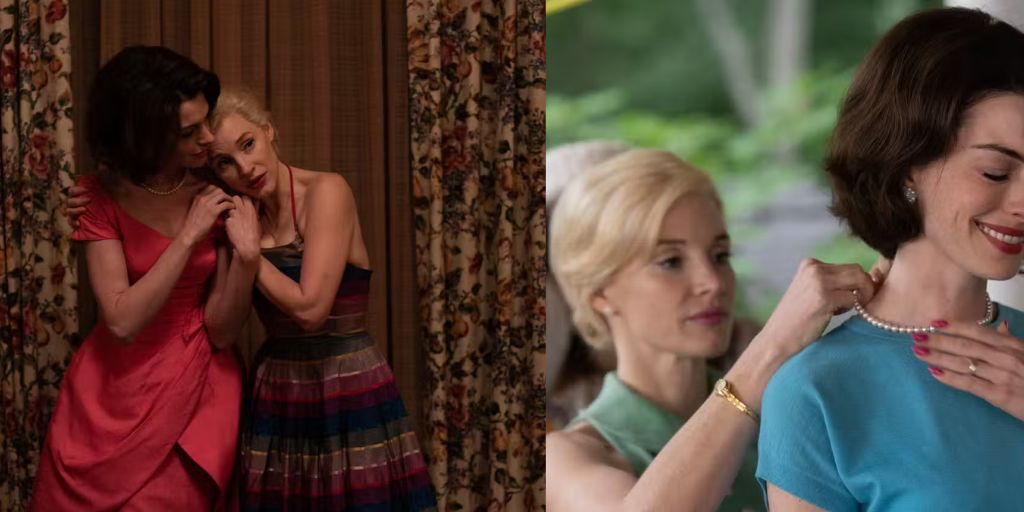
Still from Mothers’ Instinct (Credit: Neon)
Delhomme explained in an interview with A Rabbit’s Foot that this scene is his favorite because the camera “stays in the detail,” forcing the audience to witness the harsh reality of what has just happened, just as Celine must.
‘Mothers’ Instinct’ Shows Both Past and Present Sexism
Mothers’ Instinct also offers a thought-provoking scheme of the sexism that women faced in the 1950s and 1960s. The film shows how these societal expectations pushed women into certain roles and how these issues still resonate today.
According to Anne Hathaway, Celine is given “prescribed identities” that she struggles against. These identities include being a mother and the grieving mother who lost her child. It is fascinating to see how Celine fights against one of these identities only to fit into another. She believes she is worthless if she is not a mother.
Celine experiences a forced hysterectomy, as Hathaway explains. She is put to sleep and has her uterus removed during childbirth. This experience creates a “rage that would be under a really pretty surface.”
Many people can relate this situation to the current issue of abortion bans, which Hathaway notes is “important to me.” This reflects how some people try to control women’s bodies through invasive actions.
When Simon suggests she write “something for the school newspaper,” the expression on Alice’s face is heartbreaking. This moment underscores the unfair power dynamics of the time. Simon only wants Alice to fulfill the roles of a wife and mother. He disregards her instincts about danger later in the story.
Themes of Motherhood and Identity
Mothers’ Instinct also shows deep themes of motherhood and identity. The film asks the audience to consider what it means to be a mother and how societal pressures shape that identity. Celine’s desperate need to be a mother drives her actions, leading her down a dark path.
She believes her worth is tied to her ability to care for her child. When tragedy strikes, her identity shatters. This prompts her to take extreme measures to regain a sense of control.
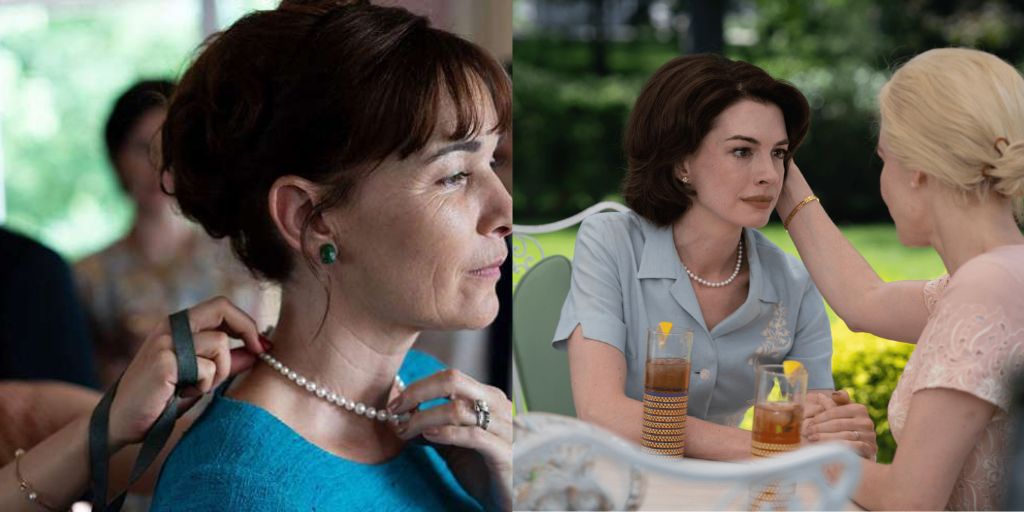
Still from Mothers’ Instinct (Credit: Neon)
Alice’s struggle with motherhood is different yet equally significant. She feels confined to her role as a mother and yearns for more. Her ambitions clash with the expectations placed on her, causing tension in her marriage. This conflict illustrates the difficulty women face in balancing personal desires with societal demands.
The film effectively highlights the struggle many women experience when their identities are defined by motherhood alone.
The dynamic between Celine and Alice also adds depth to the theme of friendship. While they are friends, their relationship is fraught with tension and competition.
Celine’s jealousy of Alice’s ambition creates conflict, and Alice’s fear of Celine’s maternal instincts complicates their bond. This complexity makes their relationship feel authentic and relatable, showcasing the multifaceted nature of female friendships.
The Visual Storytelling
The visual storytelling in Mothers’ Instinct plays a crucial role in conveying the film’s themes and emotions. The cinematography captures the subtleties of the characters’ experiences.
For instance, the use of light and shadow emphasizes the mood of each scene, often reflecting the characters’ internal struggles. The contrast between light and dark imagery symbolizes the conflict between their desires and societal expectations.
The film’s production design also contributes to its storytelling. The settings are carefully crafted to reflect the time period, immersing the audience in the 1960s suburban life.
The attention to detail in the homes, cars, and props enhances the authenticity of the story. This careful craftsmanship allows viewers to feel the tension and unease that permeates the characters’ lives.
Furthermore, the sound design adds another layer to the film’s atmosphere. The use of music and ambient sounds heightens the emotional impact of key scenes.
The score complements the tension and drama, drawing the audience deeper into the story. By combining visual and auditory elements, Mothers’ Instinct creates a rich cinematic experience that resonates with viewers.
A Film Worth Watching
Mothers’ Instinct is a film I highly recommend you watch immediately. It is surprising how quickly it draws you in, keeping you on the edge of your seat. Each line of dialogue and each expression is brilliantly portrayed by Jessica Chastain and Anne Hathaway.
The film is visually stunning, with every shot carefully crafted to serve a purpose. The combination of excellent acting, thoughtful writing, and beautiful cinematography creates a compelling narrative that shows complex themes of motherhood and sexism.
The film leaves viewers questioning their trust in the people they love most, especially regarding the safety of their children. The story’s twists and turns will keep you guessing, making it a truly engaging experience. Mothers’ Instinct effectively addresses important social issues while delivering a thrilling story filled with suspense and emotional depth.
Final Thoughts
Mothers’ Instinct is a psychological thriller set in the 1960s, following two mothers, Celine (Anne Hathaway) and Alice (Jessica Chastain), who seem to have perfect suburban lives until tragedy strikes. Celine’s son, Max, dies after falling from a roof, leading to a chain of paranoia, deceit, and ultimately murder.
Celine kills her husband, Damian, and Alice adopts her son, Theo. The film shows themes of motherhood, identity, and sexism, showcasing the actresses’ powerful performances.
Directed by Benoît Delhomme, it combines stunning visuals and an engaging narrative, making it a compelling reflection on the struggles women face in society.
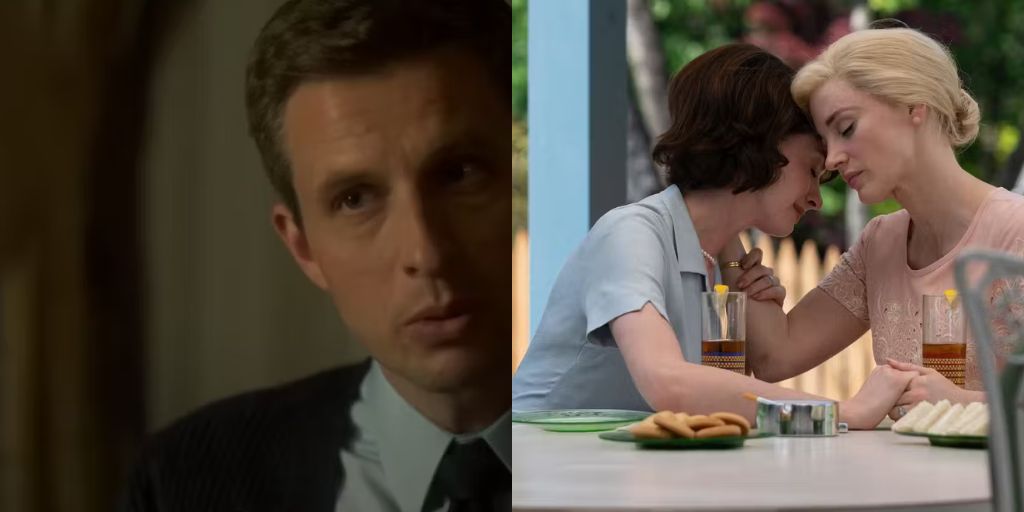
Still from Mothers’ Instinct (Credit: Neon)
Mothers’ Instinct is more than just a thriller; it is a reflection on the challenges women face in their pursuit of identity and fulfillment.
The performances by Anne Hathaway and Jessica Chastain upgrade the film, making it a memorable viewing experience. The film captures the complexities of female relationships and the societal pressures that shape women’s lives.
As you watch Mothers’ Instinct, you will find yourself reflecting on the themes of motherhood, identity, and the lingering impact of sexism. This film is a powerful reminder of the struggles women have faced in the past and continue to face today. It offers valuable insights into the ongoing conversation about women’s rights and societal expectations.
Whether you are drawn to psychological thrillers or are interested in the scheme of gender issues, Mothers’ Instinct is a film that delivers on all fronts. It is a beautifully crafted story that will resonate with viewers long after the credits roll.
Horror anthologies have been part of the horror genre for a long time. Some anthologies, like Tales from the Crypt and Creepshow, have been very good, while many others have not been memorable. In horror, if something is done too often, it can lose its impact.
This has happened with anthologies as well. However, in 2012, anthologies received a new life with the film V/H/S. This film combined short films with the realism of found footage.
It was created by Brad Miska and Bloody Disgusting. V/H/S became one of the scariest films of the 2010s and helped launch the careers of the Radio Silence team.
Due to the success of V/H/S, a franchise was created. This has resulted in six sequels with different levels of quality. Now, we have the seventh film, V/H/S/Beyond, which was released on Shudder on October 4. This new film aims to change things by making sci-fi the main focus of each story.
The short films do not include slashers or earthly monsters. However, the familiar formula of shaky cameras and scared characters being chased by a monster remains in every segment.
Even though the segments in V/H/S/Beyond may feel predictable, they are enjoyable and well-made because of big names like Mike Flanagan, Kate Siegel, and Justin Long. If you liked the previous V/H/S films, you will probably like this one as well, but do not expect any major changes.
‘V/H/S/Beyond’ Starts Off Strong With Its Best Segment
The title V/H/S/Beyond suggests that it will feature monsters that are beyond our planet. This idea is clear in the wraparound segments that surround the short films. Jay Cheel’s “Abduction/Adduction” takes the form of a docuseries about aliens. It aims to show whether life exists on other worlds.
This sets the stage for V/H/S/Beyond. However, the storyline is not as strong as in the wraparounds of other V/H/S films. “Abduction/Adduction” immerses its audience in the new themes, and it does this effectively.
The horror begins with “Stork,” which is co-written and directed by Jordan Downey, who is known for ThanksKilling. Some people might find that part of his resume unappealing, but “Stork” is not a crude or silly horror comedy. Instead, it is intense and frightening.
The video footage comes from a cop named Segura (played by Phillip Andre Botello) and body cam footage from other police officers. They learn that several babies have gone missing in a local town over the last few months.
Now, they have a lead about where the suspect might be, so they prepare for a raid on a creepy house at night. This setting is always effective for horror. What is inside the house is truly scary and not human.
The police encounter various monsters in the house. These monsters are vicious and run directly at their targets (which are the viewers). They do not go down easily, needing a few shots to the head. The makeup design of the monsters really makes “Stork” work because they are not poor CGI creations or hidden nightmares.
The viewers see the monsters up close, and their realistic design keeps everyone engaged. The plot starts to feel like a shoot ’em up video game. And the surprise in the attic is something to look forward to. Without revealing too much, it is played by Dane DiLeigro, who acted as the Predator in Prey.
There is nothing human about “Dream Girl” either. This is the first Indian segment in the franchise. It follows a two-man paparazzi team, including a young man named Sonu (played by Rohan Joshi), on the set of a Bollywood film. They aim to get photos of the beautiful Bollywood star, Tara (played by Namrata Sheth).
They are fortunate to be invited on set to watch her perform. However, one of them decides to dig deeper into Tara’s life, discovering things that are not of this world. “Dream Girl” might not be the scariest segment, but it delivers a strong message for our times. The final images highlight how obsessed we are with famous actors. We often do not treat them like real people, and in “Dream Girl,” they may not be.
‘V/H/S/Beyond’ Falls Into a Redundant Pattern
While “Dream Girl” offers creepy horror with a message, it also reveals a weakness in much of V/H/S/Beyond. Many segments in this film follow the same predictable formula of friends with a camera discovering something sinister.
This sinister presence then chases the characters while the camera shakes wildly before they are killed one by one. This creates a fun visual experience, but it loses excitement when the ride feels the same as the one before. This is very clear in “Live and Let Dive” from Justin Martinez, a co-creator of Radio Silence.
In this segment, skydivers on a small plane film themselves before their jump. They see a UFO in the sky, and their curiosity quickly turns to fear as the strange craft gets closer, leading to typical alien chaos. The segment features great midair shots and an interesting design for the alien monsters.
However, the camera shakes too much, and even a seasoned viewer like me had to look away at times to avoid dizziness. The repeated jump scares and monsters that disappear only to jump at the camera again become tiring. The premise is fun, but the outcomes feel too familiar.
The strangest segment belongs to “Fur Babies,” written and directed by Justin Long and his brother, Christian Long. It stands out because its story is not easy to predict. This segment follows a film crew of animal rights activists visiting a woman named Becky (played by Libby Letlow), who runs a doggy daycare.
Becky is the best character in V/H/S/Beyond. She is a cheerful, single middle-aged woman who wears sweaters and is obsessed with her pets. Her excitement seems almost unreal. The animal rights crew uses hidden cameras to investigate Becky while pretending to be interested in her services.
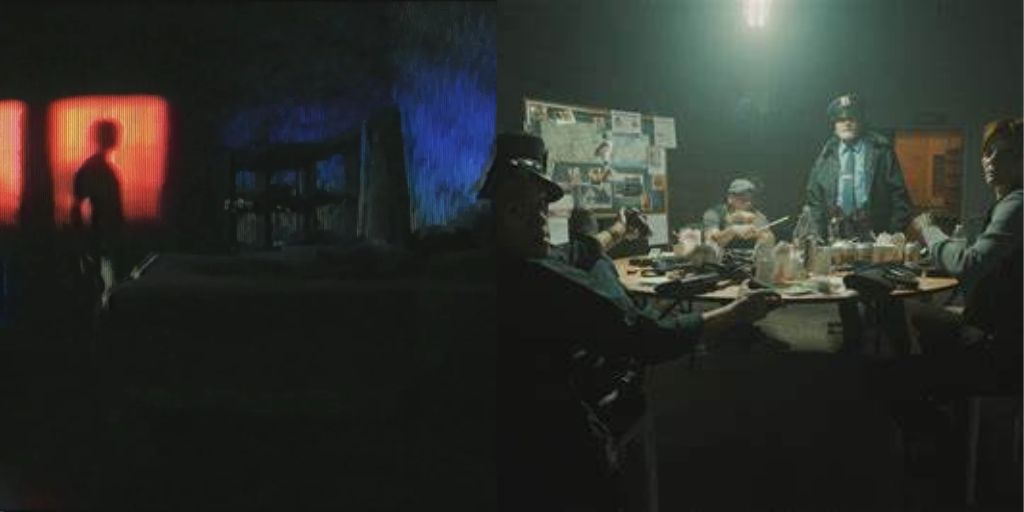
Still from VHSBeyond (Credit: Shudder)
It becomes chilling when she suddenly goes from cheerful to dead silent when she notices a camera. We learn what she is truly doing when she leads the crew to her basement to show off her dog training studio. This segment is funny at times, but it is also so messed up and disgusting that it may make you think twice before going to a doggy daycare again.
‘Stowaway’ Comes from the Minds of Mike Flanagan and Kate Siegel
The segment focuses on one character, a woman named Halley (played by Alanah Pearce), who makes a documentary about strange lights in the Mojave Desert. The segment starts off similar to The Blair Witch Project, but the story falls apart when Halley follows the lights and steps onto an alien craft.
“Stowaway” deserves recognition for moving away from the usual V/H/S formula of shaking cameras, screams, and rampaging monsters. It offers a story without all the answers, but the dark and low-quality camera work makes it difficult to understand what is happening most of the time.
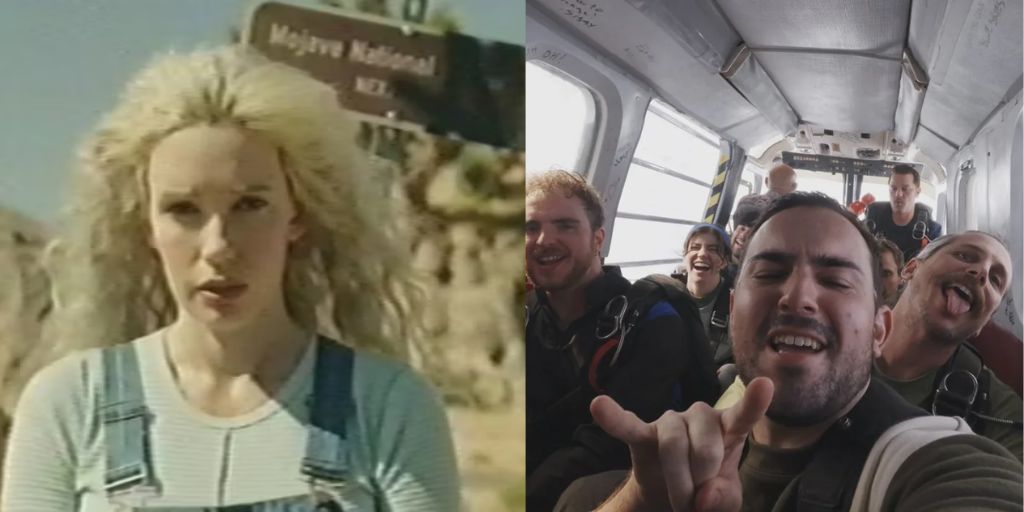
Still from VHSBeyond (Credit: Shudder)
V/H/S/Beyond is in the middle of the pack for the franchise. It is not as terrifying as the first film and is not as bad as V/H/S/Viral. Instead, it is on par with more recent entries. More films will surely follow, but it is time for a change. Creating more segments with different genres is not enough; the formula must change.
The V/H/S franchise should move away from shaky cameras and the usual monsters-on-the-loose formula, showing new ideas like “Stowaway” attempted (with better results, please). In 2012, V/H/S reinvented found footage horror. Now it is time for the franchise to reinvent itself.
