Ridley Scott returns to the historical epic genre with Napoleon, a film that has surprised audiences with its unconventional portrayal of the French emperor, played by the talented Joaquin Phoenix.
Unlike typical grandiose war films, the 2023 biopic focuses less on Napoleon as a would-be world conqueror and more on the man behind the legend.
Scott’s vision boldly erodes the glamor often associated with the “Great Man” Theory of History, presenting Napoleon not just as a brilliant tactician and a power-hungry politician, but also as a petty and insecure figure obsessed with his wife, Joséphine (Vanessa Kirby). This unexpected approach invites comparisons to placing Rhett Butler in absurd situations while Atlanta burns in Gone With the Wind.
The Director’s Cut: A Significant Improvement
Scott’s original Napoleon stands out as a solid entry in his impressive body of work, featuring stunning battle sequences and powerful performances that bring history to life. However, the director’s cut enhances the film significantly.
This new version includes additional context surrounding Joséphine, Napoleon’s paranoia, and the intricate political view of his era, cementing Napoleon as one of Scott’s best films. While it does introduce some tonal inconsistencies, the added depth enriches the narrative, making the emotional stakes even more compelling.
What Sets Napoleon: The Director’s Cut Apart?
Creating a director’s cut allows filmmakers to present a refined version of their work, giving them the chance to complete their vision. Ridley Scott is no stranger to this practice, having previously done so with films like Blade Runner and Kingdom of Heaven.
In Napoleon: The Director’s Cut, the core story remains unchanged. It still depicts Napoleon’s rise from a French officer to an emperor, his complex relationship with Joséphine, and his eventual downfall. However, the new scenes add layers that enhance the original narrative, giving it a richer context.
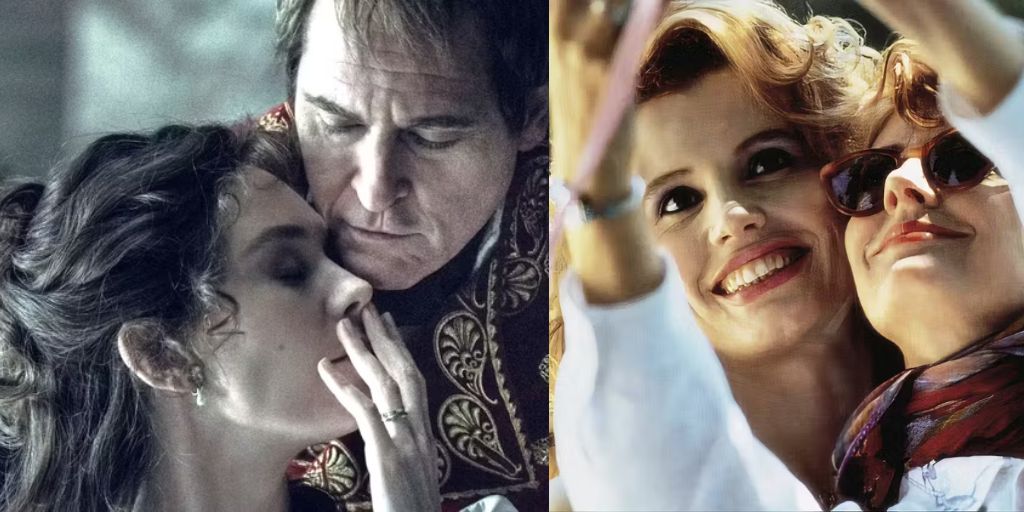
Still from Napoleon (Credit: Apple Tv+)
The film maintains its focus on Napoleon’s journey, but the additional details breathe new life into the story. For instance, Napoleon’s early insistence that French art should remain with the French people, rather than be taken by the Vatican, foreshadows his growing belief that his will and authority are synonymous with France itself.
This insight provides a backdrop to his increasing paranoia and determination to eliminate opposition. The new cut also offers substantial details about Joséphine’s character and her unusual marriage to Napoleon, which add complexity and emotional weight.
Strengthened Performances in the Director’s Cut
Joaquin Phoenix gives a mesmerizing portrayal of Napoleon, capturing the essence of the ambitious yet deeply flawed French general.
His performance is unpredictable and brutish, propelled by his desires and insecurities. The additional scenes in this director’s cut provide more breathing room for Phoenix’s performance, offering greater context for many of Napoleon’s choices. As a result, the narrative flows more smoothly, guiding the audience through the intricacies of his life and ambitions.
One exception to this improved pacing lies in the film’s first act, which introduces tonal shifts that can feel jarring. Joséphine’s introduction is marked by sadness and greater detail, yet these moments are sometimes juxtaposed with scenes showcasing Napoleon’s chaotic, immature antics.
Despite this, the tone stabilizes significantly as the film progresses. The new scenes ultimately give Napoleon’s eccentricities, along with their consequences, more space to develop, making for a richer viewing experience.
Vanessa Kirby’s performance as Joséphine shines even brighter in the director’s cut. While her character was already compelling in the original, the new material deepens her portrayal. The film reveals the origins of her slide into sex work and the calculated maneuvers that brought her into Napoleon’s life.
These additions present Joséphine as not only savvy but also deeply affected by her circumstances. The character’s journey, especially after her divorce from Napoleon, feels more poignant and tragic. This added context amplifies the emotional stakes of their relationship, allowing audiences to fully appreciate the complexities of their marriage.
A Deeper Emotional Resonance
The director’s cut does not fundamentally alter the film’s perspective on Napoleon’s controversial legacy, but it does offer greater emotional depth.
While the eccentricities of the character and the film’s unique approach remain intact, the new material provides a more nuanced view of Napoleon’s psyche and the political environment of his time. This enhanced context allows viewers to grasp the gravity of his actions, from his military campaigns to his relationships.
Scott’s film also successfully shows the complex dynamics of French politics during Napoleon’s rise and fall. By focusing on the human aspect of Napoleon’s character, Napoleon: The Director’s Cut becomes not just a historical epic, but a profound character study. It emphasizes the emotional turmoil behind the emperor’s exterior, making his ambitions and failures feel more relatable and human.
A Bold Character Study
Napoleon: The Director’s Cut stands apart from biopics, choosing not to sanitize its subject. Instead, it provides an unfiltered lens on Napoleon as a man—one who is sensitive about his height and struggles with his identity amid the chaos of war.
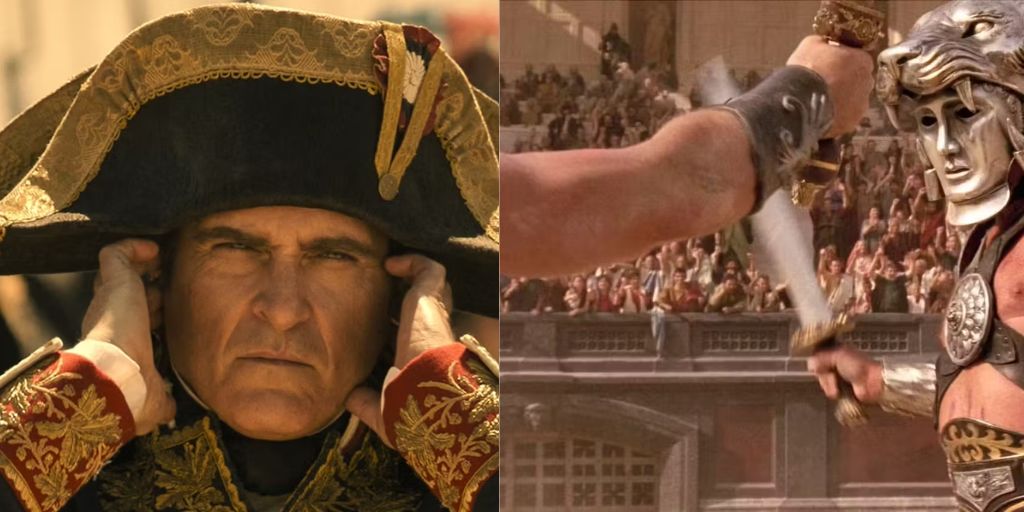
Still from Napoleon (Credit: Apple Tv+)
This focus on character over spectacle creates an adept study of a complex leader. The film’s strengths lie in its view of relationships and the emotional toll of ambition.
With Napoleon: The Director’s Cut now available for streaming on Apple TV+, it serves as a definitive version of Scott’s vision. The new cut enhances the film’s character work, emotional impact, and historical context, marking it as a standout entry in Ridley Scott’s illustrious filmography.
As Scott continues to show various genres and themes, this film resonates as one of his most poignant, making it essential viewing for both history enthusiasts and fans of character-driven narratives. know various genres and themes, this film resonates as one of his most poignant, making it essential viewing for both history enthusiasts and fans.
In 1993, Frasier Crane (Kelsey Grammer) left his friends at Cheers in Boston. He moved to Seattle to be with his father, Martin (John Mahoney), and brother Niles (David Hyde Pierce) in the NBC series called Frasier. This spinoff became very successful, winning many Emmys and was often considered even better than Cheers.
After eleven seasons, Frasier ended in 2004, seemingly for good. However, Frasier surprised everyone by returning last year on Paramount+. This new version is quite different from the original.
All the familiar characters are gone, and now it is just Frasier moving back to Boston to be with his son, Frederick (Jack Cutmore-Scott), whom he barely knows. Before you jump into Frasier Season 2, let’s recap what happened in Season 1.
After a Failed Relationship, Frasier Crane Returned to Boston
In the original NBC show, the last time we saw Frasier in 2004, he was feeling sad. Niles and Daphne (Jane Leeves) were married and new parents, and Frasier’s father had just found love and married too. Feeling lonely and wanting a change, Frasier decided to leave Seattle for a new job as a TV therapist in San Francisco.
At the last moment, he changed his mind and flew to Chicago to meet his ex-girlfriend, Charlotte (Laura Linney), who had moved away. The ending of Frasier suggests that Dr. Crane found happiness.
In the 2023 reboot of Frasier, we see him at a low point. His relationship with Charlotte did not work out, and his father, Martin, has died (John Mahoney passed away in 2018). Feeling lost, Frasier travels back to Boston to give a guest lecture at Harvard, where he studied. His son, Frederick, also lives in Boston.
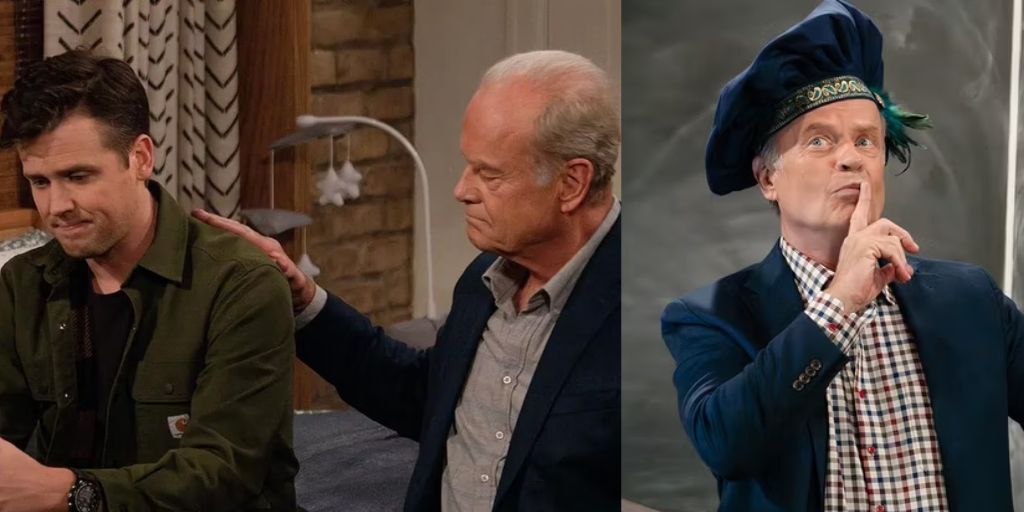
Still from Frasier (Credit: Paramount+)
We saw Freddy a few times in the original series when he visited Seattle, but now he is about to be a big part of Frasier’s life. Because of Frederick, Frasier moves back to Boston and becomes a full-time teacher at Harvard.
He reconnects with a former classmate, Alan Cornwall (Nicholas Lyndhurst), and Olivia Finch (Toks Olagundoye), who leads the Psychology department. Many people admire Frasier for his Dr. Phil-style TV show, but he no longer feels like a big deal.
Frederick Crane Is Taking Care of a Deceased Friend’s Girlfriend and Baby
When Frasier first arrives in Boston, he surprises Frederick at his door, shocking his adult son. Their meeting is awkward. Freddy went to Harvard like his father but dropped out to become a firefighter. He did not become a doctor like Frasier or Niles, although Niles’ son David (Anders Keith) is a freshman at Harvard, studying Psychology and is similar to his father.
Frasier struggles to understand Freddy’s choice of career. One is an intellectual, and the other is a blue-collar worker. Frasier senses that Freddy is hiding something from him. He thinks it is about a girlfriend named Eve (Jess Salguerio), but the truth is more complicated.
Eve and Freddy are connected through Adam, her boyfriend, who is also the father of her baby, John. Adam was Freddy’s fellow firefighter.
Sadly, Adam died in an accident while on duty, and now Frederick takes care of both Eve and the baby. Frasier feels stunned and proud when he learns what his son is doing. This inspires Frasier to move in across the hall so he can be part of Freddy’s life.
Frasier also meets Freddy’s colleagues at the fire department, which leads to funny moments when he joins their lives. This creates a mix of social groups, with the Harvard crew hanging out with the firefighters for trivia nights at a bar called Mahoney’s, and there is even a potential romance between Olivia and one firefighter.
Frasier and Frederick Mourn Martin Crane and Become Closer
Frasier has his usual romantic encounters, but that is not the focus of the reboot. This story centers on the relationship between father and son.
This was also the main theme of the original series, where Martin, a retired cop who was shot in the line of duty, had his son move in with him in Seattle. Frasier and Martin often struggled to understand each other.
In the reboot, we see that Frederick is similar to Martin. Freddy did not attend his grandfather’s funeral, which upset Frasier. Eventually, they talk, and Freddy reveals that the pain of loss and guilt over his friend’s death was too much to handle. The loss of Martin helps Frasier and Freddy connect as they grieve together.
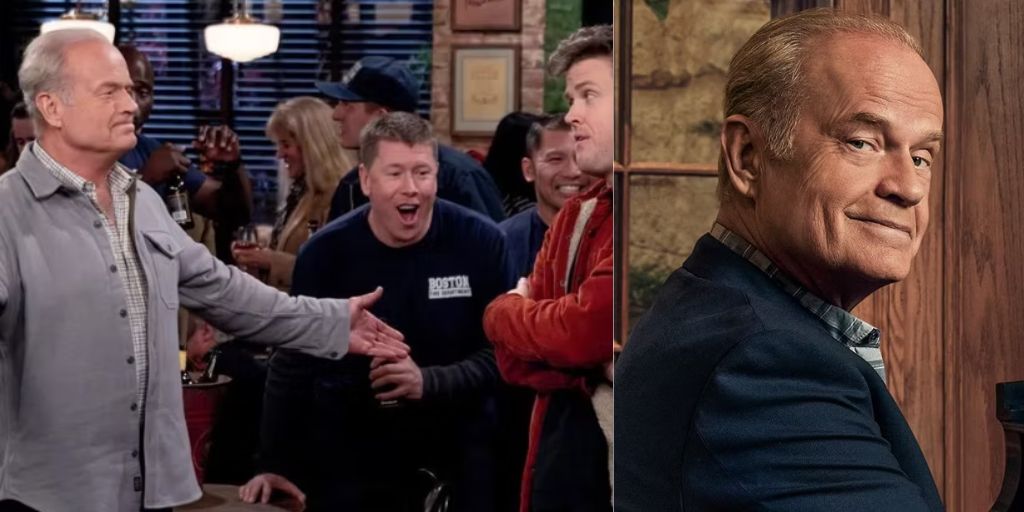
Still from Frasier (Credit: Paramount+)
In the Season 1 finale, it is Christmas time, and Frasier struggles to get through the holiday without his father. To keep himself busy, he plans a fancy party at his home, but things go wrong. It is also difficult for Freddy, who needs to support both his mourning father and Eve, who is also grieving. He finds it hard to be there for both of them at the same time. Eventually, Freddy decides to go to Eve’s party instead of his father’s.
Meanwhile, a lonely Frasier calls his old friend from Seattle, Roz Doyle (Peri Gilpin). She visits, and they discuss Martin and Frasier’s feelings about Freddy choosing Eve over him. When Roz reminds Frasier about the great man Frederick has become, Frasier realizes he has been selfish.
He goes to his son, only to find a surprise party at his home. Frasier and Freddy embrace, finally understanding each other. What adventures await Frasier next? Season 2 of Frasier will introduce new cast members, including Patricia Heaton, Rachel Bloom, Yvette Nicole Brown, and Amy Sedaris.
