Brandon Espy’s Mr. Crocket began as a six-minute horror short for Hulu’s Bite Size Halloween collection in 2021. Two years later, it expanded into a full feature that is now part of Hulu’s 2024 Huluween lineup. The movie takes a dark twist on beloved children’s shows, reminiscent of Pee-wee’s Playhouse and Mister Rogers’ Neighborhood, infused with the sharp wit of slasher film icon Freddy Krueger.
Espy’s examination of parenthood and children’s television has practical effects designed to frighten young viewers expecting innocent fun. However, like many adaptations from short films to feature-length productions, Mr. Crocket struggles to maintain a coherent story as it stretches to fill the time, yet it still provides a wickedly entertaining Halloween experience in a tight 90-minute format.
A Struggling Mother and Her Son
The film stars Jerrika Hinton as Summer, a single mother grappling with her son Major’s (played by Ayden Gavin) behavior following the tragic death of her husband. The story kicks off when a mysterious community book box falls from the sky outside Summer’s home. Inside, she finds a singalong video titled Mr. Crocket’s World.
Major quickly becomes obsessed with the video, glued to the screen whenever it plays. When Summer tries to intervene and limit his viewing, Major throws a tantrum and is sent to his room. This moment escalates when Summer hears a familiar voice coming from behind a locked door.
To her horror, Mr. Crocket (portrayed by Elvis Nolasco) manifests in real life, using his “magic marker” to kidnap Major—leaving Summer desperate to figure out where they have gone.
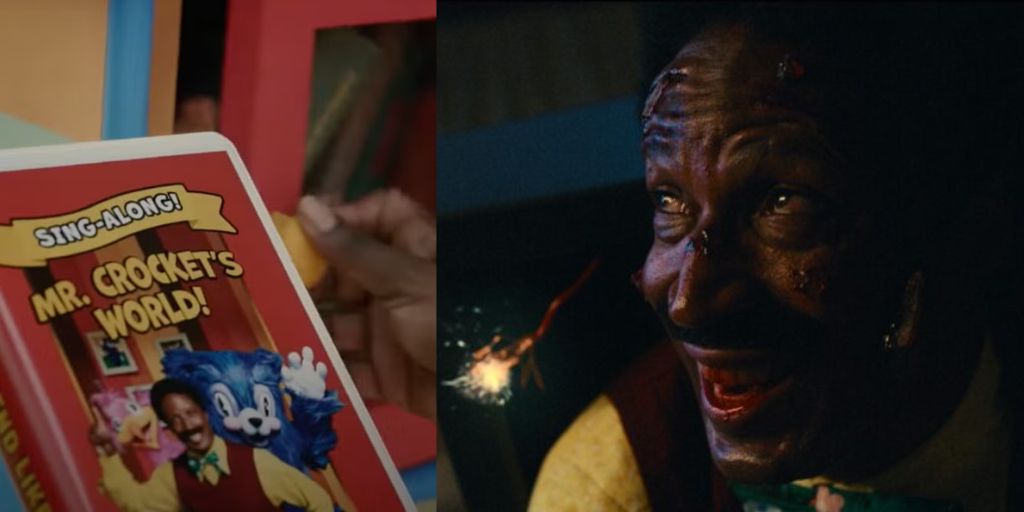
Still from the movie (Hulu)
The Creative Vision Behind Mr. Crocket
Espy’s creativity shines throughout Mr. Crocket. The film features clear references to childhood staples, like Pee-wee’s special friends. However, Espy puts a sinister twist on these characters, placing Mr. Crocket’s hideout in Hell. What initially appears to be a wholesome public access set is a deceptive facade. Mr. Crocket’s companions transform into nightmarish versions of animated furniture and characters.
One standout is Blue, a monstrous teddy bear with exposed brains and razor-sharp claws. Espy cleverly incorporates design elements reminiscent of other children’s shows, such as Barney & Friends and Teletubbies, creating a disturbing vision of a child’s play area twisted into a nightmarish environment.
Espy excels at transforming beloved childhood characters into horrifying figures, which creates a strong visual impact. Nolasco’s portrayal of Mr. Crocket embodies the archetypal children’s host but with a malevolent twist. His character uses education to teach “naughty” parents a lesson, resulting in gruesome deaths.
Nolasco perfectly embodies the duality of his role, expertly balancing the cheerful demeanor of a children’s entertainer with the sinister undertones of a predator. His character retains a wide smile while leading children into horrifying situations, reminding viewers of how dangerous charm can be in the wrong hands.
Investigating Mr. Crocket’s Urban Legend
As Summer investigates the legend of Mr. Crocket, the plot becomes less compelling. Espy and co-writer Carl Reid use cryptic tropes, leaving much of the backstory underexplained. Summer’s search for answers is aided by a homeless mother, Rhonda (Kristolyn Lloyd), who has also encountered Mr. Crocket.
Rhonda embodies the archetypal “crazy lady,” adding a layer of absurdity to the story. Additionally, a father named Eddie (Alex Akpobome) becomes an overly interested character, whose eagerness hints at predictable plot developments.
Rhonda, in particular, provides insight into Mr. Crocket’s powers. Her scenes highlight a contrast between sanity and insanity, raising questions about the reliability of characters in the story. She taps into Mr. Crocket’s essence over a set of hardwired television sets in her makeshift workshop.
Meanwhile, Eddie’s overt enthusiasm creates tension as his character pushes the narrative toward expected reveals. Espy succeeds in justifying the film’s runtime, yet the attempt to expand upon the short’s premise raises questions about adapting such a brief idea into a feature film.
While the film depicts the ups and downs of parenthood with some honesty, the exploration of these themes feels underwhelming compared to the horror elements.
However, audiences watching Mr. Crocket primarily come for the gore, and Espy delivers on this front. The film showcases practical effects in creative ways, providing thrills and chills that are often missing from family-friendly entertainment.
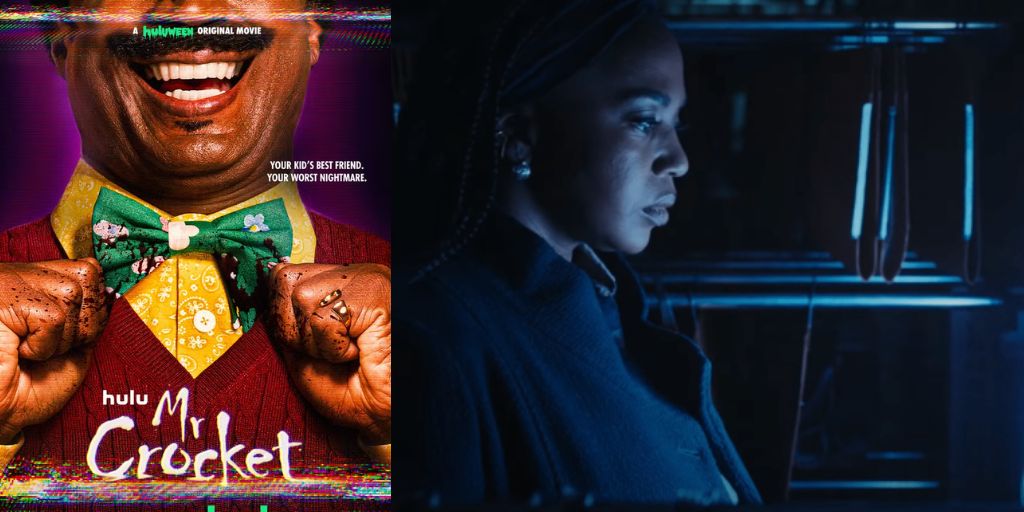
Still from the movie (Hulu)
A Showcase of Practical Effects
From the start, Mr. Crocket establishes a commitment to practical effects that heighten the horror experience. In one shocking scene, Rhonda’s husband falls victim to Mr. Crocket’s brutal form of discipline, resulting in graphic imagery as his torso is sliced open, spilling his intestines.
This early moment sets a grim tone for the rest of the film, preparing audiences for the violent spectacle to come. The creativity in the effects design is impressive, blending macabre humor with startling visuals.
The scenes featuring Blue, the psychotic bird puppet, and other anthropomorphic figures serve as reminders that childhood innocence can easily be corrupted. Espy incorporates these characters into violent sequences, showcasing the disintegration of safety that children often associate with their favorite shows. Each gruesome death scene reinforces the film’s premise that the familiar can become horrific, inviting viewers to reconsider their own childhood experiences with television.
Themes of Parenthood and Media Influence
Amid the gore, Mr. Crocket invites viewers to reflect on broader themes of parenting and the media’s influence on children. Summer’s fight to save her son from Mr. Crocket represents a parent’s ultimate fear: losing control over their child. The film critiques the media that often overwhelm children with content, posing the question of whether parents can truly protect their children from the dark influences that lurk in entertainment.
The obsession Major develops with Mr. Crocket mirrors the concerns many parents face today regarding their children’s screen time. The film does not shy away from portraying the psychological impacts of children’s programming, highlighting how easily a child’s innocence can be shattered by dark themes presented in seemingly harmless shows.
The Climax and Resolution
As the plot progresses, the tension continues to rise, leading to an intense climax where Summer confronts Mr. Crocket. This showdown is not just about physical survival; it also represents a deeper emotional struggle.
Summer must confront her own fears and insecurities as a parent, fighting not only for Major’s safety but also to reclaim her role as a protective mother. The emotional stakes make this climax all the more compelling, engaging viewers who may have similar fears of losing their loved ones.
The final confrontation sees Summer battling against Mr. Crocket in a series of visually striking sequences that blend horror with a touch of dark comedy. Espy manages to create a climactic battle that feels both satisfying and chaotic, echoing the unpredictability of parenthood itself.
Despite the film’s dark themes, it concludes with an open-ended resolution that leaves viewers pondering the consequences of Mr. Crocket’s influence. While Summer may have saved her son, the scars left behind by their experiences remain. This conclusion invites discussions about the nature of evil and the complexities of raising children in a media-driven world.
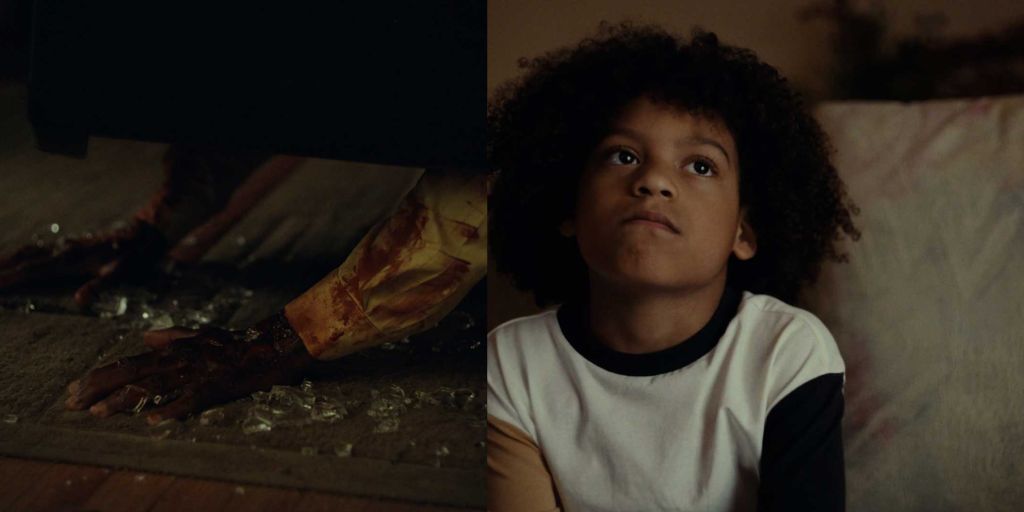
Still from the movie (Hulu)
Final Thoughts on Mr. Crocket
Mr. Crocket presents a fresh take on horror that encourages audiences to rethink their perceptions of children’s media. While it may not redefine the horror genre, it offers a compelling narrative that fuses themes of nostalgia, parental anxiety, and the darker undercurrents of childhood entertainment. Espy’s ability to blend horror with poignant commentary on parenting showcases his potential as a filmmaker.
The film stands out in a crowd of horror films, offering a unique perspective that resonates with both children and adults. Espy creates an atmosphere that is both entertaining and thought-provoking, making Mr. Crocket a worthwhile addition to any Halloween viewing list.
Mr. Crocket stands out as a daring and innovative horror film that challenges traditional views of children’s entertainment. By taking familiar elements from beloved children’s programs and twisting them into dark, disturbing narratives, the film invites viewers to reconsider the influence of media on young minds.
Espy expertly crafts a chilling atmosphere that balances horror with thought-provoking commentary on parenthood and the struggles that come with raising children in an increasingly complex world.
The character of Mr. Crocket embodies the potential dangers hidden beneath the surface of seemingly innocent programming, serving as a reminder that not everything meant for children is devoid of dark themes.
As Summer fears and ultimately confronts Mr. Crocket, the film goes into deeper emotional territories, exploring the anxiety parents face when trying to protect their children from external threats. This connection resonates with audiences, highlighting the importance of vigilance in a world where media plays a significant role in shaping children’s perceptions and behaviors.
Moreover, the film’s use of practical effects and creative storytelling amplifies its effectiveness, providing memorable visuals that stick with viewers long after the credits roll. While Mr. Crocket may not fit the mold of a traditional family film, it serves as a powerful reminder of the necessity for parents to engage with their children’s media choices and the potential ramifications of unchecked consumption.
Espy’s film, with its mix of horror and commentary, leaves an indelible mark on the genre, encouraging both parents and children to reflect on the darker implications of entertainment. As it challenges the boundaries of horror and nostalgia, Mr. Crocket firmly establishes itself as a notable entry in contemporary horror cinema.
In February, CBS surprised viewers with a hit drama called Tracker. This show features Justin Hartley, known for his roles in Smallville and This Is Us. Tracker is based on the character from Jeffrey Deaver’s book The Never Game. The series follows a character named Colter Shaw, who searches for rewards while helping solve various cases.
He looks for missing people and objects, and he only gets paid when he succeeds. This idea makes for an interesting show, with many stories to find as Colter travels across the country. The series becomes even more interesting because it includes a storyline about Colter’s difficult childhood.
In Season 2, Tracker improves even more by adding new mystery and conspiracy elements to its intriguing plot. Fans of the first season will be excited to see Hartley’s performance as Colter Shaw again. His return will pull viewers back into the story and leave them wanting more.
The second season keeps everything that worked well in the first season. Colter still shows his independent personality while maintaining some friendships from a distance. The secrets about his past remain a mystery, and his playful yet uncertain relationship with Reenie Greene, played by Fiona Rene, continues. The show follows the saying, “If it ain’t broke, don’t fix it.” This is true for Tracker, especially with the series’ main structure, which has stayed consistent since the pilot episode.
In an era where many shows rely on ongoing stories, Tracker offers a refreshing approach. It successfully combines stand-alone stories with a narrative, even in today’s streaming place. The show succeeds largely because of its lead actor.
Colter Shaw is central to Tracker, making it feel like a one-man show. Justin Hartley shines in this role. He is not only the main actor but also serves as an executive producer. He proves that Colter Shaw is a character worth watching. Colter might be distant and serious, but he is also charming and considerate. He always thinks about the people he is trying to help.

Still from season 2 (Credit: CBS)
The exciting Season 2 opener, titled “Out of the Past,” challenges Colter. He must find a young family caught in dangerous situations. Despite the stressful circumstances, Colter keeps calm and composed. He only loses his professionalism during a personal case that is very close to his heart.
Whether working with the family or law enforcement, it is inspiring to see Colter risk his life for others. Yes, he gets paid for his work, similar to police officers, but that does not lessen his bravery.
Although Colter sometimes seems like he is doing everything alone, Season 2 reminds him that he has support. This important development helps characters like Bobby, played by Eric Graise, to become more than just Colter’s assistant. The show can reveal Bobby’s character further.
In Season 2, Reenie and Velma, played by Abby McEnany, now share an office. This change makes Teddi’s character, played by Robin Weigert, leaving the series due to a family emergency less noticeable. The partnership between Reenie and Velma feels natural, and fans wonder why the show did not pair them earlier.
While it is sad to see Weigert leave, Tracker handles this change skillfully. Perhaps we will see Colter and Velma interact in person during this season. What excites fans most is the introduction of a new mystery that has haunted Colter for the last ten years. Season 1 hinted at the complicated history of the Shaw family. Season 2 builds on this by involving Colter in a case of a missing person that has affected him deeply for a long time.
This case troubles Colter more than his family issues. By the end of the first episode, the audience understands why this case is so personal for him. “Out of the Past” begins with Colter breaking into the home of a man named Frank, played by Ryan Dorsey. Colter believes Frank is connected to the disappearance of a teenage girl.
Frank protests during Colter’s yearly visits, but by the end of the episode, Colter finds himself with a new character named Camille Picket, played by Floriana Lima. She is also linked to this mystery, and it is surprising to see Colter interested in someone other than Reenie. This opens the door for new story possibilities.
The tone of Tracker Season 2 remains similar, but the series feels darker thematically. Colter states, “The past is part of who we are, it doesn’t have to define your future.” He acknowledges a truth he has not yet fully accepted. The new mystery adds depth, especially since the show has not yet resolved its previous overarching plot. However, the writers balance both storylines well in the first two episodes.
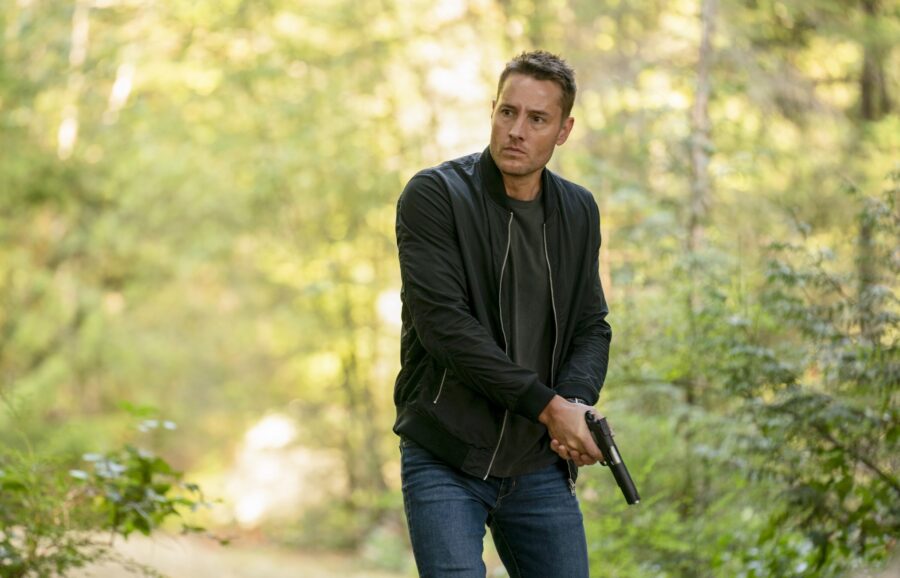
Tracker (2024) Season 2 (Credit: CBS)
The second episode, titled “Ontological Shock,” brings Colter back together with his brother Russell, played by Jensen Ackles. They go into a government conspiracy involving UAPs, commonly known as UFOs. Although this storyline feels like it belongs in The X-Files, Tracker makes it unique while making progress toward uncovering the truth about Ashton Shaw’s death. True to its nature, the show leaves viewers wanting more information.
Tracker knows how to give its audience what they desire. Viewers enjoy the chemistry between Hartley and Ackles. Their interactions feel genuine, making us wish Russell would become a permanent cast member. Thankfully, he will return later in the season alongside Dory, played by Melissa Roxburgh, and their mother, played by Wendy Crewson.
One of the show’s greatest strengths is its ability to keep viewers guessing. The series does not rush to provide answers. Whenever viewers think they understand something, another twist surprises them. For instance, the series still has unresolved questions from Season 1, but fans know that the writers will eventually address them.
Tracker is currently one of the best dramas on television. The show is fun, engaging, and suspenseful. It smoothly separates various plotlines while never sacrificing character development for narrative convenience. This achievement is impressive.
If there is one complaint, it is that some plot twists feel too obvious. This was especially evident in the season opener, which hints at a surprise that viewers can see coming. Also, in the opening episode, when authorities find a missing family’s empty van, it does not contain any car seats. As a father, this detail felt unrealistic since at least one child would likely use a car seat or booster seat.
Despite these minor flaws, Justin Hartley’s portrayal of Colter Shaw and the talented writers keep us hopeful for Tracker’s future. The show features excellent guest stars, including Lindy Booth from The Librarians, Matt Long from Manifest, and Jensen Ackles from Supernatural. Every guest or supporting character excels in their roles, enhancing the show’s quality.
Viewers look forward to when Colter visits a new town. They wonder who will join him or stand against him. Last season, Peter Stormare provided a memorable performance. Season 2 continues this trend, giving both main and guest actors substantial material to work with.
Tracker Season 2 demonstrates that this show is on the right path. If it continues to deliver high-quality content, it could easily last for ten years on the network. It is that good, and Colter Shaw is an enjoyable character to watch. We hope he stays around for a long time because people are always seeking something new.
The Plot and Characters of Tracker
The main character, Colter Shaw, is a unique protagonist. His job as a “rewardist” sets him apart from typical detectives or private investigators. Colter travels across America to help find missing people and solve cases. He operates independently, often working outside the law. His character is intriguing because he walks a fine line between helping others and pursuing his own interests.
Colter’s personal background adds depth to his character. The audience learns that he had a troubled upbringing, which affects how he interacts with others. He has a complicated relationship with his family and often struggles with his past. This inner conflict makes Colter a more relatable and realistic character.
In Season 2, the show deals with Colter’s complicated relationships more deeply. His friendship with Bobby shows how important it is to have support, even for a lone wolf like him. Bobby is more than just a sidekick; he represents loyalty and friendship. The development of this friendship allows for more meaningful interactions in the series.
Reenie Greene, played by Fiona Rene, also plays a significant role in Colter’s life. Their flirtatious yet uncertain relationship adds a layer of tension and drama to the series. It is clear that they have feelings for each other, but Colter’s past often gets in the way. This dynamic makes their interactions compelling and keeps viewers invested in their story.

Tracker (2024) Season 2 (Credit: CBS)
Another interesting character in Season 2 is Camille Picket, played by Floriana Lima. She enters Colter’s life during a critical case and becomes involved in his personal journey. Camille’s character adds complexity to the narrative, especially as she shares connections with Colter’s past. This relationship introduces new challenges and questions for Colter to face, pushing him to confront his feelings and his history.
The show does an excellent job of balancing these personal relationships with the larger mysteries Colter is trying to solve. Each case he tackles often reflects his internal struggles, making the story feel cohesive and meaningful. Viewers can see how his past impacts his actions and decisions as he searches for missing people and objects.
The Themes of Season 2
Tracker Season 2 goes into several significant themes. One central theme is the idea of the past shaping the present. Colter’s journey involves coming to terms with his upbringing and the events that have shaped him. As he confronts his past, he learns important lessons about himself and the people around him.
The season also shows the nature of family. Colter’s complicated relationship with his family influences his decisions and relationships throughout the series. As he deals with various cases, the audience sees how his family dynamics impact his interactions with others.
Another theme in Tracker is the concept of loyalty and trust. Colter often works alone, but the relationships he builds with characters like Bobby and Reenie highlight the importance of having support. The show emphasizes that even the strongest individuals need help from others at times.
Additionally, the series raises questions about morality and justice. Colter’s methods often challenge traditional notions of right and wrong. As he takes on cases, viewers are prompted to consider the ethical implications of his actions. The show does an excellent job of portraying the gray areas of morality, keeping the audience engaged in the moral dilemmas Colter faces.
The Production Quality and Style
Tracker stands out for its high production quality. The cinematography effectively captures the diverse settings of Colter’s travels across America. Each location adds a unique flavor to the narrative, enhancing the storytelling. The production team’s attention to detail helps create an immersive experience for viewers.
The writing in Tracker is also notable. The dialogue feels authentic, and the characters are well-developed. The writers skillfully balance suspenseful plotlines with moments of humor and humanity. This combination keeps the audience engaged and invested in the characters’ journeys.
Furthermore, the pacing of the show is commendable. Each episode flows smoothly, building tension and intrigue. The series expertly weaves together multiple storylines while maintaining focus on Colter’s central narrative. This structure keeps viewers hooked, eager to see what happens next.
The musical score enhances the complete atmosphere of the series. The soundtrack complements the emotional beats of the story, inhancing the viewing experience. Music plays a significant role in creating tension during suspenseful moments and evoking emotions during poignant scenes.
Audience Reception and Impact
Since its debut, Tracker has garnered a loyal fan base. Viewers appreciate the show for its engaging storylines and character development. Many fans express excitement over the series’ ability to blend different genres, including drama, mystery, and action.
The show’s exploration of complex themes resonates with audiences. Viewers often find themselves relating to Colter’s struggles, making his journey feel authentic and meaningful. As a result, Tracker has sparked conversations about the challenges individuals face when dealing with their pasts and the importance of human connections.
Critics have praised Tracker for its unique approach to storytelling. The combination of standalone cases with overarching character development creates a scenic viewing experience. The show’s ability to keep audiences guessing adds to its appeal, as viewers eagerly anticipate each new twist and turn.
The cast’s performances, particularly Justin Hartley’s portrayal of Colter Shaw, have received acclaim. Hartley brings depth to the character, making Colter both relatable and compelling. Fans often highlight his ability to convey a range of emotions, from vulnerability to determination, which enhances the character’s complexity.
Conclusion: The Future of Tracker
As Tracker enters its second season, the show continues to demonstrate its potential for growth and evolution. The combination of engaging storylines, strong character development, and high production quality positions the series for continued success.
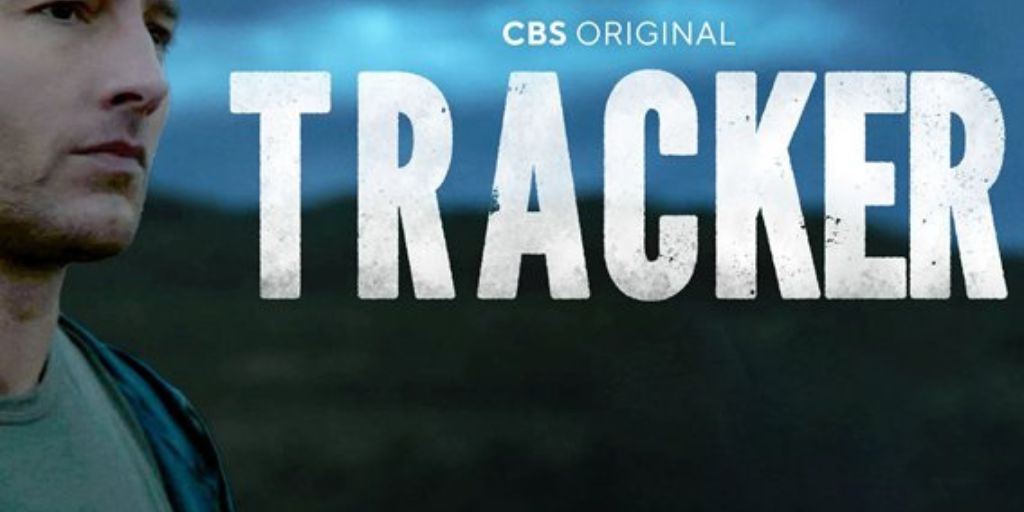
Tracker (2024) Season 2 (Credit: CBS)
Fans eagerly await future episodes, hoping to see how Colter Shaw’s journey unfolds. The introduction of new characters and mysteries promises to keep the narrative fresh and exciting. The show’s ability to balance personal struggles with larger themes will likely resonate with audiences, ensuring that Tracker remains an interesting drama.
In a crowded television, Tracker stands out as a unique and engaging series. With its compelling protagonist, intricate storylines, and important themes, the show has earned its place among the best dramas on television. As viewers continue to follow Colter Shaw’s adventures, they can only hope that the series maintains its quality and creativity for seasons to come.
Tracker Season 2 enriches its narrative with new mysteries, character development, and themes that resonate deeply with viewers. The continued exploration of Colter Shaw’s past, his relationships, and the ethical dilemmas he faces keeps audiences engaged and invested in his journey.
The high production quality, excellent writing, and strong performances contribute to the series’ success. As fans eagerly anticipate what lies ahead for Colter and his companions, Tracker proves to be a standout drama that deserves recognition and praise.
The show captivates audiences with its thrilling plotlines, relatable characters, and thought-provoking themes. Whether you’re drawn to mysteries, character-driven dramas, or simply looking for an engaging series, Tracker offers an exceptional viewing experience. With its blend of suspense, emotion, and intrigue, the show continues to stand out in the crowded world of television dramas.
As the narrative unfolds, Tracker leaves audiences excited for future developments. The intricate plot twists, character dynamics, and unresolved questions create an atmosphere of anticipation. Fans remain hopeful that the show’s creators will continue to deliver compelling stories that keep them engaged.
Ultimately, Tracker stands as a testament to the power of storytelling in television. The show’s ability to transcend complex themes while delivering thrilling narratives highlights the art of character-driven storytelling. As viewers journey with Colter Shaw, they are reminded of the importance of facing one’s past, seeking truth, and finding connection in an often chaotic world.
Tracker Season 2 is not just a continuation of the story; it is a summary of the series, solidifying its place as a must-watch drama. The combination of interesting characters, intricate plotlines, and high production quality ensures that Tracker will remain a fixture in the hearts and minds of viewers for seasons to come.
