In the Demon Slayer world, where demons embody a dark, twisted manifestation of human ambition and cruelty, Muzan Kibutsuji stands as the first and most powerful of them all.
Muzan is the original demon, a figure of fear and terror, not only to humans but also to demons under his control.
His mere presence exerts a powerful influence over his subordinates, many of whom view him as an infallible force.
His reign of terror is absolute; Muzan demands unwavering obedience and loyalty from all who fall under his curse.
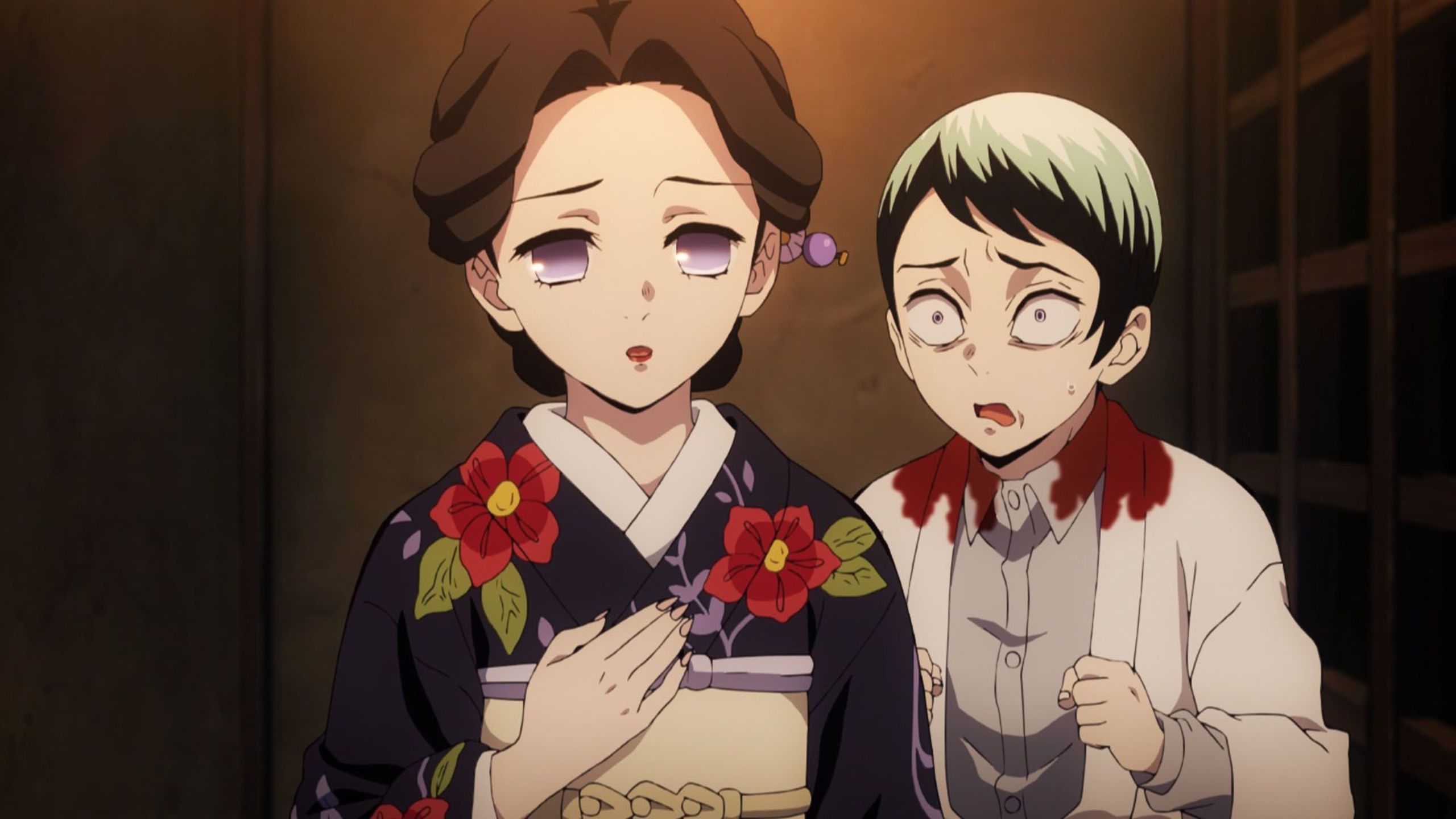
Tamayo And Yushiro From Demon Slayer (Studio Ufotable)
Yet, one demon managed to defy him: Tamayo. Among the rare few who broke free from Muzan’s influence, Tamayo emerges as an especially compelling figure.
Her independence, intelligence, and strength allowed her to sever ties with Muzan and live without fear, an unimaginable feat for most demons.
However, her significance to the story goes beyond mere defiance. Muzan’s loathing for Tamayo is rooted in her exceptional skills, which posed a unique and genuine threat to his authority.
By developing her own abilities to create demons and pursue a cure for the demon curse, Tamayo represented a direct challenge to Muzan’s claim to absolute control.
Through her journey, she not only liberated herself but also illuminated the path to redemption for others, crafting a tale of hope amidst the darkness Muzan had spread for centuries.
Understanding Muzan Kibutsuji’s Need for Control
Muzan Kibutsuji is a character steeped in darkness, driven by an insatiable need for power and survival.
His transformation into a demon granted him near-immortality but also condemned him to a life of isolation and fear, haunted by the vulnerability he feels at the prospect of facing the sunlight.
His primary goal, therefore, revolves around conquering the sun, which remains his only true weakness.
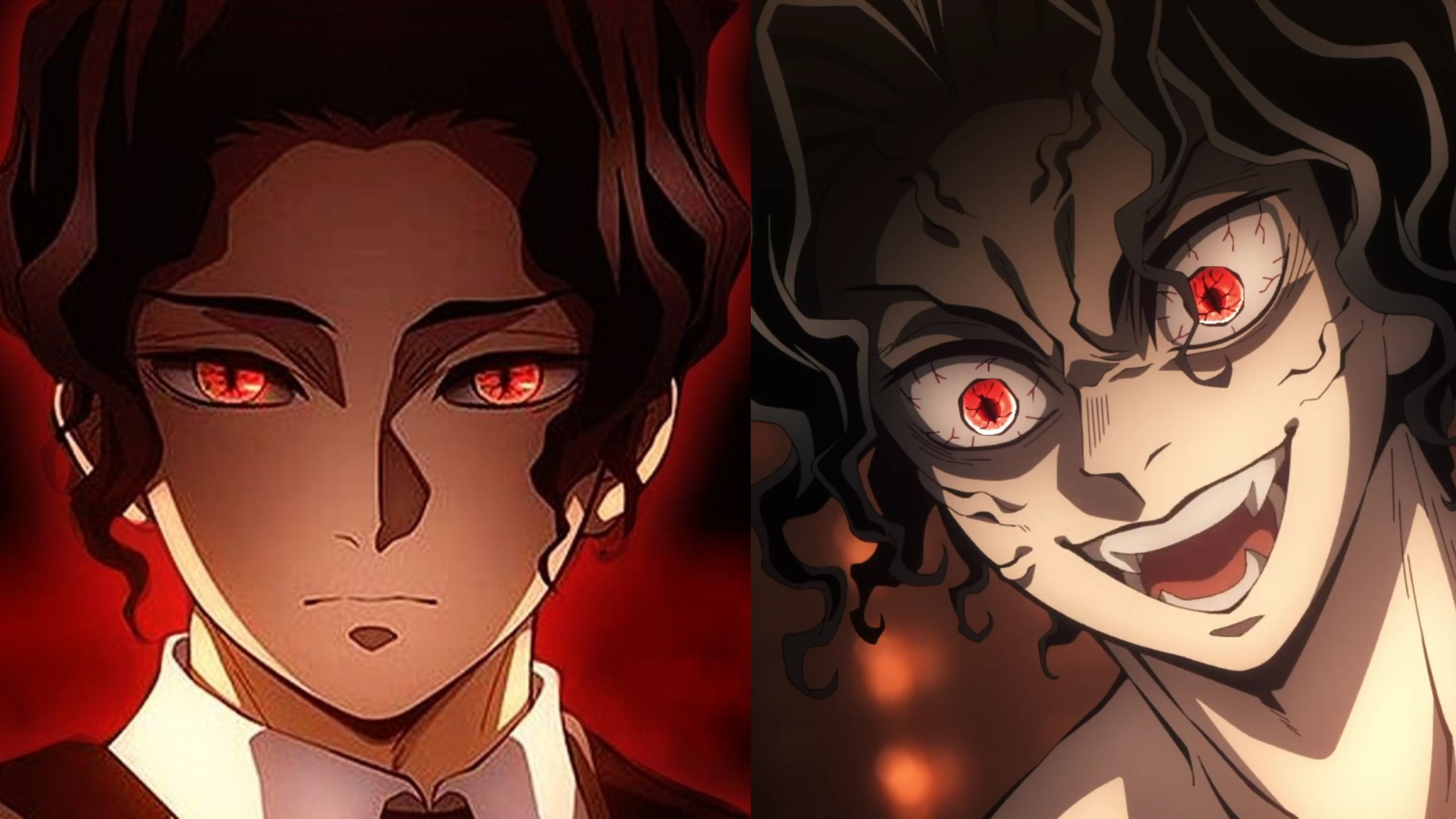
Muzan Kibutsuji (Ufotable)
In his relentless pursuit of this goal, he spares no effort, experimenting on both humans and demons alike.
He does this with an indifference to suffering that reflects his complete lack of empathy, treating others as mere tools for his own ends.
Muzan’s approach to his demonic creations mirrors this ruthlessness. He holds dominion over every demon he creates, connecting them to himself in such a way that they cannot even speak his name without risking death.
This curse manifests as a form of biological control, symbolizing Muzan’s need to keep every demon in his iron grip. To him, demons are extensions of his will, soldiers in his quest for survival.
His entire identity is built on the idea that he alone should wield absolute power over demons. In his mind, only he has the right to shape and mold their existence.
This sense of superiority is so deeply ingrained in him that any challenge to it becomes a personal affront.
Tamayo’s Story: A Journey from Subservience to Independence
Tamayo’s introduction in the Demon Slayer series reveals a complex character who embodies both tragedy and strength.
Once a human, she transformed into a demon under Muzan’s influence, likely with her consent as she sought escape from a terminal illness.
Yet, unlike other demons, she eventually sought a different path, rejecting the path of violence and bloodlust that Muzan promoted.
The act of breaking free from Muzan’s curse, however, was no small feat. The level of willpower and intelligence required to sever her ties with him speaks to the depth of her character.
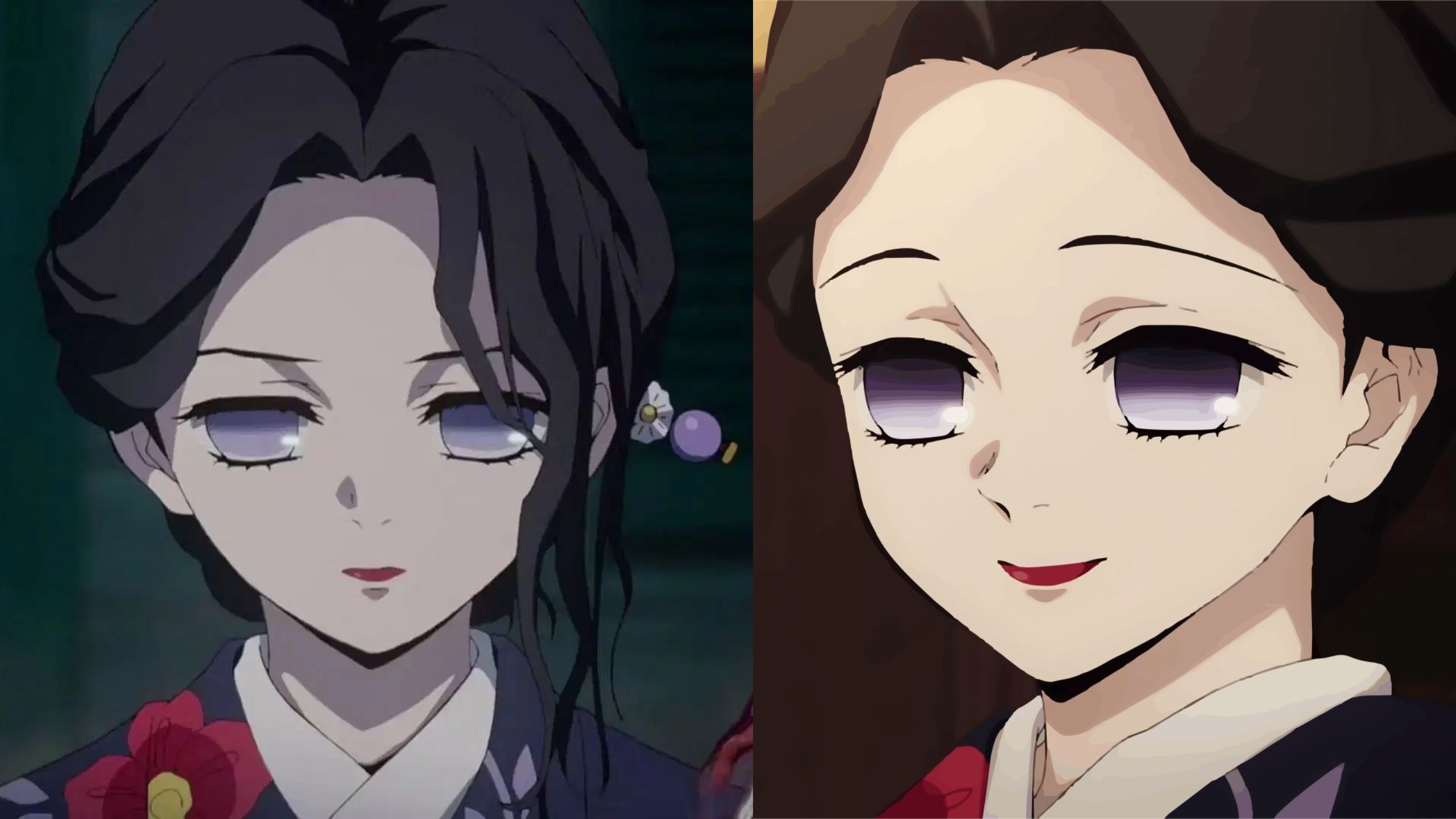
Tamayo From Demon Slayer (Studio Ufotable)
While many demons remain blindly loyal to Muzan, whether out of fear or reverence, Tamayo actively resisted him. Her motivations are rooted in her unique understanding of both the human and demon worlds.
Unlike other demons who relish their newfound powers, Tamayo views her demonic state as a curse.
She embodies a profound sense of remorse for her transformation and is haunted by the memory of her human life.
Her perspective offers a unique contrast to Muzan’s; while he sees the demon curse as a means of power and control, Tamayo perceives it as a burden, something that must be corrected.
The path she chose was both bold and dangerous. As a demon seeking to undo the curse, Tamayo had to carefully steer across the complexities of demon biology and the limits imposed by Muzan’s control.
Her journey of self-liberation became a quest to reclaim her humanity, an endeavor that demanded great intelligence, patience, and resilience.
Through her research and experimentation, she eventually unlocked powers that rivaled Muzan’s, cementing her place as one of the few characters capable of opposing him.
The Complexity Behind Tamayo’s Creation of Yushiro
One of the most intriguing aspects of Tamayo’s character is her ability to create demons independently.
Unlike other demons, who are bound to Muzan for life, Tamayo managed to transform Yushiro into a demon without Muzan’s involvement.
This act alone is groundbreaking within the Demon Slayer universe, as it demonstrates Tamayo’s unparalleled understanding of demon biology and her ability to harness her powers in ways that even Muzan could not.
Yushiro’s transformation raises many questions. How did Tamayo manage to create a demon without the aid of the Blue Spider Lily, which Muzan deemed essential for demon transformations?
And why did it take her 200 years to accomplish this feat? These questions jump into the complexities of Tamayo’s abilities and the limitations she faced.
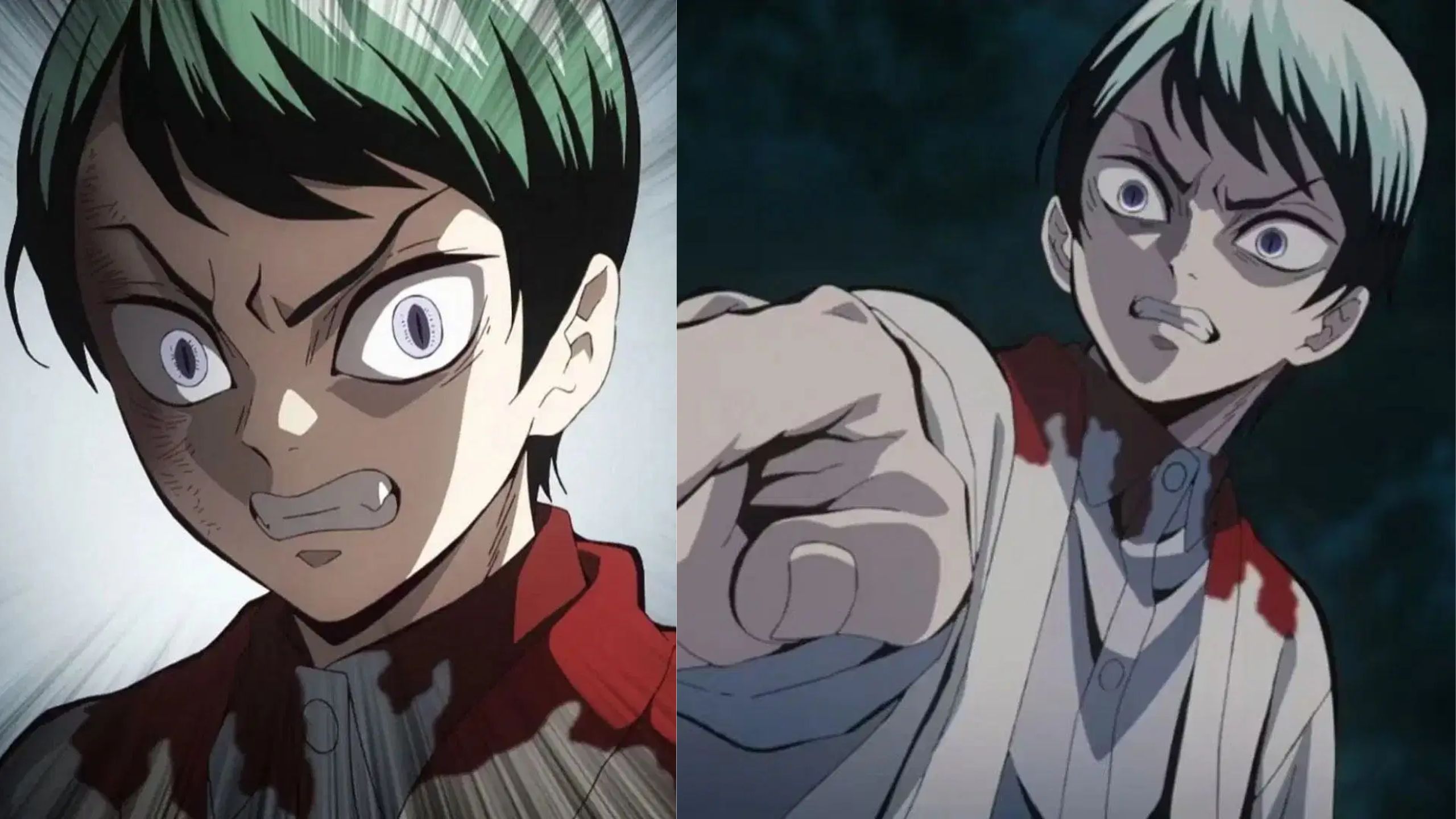
Yushiro From Demon Slayer (Studio Ufotable)
The process of transforming Yushiro was not a simple one. For Tamayo, it involved years of meticulous research, self-experimentation, and an intimate understanding of the mechanics behind demon creation.
At the core of her ability to create demons is her Blood Demon Art, a power that she developed through her intense study and understanding of her own demonic nature.
Blood Demon Arts are unique to each demon, often reflecting their deepest desires or most prominent traits.
In Tamayo’s case, her Blood Demon Art became a tool for both creation and redemption. It is plausible that her art allowed her to alter her own physiology, granting her the ability to create demons without relying on Muzan’s methods.
However, this process was not without its challenges. The transformation of Yushiro took centuries, suggesting that her methods were energy-intensive and complex.
Unlike Muzan, who could create demons with relative ease, Tamayo’s process required immense preparation and a deep understanding of the biological changes involved.
This disparity highlights the difference in their approaches: Muzan’s creations are products of brute force, while Tamayo’s creations are rooted in knowledge and precision.
This contrast between Muzan’s methods and Tamayo’s careful approach represents a key thematic element in Demon Slayer , emphasizing the importance of compassion and restraint in the face of power.
Depth of Tamayo’s Hatred for Muzan
Tamayo’s hatred for Muzan runs deep, and it is rooted not only in her personal suffering but also in her broader understanding of the consequences of his reign.
As a former servant of Muzan, she witnessed firsthand the destruction he caused, both to humans and to demons who fell under his control.
Her experience gave her a unique perspective on the horrors of Muzan’s rule, shaping her desire to oppose him at all costs.
In defying Muzan, Tamayo sought not only her own liberation but also the liberation of others. Her journey became a fight against the very nature of demonhood itself.
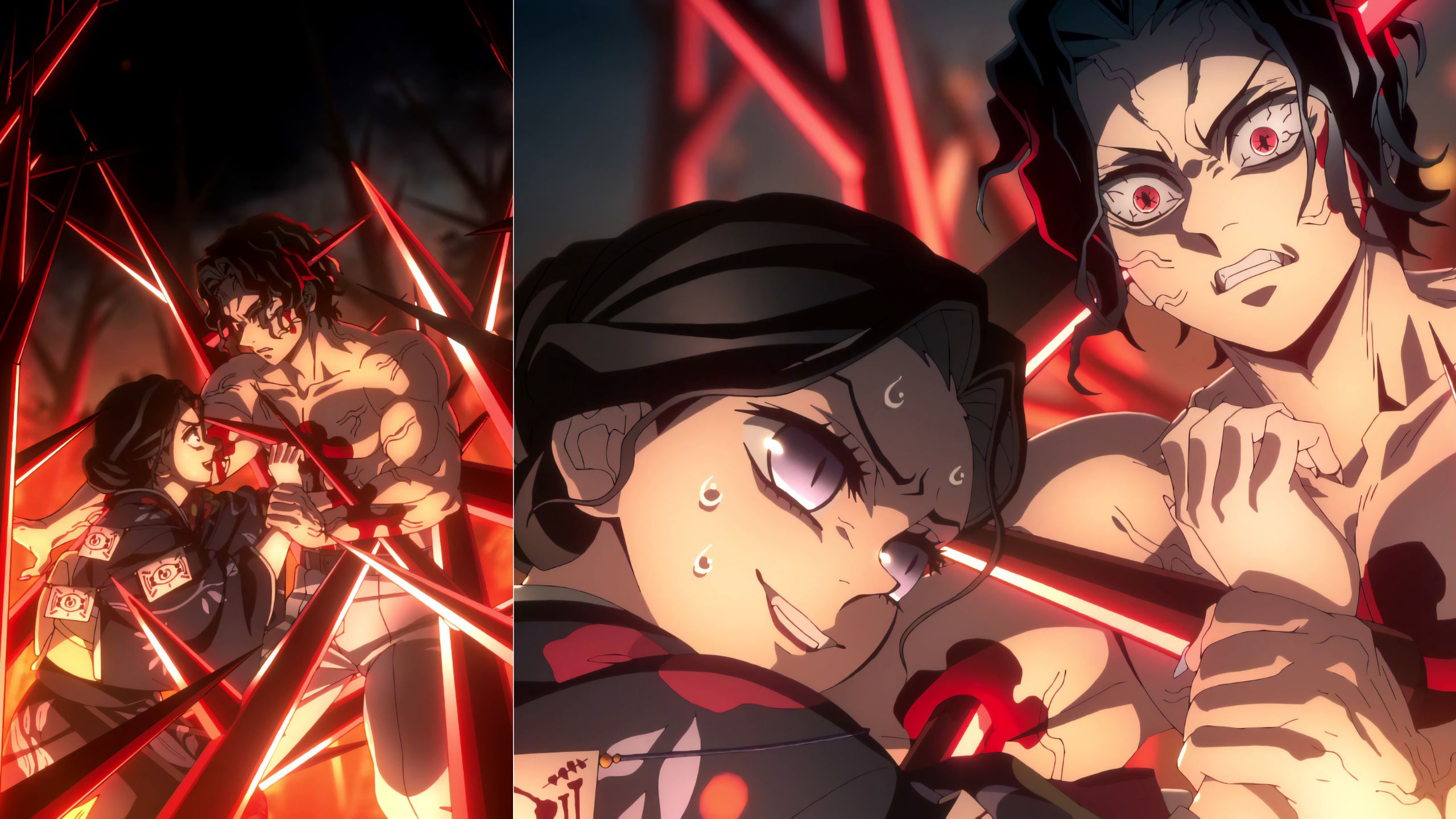
Tamayo Uses Medicine On Muzan Which Can Turn Demon Into Human (Image By Crunchyroll)
She dedicated her life to researching a cure for the demon curse, an endeavor that would ultimately allow her to reclaim her humanity and offer the same possibility to others.
For Tamayo, the act of curing demons became a form of poetic justice, a way to undermine Muzan’s power and restore what he had taken from her and countless others.
Tamayo’s disdain for Muzan also reflects her understanding of his weaknesses. While many view Muzan as an invincible force, Tamayo sees him for what he truly is: a creature driven by fear and insecurity.
His obsession with control and domination is, in many ways, a reflection of his own vulnerability.
Tamayo’s pursuit of a cure represents a direct challenge to this vulnerability, as it threatens to undo the very foundation of Muzan’s power.
By working toward a way to reverse the effects of demonhood, she undermines Muzan’s authority and strips him of his greatest weapon.
The Poetic Justice in Tamayo’s Abilities
Tamayo’s power to create demons carries a deep sense of irony, as it represents a reversal of Muzan’s most prized ability.
Muzan prides himself on being the sole creator of demons, viewing it as a mark of his superiority and control.
Yet, Tamayo’s ability to replicate this process underlines her independence from him and serves as a form of poetic justice.
By possessing the same ability, she subverts Muzan’s claim to supremacy and challenges his belief in his own invincibility.
Furthermore, Tamayo’s ability to create demons became a crucial element in her development of a cure.
Her Blood Demon Art, which enabled her to manipulate demon physiology, likely played a pivotal role in her collaboration with Shinobu to develop a demon-reversing medicine.
The fact that she used her powers not only to create demons but also to pursue a cure underscores her commitment to undoing the harm caused by Muzan’s curse.
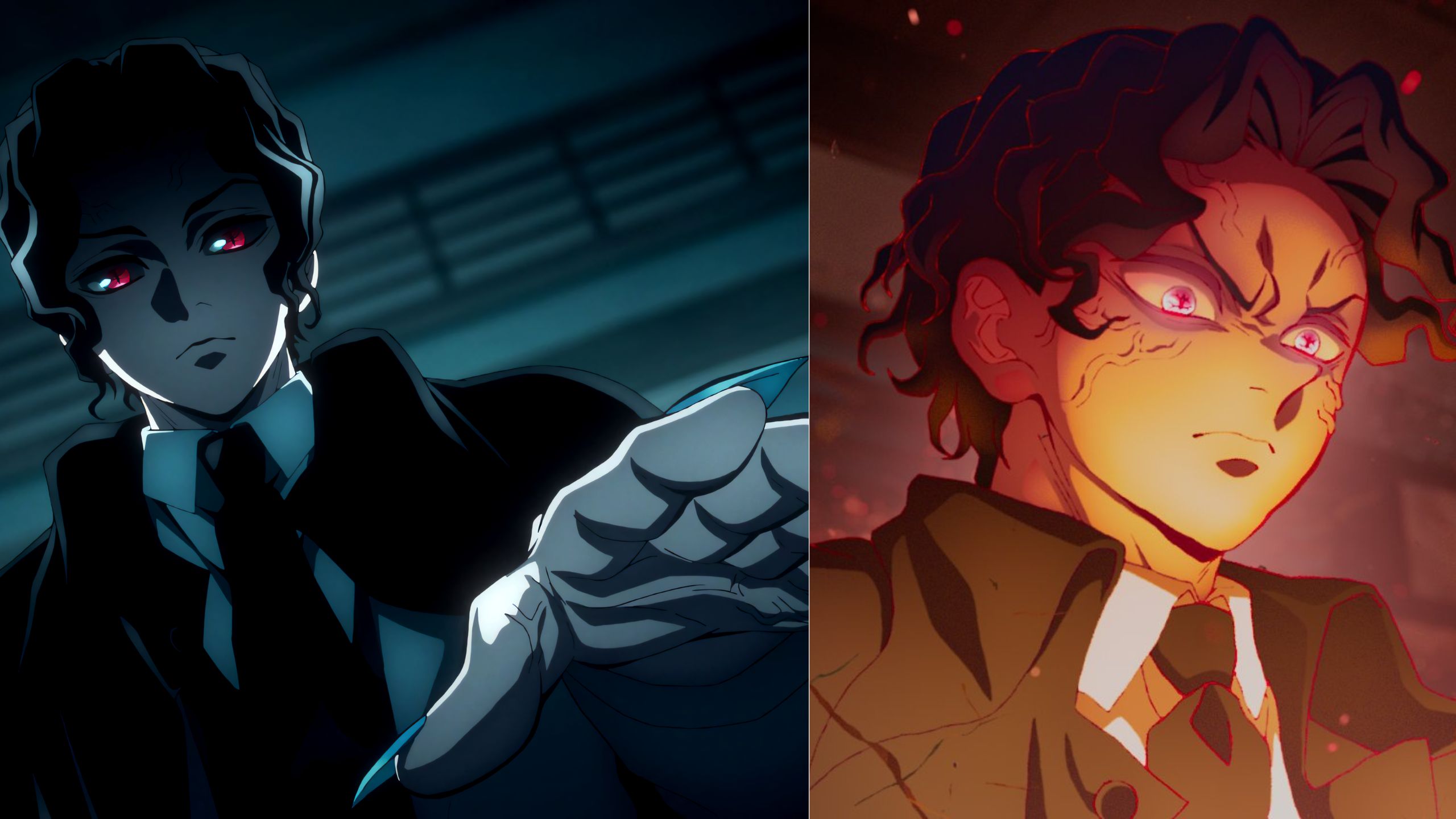
Muzan Kibutsuji From Demon Slayer (Image By Ufotable)
Unlike Muzan, who views demonhood as a path to power, Tamayo sees it as something to be overcome, a curse that must be eradicated.
Tamayo’s work with Shinobu highlights the significance of her abilities. By combining her knowledge of demon biology with Shinobu’s expertise in poisons, she created a medicine that had the potential to reverse the effects of demonhood.
This collaboration reflects Tamayo’s dedication to the cause and her willingness to go to great lengths to achieve her goal.
In this sense, her powers represent not just an act of rebellion but a profound commitment to healing and redemption.
Tamayo’s Legacy in the Demon Slayer World
In the Demon Slayer, Tamayo’s character stands as a testament to resilience, compassion, and the pursuit of redemption.
Her journey from a subservient demon to a figure of defiance and hope serves as an inspiration for others.
Through her research, she not only liberated herself from Muzan’s control but also paved the way for a future free from the curse of demonhood.
Her legacy is one of strength, intelligence, and a profound commitment to justice.
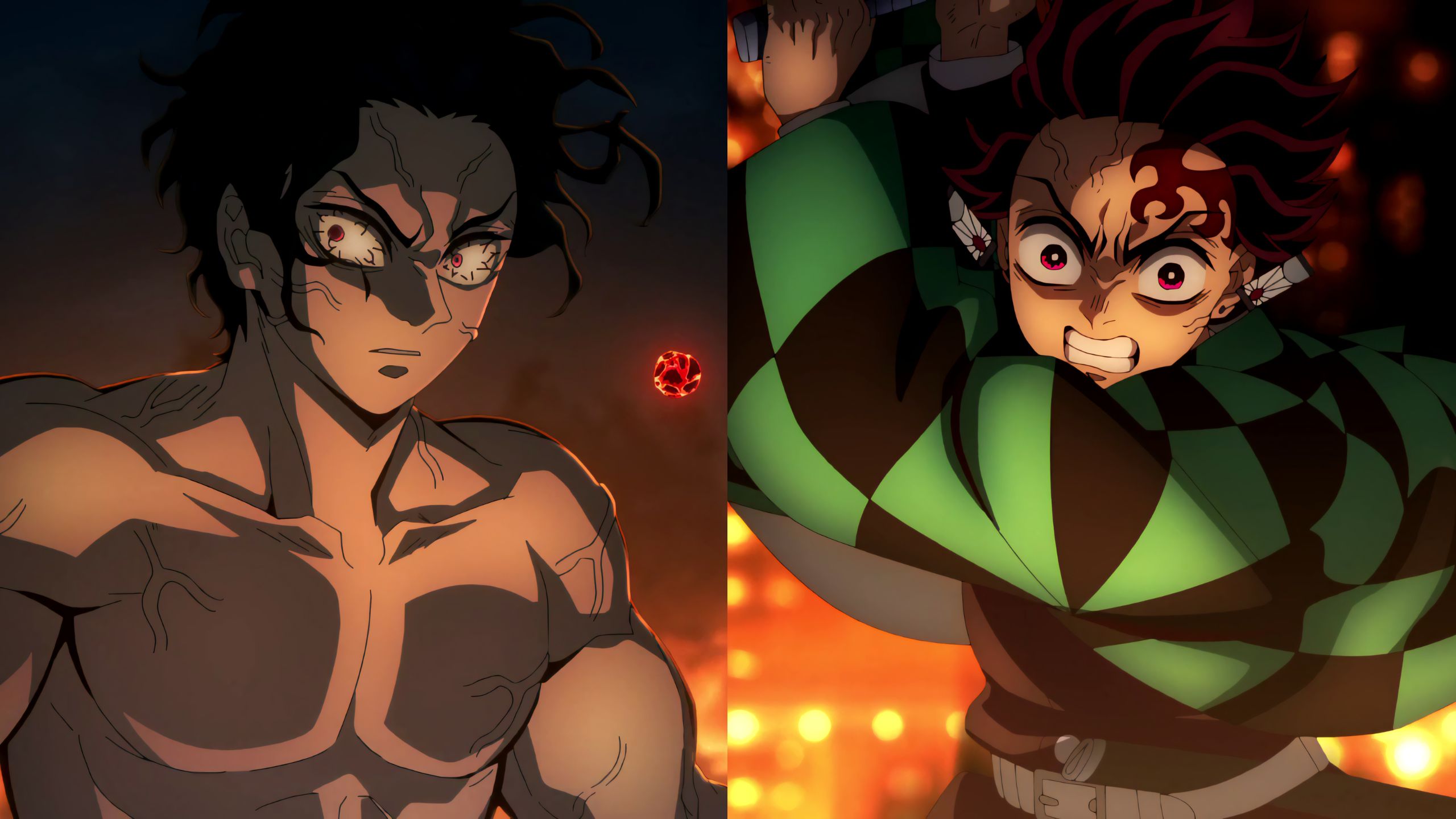
Final Battle Began In Infinite Castle – Tanjiro VS Muzan (Images By Ufotable)
Tamayo’s story offers a unique perspective on the nature of power and the importance of compassion in the face of darkness.
While Muzan represents a world of violence and domination, Tamayo embodies a path of healing and redemption.
Her defiance of Muzan’s authority and her pursuit of a cure for demonhood challenge the very foundation of his power, offering hope for a future beyond his reign.
In the end, Tamayo’s legacy serves as a reminder that even in a world consumed by darkness, there is always the possibility of redemption.
Her story is a testament to the strength of the human spirit and the power of compassion, qualities that ultimately define the true heroes of Demon Slayer.
Since Boruto: Naruto Next Generations began, fans have been comparing the protagonist, Boruto Uzumaki , to his grandfather, Minato Namikaze the legendary Fourth Hokage of Konoha.
Unlike Boruto’s father, Naruto Uzumaki, who overcame numerous challenges to achieve his dreams, Boruto’s character showed signs of prodigious talent from an early age, much like Minato did.
Known for his natural genius, Minato’s remarkable speed and mastery over complex techniques left an unforgettable mark on the ninja world.
Although Boruto inherited his father’s confidence, his exceptional abilities made him seem closer to Minato’s legacy.
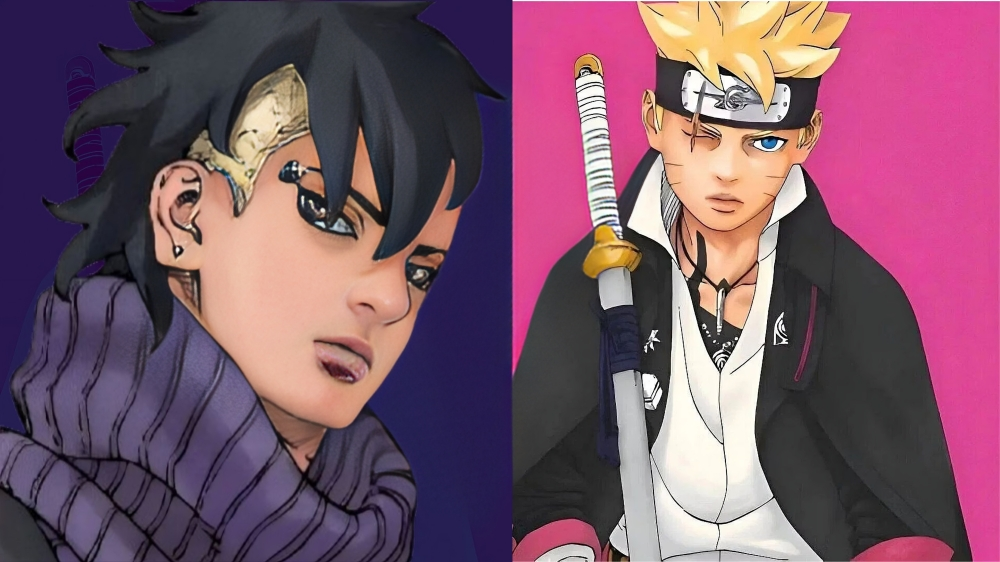
Kawaki And Boruto (Shueisha)
However, many fans were initially skeptical, arguing that Boruto lacked the maturity and discipline required to be a “worthy successor” to Minato’s legacy.
Throughout Boruto’s journey, his abilities and character have developed significantly, showing clear signs that he’s growing into a shinobi who respects his lineage and learns to embrace the values and responsibilities that come with it.
While the earlier chapters of Boruto may have shown him as brash and occasionally rebellious, recent events in the manga have shifted this perspective.
With the revelation of Boruto’s own version of the Flying Thunder God Technique, Boruto has achieved something that truly places him in line with Minato’s legendary prowess.
Here’s how Boruto’s journey has gradually proven that he is, in fact, a worthy successor to Minato’s incredible legacy.
Comparing Boruto and Minato’s Natural Genius
One of the primary reasons fans started comparing Boruto to Minato early on was his natural talent and intellect.
Minato was celebrated for being a genius and a prodigy, a ninja who rose through the ranks quickly and mastered techniques that others found daunting.
His speed and mastery over the Flying Thunder God Technique earned him the title of “Yellow Flash,” making him one of the most respected shinobi in Konoha’s history.
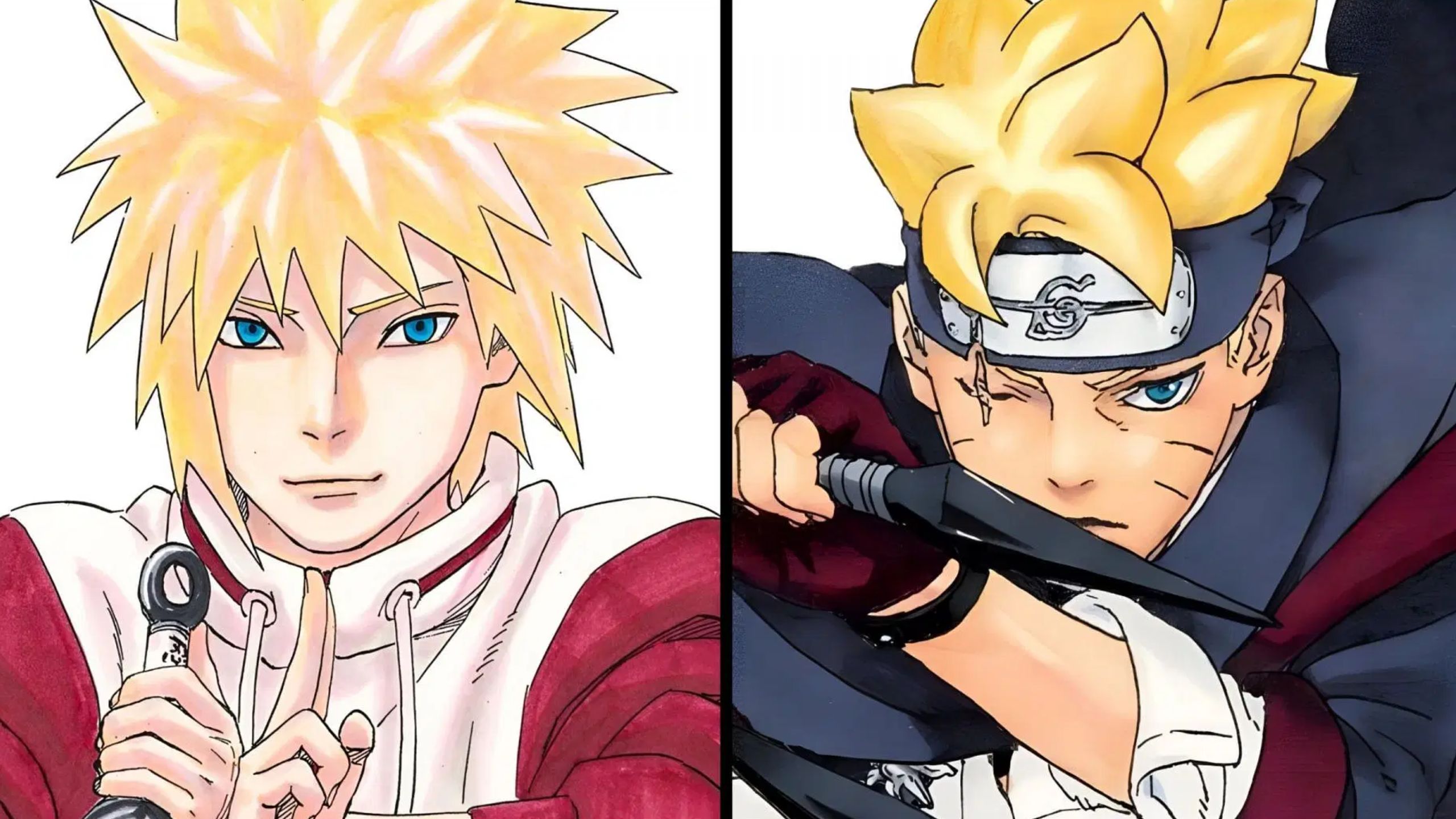
Minato And Boruto (Shueisha)
Although Minato did not come from a famous clan with unique abilities, his unparalleled skill and intelligence set him apart as a force to be reckoned with.
Boruto, by contrast, began his journey under a vastly different set of circumstances. Born into privilege as the son of the Seventh Hokage, he didn’t have to face the same hardships Naruto or even Minato did.
However, from a young age, Boruto displayed a remarkable aptitude for ninja techniques. Unlike his father, who struggled initially with ninjutsu, Boruto quickly picked up advanced skills, surprising those around him.
He demonstrated an ability to think quickly, adapt to situations, and perform jutsu with a finesse that resembled Minato’s natural talents.
Boruto’s rapid progress earned him the reputation of a genius within his generation, sparking comparisons to Minato’s own youthful excellence.
Despite this, many fans were hesitant to fully embrace the idea of Boruto as a successor to Minato’s legacy.
Boruto’s early behavior arrogant and resentful of his father’s role as Hokage made it difficult for some to see him as a mature, responsible shinobi.
Minato was admired not only for his strength but also for his humility, wisdom, and deep sense of duty.
For Boruto to prove himself worthy, he would need to develop similar qualities, something fans doubted he could achieve.
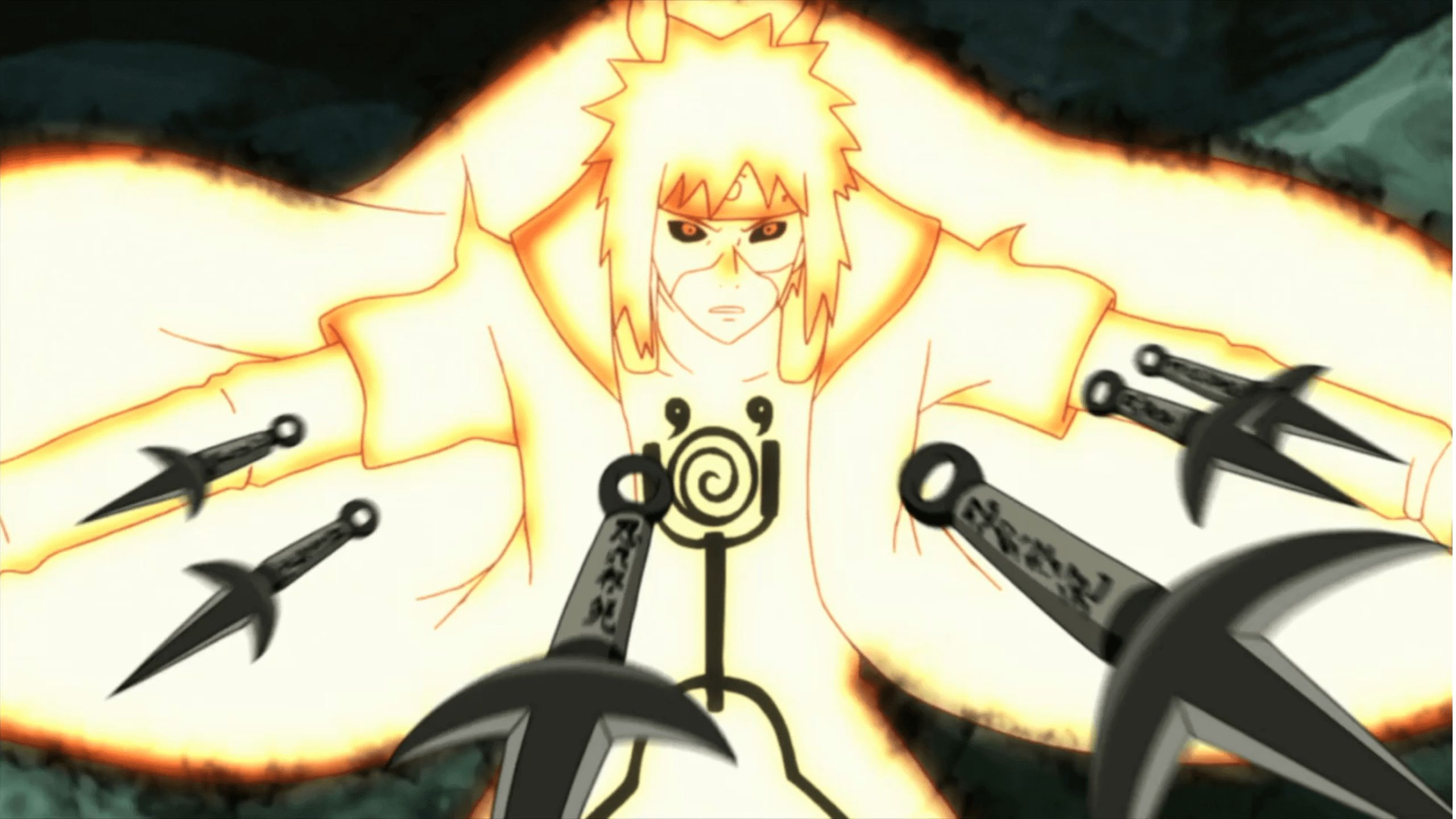
Minato Using Flying Raijin (Studio Pierrot)
However, as the story unfolds, Boruto’s character has evolved, showing that he has the potential to not only match his grandfather’s skills but also to embody his values.
Boruto’s Journey to Mastering Space-Time Ninjutsu
One of the most pivotal moments in Boruto’s journey has been his pursuit of Space-Time Ninjutsu, an advanced form of ninjutsu that allows the user to manipulate time and space.
In the Naruto universe, Space-Time Ninjutsu is exceptionally difficult to master, with very few shinobi capable of using it effectively.
Minato’s Flying Thunder God Technique, which allowed him to teleport instantaneously to marked locations, is a prime example of this kind of power.
This technique played a significant role in Minato’s legacy, making him one of the most feared and respected shinobi in the world.
For Boruto, the journey toward mastering a similar technique began with his Karma, a mysterious mark given to him by the Otsutsuki clan.
Karma granted Boruto access to abilities far beyond those of ordinary shinobi, including a form of Space-Time Ninjutsu.
However, unlike Minato’s technique, Boruto’s initial teleportation abilities were unstable and unpredictable, as they relied on the power of the Otsutsuki rather than his own skill.
This lack of control frustrated Boruto, who realized that he needed a more reliable method if he hoped to wield such power effectively.
In recent chapters, Boruto’s determination to create a stable Space-Time Ninjutsu technique has been a driving force in his training.
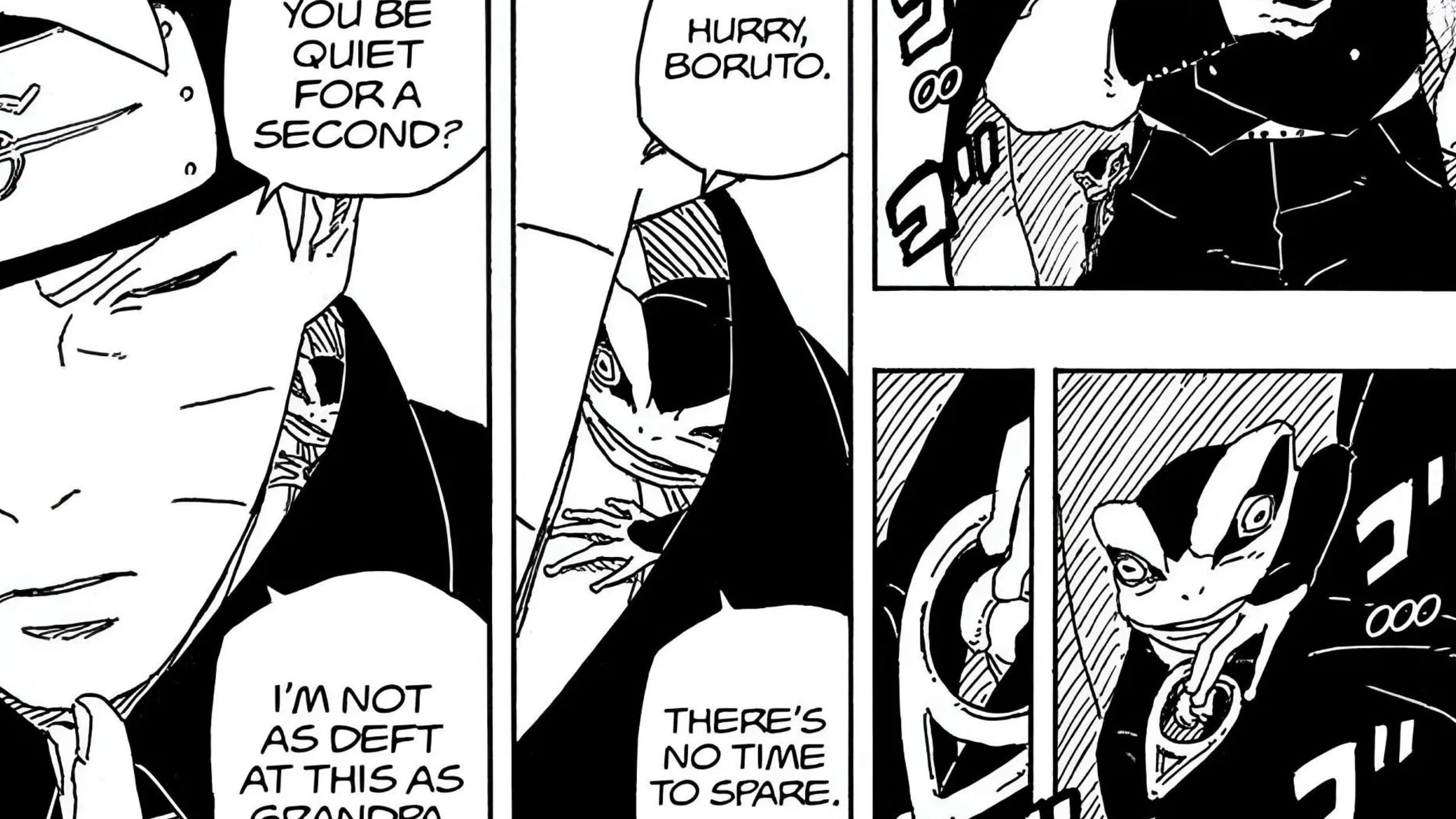
The Protagonist Using The Flying Thunder God Technique In The Manga (Shueisha)
Over a period of six years, he worked tirelessly to find a way to harness this power independently, without relying on the unpredictable nature of Karma.
His efforts eventually led him to create his own version of the Flying Thunder God Technique, one that is uniquely his own.
This achievement not only reflects his intelligence and creativity but also demonstrates his willingness to put in the hard work required to master such a challenging skill.
Kashin Koji’s Influence on Boruto’s Development
Another essential factor in Boruto’s growth as a shinobi has been his relationship with Kashin Koji, a mysterious figure with strong ties to the past.
Kashin Koji, who bears a striking resemblance to Jiraiya, has been an invaluable mentor to Boruto, helping him understand both the potential and the limitations of his powers.
In Boruto: Two Blue Vortex chapter 16, a flashback reveals a training session between Boruto and Koji, where they discuss the intricacies of Space-Time Ninjutsu and the challenges of mastering such a technique.
Kashin Koji’s role in Boruto’s life has been similar to that of Jiraiya in Naruto’s journey.
Just as Jiraiya guided Naruto and helped him develop into a powerful shinobi, Koji has provided Boruto with the guidance and knowledge he needs to grow.
Through his training with Koji, Boruto learned that power alone is not enough; it must be refined, controlled, and used responsibly.
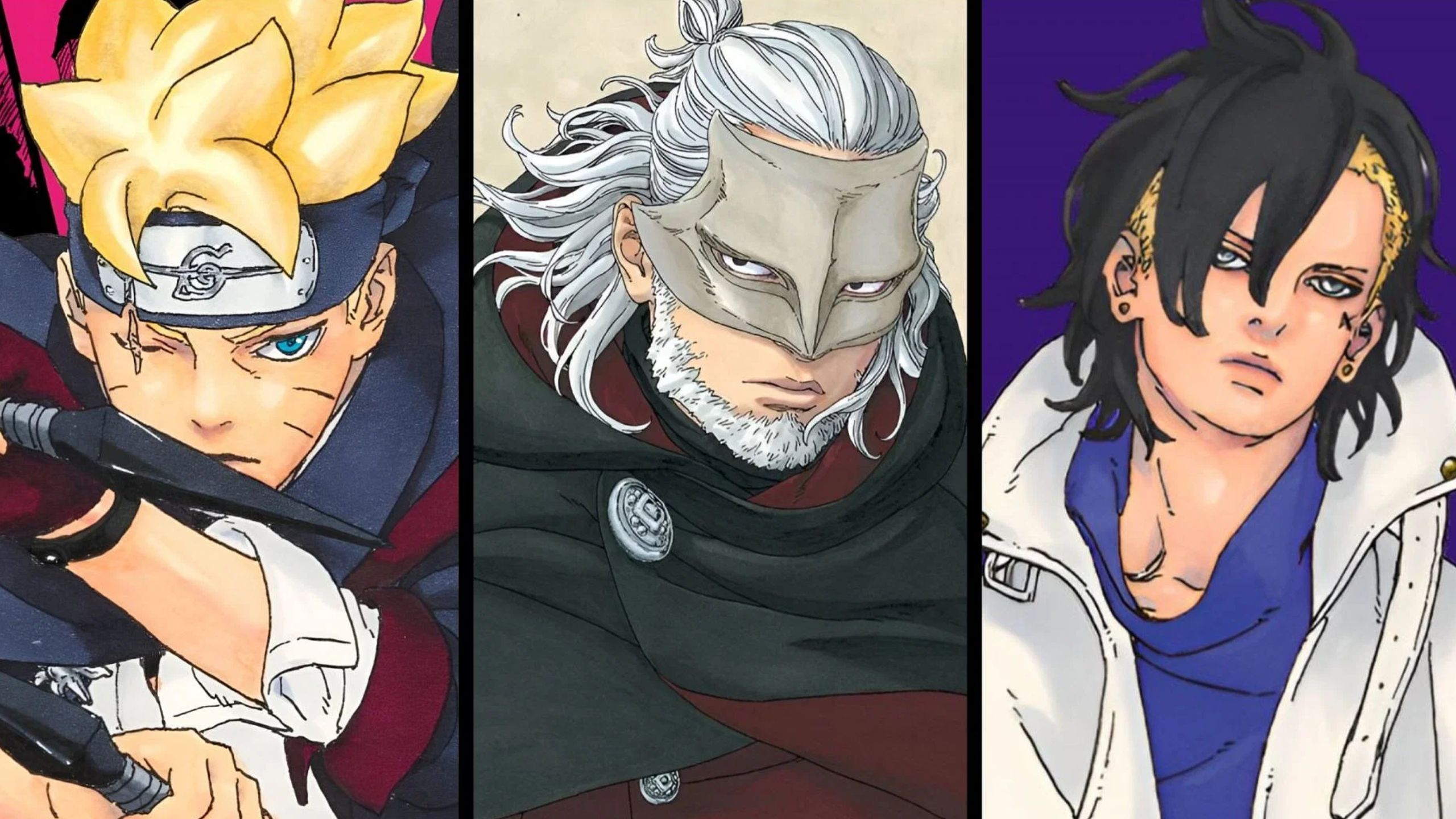
Boruto, Koshin Kaji And Kawaki (Shueisha)
This lesson has had a profound impact on Boruto’s development, instilling in him a sense of discipline and patience that was often lacking in his earlier years.
Koji’s mentorship has also helped Boruto move beyond his reliance on Karma, teaching him that true strength comes from within.
By focusing on his own chakra and abilities, Boruto has been able to create a technique that mirrors his grandfather’s legacy without depending on external powers.
This process has been a crucial part of his journey toward maturity, showing that he has the potential to live up to the legacy of the Fourth Hokage.
Creating a Unique Version of the Flying Thunder God Technique
Boruto’s version of the Flying Thunder God Technique is a testament to his ingenuity and adaptability as a shinobi.
While Minato’s original jutsu involved marking specific locations with a special seal, allowing him to teleport instantly, Boruto’s adaptation uses ninja tools as a medium for his teleportation.
By infusing these tools with his chakra, Boruto can teleport to their location, creating a technique that, while different from Minato’s, achieves a similar effect.
However, Boruto’s technique is not without its limitations. Unlike Minato’s instantaneous teleportation, Boruto’s version requires him to carefully manage his chakra-infused tools, making it more complex and challenging to use.
Additionally, while Minato could teleport instantly over vast distances, Boruto’s technique takes longer, especially when the destination is far away.
This slower teleportation makes it less effective in high-speed combat scenarios, though it still offers Boruto a significant advantage.
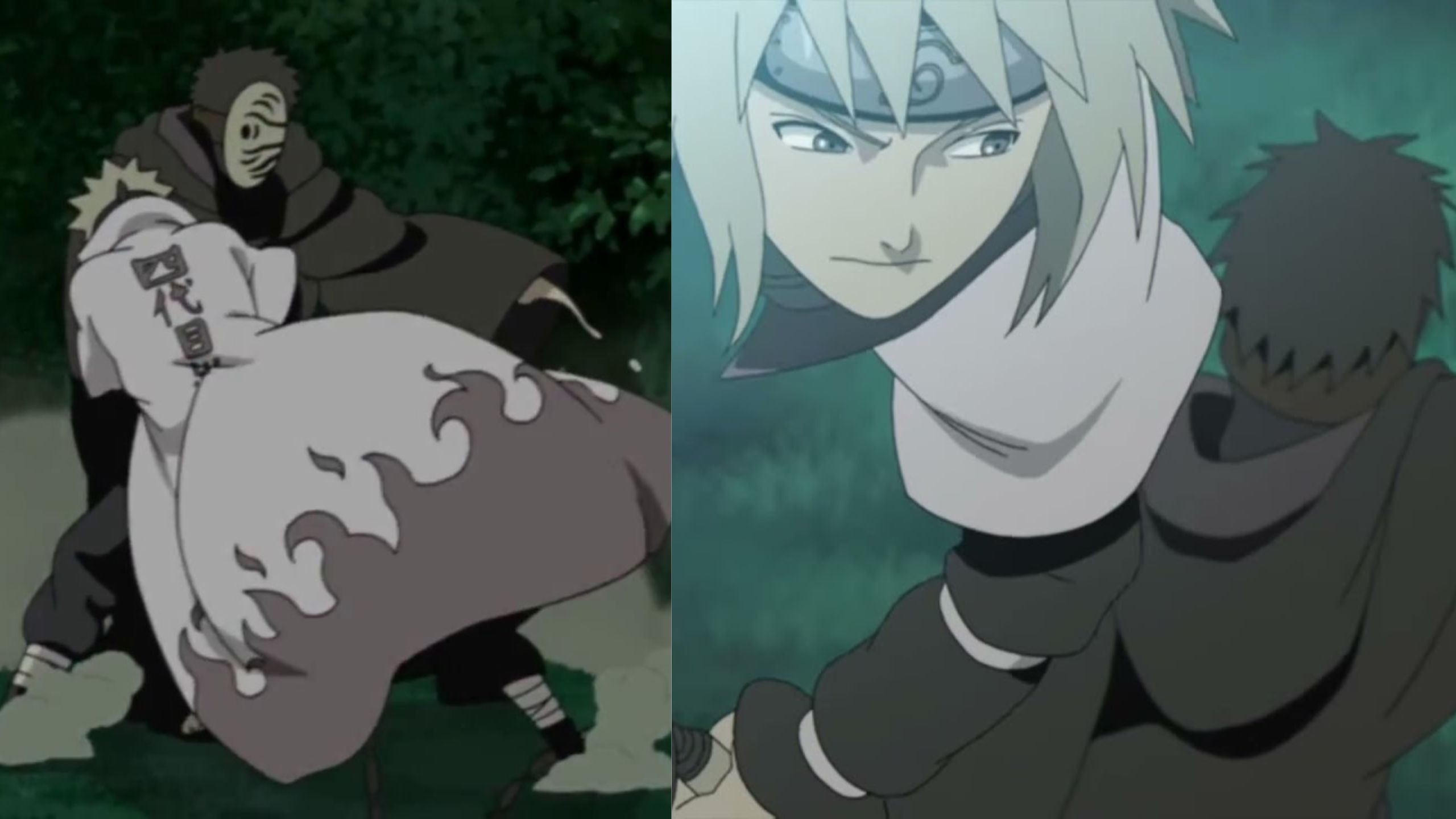
Obito Uchiha Vs Minato Namikaze In Naruto (Studio Pierrot)
To overcome these limitations, Boruto developed a method of organizing his tools by shape, allowing him to differentiate between various teleportation points.
This innovation not only showcases his intelligence and resourcefulness but also enables him to use the technique more effectively, even in complex situations.
By creating a system that allows him to manage multiple teleportation points, Boruto has shown a level of strategic thinking that is rare among shinobi of his generation.
Honoring Minato’s Legacy Through His Technique’s Name
One of the most powerful aspects of Boruto’s achievement is his decision to name his new technique after Minato’s Flying Thunder God Technique.
Despite the differences between the two jutsu, Boruto chose to honor his grandfather’s legacy by giving his own teleportation technique the same name.
This decision is deeply symbolic, reflecting Boruto’s respect for his family’s history and his desire to live up to the example set by Minato.
For Boruto, naming his technique after the Flying Thunder God represents a turning point in his character.
In the past, Boruto often felt weighed down by his family’s legacy, struggling to find his own path while living in the shadow of his father and grandfather.
By naming his jutsu after Minato’s, Boruto has embraced his heritage, acknowledging the importance of his family’s contributions to the ninja world.
This act demonstrates a newfound maturity, showing that Boruto no longer sees his lineage as a burden but as an inspiration to achieve greatness.
Boruto’s decision to adopt the Flying Thunder God name also symbolizes his commitment to upholding the values that Minato represented.
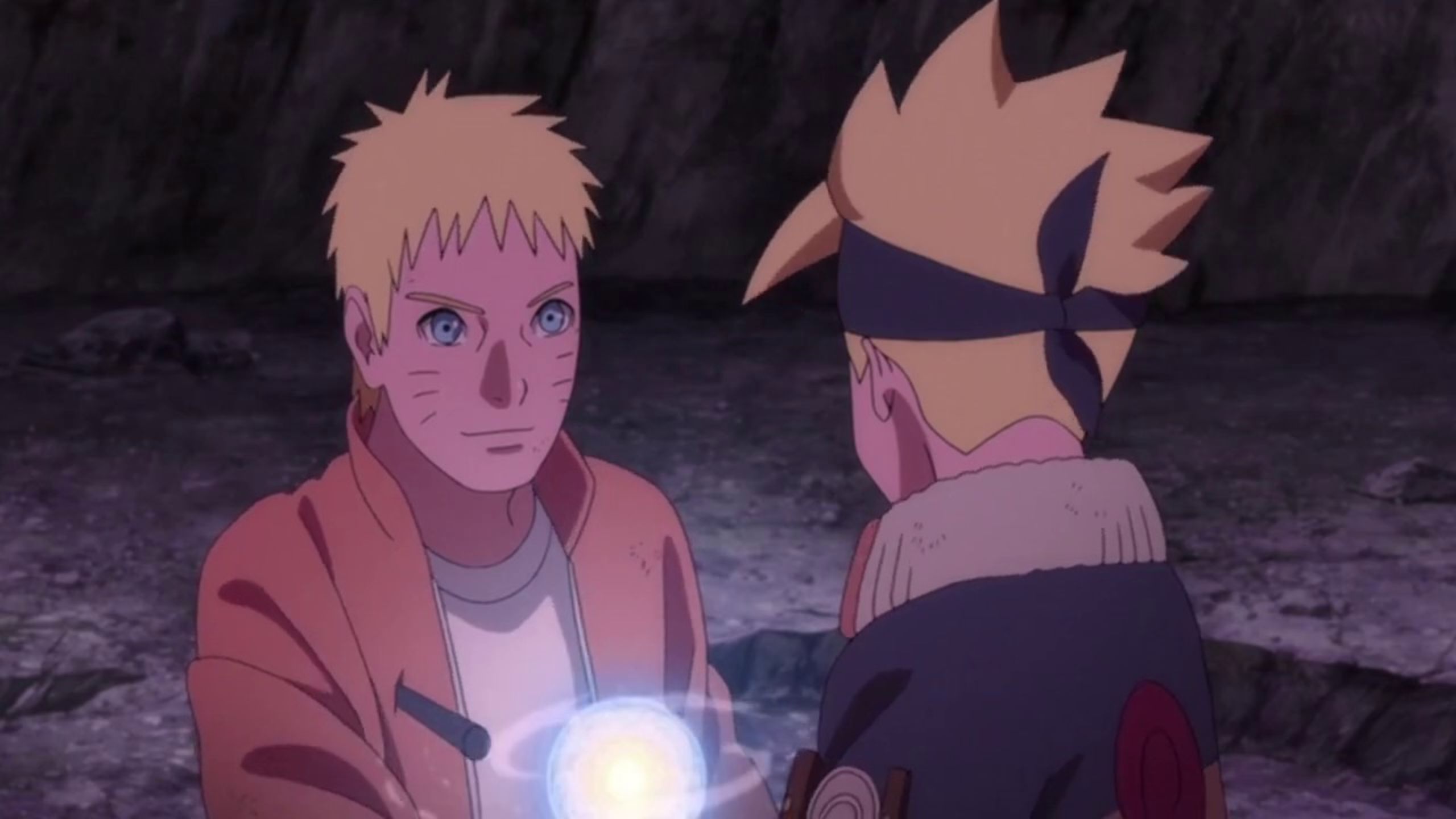
Boruto With Naruto And Boruto Using Rasengan (Crunchyroll)
The Fourth Hokage was not only a powerful shinobi but also a wise and compassionate leader who put the well-being of his village above all else.
By following in Minato’s footsteps, Boruto shows that he understands the responsibility that comes with such power and that he is prepared to use his abilities for the benefit of others.
Boruto’s Journey from Rebel to Responsible Shinobi
Boruto’s transformation from a rebellious child to a responsible shinobi has been a key theme in the series.
At the beginning of his journey, Boruto was often frustrated with his father’s role as Hokage, feeling neglected and resentful.
This resentment led him to act out, seeking attention and validation in ways that were often reckless.
However, as he has grown and faced various challenges, Boruto has come to understand the true nature of leadership and responsibility.
Through his training with Koji, his development of the Flying Thunder God Technique, and his decision to honor his family’s legacy, Boruto has shown a level of growth that few could have predicted.
He has moved beyond his initial frustrations, embracing his role as a shinobi and recognizing the importance of carrying on the values of those who came before him.
In doing so, he has proven himself not only as a worthy successor to Minato but as a young man who has the potential to become a powerful leader in his own right.
Boruto’s journey is far from over, and it is likely that he will continue to face new challenges and obstacles.
However, with each step forward, he brings honor to his family’s legacy, showing that he has the strength, wisdom, and determination to carry on the spirit of the Fourth Hokage.
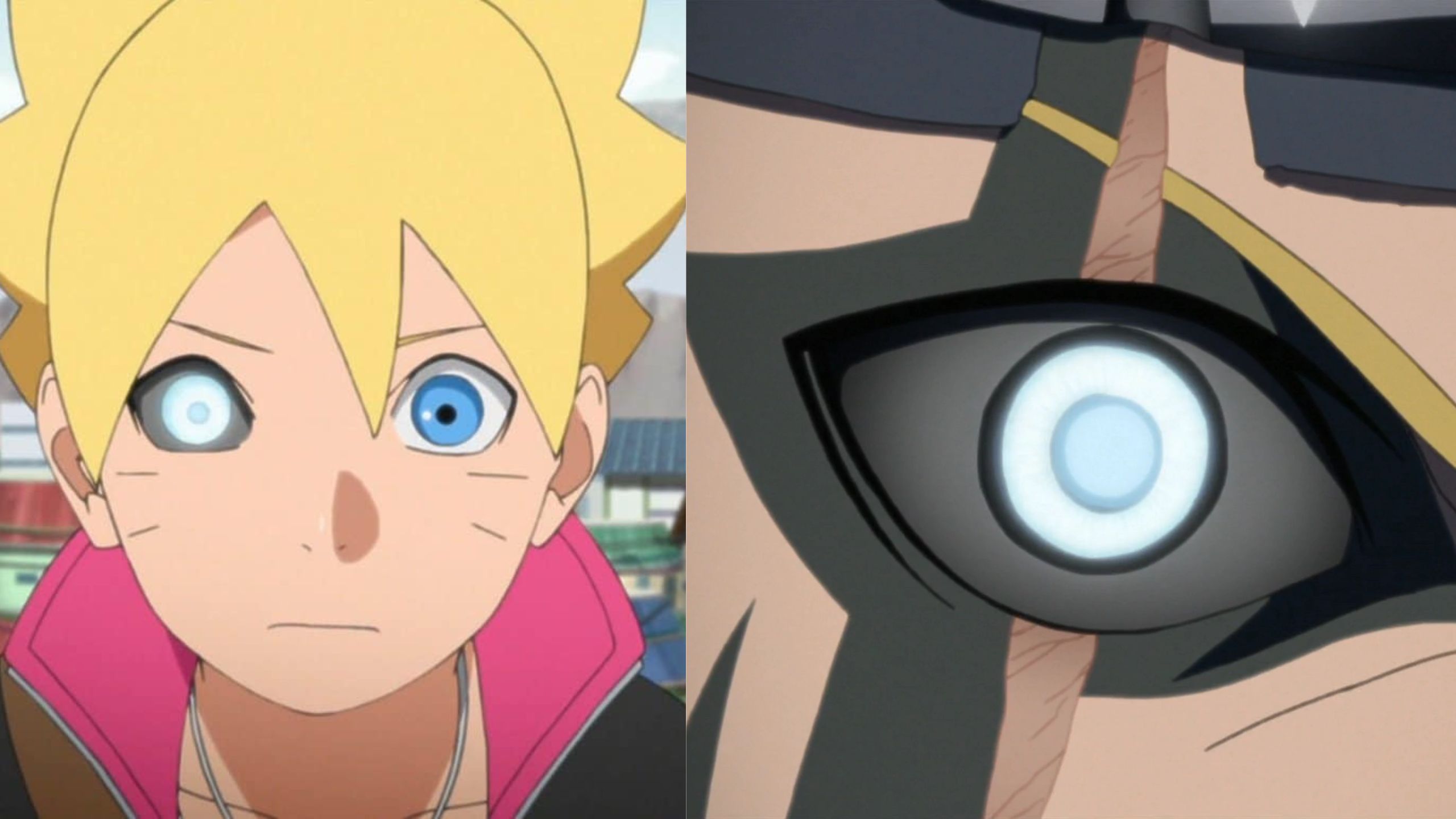
Boruto Jogan (Pierrot)
By forging his path and developing his version of the Flying Thunder God Technique, Boruto has truly proven himself as Minato’s worthy successor.
In the Boruto world, where the legacy of past generations is always present, Boruto’s journey serves as a powerful reminder of the importance of family, heritage, and personal growth.
By embracing his lineage and forging his way forward, Boruto has not only honored the memory of Minato Namikaze but also set a powerful example for the next generation of shinobi.
His achievements demonstrate that true strength lies not just in power but in wisdom, responsibility, and a commitment to using one’s abilities for the greater good.
In doing so, Boruto has shown that he is indeed Minato’s worthy successor, carrying forward the values and legacy of the Fourth Hokage into a new era.
