The climactic arc of My Hero Academia promised a whirlwind of battles, sacrifices, and emotional moments that would define the legacy of the series.
Among these events, Star and Stripe’s heroic stand against Shigaraki stood out as a high-stakes confrontation that had the potential to change the trajectory of the story.
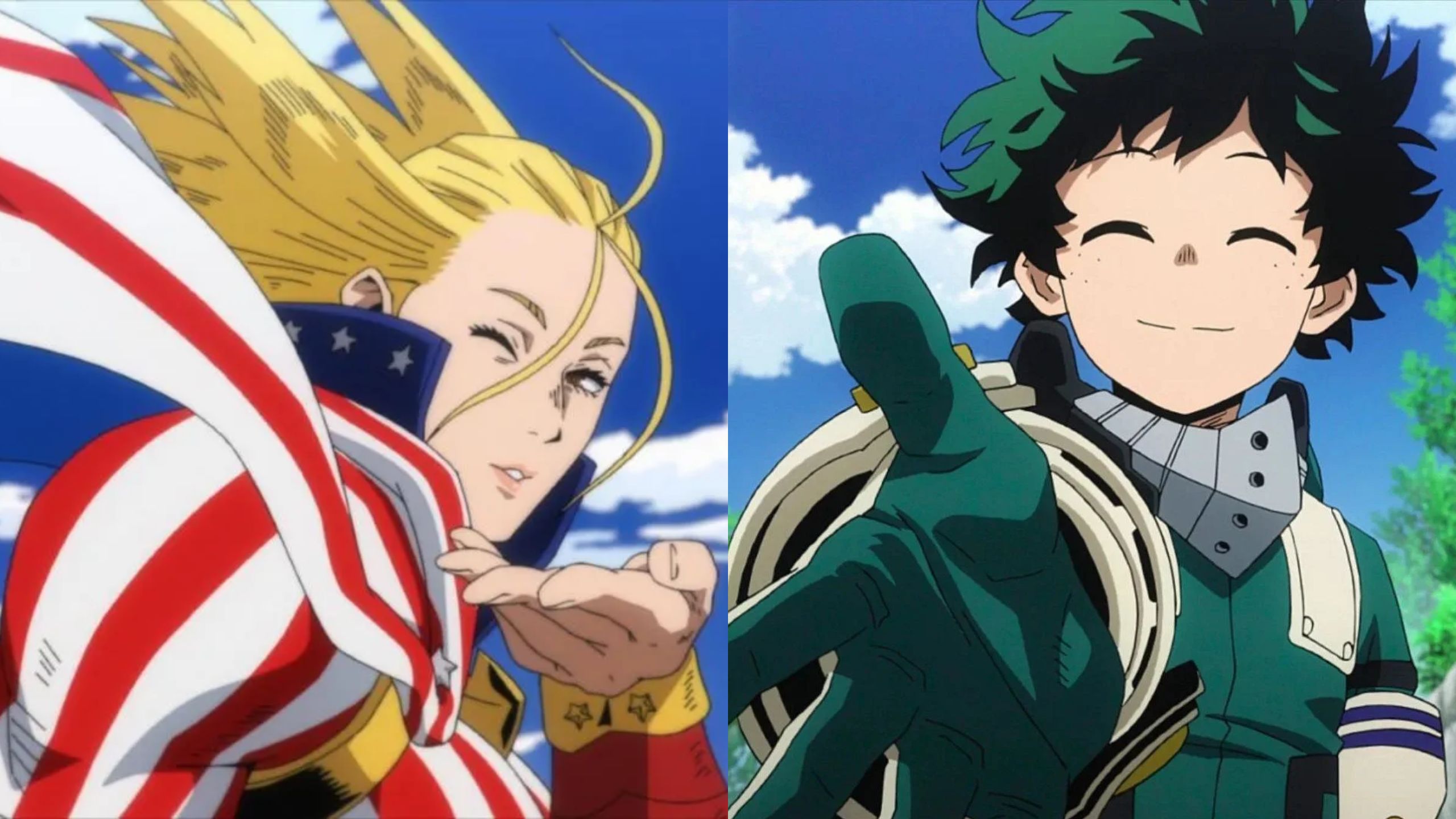
Star and Stripe And Deku In My Hero Academia (BONES)
However, as the arc unfolded, it became evident that her sacrifice while courageous was undermined by narrative choices, reducing what should have been a landmark moment into one of the series’ most disappointing missteps.
Star and Stripe was introduced as the Number One Hero of America, a figure of immense power and unwavering resolve.
Her quirk, New Order, allowed her to rewrite the rules of reality, making her one of the most formidable heroes in the My Hero Academia universe.
She epitomized the spirit of self-sacrifice and heroic ideals. Yet, despite the grandeur of her introduction and her apparent significance to the plot, her role in the final arc lacked the impact it deserved.
This exploration jumps into how her sacrifice was handled and why it felt ineffective in shaping the story’s ending.
The Arrival of Star and Stripe
When Star and Stripe was first introduced, fans were immediately attracted by her imposing presence and unparalleled strength.
As the top hero of the United States, her reputation preceded her, and her arrival in Japan was portrayed as a moment of hope in the face of despair.
With All Might retired and the heroes of Japan struggling to hold the line against Shigaraki and his forces, Star and Stripe’s intervention was seen as a much-needed game-changer.
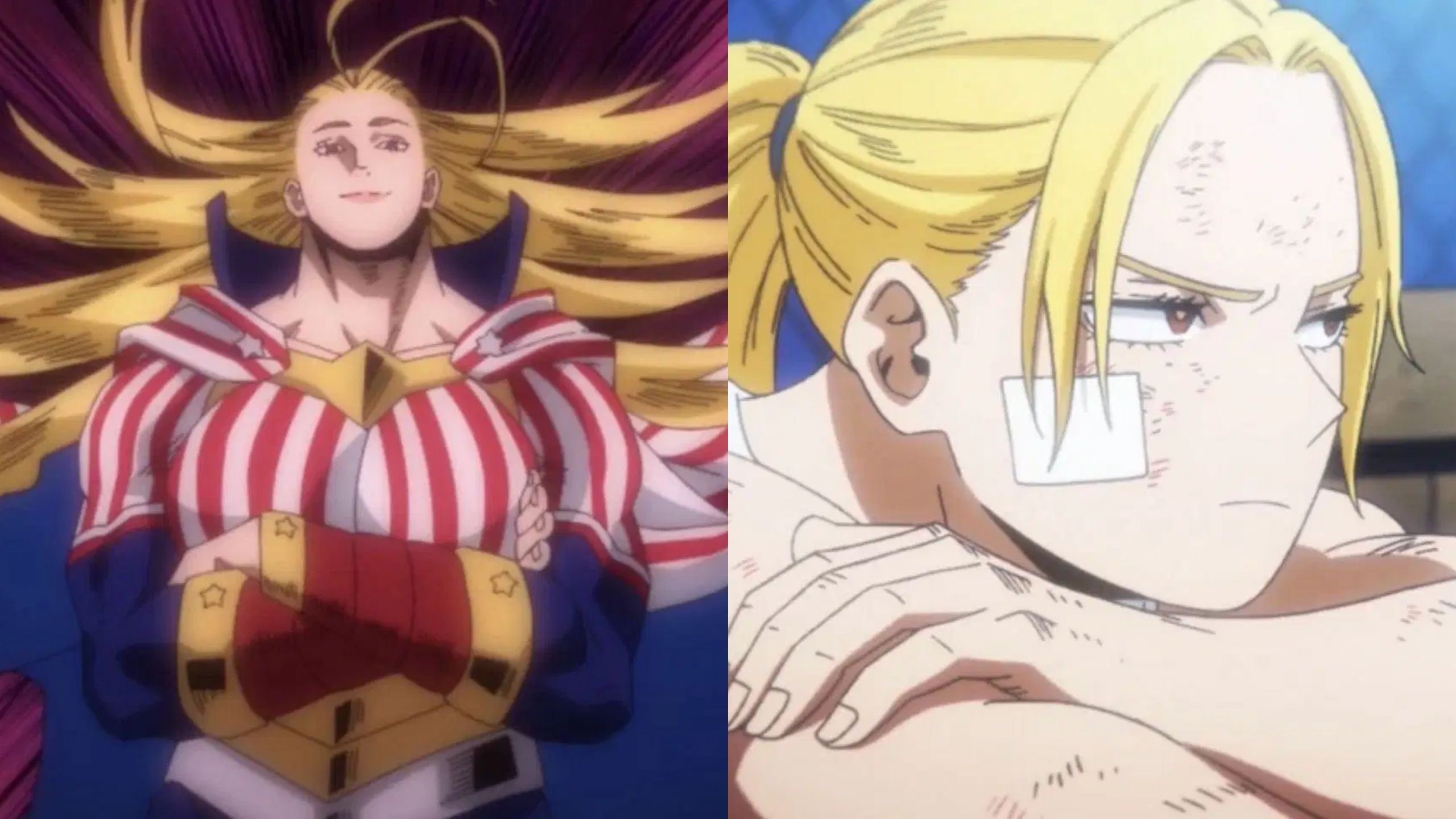
Star and Stripe In My Hero Academia (BONES)
Her entrance was nothing short of cinematic. Accompanied by her team of fighter jets, she exuded an aura of power and authority.
Star and Stripe was more than just a hero; she was a symbol of international solidarity and the global fight against evil.
Her quirk, New Order, was nothing short of extraordinary. By declaring rules, she could manipulate reality itself, making her one of the most dangerous adversaries Shigaraki could face.
The stage was set for an epic confrontation. Star and Stripe’s mission was clear: to stop Shigaraki at all costs and give the heroes of Japan a fighting chance.
Her bravery and determination were on full display as she faced the overwhelming threat posed by Shigaraki, who had become a near-unstoppable force after merging with All For One.
Battle That Promised Everything
The battle between Star and Stripe and Shigaraki was one of the most anticipated moments in the series. It was not just a clash of power but a battle of ideologies.
Star and Stripe represented the unyielding spirit of heroism, while Shigaraki embodied chaos and destruction. The stakes could not have been higher.
Star and Stripe demonstrated her tactical brilliance and mastery of New Order during the fight. She created rules to immobilize Shigaraki and attacked with unparalleled force.
Her strategy was a testament to her intelligence and experience as a hero. However, despite her best efforts, it became clear that Shigaraki’s power was on a completely different level.
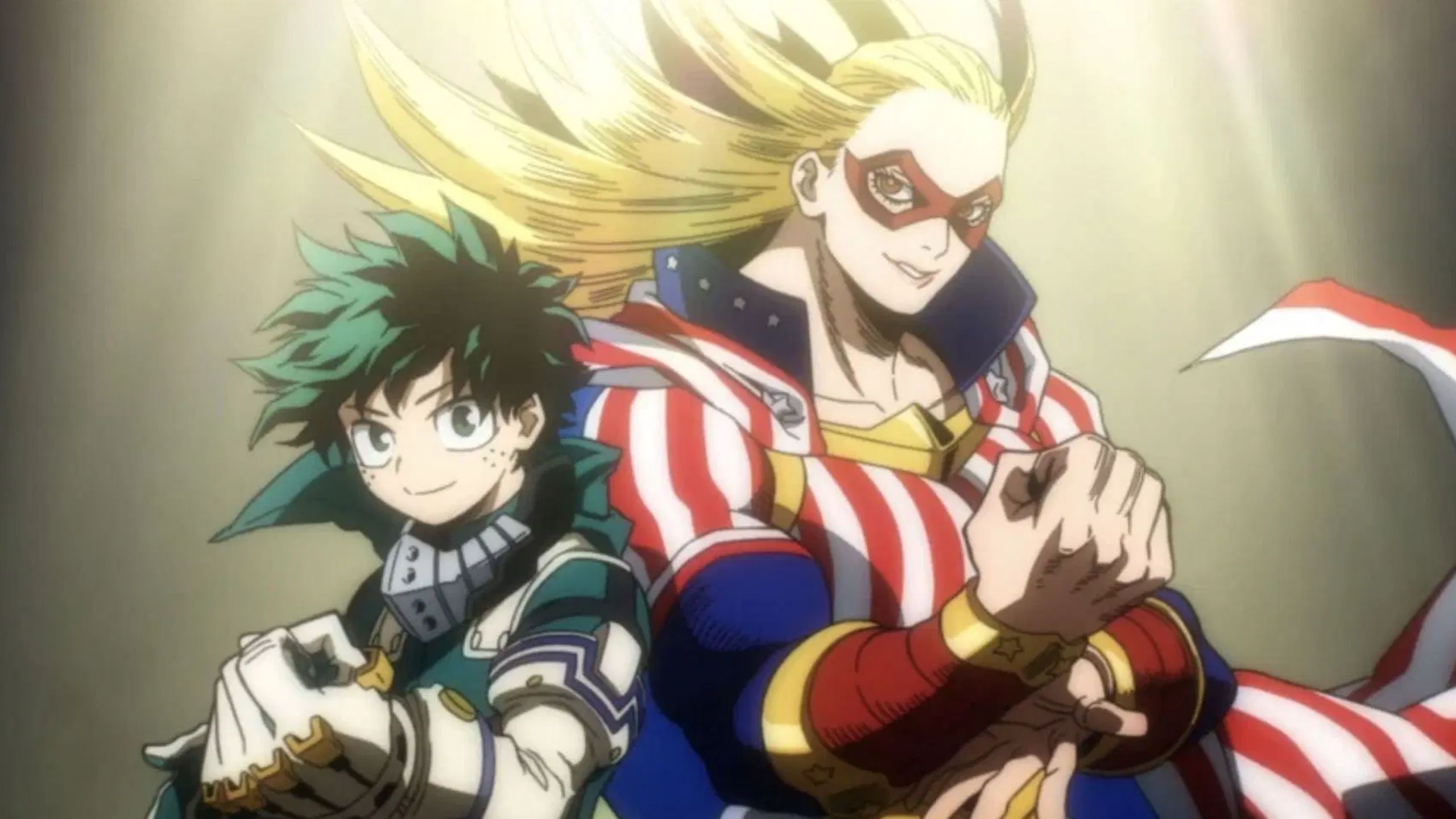
Deku And Star and Stripe In My Hero Academia (BONES)
As the battle progressed, Star and Stripe realized that conventional tactics would not be enough to stop Shigaraki. In a moment of selflessness, she made the ultimate decision to sacrifice herself.
Using New Order, she targeted Shigaraki’s quirks, attempting to destroy as many of them as possible. This act of heroism was meant to weaken him and buy the heroes valuable time to prepare for the final battle.
The Ambiguity of Her Sacrifice
While Star and Stripe’s sacrifice was undeniably heroic, the narrative surrounding its impact was frustratingly vague.
The series never clarified how many quirks were destroyed or which specific abilities were affected. This lack of clarity left fans questioning the effectiveness of her actions.
In theory, her sacrifice should have dealt a significant blow to Shigaraki. His vast collection of quirks, acquired through All For One, was a key component of his power.
Destroying even a portion of these abilities could have shifted the balance of power in favor of the heroes. However, the story failed to capitalize on this potential.
The ambiguity surrounding the outcome of her attack diluted its significance, leaving fans unsatisfied with the resolution.
Adding to the confusion was the role of Erasure, the quirk used by Eraser Head, which was already limiting Shigaraki’s abilities during the battle.
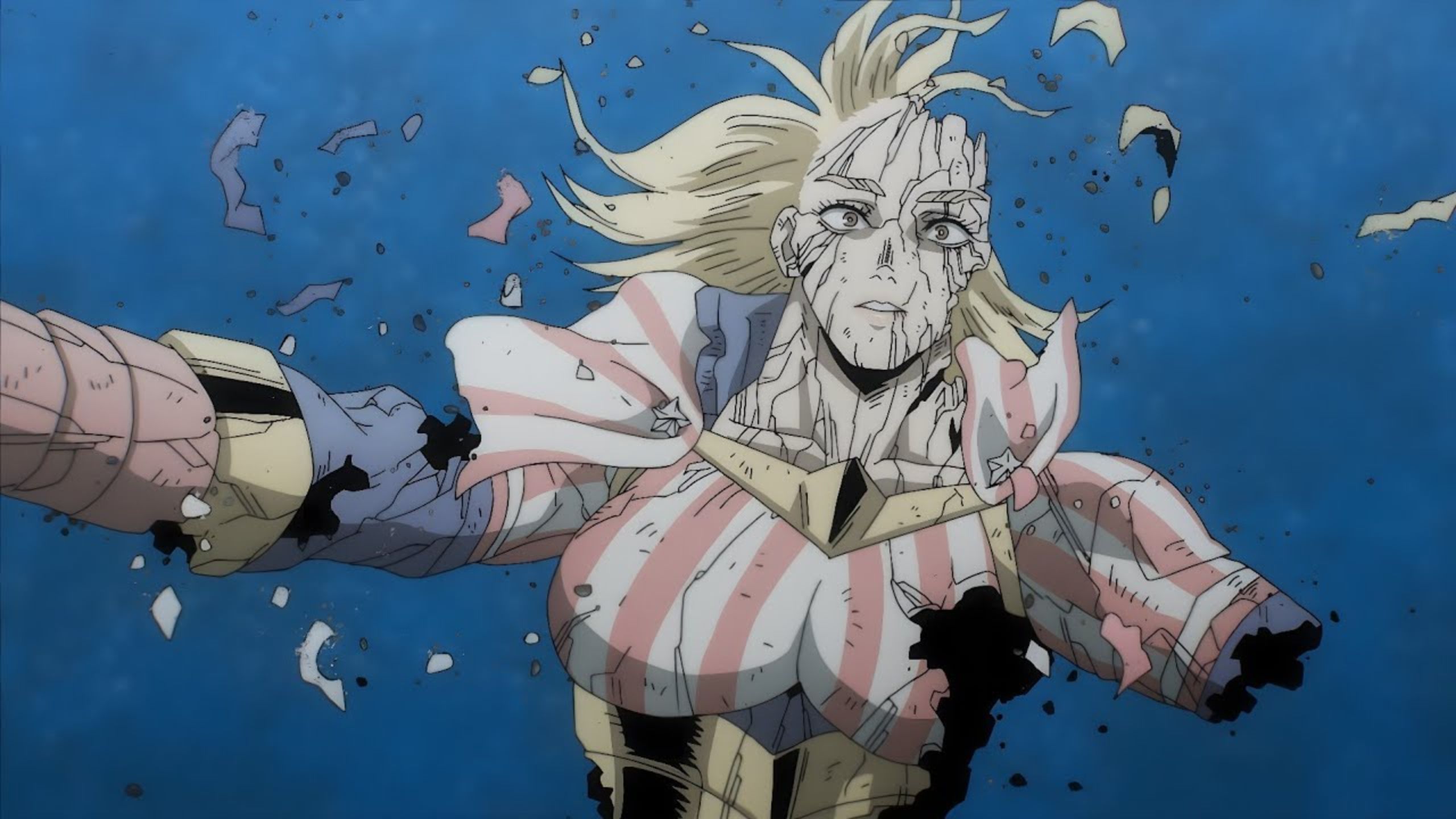
Star and Stripe In My Hero Academia (BONES)
This overlap made it difficult to gauge the true impact of Star and Stripe’s actions. Was her sacrifice redundant? Did it truly make a difference?
The lack of answers to these questions further undermined the weight of her sacrifice.
Shigaraki’s Resilience
One of the central challenges in portraying Shigaraki as the ultimate antagonist was maintaining the balance between his overwhelming power and the heroes’ ability to challenge him.
Unfortunately, the narrative leaned heavily toward making Shigaraki almost invincible, which diminished the stakes of Star and Stripe’s actions.
Even without his quirks, Shigaraki’s physical strength and durability made him a formidable opponent.
His ability to adapt to any situation and his sheer willpower allowed him to dominate the battlefield, regardless of the circumstances.
Shortly after Star and Stripe’s sacrifice, Shigaraki regained Hyper Regeneration, one of his most critical abilities.
This rapid recovery nullified the temporary advantage her actions had provided, reinforcing his status as an unstoppable force.
The fact that he could bounce back so quickly from such a significant attack made her sacrifice feel inconsequential.
Lack of Emotional Weight
One of the defining strengths of My Hero Academia is its ability to create emotional connections between the audience and its characters.
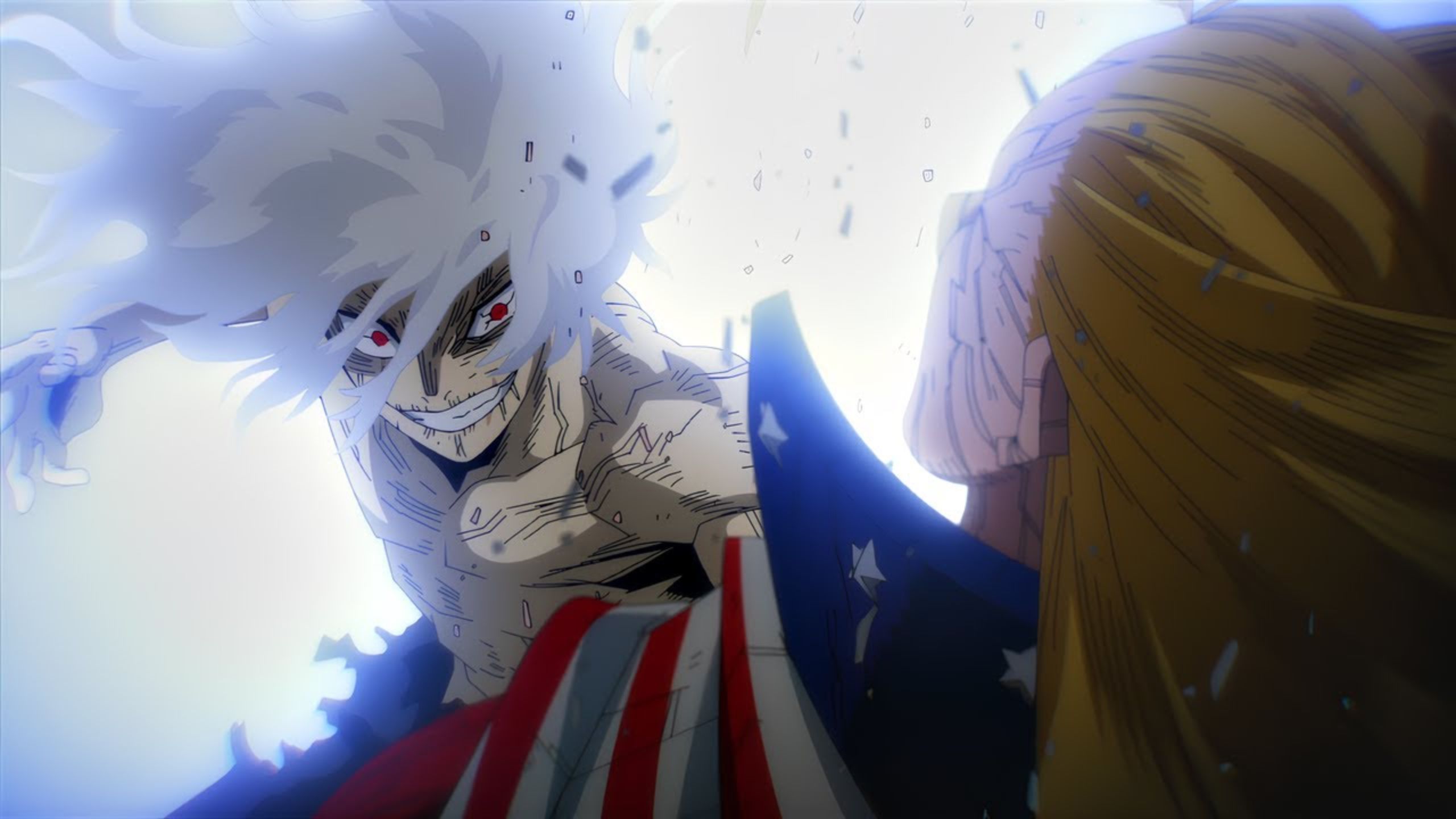
Shigaraki Vs Star and Stripe In My Hero Academia (BONES)
Throughout the series, sacrifices like those of Sir Nighteye and Twice carried emotional weight because they were rooted in well-developed character arcs and relationships.
Unfortunately, Star and Stripe did not receive the same treatment.
Her introduction came late in the story, giving the audience little time to connect with her character.
While her bravery and selflessness were evident, she lacked the depth and complexity that would have made her sacrifice more impactful.
As a result, her death felt more like a plot device than a meaningful moment. The emotional resonance that fans had come to expect from My Hero Academia was missing, leaving her sacrifice feeling hollow.
Narrative Oversights
The handling of Star and Stripe’s sacrifice highlighted a broader issue with the pacing and focus of the final arc.
Her death, which should have been a pivotal moment, was overshadowed by other events and quickly forgotten.
The story moved on without fully exploring the aftermath of her actions or the emotional impact of her sacrifice.
Her death did not inspire a significant shift in the heroes’ strategy or alter the course of the conflict in a meaningful way.
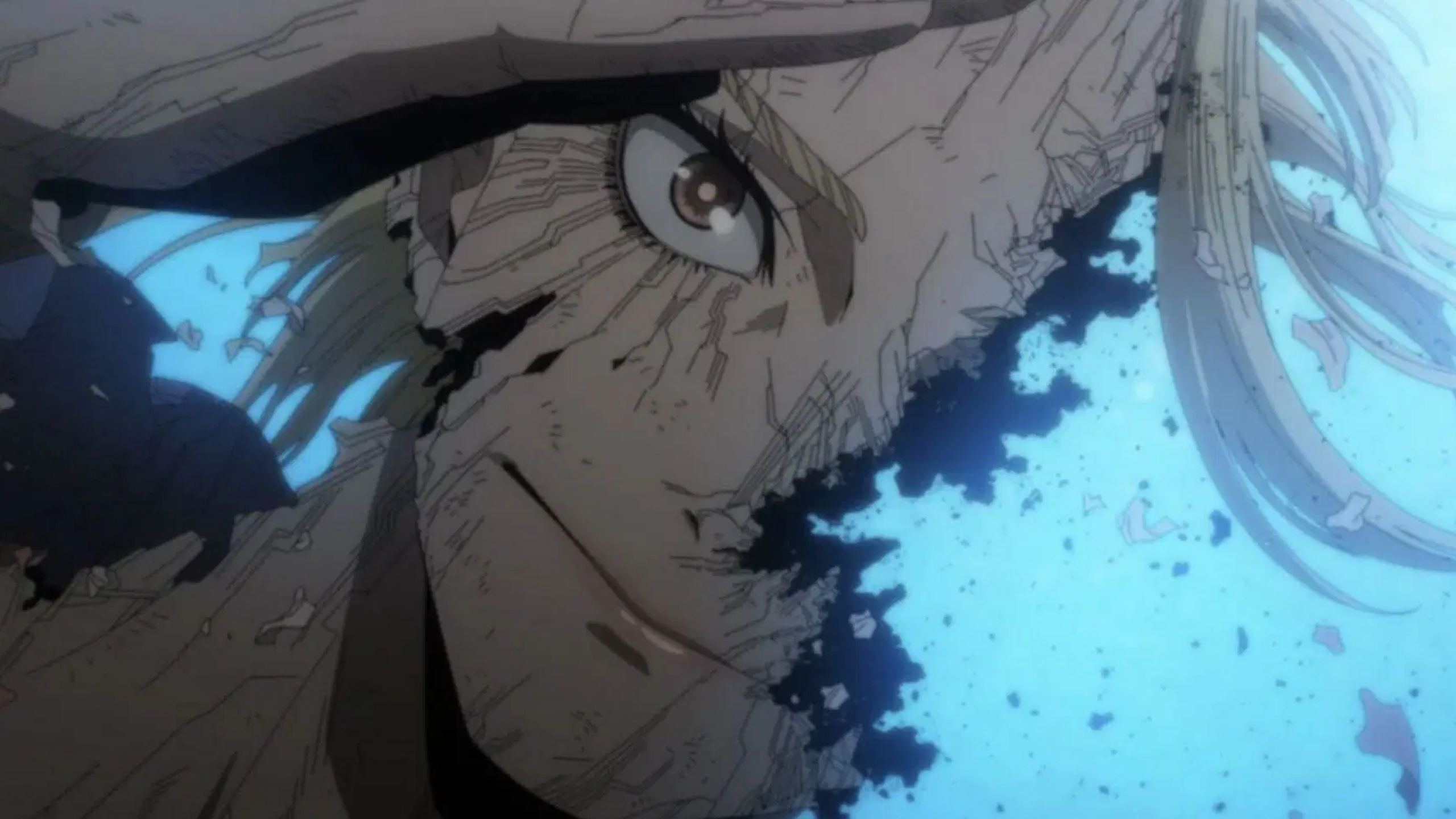
Star and Stripe Final Fight In My Hero Academia (BONES)
Instead, it felt like a temporary plot device, introduced to create a moment of tension but ultimately failing to shape the outcome of the story.
This lack of follow-through was a missed opportunity to honor Star and Stripe’s legacy. Her actions could have been used to highlight the resilience and determination of the heroes, showing how her sacrifice inspired them to fight harder and smarter.
It could have been a turning point that gave the heroes a glimmer of hope in their darkest hour.
Missed Potential
Star and Stripe’s sacrifice had the potential to be one of the most memorable moments in My Hero Academia.
Her actions could have been a game-changer, shifting the balance of power and providing the heroes with a fighting chance.
By providing more clarity about the impact of her sacrifice, the narrative could have emphasized the significance of her actions.
Destroying specific quirks or crippling Shigaraki in a tangible way would have made her efforts feel more meaningful.
Additionally, giving her character more development and screen time before her death would have allowed fans to connect with her on a deeper level.
Exploring her backstory, motivations, and relationships could have added layers to her character and made her sacrifice even more poignant.
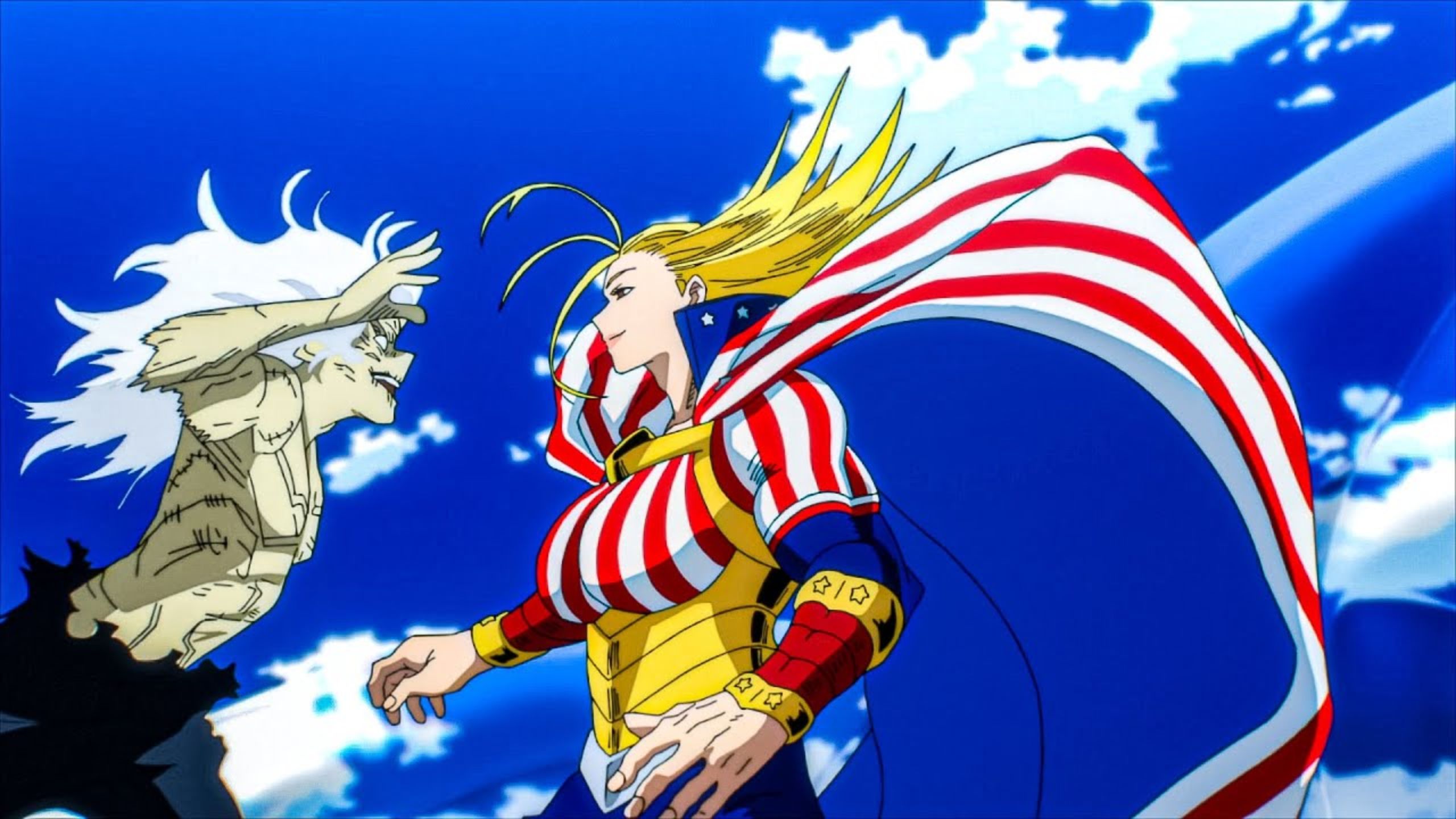
Shigaraki Tries To Steal Star and Stripe’s NEW ORDER In My Hero Academia (BONES)
The final arc of My Hero Academia was a rollercoaster of emotions, filled with intense battles, high-stakes drama, and moments of heroism.
However, not every story beat landed as intended. Star and Stripe’s sacrifice, which was meant to be a defining moment, ultimately felt inconsequential due to poor narrative execution and a lack of focus on its aftermath.
Her bravery and selflessness were admirable, but the ambiguity surrounding the consequences of her actions and the narrative’s failure to explore her sacrifice in-depth left fans questioning her role in the story.
What could have been a powerful and emotional moment became one of the most disappointing aspects of the series’ ending.
Star and Stripe’s story serves as a reminder of the importance of narrative follow-through and character development.
Her actions had the potential to change the course of the story, but the lack of clarity and focus ultimately undermined her impact, leaving fans with an unfulfilled sense of what might have been.
The Garvey sisters have always had a strong bond. However, in Season 2, Episode 3 of Bad Sisters, the family faces a devastating new challenge. After losing Grace (Anne-Marie Duff) in a tragic car accident, the once tight-knit group is left broken and grieving.
The episode begins with a somber atmosphere, picking up right where Episode 2 ended. Each sister is trying to process Grace’s death in her own way, but the weight of their loss is overwhelming.
The Garvey sisters—Eva (Sharon Horgan), Ursula (Eva Birthistle), Bibi (Sarah Greene), and Becka (Eve Hewson)—are all mourning Grace, but true to form, they find themselves pulled into new troubles. Grace’s death has left questions unanswered, and her absence has brought lingering guilt and fears to the forefront.
Adding to their challenges is the arrival of Angelica (Fiona Shaw), a meddlesome figure who quickly establishes herself as a new antagonist.
While John Paul, the abusive husband they eliminated in Season 1, is no longer a threat, Angelica’s presence poses fresh dangers. The Garvey sisters are forced to face their grief while trying to protect themselves and their family from unraveling further.
A Somber Beginning and Lingering Questions
The opening scene shows the Garvey sisters in a heartbreaking state. Ursula sits in her car taking pills to cope with her anxiety before breaking down and collapsing into Eva’s arms. Bibi and Becka join in the emotional moment, and the four sisters share a collective grief that underscores the depth of their bond. Once a group of five, they are now reduced to four.
Eva listens to a voicemail Grace left her on the night of the accident. The sisters wonder what Grace might have needed help with and what caused her fatal car crash. They try to rationalize their earlier assumptions that Grace had harmed her husband Ian (Owen McDonnell). The group agrees it was probably “group hysteria” that made them think Grace was guilty of anything.
However, the circumstances of Grace’s accident remain suspicious. Ursula becomes increasingly anxious, knowing she had given Grace pills to help with her anxiety. She worries the medication might have impaired Grace’s driving and led to her death. Desperate to find answers, Ursula searches Grace’s house for the pills but comes up empty-handed.
When the police inform the family that someone must identify Grace’s body, Ursula steps forward. She claims her experience as a nurse makes her the best choice, but her decision also seems to be driven by guilt. Ursula asks Detective Inspector Fergal Loftus (Barry Ward) to let her know when Grace’s toxicology report is ready.
Loftus, however, dismisses her request, making it clear that their brief romantic encounter after a speed dating event won’t earn her any favors.
The Sisters Grapple with Guilt and Grief
Eva struggles with her emotions and impulsively quits her job after angrily yelling at her boss during a phone call. After hanging up, she casually remarks, “I just handed in my notice,” showing a glimpse of her dry humor amid the chaos.
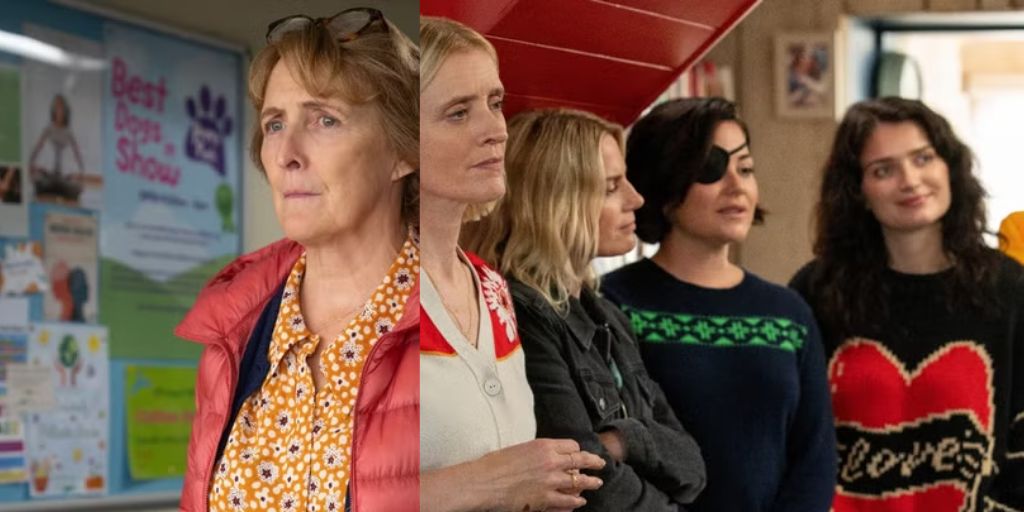
Still from Bad Sisters (Credit: Apple TV)
Becka notices that Bibi hasn’t shed a single tear for Grace and questions her sister’s lack of emotional response. Bibi, as always, uses sarcasm as a defense mechanism.
The sisters bicker but come together to choose Grace’s final outfit. Blanaid (Saise Quinn), Grace’s teenage daughter, joins them and helps them select the perfect dress. Despite the tension, the moment allows the sisters to reflect on their memories of Grace.
Bibi laments their decision to target John Paul in Season 1, declaring, “I wish we’d never started this… never gone after The Prick.” The sisters are reminded that their actions against John Paul, though justified, have come with heavy consequences. Grace’s death feels like the ultimate price.
A Funeral Full of Drama and Surprises
Grace’s funeral brings unexpected guests and emotional confrontations. Angelica arrives at the church, visibly distraught, but her behavior rubs the sisters the wrong way. Bibi labels her a “grief thief,” accusing Angelica of turning their loss into her own drama. When Angelica tries to sit in the front row with the family, the sisters insist she move, setting the stage for further conflict.
Blanaid initially refuses to sit with her aunts, still processing her mother’s death, but eventually moves to the front to sit beside Eva. Just as the service begins, Matt Clafflin (Daryl McCormack), Grace’s insurance agent, makes an appearance. His presence raises eyebrows, particularly from Loftus and Detective Una Houlihan (Thaddea Graham), who note that it’s unusual for an insurance agent to attend a client’s funeral.
The elderly priest officiating the service struggles to deliver his speech coherently, causing Bibi to burst into laughter. This unexpected moment of humor soon turns into genuine tears, marking the first time Bibi openly grieves. Though the sisters agreed not to give a eulogy, Grace’s admirer Roger (Michael Smiley) honors her with a heartfelt song. Bibi joins in, creating a bittersweet tribute.
As the service ends, another surprise guest arrives—Ian, Grace’s estranged husband. Ian reveals that he and Grace had an argument the night of her accident, which led him to stay with a friend. This revelation confirms that Grace hadn’t harmed him as the sisters had suspected.
When Ian confronts the sisters, he directly asks if they helped Grace kill John Paul. Eva admits, “We covered it up,” hinting at the guilt that continues to weigh on them.
Angelica’s Manipulation and Ursula’s Desperation
At the post-funeral gathering, Angelica begins her calculated interference. She approaches Ursula, offering sympathy and sharing her own experiences with loss. Believing Angelica’s intentions to be genuine, Ursula confesses her guilt about giving Grace pills and admits, “I think this is my fault.” Angelica, however, uses this confession to gain leverage.
In the days following the funeral, Ursula tries to contact Angelica, but her calls go unanswered. When she confronts Angelica at the community center where she volunteers, Angelica subtly blackmails her, claiming that repairs to a broken window would cost 200 euros. Ursula, desperate to keep Angelica quiet, pays her with an envelope labeled “For Quiet.”
Things worsen for Ursula when she learns her ex-husband’s new girlfriend, Ally (Deirdre Mullins), is conducting an audit at the hospital. The investigation is tied to missing pills—pills Ursula had stolen for personal use. Although she tries to cover her tracks, Ursula suspects Angelica is behind the report.
Ursula confesses to Ally that she started taking the pills to help her son with nightmares but continued using them herself after experiencing relief from her own stress. This revelation could cost Ursula her job, further adding to her troubles.
A New Villain Emerges
Meanwhile, Loftus and Houlihan continue their investigation into Grace’s death and other suspicious events connected to the Garvey sisters. Houlihan uncovers details about Bibi’s poker-playing past and suspects a connection between Becka and Matt.
When questioned about her interactions with Matt, Becka denies any involvement, but the detectives remain skeptical of the sisters.
Eva tries to reconnect with Blanaid, who has grown distant. Eva reminds Ian that Grace wanted her to step in as a parental figure if anything happened to her. Ian reassures Eva that he only wants what’s best for Blanaid. In a poignant moment, Ian admits, “I wish I could have saved Grace.”
While at Ian’s house, Eva discovers bank slips in one of Grace’s coats, revealing that Grace withdrew over 20,000 euros before her death. The purpose of this money remains a mystery, adding another layer of intrigue.
When the toxicology report finally arrives, the sisters learn that Grace has not taken any of the pills Ursula gave her. Overcome with relief, Ursula breaks down in tears, knowing she isn’t responsible for Grace’s accident. However, the detectives remain determined to uncover the truth, warning the sisters, “We will get to the bottom of it all.”
A Tense Conclusion
Ursula confesses to her sisters about the pills and her conversation with Angelica. Recognizing Angelica as a threat, Becka states, “We need to get one step ahead of her.”
The episode ends with a chilling twist. Blanaid secretly meets with Angelica, hinting that Angelica’s manipulation may extend to Grace’s daughter. As “Dedicated to the One I Love” by The Mamas and The Papas plays, the tension rises, leaving viewers wondering what Angelica’s next move will be.
While some questions are answered in this episode, new complications arise. The Garvey sisters may have to revisit their dark past to protect their family once again. The third episode of Bad Sisters Season 2 masterfully balances grief, guilt, and suspense as the Garvey sisters face mounting challenges.
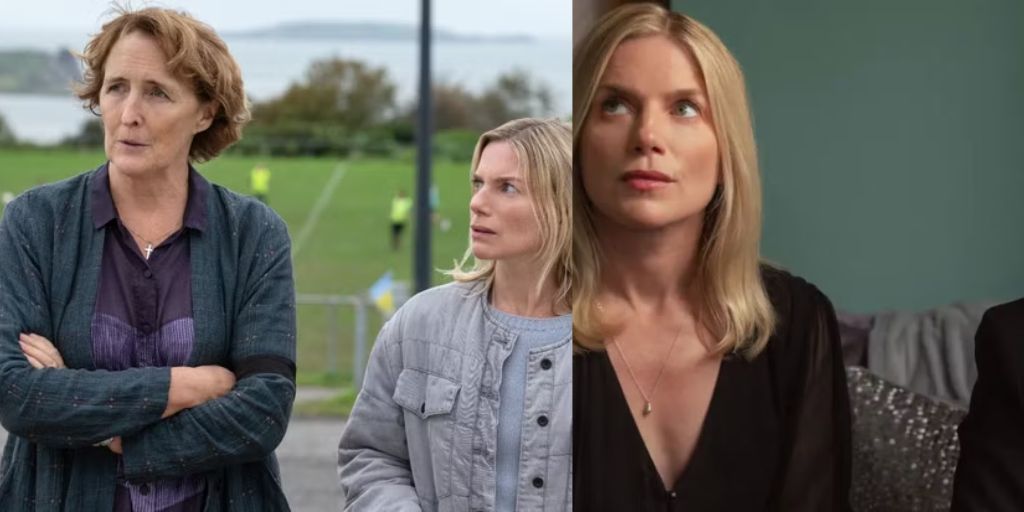
Still from Bad Sisters (Credit: Apple TV)
Grace’s death leaves unanswered questions, while Angelica’s manipulative behavior introduces a dangerous new antagonist. The sisters’ bond is tested by old secrets and new threats, with Ursula’s pill-related guilt and Blanaid’s growing distance adding emotional depth.
As the toxicology report clears Grace of wrongdoing, the mystery surrounding her final days deepens. With Angelica’s schemes intensifying and the detectives closing in, the Garvey sisters must confront their past decisions to safeguard their future. The stakes have never been higher.
