The long-standing rivalry between the fanbases of Naruto and Bleach continues to stir up intense debate, with the most recent spark involving allegations that Bleach creator Tite Kubo copied certain design elements from Naruto, created by Masashi Kishimoto.
This ongoing dispute was reignited when fans of Naruto accused Kubo of borrowing key visual elements from the Naruto series, specifically pointing to Ichigo Kurosaki’s Bankai transformation.
They claim that his horned appearance and the dark lines etched on his face bear a striking resemblance to the transformation designs of Sasuke Uchiha and Tayuya’s Curse Mark forms.
On the other hand, Bleach fans argue that such accusations lack any solid foundation.
They maintain that the supposed similarities are merely coincidental, a result of common shonen tropes rather than any intentional borrowing or imitation.
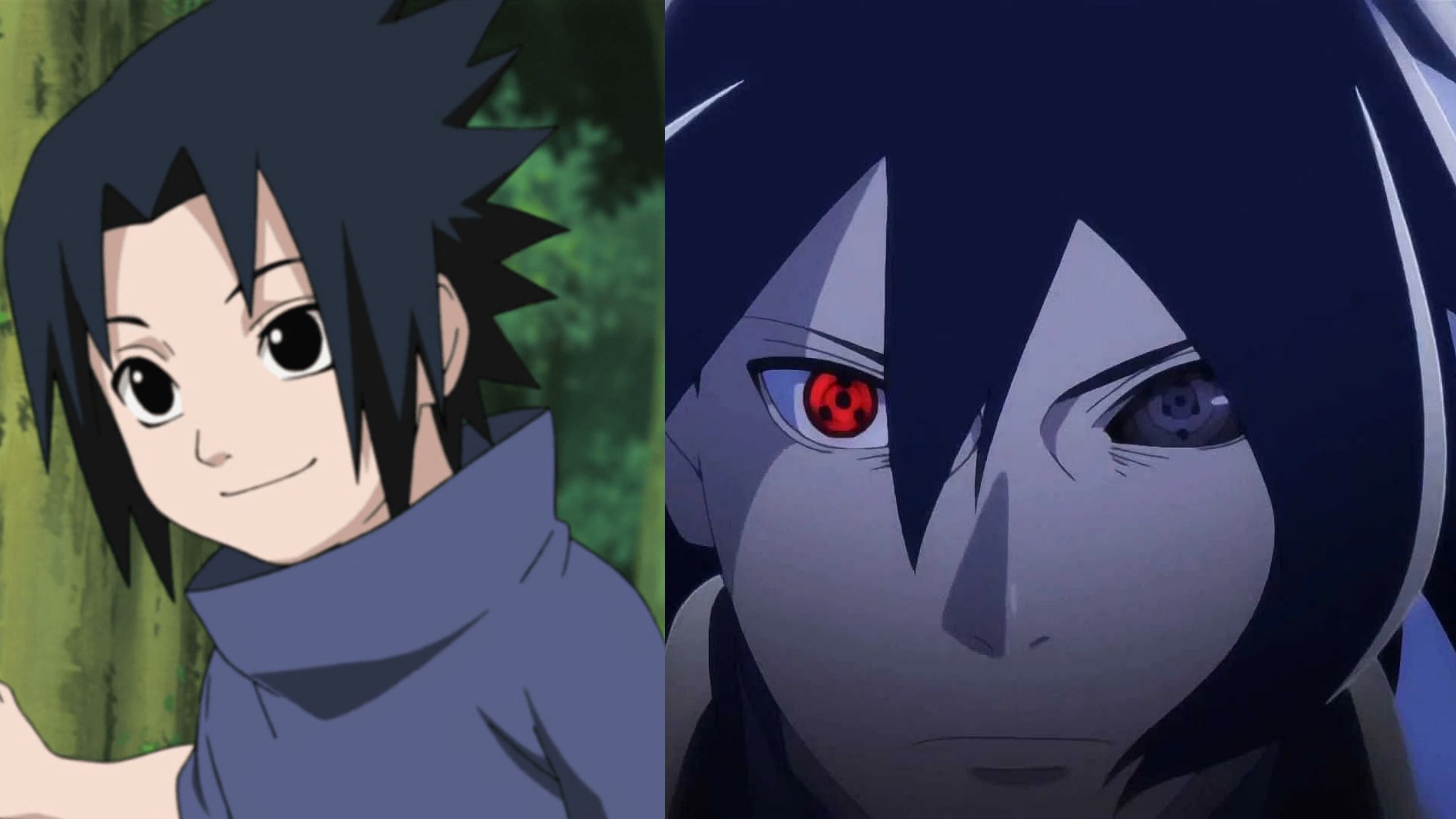
Sasuke Uchiha Using Teleportation With Rinnegan Pierrot)
While discussions rage on various social media platforms, the two fandoms remain fiercely loyal to their respective series, fanning the flames of this longstanding conflict.
Despite both being highly regarded in the anime world, the accusations have once again created a rift between Naruto and Bleach communities, dividing fans into two distinct camps.
Heated Arguments Over Alleged Design Copying Between Naruto and Bleach
The most recent flare-up in this rivalry centers on accusations directed at Kubo for allegedly copying visual elements from Kishimoto’s work.
Specifically, Naruto fans claim that Ichigo’s appearance in his Bankai form resembles the horned transformations and Curse Mark patterns that are seen in Naruto, particularly with characters like Sasuke Uchiha and Tayuya.
Sasuke’s Curse Mark transformation, which features dark, jagged markings across his skin, and Tayuya’s demonic horned appearance during her own transformation, are cited as the primary inspirations for Ichigo’s look.
This isn’t the first time fans of these two series have clashed, but the current discourse reignited when these similarities were brought up once again.
Bleach is so shameless man, Copying Naruto bar for bar🤢 pic.twitter.com/daMcI4kIMJ — Sukuna D Luffy (@Dragon006811350) September 3, 2024
For Naruto fans, the resemblance is too glaring to ignore, with many of them accusing Kubo of taking direct inspiration from Kishimoto’s designs without acknowledgment.
However, the Bleach fandom is quick to counter these claims. Many Bleach fans assert that these accusations are unfounded, arguing that both Kubo and Kishimoto drew inspiration from broader shonen themes and tropes.
Shonen anime often incorporates similar visual elements, such as characters with demonic transformations, dark marks, and powerful seals that unlock hidden abilities.
These visual cues are not unique to either series, and for Bleach fans, the accusations of copying seem like a stretch, given the thematic similarities that exist in so many other shonen stories.
Despite this defense, the debate remains heated, with both sides firmly entrenched in their positions.
The Naruto fandom remains adamant that Kubo borrowed elements from Kishimoto’s series, while Bleach supporters vehemently defend Kubo’s originality, highlighting that similar motifs can be found in a variety of shonen works.
Reactions from Both Fandoms
The ongoing debate surrounding the similarities between Naruto and Bleach has only deepened the rift between their respective fanbases.
While it is not unusual for fans of popular anime to engage in passionate debates over their favorite shows, the intensity of the rivalry between these two fandoms has reached new heights.
Social media platforms have become battlegrounds where fans clash over the perceived similarities between Ichigo’s Bankai transformation and the designs seen in Naruto.
On one side, Naruto fans are quick to point out what they believe to be clear instances of visual copying.
Many focus on the specific design elements of Ichigo’s Bankai form, arguing that the black facial markings and horned appearance bear an uncanny resemblance to the Curse Mark transformations of Sasuke Uchiha and Tayuya.
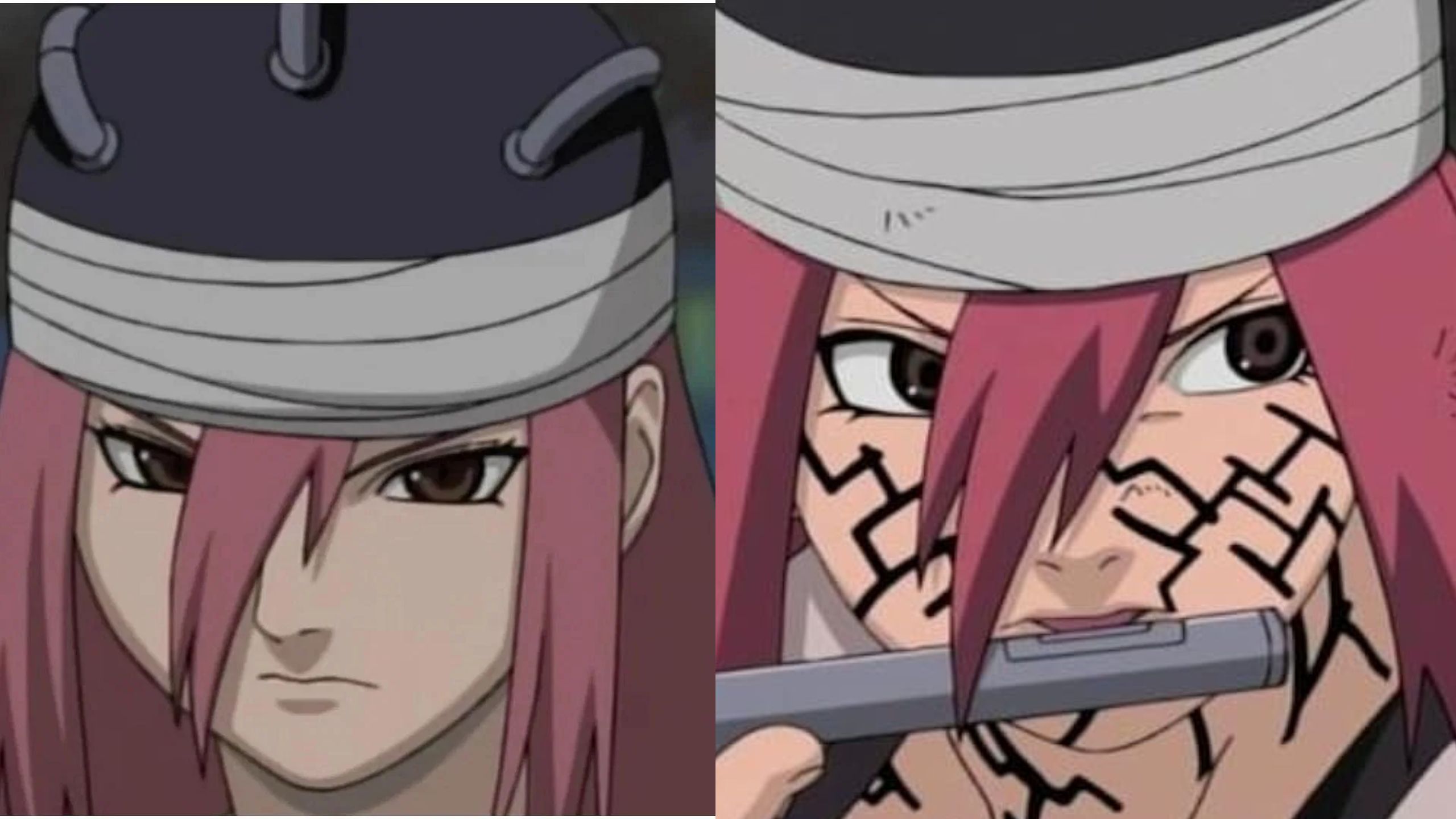
Tayuya From Naruto Anime (Pierrot)
For these fans, the similarities are too specific to be dismissed as mere coincidence, and they accuse Kubo of borrowing heavily from Kishimoto’s work without adding enough of his own creative flair.
One Naruto fan expressed their frustration, stating, “Being real doesn’t mean putting up with all the lies that Bleach fans tell.
Naruto did everything first and Bleach copied him.” This sentiment reflects the broader belief among some Naruto supporters that Kubo has, on multiple occasions, drawn inspiration from Kishimoto’s work without proper credit.
Another fan chimed in, “Mayuri is an Orochimaru knock-off,” suggesting that Bleach has borrowed from Naruto not just in terms of visual design but also in character archetypes.
A third fan added, “Bleach is terrible, idk how ppl watched it. The same with juju trash can,” expressing a more generalized disdain for the series.
On the other hand, Bleach fans have been just as vocal in their defense of Kubo’s creative vision.
They argue that the accusations are baseless and that the design similarities pointed out by Naruto fans are simply a reflection of the shared tropes and themes commonly found in the shonen genre.
In this view, Bleach fans see the accusations as an attempt by Naruto fans to discredit Bleach in order to bolster their own series’ reputation.
A Bleach fan shot back, “This can’t be real. Some of you Naruto fans just can’t be real.”
Another fan added to the discussion by pointing out a key timeline discrepancy, stating,
“The first Hollow design in Bleach that contains the orange and black eyes predates the first Cursed Mark appearance in Naruto by around 4 to 6 months.”
This fan’s argument emphasizes that Bleach featured these design elements before Naruto introduced similar ones, suggesting that the accusations of copying might not hold up under closer scrutiny.
Another Bleach fan commented, “Insecure Naruto fans still mad Bleach got the strongest MC so they gotta make up lies.
Pure entertainment,” highlighting the competitive nature of the fandoms. For Bleach fans, Ichigo’s strength and design are not only original but also superior to that of Sasuke, which they believe has fueled the jealousy of Naruto fans.
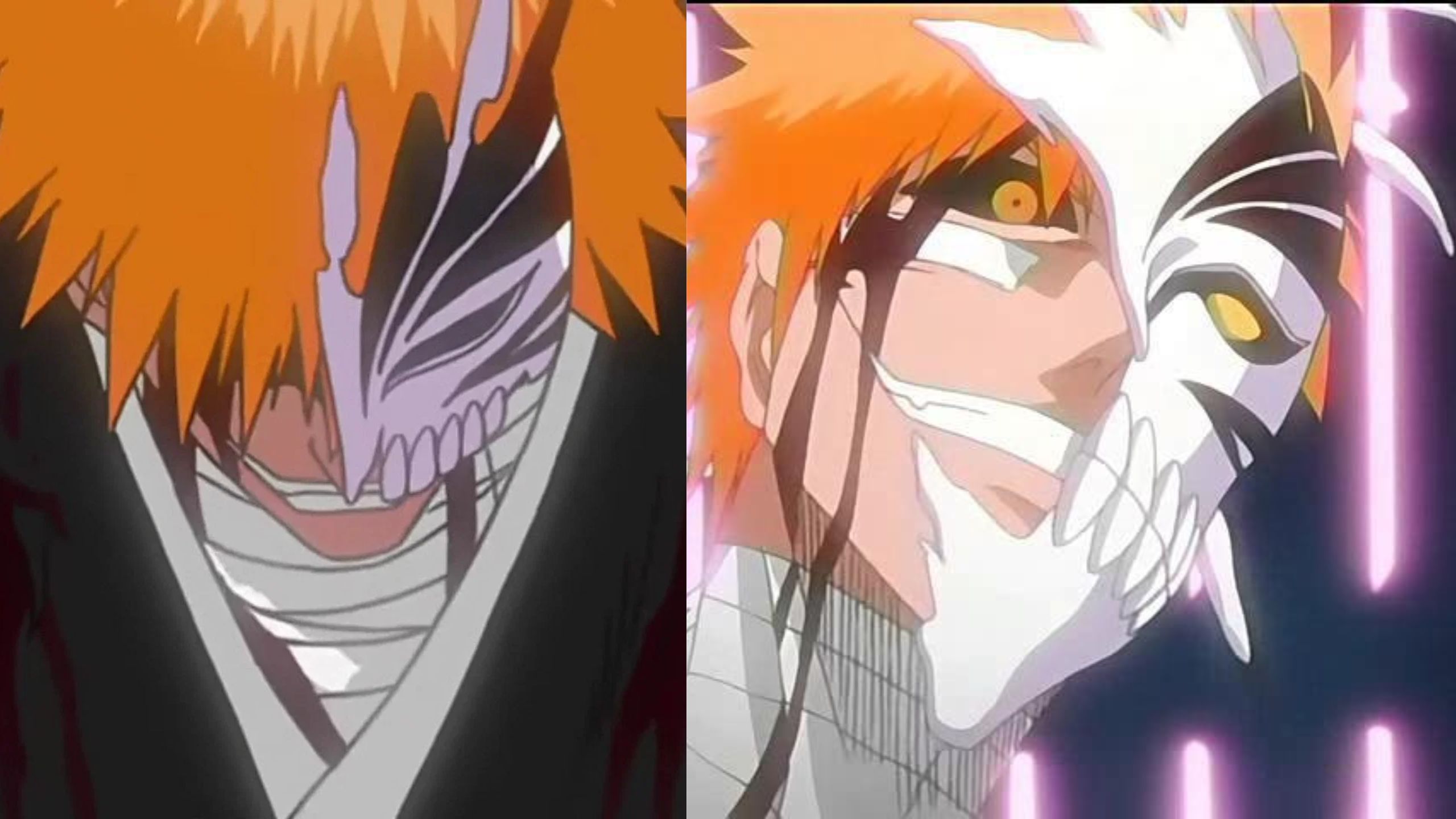
Ichigo Kurosaki Hollowfied Form (Pierrot)
This ongoing feud between the two fanbases speaks to the passionate devotion that both groups have for their respective series, with each side unwilling to back down from the argument.
Similarities in Shonen Anime
At the core of this debate lies a broader conversation about the common visual and thematic elements that are prevalent in shonen anime.
Shonen, as a genre, often revolves around certain key tropes: young male protagonists with hidden, dangerous powers; transformations that unlock greater abilities; and visual motifs like dark markings, seals, or horns that represent a character’s descent into a more powerful or dangerous state.
These themes are not unique to either Naruto or Bleach but are instead reflective of the broader genre to which both series belong.
In this context, the visual similarities that fans have pointed out between Naruto and Bleach can be seen as part of a larger trend within shonen anime.
Many other series, including Dragon Ball Z, Hunter x Hunter, and Yu Yu Hakusho, feature characters who undergo transformations that involve changes to their physical appearance, such as dark markings or otherworldly features.
For Bleach fans, the accusations of copying are baseless because these kinds of design elements are a staple of the genre and not indicative of one series copying another.
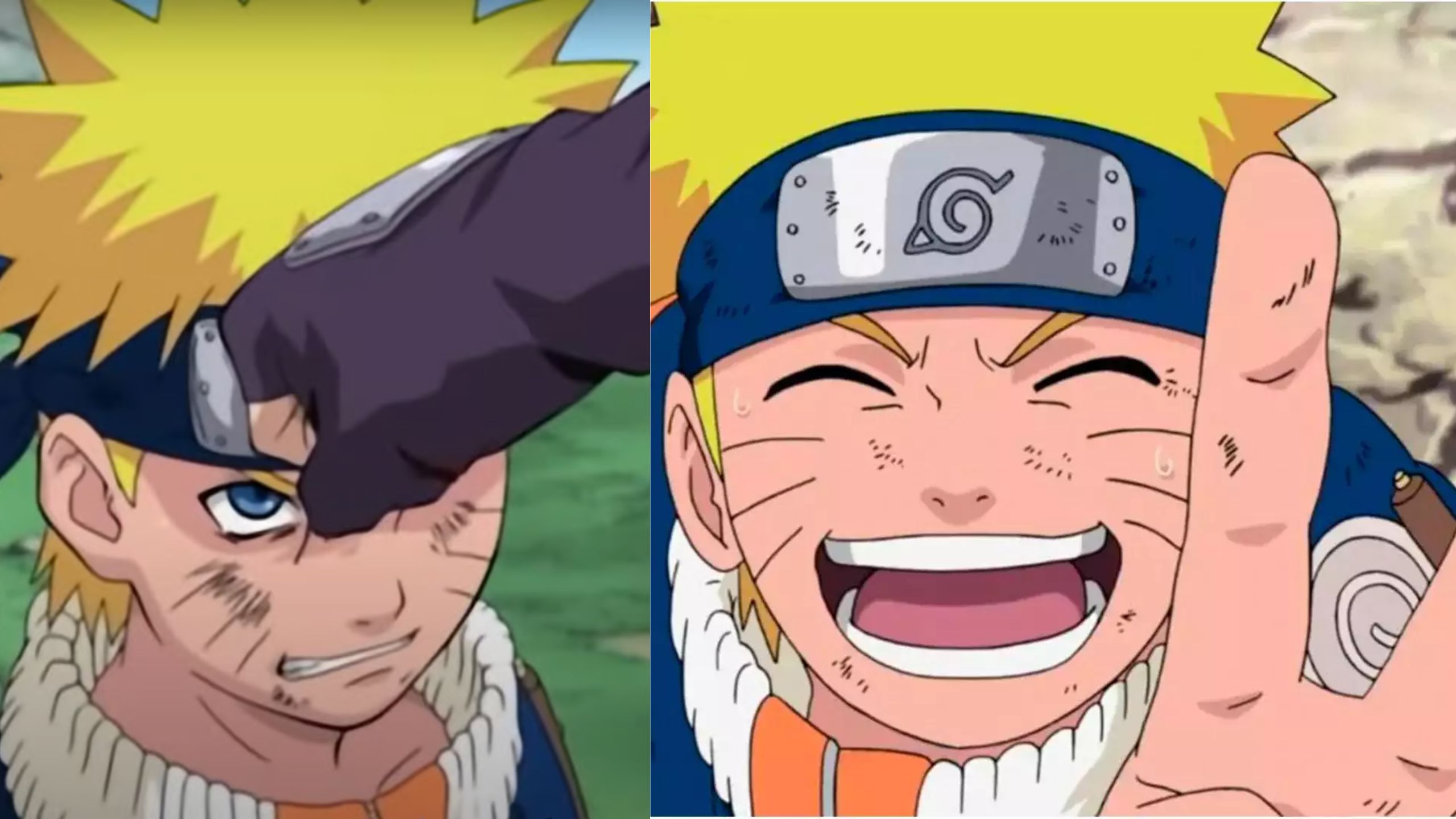
Naruto Uzumaki From Naruto Series (Crunchyroll)
Even within Naruto and Bleach themselves, these visual motifs serve different narrative purposes.
In Naruto, the Curse Mark is a representation of the darker aspects of a character’s personality, often tied to themes of corruption or loss of control.
Sasuke’s Curse Mark, for example, symbolizes his growing detachment from his friends and his descent into a more dangerous, isolated path.
Similarly, Tayuya’s transformation emphasizes her demonic, monstrous nature as she taps into forbidden power.
In Bleach, Ichigo’s transformations, including his Bankai form, represent his ongoing struggle to control the immense power within him.
While Ichigo’s appearance may change, with dark lines and horns manifesting as visual representations of this power, the narrative focus is on his inner battle to master this strength rather than succumb to it.
This distinction in how the two series approach their transformations is another reason why Bleach fans reject the accusations of copying.
They see the visual similarities as part of a shared genre language, not as evidence of one series imitating the other.
Depth of the Naruto-Bleach Rivalry
This debate over design copying is just one episode in the long-running rivalry between Naruto and Bleach fans.
Both series were among the most popular and influential anime of the 2000s, each with massive global fanbases.
During their original runs, the two series were often compared to one another, with fans debating which had the better storylines, characters, and final quality.
This competition naturally led to some tension between the fandoms, which has persisted even after both series concluded.
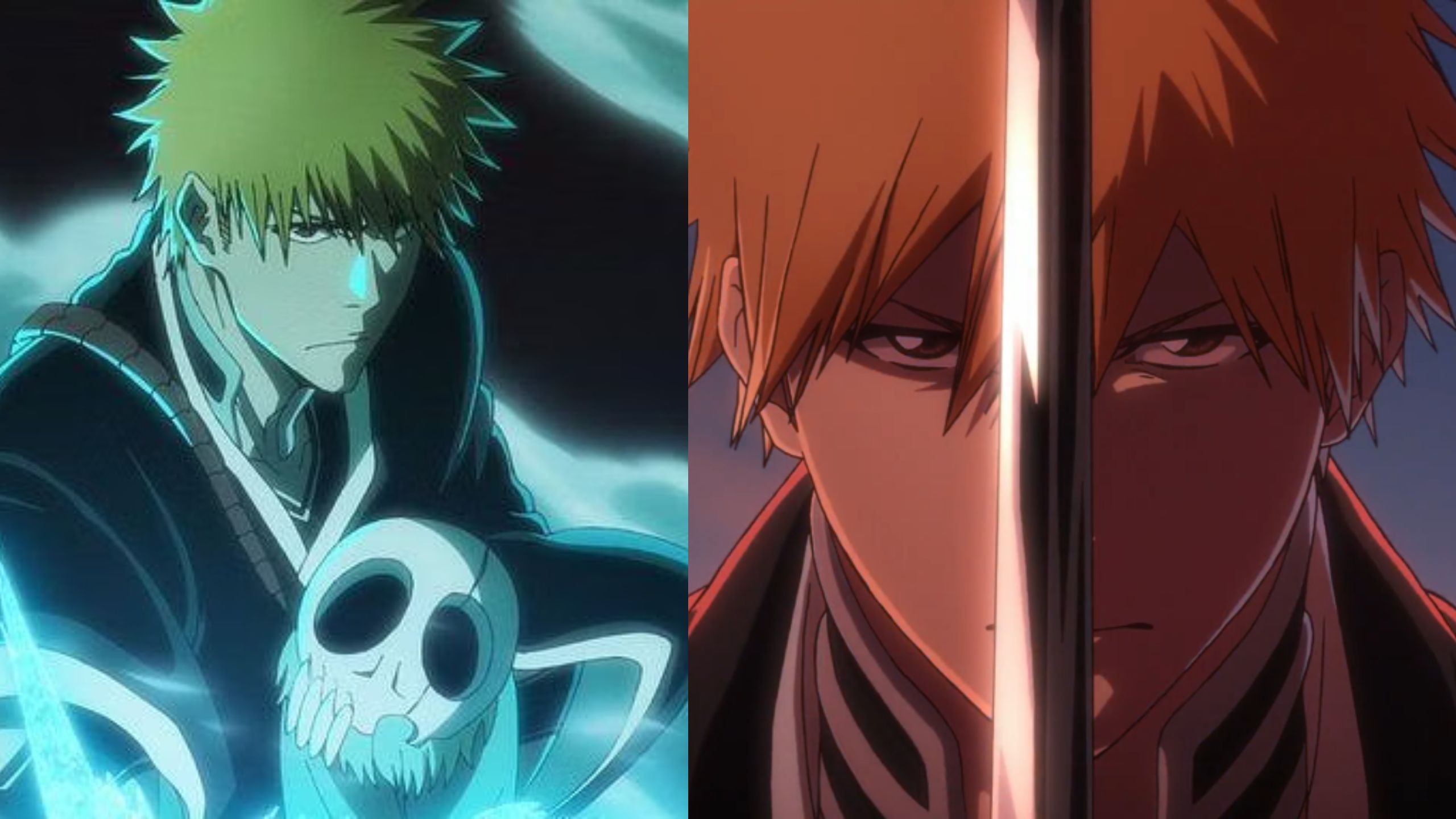
Ichigo Kurosaki (Aniplex)
One reason for this rivalry is the fact that both Naruto and Bleach were serialized in Weekly Shonen Jump, meaning that fans often viewed them as direct competitors.
Fans of one series might feel that any praise for the other comes at the expense of their own favorite, leading to an ongoing sense of competition between the two fandoms.
The current debate over design similarities is simply the latest chapter in this rivalry, but it underscores just how deeply invested fans are in their respective series.
Even though Naruto and Bleach have both ended, the rivalry between their fandoms remains as intense as ever, with each side eager to defend their series’ legacy.
For many fans, these debates are not just about visual similarities or storylines; they are about loyalty to a series that has defined their anime-watching experience for years.
This emotional attachment means that discussions, even over relatively minor topics like character design, can quickly escalate into heated arguments.
How the Shonen Genre Influences These Debates
The shonen genre plays a significant role in shaping the nature of the debate between Naruto and Bleach fans.
Shonen anime and manga, which are primarily targeted at young male audiences, tend to feature recurring themes of personal growth, friendship, and battles against increasingly powerful enemies.
Visual representations of power, such as transformations, unique markings, and changes in physical appearance, are a hallmark of the genre.
These elements are used to signal a character’s growth or descent into darker, more dangerous abilities.
In this context, the design elements being debated horns, facial markings, and other transformations are not exclusive to either Naruto or Bleach.
Instead, they are part of a visual language that is common in shonen anime.
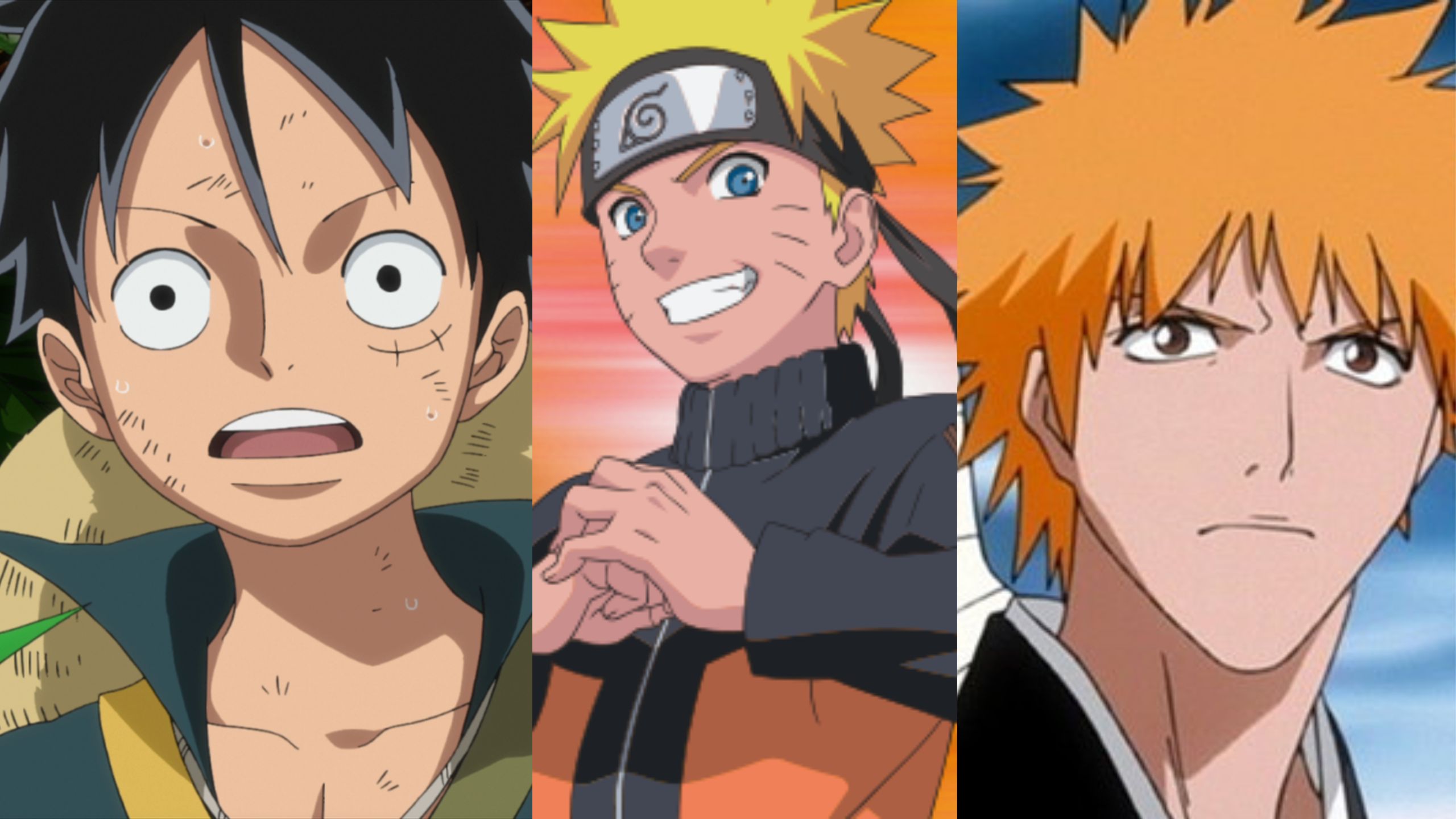
Luffy From One Piece, Naruto From Naruto Shippuden And Ichigo From Bleach (Crunchyroll) (Twitter)
Other popular series, like Dragon Ball Z with its Super Saiyan transformations or Yu Yu Hakusho with its demonic forms, also feature characters whose appearances change as they unlock new powers.
This shared language makes it difficult to argue that one series is directly copying another, as these tropes are widespread within the genre.
For Bleach fans, the use of such design elements in Ichigo’s Bankai transformation is simply a reflection of this genre-wide trend.
They argue that Kubo was not copying Kishimoto but rather working within the same creative space that many other shonen creators have explored.
In this light, the similarities between Naruto and Bleach are not evidence of plagiarism but rather of both series adhering to the conventions of the shonen genre.
This broader perspective helps explain why Bleach fans are so quick to dismiss the accusations of copying.
For them, these visual elements are part of a larger tradition, and accusing one series of copying another overlooks the fact that many shonen creators are inspired by the same themes and visual motifs.
The Speculations of the Naruto-Bleach Rivalry
As long as both series continue to have passionate fanbases, the rivalry between Naruto and Bleach is unlikely to disappear anytime soon.
Even though both series have officially concluded Naruto with the sequel series Boruto: Naruto Next Generations, and Bleach with its final arc, the Thousand-Year Blood War the legacy of both continues to live on through dedicated fans.
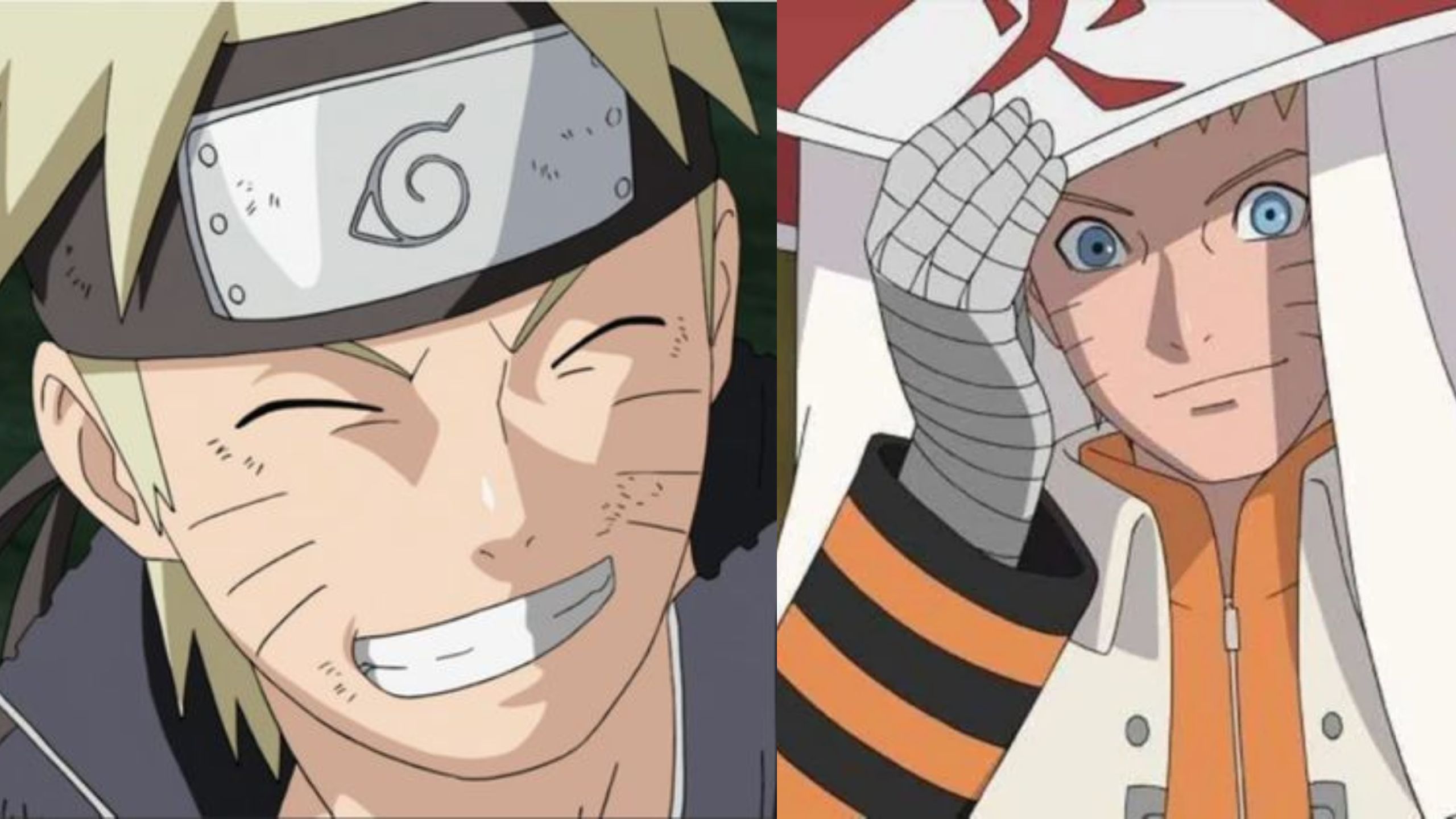
Naruto And Naruto As A Hokage (Crunchyroll)
These fans remain highly engaged with the series, discussing everything from favorite characters to key plot points, and, as seen in this debate, comparing the creative decisions made by Kishimoto and Kubo.
The enduring popularity of both series also means that new fans are continually discovering Naruto and Bleach.
As these series are introduced to new generations of viewers, the potential for renewed debates over their respective merits remains high.
In fact, with the increasing availability of both series on streaming platforms and the resurgence of interest in anime worldwide, it’s likely that the rivalry between these two fandoms will only intensify in the years to come.
At the same time, both Naruto and Bleach have left a lasting impact on the broader anime industry.
They helped shape the shonen genre as we know it today, influencing newer series like My Hero Academia and Jujutsu Kaisen.
This legacy means that even as fans continue to argue over design similarities or plot points, both series have cemented their place in anime history.
In a sense, the rivalry between Naruto and Bleach is a testament to the cultural significance of both series.
Fans are deeply invested in defending the shows they love because these series have had a profound impact on their lives.
Whether through the characters they relate to, the storylines that resonated with them, or the friendships they’ve formed through their fandom, Naruto and Bleach are more than just entertainment they’re part of their fans’ identities.
A Rivalry That Reflects Passionate Fandom
The ongoing debate between Naruto and Bleach fans over alleged design copying reflects the deep passion and loyalty that fans have for their respective series.
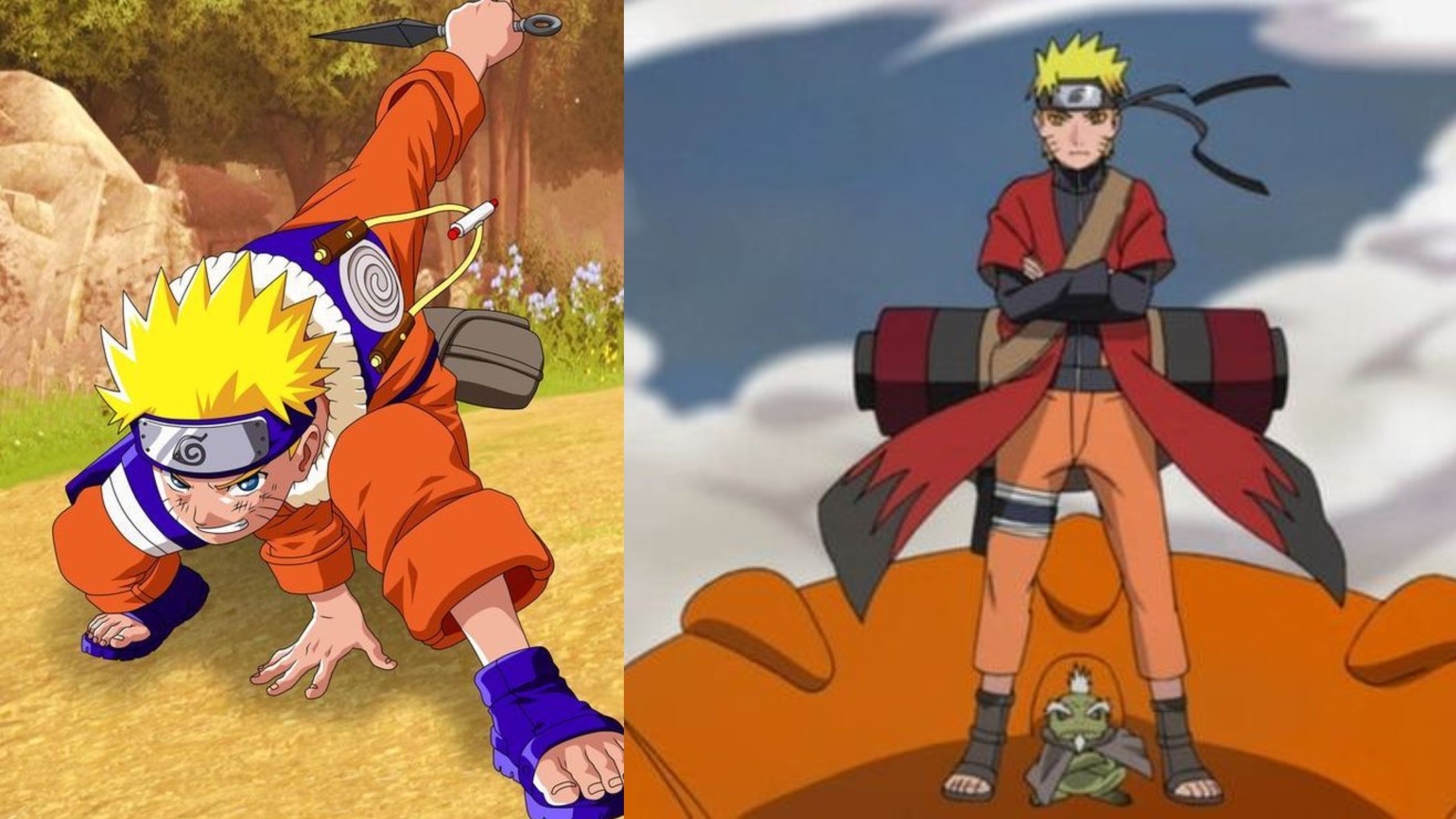
Naruto As A Genin (Left) And Naruto Vs Pain (Pierrot)
While some Naruto fans are convinced that Kubo borrowed visual elements from Kishimoto’s designs, Bleach fans strongly reject these accusations, pointing to shared genre tropes and themes that are common in shonen anime.
Ultimately, this debate is about more than just design similarities. It’s a reflection of the broader rivalry between two of the most iconic anime series of the 2000s.
Fans of both Naruto and Bleach are deeply invested in their favorite shows, and this emotional attachment drives the intensity of the discussions that take place on social media and in fan communities.
In the end, whether or not Ichigo’s Bankai transformation bears any resemblance to Sasuke’s Curse Mark form is almost beside the point.
What really matters is the sense of ownership and pride that fans feel for their favorite series.
For many, Naruto and Bleach are not just anime they’re cultural touchstones that have left a lasting impact on their lives.
And as long as that passion remains, the rivalry between these two fandoms will continue to thrive.
The world of One Piece is renowned for its complexity and depth, with even seemingly minor characters holding the potential to become pivotal figures in the storyline.
Eiichiro Oda’s magnum opus has consistently surprised its audience by weaving intricate plots and character arcs that continually evolve.
Chapter 1125 of One Piece exemplifies this narrative brilliance, as it introduces a fascinating subplot involving Haredas a character whose role in the story might be remembered by only the most dedicated fans as the wise, Merlin-like scientist who guided Nami during the two-year timeskip.
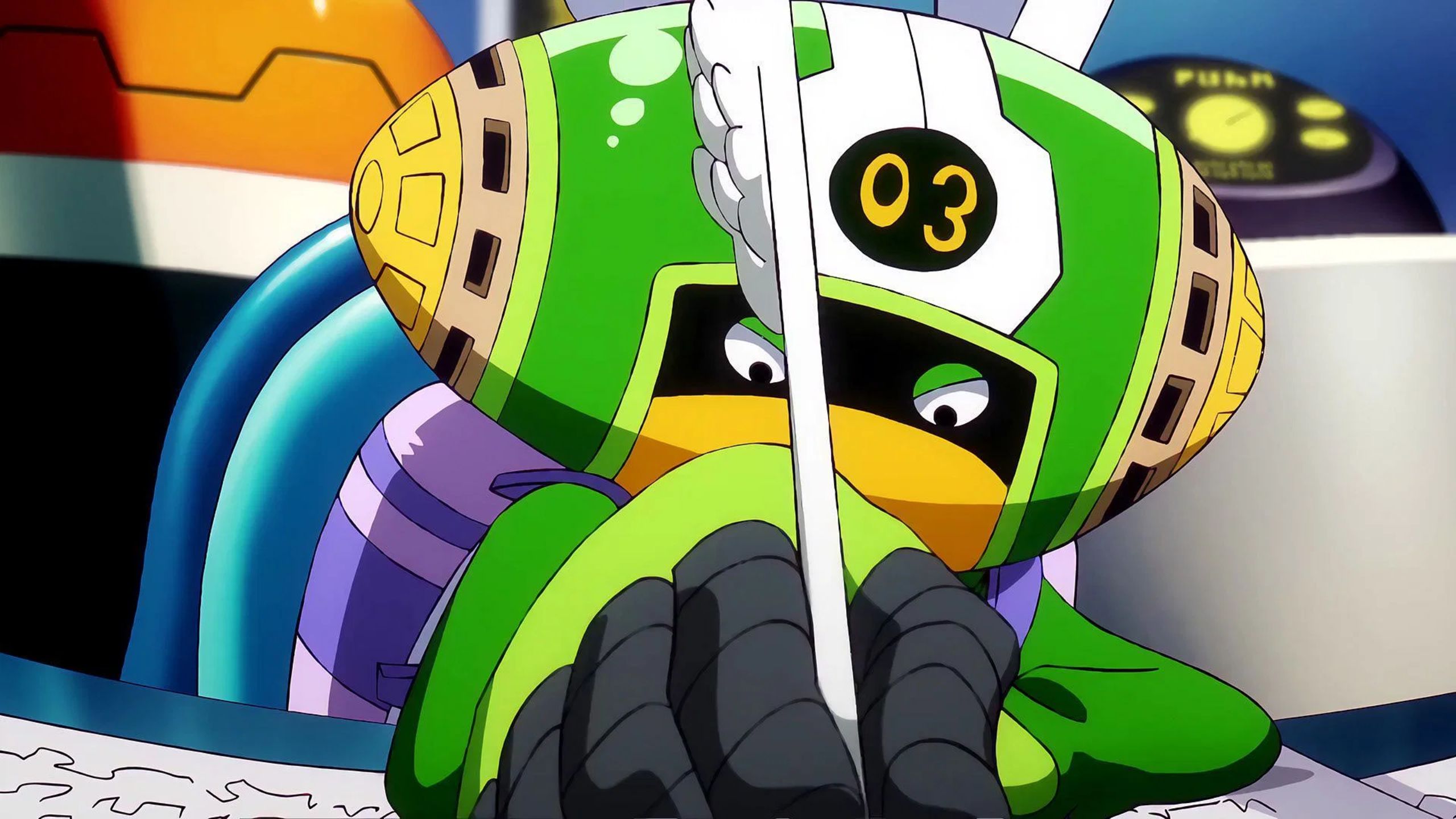
Vegapunk Edison (Toei Animations)
Recent spoilers for chapter 1125 have ignited excitement among fans by hinting at a significant connection between Haredas and Dr. Vegapunk.
This revelation not only adds depth to the storyline but also underscores Oda’s exceptional ability to interlink various narrative elements across the expansive One Piece universe.
Oda’s storytelling approach ensures that every detail, no matter how seemingly insignificant, contributes to the broader narrative in meaningful ways.
Oda’s worldbuilding in One Piece is a testament to his creativity and skill. The series is celebrated for its vast and interconnected world, where every character and location plays a role in shaping the final story.
From the core members of the Straw Hat Pirates to their allies and adversaries, each character’s actions have far-reaching consequences.
Haredas, while initially appearing as a minor figure, is positioned to have a substantial impact on the story’s progression, reflecting Oda’s mastery in weaving complex narrative threads.
The Role of Haredas in One Piece
Currently, Haredas is depicted as an elderly man with a long, flowing white beard and hair, clad in a robe that gives him a wizard-like appearance.
His lifelong dedication to the study of weather science culminated in his involvement in the creation of Weatheria a man-made sky island designed for advanced meteorological research.
Before the timeskip, Haredas played a significant role in Nami’s journey.
Sent to Weatheria by Bartholomew Kuma, Nami encountered Haredas, who, despite her initial attempts to manipulate him, treated her with kindness and understanding.
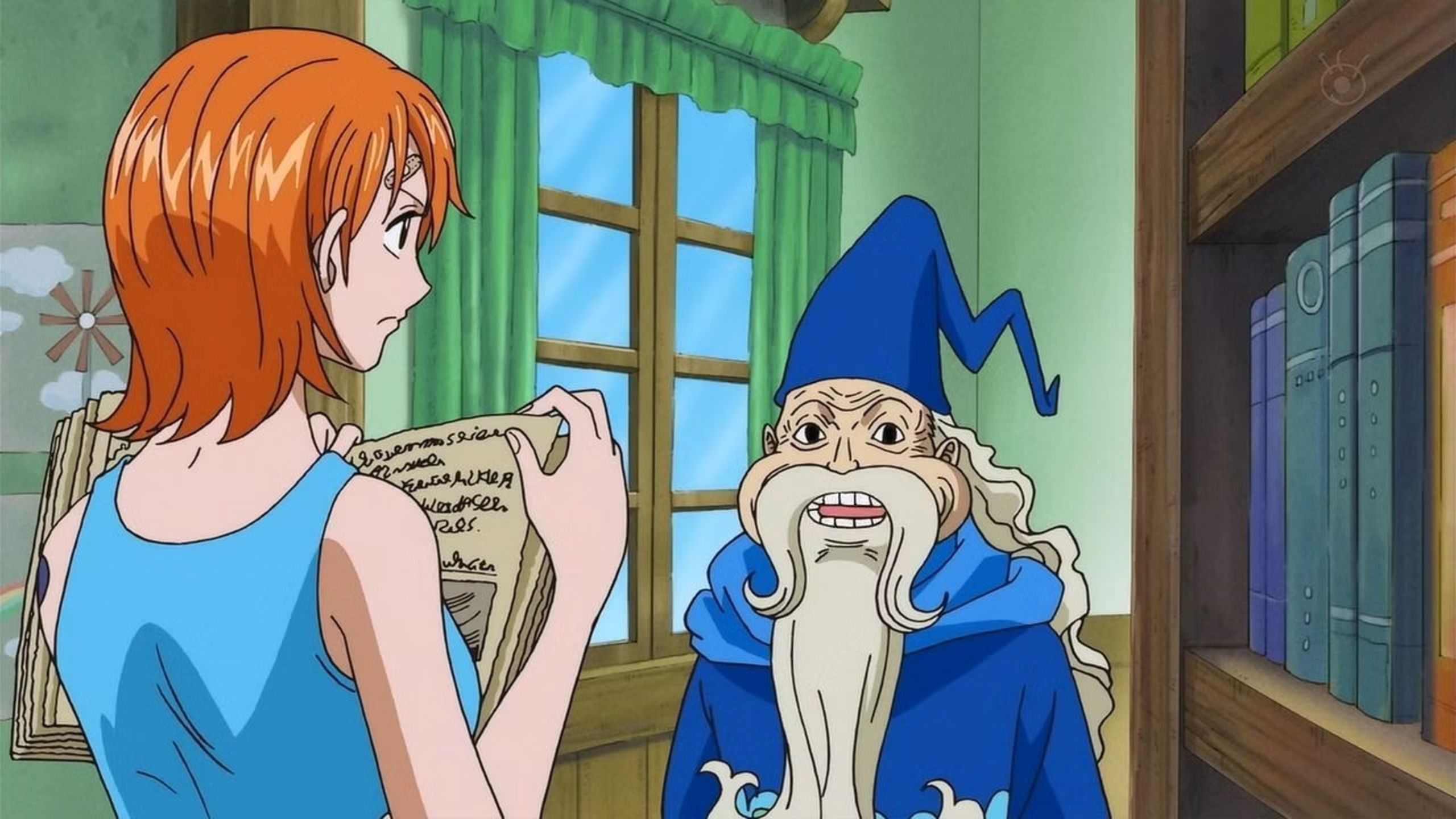
Haredas and Nami (Toei Animations)
Haredas allowed Nami to explore Weatheria’s unique environment and taught her about the manipulation of weather phenomena.
He introduced her to Weather Balls, a crucial element that Nami later incorporated into her Clima-Tact a key tool in her arsenal as a member of the Straw Hat Pirates.
Haredas’s decision to mentor Nami was driven by his compassion, especially after learning about the tragic death of Portgas D. Ace, Nami’s captain’s brother.
Despite Nami’s deceit and theft of scientific equipment which led to her temporary imprisonment Haredas chose to release her and offer his guidance.
This mentorship period was instrumental in enhancing Nami’s abilities and preparing her for the challenges she would face upon reuniting with the Straw Hat crew.
The relationship between Haredas and Nami underscores his importance within the One Piece universe.
His contributions to Nami’s development and his role in Weatheria highlight the interconnectedness of various characters and storylines, showcasing Oda’s skill in creating a rich and immersive narrative world.
Connection Between Haredas and Dr. Vegapunk
Chapter 1125 of One Piece is set to officially release on September 9, 2024, on Shueisha’s MANGA Plus website and app, and promises to bring significant developments to the storyline.
As the narrative shifts from the ending of the Egghead Incident to the beginning of the Straw Hat crew’s journey to Elbaf, chapter 1125 will explore several scenarios, including a surprising twist involving Haredas.
The chapter begins by depicting the aftermath of Dr. Vegapunk’s death, with the World Government preparing to take control of Egghead’s Power Plant and Punk Records.
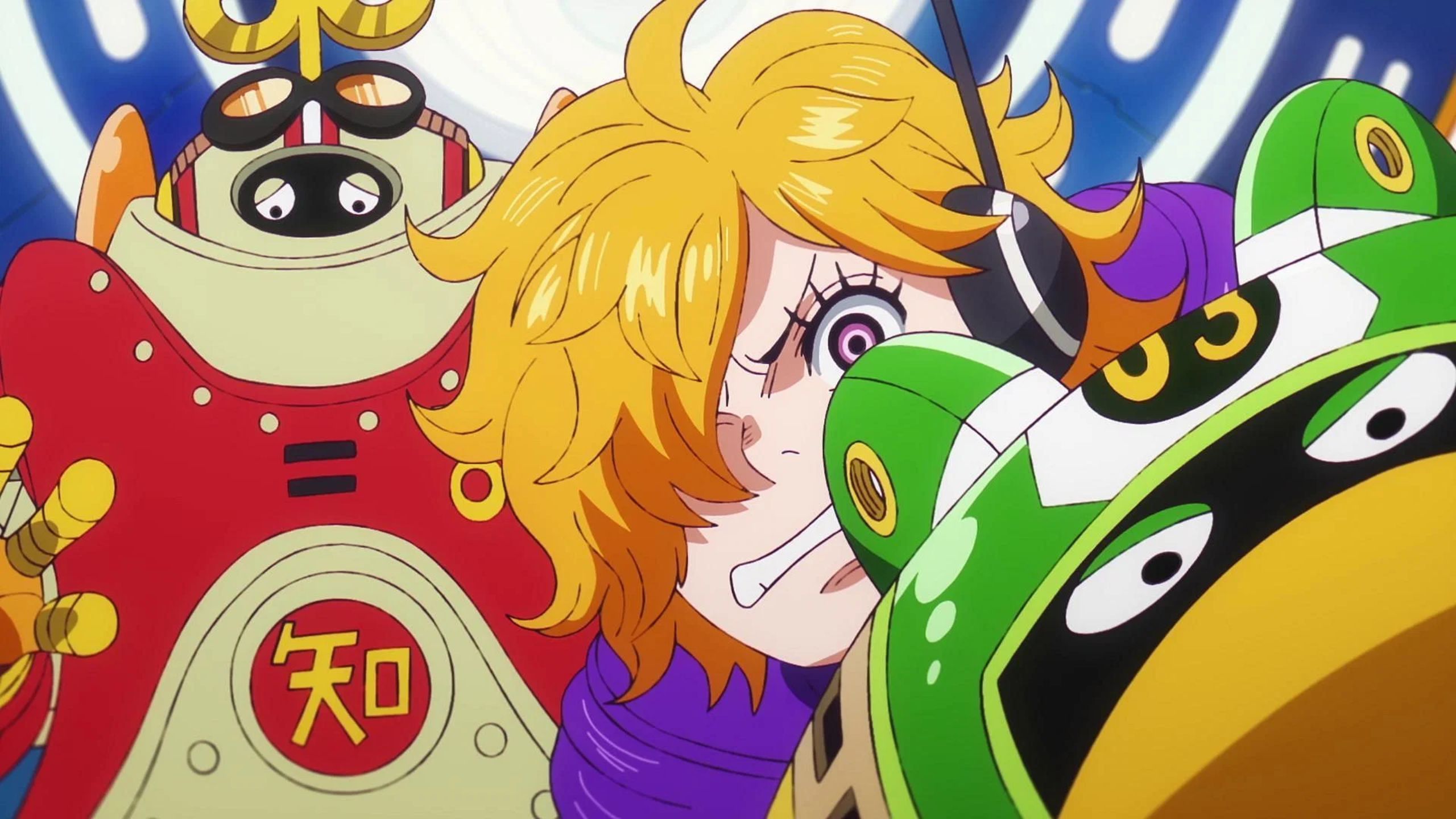
Pythagoras, Lilith, and Edison Toei Animation)
Vegapunk York, who betrayed her fellow Vegapunks in a bid to become a Celestial Dragon, is shown to be particularly pleased with the prospect of acquiring the valuable resources on Egghead Island.
However, York soon discovers an anomaly within Punk Records—the upper part of Egghead’s Labophase, where Dr. Vegapunk’s brain was stored.
This discovery triggers a series of events that lead to Punk Records detaching from Egghead and flying away, setting the stage for a dramatic turn of events.
As the chapter progresses, it is revealed that Vegapunk Shaka, Vegapunk Edison, Vegapunk Pythagoras, and Vegapunk Atlas are alive and residing within Punk Records, which is now soaring through the sky over the sea.
These Vegapunks have managed to combine their various body parts Edison’s head, Shaka’s body and legs, Atlas’ left arm, and Pythagoras’ right arm to create a new composite body.
Despite their minds being merged into this new form, they retain their individual voices and identities, showcasing Oda’s creativity in blending science fiction elements with character development.
Edison then makes a call to an old friend Haredas.
Edison’s greeting, “Hello, Weatheria! This is Vegapunk here,” surprises Haredas, who is taken aback by the news of Vegapunk’s death.
The chapter concludes with Haredas’s response and a cliffhanger regarding the nature of Edison’s request.
Significance of Haredas’s Reappearance
The reappearance of Haredas in chapter 1125 highlights Oda’s talent for integrating seemingly minor characters into the main storyline.
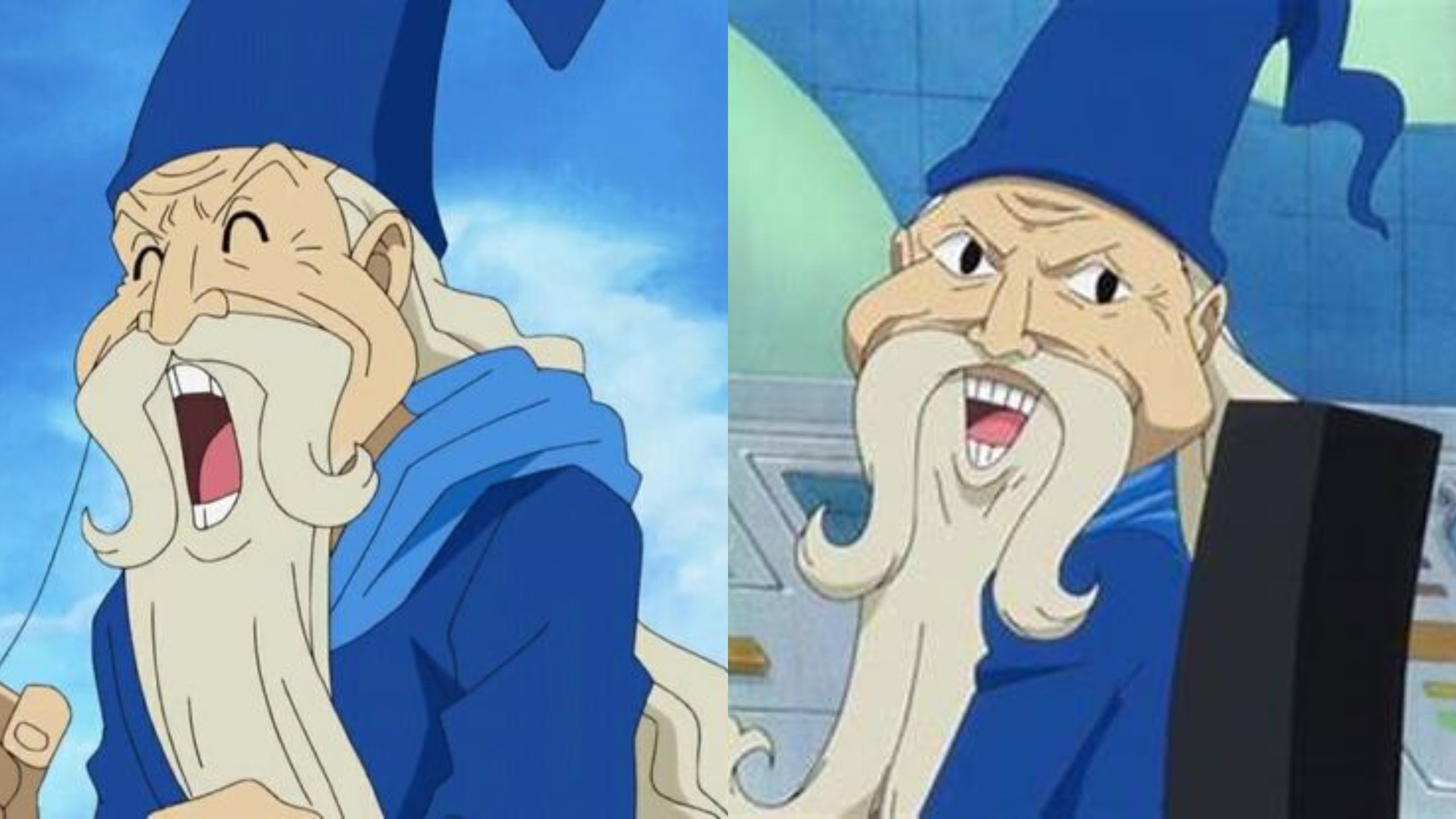
Haredas – One Piece (Toei Animations)
Haredas, who was once a mentor to Nami, is now positioned to play a crucial role in the final saga of One Piece.
This development underscores the depth of Oda’s worldbuilding and the interconnectedness of the One Piece universe.
Haredas’s scientific expertise and his relationship with Vegapunk make him an ideal candidate to assist the Vegapunks in their current predicament.
The connection between Haredas and Vegapunk, rooted in their shared background in weather science and technological innovation, adds a new layer of complexity to the story.
As the Vegapunks steer across their new form and seek resources to continue their work, Haredas’s involvement could prove pivotal in shaping the direction of the narrative.
The aesthetic similarities between Egghead and Weatheria, as well as the thematic parallels between Vegapunk’s laboratory and Weatheria’s advanced technology, further reinforce the connection between Haredas and Vegapunk.
The visual and thematic cues provided by Oda suggest that Haredas’s expertise will be instrumental in addressing the challenges faced by the Vegapunks and advancing the storyline.
Potential Implications for the Story
The involvement of Haredas in the final saga of One Piece opens up several intriguing possibilities for the future direction of the story.
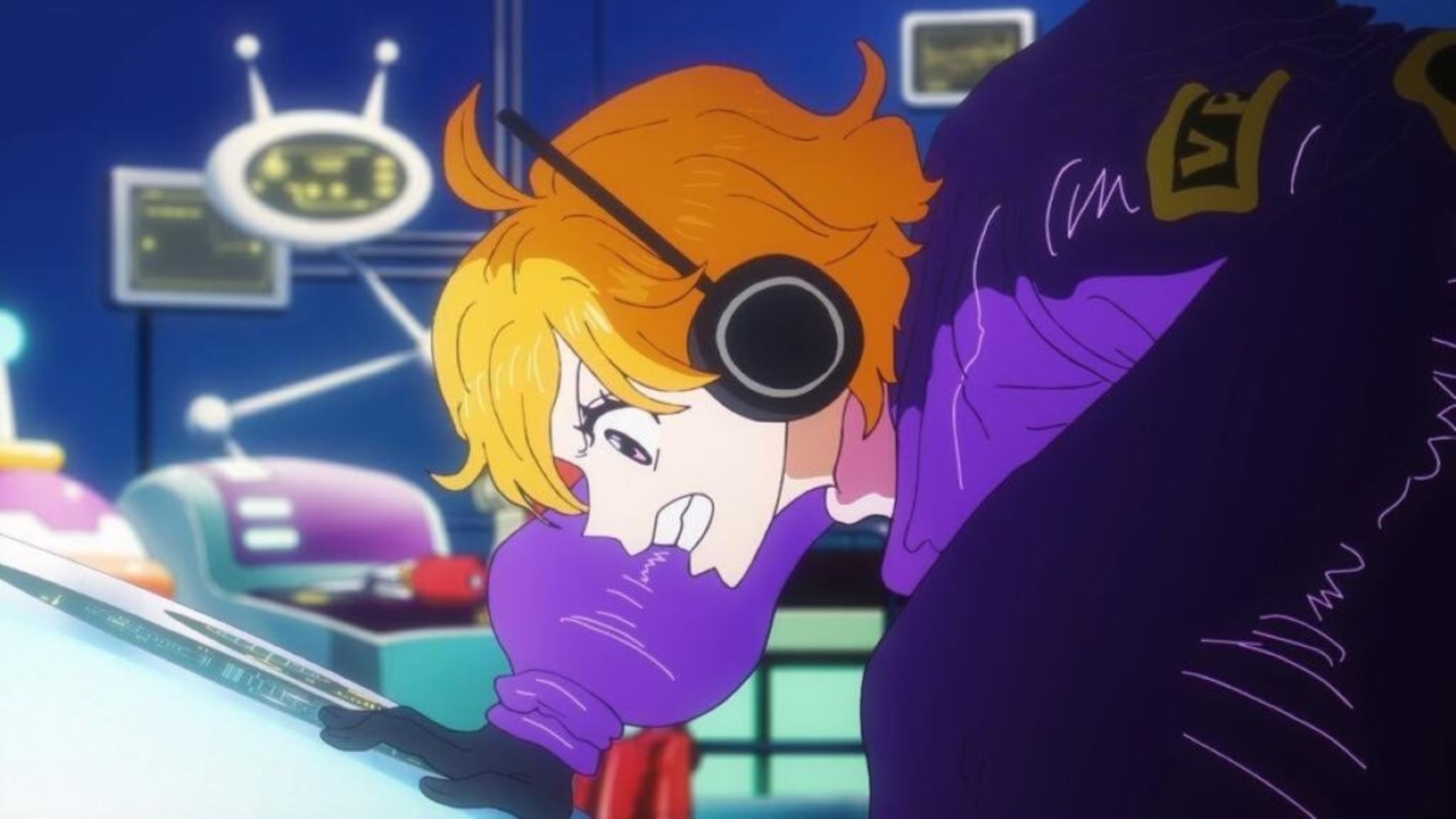
Vegapunk Lilith (Toei Animation)
Given the context of Vegapunk’s previous messages and the current situation involving Punk Records, it is reasonable to speculate that the Vegapunks may be planning something significant to counteract the World Government’s schemes.
One potential implication of Haredas’s involvement is the possibility of a collaborative effort to thwart the World Government’s plans to sink the One Piece world underwater.
The Vegapunks’ expertise in advanced technology, combined with Haredas’s knowledge of weather science, could lead to the development of a countermeasure that addresses the looming threat posed by the World Government.
Additionally, Haredas’s reappearance could serve as a catalyst for Nami’s return to a more prominent role in the story.
Despite being one of the original Straw Hats alongside Luffy and Zoro, Nami’s role has diminished in recent arcs.
By leveraging her knowledge of weather science and her connection with Haredas and Weatheria, Nami could be reintegrated into the central narrative and given a more significant role in the unfolding events.
Nami and Weatheria
Nami’s connection to Haredas and Weatheria is a key element in the potential reintegration of her character into the main storyline.
As one of the original members of the Straw Hat Pirates, Nami’s contributions to the crew’s adventures have been significant.
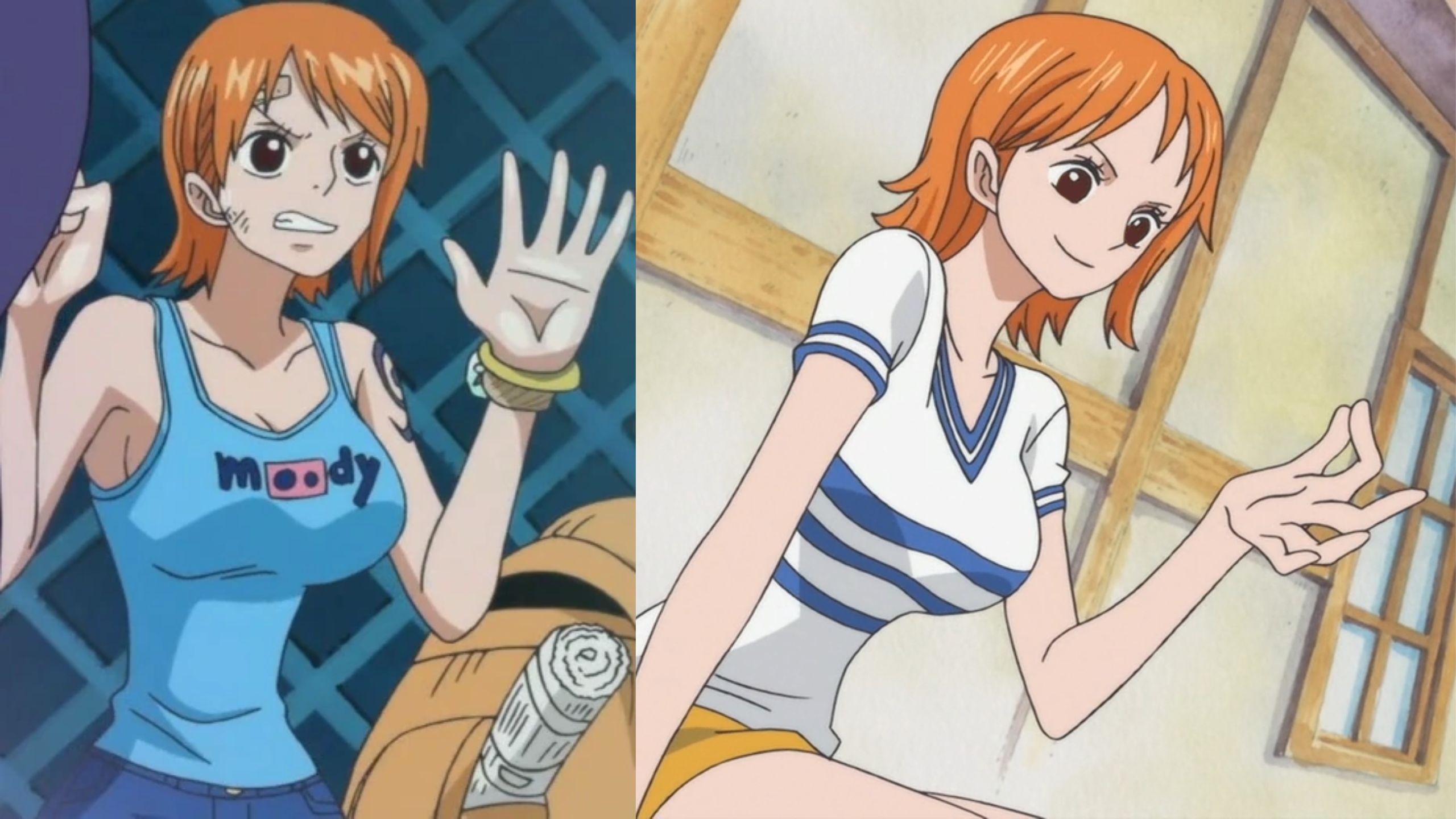
Nami From One Piece (Toei Animations)
Her time with Haredas and her mastery of weather manipulation have been crucial in shaping her abilities and character development.
The focus on Haredas and Weatheria in chapter 1125 could lead to a renewed emphasis on Nami’s role within the crew.
Her expertise in weather science, combined with her relationship with Haredas, could make her an invaluable asset in addressing the challenges posed by the World Government and advancing the plot toward its climax.
Furthermore, the potential return to Weatheria could provide an opportunity for the story to explore the island’s advanced technology and its role in the larger narrative.
The interplay between Weatheria’s technology and the Vegapunks’ innovations could lead to the development of new strategies and tools that impact the outcome of the story.
Thematic Resonances and Narrative Techniques
Oda’s narrative techniques in One Piece often involve thematic resonances that enhance the story’s depth. The connection between Haredas and Vegapunk serves as a prime example of this approach.
By revisiting characters from earlier arcs and integrating them into the current storyline, Oda creates a sense of continuity and cohesion that enriches the narrative.
The thematic parallels between Weatheria and Egghead are also noteworthy.
Both locations represent advanced scientific endeavors and technological innovations, highlighting the recurring theme of progress and discovery within the One Piece universe.
This thematic resonance underscores the importance of scientific knowledge and collaboration in overcoming challenges and achieving goals.
Oda’s ability to blend science fiction elements with character-driven storytelling is evident in the interaction between Haredas and the Vegapunks.
The fusion of their scientific expertise and personal relationships adds layers of complexity to the narrative, making it more engaging and multifaceted.
#ONEPIECE1125 #OPSPOILERS Full summary for onepiece ch- 1125 (Thanks to : @Mugiwara_23 ) pic.twitter.com/n8EHGIAUvO — Pew (@pewpiece) September 4, 2024
Chapter 1125 of One Piece introduces a compelling subplot involving Haredas and the Vegapunks, highlighting Eiichiro Oda’s skill in weaving intricate narratives and connecting seemingly disparate elements.
Haredas’s role as Nami’s mentor and his connection to Vegapunk add depth to the story and set the stage for exciting developments in the final saga.
The potential implications of Haredas’s involvement ranging from the development of countermeasures against the World Government’s plans to the reintegration of Nami into the central narrative promise to deliver significant twists and revelations.
Oda’s thematic resonances and narrative techniques further enhance the story’s complexity and richness, making One Piece a continuously attracting and immersive experience for fans.
As the series progresses toward its ending, the interplay between Haredas, the Vegapunks, and the Straw Hat Pirates will undoubtedly shape the future direction of the story.
Fans can look forward to seeing how these developments unfold and how they will impact the epic journey of the Straw Hat crew as they steer the final chapters of their adventure.
