Netflix’s Don’t Move offers a tense story of survival and fear set against the backdrop of grief. Directed by Brian Netto and Adam Schindler, this film centers on the struggle of its lead character, Iris, played by Kelsey Asbille, as she faces unimaginable terror.
The plot unfolds with suspense, bringing tension to viewers, but the film ultimately lacks the staying power of memorable horror stories.
Despite its compelling setup, Don’t Move leaves some viewers unsatisfied, reflecting both strengths and missed opportunities within its storytelling.
In Don’t Move, Kelsey Asbille’s Iris, a grieving woman, decides to go on a hike into a remote wilderness.
This area holds painful memories for her because it is the place where her young son passed away. She feels the heavy burden of her grief and begins her journey as a way to come to terms with her loss.
Just as she reaches a moment of deep sorrow, a stranger named Richard appears, offering her company and comfort. Richard seems charming and kind, but soon, his intentions take a dark turn. He quickly reveals his cruel side by taking control of Iris’s situation with frightening efficiency.
Suddenly, the support Iris thought she’d found turns into a dangerous trap as Richard tases her and binds her, leaving her helpless.
When Iris regains consciousness, she realizes she’s been trapped in the back of Richard’s car. The horror intensifies as Richard reveals that he’s injected her with a drug that will leave her fully paralyzed within 20 minutes.
In the face of this terrible fate, Iris is forced to fight for her survival with every ounce of strength she has left, even as her body starts to fail her.
What follows is a harrowing struggle as Iris tries to outwit Richard and escape his grip before the drug completely disables her.
Kelsey Asbille brings depth to Iris’s character through her emotional and physical performance. She effectively conveys Iris’s sadness and deep-rooted fear from the beginning, showing the character’s vulnerability as she mourns her son’s loss.
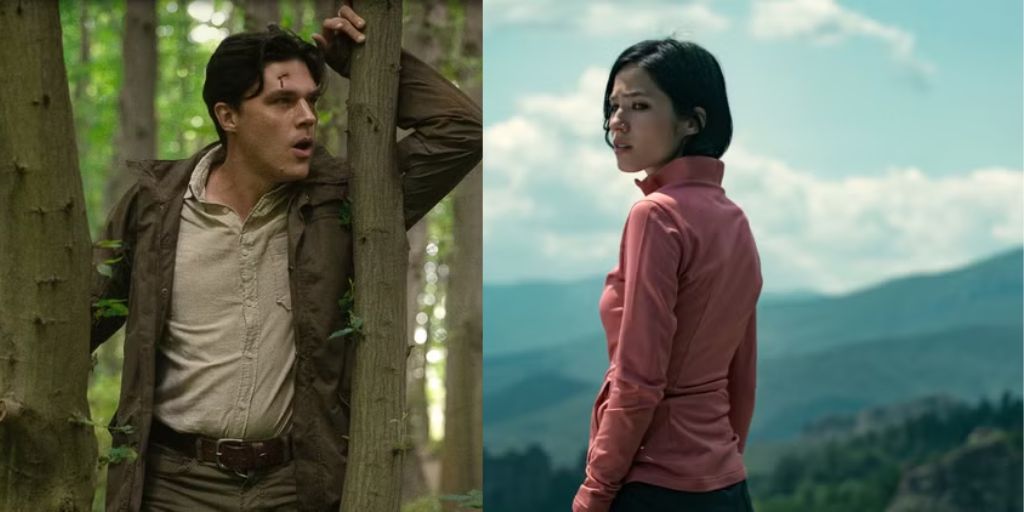
Still from the movie (Netflix)
As the drug begins to take hold, Asbille portrays Iris’s frustration and determination with subtle expressions and trembling movements, creating a sense of claustrophobia and tension for viewers.
Her helplessness and limited physical movements build a nerve-wracking atmosphere, making the audience feel her fear as she fights against her own body.
Finn Wittrock, known for his role in American Horror Story, portrays the character Richard with disturbing intensity.
Wittrock skillfully shows the character’s chilling personality, switching between moments of fake kindness and sudden bursts of violent rage. As a master manipulator, Richard seems to know exactly how to control and terrify Iris, amplifying the tension.
Wittrock’s performance brings out the character’s twisted need for control, making Richard’s sadistic motives evident.
At one point, Richard even senses that Iris has been struggling with her will to live, and rather than simply ending her life, he aims to deepen her despair and take away any remaining sense of power she has.
Despite the strong performances by Asbille and Wittrock, both characters lack depth. The film gives little insight into their backgrounds or motivations, which can make it difficult for viewers to form a strong emotional connection with them.
Some of the dialogue feels awkward, especially during Iris and Richard’s initial interaction. This lack of realism in their exchanges can detract from the film’s impact, as it may remind viewers that these characters are fictional rather than real people in a dangerous situation.
Additionally, a late twist about Richard’s identity, while meant to add intrigue, comes across as predictable, offering little to change our understanding of his character.
The film’s cast is small, with a limited number of supporting characters. Despite this, Daniel Francis and Moray Treadwell offer noteworthy performances that add some variety to the story. Treadwell, who plays Bill, a man who briefly crosses paths with Iris, brings unexpected depth to his role.
When Bill finds Iris in a vulnerable state, his reaction adds a surprising emotional layer to the film. Some viewers might even find Bill to be the most intriguing character, given the limited development of the main leads.
One of Don’t Move’s biggest strengths is the way it builds tension. As Iris races against time to avoid total paralysis while Richard hunts her, viewers are kept on edge, feeling the urgency of her situation.
The suspense remains strong throughout most of the movie, and the looming threat creates a sense of anxiety that lingers, capturing the audience’s attention.
Yet, while the film does manage to sustain this tense atmosphere, it does not fully satisfy fans of traditional horror, as it lacks the depth and intensity found in the genre’s most iconic works.
The film’s soundtrack enhances the sense of fear but also has some jarring moments. Haunting string music plays in the background, adding to the dark mood and helping to build suspense.
However, during the film’s climax, the music suddenly shifts to a different style, using either synthesizers or brass instruments that feel out of place.
This shift in sound may leave viewers distracted during a key emotional moment, which reduces the intended impact.
Although some viewers may find these musical choices unsettling in a good way, others might see them as unintentionally comedic, detracting from the horror experience.

Still from the movie (Netflix)
Don’t Move includes scenes with some intense and violent moments that add to the horror, yet the film doesn’t rely heavily on gore to create fear. The story itself and the suspenseful situation carry most of the horror elements.
There are a few scenes where viewers may feel uncomfortable or anxious due to the graphic nature of what’s happening, but these moments are limited.
While these scenes work to some extent, the film completely depends more on its basic concept of terror rather than shocking visuals.
As the film unfolds, certain details raise questions that may break the immersion for some viewers. For instance, given the strength of the paralytic drug, one might wonder why Iris does not lose the ability to breathe as the drug’s effects increase.
Other small inconsistencies, such as her makeup remaining intact despite her physical struggles and near-drowning experiences, can distract the audience from the story.
While these details do not ruin the film, they create a sense of inconsistency that could affect how some viewers perceive the complete experience.
Netflix’s Don’t Move stands out among other thrillers because of its original concept and the way it combines elements of suspense and grief.
The film attempts to find how the deep sorrow from losing a loved one can affect a person’s sense of control and strength, creating a metaphor for the paralyzing effects of grief.
Yet, while it tries to address this emotional theme, the movie falls short of becoming a standout thriller. For those looking for a truly terrifying experience, the slow pace and limited action might feel unsatisfying, making Don’t Move more of a suspense drama than a full-fledged horror.
The film’s unique premise gives it some staying power among Netflix’s many thriller releases, offering an interesting angle on survival and despair.
However, the story’s lack of strong character development and its occasional missteps prevent it from reaching the level of intense horror that some viewers may expect.
In the end, Don’t Move is a film that builds up plenty of tension but ultimately leaves viewers with mixed feelings.
While it captures the desperation and isolation of a woman struggling against a terrifying threat, the film doesn’t quite live up to its potential as a haunting or memorable horror experience.
As Don’t Move reaches its ending, viewers may find themselves reflecting on the themes of control, fear, and grief that permeate the film.
The movie deals with not only the physical battle between Iris and her captor, Richard, but also the emotional struggle within Iris herself.
Grief, in this story, isn’t just a feeling but a force that challenges Iris’s ability to fight for her life. Her journey through both grief and terror highlights how loss can leave someone vulnerable yet desperate to reclaim their strength.
This emotional layer adds complexity to an otherwise straightforward thriller, hinting at the psychological turmoil that trauma and despair can impose on someone’s will to survive.
One of the most interesting aspects of Don’t Move is its attempt to convey the paralyzing nature of grief through a literal paralysis.
Iris’s physical immobility due to Richard’s drug injection reflects how grief can leave a person feeling helpless and unable to move forward.
This dual layer of vulnerability – both physical and emotional – makes Iris a compelling character, especially as she fights back despite feeling lost and weak.
Her journey emphasizes that survival is not just a physical act but also a mental one, where even the smallest act of resistance can become a step toward reclaiming one’s life.
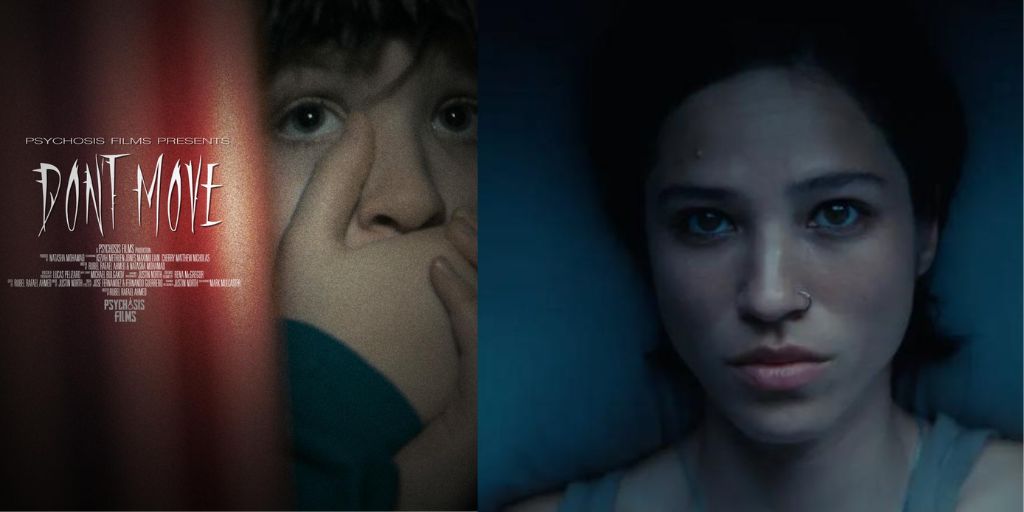
Still from the movie (Netflix)
This aspect of the film attempts to provide a deeper narrative, suggesting that strength can emerge from even the darkest places. However, while these themes bring depth, the film’s execution sometimes detracts from its message.
Despite Asbille’s effective portrayal of Iris’s internal and external struggles, the limited character development leaves many aspects of her story unexploited.
The lack of backstory for Iris and Richard restricts viewers from fully engaging with their motivations and past experiences.
Without a clear understanding of who Iris was before her son’s death or what drives Richard’s sadistic behavior, both characters remain somewhat flat.
As a result, the film’s coverage of grief feels underdeveloped, leaving audiences with unanswered questions about Iris’s transformation and Richard’s intentions.
The tension throughout the movie is well-maintained, but Don’t Move could have benefited from additional plot twists or character revelations to break its predictability.
The suspense in Iris’s struggle to escape is engaging, but the lack of narrative complexity makes the film feel more like a surface-level thriller than a nuanced horror story.
Don’t Move maintains suspense but doesn’t fully capitalize on its unique premise, missing opportunities to go deeper into the psychological horror that might arise from Iris’s trauma and fear.
While the film keeps viewers on edge, it falls short of fully finding the emotional and mental turmoil that accompanies Iris’s fight for survival.
For fans of straightforward survival stories, Don’t Move offers moments of suspense, with themes of grief and desperation adding an extra layer of tension.
However, for horror enthusiasts expecting a pulse-pounding, complex story with meaningful character growth, the film may feel like it’s lacking substance.
By balancing its suspenseful atmosphere with moments that reflect on grief and helplessness, Don’t Move stands as an earnest, if imperfect, attempt to blend horror with psychological insight.
Its approach to survival and loss gives viewers something to ponder, but its shortcomings in character depth and unpredictability mean it may not leave a lasting impact in horror cinema.
Don’t Move resonates as a reminder that survival is as much about mental resilience as it is about physical endurance.
Iris’s battle is a testament to human strength in the face of despair, and though the film doesn’t reach horror classics, it offers an experience worth watching for fans of psychological thrillers.
Don’t Move underscores how physical limitations can amplify psychological challenges, especially in life-threatening situations. Iris’s journey emphasizes that even when one feels immobilized by grief or fear, resilience can emerge from unexpected places.
As her character grapples with the effects of paralysis and her terrifying captor, she finds ways to assert her will to survive.
This element of her story offers a subtle, yet powerful, message about the strength individuals can find within themselves, even when they believe they’ve reached their breaking point.
Moreover, Don’t Move raises subtle questions about human connections and isolation in times of grief. By choosing to isolate herself in the wilderness to mourn, Iris inadvertently places herself in a vulnerable situation.
Her interactions with Richard serve as a reminder of how loneliness can sometimes lead to harmful encounters, emphasizing the importance of support systems in times of loss.
While this theme isn’t deeply dealt, it adds another dimension to the story, reminding viewers of the value of connection.
After an intense season of changing loyalties, family drama, and an identity crisis, The Old Man Season 2 ends with a packed finale. The previous episode left us with several cliffhangers.
Dan Chase (Jeff Bridges) was poisoned with no antidote in sight, Harold Harper (John Lithgow) felt relieved about possible divorce options, and Zoe (Amy Brenneman) was safe with Julian Carson (Gbenga Akinnagbe).
The biggest twist was that Emily Chase (Alia Shawkat) — also known as Angela Adams or Parwana Hamzad — was still alive and controlling the Hamzad family’s lithium mine in Meshbahar. Now, how do all these complex storylines conclude in this finale?
The episode starts by revisiting the night Emily was thought to be killed, although this time, events unfold from her perspective.
While she speaks to her father on the phone, the remaining villagers take shelter in a room within the main house as Pavlovich’s (Rade Serbedzija) hired gunmen approach.
Khadija (Jacqueline Antaramian) heads to the door to confront them, firing shots that Chase mistakenly hears as the gunshots that killed Emily.
Tragically, Khadija is quickly killed, and the gunmen interrogate the rest, switching between Dari and Russian as they search for “Hamzad.”
Emily identifies herself as Hamzad but chooses not to reveal her identity in Dari, even though she learned the language during her time there. She agrees to provide information in exchange for the lives of others in the room.

Still from The Old Man (Credit: FX)
The soldiers hold Emily in one of the houses, demanding she write down everything she knows under threat of death. In the following days, she develops a fragile bond with one of her captors, Pavel, after conversing in limited Russian.
This also explains why she initially didn’t speak Russian when the soldiers arrived. Despite the danger, Emily uses the bond with Pavel to negotiate, even providing directions to the weapons storage to protect her newfound family, though it brings her inner conflict.
Pavel visits her again with a bottle of vodka from the captain as a thank-you for the information.
However, he warns her that the captain now wants a list of potential “troublemakers” in the group. As she writes the names, he asks if she believes her family would still accept her after everything she’s done.
Pavel, grappling with his loyalty, glances at a photo of his wife and daughter back home, hinting at his own inner conflict.
This tension reaches a climax when Emily completes the list, only to smash Pavel’s head with the vodka bottle.
Pavel awakens momentarily on the floor, only to realize that Emily and the village fighters have already killed the other soldiers. His relief is short-lived as he meets the same fate, solidifying Emily’s control over the situation.
Meanwhile, in Hong Kong, Harper is with Marion (Janet McTeer), who confirms that the lithium deposit is no longer under Russian control and that local fighters, led by an American woman, killed the Russians stationed there.
Harper feels relief knowing Emily is alive, but Marion warns him that Pavlovich intends to retaliate with reserves. She shows little desire to stop him.
Harper, willing to make Emily his ally if it means protecting her life, tries to persuade Marion to help him end the threat. In Europe, Zoe and Carson continue their search for Chase, with Zoe questioning Carson’s confidence in Chase’s survival.
She fears Carson might only use her to reach Pavlovich if he thinks Chase is already dead.
Despite Morgan Bote’s (Joel Grey) interference, Carson assures Zoe he will help her find Chase if she helps him eliminate Pavlovich. This aligns with Harper’s own plan, as he contacts Carson to set things in motion.
Harper then appeals to Marion’s pragmatism, suggesting Pavlovich’s actions might lead to more trouble for her down the line.
Their conversation, fueled by unresolved issues from their marriage, reveals the complex dynamics between them. This scene demonstrates the actors’ skill, grounding the vague, poetic dialogue with raw emotions, bringing out the core of the show’s intensity.
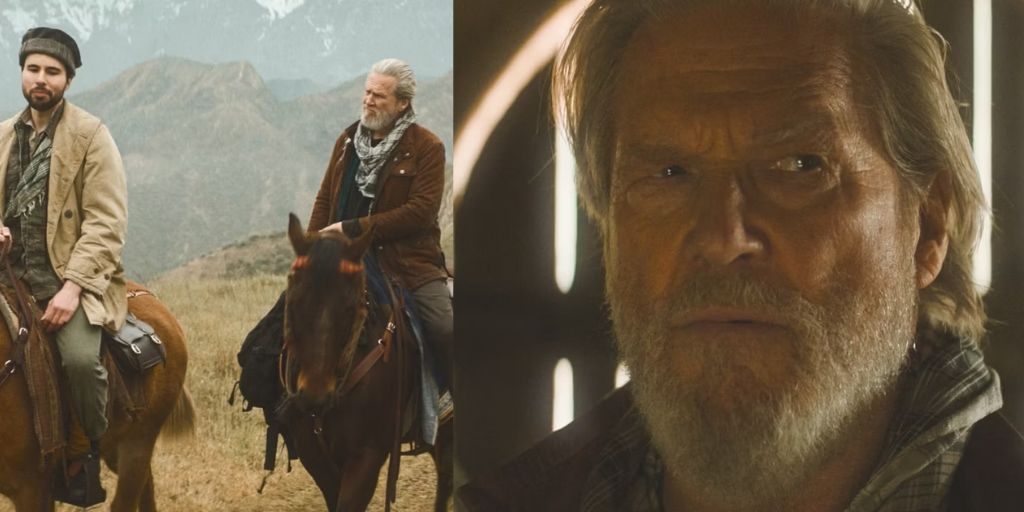
Still from The Old Man (Credit: FX)
Marion’s dialogue ultimately convinces her to join Harper’s plan, allowing him to give Carson the green light to target Pavlovich.
Marion’s contacts arrange for the Chinese delegation’s security to ignore Carson briefly, giving him time to reach Pavlovich’s location undetected.
Zoe offers to help, but Carson insists she stay out of harm’s way, promising to spare one of Pavlovich’s men to find the antidote Chase needs.
Carson’s covert approach lasts only until he fires his gun, alerting additional guards whom Zoe warns him about. Despite this, he manages to eliminate most of Pavlovich’s men and capture one for information.
Before killing Pavlovich, Carson suggests that this act is retribution for Morgan Bote’s death. With Pavlovich gone, Carson clears the way for Zoe to search for Chase.
She finds the GPS in the unlocked car of Pavlovich’s men, which leads her to the abandoned church where Chase was left. There, Zoe finds Chase on the verge of death.
She administers the antidote, giving three doses and performing CPR when his pulse remains weak. The show’s unique staging shines as it cuts between close and distant shots of Zoe’s struggle, allowing viewers to experience Chase’s slipping in and out of consciousness.
Chase ultimately survives, awakening in a safe house with Zoe and his dogs by his side. Zoe explains they have been staying there alone for a few days, with only Carson and her son aware of their location.
She assures him they’re safe, and Chase, finally able to rest, gradually recovers. As the days pass, he and Zoe form a quiet routine, while Zoe remains in touch with her son, maintaining a small link to her old life.
Though this calm life offers comfort, Chase becomes uneasy with the loose ends they left behind. Unanswered questions about the cartel and the fear of someone tracking them start to bother him.
Despite his enjoyment of this new life, he becomes unsettled when a mysterious package arrives containing only a flip phone and a slip of paper with a number. He immediately dials the number.
Emily is now back in the United States and has arranged to meet her father at a local diner. Although Chase is thrilled to see her, Emily remains focused.
She tells Chase that Harper went missing after visiting Marion, who is holding him to leverage control over the Meshbahar lithium mine. Chase assumed the mine was under local control, but Emily reveals that she now runs it along with the rest of the Hamzad family.
Emily tells Chase she plans to rescue Harper with his help, and Chase agrees, ready to do whatever she asks. She reveals she needs to contact Lou Barlow — an alias Chase once used for his darker dealings — to use his connections to get close to Marion.
Still from The Old Man (Credit: FX)
Chase, uncomfortable with bringing Barlow into this, suggests another approach. However, when Zoe presses him, he confesses that he himself is Lou Barlow, and that under this alias, he did things “uglier than violence.” Emily insists it’s the only way to reach Marion and save Harper.
Their conversation is cut short when large vans arrive to escort Emily and Chase to her plane. She explains that her new role managing the lithium mine gives her enough influence to manipulate FBI resources, allowing her to track Zoe’s son’s phone and secure an international flight.
This moment makes Chase realize that Emily Chase no longer exists; she has become Parwana Hamzad, willing to do whatever it takes to achieve her goals.
Unlike the Season 1 finale, The Old Man doesn’t end with a shocking revelation. But this slower-paced conclusion gives the characters room to breathe, moving them toward new challenges in a possible third season.
The finale creates a strong foundation for future stories, setting up fresh character arcs and power dynamics in a series where loyalty and identity remain ever-shifting.
The Season 2 finale of The Old Man brings powerful moments, tightly woven relationships, and a mix of complex emotions. Emily’s emergence as Parwana Hamzad highlights her evolution from a vulnerable character into a calculated, resourceful leader.
Her handling of the Hamzad family’s lithium mine and her willingness to assert power reflect a newfound sense of independence and authority.
Meanwhile, Chase’s loyalty to Emily drives him to reawaken a darker side of himself as Lou Barlow, hinting at the lengths he will go to protect his family.
This story of family dynamics and sacrifices offers a compelling layer to the show, as we witness a father grappling with his past choices and the person his daughter has become.
The alliances, betrayals, and transformations that emerged throughout this season leave the show in an intriguing position, with characters moving toward greater conflicts and consequences.
With Chase’s past catching up to him, Harper and Marion’s uneasy truces, and Emily’s strengthened control over her identity and legacy, The Old Man could find even more profound themes of loyalty, redemption, and power struggles in a potential third season.
It’s a fitting, if quieter, finale that sets the stage for thrilling new chapters in these characters’ journeys.
