No Country For Old Men has earned its place as a modern classic, with its unforgettable characters, tension-filled moments, and a plot that keeps viewers on the edge of their seats. However, its ending has sparked considerable debate. The film is a faithful adaptation of Cormac McCarthy’s novel, following Llewelyn Moss (Josh Brolin) who steals a bag of drug money and finds himself pursued by the relentless hitman Anton Chigurh (Javier Bardem). At the same time, Sheriff Bell (Tommy Lee Jones) tries to intervene, hoping to save Moss and stop Chigurh’s reign of terror.
The Coen Brothers’ movie, much like McCarthy’s book, begins as a gripping genre piece, only to reveal deeper philosophical themes by the end. The No Country For Old Men finale, especially its final moments, left audiences expecting a more traditional climax, only to find themselves presented with an ambiguous conclusion. A decade after its release, discussions surrounding the ending continue to unfold, with a closer analysis revealing the nuanced intentions behind the Coen Brothers’ vision.
No Country For Old Men Ending Explained: The Surprising Conclusion of No Country For Old Men
The story’s suspense mainly revolves around Moss trying to stay ahead of Chigurh. However, in an unexpected turn, Moss is killed off-screen by a group of assassins. Chigurh recovers the stolen money, and true to his earlier threat, he visits Moss’ wife, Carla Jean, with a grim decision. Chigurh offers her a coin toss to decide her fate, and she refuses to play along, leaving the choice to him. It’s implied that he kills her.
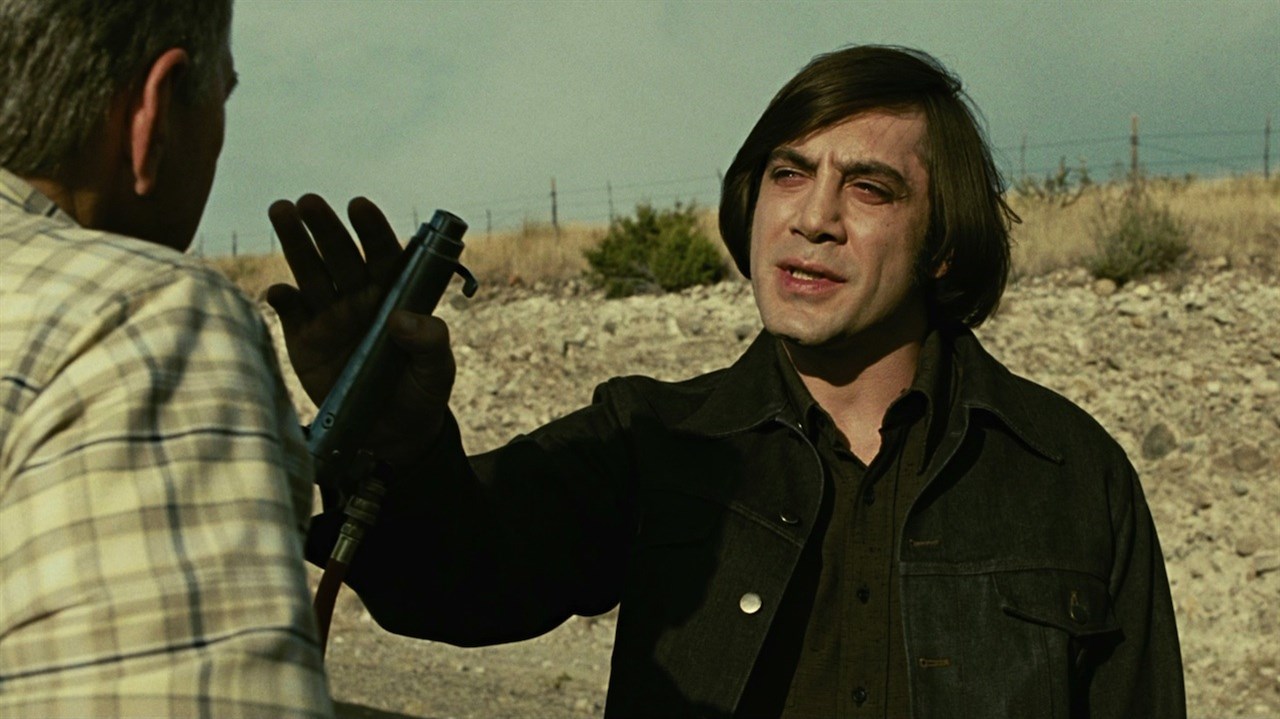
Anton Chigurh (Image via Getty)
Soon after, Chigurh is involved in a traffic accident, but despite his injuries, he walks away from the destruction he’s caused. The focus then shifts to Sheriff Bell, who is grappling with the fallout of his failure to save Moss or stop the chaos. In his retirement, Bell reflects on two dreams he had the night before. The first involves meeting his father, who gives him money, and the second features them riding together through a snowy mountain pass. Bell’s recounting of these dreams ends with him acknowledging that he woke up, marking a symbolic end to the film.
The Symbolism Behind Sheriff Bell’s Dreams
Bell’s two dreams are central to understanding the deeper meaning of No Country For Old Men. From the beginning, it’s clear that Bell feels disconnected from the world around him, yearning for a time when good and evil were easily distinguishable. His first dream highlights this sense of guilt, as he was entrusted with a mission to protect Moss and failed to do so. The dream is a subconscious reflection of Bell’s lingering sense of responsibility and regret, which he struggles to articulate.
The second dream features Bell and his father riding through a cold, snowy, and it represents Bell’s internal conflict. He notes that he is now 20 years older than his father ever was, signifying that he has become the old man in his visions. This moment is more than just nostalgia; it’s an acknowledgment of the passing of time and the death of a simpler, more hopeful worldview. The fire Bell’s father lights in the dream symbolizes the hope that values from the past could carry on into an uncertain future. However, Bell’s abrupt awakening suggests that not only have these values faded, but they may never have existed as he remembers them.
Why No Country For Old Men’s Ending Was Controversial
On the surface, No Country For Old Men may seem like a typical Western thriller. In a conventional storyline, Moss would have faced off against Chigurh, and after a dramatic showdown, he would have survived, escaping with his wife and the stolen money. Instead, Moss is found dead in a rundown motel room, and his wife’s life is taken shortly afterward. The audience’s expectations are shattered further when Sheriff Bell, who has largely been a passive observer, does not bring about a traditional resolution.
The final scenes defy the expected hero-villain confrontation, leaving Chigurh to escape with the money, his actions unpunished. Bell’s failure to catch Chigurh or recover the money is jarring, and the film concludes with a sense of unresolved tension. Some viewers found this anti-climactic, feeling that the film lacked closure. However, the Coen Brothers’ refusal to conform to genre conventions points to the deeper thematic exploration of fate and mortality that runs throughout the film.
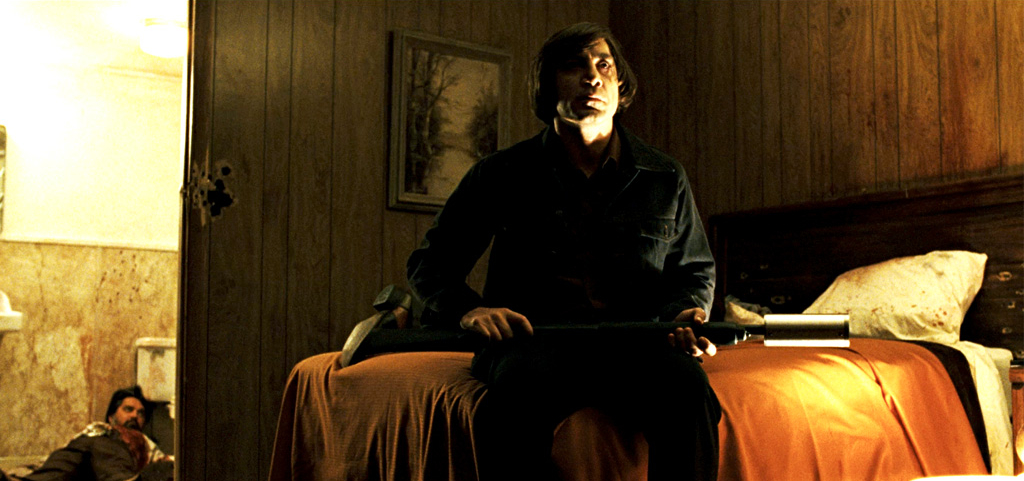
Anton Chigurh (Image via Getty)
Why No Country For Old Men’s Ending is Perfect
Despite initial reactions, No Country For Old Men’s ending is a fitting conclusion to the film’s overarching narrative. While Moss’ actions and Chigurh’s terrifying presence might seem to dominate the story, it’s clear on further analysis that Sheriff Bell is the true protagonist. His journey isn’t about hunting down criminals but about coming to terms with his own aging, his struggle to understand a violent and chaotic world, and his acceptance of the inevitability of death.
Chigurh, often perceived as a symbol of death, represents the inescapable nature of fate. Moss, despite his skills and military experience, cannot outrun the consequences of his choices. In this way, the film suggests that death is an unyielding force, one that will eventually claim everyone, regardless of their actions. Bell’s retirement is a decision to withdraw from a world that no longer makes sense to him, and his inability to confront Chigurh signifies his recognition of a world beyond his control.
How The Ballad of Buster Scruggs Continues No Country’s Themes
The Coen Brothers’ The Ballad of Buster Scruggs, another Western anthology film, delves further into themes introduced in No Country For Old Men. One of the recurring elements in both films is the inevitability of death and the futility of trying to escape it. Each chapter of The Ballad of Buster Scruggs portrays characters attempting to outrun death, only to meet tragic ends. The stories share a dark, nihilistic worldview, where death is an inescapable reality.
While No Country For Old Men focuses on Sheriff Bell’s struggle with the modern world, The Ballad of Buster Scruggs presents death as an omnipresent force that shapes the lives of its characters. The films are linked by their shared exploration of mortality and the futility of trying to control one’s fate, making The Ballad of Buster Scruggs a thematic continuation of the ideas that No Country For Old Men grapples with.
How The Coen Brothers Explain No Country For Old Men’s Ending
The Coen Brothers have discussed their intentions behind the unconventional ending of No Country For Old Men, emphasizing that the film’s conclusion was always meant to be ambiguous. The ending’s lack of closure was not a mistake or oversight; rather, it was a deliberate choice to avoid the conventional “hero vs villain” resolution. The filmmakers have stated that they wanted to stay true to Cormac McCarthy’s novel, which explores a world in chaos, where old systems of understanding no longer hold.
The Coen Brothers acknowledged that they were drawn to McCarthy’s story because of its complexity and its resistance to traditional storytelling. In an interview, they explained that they didn’t want to make a “Hollywoodized” version of the story and were committed to presenting a more realistic, albeit unsettling, portrayal of life’s uncertainty and randomness. This anti-Hollywood approach was essential to capturing the novel’s essence and contributing to the film’s lasting impact.
The Meaning Behind the No Country For Old Men Ending
The ending of No Country For Old Men encapsulates the film’s central themes. While it may appear to focus on the cat-and-mouse pursuit between Moss and Chigurh, the true story is Bell’s. His journey is one of aging, grappling with a world that no longer makes sense, and coming to terms with his own mortality. Bell’s final reflection on the past, alongside his acceptance of the inevitability of death, highlights the emotional core of the film.
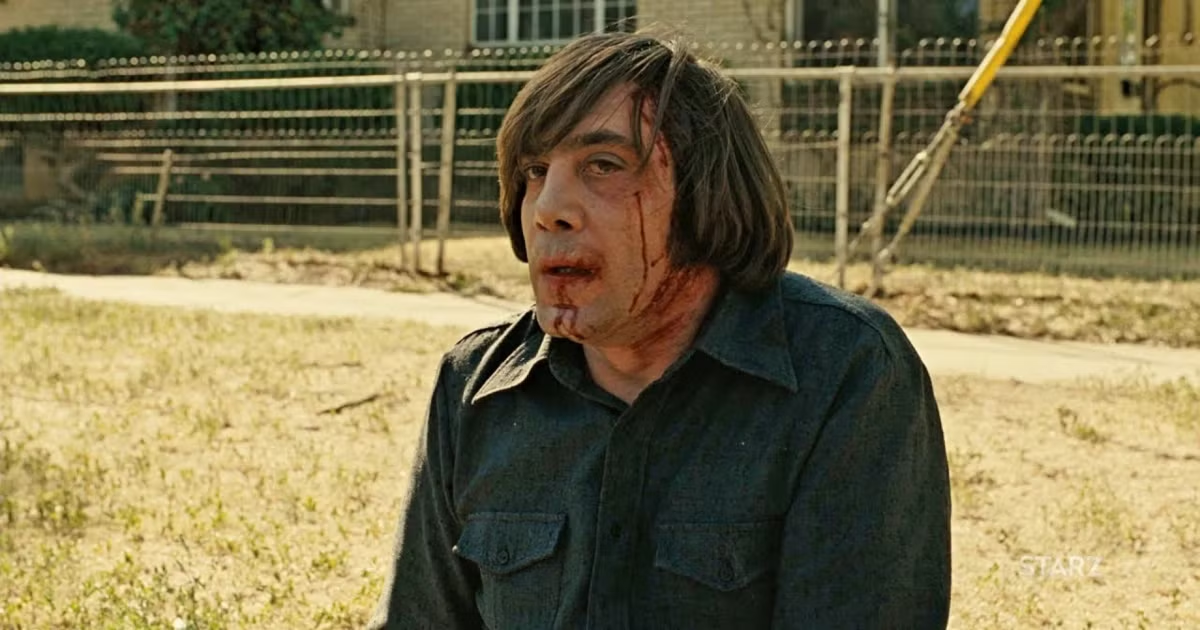
Anton Chigurh (Image via Getty)
Before the final scene, Bell visits his uncle Ellis, who shares a story about death that further emphasizes the film’s themes. Ellis recounts how his uncle was killed for no reason, a stark reminder that death is unpredictable and beyond anyone’s control. Bell’s acceptance of the future, as unrelenting and unavoidable as Chigurh’s presence, marks his realization that he cannot hold onto the past. In this way, the ending reflects both personal and universal truths about aging and mortality.
How the No Country For Old Men Ending Was Received
Critical reception to No Country For Old Men was overwhelmingly positive, with the film holding a high score on Rotten Tomatoes and Metacritic. Many saw it as one of the best films of the year, and it received several Oscar nominations. However, the ending remained a point of contention. Some viewers found the abrupt nature of the finale unsatisfying, questioning whether the film was simply unfinished or intentionally inconclusive.
The division in opinion continues, with some praising the film for its deep philosophical exploration of mortality and fate, while others felt let down by the lack of a clear resolution. Even years after its release, discussions around the ending continue to highlight the film’s complexity and the bold choices made by the Coen Brothers.
Why No Country For Old Men Has the Coen Brothers’ Best Ending
No Country For Old Men stands out in the Coen Brothers’ filmography for its refusal to offer the audience a comforting conclusion. Many of their other films, like Fargo and Raising Arizona , end on a more hopeful note, with characters finding peace or redemption. However, No Country For Old Men challenges this convention by leaving viewers with a bleak, unresolved ending that highlights the inescapability of death and the futility of trying to outrun it.
This stark, dark ending makes the film feel more profound, reinforcing the themes of inevitability and mortality. While the Coen Brothers have often balanced their grim stories with a sense of hope, No Country For Old Men rejects that notion, delivering a closing message that is unsettling but true to the story’s core message.
Gone Girl stands out as a masterful psychological thriller that delivers an unexpected and compelling twist, free from the typical storytelling clichés. The movie, directed by David Fincher and based on Gillian Flynn’s bestselling novel, delves deep into the dynamics of a toxic marriage between Nick (Ben Affleck) and Amy Dunne (Rosamund Pike). As the story unfolds, it becomes clear that Amy’s supposed disappearance is part of a calculated scheme to manipulate her husband, ensuring he stays trapped in their deteriorating relationship.
At first, the narrative follows the well-worn path of a domestic thriller, where the husband is the prime suspect in the disappearance of his wife. However, Gone Girl turns this familiar setup on its head with a stunning revelation: Amy is not dead but alive and has masterminded her own disappearance to frame Nick. The film’s brilliance lies in its ability to pull off this twist without resorting to the predictable tropes that often plague thrillers.
Gone Girl Ending Explained: The Mastery of David Fincher and Gillian Flynn
David Fincher’s direction and Flynn’s script promote Gone Girl as something far beyond your average crime thriller. Their collaboration brings sharpness and precision to the story, as each layer of the plot is carefully revealed. The movie stays true to the structure of Flynn’s novel, with Amy’s journal entries offering insight into her manipulative mindset. As the film reaches its conclusion, it answers crucial questions about the fate of the central characters, especially the unsettling dynamics of Nick and Amy’s marriage.
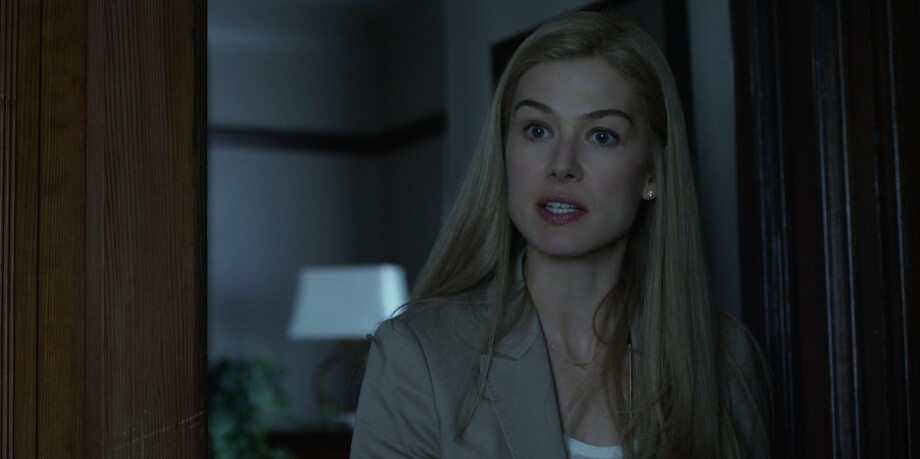
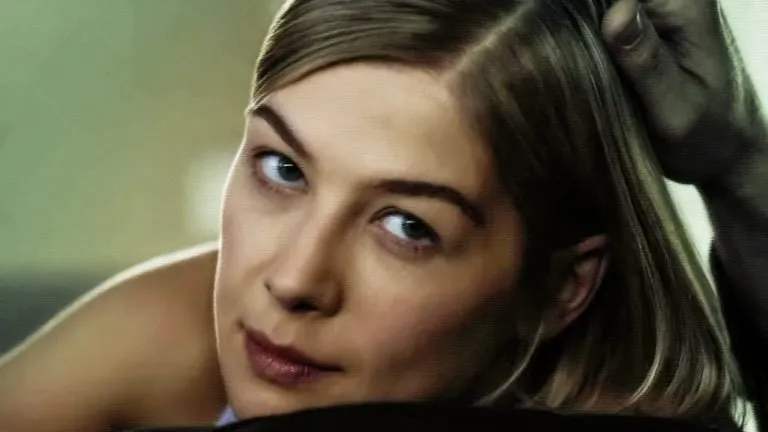
Amy Dunne (Image via Getty)
One of the most remarkable aspects of Gone Girl is its ability to depict a toxic marriage with such precision. Every interaction between Nick and Amy highlights their bitterness and deception. The film uses these character moments to explore the darker sides of human relationships, making the ending all the more impactful. The twist not only exposes Amy’s manipulation but also reveals the devastating reality that both Amy and Nick are equally responsible for the deterioration of their marriage.
Amy’s Deadly Escape Plan As the movie progresses, Amy’s meticulous plan starts to unravel, revealing cracks in her perfect setup. She had intended to escape from the clutches of her controlling husband, but her plan takes a detour when she encounters Desi Collings (Neil Patrick Harris), a man from her past. Desi, who once dated Amy, attempts to keep her locked in his home, unaware that he is playing into her hands. This moment is pivotal as it highlights Amy’s vulnerability and the one instance where she truly feels fear.
In a chilling turn of events, Amy kills Desi, staging his death to make it look like he kidnapped her. She then returns to Nick, convincing him that she has been the victim all along. This brutal act further reveals Amy’s determination to regain control of her life. While the public sees her return as a triumph, it signals the beginning of a new, twisted phase in her relationship with Nick, who remains unaware of just how deep his wife’s deception runs.
The Pregnancy as a Tool of Manipulation One of the key elements of Amy’s plan involves her pregnancy, a plot point that forces Nick to remain in the marriage. As the story progresses, it becomes clear that Amy’s pregnancy is not a mere coincidence but a calculated move to keep Nick trapped. She knows that he would be unwilling to leave her while she is expecting, using this knowledge to manipulate him further.
This twist harkens back to the beginning of the film when Amy pretends to be pregnant in order to manipulate public opinion and make Nick appear more guilty. The movie skillfully shows how Amy tests her theory that a baby can’t be ignored, proving her understanding of Nick’s weaknesses. Without the pregnancy, it’s implied that Nick might have left her, but Amy’s cunning plan ensures that he stays by her side, tied to their toxic marriage.
Amy Dunne (Image via Getty)
Margo’s Heartbreak and Realization Margo, Nick’s sister, played by Carrie Coon, is one of the few characters who sees through the charade. She has a close relationship with her brother, offering him support throughout the movie, but she is also the only one who truly recognizes the dangerous dynamics between Amy and Nick. Margo’s disapproval of their reunion, especially after everything that has happened, is evident. She understands that their relationship is built on lies and manipulation, but she also realizes that they are both too entrenched in their toxic bond to ever escape it.
Despite Margo’s warnings, Nick and Amy’s toxic relationship continues, and the couple’s return to their life in Missouri only highlights the emotional distance between them. Margo’s heartbreak is not only about her brother’s choices but also about the realization that the pair is incapable of letting go of their destructive love.
The Echoes of the Book’s Ending While Gone Girl’s movie adaptation stays largely faithful to the original novel, there are a few key differences, particularly in the way Nick and Amy interact during their final confrontation. One of the most notable changes is Nick’s line, “I feel sorry for you because every morning you have to wake up and be you.” This remark encapsulates the uneasy dynamic between the two characters. While Amy has won, she remains trapped in her own twisted existence.
Despite these subtle changes, the ending of the film mirrors the book’s conclusion. Nick and Amy are back together, pretending for the world that they have reconciled and are living happily. This false image of contentment becomes their new reality, as they continue to deceive everyone around them, including themselves. The final scenes show them faking a happy marriage, reinforcing the idea that appearances are everything in their world.
The Meaning Behind the Ending The ending of Gone Girl explores the dark side of human nature, showing how individuals can justify their most horrific actions. Both Amy and Nick are ruthless and self-centered, each doing whatever it takes to secure their own survival, regardless of the damage caused to others. The film presents them as two sides of the same coin, trapped in a cycle of manipulation and deceit.
In the final moments, it becomes apparent that neither character is truly innocent. Amy, who has used her pregnancy to manipulate Nick into staying, will likely continue to use him for her own gain. On the other hand, Nick may attempt to retaliate, but the nature of their marriage suggests that any future attempt at revenge will only lead to more manipulation. The eerie tone of the conclusion emphasizes the idea that neither Amy nor Nick is trustworthy, leaving the viewer with a sense of unease and uncertainty.
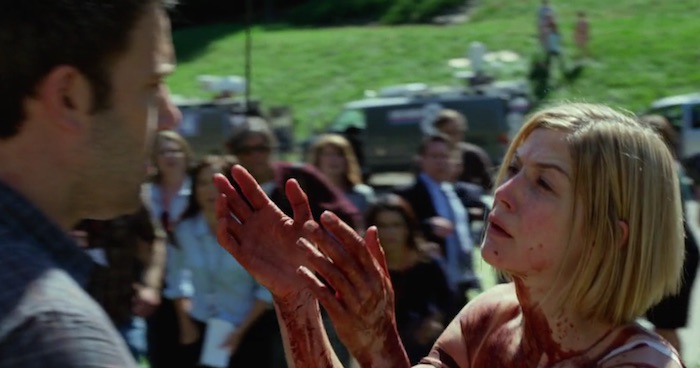
Nicholas Dunne and Amy Dunne (Image via Getty)
David Fincher’s Take on the Ending David Fincher, known for his dark and twisted storytelling, offers a unique perspective on the film’s conclusion. In interviews, Fincher revealed that the ending of Gone Girl was not initially what fans saw in the movie. The film’s script went through several revisions, with Flynn reworking the ending to fit the new vision for the story. While the core message remained the same, Fincher introduced subtle changes that shifted the tone of the film, especially in the final confrontation between Nick and Amy.
Fincher has described the movie as evolving from a mystery to an absurdist thriller, ultimately becoming a dark satire. He acknowledges that while the ending is unsettling, it is also darkly comedic in its depiction of a marriage filled with resentment and manipulation. As Fincher puts it, the ending is like watching a couple hold their anger in check, only for the consequences to come crashing down later.
Reflections from Gillian Flynn and Rosamund Pike Gillian Flynn, who wrote the original novel and adapted it for the screen, has spoken about the divisive nature of the film’s ending. While some fans wanted justice for Amy, Flynn explained that this would not have been satisfying for the story. Amy, as “Amazing Amy,” is always one step ahead, and her lack of punishment reinforces the idea that she is above the law, and always in control of the narrative.
Rosamund Pike, who portrayed Amy in the film, also shared her thoughts on the ending. She highlighted the tension between the characters and the way the story keeps viewers on edge. The final confrontation between Nick and Amy is not about truth but about power. Amy remains in control, even as she manipulates her way back into Nick’s life. This final moment leaves the audience with a chilling understanding of the lengths people will go to in order to protect their image and their sense of self.
