Kiana Cook, the newest patrol officer on Chicago P.D., had a dramatic introduction when she was quickly thrown into a chaotic shootout alongside Adam Ruzek.
From the moment she appeared, it was clear that she could handle high-pressure situations, but viewers didn’t get much time to see who she really is. However, that’s about to change with the upcoming episode, Season 12, Episode 5, titled “Water and Money.”
This episode will give viewers a deeper look into Cook’s character and her role in the Intelligence Unit. According to the showrunner Gwen Sigan, the episode will be filled with unexpected twists and a dark mystery that will put Cook in the spotlight once again.
Sigan, in her conversation with TV Insider, called the episode “twisty,” “weird,” and “dark,” giving fans a sense that they are in for a thrilling ride.
Cook’s Character Will Be Shown
Up until now, Kiana Cook has been a bit of a mystery. Her first appearance in the series was all action, as she had no choice but to jump into the chaos of a dangerous situation. Fans saw her in a high-stakes moment, but they didn’t get to learn much about her background or personality. Season 12, Episode 5, promises to change that.
Sigan hinted that Cook’s past will come to light, revealing some of the reasons behind her behavior. “We’ll go a little bit more into her, not just police-wise, but also who she is, why she is that way, and what’s been going on with her for the past few years,” Sigan shared.
This character development will help fans connect with Cook on a deeper level, as they’ll start to see her as more than just a tough cop. By learning about her personal life and struggles, the audience will be able to understand her motivations and decisions better.
A Unique Murder Mystery
The episode “Water and Money” will center around a murder mystery, which is a departure from the typical types of cases the Intelligence Unit usually deals with. According to Sigan, this isn’t the kind of case we see very often on Chicago P.D., making it special for both the characters and the viewers.
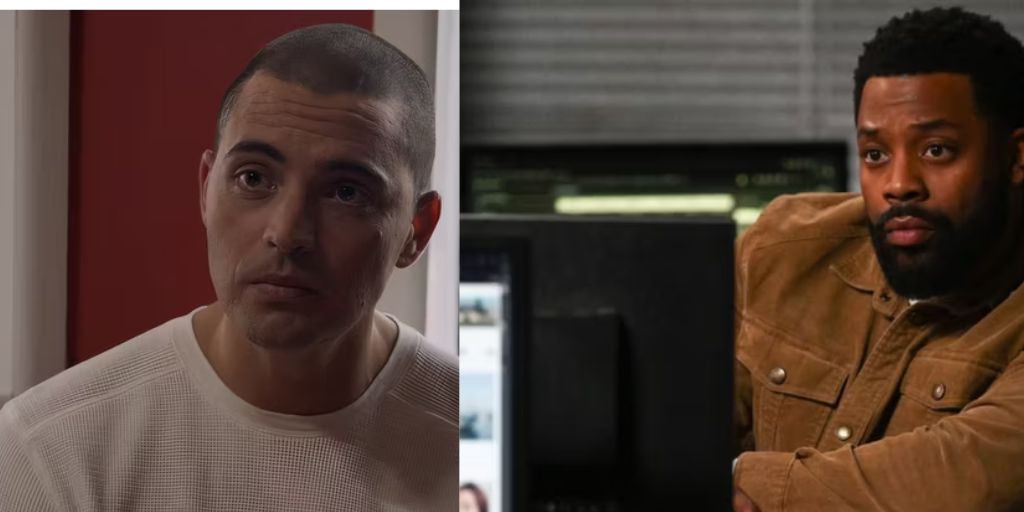
Still from Chicago P.D. (Credit: NBC)
“It’s actually a murder mystery case, which we don’t get to do very often. It’s twisty, it’s weird, it’s dark, and it brings out a lot in all of our characters,” she explained.
The case itself will be complex and unpredictable, leaving the Intelligence team in a state of confusion as they try to piece everything together.
This sense of uncertainty will bring out different sides of the characters, including Cook. It’s a case that requires the team to think on their feet, as they won’t always know what’s going on or have complete control over the situation. This makes it more engaging to watch, as the unpredictability keeps the audience on edge.
Cook’s Instincts Lead Her to Intelligence
Cook will be at the center of this episode, as she follows her gut feeling on something that she believes is worth investigating. Her intuition leads her to contact the Intelligence Unit, setting the stage for the episode’s events.
Sigan hinted that Cook’s instincts play a key role in the story, as she stumbles upon something that feels off to her. This will further emphasize Cook’s natural abilities as a police officer, showing that she has a sharp mind and trusts her instincts.
By following her hunch, Cook gets involved in a case that turns out to be much more complicated than it first appears. This will challenge her in new ways, pushing her to rely not only on her skills as a cop but also on her ability to show tricky situations with the rest of the team.
A New Dynamic Between Cook and Torres
One of the most exciting aspects of this episode will be the dynamic between Cook and Dante Torres. While Cook’s first appearance involved a fast-paced shootout with Ruzek, her second appearance will be quite different. This time, she will be working closely with Torres, and their partnership will have a more psychological and emotional focus.
Sigan shared that there will be a strong connection between Cook and Torres, as the two characters quickly establish a natural bond. “It’s very fun.
The actors really get along great, and you can see onscreen there’s a really nice chemistry between the pair of them,” Sigan said. She explained that the goal was to create a relationship between Cook and Torres that felt genuine and easygoing.
Unlike her first encounter with Ruzek, which was all about action and survival, Cook’s time with Torres will involve more personal interactions.
The two characters will understand each other on a deeper level, forming a friendship that goes beyond their work as police officers. This new bond will allow both characters to open up to one another, creating a meaningful connection that viewers will enjoy watching.
“It’s a lot less run and gun. It’s a lot more psychological and strange, and it’s a nice thing for the two of them to experience together,” Sigan teased. This shift in pace will give both Cook and Torres a chance to show different sides of their personalities, as they show the complexities of the case and their growing friendship.
It will be refreshing to see these characters interact in a more thoughtful and reflective way, rather than just focusing on action scenes.
What to Expect from Cook’s Future on Chicago P.D.
The episode “Water and Money” will be a significant one for Cook’s character, as it will set the tone for her future in Chicago P.D.. As viewers get to know more about her background and personality, it will be interesting to see how she continues to fit in with the rest of the Intelligence Unit.
Cook’s ability to follow her instincts and connect with her fellow officers will likely make her an important part of the team moving forward. The fact that she has already shown herself to be quick-thinking and brave under pressure will undoubtedly serve her well as she takes on more challenging cases with Intelligence.

Still from Chicago P.D. (Credit: NBC)
Will her gut feeling in this episode lead to the team solving the murder? And what other challenges will Cook face as she becomes more involved with Intelligence? Fans will have to tune in to find out.
When and Where to Watch
If you’re eager to see Kiana Cook’s character development and the twists and turns of the murder mystery case, make sure to catch Chicago P.D. Season 12, Episode 5, titled “Water and Money,” on NBC. The episode will air on Wednesday, October 23, at 10 p.m. Eastern Time.
For those who have missed previous episodes or want to rewatch the series, Chicago P.D. is also available for streaming on Peacock. This is a great opportunity to catch up on Cook’s first appearance and get ready for her second, more personal, outing in the upcoming episode.
Once upon a time, in 1999, a horror movie called The Blair Witch Project became very successful. It introduced a new style of filmmaking known as “found footage,” where the movie looks like it’s been recorded with a handheld camera by the characters themselves. This approach was a refreshing change from the usual horror films of the time, which mostly followed the slasher format popularized by movies like Scream.
However, when any movie style becomes popular, filmmakers tend to overuse it until it loses its originality. Hollywood did exactly that with found footage horror films. Over the years, some great ones like Paranormal Activity or the V/H/S series have come along, but many more have just been cheap copies, using the same tired techniques: shaky cameras, characters yelling and screaming, sudden scares, and of course, everyone dying in the end.
With that said, a newfound footage film from Australia called Puzzle Box is out today on digital platforms. It tries to break away from the usual pattern. Written and directed by Jack Dignan, who previously made After She Died, Puzzle Box is a smaller-scale movie that focuses more on the characters than on any kind of monster.
Dignan understands that a horror film only works when the audience cares about the people in it. Without an emotional connection to the characters, there is nothing to fear. This movie is not about ghosts or haunted houses.
Instead, it’s more of a psychological horror, where the main characters are isolated in a house at night, and the tension comes from their internal struggles. Puzzle Box does have some flaws, and it’s not going to redefine the found footage genre, but for fans of this style of filmmaking, it stands out as one of the better films to be released in recent years.
The film starts off with a scream in the woods. At first, it seems like it’s going to follow the familiar formula of other found footage horror movies. You might think, “Here we go again.” But just when you’re expecting another story about witches or some supernatural entity brought to life by an Ouija board, the movie changes direction. What we actually see is a family falling apart.
The story focuses on two sisters, Kait (played by Kaitlyn Boyé) and Olivia (played by Laneikka Denne), who are in their twenties. Kait has been struggling with drug addiction for a long time and has failed in rehab multiple times.
Something went terribly wrong during her last stay in rehab, and now her sister Olivia is determined to help her get better. Olivia has taken it upon herself to save Kait, and they both need this to work. Olivia feels like she is running out of patience and just wants her old life back.
The plan is to take Kait to a house they have rented deep in the woods. The idea is to get Kait away from all the distractions of the world so she can detox in peace. Olivia is there to provide support but also to record everything on camera as proof for the doctors that Kait can be helped.
However, it’s not just Kait who needs saving; their relationship is also in a fragile state. Kait doesn’t like the idea of being filmed or the entire plan for the weekend. Olivia is frustrated that her sister doesn’t seem to want to get better. On top of all that, their mother recently passed away, which has added more tension to their relationship.
Puzzle Box understands that the most effective horror comes from taking away everything that makes the characters feel safe. The film removes the sisters from civilization by placing them in the middle of nowhere.
It also emotionally separates them from each other, and to make matters worse, it reminds them of the loss of their mother. These are classic elements of horror, which is why many scary movies take place in isolated locations, like abandoned houses or remote forests, or focus on characters grieving over the death of a loved one.
However, Puzzle Box is not just another movie full of clichés. It uses these familiar elements in smart ways. The plot is somewhat similar to the 2013 remake of Evil Dead by Fede Álvarez, where a character named Mia (played by Jane Levy) is taken to a cabin in the woods to recover from drug addiction. But unlike Evil Dead, where the cabin is small and rundown, the house in Puzzle Box is large and multi-leveled.
It looks perfect at first glance, though there are a few unsettling details, like the fact that there are no curtains on the windows and the homeowners forgot to leave the key card. Eventually, the sisters get inside, but almost immediately, things start to go wrong. The lights go out, and Olivia disappears.
In the first part of Puzzle Box, the camera is mostly focused on Kait, making her the center of the story. Olivia is more of a background presence, giving directions and trying to guide Kait through their weekend plan. But when Olivia suddenly vanishes, Kait is left to fend for herself.
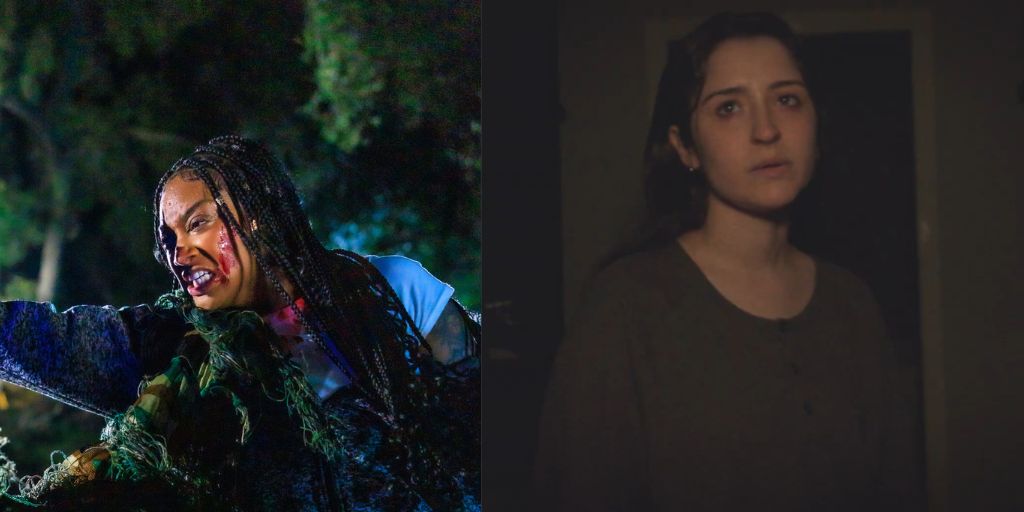
Still from the movie (IMDb)
This is something she has struggled with her entire life, and now she has to face it in a very intense situation. Finding someone who has disappeared inside a locked house is terrifying enough, but then a strange woman appears. This woman, played by Cassandre Girard, looks like she has been through something awful. Her face is covered in blood, and she runs at Kait with a knife, screaming. This, as you can imagine, is not a good sign.
Kait manages to escape the first time, but the bloody woman keeps showing up again and again, no matter where Kait tries to hide. The sound of the woman’s screams in the distance is unsettling at first, but after a while, it loses its effect. It becomes more annoying than scary.
This is a mistake some horror directors make; they overuse a scare tactic, thinking that if it worked once, it will work every time. However, horror often works best when used sparingly. The repetition in this case lessens the impact.
Kait’s main goal becomes finding a way out of the house, but the house seems to have a mind of its own. Every time she tries to escape through the front door, she ends up back inside. Several times throughout the movie, characters walk through one room and find themselves back where they started.
This gives the movie a confusing, dreamlike quality that works well when the camera isn’t spinning too much, leaving the audience just as disoriented as the characters. The film is relatively short at 73 minutes, which helps it avoid dragging on too long. However, the second part of the movie does start to feel repetitive, as it stalls for time before moving into the final act.
The ending of Puzzle Box brings together the different pieces of the story, though it doesn’t entirely stick the landing. Still, Jack Dignan deserves credit for trying to do something different with the found footage style. Many other movies in this genre fall into predictable patterns in their final scenes, but Dignan avoids that here.
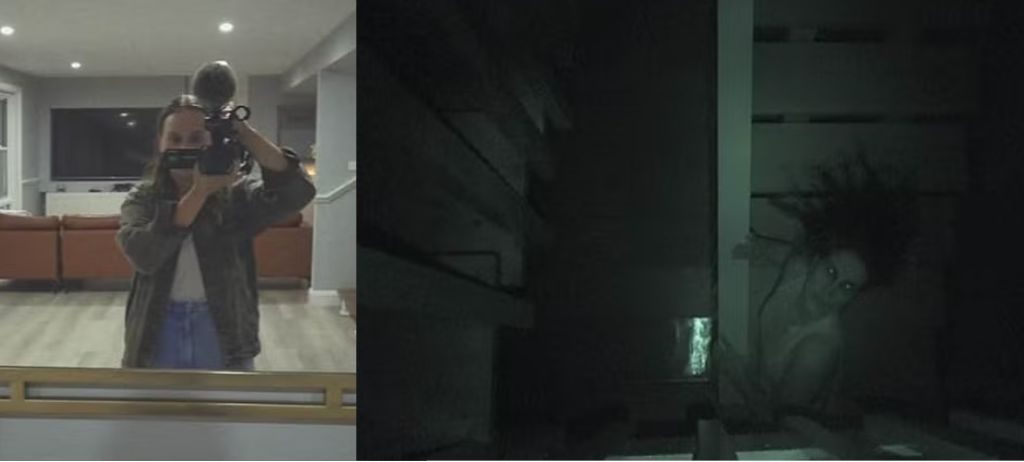
Still from the movie (YouTube)
Puzzle Box is not a groundbreaking found footage film. It doesn’t rise to the level of the best examples in the genre, but it’s far from the worst. What makes the movie stand out are the characters. Even if you took away the horror elements, you would still have an interesting drama about two sisters at a breaking point.
Olivia is ready to move on and live her own life, while Kait just wants one more chance to prove she can get it right. Their relationship feels real, and the audience wants to see them succeed. The horror in the movie is just an added layer on top of their already complicated dynamic.
As Kait and Olivia argue, reconcile, and try to escape from the nightmare they are trapped in, the audience is left hoping that they will make it through. The house itself becomes a kind of character in the story, seemingly intent on keeping them trapped inside. Whether or not they can escape is the central question that keeps the audience invested.
Puzzle Box offers a fresh take on the found footage genre by prioritizing character development over traditional horror tropes. While the film may not completely redefine the genre, it succeeds in creating an engaging narrative centered on the complex relationship between two sisters, Kait and Olivia. Their struggles with addiction, grief, and familial bonds serve as the emotional backbone of the story, making the horror elements more impactful.
The film’s setting in an isolated house amplifies the tension, reflecting the characters’ internal battles while introducing chilling supernatural elements, such as the mysterious woman haunting Kait. Although some horror clichés appear, Dignan skillfully manipulates them to create a sense of disorientation and fear, keeping viewers on edge.
The film’s pacing may lag at times, but its shorter runtime prevents it from overstaying its welcome. Ultimately, Puzzle Box stands out in a crowded field of found footage films, drawing viewers in with its relatable characters and emotional depth. By blending psychological drama with supernatural horror, it invites audiences to invest in the sisters’ journey and leaves them pondering the deeper themes of loss, recovery, and the haunting specters of the past.
