Directed by Park Chan-wook, Oldboy (2003) is a neo-noir thriller regarded as one of the finest Korean films ever made. Loosely based on the manga by Garon Tsuchiya and Nobuaki Minegishi, this film is the middle installment of Park’s vengeance-themed trilogy. The plot follows Oh Dae-su, a man imprisoned for 15 years in a small hotel room, who embarks on a mission to find the person responsible for his captivity after being mysteriously released. Over the years, Oldboy has garnered admiration for its unforgettable action sequences, brilliant direction, and a plot full of twists.
Although the 2013 American remake by Spike Lee didn’t match the brilliance of the original, Oldboy has remained an influential cinematic landmark. The movie’s ending, however, can be perplexing even to long-time viewers. If you’ve recently watched it, your mind may still be trying to piece together the complexities of the final scenes. Here’s a thorough breakdown to help make sense of the ending.
Oldboy Ending Explained
The intricacies of Lee Woo-jin’s plan can be overwhelming, especially considering how it profoundly alters Oh Dae-su’s life. After Dae-su is freed from captivity, his sole purpose becomes finding and killing the man who locked him away—Lee Woo-jin. The two men share a past that is more complicated than mere animosity. In their school days, Dae-su unknowingly ignited a rumor about Woo-jin and his sister. This rumor, once spread, led to the tragic death of Woo-jin’s sister, the driving force behind his desire for revenge.
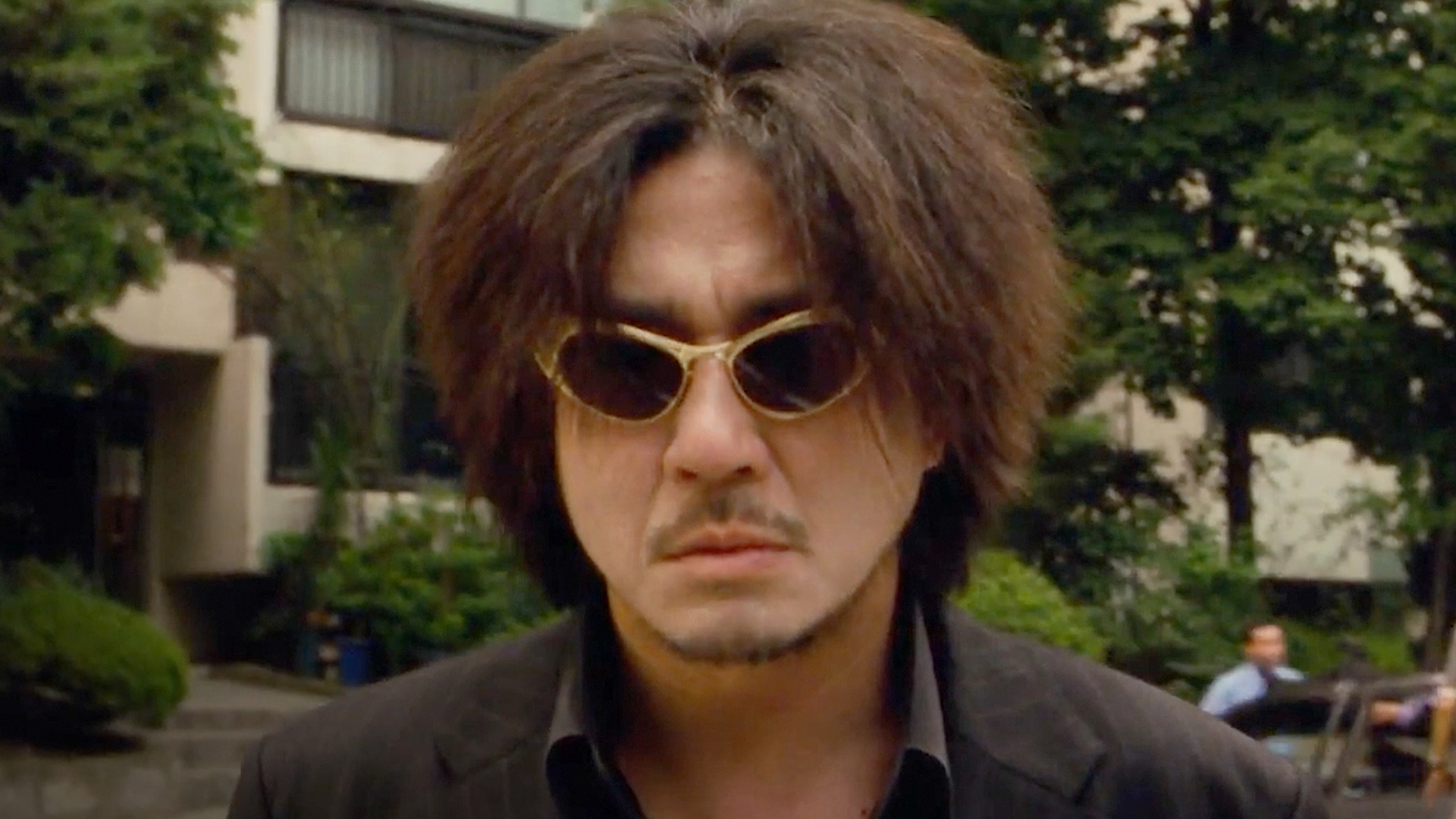
Dae-su (Image via Getty)
Woo-jin doesn’t simply want to ruin Dae-su’s life; he seeks to make him experience the same suffering and shame that he has endured. Woo-jin traps Dae-su in a prison, preventing him from witnessing his daughter growing up. He uses hypnotism to manipulate Dae-su into unknowingly sleeping with his own daughter, Mi-do, believing it will bring them to an equal level of suffering. In the end, despite Woo-jin’s death and Dae-su’s newfound freedom, it becomes clear that Woo-jin’s plan was successful from the very beginning.
How Did Lee Woo-jin Fund His Plot?
The question of how Lee Woo-jin managed to fund his elaborate plan seems secondary in light of the film’s other developments. But, it’s undeniable that an operation of this magnitude—keeping a man imprisoned for 15 years, employing a hypnotist, and orchestrating complex surveillance—would require substantial financial resources. The film does not provide a direct explanation of how Woo-jin accumulated his fortune, but subtle clues suggest he was an astute businessman.
Interestingly, both Woo-jin and Dae-su come from corporate backgrounds, with Dae-su potentially having been successful had he not been imprisoned. In a cruel irony, Woo-jin’s financial success enabled him to execute his plans, and in his pursuit of vengeance, he may have not realized how much he and Dae-su had in common.
What Happened to Oh Dae-su’s Wife?
The night of Oh Dae-su’s kidnapping was supposed to be a celebration of his daughter’s birthday, but Dae-su was intoxicated and out on the streets. His wife, as the film establishes, wasn’t fully part of his life, and his failure as a father is clear. Fifteen years later, upon his release, Dae-su learns of his wife’s death and that his daughter was adopted by a Swedish family. He seems almost unfazed by this news, which is unsettling, suggesting that he might have subconsciously accepted that this was the truth.
The film never directly explains what happened to Dae-su’s wife, but the assumption is that she likely passed away naturally during his imprisonment. While it’s tempting to think that Woo-jin orchestrated her death, there’s little evidence to support that theory. Killing Dae-su’s wife didn’t serve Woo-jin’s plan, and thus, it’s more likely she died of natural causes, with Woo-jin exploiting her death as a further step in his revenge scheme.
Was Park Cheol-woong Really Lee Woo-jin’s Ally?
Park Cheol-woong operates the secret prison where Oh Dae-su is kept for 15 years. Though the prison has multiple clients, Dae-su is clearly the longest-serving prisoner, making Woo-jin his biggest client. Park Cheol-woong is involved in several tasks for Woo-jin throughout the film, including attacking Mi-do and delivering a crucial box to her. Despite his frequent involvement, Park is more of a hired criminal than a full-fledged co-conspirator.
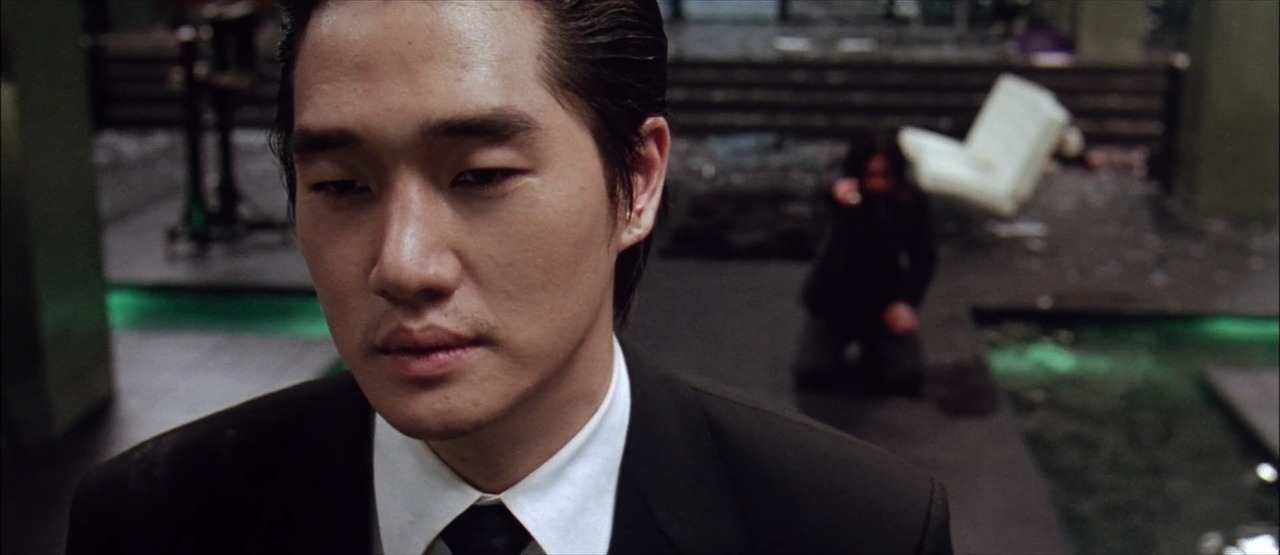
Lee Woo-jin (Image via Getty)
At the start, Park is presented as an opportunist, willing to do whatever he’s paid for. He has no personal stake in Dae-su’s suffering. When Dae-su attacks Park after his release, the prison warden willingly gives up all the information he has, revealing his role as a mere contract worker for Woo-jin. Though he occasionally assists Woo-jin, Park never contributes creatively to the plot and remains a neutral, self-serving figure.
Was Lee Woo-jin’s Sister Really Pregnant?
At the heart of Woo-jin’s resentment toward Oh Dae-su is his sister, whom Dae-su once saw in a compromising situation. Dae-su inadvertently spread a rumor about them being involved, leading to his sister’s tragic death. Woo-jin’s confrontation with Dae-su years later is both cryptic and unsettling. Woo-jin explains that the rumor, which spread after Dae-su’s departure, led his sister to believe she was pregnant with Woo-jin’s child. But is that the truth?
There are two potential explanations for this disturbing revelation. It’s possible that Woo-jin’s sister was truly pregnant, and he convinced himself that Dae-su’s rumor was to blame. Alternatively, she may have suffered from pseudocyesis, or false pregnancy, which causes the person to believe they are pregnant, experiencing symptoms without a fetus. This tragic confusion becomes the catalyst for Woo-jin’s revenge, turning the incident into one of the most intense acts of vengeance ever seen in cinema.
Why Didn’t Lee Woo-jin Kill Oh Dae-su?
Throughout the film, Lee Woo-jin has numerous opportunities to kill Oh Dae-su, yet he never does. Even when Dae-su is freed and vulnerable, Woo-jin spares his life. This apparent contradiction arises because, despite all the torment Woo-jin inflicted upon Dae-su, he never intended for him to die. Woo-jin’s plan was always about making Dae-su share in the same suffering and shame that haunted him for years.
Woo-jin’s ultimate goal was to put Dae-su in a position similar to his own, experiencing the agony that Woo-jin had lived with since his sister’s death. This is why Woo-jin reveals the horrifying truth to Dae-su but does not kill him. In his mind, Dae-su’s suffering would be the ultimate punishment.
Why Did Lee Woo-jin Kill Himself?
Despite achieving his revenge, Woo-jin’s final act is to take his own life. After revealing the full extent of his plan and breaking Dae-su, Woo-jin steps into an elevator and commits suicide. His death is not merely a means to escape punishment, though it is likely he would have faced consequences. Instead, Woo-jin’s suicide stems from the realization that his entire existence had been consumed by his quest for vengeance. With Dae-su ruined, he had no reason to live anymore.
Woo-jin’s life, built around a singular pursuit, left him with no meaningful connections or goals outside of his revenge. His guilt and grief over his sister’s death, compounded by the culmination of his twisted revenge, drove him to despair. His suicide, in essence, is the final release from his own torment.
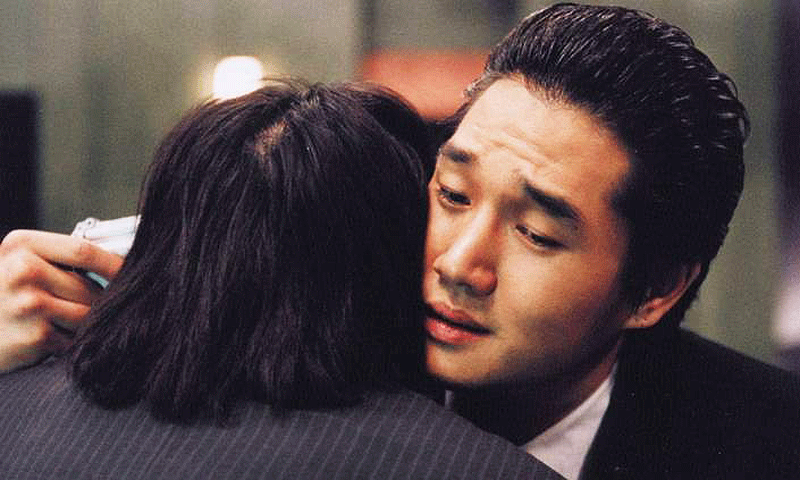
Dae-su and Lee Woo-jin (Image via Getty)
Did Oh Dae-su Really Forget Everything?
After Woo-jin’s death, Dae-su is free, but the knowledge of his relationship with Mi-do is unbearable. Seeking peace, Dae-su tracks down the hypnotist who had manipulated his memories earlier and asks her to erase his memories once again. Through this manipulation, Dae-su aims to forget the truth about his daughter.
The hypnotist alters Dae-su’s mind, and the audience is left to wonder what exactly was erased. Did Dae-su forget that Mi-do is his daughter, or did he forget the events of their illicit relationship? The film leaves this open-ended, allowing the audience to speculate about the extent of Dae-su’s memory loss and the tragic cost of his emotional relief.
Does Mi-do Know the Truth?
By the film’s end, Mi-do is shown comforting Dae-su in the woods, but we are left uncertain whether she knows the truth about their relationship. Woo-jin had planned to reveal this truth to Mi-do but ultimately spared her from learning it. Despite her pivotal role in the film, Mi-do’s knowledge remains ambiguous.
Director Park Chan-wook has stated that Mi-do was “not privy to the truth,” suggesting that she remains unaware of her true relationship with Dae-su. This uncertainty adds to the film’s unsettling atmosphere, leaving the audience to wonder if Mi-do will ever learn the truth or if she will continue her life without ever realizing the dark reality.
What Happened to the Hypnotist?
The hypnotist, a mysterious and enigmatic character, plays a crucial role in manipulating the minds of both Dae-su and Woo-jin. Throughout the film, she remains an almost supernatural figure, using her powers for her own amusement. She works for Woo-jin, but her true allegiance is unclear, as she also helps Dae-su in the end. After altering Dae-su’s mind, the hypnotist disappears without a trace, leaving only an empty chair behind. Her presence, like her actions, is fleeting and mysterious, as she moves on to her next victim, continuing her unpredictable path of manipulation.
What Happens to Oh Dae-su and Mi-do?
The ending of Oldboy leaves much to the imagination. After everything they’ve been through, Dae-su and Mi-do are reunited, but Dae-su is broken—his mind altered and his body damaged. They may not be able to live “normal” lives, but they will likely try to move on in whatever way they can. Their future is unclear, and the film ends with them holding each other in the snow, perhaps unaware of the truth of their relationship.
The film concludes with an unsettling ambiguity, leaving viewers to imagine how Dae-su and Mi-do will navigate their lives after the horrors they’ve endured. Whether they choose to live together as caregivers or enter into a doomed romantic relationship, Oldboy ensures that their future will forever remain marked by the tragic events that transpired.
The mystery-filled show Manifest has viewers since it first aired in 2018, offering a web of intricate questions surrounding Flight 828’s disappearance and the passengers’ strange experiences. The passengers’ journey to uncover the truth behind their fate involved learning about the Callings, the Death Date, and their ultimate survival. While the show was canceled by NBC after its third season, the arrival of season 4 on Netflix in 2022 provided the much-needed closure, answering many questions, but leaving others open for speculation.
Manifest Ending Explained
Ben Stone’s theory regarding the fate of Flight 828’s passengers provided one of the most compelling revelations in Manifest . He suggested that the passengers had all died during the storm in 2013, only to be resurrected five years later through a divine intervention. This theory was particularly supported by the strange circumstances surrounding the three meth addicts, Jace, Kory, and Pete, who had seemingly drowned but were revived later. The notion of divine intervention became more evident in the final season, cementing Ben’s theory as the truth.

Ben (Image via Getty)
Season 3 of Manifest delved deeper into the idea of a divine presence influencing the passengers. The theory explored the possibility that God—or another divine entity—was involved in the resurrection of the passengers and the Callings they received. Research at Eureka provided some scientific backing for this theory, particularly the discovery of sapphire, which was believed to be a divine signature. This connection to the divine was confirmed as the series progressed, explaining why certain individuals were marked by divine forces.
Surviving the Death Date: The Divine Test
The concept of the Death Date served as one of the most ominous elements of Manifest . The Death Date was based on the idea that each passenger was fated to die on the anniversary of their disappearance, five and a half years after their return. The main characters, including Ben, Saanvi, and Michaela, had more time to face this fate, but other characters had much shorter periods to live. Zeke’s survival past his Death Date in season 2 demonstrated that it was possible to evade the impending doom if the passengers followed their Callings and made the right moral choices.
However, the Death Date was not just a simple countdown—it was tied to a greater test. The passengers learned through an ancient legend known as “The Last Trial” that the Callings were designed to challenge their morality. If they made the wrong decisions, they would perish when their Death Date arrived. This idea was brought to life when characters like Kory and Pete failed their tests, leading to their untimely demise, and showing that even one mistake could cost them everything.
The Significance of the Peacock in the Plot
The peacock, a symbol that appeared throughout Manifest , played a crucial role in explaining some of the show’s mysteries. The discovery of ancient peacock DNA on a piece of driftwood tied back to Noah’s Ark raised intriguing questions about the connection between the ark and Flight 828. The peacock DNA was linked to the passengers, suggesting that both the ark and the plane shared a similar mysterious phenomenon. Ben’s vision of the peacock in season 1 was eventually revealed to be a foreshadowing of this connection, adding depth to the storyline that tied ancient history to the events of the show.

Michaela (Image via Getty)
Manifest Season 4 on Netflix: The Final Revelations
Season 4, particularly the second part, answered many of the lingering questions that had haunted viewers since the show’s inception. The truth behind Flight 828’s disappearance and the Callings was clarified: the passengers had been trapped within a divine consciousness, where a higher power had used the Callings to prevent an impending volcanic apocalypse. The show also revealed that the Death Date was tied to this apocalyptic event, not directly to the passengers themselves. As a result, the final episodes brought resolution to many of the mysteries, although a few questions remained unanswered.
The finale of Manifest was both heart-wrenching and satisfying. The Death Date arrived, and the passengers were brought together by a beacon of light. As the characters boarded Flight 828 once again, they faced their final judgment. However, not all of the passengers survived. Eleven passengers, including Angelina—who had killed Grace and kidnapped Eden—did not make it through the test. Those who passed were reunited with their loved ones in the place and time they were originally meant to return to, with their memories of the events intact. Michaela, for example, rejected Jared’s proposal, knowing he would find happiness with someone else in the future, while she reunited with Zeke.
Understanding the Callings and Their Role in Survival
The Callings, one of the central mysteries of Manifest , were integral to the survival of the passengers. These divine messages guided the characters toward making the right choices and avoiding the Death Date. Olive discovered that if the passengers failed to follow the Callings, it would spell disaster for everyone. As the final judgment approached, the stakes grew higher. Some passengers, like Angelina and her followers, ignored their Callings, which led to their demise. The show emphasized the importance of selflessness and redemption in the final moments.
The character of Eagan exemplified this theme when he sacrificed himself to save Adrian, a selfless act that ultimately helped them survive. Meanwhile, those who had been driven by vengeance or arrogance, like Angelina, failed the test. Her belief that she had been sent by God blinded her to the true purpose of the Callings, leading to her downfall.

Ben (Image via Getty)
Unresolved Mysteries After the Finale
Despite the satisfying resolutions in the finale, some mysteries remained unanswered. One major question centered around Cal Stone, who, as a child, was the only character who did not retain his memories of the events that transpired. This may have been related to his sacrifice with the sapphire, but it remained unclear. Furthermore, the public was unaware of the true nature of Flight 828’s disappearance, and several passengers were missing when the plane landed. This left room for further exploration, particularly with the appearance of Vance and Drea, who set out to investigate the missing passengers.
Could There Be a Manifest Season 5?
Although the show’s creators have suggested that a spinoff could be in the works, the likelihood of a Manifest season 5 seems low. The original series concluded with a satisfying ending, and extending the story could risk diminishing its impact. However, showrunner Jeff Rake has expressed interest in continuing the Manifest universe through a spinoff, though nothing has been confirmed. Fans are divided on the possibility, with some expressing concern that it might tarnish the original series’ conclusion, while others are open to new stories set in the same world.
Manifest has provided answers to many of the questions that had been raised throughout its run, some mysteries still remain unresolved. The show’s finale brought closure to the key storylines, but the fate of certain characters, including the missing passengers and Cal’s memory loss, continues to leave room for speculation. Whether the Manifest universe will expand through a spinoff or remain closed, its impact on fans and the world of mystery-driven television is undeniable.
