Sergio Leone’s Once Upon a Time in America is regarded by some as the pinnacle of his career, a masterpiece that stands among his previous greats such as A Fistful of Dollars , The Good, the Bad, and the Ugly , and Once Upon a Time in the West . These films, often described as spaghetti westerns, were known for their grand portrayals of vast spaces where cowboys and conmen fought for survival. However, Once Upon a Time in America , released in 1984, is far from Western. It is a gangster epic that contrasts the former by exploring the notion of time itself. The narrative continuously jumps between three distinct eras in the lives of its characters: as young petty criminals in 1918, as hardened gangsters in the early 1930s, and as older men far removed from their criminal pasts in 1968.
Once Upon a Time in America, Ending Explained
The film presents a brutal depiction of the immigrant experience and the American dream, with the central characters far from traditional heroes. Upon its initial release in the United States, the film suffered from studio-imposed cuts, which ultimately transformed it into a version far shorter than the director’s intended edit. Originally, the film had a runtime close to four hours, reflecting Leone’s full vision. In America, however, audiences were subjected to a truncated version, resulting in a less coherent experience and, consequently, a largely confused reception. While this version resembled Leone’s original work, it didn’t fully reflect the depth and richness of the director’s intentions.
At the core of the film’s plot lies a dual mystery, with the ending designed to leave audiences questioning the fates of the main characters. This intricate layering of questions allows viewers to interpret the story in various ways. Leone deliberately left much of the final sequence open-ended, forcing audiences to draw their own conclusions about the truth behind what transpired. Here’s a breakdown of how the film’s ending unfolds.
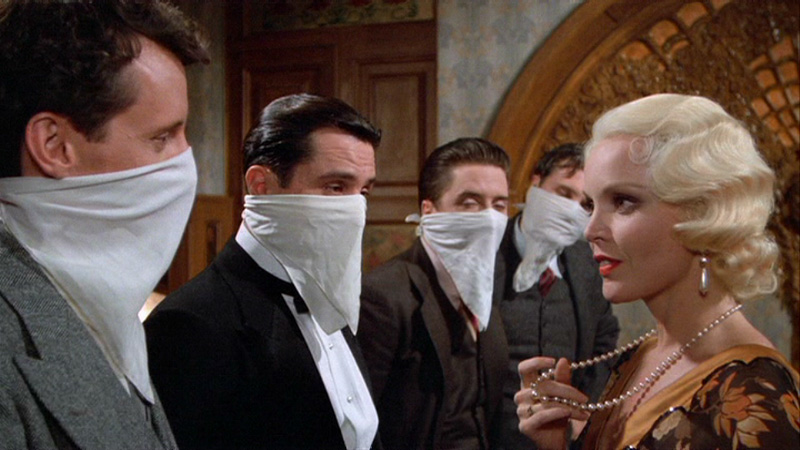
Once Upon a Time in America cast (Image via Getty)
Setting the Stage for the End of Once Upon a Time in America
The story follows Noodles Aaronson (played by Scott Tiler as a young man and Robert De Niro in his adult years), a gangster who initially rose to power alongside his friend Max (Rusty Jacobs as a child and James Woods as an adult). Their journey begins when they form a gang together while still young, based in the Lower East Side. Noodles ends up in prison after stabbing a local boss. Upon his release, he discovers that his gang has prospered, turning into a successful bootlegging operation. Yet, their success is fleeting, as their empire crumbles after the repeal of Prohibition.
At a pivotal moment, Noodles is persuaded by Max’s girlfriend Carol (played by Tuesday Weld) to betray the gang by providing information that would send the members to prison for lesser offenses. The plan goes awry, and instead of helping, Noodles and Max end up fighting. Noodles knocks Max unconscious, and, upon waking, learns that his friends have all been killed in a shootout with the police. Overcome with grief, he flees to Buffalo, where he spends years hiding from his past in an opium den, trying to numb his pain.
Everything changes in 1968 when someone from his past reappears, revealing that Max faked his death with the help of the police. He had spent the last 30 years rising through the ranks of the Teamsters Union under a new identity: Christopher Bailey. Max’s rise has been significant, leading him to become the U.S. Secretary of Commerce. However, Max has now made powerful enemies, and Noodles is contracted to kill him before the Teamsters do.
Max’s Fate in the Final Moments
This is where the first part of the film’s two mysteries comes into play. Noodles refuses to kill Max. He believes that Max died with the rest of their gang and sees the man before him as a stranger who doesn’t deserve his loyalty. As Noodles leaves Bailey’s house, Max, or someone resembling him, follows him in the darkness. The camera cuts to a garbage truck that drives between the two men. When the truck passes, Max is nowhere to be found. Instead, the camera focuses on the truck’s rear end, showing the spinning blade as it compacts refuse.
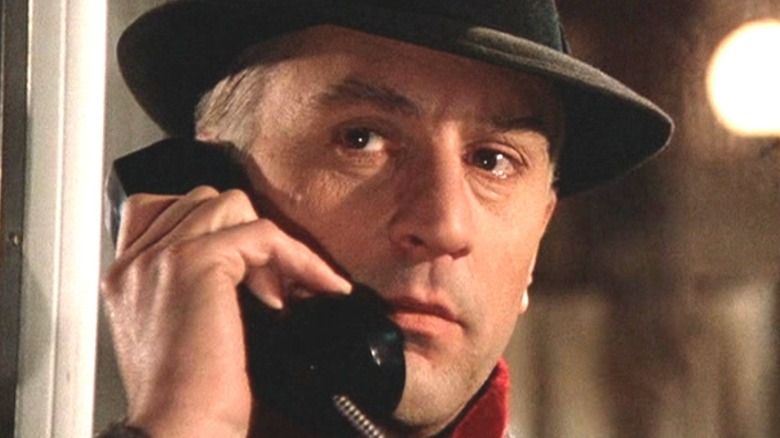
Noodles (Image via Getty)
The scene of the garbage truck is deliberately ambiguous and suggests several possibilities. One theory is that Max, or the man who resembled him, was killed during this moment. The truck’s spinning blades might symbolize the finality of death. Alternatively, the scene could imply that Max escaped or that he was an entirely different person altogether. James Woods, who portrayed Max, has even stated that he didn’t know what happened to his character during the film’s ending. To maintain this uncertainty, Leone chose to use a stand-in actor for the scene rather than Woods himself.
Is Noodles Dreaming the Whole Story?
At this point, the line between reality and imagination starts to blur. The final sequence of the film returns to an earlier scene, where a younger Noodles is seen in the opium den after the death of his friends in the 1930s as he consumes the drug, a blissed-out smile spreads across his face. This moment has sparked various interpretations about the nature of the story’s conclusion.
One popular theory suggests that Noodles, while under the influence of opium, begins to piece together the truth about Max’s plan. The smile, in this context, could indicate Noodles’ realization of Max’s long-standing intentions. It could be a moment where Noodles understands that Max had orchestrated his escape from the gangster world, freeing himself from the misery they both endured. The opium-induced high might serve as the point at which Noodles gains clarity about the master plan, finally coming to terms with what happened.
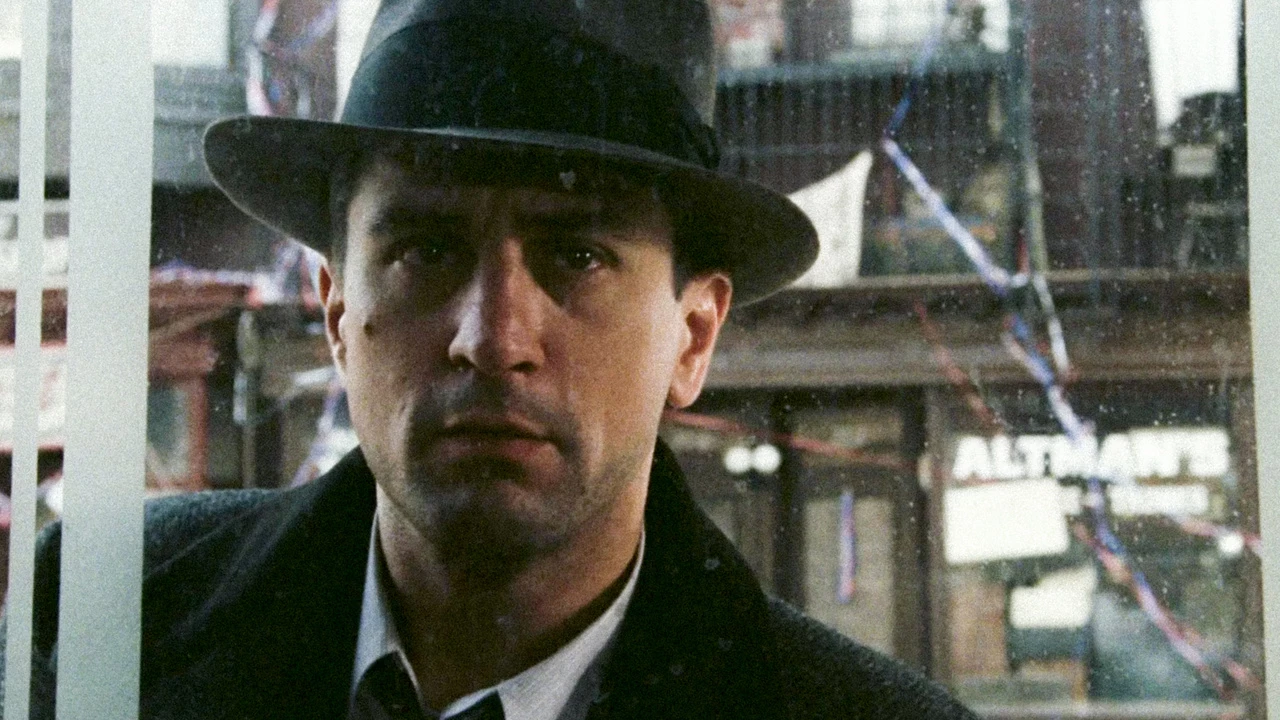
Noodles (Image via Getty)
Alternatively, another theory, widely discussed by Aural Crave, suggests that Noodles’ final moments represent an opium-induced dream. Everything after he enters the den—the escape to Buffalo, his eventual return to New York, Max’s rise to power, and his return to Noodles’ life—could be imagined by Noodles as part of his fantasy of a happier ending. In this version, Noodles dreams that Max survived, and the entire scenario unfolds in his head as a wish-fulfillment fantasy. It could be that Noodles’ smile signals his desire to make peace with Max’s survival, despite the betrayal and violence that marked their past.
The ambiguity of Max’s fate might also represent Noodles’ inner conflict. He is unsure whether he wants Max to live or die. Noodles’ indecisiveness is portrayed in this open-ended sequence, where the mystery of Max’s fate lingers, allowing audiences to interpret it in ways that align with their own desires for the story’s conclusion.
The beauty of Once Upon a Time in America lies in the intricacy of its ending. The film masterfully weaves together two mysteries, inviting viewers to make sense of them while exploring the themes of memory, loss, and the passage of time. Whether the final scenes are a dream, a reality, or a combination of both, Leone leaves his audience with more questions than answers, ensuring that Once Upon a Time in America remains a film that is deeply felt and endlessly debated.
Den of Thieves concludes with a surprising twist, revealing the true mastermind behind the heist. Directed by Christian Gudegast, the film presents an intense finale while leaving questions unanswered about the criminals’ motivations and how they managed to escape with millions. Here’s a breakdown of the ending and the key plot points leading to the ultimate revelation.
Den of Thieves Ending Explained
Den of Thieves, originally released in 2018 and now streaming on Netflix, opens with characters that subvert the traditional good guy vs. bad guy dynamic. The film introduces Detective Nicholas “Big Nick” O’Brien, played by Gerard Butler, who arrives at a crime scene with an air of toxic masculinity. While he isn’t liked by his peers, his team, known as the “regulators,” remains fiercely loyal to him.
Big Nick’s team’s loyalty is demonstrated in a sequence where they kidnap and interrogate Donnie Wilson, a local bartender played by O’Shea Jackson Jr. Big Nick forces Donnie to reveal information about his criminal associate, Ray Merrimen, portrayed by Pablo Schreiber. The central conflict of Den of Thieves revolves around Big Nick’s investigation into Merrimen’s next big heist: targeting the Los Angeles branch of the Federal Reserve.
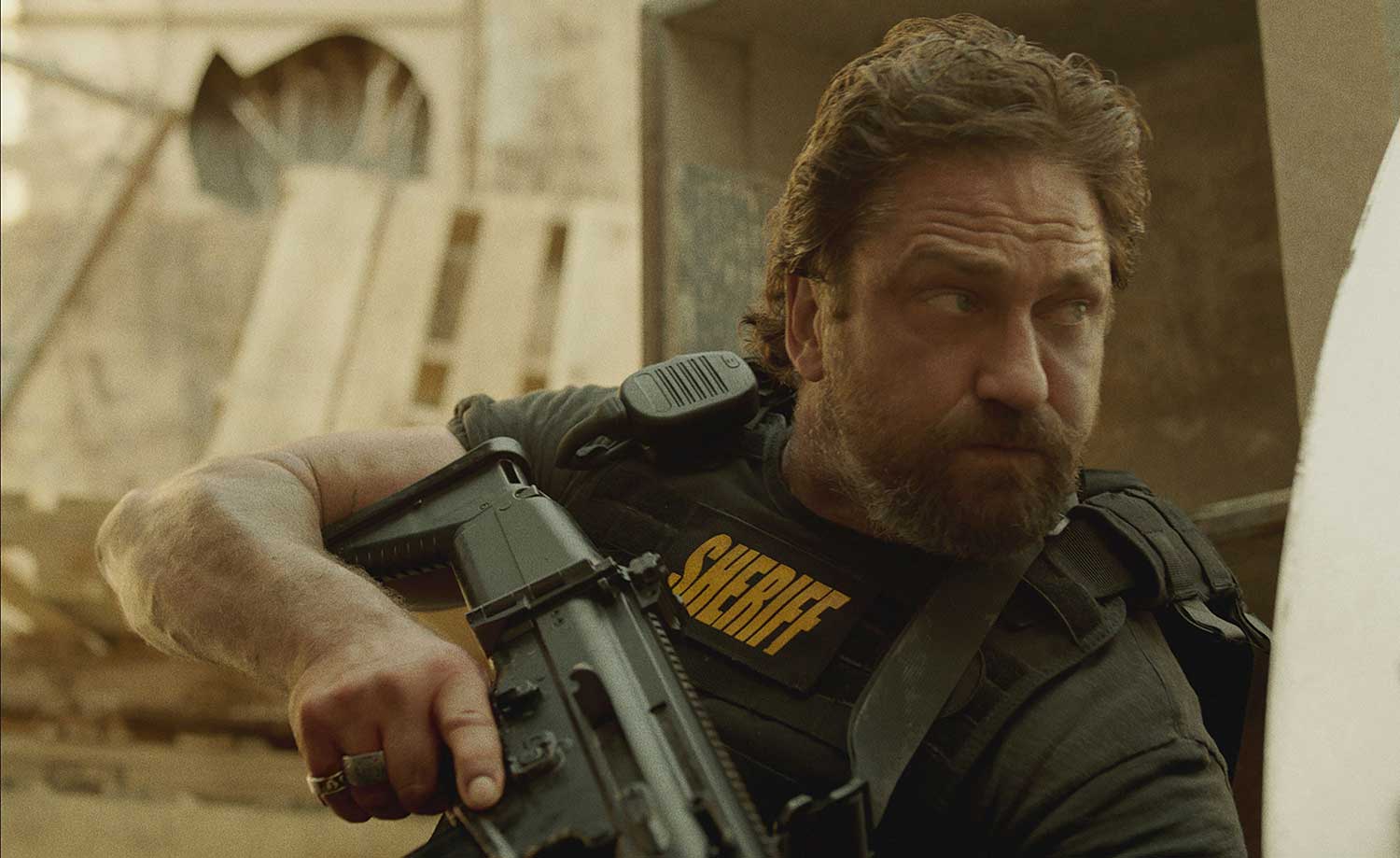
Big Nick (Image via Getty)
Merrimen plans to steal $30 million of unfit money from the Federal Reserve. This money, lacking serial numbers, is set to be shredded and is considered worthless. Merrimen’s crew consists of Donnie, Levi (50 Cent), Bosco (Evan Jones), and Mack (Cooper Andrews). While Merrimen’s deep knowledge of the Federal Reserve is never fully explained, his crew trusts him due to their military and sports connections. Merriman uses Donnie and his girlfriend to feed Big Nick false information about a different heist target, but this is only part of a larger, more complex plan.
The First Twist: The Heist at Pico Rivera Savings & Loan
In the film’s final act, Big Nick expects to catch Merrimen’s crew at Pico Rivera Savings & Loan. However, things take an unexpected turn when he realizes this heist is different. The crew threatens to kill civilians, something they don’t usually do. As Big Nick waits for Merrimen’s demands to be met, he observes the destruction of a bank vault. But, soon, Big Nick realizes he’s been tricked as Merrimen’s crew escapes undetected.
Merrimen and his team proceed with their heist at the Federal Reserve. As events unfold, Donnie is detained by Big Nick, who pressures him into revealing the rally point for the crew. Merrimen loses communication with Mack after learning of Donnie’s capture. This leads to the film’s explosive climax: a shootout in a traffic jam, where Merrimen, Bosco, and Levi meet their deaths.
The Incredible Revelation: The Shredded Money
The final moments of the film reveal that the $30 million stolen from the Federal Reserve has been shredded. Big Nick soon realizes that Donnie managed to escape the scene. He visits Ziggy’s Hafbrau, the bar where he had confronted Donnie earlier, and reflects on their previous conversations. This leads to a surprising discovery—Donnie was the true mastermind of the heist. A brief montage reveals Donnie’s meticulous planning, collecting intel on napkins over time, and manipulating Merrimen into executing his plan.
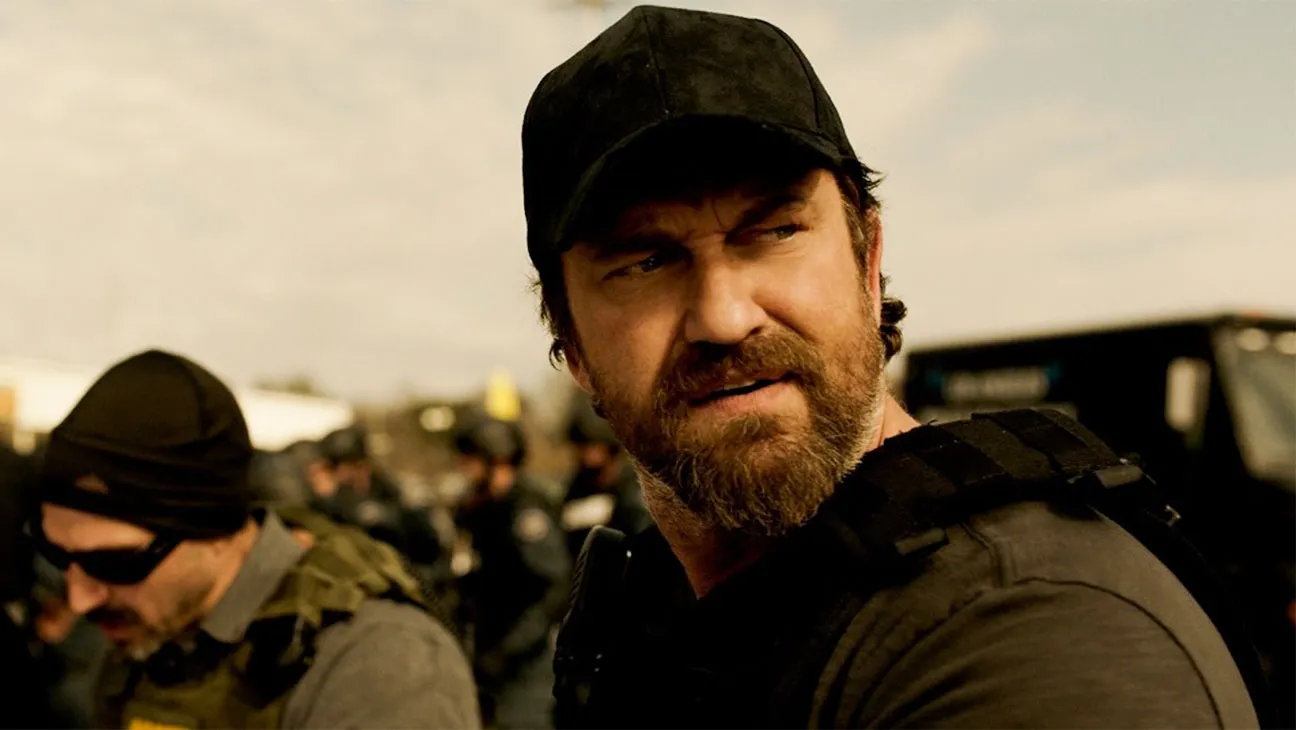
Big Nick (Image via Getty)
The final scenes show Donnie working in London, seemingly plotting another robbery at a diamond exchange. This revelation changes everything, as Donnie’s role as the mastermind of the Federal Reserve heist is fully revealed. Throughout the film, Donnie has been quietly building his criminal network, manipulating the people around him, and maintaining control over his environment.
Merriman’s Heist Plan: A Complex Operation
Merriman’s Federal Reserve heist initially appears to go as planned, with the crew creating a distraction at the Pico Rivera Savings & Loan and escaping through a sewer system. Merrimen and Levi then use a stolen armored vehicle and disguise themselves to enter the Federal Reserve. Once inside, Donnie gains access to the count room after Bosco cuts the power. He locates the unfit money, ensures it is placed in a garbage truck for transport and escapes.
Donnie, pretending to be a deliveryman, uses Mack’s intel to bypass security while escaping with the stolen money. Big Nick detains him, but Merrimen and the crew manage to continue the plan. Meanwhile, Bosco hijacks a garbage truck carrying the stolen money, and Donnie’s friend is revealed to be the driver. This shows the intricate steps taken by each crew member to ensure the heist’s success.
Merriman’s Code: Lives by the Gun, Dies by the Gun
Merrimen, much like Big Nick, lives by a strict code of conduct, believing in his ability to control the situation. However, Merrimen doesn’t anticipate Donnie’s betrayal. In the end, both Merrimen and Big Nick are revealed to be mere pawns in a larger game, highlighting the masculinity and pride that drives both characters. The twist shows that Donnie has been in control all along, manipulating Merrimen and executing the heist his way.
Donnie’s ability to manipulate those around him is key to his success. Early in the film, he makes a telling statement while bartending near the Federal Reserve: “I’m in complete control of my environment, and people don’t even know.” The final scene in London, where Donnie plans his next job, reinforces this idea. He is shown continuing his criminal activities, hinting that his story is far from over.
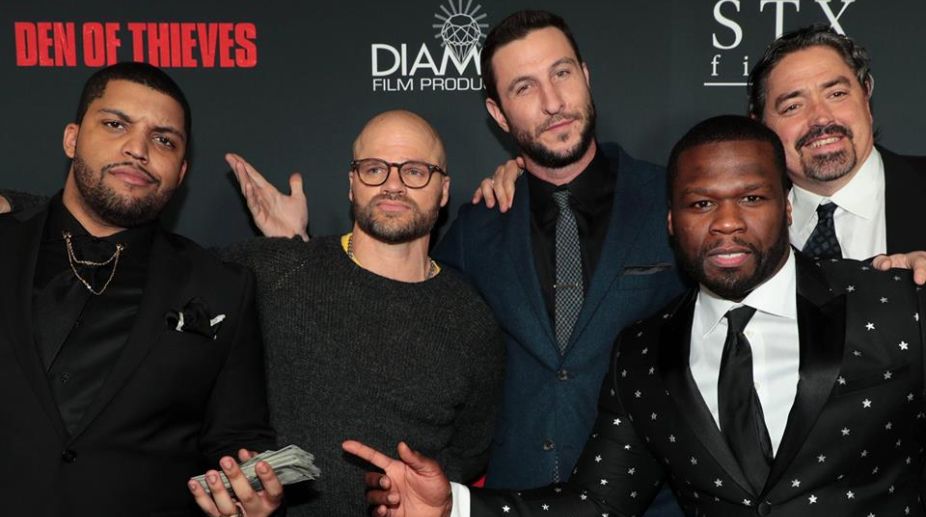
Den of Thieves cast (Image via Getty)
Realism in Den of Thieves: Authenticity in the Heist
Despite its over-the-top moments, Den of Thieves strives for authenticity. Christian Gudegast consulted with real robbery experts, including Bill Rehder, a Los Angeles robbery specialist, to ensure the film’s portrayal of crime feels realistic. The story blends elements of reality with fiction, creating a sense of intrigue and realism that resonates with audiences. While the film may not be perfect, its grounded approach to heists adds to its appeal.
The future of Den of Thieves lies in its upcoming sequel, Den of Thieves 2. Gudegast has revealed that the sequel will take the story across Europe, with locations including London, Belgium, Marseilles, the Cote d’Azur, and Montenegro. In the sequel, Big Nick will pursue Donnie, who is now part of an international jewel thief network known as the Pink Panther mafia. Gudegast also teased that Big Nick’s character would evolve, no longer merely a cop seeking justice but someone being hunted by an unknown organization.
Den of Thieves wraps up with a twist that redefines the entire narrative. Donnie, the seemingly innocent bartender, is revealed to be the mastermind behind the Federal Reserve heist, orchestrating the entire operation from the shadows. The film’s blend of reality and fiction keeps viewers engaged, while the incredible ending leaves the door open for future adventures. As Den of Thieves 2 prepares to expand the story globally, the saga of betrayal, crime, and manipulation is far from over.
