Pachinko is a moving drama that has attracted audiences with its rich storytelling and emotional depth. Apple TV+’s adaptation of Min Jin Lee’s novel has made waves with its second season. The finale of Season 2 brings its characters to an intense point in their journeys, filled with difficult decisions and emotional turmoil. In this season, the characters face profound moments that shape their identities and destinies.
The series follows the story of Sunja (played by Kim Min-ha), who becomes a pivotal figure in the lives of her family members. Her eldest son, Noa (played by Kang Tae Joo), is at the center of the drama.
The final episode of Season 2 reveals Noa’s struggle as he learns a painful truth about his biological father, which has significant implications for his life and his family.
This moment drives Noa to make a drastic choice: he decides to leave his studies at Waseda University to escape the reality of his situation, even bidding farewell to his beloved mother. While this moment seems monumental, the most crucial decision does not actually occur in the finale. Instead, it is a scene from Episode 4 that truly defines Noa’s journey.
Pachinko’s Biggest Moment Came Midway Through Season 2
Throughout Season 2, Noa’s character evolves, starting with his introduction as a teenager in the first episodes. The narrative sets the stage for a significant revelation in Noa’s life, one that shapes not just his arc but the overall trajectory of the season.
As the episodes unfold, we see Noa grappling with his identity, particularly after discovering the truth about his real father. The shocking revelation in the finale serves as a culmination of his character development.
However, the pivotal moment occurs in Episode 4, where Noa witnesses Hansu (played by Lee Min-ho), his biological father, committing a brutal act of violence.
This scene has a profound impact on Noa’s perception of Hansu and ultimately influences his decisions moving forward. Noa sees Hansu mercilessly beat the caretaker of the farm, and this violent display of power marks a turning point in Noa’s understanding of who his father truly is.
The Impact of Hansu’s Actions on Noa’s Perception
Initially, Noa has not interacted much with Hansu, but the violent encounter changes everything. Up until this point, Hansu was seen as a benefactor who helped Noa and his family.
However, the brutal reality of Hansu’s nature shatters that image. For Noa, Hansu transforms from a seemingly kind figure into a ruthless man who embodies everything Noa opposes.
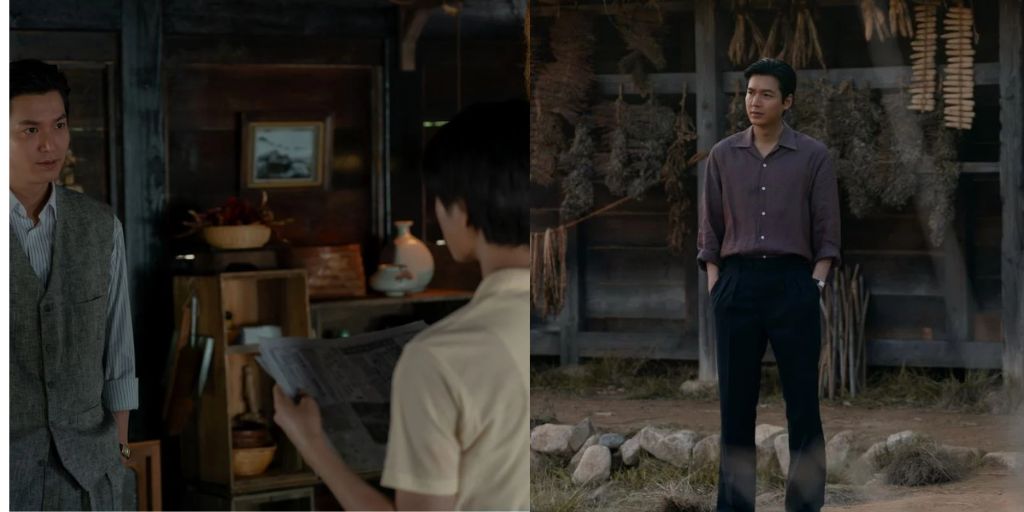
Still from the episode (Apple TV+)
Witnessing such brutality firsthand forces Noa to confront the truth about his father’s criminal background. He realizes that Hansu’s wealth and influence come from a place of cruelty.
This realization weighs heavily on Noa, who dreams of becoming a teacher and living a life defined by kindness and integrity. The contrast between Hansu’s actions and the values instilled in him by his stepfather, Baek Isak (played by Steve Sang-Hyun Noh), becomes starkly apparent.
The Lessons of Forgiveness from Baek Isak
Baek Isak plays a crucial role in Noa’s upbringing. He teaches Noa valuable lessons about forgiveness and compassion, even in the face of betrayal. In a significant scene after Isak is released from prison, he encounters a man who betrayed him to the authorities.
Despite the pain this betrayal caused, Isak chooses to forgive his former friend. This act of forgiveness is not just about Isak’s character; it sets an example for Noa.
As Noa watches his stepfather forgive someone who wronged him, he starts to understand the importance of compassion. Isak’s decision to forgive, despite the harsh realities they face, serves as a guiding light for Noa. It shows Noa that true strength lies in the ability to forgive rather than seek vengeance.
The contrast between Isak and Hansu is sharp. While Isak represents kindness and moral integrity, Hansu embodies cruelty and self-interest. This dichotomy leaves Noa in a moral quandary, torn between the love for his biological father and the lessons he learned from Isak.
Noa’s Internal Conflict
Noa’s internal conflict grows as he grapples with the truth about Hansu. He is caught between two worlds: the world of his real father, marked by violence and betrayal, and the world of his stepfather, defined by love and forgiveness. The memory of witnessing Hansu’s brutality becomes a burden too heavy for Noa to carry.
Throughout Season 2, Noa attempts to hide from this reality. Even as his girlfriend, Akiko Nakazono (played by Kilala Inori), pushes him to confront the truth, Noa struggles to accept the implications of his father’s actions. He wants to believe that Hansu is acting out of kindness, but deep down, he knows that this is a lie he tells himself to avoid facing the harsh truth.
As the season progresses, Noa’s denial becomes increasingly evident. He tries to rationalize Hansu’s behavior, but the memories of that violent night linger. Noa’s realization that he cannot ignore who Hansu truly is leads him to make a life-altering decision.
The Consequences of Noa’s Choice
The decision to leave Waseda University and his family marks a critical turning point for Noa. He believes that by distancing himself from his past and his biological father, he can forge a new identity free from the shame associated with Hansu. This choice, however, does not come without consequences.
As Noa says goodbye to his mother, the emotional weight of his decision becomes clear. He loves his mother dearly and understands the pain his departure will cause her. Yet, he feels that he cannot live under the shadow of a man like Hansu. Noa’s choice symbolizes a desperate attempt to reclaim his identity and reject the toxic legacy left by his father.
Noa’s journey throughout Season 2 illustrates the complexities of family ties and the impact of our choices. He is a young man searching for his place in a world that often feels hostile and unforgiving. The struggle between love and shame, loyalty and self-preservation, defines his character and sets the stage for his future.
The Pivotal Scene in Episode 4
The scene in Episode 4, where Noa witnesses Hansu’s brutality, stands as the most significant moment of the season. This event does not just shape Noa’s perception of his father; it reverberates through the entire narrative. Noa’s reaction to this scene highlights the depth of his internal conflict and the weight of his lineage.
After witnessing Hansu’s violent nature, Noa is thrust into a world where he must confront the truth about himself. He realizes that he cannot escape his lineage, no matter how hard he tries.
The burden of being the son of a man like Hansu becomes too great for him to bear. This pivotal moment forces Noa to confront his feelings of shame, anger, and confusion.
Noa’s Struggle with Identity and Legacy
Noa’s struggle is not just about rejecting Hansu; it is also about defining himself in opposition to his father. He grapples with questions of identity and legacy, wondering what it means to be the son of someone like Hansu. The weight of his father’s actions weighs heavily on Noa as he contemplates his future and the person he wants to become.
The decisions he makes are informed by a desire to distance himself from the violence and cruelty associated with Hansu. Noa wants to carve out a new identity based on the values he learned from Isak. He dreams of becoming a teacher, someone who can impart kindness and compassion to others. However, the shadow of his father looms large over his aspirations.
Noa’s journey reflects a universal struggle faced by many individuals who grapple with the complexities of family dynamics. He is not just fighting against the legacy of his father; he is also trying to find his place in a world that often feels overwhelming.
The Emotional Climax of Season 2
As Season 2 reaches its climax, the emotional stakes for Noa become higher than ever. The choices he makes are not just personal; they impact his entire family. The revelation of his father’s identity, coupled with the brutality he witnesses, forces Noa to make a choice that will affect everyone he loves.
The tension builds as Noa grapples with the consequences of his actions. He must show the delicate balance between loyalty to his family and the need to protect himself from the toxic influence of Hansu. This internal struggle adds depth to his character and makes his journey relatable to viewers.
In the final moments of Season 2, Noa’s decision to leave represents a powerful act of defiance. He chooses to step away from the legacy of violence and cruelty that Hansu embodies. While this choice brings him pain, it also offers the possibility of freedom and self-discovery.
The Aftermath of Noa’s Decision
The aftermath of Noa’s decision to leave is profound. As he walks away from his past, he knows he is leaving behind not just a family but also the life he has known. The emotional turmoil is palpable, and viewers can feel the weight of his choice. Noa is stepping into the unknown, uncertain of what lies ahead but determined to forge a new path.
His decision marks a pivotal moment in the series, illustrating the complexities of family bonds and the sacrifices we make in the pursuit of self-identity. Noa’s journey resonates with anyone who has ever faced the difficult task of breaking free from the expectations and legacies imposed by family.
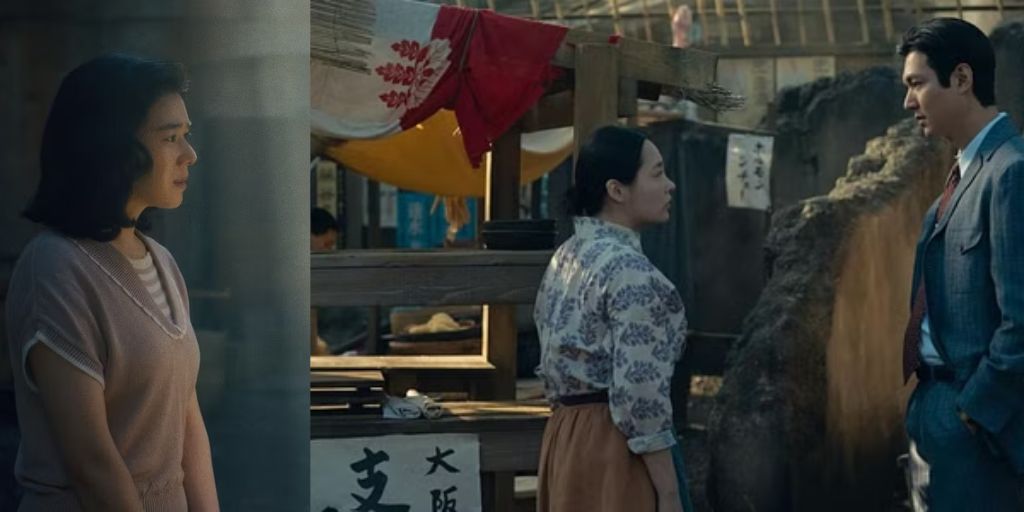
Still from the episode (Apple TV+)
As the season closes, Noa’s story leaves viewers with a sense of hope and uncertainty. He is on the brink of discovering who he truly is, unburdened by the weight of his father’s legacy. The choice to leave symbolizes not just a physical departure but also an emotional and spiritual awakening.
Conclusion: The Journey Ahead
The narrative of Pachinko Season 2 emphasizes the power of choice and the impact of family on personal identity. Noa’s struggle is a poignant reminder of the complexities of love, loyalty, and self-acceptance. His journey reflects a universal experience—one that resonates deeply with audiences.
As Pachinko continues to unfold, viewers are left to ponder the implications of Noa’s choice. Will he find the freedom and identity he seeks? Or will the shadows of his past continue to haunt him? These questions linger, creating anticipation for the next chapter in his story.
All episodes of Pachinko Season 2 are now available to stream on Apple TV+ in the U.S. The series masterfully captures the emotional journey of its characters, inviting audiences to reflect on their own choices and the legacies they carry.
DreamWorks is celebrating an important achievement this weekend with its newest release, The Wild Robot. This animated movie has reached a significant milestone at the domestic box office, crossing the coveted $100 million mark in the United States.
As it continues to perform well, the film is also approaching a larger goal of $200 million in worldwide box office earnings. This success is noteworthy, especially since The Wild Robot was made available on digital streaming platforms just a few days ago. However, it seems that streaming availability has little effect on the success of a theatrical release that is already doing well.
Recent trends show that even when animated films are released for home viewing, they can still attract a large audience to theaters. A prime example of this is Despicable Me 4, which grossed nearly $1 billion worldwide, despite being available for rental on premium video-on-demand (PVOD) services for most of its run.
In its fourth weekend, The Wild Robot generated $101 million in domestic sales, while also earning an impressive $94 million from international markets.
This brings the film’s total global earnings to an outstanding $196 million. This success marks DreamWorks’ second hit in a row this year, following the hugely successful Kung Fu Panda 4, which grossed close to $550 million worldwide.
A Sequel to ‘The Wild Robot’ Is In Development
The production budget for The Wild Robot was reportedly around $80 million. This figure has become the new standard for animated films, especially considering that studios were willing to invest nearly twice that amount before the pandemic affected the industry.
The ability of The Wild Robot to thrive despite its simultaneous release on streaming platforms shows that audiences still appreciate the theater experience, especially for animated features that offer family-friendly entertainment.
Based on the beloved book series by Peter Brown, The Wild Robot debuted after Transformers One, another animated film that did not perform well at the box office. Critics have praised The Wild Robot, giving it exceptional reviews.
The film holds a remarkable “fresh” rating of 98% on Rotten Tomatoes, making it one of the best-reviewed films in the history of DreamWorks. The strong reception from audiences and critics alike has contributed to its impressive box office performance, adding to DreamWorks’ cumulative global box office total, which is nearing $17.5 billion thanks to this film’s success.
The storyline of The Wild Robot centers around a matronly robot named Roz who becomes stranded on a strange new island. She must learn to survive in this unfamiliar land while trying to connect with the local wildlife and find her place in the ecosystem.
This narrative shows themes of adaptation, family, and the bond between nature and technology. The film captures the imagination of viewers, providing both adventure and heartwarming moments that resonate with audiences of all ages.
Directed by Chris Sanders, a veteran of the animation industry, The Wild Robot draws inspiration from the works of renowned filmmaker Hayao Miyazaki. Sanders has a strong background in creating compelling animated films, having previously directed Lilo & Stitch and How to Train Your Dragon.
The film features an impressive voice cast, including award-winning actress Lupita Nyong’o, who brings the character of Roz to life with her unique vocal talent.
Other notable voice actors include Pedro Pascal, Kit Connor, Bill Nighy, Stephanie Hsu, Mark Hamill, Catherine O’Hara, Matt Berry, and Ving Rhames, all of whom contribute to the film’s rich character development and storytelling.
In response to its success, DreamWorks has recently green-lit a sequel to The Wild Robot, indicating the studio’s confidence in the franchise’s potential. Fans of the film can look forward to more adventures featuring Roz and her friends in the sequel, which promises to build on the original’s themes and show new storylines.
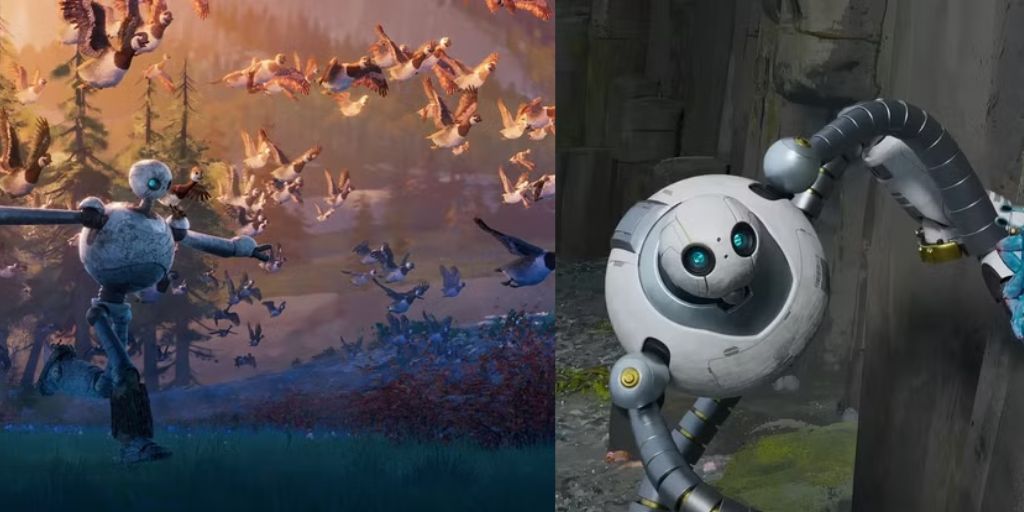
Still from The Wild Robot (Credit: DreamWorks)
Audiences can currently enjoy The Wild Robot both in theaters and at home. This dual-release strategy allows viewers to choose how they want to experience the film, whether it be on the big screen or in the comfort of their own living rooms.
As the movie continues to attract attention and generate positive buzz, DreamWorks encourages fans to stay tuned for more updates about upcoming projects, including the sequel.
The Wild Robot stands as a testament to DreamWorks’ ability to produce high-quality animated films that resonate with audiences. With strong box office numbers, excellent reviews, and the promise of a sequel, it is clear that this film has captured the hearts of many.
DreamWorks continues to demonstrate its commitment to creating entertaining and meaningful animated experiences that leave a lasting impression on viewers around the world. Whether you are a long-time fan of animated films or new to the genre, The Wild Robot is a movie that should not be missed.
