The second season of Pachinko concludes with its characters continuing their search for meaning, purpose, and, ultimately, happiness. However, this quest is not straightforward; the characters face numerous obstacles along the way, each driven by their personal struggles.
These challenges include the trauma and horror of war, conflicts in the pursuit of power, and the delicate, often painful, complexities of identity and family. At the heart of these journeys is a broader, universal theme—what it means to survive, especially in a world full of turmoil.
Sunja (played by Minha Kim in her youth and Youn Yuh-jung in her later years) is the emotional core of the story, her determination to keep her family safe and her unwavering resilience a testament to her strength. Despite decades of hardship, from war to loss and personal grief, she remains strong.
She knows, perhaps more than anyone, that life is full of suffering, and her true strength lies in how she stands back up after being knocked down. This theme of resilience is presented clearly in the final moments of Season 2, where the past, present, and future all collide.
In the 1951 timeline, Sunja and her son, Mozasu (Mansaku Takada), deal with the difficulties of survival, while in the 1989 timeline, Solomon (Jin Ha), Mozasu’s son, pursues success and power but is faced with choices that could threaten his family’s legacy. These two timelines mirror one another, presenting the enduring challenges faced by the Baek family as they find a world that has not always been kind to them.
1951 Timeline: A Mother’s Decision
The 1951 timeline takes us back to a pivotal point for Mozasu. At this time, Mozasu is still young, but the decisions made in this period have lasting consequences on his life and those around him. In the season finale, we see Mozasu, who has recently started working at a pachinko parlor, caught cheating in a game.
Mozasu and his friends have been using magnets to manipulate the pachinko machines and win unfairly. Goto-san, the owner of the pachinko parlor, catches them in the act.
Goto-san’s reaction to the situation is unexpected. Instead of punishing Mozasu for cheating, he shows mercy, but not without consequence. He tells Mozasu that he will not turn him over to the authorities because he likes Sunja’s noodles.
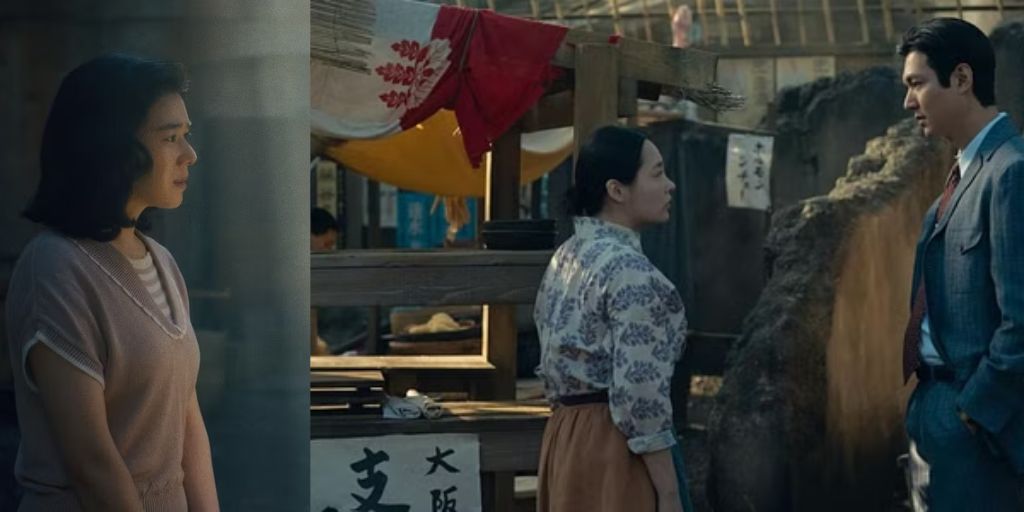
The way Goto-san handles the situation reflects his pragmatic approach to life. He understands that Mozasu is not like his older brother, Noa, who excels in academics and is bound for university. Goto-san sees Mozasu for who he is—a boy who is more streetwise than book-smart. He tells Sunja that Mozasu should stop attending school and start working at the pachinko parlor full-time.
This is a turning point for Sunja as well. For her, education is critical, and she dreams of her sons achieving success, especially through traditional means like schooling. But Goto-san’s suggestion forces her to confront a harsh reality: Mozasu is different from Noa, and perhaps his path lies outside the traditional academic world.
Still from the episode (Apple TV+)
While Sunja hesitates to make this decision, it is Kyunghee (Jung Eun-chae), Sunja’s sister-in-law, who is the most resistant.
Kyunghee worries about Mozasu working in a gambling parlor, fearing it will corrupt him. But after some deep reflection, Sunja recognizes that Mozasu’s future may not be the same as Noa’s, and she eventually allows him to pursue this new direction in life.
This moment is significant not just because it marks Mozasu’s entry into the domain pachinko but also because it shows Sunja’s evolution as a mother. Her willingness to let go of the conventional dream for her son reveals her deep understanding of Mozasu’s strengths and weaknesses.
She understands that his survival and success may come from following a nontraditional path. This decision, though painful for Sunja, is a reflection of her growth as a character who has always put her family first, even when it means sacrificing her own dreams for them.
A New Future for Mozasu
As Mozasu begins working at the pachinko parlor, we see a different side of him emerge. At just 15 years old, Mozasu already shows a strong work ethic
He is diligent, sweeping the floors of the parlor and doing whatever tasks are needed. During one of his shifts, Mozasu encounters a man with a young boy, around seven years old. This man, who we later learn is the same one who stabbed Hansu’s father-in-law in Episode 7, is accompanied by his son, Mamoru.
The interaction between Mozasu and this man might seem insignificant at first, but it gains importance in the 1989 timeline, where we see the consequences of these early interactions unfold.
In many ways, this scene foreshadows the choices Mozasu will face as an adult, as well as the kind of people he will interact with in his future business dealings.
Solomon’s Quest for Power in 1989
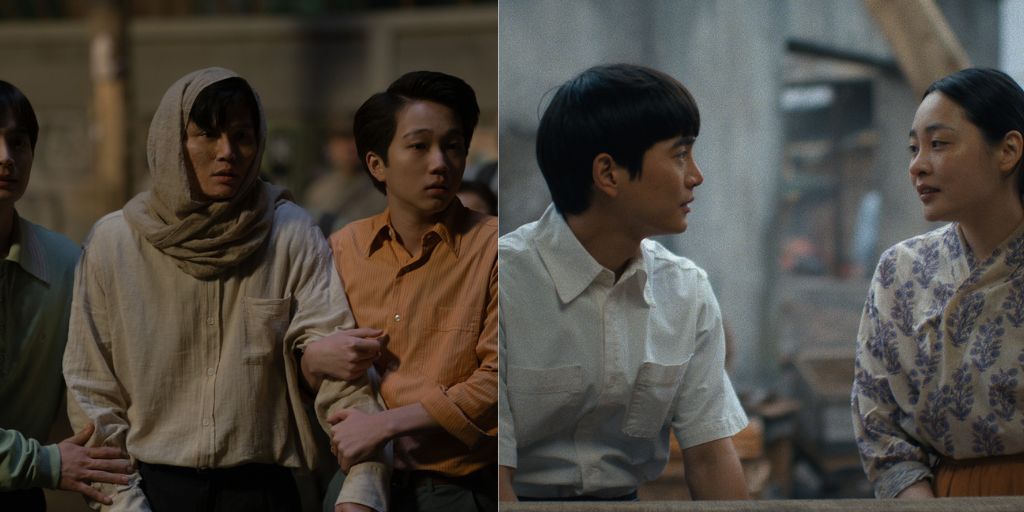
Fast forward to 1989, and we see Solomon Baek, Mozasu’s son, taking center stage. Throughout Season 2, Solomon has been portrayed as someone constantly searching for success, power, and validation. His ambition knows no bounds, but his desire for success is often at odds with the values his family holds dear.
While Sunja and Mozasu focus on survival and resilience, Solomon is driven by a different kind of pursuit—one that is focused on wealth, prestige, and recognition.
In the finale, Solomon is in the middle of a significant business deal involving a golf club. He is pitching the idea of an exclusive, members-only golf club, and the stakes are high.
During his presentation, he confidently declares that only 47 spots remain in the club, and construction is set to begin in just 90 days. Solomon’s pitch is designed to convey a sense of urgency and exclusivity, appealing to the wealthy and influential audience in attendance.
However, Solomon’s confidence is momentarily shaken when someone in the audience raises a critical question: what if the real estate market crashes?
The question causes Solomon to hesitate for just a brief moment, and it is in that moment that he notices his father, Mozasu, sitting in the audience, watching him.
Mozasu’s presence is both a source of strength and a reminder of the high stakes Solomon faces. Despite the pressure, Solomon quickly regains his composure and dismisses the concerns about a real estate crash.
He refers to the idea as an “amusing rumor,” explaining that land prices in Japan have never fallen since World War II.
In Solomon’s mind, real estate is a sure bet, and Japan’s economy is poised to overtake the United States as the largest in the world.
Solomon’s presentation is ultimately successful, but it is clear that he is walking a dangerous line. His pursuit of power and success comes at a cost, and there are hints that his relentless ambition could lead to trouble down the road.
Still from the episode (Apple TV+)
Mozasu’s Warning to Yoshii
After the presentation, Mozasu meets with Mamoru Yoshii (Louis Ozawa), the same man he encountered as a child at the pachinko parlor in 1951. Their conversation is tense, with Mozasu making it clear that he does not want Yoshii anywhere near Solomon. Mozasu knows that Yoshii is not someone to be trusted, and he warns him to stay away from his son.
Yoshii, however, is unfazed by Mozasu’s warning. He responds with a chilling statement: “Your son is going to make a lot of money for me.” It is clear that Yoshii has plans for Solomon, and despite Mozasu’s attempts to protect his son, Solomon is already entangled in Yoshii’s web.
This confrontation between Mozasu and Yoshii highlights the dangers that Solomon faces in his quest for power. Mozasu, having lived through years of hardship and survival, understands the risks involved in associating with people like Yoshii. He has seen firsthand the kind of damage that can be done when greed and ambition are prioritized over family and integrity.
Mozasu’s final words to Yoshii are a veiled threat: “We both know I could’ve destroyed you back then. Instead, I showed you mercy. If you bring any harm to my son, there will be no more mercy from me. You know what I’m capable of.” Mozasu’s warning is clear—he will not hesitate to protect his family, no matter the cost.
Sunja’s Farewell to Kato
Meanwhile, in the 1951 timeline, Sunja meets with Kato (Jun Kunimura) in a coffee shop. Their conversation is one of the most emotionally charged moments of the finale, as it brings closure to Sunja’s relationship with Kato, a man who has been a significant figure in her life.
Throughout Season 2, Kato has served as a mentor and friend to Sunja. He introduced her to new experiences, such as taking her to a restaurant for the first time and helping her deal with the complexities of life in Japan.
However, their friendship is complicated by Kato’s past—specifically, his involvement in the massacre of American POWs during World War II.
In their conversation, Kato opens up about his experiences during the war. He explains that the Japanese soldiers were ordered to kill American POWs, and he was one of the soldiers who followed those orders.
The weight of this guilt has been with him ever since, and he reveals to Sunja that he has been living with a sense of shame and regret for his actions.
Sunja listens to Kato’s confession with compassion and understanding. She does not judge him for his past, recognizing that the war forced many people to make impossible choices. However, this conversation also serves as a turning point for Sunja, as she realizes that it is time for her to move on from Kato and focus on her family.
In a final gesture of farewell, Sunja thanks Kato for all he has done for her but makes it clear that their paths are diverging. She is ready to let go of the past and move forward, knowing that her future lies with her family.

Still from the season (Apple TV+)
Noa’s Struggle with Identity
Noa, Sunja’s eldest son, faces his own challenges in the finale. Throughout Season 2, Noa has been grappling with his identity, particularly after discovering the truth about his biological father, Hansu (Lee Min-ho).
This revelation has shaken Noa to his core, as he has always believed that his father was Isak (Steve Sanghyun Noh), a kind and honorable man.
The discovery that Hansu, a powerful and morally ambiguous figure, is his real father creates a deep sense of conflict within Noa. He feels torn between the man he has always looked up to—Isak—and the man whose blood runs through his veins—Hansu.
This internal struggle is compounded by the societal pressures he faces as a Korean living in Japan, where discrimination and prejudice are rampant.
In the finale, Noa’s sense of identity reaches a breaking point. He feels lost, unsure of who he is or where he belongs.
This emotional turmoil is further exacerbated by the fact that he has been lying to his family about his involvement with the yakuza, a criminal organization. Noa has been secretly working for them, trying to make money to support his family, but this decision has only led to more complications and danger.
As Noa continues to spiral, he confides in his mother, Sunja, about his struggles. He tells her that he feels like a failure, that he is not the man she raised him to be.
Sunja, in turn, reassures Noa that she loves him no matter what and that he does not have to carry the weight of the world on his shoulders. She reminds him that he is her son, and that is all that matters.
This moment of vulnerability between Noa and Sunja is one of the most poignant scenes in the finale, as it highlights the deep bond between mother and son. Despite the challenges they have faced, their love for each other remains strong, and Sunja’s words provide Noa with a sense of comfort and hope.
Solomon’s Final Dance
As the finale comes to a close, we return to Solomon’s story in 1989. After his confrontation with Yoshii, Solomon attends a business event with his uncle Tom (Soji Arai) and Yoshii. The event is a lavish party, and Solomon is once again faced with the pressures of the business world.
During the party, Solomon notices that Yoshii is paying close attention to him. Yoshii’s presence serves as a reminder that Solomon is now deeply entangled in his web, and the stakes are higher than ever.
In a final, desperate attempt to prove himself, Solomon runs out onto the dance floor and begins dancing with reckless abandon. His actions are wild and erratic, a stark contrast to the composed and calculated businessman he has been presenting to the world. Solomon’s dance is a manifestation of his inner turmoil—a man caught between the pursuit of power and the desire for personal fulfillment.
As Solomon dances, Tom watches from the sidelines, laughing at his nephew’s display. It is unclear whether Tom’s laughter is one of amusement or disdain, but it is clear that Solomon’s actions have made an impression.
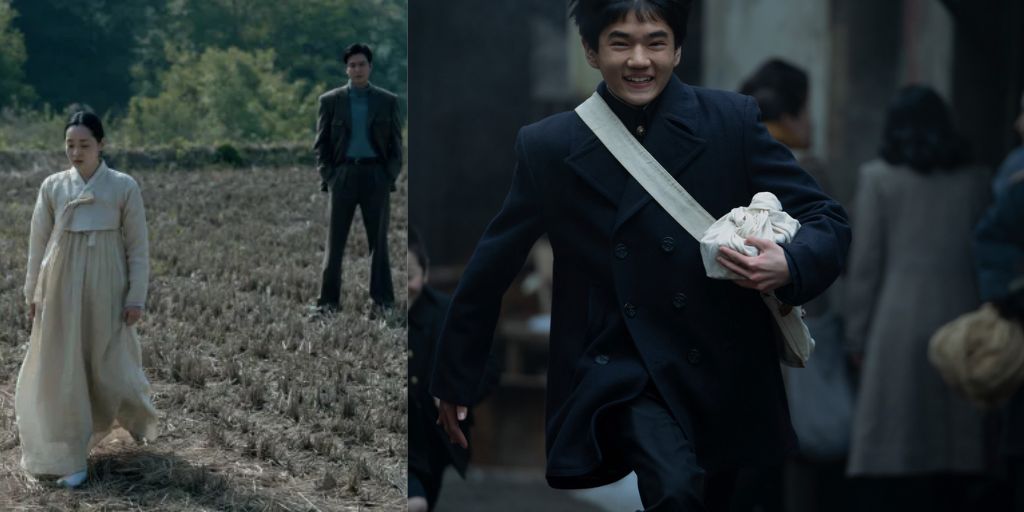
The finale ends with a sense of uncertainty. Solomon is still chasing success, but it is unclear whether his relentless pursuit will lead to happiness or destruction. Sunja and Mozasu, on the other hand, continue to forge ahead, their resilience and strength guiding them through the hardships they face.
Still from the show (Apple TV+)
The Power of Family and Forgiveness
At its core, Pachinko is a story about family, survival, and the choices we make in the face of adversity. Season 2 has brought these themes in depth, showing how each character solve their own personal struggles while remaining connected to their family.
For Sunja, her family has always been her greatest source of strength. She has endured unimaginable hardship, but her love for her sons has kept her going. In the finale, we see Sunja’s unwavering commitment to her family, even as she faces difficult decisions and painful truths.
Mozasu, too, is guided by his love for his family. His desire to protect Solomon from the dangers of the business world reflects his deep understanding of the risks involved in the pursuit of power. Mozasu has lived through years of struggle and survival, and he is determined to ensure that his son does not make the same mistakes.
Solomon’s journey, however, is more complicated. His pursuit of success and power often puts him at odds with his family’s values, and the finale leaves us wondering whether Solomon will find a way to reconcile his ambitions with the love and support of his family.
Pachinko Season 2 concludes with a mix of hope and uncertainty. The Baek family has faced incredible challenges, but their resilience and love for one another have carried them through.
As the story moves forward, we are left with the sense that, no matter what lies ahead, the strength of family and the power of forgiveness will continue to guide them through the trials and tribulations of life.
Their enduring connection offers a beacon of hope, symbolizing how even in a world filled with hardship, love and unity have the power to heal, rebuild, and transform generations.
The wait was shorter than usual between seasons, but it’s finally here—Season 2 of Elsbeth! Everyone’s favorite optimistic attorney, Elsbeth Tascioni, played by Carrie Preston, is back. This time, she has a permanent job at the NYPD.
She works with Officer Kaya Blanke, portrayed by Carra Patterson, and is under the supervision of Captain Wagner, played by Wendell Pierce. The first season wrapped up neatly, leaving few loose ends.
Elsbeth was asked to stay at the NYPD to help uncover corruption and solve cases. In the season premiere titled “Subscription To Murder,” we see a lot of detective work, and it starts off with an interesting story.
A Fateful Night at the Opera
The episode starts at the opera, just like the first season. We see Phillip Cross, played by Nathan Lane, who is a regular opera-goer.
He chats with the usher before taking his seat. In front of him, a young couple sits down. Their names are Eddie, played by Corey Mach, and his date.
Eddie’s grandmother recently passed away, leaving him her opera subscription. He isn’t really into opera but is using the tickets to impress his date. Eddie’s behavior makes him seem out of place.
He has a phone out during the performance, and he even falls asleep while his date plays on her phone. He also makes loud noises while eating snacks and gets very physical with his date.
The final straw comes when he answers a phone call in the theater. After the call, Eddie leaves to meet a friend at a club.
This leaves Phillip Cross feeling frustrated with the opera experience. Cross decides to take action. He grabs a prop knife from his home, follows Eddie back to his apartment, and stabs him several times.
Elsbeth and Blanke: Out Shopping for Detective Gear
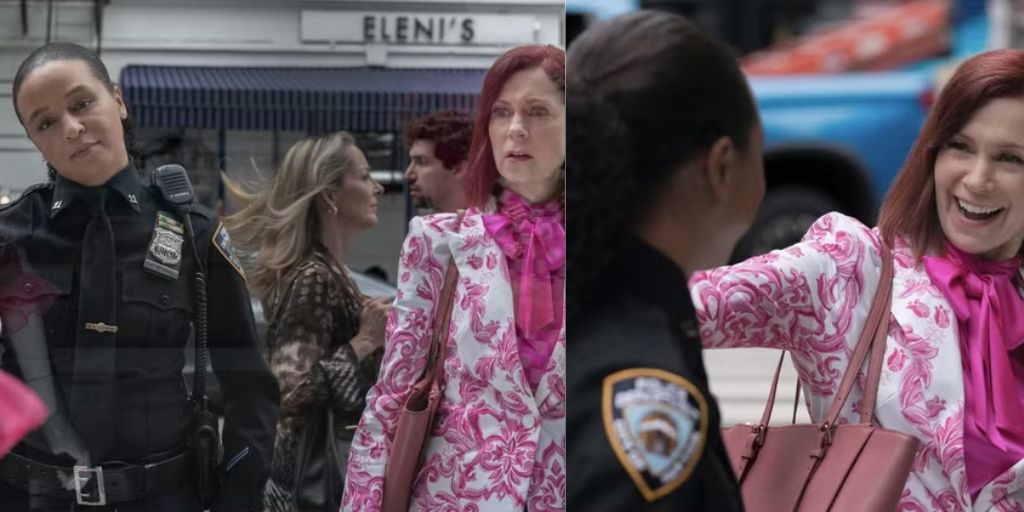
Now that the murder has happened, we check in on Elsbeth and Officer Blanke. The pair is out shopping for new clothes. Blanke wants something appropriate for her promotion to detective.
While Blanke thinks they should not be buying things before she is promoted, Elsbeth is optimistic and wants to be prepared. She knows that Captain Wagner has been supporting Blanke’s promotion.
Still from Elsbeth (Credit: CBS)
However, Blanke feels the process is slow. Just then, they hear police sirens. Their break is over, and it is time to get back to work.
Working with a New Detective
Elsbeth and Blanke arrive at Eddie’s house. They meet Detective Flemming, played by Daniel Oreskes. He is a seasoned detective and will help them with the case.
Flemming believes that most cases are either about sex or money. Since Eddie’s wallet is missing, he thinks the murder was a robbery.
Elsbeth and Blanke do not agree with this theory. They believe that the violent way Eddie was killed suggests it was a crime of passion, not a random robbery.
Flemming listens to them and decides to look into their theory. Meanwhile, Captain Wagner meets with Lt. Connor, played by Daniel K. Isaac. Connor is replacing the corrupt Lt. Noonan.
He tells Wagner he is comfortable being a fact-based detective and doesn’t mind not being friends with everyone. Connor wants to check all the operations at the precinct to ensure everything is honest and above board.
Wagner is happy to have Connor join the team. He introduces Connor to Elsbeth. She offers her old office to Connor, as it was once Noonan’s—however, Connor declines.
He plans to make Elsbeth and her work unnecessary, meaning he does not want her in the precinct anymore. It is clear that Connor wants to root out corruption, but since the show is called “Elsbeth,” it seems unlikely he will succeed in getting rid of her.
After the introductions, Flemming and Blanke report their findings to Wagner. Flemming still thinks the case is a robbery and believes finding Eddie’s wallet will lead them to the killer.
New Evidence from the Autopsy
Back at the precinct, Elsbeth and Blanke look over the autopsy report. They discover that the coroner found unknown DNA on Eddie’s body. They also find a strange bruise shaped like the knife’s hilt but without a puncture wound.
Hearing this new information, Flemming changes his mind and agrees it looks like a crime of passion. The team decides to interview Eddie’s previous dates to get more information.
However, none of the women have anything nice to say about Eddie. His last date provides useful details about what he was doing on the night he was killed. Flemming tries to pin the murder on one of the women, but it leads nowhere. Eventually, they discover Eddie’s wallet has been found near the George Washington Bridge, discarded by Cross, who wore a fake mustache.
Investigating Eddie’s Last Night
With the robbery theory still in play, Flemming and Blanke go to the park to investigate. While Flemming checks the area around a bench, Blanke speaks to potential witnesses. They hit a dead end. Blanke mentions that one witness saw a man with a hat and mustache nearby. However, their investigation is cut short when Flemming decides to end the day. He refuses to work overtime without pay.
Back at the precinct, Elsbeth goes through Eddie’s phone photos. She sees Cross in the background of every opera selfie, looking annoyed. Elsbeth gets an idea. They should go back to the opera!
Elsbeth Discovers the Joy of Opera
Elsbeth and Blanke return to the opera. They sit right in front of Cross. While they are there for work, Elsbeth cannot help but enjoy herself.
She cries during the show, fully embracing her feelings. After the first act, they go to the lobby for intermission. Elsbeth tries to talk to Cross about the show, but he leaves quickly when he learns they are police officers.
In the lobby, they meet Dr. Yablonski, played by Daniel Davis, who was seen in Season 1. Blanke asks the usher about Eddie’s actions that night, while Yablonski shares details about Cross. He tells them that Cross is known for being strict and has attended shows alone since his wife died.
Yablonski, who found Cross’s obsession with Tosca annoying, suggests that Elsbeth and Blanke join him for a drink after the performance. Elsbeth approaches Cross to apologize for her emotional outburst. Surprisingly, he is happy to discuss how the opera affected her feelings.
Elsbeth asks if he goes to the bar after every show. Cross tells her he was at the bar the night Eddie was killed and even has the receipt as proof.
Elbseth finds this suspicious. It seems odd for someone to volunteer an alibi without being asked directly. Before the conversation ends, Elsbeth asks if he saw Eddie that night.
Blanke Faces a Setback in Her Career
Back at the precinct, Blanke interrogates Eddie’s friend Sean, played by Kario Marcel. She asks him about two calls he made to Eddie that night.
Sean says the first call was to invite him out, and he took the call during the opera. The second call was hours later when Sean realized Eddie left without paying his share of the bill.
Blanke thinks the first call is more interesting because Eddie answered it during the show. However, Wagner, Captain Wagner, is skeptical. He doubts anyone would kill over bad manners at the theater. Blanke struggles to convince him that the call might be relevant.
Meanwhile, at Cross’s home, Elsbeth arrives for her first opera lesson. She looks around at the opera items in Cross’s study. While showing, she discovers the knife he used to stab Eddie. He tells her it is a prop from the first Tosca production he attended. Cross starts teaching her about opera.
Uncovering More Clues
After a few hours of lessons, which frustrate Cross at times, Elsbeth notices something. She asks him why there are no photos of his wife in his study.
He explains that she was not real to him anymore. He tried to find people to go with him to the opera but eventually decided to go alone.
Elbsbeth continues her attempts to understand his theater behavior. Cross realizes she is trying to interrogate him, but he appreciates her passion for opera more than he is offended.
He even offers her a pair of opera glasses to choose from his collection. Elsbeth, while his back is turned, takes a pair and bags them as evidence without him noticing.
Back at the precinct, Blanke faces bad news. Captain Wagner tells her that Lt. Connor found a mix-up with her college credits.
It turns out that the two Advanced Placement (AP) courses she took in high school do not count towards her college credits. This means her promotion to detective is on hold.
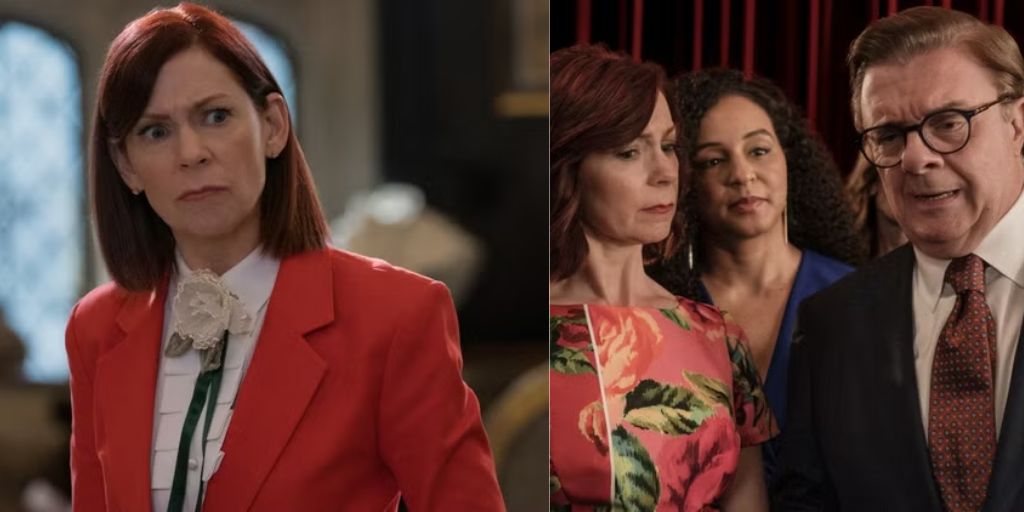
Still from Elsbeth (Credit: CBS)
Blanke is upset but decides to focus on finding a way to make up the missing credits. Wagner tries to help her by stalling the situation, but the news still weighs heavily on her.
A Surprising Discovery
Meanwhile, Elsbeth listens to an old interview with Gino Gozzi, played by Christopher Borg, who was a lead in the Tosca performance that Cross loves.
Gozzi was a controversial figure, known for being difficult but also talented. While looking through the opera archives, Elsbeth finds an old photo of Gozzi with Cross at an event.
Elbsbeth realizes that Gozzi and Cross knew each other. She brings this new evidence to Blanke. Together, they think it could mean that Cross was motivated by jealousy, as Gozzi took his place in the opera world.
To get more information, Elsbeth goes to speak to Gozzi directly. She discovers that Gozzi did have a fight with Cross over artistic differences, but he was not involved in the murder.
Blanke joins Elsbeth at the opera once more. They find a new suspect, the usher, who was present at both the bar and the theater. They interrogate him and find out that he has a close relationship with Cross.
The Truth Comes Out
As the investigation deepens, Elsbeth realizes that the key to solving the case lies with Cross. She sets up a meeting with him, and he reveals everything in a roundabout way.
Cross confesses to following Eddie and confronting him about his behavior. He also admits to being deeply affected by the opera and the emotions it stirs within him.
In a moment of vulnerability, Cross reveals how much he missed his wife and how Eddie’s disrespect for the opera reminded him of his loss. He admits to the stabbing but insists it was a mistake driven by emotions.
After Cross’s confession, Elsbeth faces a dilemma. She feels sympathy for him, understanding his grief, but knows that the law must be upheld.
A New Chapter Begins
In the closing scenes of the episode, Elsbeth talks with Blanke about the case. They both reflect on how challenging it is to balance justice with understanding human emotions. They are aware that not every crime is black and white, and sometimes there are complex feelings at play.
As the season progresses, it will be exciting to see how Elsbeth continues to follow her job at the NYPD and her personal growth. Season 2 of Elsbeth promises more twists and turns as the characters face new challenges, go into complex emotional stories, and seek justice.
With fresh mysteries to solve and relationships to show, fans are eager for what comes next. Elsbeth’s journey is just beginning, and audiences can’t wait to see how she handles the trials ahead, both as an attorney and a friend.
