Parasite is a compelling exploration of greed, class divides, and the lengths people will go to survive. Bong Joon-ho’s Academy Award-winning film takes viewers on a journey that examines the gap between the wealthy Park family and the struggling Kim family. In a surprising twist, the film introduces a hidden man living in the basement of the Park house, resulting in chaos, bloodshed, and a tragic conclusion. The film’s final moments highlight the reality of wealth as a trap, illustrating economic immobility as a harsh, inescapable norm.
Parasite Ending Explained
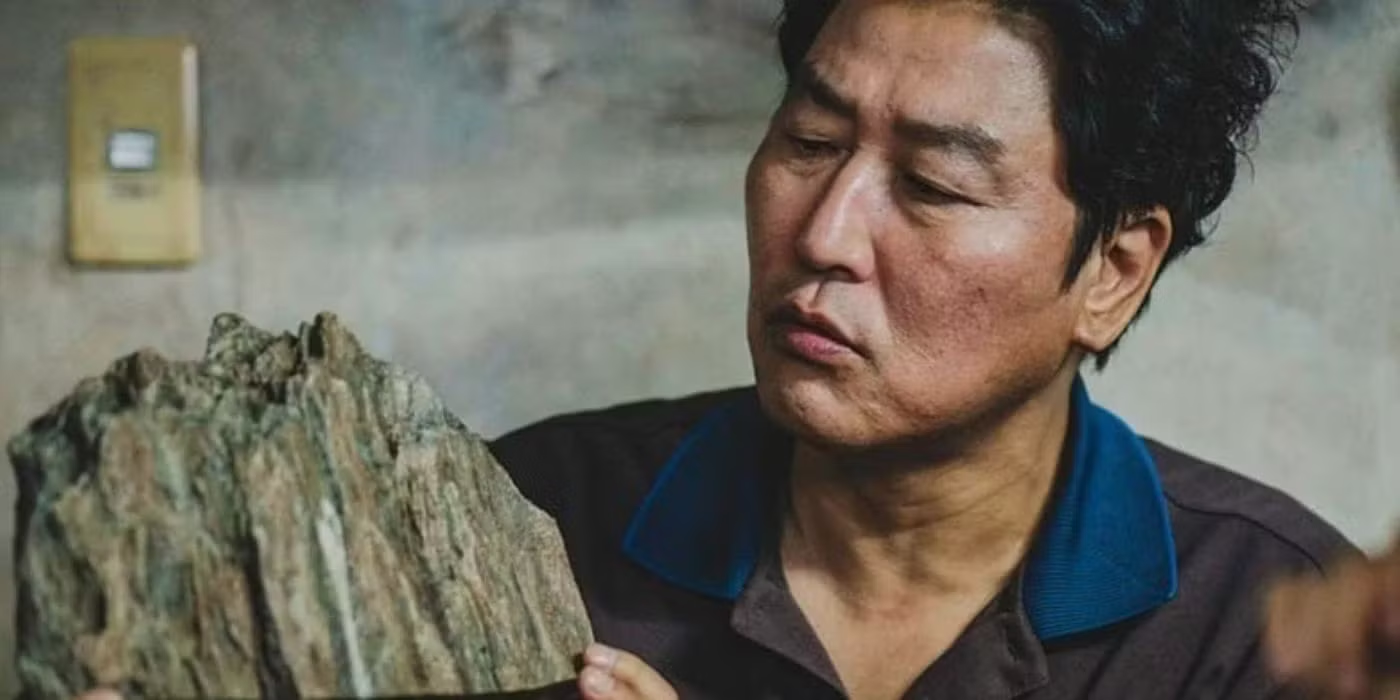
Ki-taek (Image via Getty)
The Kim family, struggling to make ends meet, finds a way to infiltrate the wealthy Park family’s home. Ki-woo, the son, secures a job as a tutor for the Park’s daughter, Da-hye. He soon involves his sister, Ki-jung, who convinces the Parks to hire her as an art therapist for their son, Da-song. Then, the Kims use clever tactics to remove the Park family’s long-term employees, eventually filling all the jobs with members of their own family. The Kims enjoy the luxuries of the Park house, unaware of the dark secret hidden beneath.
The Secret in the Basement
The story takes an unexpected turn when Moon-gwang, the former housekeeper, returns to the Park home. She reveals the startling truth: her husband, Geun-se, has been living in a secret bunker beneath the house. Geun-se, who had been hiding from the Park family, turns out to be the “ghost” that traumatized Da-song. When the Kims threaten to expose Geun-se, Moon-gwang retaliates by threatening to reveal their deception to the Parks. This leads to an intense confrontation, during which Moon-gwang dies, and Geun-se is once again locked away in the basement.
The tension escalates when the Parks unexpectedly return early from a trip. The Kims are forced to leave their home, which is flooded after a storm. A birthday party for Da-song, which the Kims are invited to, turns into a scene of violence and chaos. Ki-woo, desperate to finish off Geun-se, is attacked and injured. Geun-se, in an act of revenge, escapes the basement and wreaks havoc at the party, fatally stabbing Ki-jung. Da-song is traumatized again, and Ki-taek, the father, kills Mr. Park after hearing him comment on Geun-se’s “poor man’s smell.” The situation unravels quickly, with Ki-taek fleeing the scene as chaos consumes the family.
The Aftermath and Broken Dreams
Ki-woo awakens in the hospital with severe injuries. His sister is dead, and his father is missing. Both he and his mother face charges for fraud, and their once-bright future is now shattered. The film jumps ahead in time, and Ki-woo returns to the Park house, now occupied by a new family. He notices a flickering light in Morse Code, which reveals a message from his father, indicating he’s still hiding in the house’s basement. Ki-woo dreams of earning enough money to buy the house and free his father, but the final moments reveal that this is merely a fantasy.

Ki-jung (Image via Getty)
The tragic ending of Parasite forces the audience to confront the illusion of upward mobility. Ki-woo’s dream of buying the house and rescuing his father reflects a fantasy, as the system of wealth and class is rigged in such a way that the Kims will never be able to escape their poverty. The film closes with Ki-woo back in his own basement apartment, trapped not by law but by economic circumstances. The idea of climbing the social ladder is exposed as a mere fantasy that will never become a reality.
The True Meaning of ‘Parasite’
The film’s title, Parasite , carries significant meaning in this context. While the Kims are depicted as parasitic, feeding off the wealth of the Park family, the Parks themselves are revealed to be the true parasites. They live off the labor of the lower class, offering little in return. Their wealth and ignorance of the struggles of the people they employ expose them as self-centered and indifferent. The Kims, in their pursuit of a better life, are simply trying to survive within a system that has already set their social status.
A Bleak Reflection on Wealth and Class
Parasite ends on a somber note, reinforcing the idea that economic immobility has become the new reality. Unlike other narratives that propose solutions to income inequality, the film offers a much darker perspective, showing that those born into poverty will likely stay in poverty. The concept of economic mobility is, for Ki-woo, a hopeful dream that will never come true. His fantasy of escaping his basement and rescuing his father is a poignant symbol of the traps created by wealth and the social systems that perpetuate it.
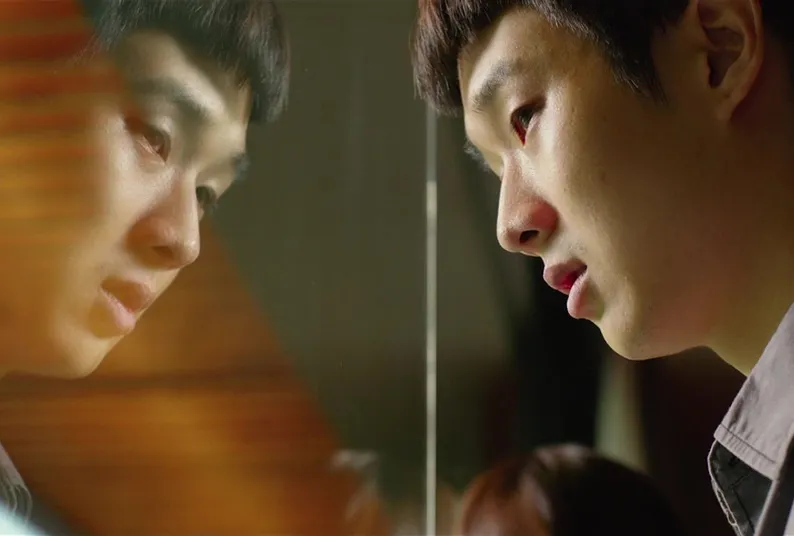
Ki-woo (Image via Getty)
The bleakness of the film’s final scenes highlights how wealth functions as a prison, entrapping the Kims. Though they may be “parasites” in a literal sense, the Parks’ wealth was never truly accessible to the Kims. The luxurious lifestyle of the wealthy only reinforces the divide, with the Kims unable to achieve anything beyond their current circumstances. As the film ends, the Kims are left in their respective basements—Ki-take in hiding and Ki-woo stuck in his low-income reality—trapped by the very forces that they cannot control.
The Fantasy of Escape
In today’s world, the idea of “income inequality” is often discussed as something that can be corrected through various reforms. Parasite challenges this notion, suggesting that the gap between the rich and the poor is insurmountable. Ki-woo’s imagined future of wealth is simply that—an illusion. The harsh truth is that the Kims, much like many others, are trapped by their economic circumstances, and there’s no escape for them. The film makes it clear that no matter how much they try to break free, they will never be able to escape the cycle of poverty.
Parasite paints a grim portrait of a world where wealth and class determine your fate. The Kims’ journey is one of desperation and survival, while the Parks live in ignorant bliss, oblivious to the struggles of those beneath them. The film’s brutal, thought-provoking conclusion serves as a powerful commentary on the harsh realities of economic inequality and the difficulty of breaking free from one’s social station. Through its devastating ending, Parasite reveals the true nature of the system—one that traps people in their circumstances, with no hope of escape.
“Among Us,” developed by Innersloth, has captured the attention of the global gaming community. Blending social deduction with teamwork, the game challenges players to identify hidden threats within their group while completing assigned tasks. Its simple yet engaging mechanics, combined with cross-platform availability, have secured its place as a cultural icon in the gaming world.
The Rise of “Among Us”
Launched in 2018, “Among Us” initially went unnoticed. However, according to eTrueSports , in 2020, it experienced an unexpected surge in popularity, largely fueled by online communities and streamers. Inspired by party games like “Mafia” and the film The Thing , it sets players in sci-fi environments such as spaceships and planetary bases. Players assume roles as either Crewmates or Impostors, each with distinct objectives.
Engaging Gameplay Mechanics
The game accommodates 4 to 15 players and features five distinct maps:
- The Skeld: A spaceship with interconnected rooms.
- MIRA HQ: A futuristic corporate office setting.
- Polus: A sprawling planetary outpost.
- The Airship: Inspired by the Henry Stickmin series.
- The Fungle: A mushroom-themed jungle map introduced in 2023.
Crewmates work on completing tasks while Impostors attempt to sabotage operations and eliminate others. Emergency meetings allow players to discuss suspicions and vote out potential threats, creating an environment of strategy and deception.
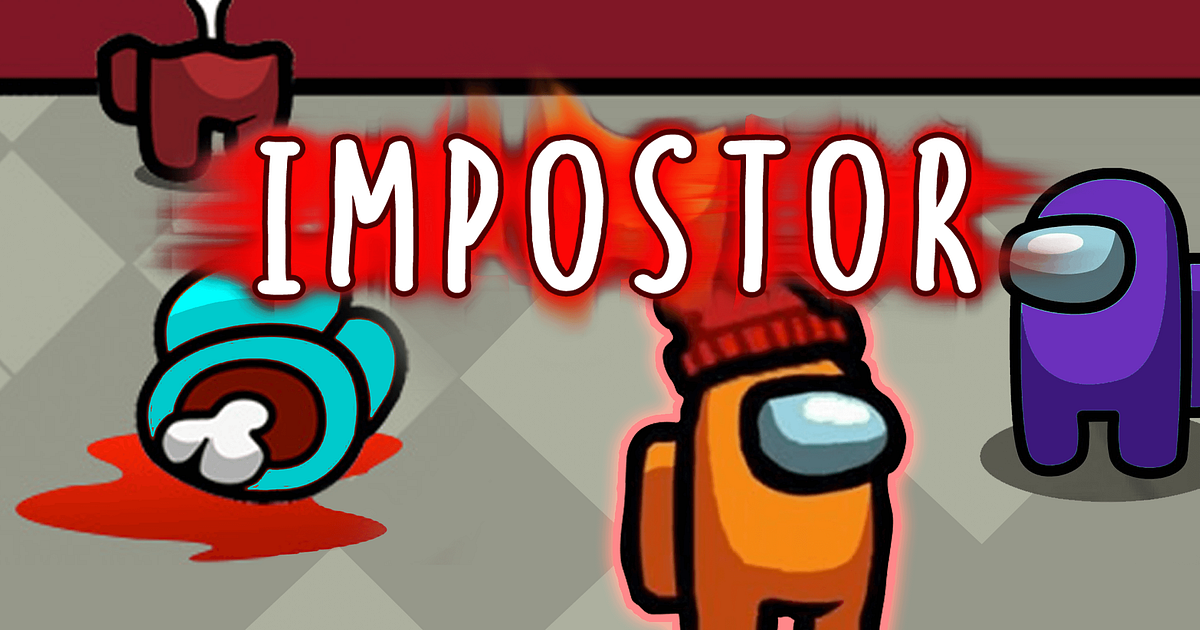
Among Us (Image via Getty)
Constant Updates for Fresh Experiences
Innersloth keeps the game dynamic with frequent updates. Noteworthy additions include:
- New Roles: Engineers can use vents, Scientists monitor vitals, Guardian Angels protect players, and Shapeshifters can mimic others.
- Hide and Seek Mode: Introduced in 2022, offering a fast-paced hunt.
- The Fungle Map: Expands gameplay with a new environment.
These updates keep the game fresh, engaging both new and veteran players alike.
“Among Us” is accessible on various platforms, including Android, iOS, Windows, Nintendo Switch, PlayStation, and Xbox. Its full cross-platform compatibility allows players to connect regardless of their device, fostering an inclusive and diverse gaming community that contributes to its widespread appeal.
A Cultural Touchstone
The COVID-19 pandemic significantly boosted the game’s popularity as people sought ways to socialize virtually. Terms like “sus” (short for suspicious) entered everyday language. Influencers and streamers on platforms like Twitch and YouTube played a vital role in promoting the game, creating viral moments and memes that embedded “Among Us” into pop culture.
One of the game’s strengths lies in its active community. Players have developed custom mods, new roles, and unique maps, adding layers of creativity beyond the official content. Innersloth supports these efforts, encouraging community-driven innovations that keep the gameplay experience diverse and exciting.
Tackling In-Game Challenges
Despite its success, “Among Us” has faced challenges, particularly with hacking and cheating issues. Innersloth responded by introducing account systems, reporting tools, and frequent security updates to protect the integrity of gameplay. These efforts ensure a fair and enjoyable experience for all players.
Beyond entertainment, “Among Us” has found a place in educational and social settings. Teachers use it to promote teamwork, critical thinking, and communication skills in classrooms. It’s also popular in virtual gatherings, helping friends and families stay connected, especially during periods of physical distancing.
What Lies Ahead for “Among Us”
Looking to the future, Innersloth plans to continue expanding the game with new maps, roles, and potentially different gameplay genres. Its dedicated fan base and strong community engagement suggest that “Among Us” will remain relevant for years to come, evolving alongside the gaming terrain.
