Prison Break has officially made a triumphant return to Netflix, bringing with it all the thrills, drama, and suspense that attracted audiences during its original run.
Since its addition to Netflix on July 29, the show quickly climbed the Nielsen streaming rankings, holding the number-one spot for its first two weeks. This is an impressive feat, especially considering that it even managed to surpass the season finale of The Umbrella Academy.
The enduring popularity of Prison Break speaks volumes about its significance in television history. Originally airing on Fox between 2005 and 2009, Prison Break followed the story of Michael Scofield, a man determined to break his brother, Lincoln Burrows, out of prison after Lincoln was wrongfully convicted of murder.
The show’s complex narratives, intense action sequences, and memorable characters made it a fan favorite during its run, and it continues to resonate with audiences today. But as popular as the series has been, its conclusion(s) have sparked considerable debate.
In fact, when it comes to Prison Break, the term “ending” is a bit tricky. The series officially wrapped up with the Season 4 finale in 2009. However, two additional episodes—The Final Break—were released soon after on DVD, providing an alternate conclusion that did not air on television.
Then, in 2016, Prison Break was revived for a fifth season, which introduced a new storyline and yet another ending for Michael Scofield and his crew. The following is an in-depth breakdown of each of the show’s conclusions and the elements that made Prison Break such a beloved series.
Season 4 Finale: “Killing Your Number”
The fourth season of Prison Break is one of the most complex and action-packed in the series. By this point, the characters have faced more than their fair share of dangers, from escaping multiple prisons to taking down powerful and corrupt organizations.
However, in Season 4, their greatest challenge comes in the form of the mysterious organization known as The Company. This global network, often compared to the Illuminati, has its hands in politics, finance, and nearly every aspect of society, making it a formidable foe.
The final episode of Season 4, “Killing Your Number,” brings the storyline to a climactic conclusion. Michael Scofield and Lincoln Burrows, along with their loyal team, make their last stand against The Company. In earlier episodes, Michael was diagnosed with a rare and aggressive brain tumor.
His chances for survival seemed slim, but he was offered an unexpected lifeline by General Krantz, the leader of The Company. Krantz promised to provide Michael with a life-saving surgery in exchange for Lincoln’s cooperation in recovering a crucial data file known as Scylla.
Scylla is more than just a data file—it contains detailed information about The Company’s global operations, its personnel, and its research on alternative forms of energy. Scylla holds the key to The Company’s power, and both sides are desperate to control it.
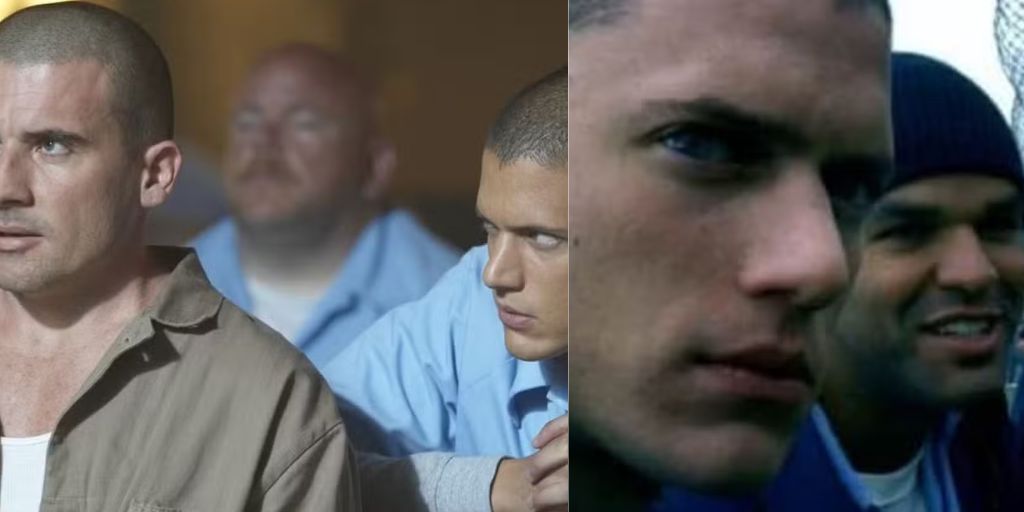
Michael, despite his initial reluctance, undergoes the surgery and survives the procedure. Now, tumor-free, he joins forces with Lincoln to retrieve Scylla from their estranged mother, Christina Scofield, who was once thought to be dead.
Still from Prison Break (Credit: Fox)
Christina Scofield’s return is one of the biggest surprises in Season 4. It is revealed that she had been working as a high-level executive within The Company and had faked her death years earlier. Her reappearance adds a deeply personal element to the brothers’ mission, as they must not only confront The Company but also their own family history.
In the final showdown, Christina attacks Michael, but her attempt to kill him is thwarted by Sara Tancredi, Michael’s love interest and eventual wife. Sara shoots and kills Christina in self-defense. Meanwhile, General Krantz is captured and sentenced to death, marking the end of The Company’s reign of terror.
With Scylla in hand, Michael and Lincoln are on the verge of destroying it, ensuring that The Company will never rise again. However, they are interrupted by Paul Kellerman, a former Secret Service agent who offers them an alternative.
Instead of destroying Scylla, they can hand it over to the U.S. government in exchange for complete immunity. This deal not only clears Michael and Lincoln’s names but also exonerates Sara, Sucre, and Mahone, effectively wiping the slate clean for the entire team.
This moment could have served as a satisfying conclusion to the series, with all the characters walking away free. However, the episode takes a bittersweet turn. In a time jump to four years later, we see the surviving members of the team—along with Michael and Sara’s young son—gathering at a grave.
The camera zooms in, revealing that it is Michael’s grave. The show ends on this somber note, leaving fans with a mixture of relief and sorrow. Michael, the man who fought so hard to free his brother and loved ones, did not survive to enjoy the peace he had earned.
Prison Break: The Final Break
For fans who wanted more closure on Michael’s fate, Prison Break: The Final Break provided some answers. Released exclusively on DVD, these two episodes serve as a bridge between the end of Season 4 and the time jump in the finale. They explain how Michael died, and they give the audience one last thrilling escape sequence.
In The Final Break, Michael and Sara are newly married and expecting their first child. However, their happiness is short-lived.
Sara is arrested for the murder of Christina Scofield, even though it was an act of self-defense. The problem is that the surveillance footage only shows Sara shooting Christina, with no context to explain the circumstances. As a result, Sara is sent to a maximum-security prison, and it looks like she will be there for a long time.
True to form, Michael is determined to rescue Sara. He assembles his old team—Lincoln, Sucre, and Mahone—and begins planning an elaborate prison break. Meanwhile, General Krantz, who is still alive and awaiting execution, puts out a hit on Sara. He wants revenge for the downfall of The Company, and he sees Sara as an easy target.
Sara faces multiple assassination attempts while behind bars, including being poisoned and attacked by other inmates. As the threats against her escalate, Michael works tirelessly to find a way to free her. He eventually discovers an emergency escape tunnel that was overlooked during the prison’s construction. This tunnel becomes the key to Sara’s escape.
In the end, Michael sacrifices himself to save Sara. As they make their way through the escape tunnel, they encounter an electronically locked door. Michael uses a live electrical wire to short-circuit the door, allowing Sara to pass through. However, the electrical surge kills Michael. His final act is one of pure selflessness, ensuring that Sara and their unborn child can live a free life.
After Sara’s escape, Mahone delivers a final message from Michael, which he had recorded before the breakout. In the video, Michael reveals that his brain tumor had returned and that he knew his time was limited. Rather than succumb to his illness, he chose to go out on his own terms, sacrificing himself for the people he loved.
This conclusion is heartbreaking but fitting for a character like Michael Scofield. Throughout the series, Michael had always been willing to put himself in harm’s way to protect his family, and in The Final Break, he makes the ultimate sacrifice.
Season 5: The Resurrection of Michael Scofield
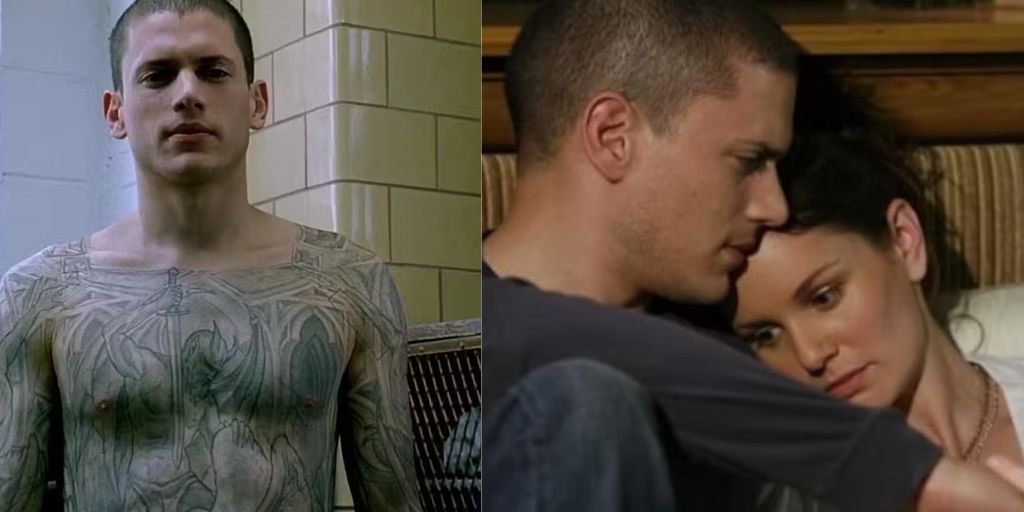
For many fans, Prison Break ended with The Final Break, but in 2016, the series was revived for a fifth season. This season brought with it a major twist: Michael Scofield was not actually dead. Season 5 shows the idea that Michael had faked his death in order to protect his loved ones and had been living under a new identity for the past several years.
In Season 5, Michael is imprisoned in Ogygia, a notorious prison in Yemen. He has been working for a rogue CIA operative named Poseidon, who forced him to participate in a series of high-profile prison breaks around the world. Poseidon, whose real name is Jacob Ness, also happens to be Sara’s new husband. He manipulated Sara into believing that Michael was dead and took on the role of father to Michael’s son.
The plot of Season 5 revolves around Michael’s efforts to escape from Ogygia and reunite with his family. Along the way, he must outwit Poseidon, clear his name, and expose the truth behind his faked death. The season culminates in a final showdown between Michael and Poseidon.
Still from Prison Break (Credit: Fox)
In the series finale, titled “Behind the Eyes,” Michael finally gets the upper hand. He lures Poseidon into a trap, recreating the scene of a murder that Poseidon had committed years earlier.
Michael uses this setup to frame Poseidon for the crime, ensuring that justice is served. With Poseidon arrested and his name cleared, Michael is free to reunite with Sara and their son.
The ending of Season 5 is more optimistic than the previous finales. Michael, Sara, and their son are finally able to live a peaceful life, free from the shadow of The Company or Poseidon’s schemes. However, some fans felt that this ending was too neat, given the complexity of the series. Others were simply happy to see Michael alive and reunited with his family.
Character Development and Evolution
One of the reasons Prison Break has remained so popular is the depth and complexity of its characters. Michael Scofield, in particular, is a fascinating character. He starts the series as a calm, collected, and highly intelligent man with a clear mission: to break his brother out of prison.
However, as the series progresses, we see more of Michael’s vulnerabilities. His willingness to sacrifice himself for others, even at the cost of his own happiness, makes him both heroic and tragic.
Lincoln Burrows, Michael’s brother, also undergoes significant development throughout the series. Initially, Lincoln is portrayed as the muscle of the operation, relying on brute strength rather than intellect.
However, as the series progresses, we see Lincoln take on a more active role in planning and executing their escape attempts. His relationship with Michael is central to the show’s emotional core, and their bond is what drives much of the plot.
Sara Tancredi, Michael’s love interest, also evolves from a prison doctor to a key player in the team’s operations. Her relationship with Michael is one of the most compelling aspects of the show, and her character is given a lot of depth in later seasons. She is strong, capable, and fiercely loyal, willing to risk her own life for the people she loves.
Other characters, like Sucre, Mahone, and T-Bag, add to the richness of the series. Sucre, in particular, provides much-needed comic relief, while Mahone’s moral ambiguity makes him one of the most intriguing characters in the show.
The Legacy of Prison Break
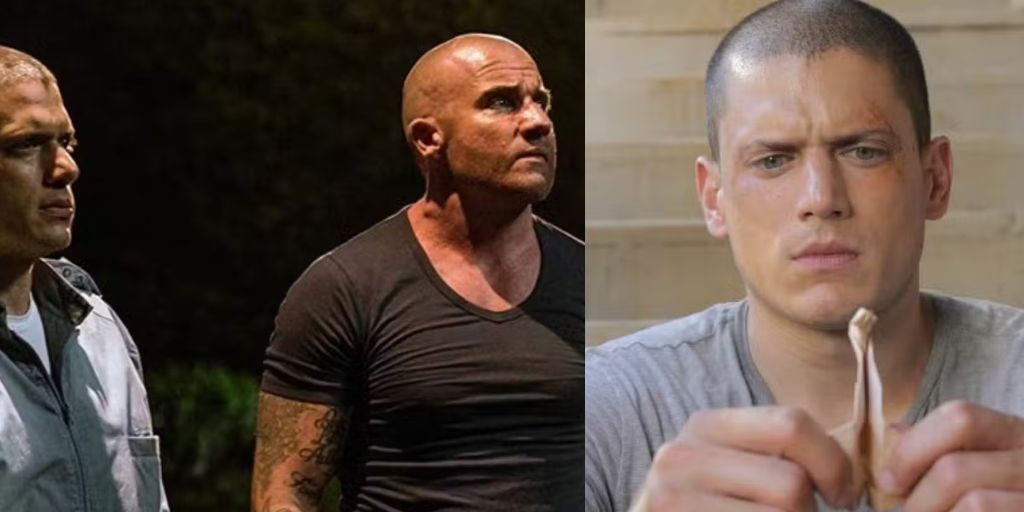
Prison Break has left an indelible mark on television history. The show’s innovative concept, which blended prison drama with high-stakes action and conspiracy, set it apart from other series at the time. It was one of the early shows to adopt a serialized format, where each episode led directly into the next, creating a sense of urgency and excitement.
The series also broke new ground in terms of representation. Michael Scofield’s calm, methodical approach to problem-solving challenged traditional portrayals of male action heroes, while Sara Tancredi’s character offered a strong, independent female lead. The show’s diverse cast and international settings also reflected a more globalized world.
Still from Prison Break (Credit: Fox)
The Debate Over Multiple Endings
One of the most interesting aspects of Prison Break is the fact that it has multiple endings. The Season 4 finale, The Final Break, and Season 5 all offer different conclusions to the story of Michael Scofield and his team. Each of these endings has its own merits and has sparked debate among fans.
Some viewers felt that the Season 4 finale was the perfect way to end the series. Michael’s sacrifice was seen as a fitting conclusion to his character arc, and the bittersweet ending added emotional weight to the story. Others, however, were frustrated by the lack of closure and were eager for more answers, which they got with The Final Break.
When Season 5 was announced, many fans were excited to see Michael back in action, but some were skeptical about bringing him back from the dead. The fifth season offered a more optimistic ending, but not everyone was satisfied. Some felt that it undermined the emotional impact of Michael’s death in The Final Break, while others were simply happy to see the characters they loved return.
Conclusion: The Future of Prison Break
As of now, Prison Break is available to stream on Netflix in the U.S., giving new audiences a chance to experience the show for the first time, while longtime fans can revisit the series’ many twists and turns.

Still from Prison Break (Credit: Fox)
With multiple endings and a revival already under its belt, the future of Prison Break is uncertain, but the possibility of more content remains.
Season 2 of The Lord of the Rings: The Rings of Power is finished, but it is always special to return to Middle-earth. Even with all the fighting and destruction, the last episode, titled “Shadow and Flame,” leaves us with a hopeful feeling. This episode hints at exciting places that will appear in Season 3.
It also answers a big question that has been around since the beginning of the series: who is the Stranger, played by Daniel Weyman? After two full seasons of wondering and guessing, we finally learn the answer. While it may not be a big surprise, it is nice to finally settle this mystery.
Season 2 Confirms That There Is Only One Character the Stranger Could Have Been
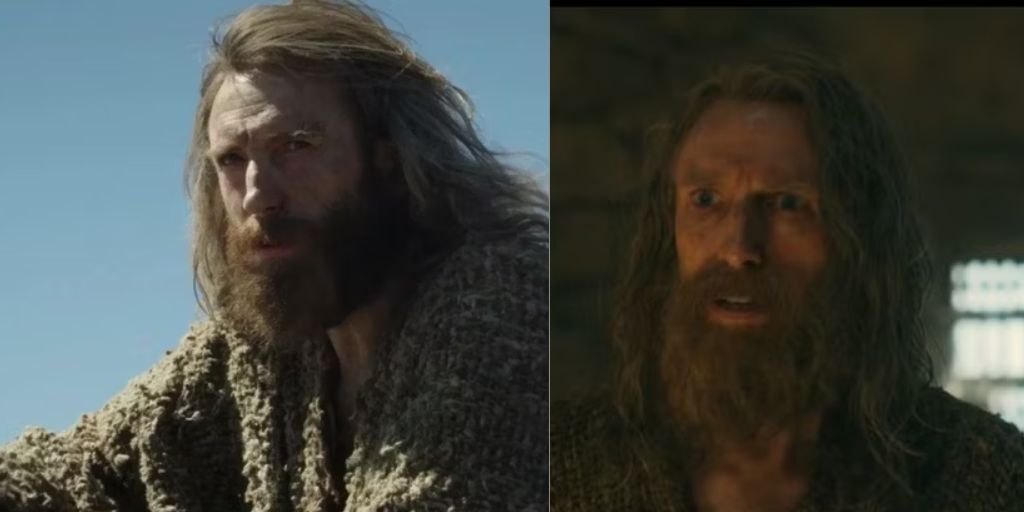
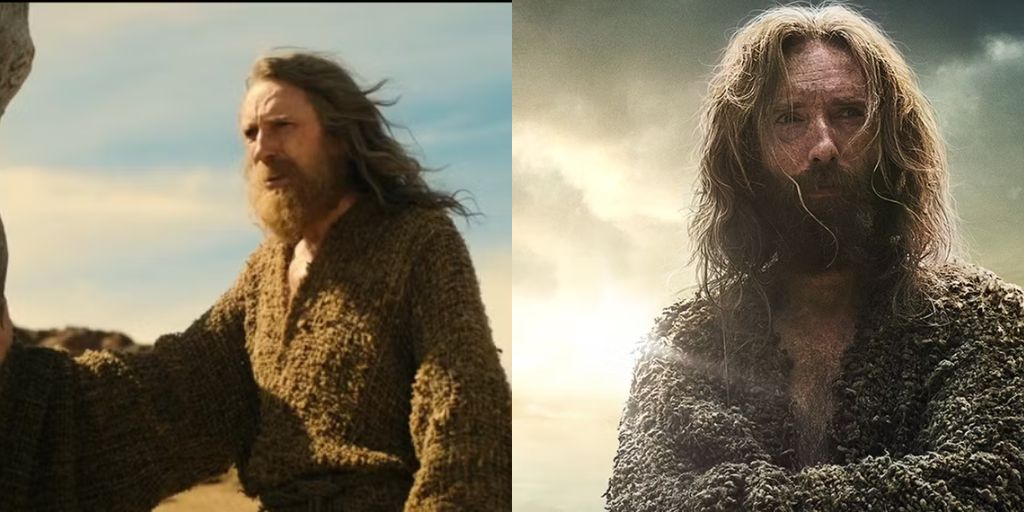
Viewers have argued and speculated since Season 1 of The Rings of Power about the true identity of the Stranger. Finally, Season 2 gives us the answer. In “Shadow and Flame,” he discovers that his true name is Gandalf. This means he has been everyone’s favorite wizard all along.
This moment is the peak of his journey in the second season. It shows his growth as he saves his friends and confronts his enemy, the Dark Wizard played by Ciarán Hinds. Tom Bombadil, played by Rory Kinnear, teaches the Stranger that his name and staff will come to him naturally once he understands his mission in Middle-earth.
Throughout Season 2, the show provides many hints for viewers to follow. These clues make it possible to think that the Stranger is Gandalf from very early on. For instance, he rejects every name his friend Nori, played by Markella Kavenagh, suggests in the first episode, “Elven Kings Under the Sky.”
In Episode 2, “Where the Stars Are Strange,” Nori and Poppy, played by Megan Richards, discuss the Stranger’s powers and talk about getting him “a gand” to help him use his abilities. Later, in Episode 6, titled “Where Is He?,” the Stranger speaks with Tom Bombadil about “serving the Secret Fire.”
Tom gives him the famous line: “many that die deserve life, some that live deserve death,” which Gandalf, played by Ian McKellen, shares with Frodo in The Lord of the Rings: The Fellowship of the Ring. Finally, in “Shadow and Flame,” the Stoors refer to him as “Grand-Elf,” which leads him to the conclusion that he will be called Gandalf.
These hints are enough for anyone to figure out the connection. However, there is a simpler reason for the Stranger to be Gandalf: he is such a beloved character that he cannot be left out of The Lord of the Rings story.
Some timeline issues might suggest he should not be present during the time of The Rings of Power, but most viewers likely do not worry about that. Gandalf connects the series to the movies and novels, making it easier for the audience to feel connected to the story.
Still from The Rings of Power (Credit: Prime Video)
Additionally, Gandalf’s popularity makes him an important character to attract more viewers. If all those hints were just to lead to him being someone else, many would feel frustrated, especially casual viewers who do not care about J.R.R. Tolkien’s original writings, as long as the story makes sense.
Gandalf Is One of the Istar, but What Does That Mean for His Story?
Season 2 gives us many hints about the Stranger being Gandalf. However, there were also clues in Season 1. In Season 1, his story is about discovering himself and relearning the basics of his powers. After he falls from the sky on a giant meteor, some fans thought he could be Sauron.
This theory even fooled the Dark Wizard, who sent a group of minions called the Mystics to find “Sauron” and take him to Rhûn. When they realize they made a mistake, they immediately recognize the Stranger as an Istar.
The Dark Wizard is also an Istar, meaning they belong to the same group of magical beings as the Stranger. The Istari are Maiar, which are angelic beings that assist the Valar in managing and shaping Middle-earth. Sauron and the Balrog of Khazad-dûm are also Maiar, showing that there can be both good and evil spirits among them.
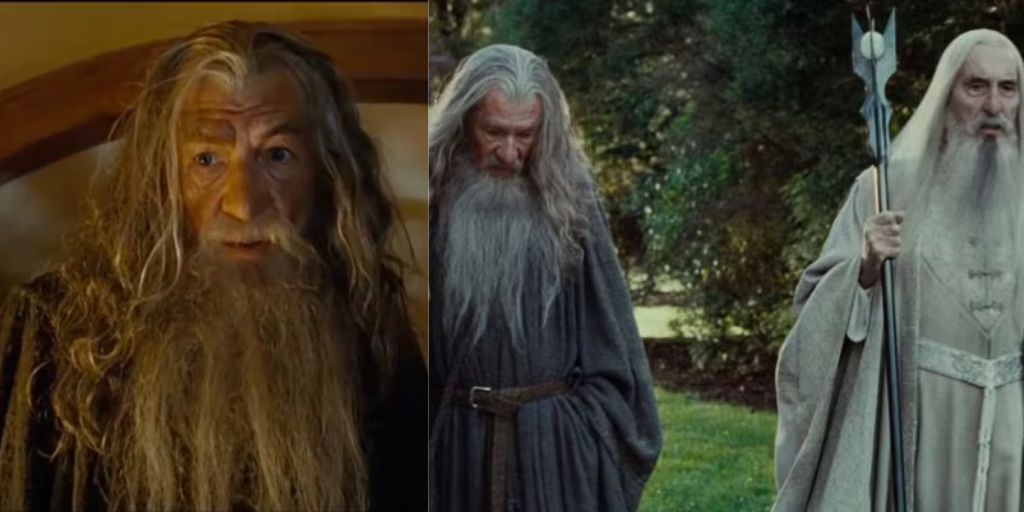
In Tolkien’s legend, the Istari are five Maiar sent by the Valar to Middle-earth during the Third Age. Their mission is to help rekindle the flame of resistance against Sauron’s growing power. In the books, Gandalf the Grey is the Istar whose task is to travel around Middle-earth, warning the Free Peoples about Sauron and inspiring them to resist the Dark Lord.
The other four Istari have different but complementary missions. Saruman the White is the leader of the Istari. He embodies the struggle against darkness and keeps track of the other wizards’ missions.
Radagast the Brown focuses on protecting nature from darkness, befriending animals and plants throughout Middle-earth. Lastly, Alatar and Pallando are the Blue Wizards. Their mission is to weaken Sauron’s influence in the East and South, especially in Rhûn and Khand.
At the end of Season 1, when viewers learn that the Stranger is an Istari, some connected the dots and concluded he must be Gandalf. Others thought this conclusion was too obvious, so they speculated that he might be another Istari.
His brown robes led some to believe he could be Radagast, while others thought he might be Saruman since the White Wizard travels into Rhûn earlier in his journey. Some viewers believed he could be one of the Blue Wizards, as they are sent to Middle-earth in the Second Age, while Gandalf and the others arrive in the Third Age.
Since they go to the East, this theory made sense. However, with so many Gandalf references scattered throughout the series, it would likely confuse viewers if he turned out to be one of the Blue Wizards.
Gandalf’s Mission in Middle-earth Remains a Mystery at This Point
In Tolkien’s books, Gandalf arrives in Middle-earth under very different circumstances compared to The Rings of Power. For instance, it is during the Third Age, when the threat of Sauron seems to be gone. In contrast, in the series, the Dark Lord is actively trying to control the land during the Second Age.
Still from The Rings of Power (Credit: Prime Video)
These two situations create very different contexts. In the first context, Gandalf has time and freedom to do things like enjoy parties with Hobbits in the Shire. However, in the second context, he must take a more hands-on and focused approach.
As a wandering wizard, Gandalf’s role in the fight against Sauron in the Second Age remains unclear, although Tom Bombadil hints at what it might be. In Episode 4, “Eldest,” he and the Stranger discuss learning to use magic and finding purpose. Tom mentions that, although the Stranger is powerful, he is a wanderer, not a warrior.
He adds that “great deeds are left to the hands they were placed in.” He warns that Sauron and the Dark Wizard can join together into a flame that may consume all of Middle-earth. The Stranger quickly asks if his task is to stop the fire and confront Sauron. Tom responds that his mission is to face both threats.
This makes us think about the Stranger potentially going against Sauron in a grand battle. However, that cannot happen according to Tolkien’s rules. The fight against Sauron in the Second Age is carried out by Elves and Mortal Men.
These two races struggle against different aspects of the enemy. The Elves fight to preserve the Light of the Eldar, their magical powers in Middle-earth. This is why they create their three Rings of Power. Meanwhile, Men face tests of resolve and moral strength against a clever and tempting foe.
The involvement of an Istar at this stage is hard to imagine because, in theory, they have no narrative growth to gain. There is still a whole age that follows Sauron’s defeat against the Elves and Men, where the Dark Lord returns.
So if the Istari are present and Sauron is still around, it would mean they have failed in their mission. It may be that The Rings of Power chooses this path, but that is still a long way off. For now, Gandalf has more growth ahead.
Gandalf Still Has Many Names To Earn Before He Can Face Sauron
Now that The Lord of the Rings is a successful and established pop-culture franchise, it can be hard to view certain characters differently than the common audience understands them. Before The Rings of Power, we knew that Gandalf, Saruman, and Radagast were unique wizards.
However, the term “Istar” had never been mentioned on screen before. This aspect makes these characters great in Tolkien’s legend: they are known by many different names. Gandalf is just the first name that the Stranger learns about himself. It is certainly the most famous, but it is one of many—five, to be exact.
In Peter Jackson’s movie trilogy, the Hobbits and Humans call Gandalf the Grey Wizard. However, the Elves have a different name for him. They call him Mithrandir, which means “grey pilgrim.” This name reflects his clothing and his constant traveling between places.
Additionally, he has at least three other names, each showing different parts of his identity or role among various peoples. As a Maiar, he has an “official” Ainur name: Olórin. This was his name in the Undying Lands of Valinor before he came to Middle-earth, reflecting his identity in that earlier life.
Among the Dwarves, he is called Tharkûn. Although the exact meaning is not clear in the texts, it is believed to mean “man of the staff,” referring to his appearance or deeds among them. Finally, the people of the South, especially around Gondor, refer to him as Incánus, meaning “Mind Master.”
This name carries a negative connotation since he is not often welcomed there. In Gondor and Rohan, he is usually tolerated but not always warmly received, as he often appears when bad news is about to arrive. Nevertheless, having Gandalf or Incánus around is still better than the alternative.
Of course, “Gandalf” has a special meaning as well. Tolkien based this name on Norse mythology, where it means “Elf of the wand.” This is a nod to the fact that the wizard carries his staff and needs it to perform his most powerful magic. In Old Norse, “gandr” means “wand” or “staff,” while “álfr” means “elf.”
Therefore, “Gandálfr,” which became “Gandalf,” combines these elements to mean “Elf of the Wand” or “Wand-elf.” Although Gandalf is not an Elf but a Maia, this name reflects his connection to magic and wisdom, as well as his use of a staff, which is central to his identity as a wizard.
Tolkien’s method of forming names for his characters is elaborate and sometimes amusing. The Stoors calling the Stranger “Grand-Elf,” which later becomes “Gandalf,” is both funny and weird, showcasing the playful nature of Tolkien’s writing. The humor adds a unique charm to the story.
Even though Gandalf is not an Elf, as Nori points out in “Shadow and Flame,” the Stoors have never encountered an actual Elf. To them, anyone taller than them could be considered an Elf. It is also significant that Tom Bombadil does not confirm anything when the Stranger arrives at his house and claims his name is Gandalf.
This is the moral of the story: a wizard’s name, like his staff, finds him, not the other way around. Thus, if Gandalf says his name is Gandalf, then it must truly be Gandalf. He is no longer a stranger.
Still from The Rings of Power (Credit: Prime Video)
As Season 2 of The Lord of the Rings: The Rings of Power concludes, it leaves viewers excited for what lies ahead in Middle-earth.
The reveal of the Stranger’s identity as Gandalf brings a sense of closure while also opening up new possibilities for future storylines. With his many names yet to be earned and a mission still unfolding, Gandalf’s journey promises to be filled with growth, challenges, and, undoubtedly, more adventures.
Season 2 of The Rings of Power successfully unveils the true identity of the Stranger as Gandalf, connecting the story to the rich scheme of Tolkien’s universe. The series masterfully incorporates themes of friendship, identity, and the battle between good and evil while introducing audiences to the complexities of the Istari.
As fans look forward to Season 3, they can eagerly anticipate more thrilling adventures and deeper scheme of Gandalf’s character. The journey through Middle-earth continues, promising to deliver more enchanting stories and timeless lessons for all who dare to follow the path of the Rings.
