Though My Hero Academia, Kohei Horikoshi’s magnum opus, officially concluded on August 5, 2024, the story’s impact continues to resonate deeply with fans.
Even though the series has ended, its intricate characters, complex plotlines, and thought-provoking themes have led fans to continue dissecting it with great fervor.
Across social media platforms like X (formerly known as Twitter), My Hero Academia still sparks debates, conversations, and endless theories about the characters and their respective journeys.
Recently, a post on X grabbed the attention of many fans when one user decided to compare Tomura Shigaraki to other morally ambiguous characters like Hawks and Lady Nagant.
The post ignited a fierce debate within the My Hero Academia fandom, as the original poster (OP) argued that despite having similar tragic backstories, Shigaraki received much harsher treatment, both from fans and characters in the story, compared to Hawks and Lady Nagant.
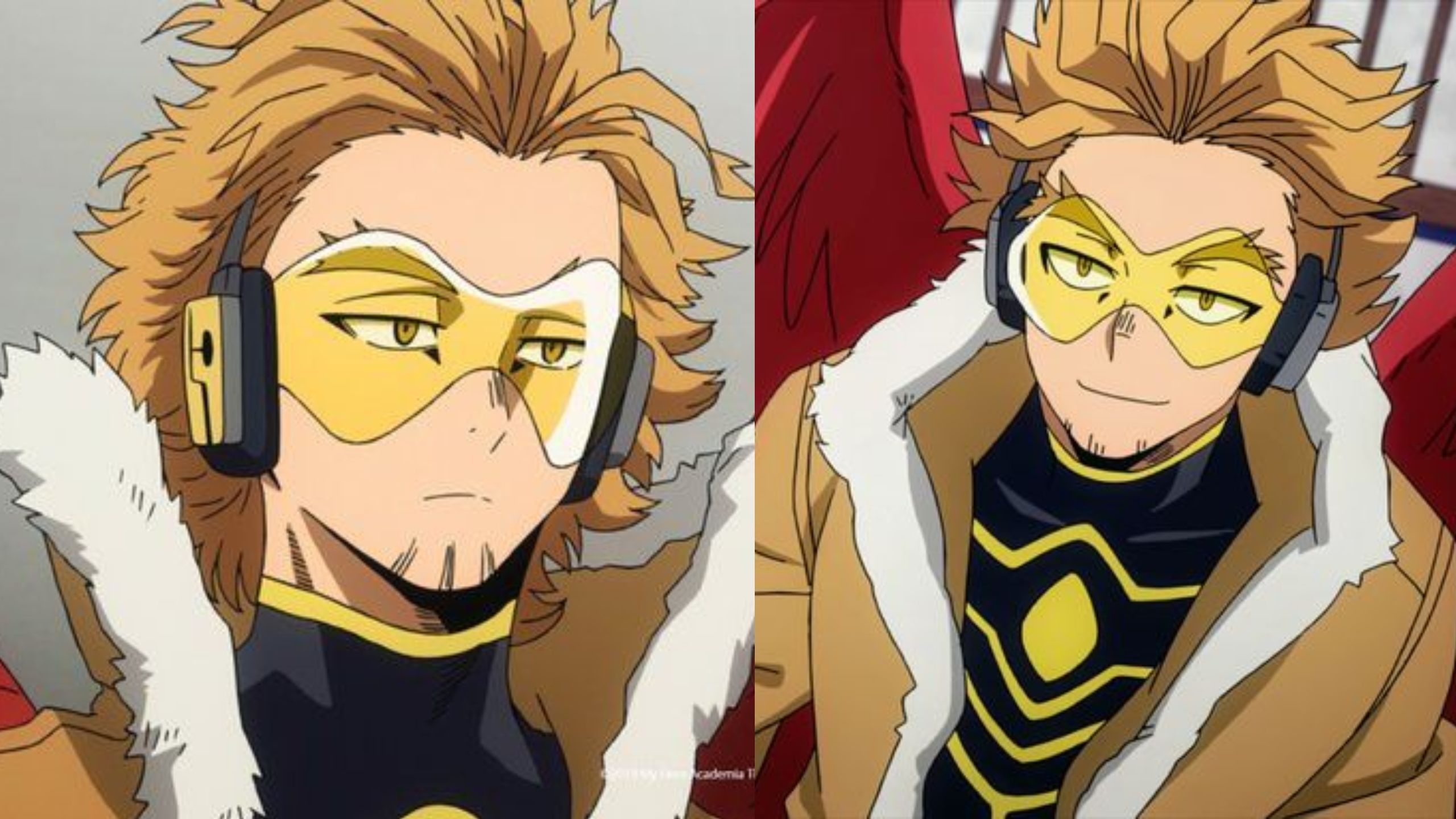
Hawks From My Hero Academia (Bones)
According to the OP, Shigaraki was condemned to death for his actions, while the other two characters were allowed to live freely and were even forgiven for their morally questionable actions.
This post, naturally, sparked heated reactions, with many fans pointing out that the comparison didn’t make much sense.
Some even humorously suggested that the OP had fallen prey to what’s known in the manga and anime community as the “Reading Comprehension Devil” a sarcastic term used when a reader misinterprets or misses key points in a story.
While Chainsaw Man is known for its devils and contracts, the “Reading Comprehension Devil” isn’t a literal entity but rather a humorous way of addressing misinterpretation among readers.
But was the comparison between Hawks, Lady Nagant, and Shigaraki truly as flawed as the majority of fans believed?
Let’s look through the roots of this debate, the motivations behind each character, and why this conversation stirred such intense reactions in the fandom.
Hawks vs. Shigaraki: A Fan Sparks Debate Over Backstories
At the heart of this recent debate is a post on X where the OP compared Shigaraki to two other popular characters from My Hero Academia: Hawks and Lady Nagant.
The OP argued that the three characters Shigaraki, Hawks, and Lady Nagant share tragic backstories, and yet, they seem to be judged by different standards within the series.
According to the OP, Shigaraki was unfairly condemned to die for his actions, while Hawks and Lady Nagant were allowed to live and move forward, despite having committed their own morally dubious acts.
To better understand this debate, it’s important to revisit the backstories of each character and how their experiences shaped the decisions they made throughout the series.
In My Hero Academia, both Hawks and Lady Nagant are considered morally grey characters.
They occupy a unique space in the story, as their roles often force them to walk the fine line between right and wrong.
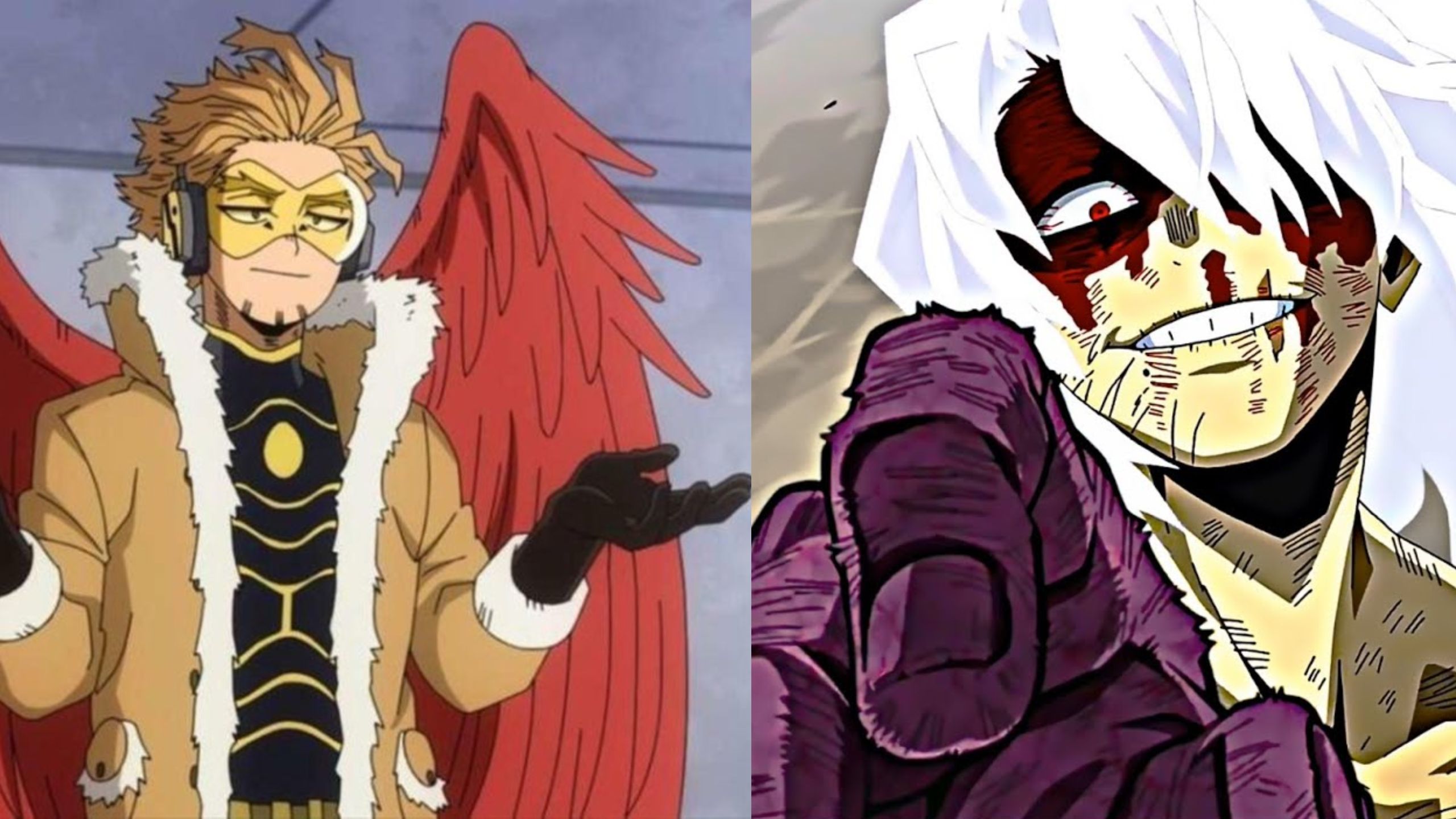
Shigaraki And Hawks From My Hero Academia (Bones)
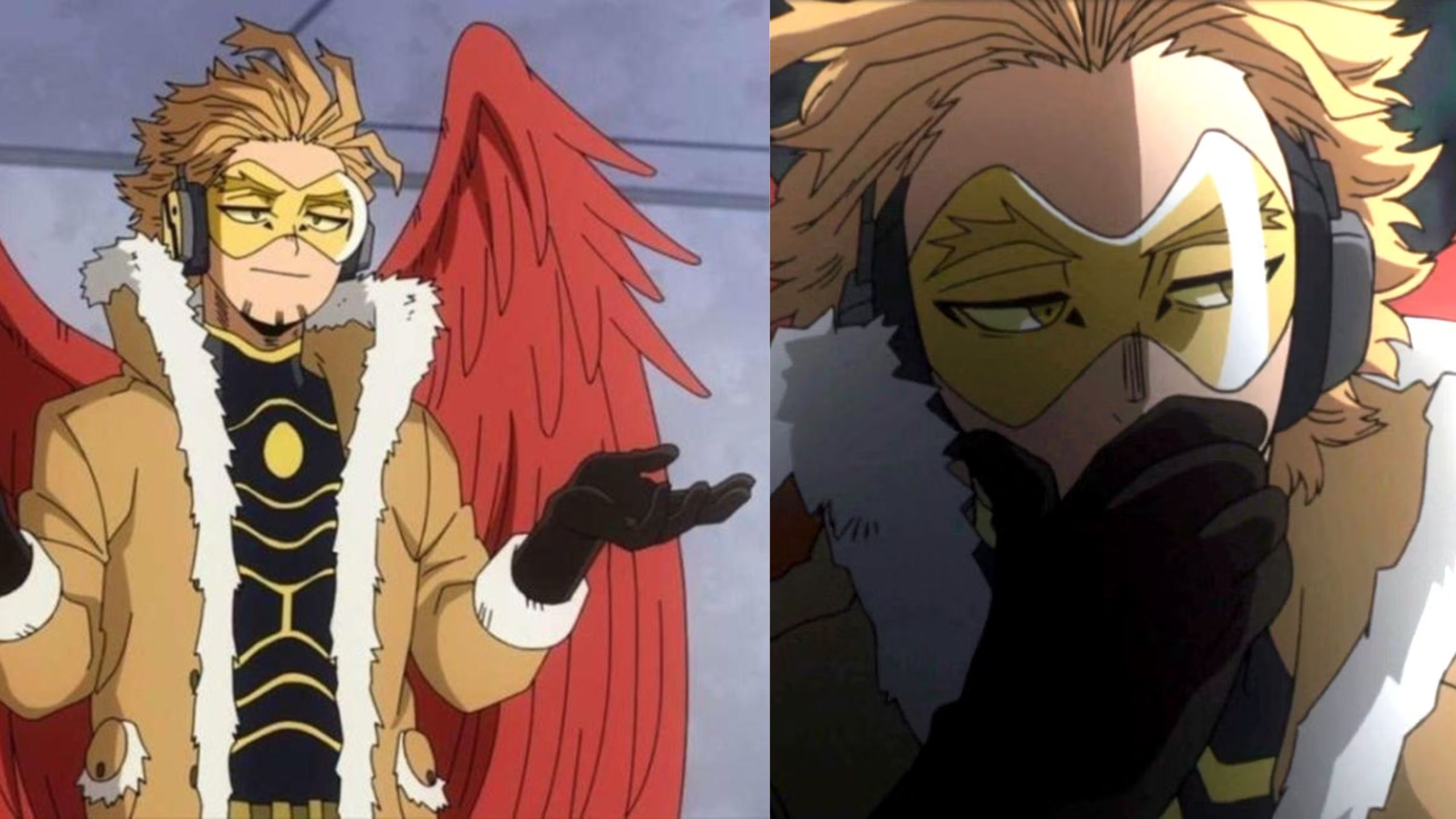
Hawks, whose real name is Keigo Takami, was taken in by the Hero Public Safety Commission at a very young age.
As a child, Hawks was conditioned to follow orders without question. This led to him growing up with a very practical, almost detached sense of morality he was willing to do whatever it took to maintain peace and protect society, even if it meant committing acts that were morally questionable.
Similarly, Lady Nagant, whose real name is Kaina Tsutsumi, had dreams of becoming a great hero.
However, her path as a hero was quickly derailed when she was manipulated by her superiors in the Hero Public Safety Commission.
Instead of becoming the hero she had once envisioned, Lady Nagant was turned into an assassin, tasked with eliminating villains and even corrupt heroes.
Her assignments required her to “disappear” targets individuals the government didn’t want to deal with through traditional legal processes.
Over time, the disillusionment with her role consumed her, leading her to question the very system she had once sworn to protect.
Then, there is Tomura Shigaraki. Born as Tenko Shimura, Shigaraki had arguably the most tragic backstory of the three.
His life was defined by trauma from a very young age. As the grandson of Nana Shimura, one of the most revered heroes in My Hero Academia, Shigaraki’s life could have taken a very different path.
However, his father, who had a deep resentment toward Nana for abandoning him to pursue her heroic duties, took out his anger on young Tenko, subjecting him to severe emotional and physical abuse.
This abuse, compounded with his family’s cold indifference, led to Shigaraki’s Quirk manifesting in a horrifying way.
In a tragic accident, Shigaraki’s Quirk activated, and he inadvertently killed his entire family.
All For One, the series’ main villain, capitalized on Shigaraki’s grief and rage, manipulating him into becoming the successor to his evil empire.
The key argument from the OP was that Shigaraki, despite his tragic backstory, was judged far more harshly than Hawks or Lady Nagant.
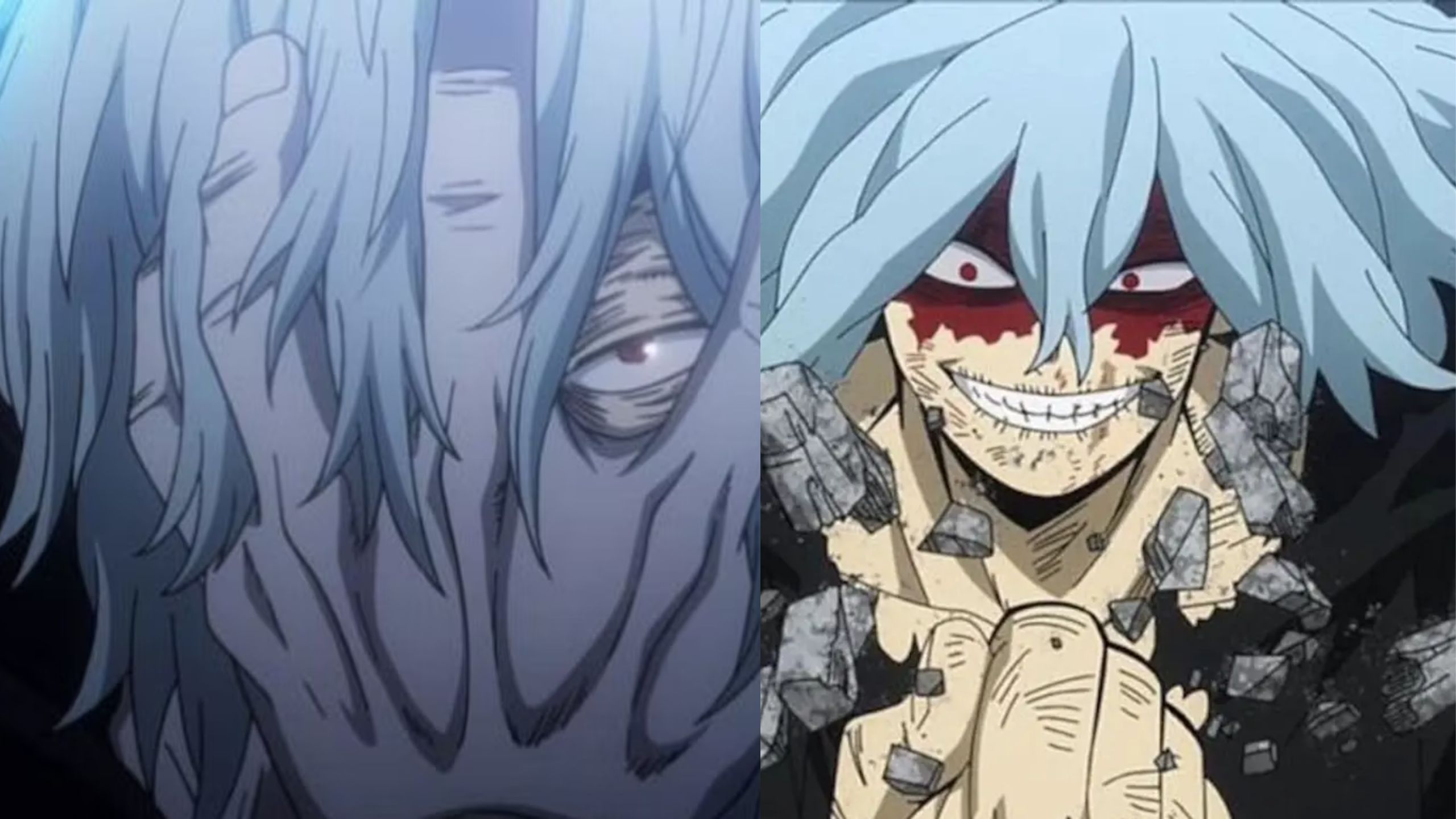
Tomura Shigaraki (Crunchyroll)
Shigaraki was considered irredeemable and deserving of a death sentence, while Hawks and Lady Nagant were allowed to walk free, despite having committed similarly questionable actions under the manipulation of the Hero Public Safety Commission.
This sparked a larger conversation about how society and even the fans themselves perceive and judge characters based on their actions and backstories.
Fans React to the Debate: The “Reading Comprehension Devil” Strikes Again
Once the post comparing Shigaraki to Hawks and Lady Nagant began circulating, the My Hero Academia fanbase didn’t waste any time in responding.
The overwhelming reaction from fans was one of disbelief and ridicule, with many claiming that the OP’s comparison was deeply flawed.
A running joke within the manga and anime communities, the “Reading Comprehension Devil” was quickly invoked to explain the OP’s apparent misunderstanding of the characters and the series as a whole.
For those unfamiliar with the term, the “Reading Comprehension Devil” isn’t an actual character in Chainsaw Man or any other manga.
It’s a sardonic nickname created by fans on Reddit to describe a phenomenon where readers miss obvious details or fail to interpret key aspects of a story.
It’s used to humorously explain why some fans may make arguments or observations that seem to completely ignore major plot points.
One fan humorously pointed out the core issue with the comparison: “You forgot the part where the guy on the right was planning on destroying the world.”
This simple comment underscores the stark contrast between Shigaraki’s intentions and those of Hawks and Lady Nagant.
Reading comprehension devil — Dev今Jonathan (@ZBalance) September 5, 2024
While both Hawks and Lady Nagant made morally grey decisions, their ultimate goal was to protect society, whereas Shigaraki sought nothing less than total destruction.
Another fan expanded on this point, stating: “Nagant was literally in prison before her introduction, she was given a second chance when she literally helped save the entire world. Hawks may have killed people, but they were still villains. SHIGARAKI IS LITERALLY A MASS MURDER WHO WANTED TO KILL EVERYONE AND EVERYTHING.”
This fan was quick to highlight that Hawks and Lady Nagant, though morally ambiguous, were still fighting on the side of justice, whereas Shigaraki’s motivations were rooted in a deep desire to destroy everything and everyone in his path.
Others pointed out the specifics of Shigaraki’s actions and the magnitude of the destruction he caused.
One fan asked sarcastically: “Hey what was manipulated guy gonna willingly do to Japan at the end? Hmm tell me.”
This pointed question called out the OP’s attempt to justify Shigaraki’s actions by focusing solely on his backstory and not acknowledging his later decisions, which included a plan to annihilate Japan.
The fanbase, for the most part, collectively ridiculed the original poster’s argument, seeing it as an oversimplification of the characters’ complexities.
While Hawks and Lady Nagant were certainly morally grey characters who carried out questionable actions under manipulation, Shigaraki was viewed as a mass murderer who sought to destroy society, regardless of his tragic past.
One particularly cutting comment from a fan read: “Me when I cut 90% of the story off so I can make my silly point valid.”
This was a jab at how the OP seemed to be ignoring key parts of the story to support their argument.
Another fan added: “One decided to do the good thing, the other decided to destroy a country to its core.”
This statement sum up the core difference between Hawks and Lady Nagant, who chose to fight for good despite their grey areas, and Shigaraki, who embraced chaos and destruction.
The conversation about Shigaraki’s backstory versus his actions reflects a broader theme that has been present throughout My Hero Academia: the tension between sympathy and accountability.
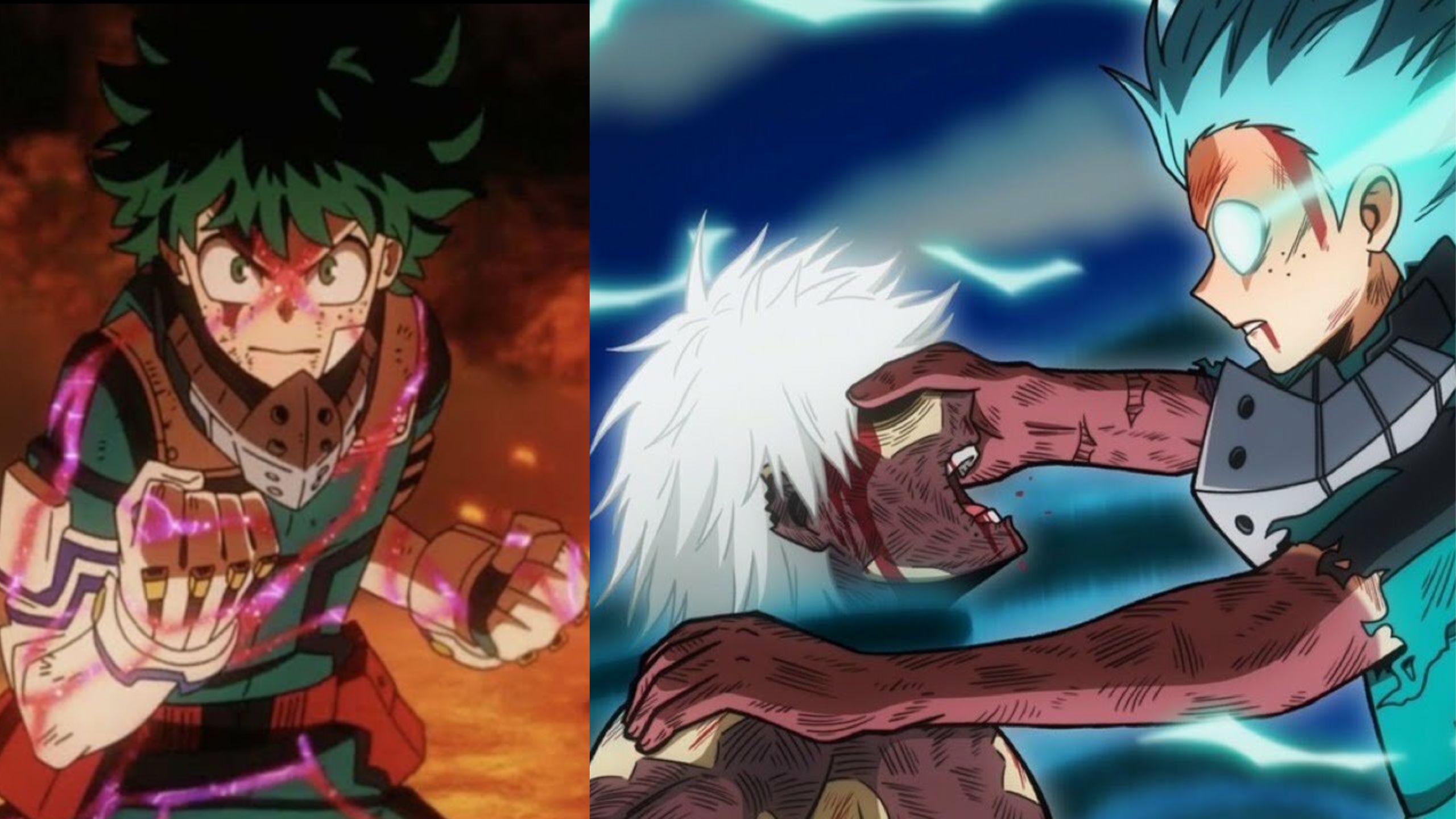
Deku And Shigaraki Final Battle (Twitter)
Can a character’s tragic past ever fully excuse or justify the harm they cause later in life? And at what point does a character become irredeemable, regardless of the trauma they’ve endured?
Sympathy and Accountability: Can Shigaraki Be Forgiven?
The debate about Shigaraki’s character ultimately comes down to one central question: Can we separate the trauma and manipulation he endured as a child from the destruction he willingly caused as an adult?
While Shigaraki’s backstory is undoubtedly one of the most tragic in the series, many fans feel that his later actions especially his plan to annihilate Japan place him beyond redemption.
Shigaraki’s story is one of abuse, manipulation, and an overwhelming desire for destruction. All For One, the series’ central villain, played a major role in shaping Shigaraki into the monster he became.
By capitalizing on Shigaraki’s trauma and hatred, All For One turned him into a weapon of mass destruction.
However, it’s important to note that as the series progressed, Shigaraki became more aware of his own desires and intentions.
By the final arc, Shigaraki had embraced his identity as a villain, choosing to follow a path of chaos and destruction, regardless of the sympathy his backstory might evoke.
Hawks and Lady Nagant, on the other hand, also suffered from manipulation at the hands of the Hero Public Safety Commission.
Hawks From My Hero Academia (Bones)
Both characters were used as tools by the government, forced to commit morally questionable acts in the name of maintaining peace.
However, unlike Shigaraki, both Hawks and Lady Nagant ultimately chose to fight for justice and redemption.
Hawks, despite his morally grey decisions, always had the safety of society in mind, and Lady Nagant, after initially turning against the system, eventually decided to help the heroes in their fight to save the world.
In contrast, Shigaraki’s actions were motivated by a desire to destroy society rather than save it. While it’s easy to sympathize with his tragic backstory, many fans feel that his later decisions, particularly his willingness to wipe out an entire country, place him beyond forgiveness.
The Fandom’s Verdict: Why Hawks and Lady Nagant Are Different
Ultimately, the overwhelming majority of My Hero Academia fans rejected the OP’s comparison between Shigaraki, Hawks, and Lady Nagant.
While all three characters had tragic pasts and were manipulated by powerful figures, the key difference lies in how they chose to act moving forward.
Hawks and Lady Nagant, despite their morally grey actions, still fought for a greater good, while Shigaraki embraced his role as a villain and sought to destroy everything in his path.
The term “Reading Comprehension Devil” may have been used humorously in this instance, but it reflects a deeper truth about how fans interpret complex characters and stories.
In a series like My Hero Academia, where characters are constantly grappling with questions of morality, redemption, and justice, it’s easy for fans to form differing opinions.
Consequences for thee but not for me pic.twitter.com/ege92OFd3f — 🃏Jester X🃏 (@ErlangFan69) September 4, 2024
However, as this debate has shown, not all comparisons are created equal, and sometimes, a more nuanced understanding of the story is required.
As My Hero Academia continues to be discussed and dissected by its passionate fanbase, these debates will undoubtedly continue to arise.
The characters, their motivations, and the choices they make will remain a topic of conversation for years to come.
Whether it’s Hawks, Lady Nagant, or Shigaraki, each character represents a different facet of the series’ exploration of morality, and their stories will continue to resonate with fans long after the final chapter has been written.
As we pass the halfway mark of The Lord of the Rings: The Rings of Power Season 2, the world of Middle-earth is embroiled in chaos and power struggles. The show continues to reveal new layers of intrigue, and Episode 6 moves several key plot points forward.
Villains grow up so fast, don’t they? We went from forging the Three Rings to starting work on the Nine, and the stakes are higher than ever. Let’s go into the episode as our characters deal with looming threats and rapidly unfolding events.
A Dark and Tense Opening in Mordor
The episode begins with Arondir (Ismael Cruz Cordova) deep in the woods near Mordor. He is keeping his promise to track down the elusive Adar (Sam Hazeldine) and his Orc army. Mordor, which is slowly becoming the dark heart of Middle-earth, serves as the backdrop for Arondir’s dangerous quest.
The atmosphere is eerie, and danger lurks in every shadow. The cinematography effectively portrays the growing darkness around the land, reflecting the ominous transformation of this once relatively neutral territory into the stronghold of evil we know it will become.
Arondir doesn’t need to search for long before he encounters a group of deserting Orcs. The Orcs, complaining about Adar’s obsessive search for Sauron, pass close by Arondir’s hiding spot. A third Orc discovers him, but before the creature can raise the alarm, Arondir quickly dispatches him.
This scene is a reminder of Arondir’s deadly skills and his determination to stop Adar’s plans. In one of the Orc’s pockets, Arondir finds a rough sketch of Eregion, which provides the first clue to Adar’s larger plans.
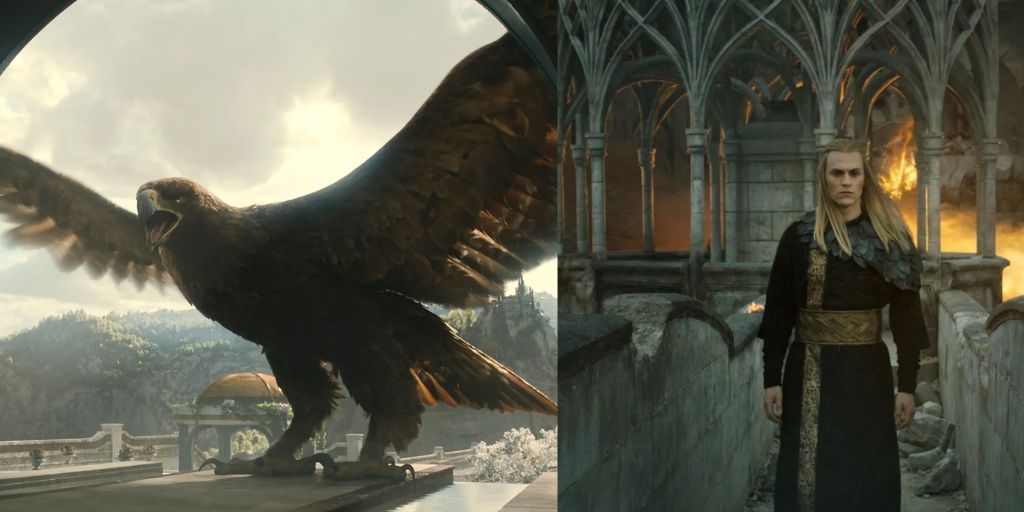
Adar’s hunt for Sauron isn’t just a matter of power; it’s personal. He’s searching for the Dark Lord, someone who both betrayed him and empowered him.
Still from Rings of Power (Credit: Prime Video)
The show’s goes into Adar’s fractured relationship with Sauron provides fascinating insights into the motivations of this enigmatic character, but it also raises the stakes for the entire season. It’s clear that Adar wants to secure his place in the world, and Sauron stands in his way.
Trouble Brewing in Eregion
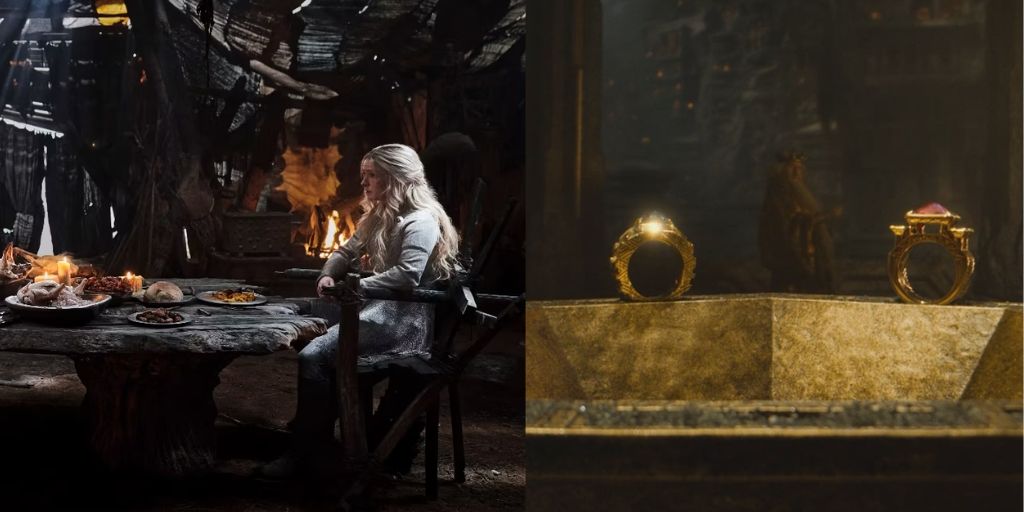
Meanwhile, in the elven city of Eregion, Celebrimbor (Charles Edwards) is facing his own set of challenges. As one of the most skilled Elven smiths, Celebrimbor is under immense pressure to complete the forging of the Nine Rings of Power. However, things are not going according to plan.
The process of forging these powerful artifacts has hit a roadblock, and Celebrimbor’s frustration is evident as he lashes out at his fellow smiths.
The Nine Rings, as readers of Tolkien’s works know, are critical to the balance of power in Middle-earth. They are destined for mortal kings, and they will ultimately be corrupted by Sauron, turning their bearers into the Nazgûl, the terrifying Ringwraiths. Knowing the fate of these rings adds an additional layer of tension to the scenes in Eregion.
Mirdania (Amelia Kenworthy), one of the Elven smiths working under Celebrimbor, notes that he has seemed increasingly irritable lately. Celebrimbor’s obsession with the rings is consuming him, and his inability to even recall Mirdania’s name alarms her.
Annatar, who is secretly Sauron in disguise, arrives at this moment and orders the other smiths to take a break, allowing him some time alone with Celebrimbor.
The interaction between Annatar and Celebrimbor is steeped in manipulation. Sauron, in his guise as Annatar, is playing a long game, subtly influencing Celebrimbor’s thoughts and actions. Celebrimbor confides in Annatar that he is struggling to stay focused and is beginning to lose track of time.
Annatar attributes this to Celebrimbor being in a creative “groove” and encourages him to continue forging the rings. The dialogue here is dripping with subtext, as Sauron carefully plants seeds of doubt and dependence in Celebrimbor’s mind.
Celebrimbor refuses to meet with the people of Eregion, insisting that his only responsibility at the moment is to the rings. This scene highlights the beginning of Celebrimbor’s descent into obsession, a key element in the downfall of Eregion.
Still from Rings of Power (Credit: Prime Video)
Annatar takes control of the situation, addressing the people of Eregion himself and asserting his authority. The cracks in Eregion’s leadership are becoming increasingly visible, and it’s only a matter of time before the consequences of Celebrimbor’s decisions come to the forefront.
Mirdania’s curiosity about the message carved on the chest of the returned soldier adds another layer of mystery to the episode. The chilling message, “Where is He?” is a reminder of Sauron’s looming presence, even as he hides in plain sight as Annatar.
Adar and Galadriel’s Uneasy Truce
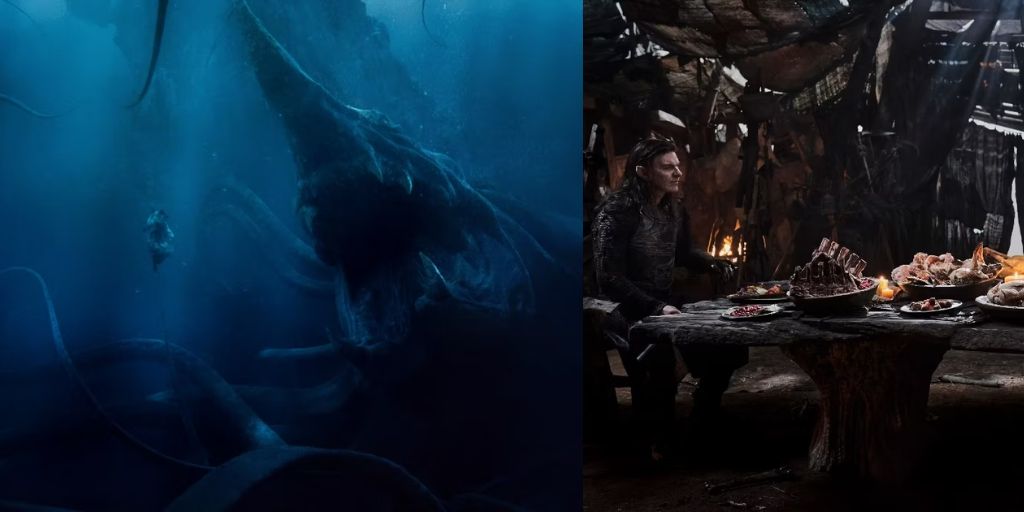
In one of the episode’s most intense sequences, we find Galadriel (Morfydd Clark) and Adar having a tense conversation over dinner in Adar’s camp. The two characters are natural enemies, but here they find themselves in a strange and uneasy truce.
Adar, who has his own vendetta against Sauron, recognizes Galadriel’s obsession with finding the Dark Lord. Their conversation touches on themes of corruption and power, with Adar suggesting that Sauron’s influence has tainted Galadriel’s mind.
Adar, despite being an antagonist, presents himself as more than just a villain. His deep connection with the Orcs, whom he refers to as his “children,” humanizes him to some extent.
He sees them not just as minions, but as beings worthy of protection and freedom from Sauron’s control. This adds complexity to his character, as he isn’t simply serving evil for the sake of it; he has his own reasons for opposing Sauron.
The scene’s cinematography enhances the tension. Dutch angles — where the camera is tilted to create a sense of disorientation — make the audience feel as unsettled as Galadriel does. The shift between straight shots and these tilted angles gives the entire exchange a dreamlike, off-kilter quality, heightening the sense that something is deeply wrong.
Adar reveals that he needs the power of the Three Elven Rings combined with Morgoth’s crown to destroy Sauron once and for all. His knowledge of Halbrand’s true identity as Sauron adds another layer of intrigue to the plot, though Galadriel is reluctant to confirm this.
Still from Rings of Power (Credit: Prime Video)
This dinner scene not only provides more insight into Adar’s motivations, but it also hints at the growing internal conflict within Galadriel. She is torn between her duty to Middle-earth and the temptation to use Sauron’s power to achieve her goals. The episode leaves viewers questioning whether Galadriel will be able to resist the corrupting influence of the rings.
Tensions in Númenor: Elendil on Trial
While the drama unfolds in Middle-earth, Númenor is dealing with its own political upheaval. Elendil (Lloyd Owen), one of the kingdom’s most respected captains, is on trial for inciting a riot and high treason.
Pharazôn (Trystan Gravelle), who has been steadily consolidating power, presides over the trial and declares that Elendil’s crimes warrant death. However, Elendil’s years of service to the kingdom earn him a chance to avoid execution, provided he pledges loyalty to Pharazôn.
Elendil’s trial is a key turning point for Númenor. His refusal to recognize Pharazôn as king, instead declaring Miriel as the rightful ruler, sets up a clash between the Faithful — those who still honor the Valar and their ways — and the growing faction of Pharazôn’s supporters who seek to break away from these ancient traditions. Elendil’s defiance shows his unwavering commitment to what is right, even if it costs him his life.
The trial also deepens the personal conflict between Elendil and his daughter Eärien (Ema Horvath), who has allied herself with Pharazôn’s faction.
As Elendil faces the possibility of death, Eärien begins to realize that she may have chosen the wrong side. Her growing doubt about Pharazôn’s leadership adds complexity to her character and sets up an interesting dynamic for future episodes.
Lord Belzagar’s suggestion that Elendil’s fate should be decided by the Valar through a Trial by Abyss adds an element of mythic grandeur to the scene. Númenor’s reverence for the sea and the Valar’s influence over it is a central theme in Tolkien’s lore, and this trial serves as a reminder of the kingdom’s deep connection to the divine.
The Stranger’s Struggle: A Trial of Fire
Meanwhile, in a remote valley, the Stranger (Daniel Weyman) is undergoing his own trial, though of a very different nature. His meditation session with Tom Bombadil (Rory Kinnear) turns into a harrowing vision of Nori (Markella Kavenaugh) and Poppy (Megan Richards) in grave danger.
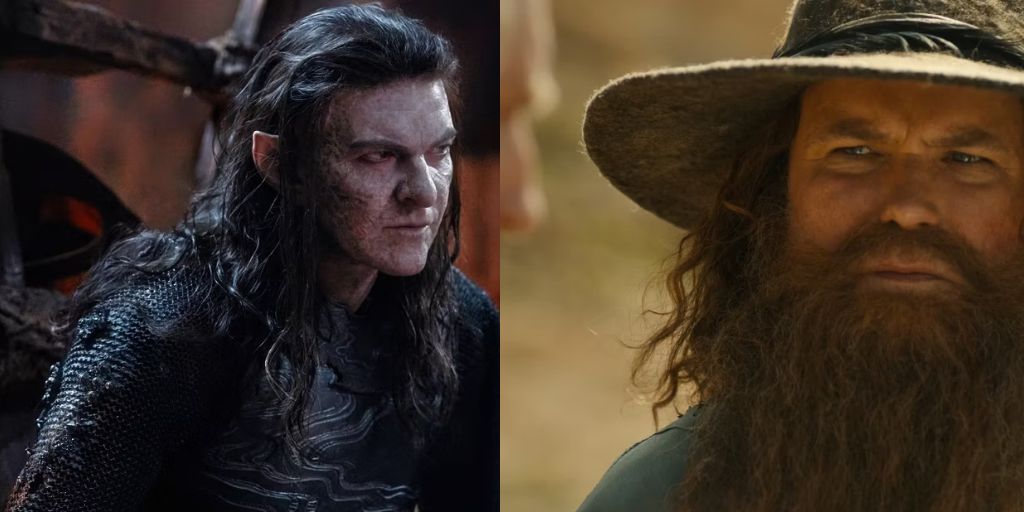
Still from Rings of Power (Credit: Prime Video)
The Stranger, who has been struggling to understand his place in Middle-earth, seeks guidance from Tom Bombadil, who tells him that the Secret Fire can show him things if he only learns to listen.
The Secret Fire, a mysterious concept in Tolkien’s legendarium, represents the creative force that sustains life and the world itself. The Stranger’s journey to master it is a metaphor for his internal struggle — he must decide whether to use his power to protect or to destroy.
The Stranger is faced with a decision: does he abandon his trial to save Nori, or does he continue his path toward understanding his power? The emotional weight of this decision is palpable, as it reflects the broader theme of the episode — the balance between personal desires and the greater good.
