Reality Bites was Ben Stiller’s directorial debut. It shows his strong influence from Richard Linklater’s 1990 indie film, Slacker. The film features Ethan Hawke and Winona Ryder. It is set in Texas and shares many features of Generation X’s relaxed cultural attitude.
The Baby Boomers were strong, while the new generation of the ’80s and ’90s was forming a new identity. This identity matched the rise of a dirty new Seattle sound and a rough fashion style called grunge.
Stiller clearly understands this new world, and Reality Bites is a tribute to the last days before the internet, cell phones, and social media took over life.
The movie’s love triangle centers on three people in their twenties. They struggle to figure out what path to take in life and what it means to be an adult. Along with Hawke and Ryder, Stiller creates a realistic romantic comedy that captures the essence of the Gen-X experience.
Troy Dyer and Lelaina Pierce are college graduates living together. They are looking for stability during the awkward transition from students to professionals.
Troy is a laid-back musician who dreams of being a philosopher. Lelaina wants to have a career in filmmaking that gives her the structure she needs.
They are very different, but their strong attraction sometimes makes their relationship hard to handle. When Michael Grates, played by Stiller, becomes Lelaina’s boyfriend, Troy realizes his relaxed lifestyle does not meet her needs. However, he struggles to change for her.
The love triangle drives the story, pushing both Troy and Lelaina to change their views and find out what they truly want from life and from each other. Janeane Garofalo and Steve Zahn give great performances as supporting characters Vickie and Sammy.
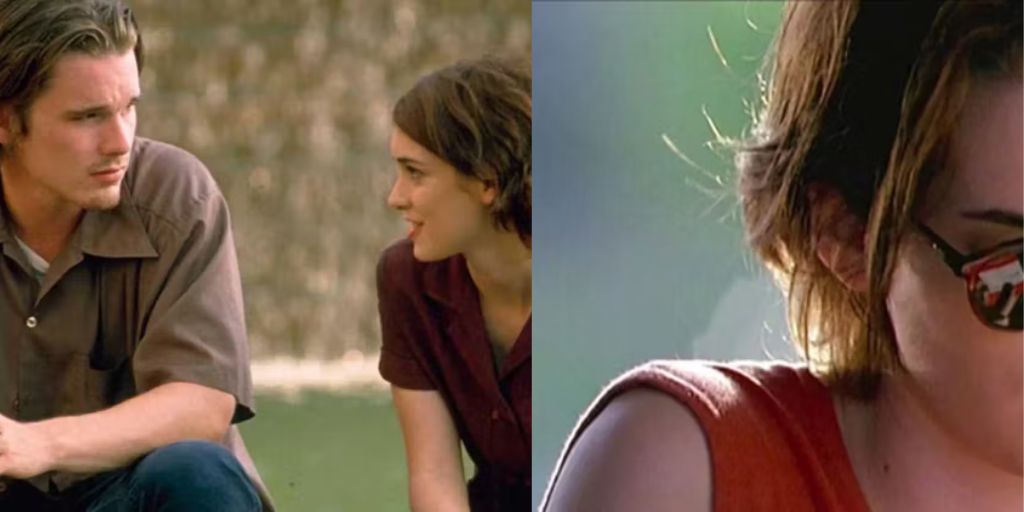
Still from the movie (Netflix)
A generational-defining movie must include certain elements. Reality Bites is linked with Gen-X and the ’90s, featuring vintage clothes, messy hair, phone booths, and fears of HIV/AIDS.
Stiller does an excellent job of including these important elements in his first film, but at times, Reality Bites seems too polished regarding the complex cultural changes of the decade.
Hawke and Ryder are two of the most recognizable actors from that time. They genuinely portray the lives of young people who clash with Boomers while trying to create their own identity. Reaganism and conservative values were fading in the early to mid-1990s.
Reality Bites shows how the newest generation of graduates and young adults moved away from the 1980s culture and embraced new ideas.
Much of this change began with the new music emerging from Seattle. The grunge style became a turning point that affected many areas of life, including politics, fashion, and a new mindset that often felt indifferent.
Young people are often seen as indifferent toward social norms. Reality Bites is a key coming-of-age film that makes a generation look at itself and decide if it likes what it sees.
The characters in the film show different paths one can take in life without judging any of them. If Stiller aimed to create an enjoyable romantic comedy that also made viewers rethink their values, he achieved it.
Reality Bites also moves into deeper themes of self-discovery and uncertainty, which are central to the Generation X experience.
The characters aren’t just finding relationships, but also grappling with their place in society. They question what success means, whether following a corporate path leads to fulfillment, or if pursuing creative ambitions is worth the risk.
Stiller’s portrayal of these dilemmas is both humorous and thought-provoking, making the movie relatable to anyone who has felt lost in the process of growing up. The film also touches on the fear of failure and rejection, emotions often felt by young adults trying to find their way.
The recent success of Beetlejuice Beetlejuice reminded audiences that director Tim Burton has been a talented filmmaker for forty years.
Instead of making a complete reboot, Burton found a natural way to continue the story of Michael Keaton’s mischievous bio-exorcist and the quirky Deetz family.
It took more than thirty years for all the important people to agree on the right story. At one point, a different idea for a Beetlejuice sequel would have removed all the original characters except for the Ghost with the Most.
In 1990, Warren Skaaren, who co-wrote the original Beetlejuice, agreed to write a draft for a sequel. Instead of staying in Adam and Barbara Maitland’s country home in Winter River, Skaaren moved the story to Paris.
In this version, Beetlejuice would meet a new couple and cause more trouble. Sadly, a real-life issue stopped this version of the Beetlejuice sequel from moving forward after the first draft.
Warner Bros. was not ready when 1988’s Beetlejuice became popular with both critics and audiences. The intense visuals of the afterlife should have scared children.
However, the funny tone and Burton’s unique creature designs amazed their imaginations. Beetlejuice went on to create many toys, video games, and a popular Saturday morning cartoon on ABC. The franchise’s success made Warner Bros. eager to start a sequel while it was still popular.
According to “The Tim Burton Encyclopedia” by Samuel J. Umland, Skaaren was excited to write his version of the bio-exorcist’s next adventure.
The writer brought a lighter tone to the original movie’s screenplay, which was initially darker and more violent, similar to Wes Craven’s A Nightmare on Elm Street.
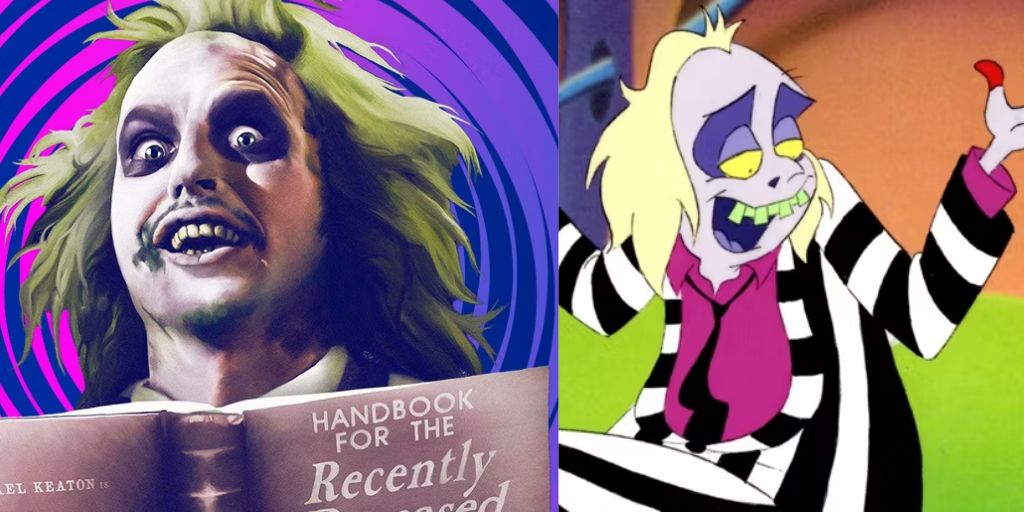
Still from the show (ABC)
Skaaren added more heart to the Maitlands’ marriage and used popular music to match Burton’s gothic but fun style. His work created a strong partnership with Burton, who later brought him in to rewrite Batman. Skaaren seemed to be Burton’s main screenwriter because his writing fit Burton’s unique vision.
Beetlejuice ends with the Maitlands stopping the bio-exorcist from marrying Lydia Deetz, played by Winona Ryder.
This allowed both families to live happily in the Winter River country home. The original story seemed to conclude nicely for all the characters without leaving any loose ends.
Skaaren’s sequel screenplay, titled Beetlejuice In Love, would take place in Paris, featuring Keaton’s character and Sylvia Sidney’s afterlife caseworker Juno as the only returning characters. Loosely inspired by The Phantom of the Opera, Skaaren’s new story follows a couple named Leo and Julia.
Leo dies in a freak accident after falling off the Eiffel Tower while proposing marriage. His death brings Beetlejuice back to the living world, where he chases Julia like he did with Lydia in the original film.
At first, Beetlejuice In Love seems like a repeat of the first movie. However, the script stands out because it focuses more on the afterlife scenes from the first film.
The animated series became popular with kids partly because the episodes mostly took place in the “Netherworld,” where Beetlejuice and Lydia had fun adventures.
Skaaren’s script expands the universe through Leo. He travels through the afterlife, where the dead must sing songs similar to “We Are The World,” and he has to find a way back to the living world to stop Beetlejuice from marrying Julia.
One week after Skaaren submitted his first draft of Beetlejuice In Love to Warner Bros., he learned that he had bone cancer.
Gems’ script developed further for a few years. However, as Burton became busy with Batman Returns and The Nightmare Before Christmas, the Hawaiian idea stopped being developed.
While Skaaren’s involvement would have kept some level of continuity for Beetlejuice, the weakness of his script was the sudden change in supporting characters. Beetlejuice was never the main character in the original story, which focused on the Maitlands and Lydia.
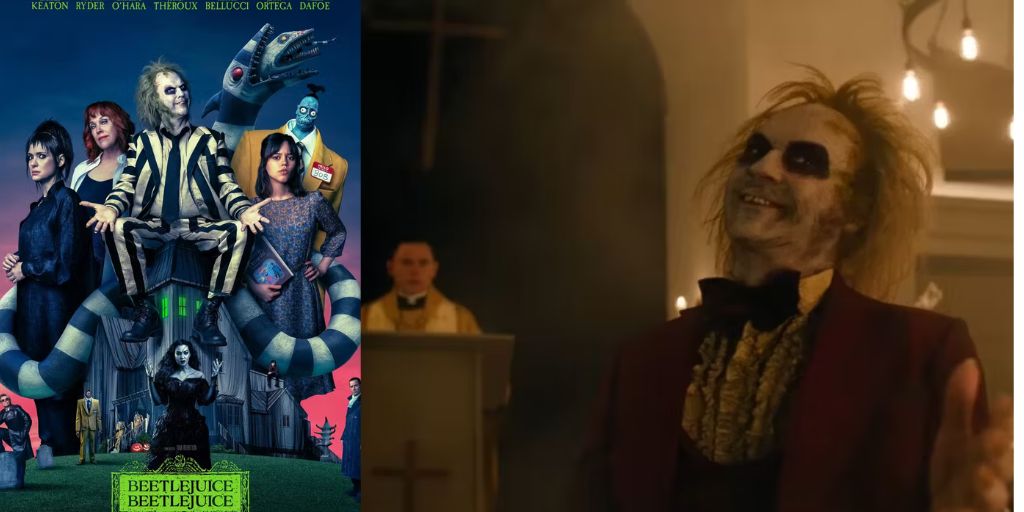
Still from the show (ABC)
Additionally, with the growing popularity of Lydia and her parents in the animated series, audiences would likely be more interested in their journey than in new characters.
Luckily, the sequel that was finally made, Beetlejuice Beetlejuice, provided the right mix of nostalgia and character development, resulting in a satisfying follow-up.
The sequel, Beetlejuice Beetlejuice, successfully builds on the charm and eccentricity of the original film while introducing a fresh narrative that resonates with both new audiences and long-time fans.
Unlike the earlier drafts that strayed from the characters people had grown to love, this sequel wisely keeps the focus on the familiar faces of the Deetz family and Beetlejuice himself.
By blending nostalgia with modern-day humor, the film strikes a balance between paying tribute to its roots and evolving the story for today’s viewers.
Tim Burton’s ability to reconnect with the spirit of the original, without completely rewriting its essence, is a testament to his visionary talent. He preserves the quirky tone, oddball characters, and signature visuals that made Beetlejuice iconic in the first place.
While the early attempts to expand the Beetlejuice universe in different directions fell short due to various reasons, including Skaaren’s unfortunate passing, Beetlejuice Beetlejuice proves that a well-crafted continuation of the story can still impress audiences.
The sequel’s success highlights how important it is to respect the core of a beloved film while pushing its boundaries just enough to feel fresh and exciting.
Fans can enjoy a return to Burton’s spooky, humorous world with a sense of familiarity, along with the excitement of something new.
