Jeremy Saulnier has established himself as one of the most impressive filmmakers in the genre. His earlier works, Blue Ruin and Green Room have left audiences stunned with their intense and shocking narratives.
After taking a short break from feature films to direct two episodes of HBO’s critically acclaimed crime drama True Detective, Saulnier has returned with a new film, Rebel Ridge, now streaming on Netflix.
This latest project continues his streak of compelling storytelling, offering an exhilarating experience with plenty of unexpected moments. Despite being one of his longest films to date, Rebel Ridge features a finale that significantly challenges and redefines the genre.
What Is ‘Rebel Ridge’ About?
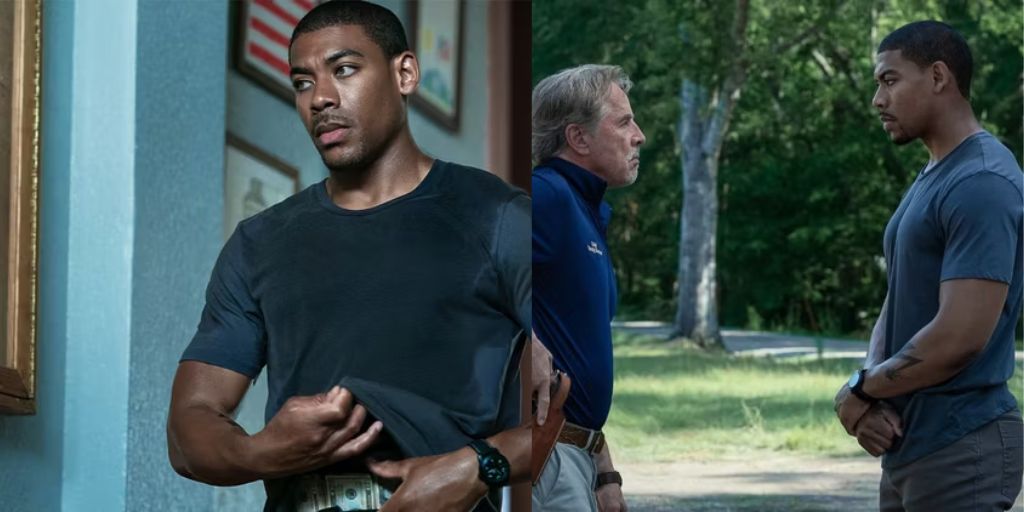
In Rebel Ridge, Aaron Pierre takes on the role of Terry Richmond, a former marine who finds himself in a perilous struggle against the corrupt police force in the small town of Shelby Springs.
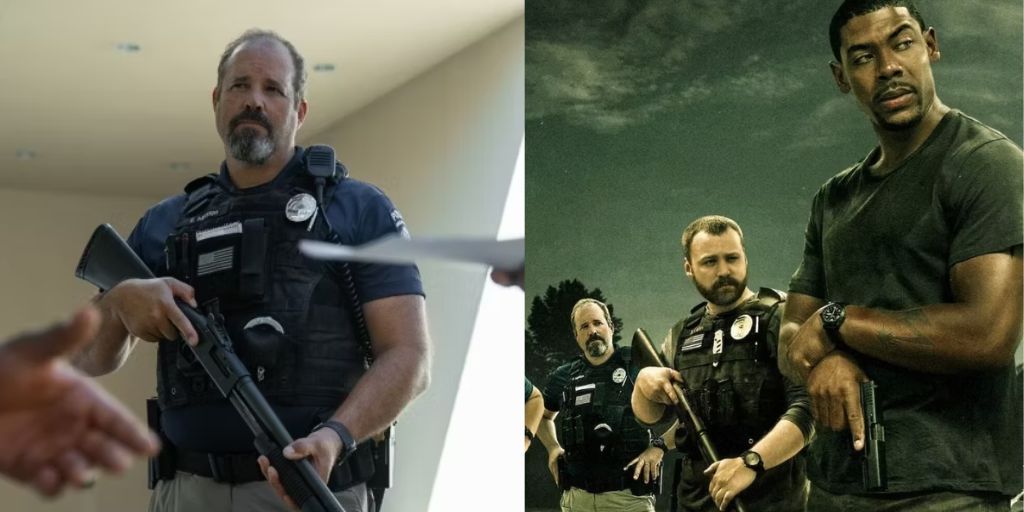
The film begins with a dramatic turn of events: Terry’s $36,000 in cash is seized by local officers Evan Marston (David Denman) and Steve Lann (Emory Cohen).
The officers falsely accuse Terry of being involved in a drug smuggling operation. Terry’s intent was to use the money to bail out his cousin, Mike Simmons, who was in jail and trying to return to a more honest way of life.
When the police refuse to return the money, Terry decides to report the incident to the local station. Unfortunately, his complaints are met with indifference.
Police Chief Sandy Burnne (Don Johnson) and Officer Jessica Simms (Zsané Jhe) dismiss his concerns. However, Summer McBride (AnnaSophia Robb), who works at the courthouse, offers to help Terry retrieve at least $10,000, which he needs to post Mike’s bail.
Terry attempts to get the remaining funds from his business partner, Mr. Liu (Dana Lee), but his efforts are unsuccessful. His interaction with the police escalates, leading to a heated confrontation with Burnne that results in Terry being briefly imprisoned.
Still from Rebel Ridge (Credit: Netflix)
With Summer’s help, Terry is released from jail. Tragically, Mike is stabbed in prison soon after being processed, dying from his injuries at the hospital. Devastated and angry, Terry decides to take matters into his own hands and expose Burnne’s corruption.
The Dark Side of Justice
As Terry seeks justice, he uncovers a darker side of the local justice system. Summer is attacked at her home and drugged by the corrupt cops, who fear that she might reveal their actions. Despite the danger, she is reluctant to go to the hospital, fearing that drug tests might jeopardize her custody battle for her child.
Meanwhile, Terry’s quest for truth leads him to confrontations with Lann and further revelations about the corruption within the police force.
They learn from a local judge (James Cromwell) that the police are involved in a major cover-up. This cover-up relates to a legal settlement that nearly drove the town of Shelby Springs into bankruptcy, revealing their desperate need for money.
Terry’s Fight for Justice
Determined to expose the corruption, Terry and Summer manage to infiltrate the courthouse and gather evidence of the conspiracy stored on a series of SD cards. However, their mission hits a major setback when the police start a fire to destroy the evidence.
Summer is kidnapped and Terry is left in a dire situation. He strikes a tense deal with Lann to exchange the evidence for Summer’s safety, but when the deal falls apart, Terry decides to storm the police station. He confronts Burnne, threatening him over the phone.
In a betrayal, Lann destroys the SD cards and reveals that Summer’s life is at risk because she has been injected with more drugs. Marston, who tries to intervene, is shot by Burnne, who plans to pin Marston’s death on Terry.
Despite the dangerous circumstances, Terry’s Marine Corps training allows him to overpower several police officers, including Lann. He manages to escape the station with Marston and Summer, driving them toward the hospital in a police car.
The Climax and Resolution
As they head to the hospital, Terry learns from Marston that turning on the police siren will activate the dashcam in the police car, capturing crucial evidence needed to prosecute Burnne and his accomplices. Terry’s escape from the station leads to a dramatic rescue by Officer Sims, who uses a PIT maneuver to run Burnne off the road.
In a surprising twist, other officers then escort Terry to the hospital, suggesting that Burnne was the primary instigator behind the cover-up. Marston and Summer are taken for medical treatment, and Terry secures the dashcam footage, which includes evidence of Burnne shooting Marston.
The film concludes on an ambiguous note, leaving it uncertain whether Terry’s efforts will result in justice being served. The ending reflects the real-life uncertainties within the criminal justice system, highlighting the possibility that those responsible for such serious misconduct might escape accountability.
Is ‘Rebel Ridge’ Based on a True Story?
While Rebel Ridge is not directly based on actual events, it draws inspiration from real issues within the justice system, particularly regarding the seizure of cash suspected of being linked to drug activities.
Still from Rebel Ridge (Credit: Netflix)
Saulnier was motivated by the concept that law enforcement can seize property from ordinary citizens without needing solid evidence of criminal activity. The film also addresses racial issues, as Terry is targeted and harassed due to his race, making it a relevant commentary on current social issues.
The film’s ending mirrors the real-world uncertainty surrounding criminal justice. It is unsettling to think that someone like Burnne might continue their duties after being involved in such a grave incident, but Rebel Ridge stands out as a powerful revenge thriller and one of the best action films of 2024.
Rebel Ridge is available for streaming on Netflix.
When a pope dies, it signals more than just the end of a life. It marks the start of a new chapter. As soon as the pope’s death is officially confirmed, a set of well-defined events begins. These events combine ancient traditions with modern requirements.
For instance, to prevent paparazzi from capturing images, lasers are used to block the windows. Mobile phones are also collected to ensure that no one inside can communicate with the outside world. Even though the cardinals are isolated, their decisions have global implications.
A Glimpse Inside Edward Berger’s Conclave
Edward Berger’s film Conclave offers a fascinating view inside the process of choosing a new pope. The film is set in the conclave, a significant event where Cardinals from around the world gather to select a new leader from their own group.
A Connection to Tinker, Tailor, Soldier, Spy
Watching Conclave reminded me of another favorite film, Tomas Alfredson’s adaptation of John le Carré’s crime thriller Tinker, Tailor, Soldier, Spy.
This film is known for its perfect tone and sweeping visuals that make the tight spaces feel like the center of the world. I was pleased to find out that Peter Straughn, who co-wrote Tinker, Tailor, Soldier, Spy, also wrote the script for Conclave. His talent for complex storytelling is clearly present in both films.
A Beautiful Portrait of a Struggle for Power
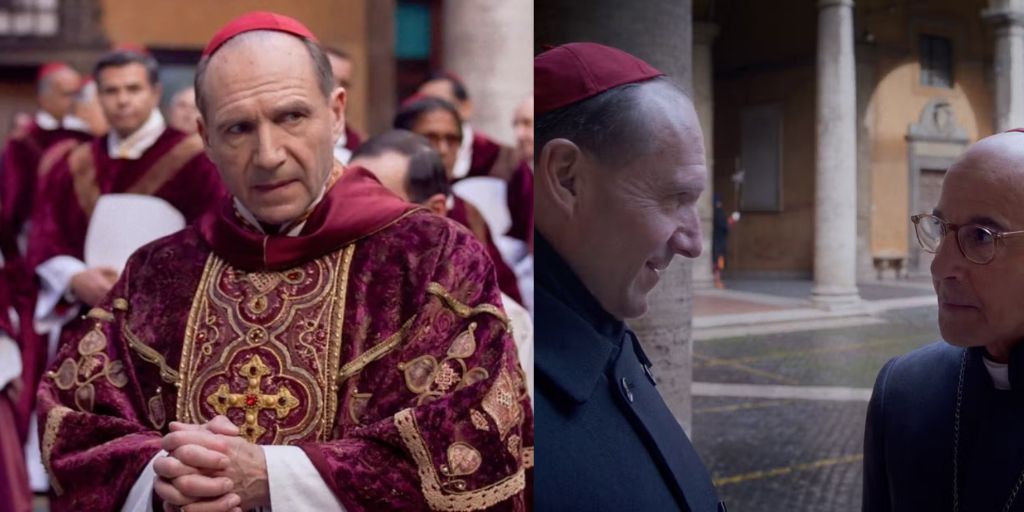
In Conclave, the setting is visually stunning. While Tinker made the secretive rooms of MI6 dramatic, the setting in Conclave is even more impressive. During the election for a new pope, the cardinals are locked inside the Sistine Chapel, one of the most revered places on Earth.
Still from Conclave (Credit: Focus Features)
Without tourists and art restorers around, they are free to talk only among themselves. They are surrounded by masterpieces from artists like Botticelli, Perugino, van den Broeck, and Michelangelo. This adds a layer of historical depth to the proceedings.
Power Corrupts In Conclave
In this sacred setting, the human struggle for power becomes apparent. Ralph Fiennes plays Cardinal Lawrence, a character torn not by his faith but by his doubts about the church itself. He is responsible for organizing the election. Bellini (Stanley Tucci) is a liberal who is running reluctantly.
His goal is to prevent the more conservative Tedesco (Sergio Castellitto) from reversing recent reforms. Cardinal Adeyemi has strong support but faces obstacles in his path.
Tremblay (John Lithgow) is a shrewd political figure, while newcomer Carlos Diehz plays Cardinal Benitez, who is introduced to the group just before the voting begins.
The Corruption of Power
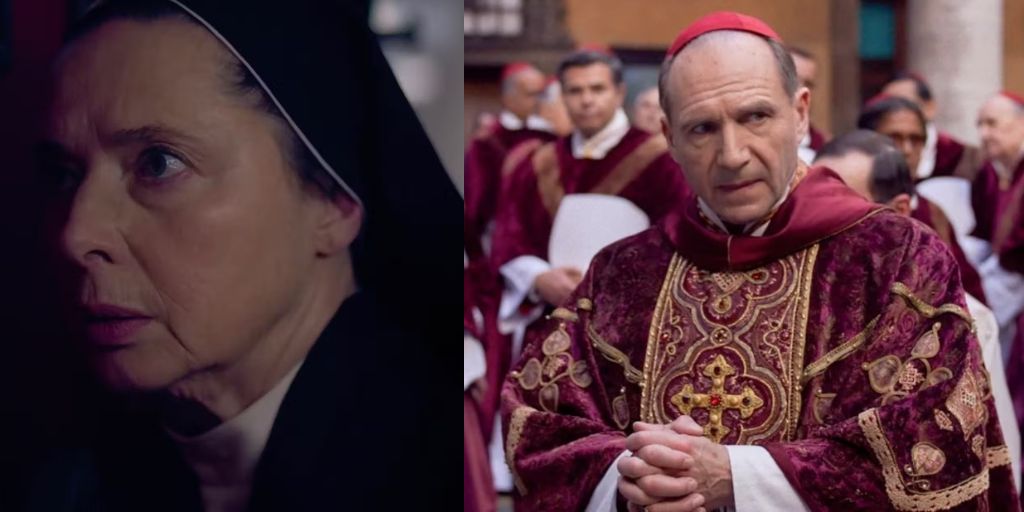
As the priests vote or retreat to quiet corners to discuss their strategies, an army of nuns silently serve food and observe the discussions. Sister Agnes (Isabella Rossellini) is particularly vigilant. Her admiration for the late pope makes her cautious about the political maneuvering she witnesses.
Conclave powerfully illustrates how power can corrupt. Plato, in The Republic, suggested that the best rulers are those who are reluctant to lead, while the worst are those who are eager for power. Conclave challenges this idea by showing how even the most reluctant leaders are drawn to the lure of power.
The Cardinals, while claiming to act in the best interest of the church, commit various infractions. This shows how any system, no matter how traditional or noble, can be affected by the corrupting nature of power.
A Cinematic Triumph
Edward Berger’s previous film, All Quiet on the Western Front, was a bold and powerful retelling of a classic story. Similarly, Conclave makes the secretive process of voting just as exciting as any action scene.
The film’s cinematographer, Stéphane Fontaine, known for his work on films like Jackie, Elle, and A Prophet, brings his expertise to the narrow hallways, sunlit courtyards, and colorful figures of the Vatican.
Celebrating Conclave
In Conclave, Berger delivers a brilliant film with a compelling story and exceptional performances. Ralph Fiennes, known for his many impressive roles, gives one of his best performances yet.
The film mixes entertainment with deep ideas, creating a blend that is both engaging and thought-provoking. It’s a film that deserves to be celebrated, and I hope you agree and join in this appreciation.
The film shows themes of power and politics within one of the most sacred spaces in the world. The conclave, with its rich historical and religious significance, becomes the backdrop for a tense and dramatic narrative.
Still from Conclave (Credit: Focus Features)
The tension is not just in the voting but also in the subtle power plays and personal ambitions of the characters. The setting of the Sistine Chapel, with its art and history, adds a dramatic layer to the unfolding drama.
As the cardinals deliberate and vote, the film captures the high stakes and the intense pressure they face. The isolation from the outside world adds to the suspense, as every move and decision is under scrutiny.
The film does a remarkable job of making the complex process of electing a new pope engaging and dramatic. It shows how even in a setting steeped in tradition and reverence, the struggle for power is a very human experience.
Conclave is a standout film that combines rich storytelling with strong performances. The portrayal of the papal election is both dramatic and insightful. The film’s scheme of power and its effects on individuals is compelling, making it a must-watch for anyone interested in political dramas and character studies.
