Back in 2023, Citadel premiered with high hopes, featuring Priyanka Chopra Jonas and Richard Madden in lead roles. The series, produced by the Russo Brothers, known for their work on the Marvel franchise, promised a thrilling ride filled with espionage, action, and complex characters.
However, it received mixed reactions from audiences and critics alike. While some appreciated its ambitious storyline and high production values, others felt it fell short of expectations.
Despite the divided opinions, Prime Video greenlit a second season and approved the creation of international spin-offs, indicating the company’s confidence in the Citadel franchise.
One of these spin-offs is Citadel: Diana, set in Italy. This new installment expands the Citadel universe, introducing a storyline that runs parallel to the original series. Although I wasn’t particularly impressed by Citadel, I found its strong cast and a few unexpected twists made it an engaging watch.
While it did not reach the thrilling heights of Mission Impossible, it still had some noteworthy aspects worth discussing. However, Citadel: Diana feels much less like a blockbuster.
It does not increase the stakes or present a fresh take on the spy genre. If viewers were disappointed by Chopra Jonas and Madden’s series, they may find Citadel: Diana even more underwhelming.
What Is ‘Citadel: Diana’ About?
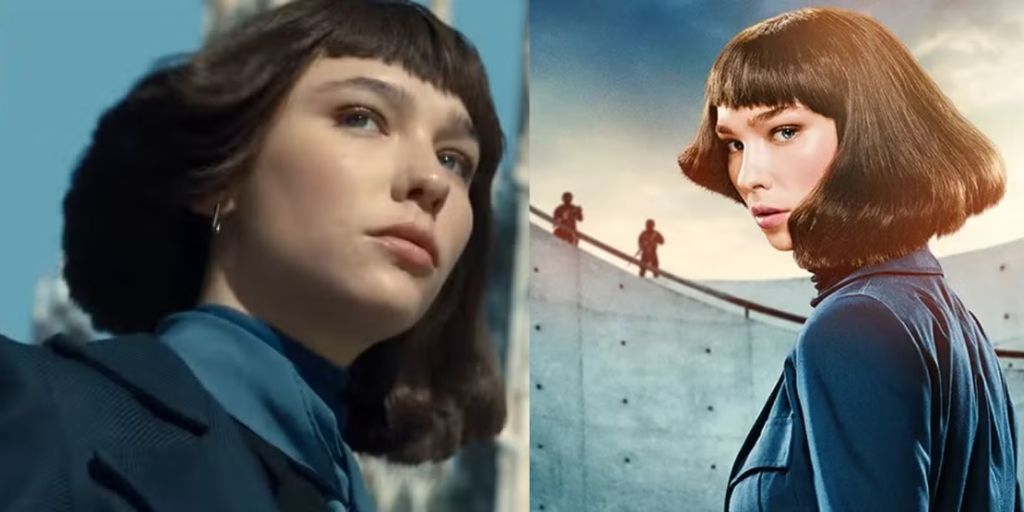
Citadel: Diana is set in Milan in the year 2030. The main character, Diana Cavaleri, portrayed by Matilda De Angelis from The Undoing, is deep undercover at Manticore’s headquarters.
Eight years before the events of the show, Diana was recruited as a Citadel agent, driven by her desire for revenge after her parents died in a plane crash that Manticore orchestrated. This tragic event set the course for her life, as she sought justice against the organization responsible for her family’s suffering.
Manticore’s efforts to destroy their competition led to Citadel fading into obscurity, leaving only one person behind to carry on the mission of protecting the world from corruption. This backstory sets the stage for Diana’s character and her motivations throughout the series.
As the story unfolds, we see Diana struggling with the weight of the Citadel legacy. She is diagnosed with a chronic illness, making her mission feel even more burdensome.
Exhausted and wanting a way out of her dangerous lifestyle, Diana finds a chance to leave the world of espionage behind. To gain her freedom, she hands over a weapon as leverage, hoping to escape the life that has consumed her for so long.
In her new life, Diana connects with Edo Zani, played by Lorenzo Cervasio, who is next in line to lead Manticore. Their relationship develops against a backdrop of tension and intrigue. Diana faces an internal battle, torn between her desire for freedom and her attraction to Edo.
This attraction raises the stakes, as Edo’s potential influence on Manticore could change the organization for the better. Diana must ultimately decide where her loyalties lie and what kind of future she wants for herself and her remaining family.
‘Citadel: Diana’s Greatest Strength Is its Stuntwork’
As a spy drama, Citadel: Diana follows a familiar structure. It features a protagonist involved in a secret mission who also finds herself romantically involved with the enemy. While the genre does not require a complicated storyline, it typically demands a higher level of action.
Unfortunately, this series falls short in that regard. There are only two major stunt-driven sequences in the entire show, which is surprisingly low for an espionage series.
However, the action scenes that are present are brilliantly choreographed and executed. In one standout moment, Diana manages to chase someone down using a zipline, showcasing her skills and determination.
The camera angles and precise direction by Arnaldo Catinari enhance these action sequences, making them the greatest strength of the series.
The tension and excitement of these moments could have been expanded, creating a more thrilling viewing experience. If more intricate and engaging action scenes were included, the spin-off might not have felt like such a missed opportunity.
Alongside the action, other details in the show also stand out, although they remain underexplored. The design of the weapons and Diana’s exotic hairstyle are particularly noteworthy.
Manticore’s advanced technology and weaponry are attributed to Edo, who wants to prove to his father, Ettore (Maurizio Lombardi), that he has the skills to upgrade the organization. Manticore Italy faces sanctions from their European counterparts in France and Germany, adding another layer of complexity to the story.
Edo’s technological prowess is evident, especially in Episode 5, where he showcases his talent in crafting high-tech gear. However, the series misses a valuable opportunity to go deeper into how his inventions relate to his brother’s death during an attack on Citadel. This connection could have added emotional depth to his character and the storyline.
Similarly, Diana’s appearance and hairstyle could have been used to reflect her persona as a mole within Manticore. Her look should connect with her efforts to maintain a low profile while carrying out her treacherous mission. More scenes of these visual elements could have enhanced the storytelling.
‘Citadel: Diana’ Does Little to Further the Russos’ Global Franchise
Despite its potential, Citadel: Diana does not succeed in making a mark on the larger Citadel franchise. The series lacks character development and relies heavily on familiar spy tropes.
Additionally, it does not fully utilize its setting to enrich the narrative. The Italian espionage headquarters could offer a unique cultural perspective, yet we are left questioning how it differs from other locations around the world.
As more international spin-offs are produced, there is a growing need for each series to stand apart in terms of cultural significance and storytelling. While Citadel: Diana tries to expand the universe, it ultimately feels like a missed chance to create something unique and compelling.
While the series does have promising moments, such as its action sequences and weapon designs, these aspects do not lead to a satisfying experience. Although it consists of only six short episodes, the lack of substance prevents it from making a lasting impression on viewers.
Still from Citadel Diana (Credit: Prime Video)
Audiences may find themselves binge-watching the series in just a few hours, but they will likely forget the experience shortly afterward.
As we look ahead, Citadel: Honey Bunny, a spin-off set in India, is set to debut next month. Fans of the franchise are hopeful that this new installment will take full advantage of its concept and avoid repeating the mistakes made in Citadel: Diana.
Conclusion
Citadel: Diana had the potential to be an exciting addition to the Citadel franchise, but it ultimately falls short in delivering a attractive story.
While it offers some engaging moments, the series struggles to develop its characters and show the intricate world of espionage effectively. With only a handful of action scenes, viewers may find themselves wanting more excitement and depth from the narrative.
The character of Diana Cavaleri provides a strong foundation for the story, but her journey is not fully realized. The relationship between Diana and Edo Zani could have been more compelling with deeper scenes of their motivations and backgrounds. Furthermore, the series misses opportunities to utilize its setting and cultural context to enrich the story.
Ultimately, while Citadel: Diana offers some entertaining moments and strong performances, it does not fully capitalize on its potential.
Viewers may enjoy the action scenes and the visual elements, but the full experience may leave them feeling unfulfilled. As the Citadel franchise continues to grow, fans will be eagerly watching for the next spin-off, hoping for a more exciting and engaging narrative.
Citadel: Diana will be available to stream on Prime Video worldwide starting October 10, giving viewers a chance to experience this new chapter in the Citadel universe for themselves.
By the end of the series, viewers are likely to find themselves questioning how they arrived at such an emotionally charged state, making it clear that the past can indeed come back to haunt those who least expect it.
The most striking aspect of Cuarón’s series, aside from its stunning visuals, is the masterful way he tells the story. Cuarón weaves together three well-crafted storylines—two set in the present and one in the past—with a level of precision that sharpens the tension and intrigue with each episode.
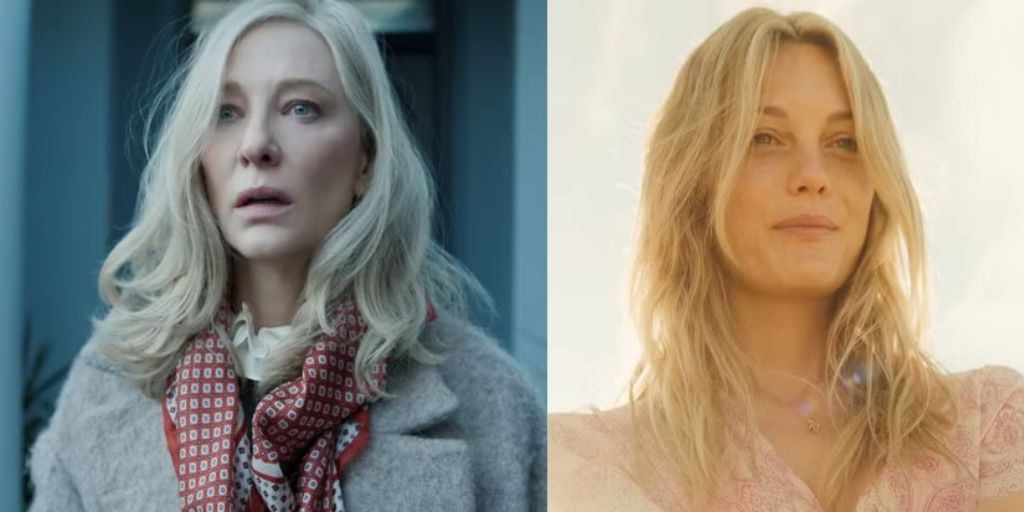
The series begins with Cate Blanchett’s character, Catherine Ravenscroft, at the pinnacle of her journalism career. She is being honored at a lavish ceremony, celebrating her success in uncovering hidden truths and exposing the exploitative behaviors of powerful individuals.
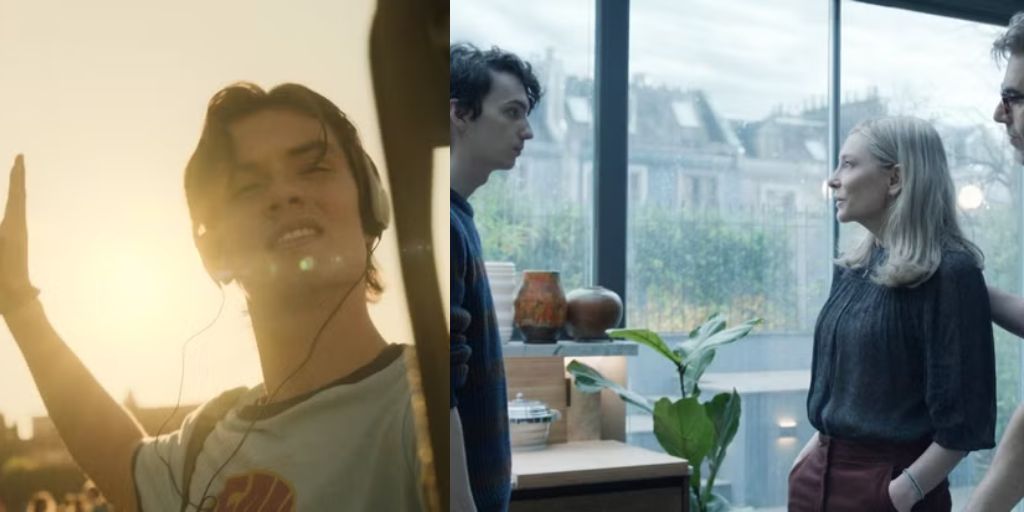
Catherine is not alone on this journey; she is accompanied by her supportive husband, Robert, played by Sacha Baron Cohen. Initially, Robert appears to be a loving partner, yet he often seems more like an accessory to Catherine’s opulent lifestyle than a strong presence in their relationship.
He indulges in fine wines and engages in discussions about their flavors, often while Catherine seems indifferent to his musings. His reassurances that she is a good mother to their son, Nicholas (played by Kodi Smit-McPhee), who displays a disinterested demeanor, further illustrates the disconnect in their family life.
Catherine’s seemingly perfect world is shattered when she receives a book in the mail that eerily reflects a traumatic event from her past, an event she thought she had successfully buried.
The arrival of this book acts as a catalyst, forcing Catherine to confront the haunting memories she has tried to suppress. The narrative’s complexity deepens as we witness how this revelation not only affects Catherine but also ripples through the lives of those around her.
Cuarón effectively portrays the Ravenscroft family’s wealth and privilege, emphasizing the stark contrast between their glamorous lifestyle and the heartbreaking parallel story involving Stephen (played by Kevin Kline).
Stephen is at his lowest point, drowning in grief and suffering after the loss of his wife and son. His son, Jonathan (played by Louis Partridge), died twenty years ago, leaving Stephen with a singular purpose: to seek revenge against Catherine, whom he believes is responsible for Jonathan’s tragic death.
Still from Disclaimer (Credit: Apple TV)
The events that transpired between Jonathan and Catherine in Italy years ago are gradually revealed through the book. This book serves as a tool for Stephen, as he hopes to not only inflict shame and humiliation upon Catherine but also to destroy the happy life she has built, a life he feels he was unjustly robbed of due to that fateful Italian getaway.
Cuarón’s storytelling effectively invites the viewer to go into the emotional turmoil of each character, creating a narrative that is as compelling as it is complex.
Flashbacks and narrations play a critical role in Cuarón’s narrative style, transforming what could be seen as narrative crutches into powerful storytelling devices. The storyline set in the past, detailing Jonathan’s adventurous life in Europe with his girlfriend, provides vital context.
It presents a young man filled with curiosity and a desire for life. Jonathan’s character is depicted as carefree, embodying a “nothing-can-stop-me” mindset typical of youth. He is portrayed as innocent yet easily manipulated by a young Catherine (expertly portrayed by Leila George), who uses her charm and beauty to influence him.
These flashbacks serve to shape how viewers perceive present-day Catherine. They cast a shadow over her attempts to connect with her son, Nicholas, making her efforts seem inadequate and desperate.
As she tries to rid herself of any copies of the book and frantically questions Nicholas about the woman in the story—who she suspects is her own younger self—the audience witnesses her growing panic and fear of losing the carefully crafted reputation she has worked so hard to build.
Narration provides a raw view into the characters’ thoughts and emotions, revealing their vulnerabilities and insecurities. For instance, while Robert appears to be a supportive husband, the narration unveils his inner struggles with feelings of inadequacy and fragility.
This internal conflict connects to a larger theme of the show: society’s tendency to judge others without considering the complex factors that shape their behavior. In a fast-paced world, it is easy to take people at face value without going into their deeper struggles.
By the end of the series, viewers may find themselves reflecting on their judgments of others, as well as their own motivations and actions.
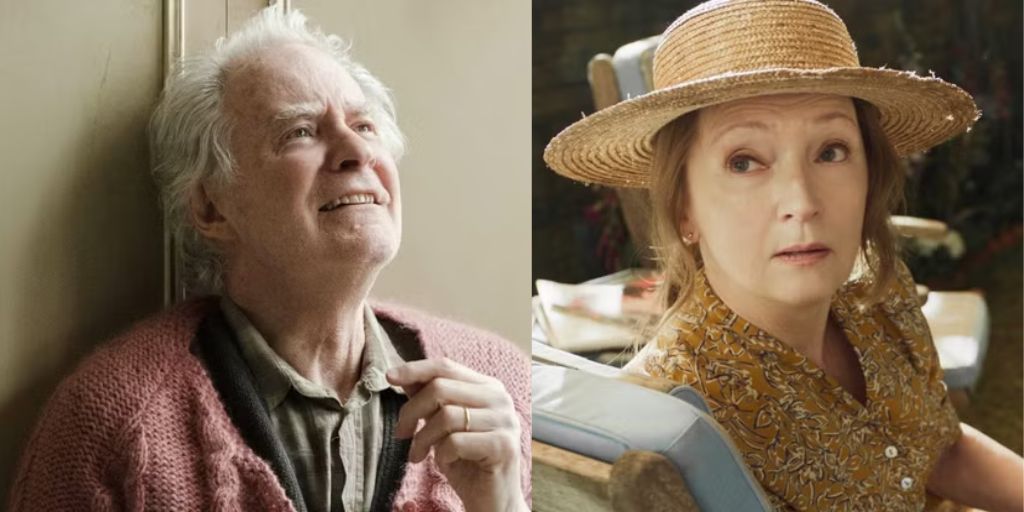
His character’s journey is softened by the poignant detail that he wears his deceased wife’s favorite sweater, a symbol of his unresolved grief. Stephen becomes increasingly difficult to sympathize with as he continues down his vengeful path, but Kline’s portrayal of a man in denial adds layers to the character.
Manville’s character grapples with her own grief, exhibiting unchecked rage that threatens those around her, including her husband. The rawness of her emotional state adds another layer to the family dynamics, illustrating how grief can manifest in destructive ways.
Kodi Smit-McPhee’s character, Nicholas, appears underused for much of the series, often displaying a nonchalant attitude toward his mother’s attempts to connect with him. He seems to crave an emotional bond but consistently pushes her away.
Initially, Nicholas may come off as a typical teenager dismissing his mother, but as the series progresses, especially in Episode 5, Smit-McPhee delivers a performance that showcases his character’s emotional depth. This pivotal episode allows him to break free from his character’s confines, making his previously stifled role all the more powerful.
Still from Disclaimer (Credit: Apple TV)
Sacha Baron Cohen delivers a remarkable performance, capturing the nuances of a man whose character is defined more by his weaknesses than his strengths.
His interactions with Blanchett are particularly attractive, but it is in the quieter moments—when Robert is left alone with his racing thoughts—where Cohen’s performance truly shines. The audience is drawn into Robert’s internal struggles, which are conveyed through his subtle gestures and expressions rather than through dialogue.
Blanchett, as expected from a two-time Oscar winner, is fully immersed in her character’s complexities. Her performance becomes increasingly powerful as the walls close in around her, highlighting the emotional strain she experiences.
However, it is Leila George who truly shines in this ensemble cast. Tasked with portraying a younger version of Catherine, George captures Blanchett’s mannerisms and speech patterns while adding her own unique flair to the character. She embodies a seductive confidence that contrasts sharply with the more vulnerable Catherine of the present.
In her first encounter with Jonathan at a hotel bar, it becomes clear that George’s portrayal of Catherine is not just about charm; it reflects a deep-seated need for control. Her ability to manipulate situations and people is evident, and it raises questions about the ethics of her actions.
George’s performance reveals a woman who revels in her power over others, particularly in her interactions with Jonathan, where her intent is as much about seduction as it is about dominance.
As the series progresses, it becomes increasingly difficult to accept that loved ones can be at fault. Just when viewers think they have a solid grasp on the plot and characters, new revelations turn everything upside down.
The latter half of the series is particularly filled with twists and misdirections, though it would be unfair to reveal too much. While some might argue that certain plot points are easily resolved and key details are held back for too long, the strengths of the story far outweigh any weaknesses.
Still from Disclaimer (Credit: Apple TV)
