A massive group of competitors, simply referred to by their number, is fighting for a huge sum of money. Some masked individuals follow the orders of the person in charge. The drama coming from the competition has raised questions about how safe this game is.
Does this situation sound familiar? With a massive budget of $100M, YouTube star MrBeast’s project, Beast Games, has officially finished, and viewers were eager to watch every part. Essentially, it is a bigger and more exciting version of Netflix’s Squid Game reality show, Squid Game: The Challenge.
The game features a series of physical, strategic, and psychological challenges. The creator of the game, a well-known media figure, dangled an incredible amount of money in front of the 1000 contestants, all of whom were eager to win. They saw this as an opportunity they might never get again in their lives.
MrBeast added some over-the-top features to make it even more exciting, like Beast City, a private island that one player would soon own, a pirate ship, and monster trucks. The game turned into a vanity project for a rich man, who simply wanted to give away a lot of money for fun.
Throughout the game, MrBeast, whose real name is Jimmy Donaldson, offered the players chances to leave with huge sums of money. Some players could not resist and chose to take the offers. Five players left the game with some of the highest rewards available in Beast Games. Let’s take a look at the five players who earned the most money by the end of the game.
Player 457 – Esteban Zepeda ($450,000)
After 60 players earned a golden ticket to MrBeast’s private island, the host offered the group a chance to earn the deed to the island, which was worth $1.8M. However, there was a catch. If any of them decided to play for the island, they risked being eliminated from the game completely if they lost.
While the odds of winning were favorable, only nine people chose to play for the island. The rest decided to enjoy a short vacation while still staying in the game for the grand prize of $5M.
The group played a series of games that tested their determination and their will to win. As the number of players decreased, only four individuals remained in the game. MrBeast brought them onto a pirate ship and revealed that the ship had real cannons.
At this point, the four remaining players were given a new offer. If they chose to self-eliminate and not play for the private island, MrBeast would give them $450,000 in gold. This was a quarter of the value of the island. To decide the order in which the players would make their decisions, they went in the order of the number they had selected in the previous game.
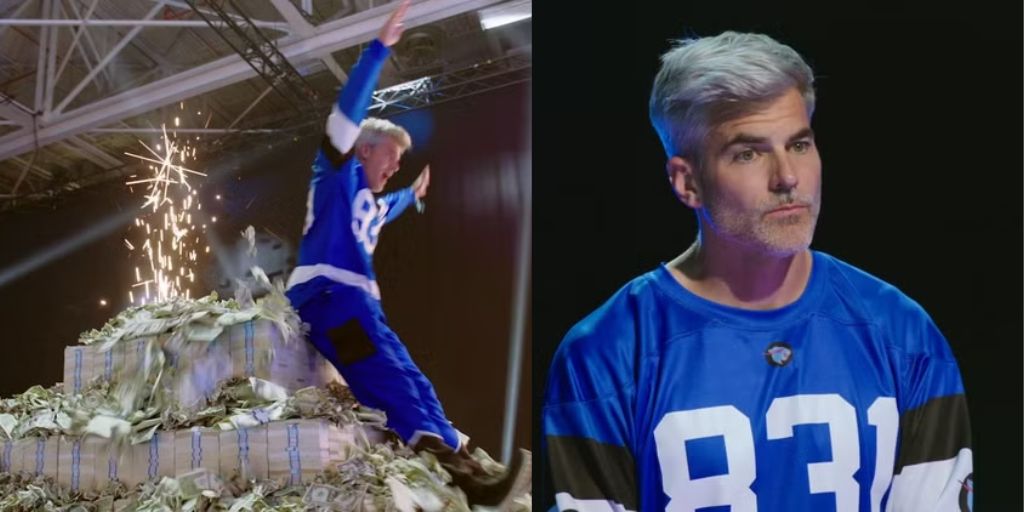
Still from Beast Games (Credit: Prime Videos)
As Player 1, Esteban Zepeda had the first chance to take the offer. Without thinking twice, Esteban accepted the $450,000 and walked away from the game, leaving the other three players to make their choices. He left Beast Games with $450,000 in his pocket.
Player 566 – JC Gallego Iori ($650,000)
Trust is something hard to build, but it can easily be broken. MrBeast pushed his contestants to their limits, placing them in situations that tested their moral values. Many of the players showed that they had big hearts and would go out of their way to help others.
But when a tough decision had to be made, Player 566, JC Gallego Iori, shocked everyone. JC entered Beast Games with the goal of changing his family’s life. He and his husband were raising two sons, and they were his main motivation to win the prize money.
The top ten players were given the rare chance to see their family, but JC was visited by his friends because his family could not make it. Did this have an effect on his decision later? During the final challenge for the top ten, the contestants had to decide how to split $1,000,000 from a giant cube.
The first person to choose, Twana Barnett (Player 830), took $100,000, believing the others would do the same. However, when Player 453, Michael Robert House, took $223,000, it started a chain reaction. From then on, it was every player for themselves.
When it was JC’s turn, he was faced with a difficult choice. He could either take less money to leave something for the other players, or he could take the money for himself and his family.
Knowing that this opportunity might be his only chance to pay off his debt, JC decided to take $650,000. He left only $27,000 for the others. It was a tough decision, but JC knew that he couldn’t turn down the chance to improve his family’s future.
Player 974 – Gage Gallagher ($1,000,000)
Even though Gage Gallagher, Player 974, did not win the grand prize, he may have been the luckiest contestant out of all 1000. He used a sneaky tactic to earn a spot in the final six. Then, he used a coin flip to double the original $5M prize to $10M.
MrBeast tempted the finalists with this offer. One player had to predict the outcome of a coin flip. If they guessed correctly, the prize would be doubled, but if they were wrong, they would be immediately eliminated.
Gage, feeling lucky, correctly guessed the outcome of the coin flip. The prize was increased, and he stayed in the game. As he reached the final three, he had a 1 in 3 chance of winning the $10M prize. However, Gage became worried that he might be eliminated.
MrBeast had previously surveyed the Top 50 contestants and asked them who they wanted to see eliminated. The name in the envelope would be the one to go home—unless the player was tempted with a $1,000,000 bribe.
Gage was concerned that his name would be in the envelope, so he decided to self-eliminate and take the $1,000,000 bribe. It turned out that his name was not in the envelope, but he did not mind. He walked away with $1,000,000, happy with his decision.
Player 952 – Mia Speight ($1,800,000, Winner of MrBeast’s Private Island)
Throughout the game, certain players were singled out for their strong personalities and their actions. Faith and religion played an important role in the game, especially when players were given the opportunity to select people for a seat on the helicopter to MrBeast’s private island.
Player 991, Jeremy Grant, quickly became a fan favorite. When MrBeast forced the remaining competitors to choose one person to get 100 of the 110 available coins, that person would select five others to join them on the helicopter. Jeremy used his faith to guide his choices, and many players believed he was trustworthy.
However, some of the women in the game were hesitant to allow him to make all the decisions, believing he had made a deal with them to select women for the helicopter. Instead, Jeremy selected two of his male allies, which upset some players.
Mia Speight, Player 952, was another competitor who valued her faith. She did not trust Jeremy’s decision, and when she was given a chance to fly to the island, she eagerly accepted MrBeast’s offer to compete for the deed to the private island.
During a series of mini-games, Mia relied on her faith to guide her decisions. In one game, she was guided by Harrison Watkins, Player 441. However, Harrison made a mistake that would cost him dearly in the final challenge for the private island.
Mia, Harrison, and Player 711, Brennan Moore, played a game in which the first person to reach the end would get to decide who to face in the final game. Both Harrison and Brennan helped Mia win the challenge, believing she would pick them for the final game.
However, Mia, feeling betrayed by Harrison’s earlier actions, eliminated him. In the last challenge, Mia and Brennan had to decide which briefcase contained the deed to the island. Brennan, believing in Mia’s faith, did not try to deceive her.
In the end, Mia’s belief in herself and her faith led her to victory. She won the deed to MrBeast’s private island, valued at $1.8M. However, she was eliminated in the very first round of the Trolley Problem game.
Player 831 – Jeffrey Randall Allen ($10,004,244)
Jeffrey Randall Allen, Player 831, was the true family man of the game. His main goal was to win the prize money to help his son, who had a rare medical condition. Although Jeff was not at the center of the action at the start of the game, he became more important as the competition progressed and the number of players dropped.
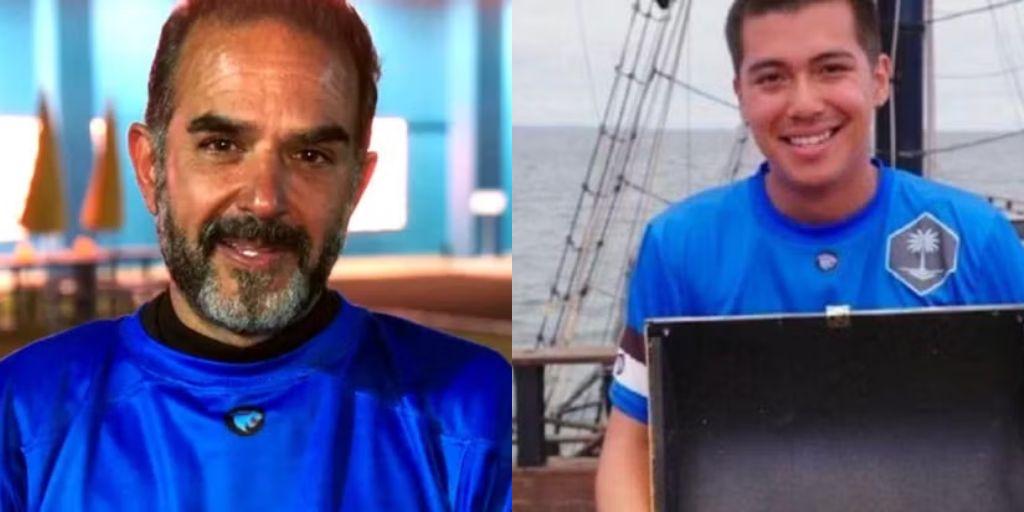
Still from Beast Games (Credit: Prime Videos)
He played with honor and integrity, making him a fan favorite. As the final two players, Jeff and Player 830, Tawana Barnett, faced off in a game of chance.
In this final game, ten briefcases held checks for $10M. One player would shuffle the briefcases, and the other would choose one. Jeff made his pick on the first try and guessed the correct briefcase containing the grand prize check. He won $10M, adding to his earlier earnings in the game.
In total, Jeff walked away with $10,004,244. MrBeast said he is ready to play again, so if you want to be the next winner, get ready for Season 2!
Tim Cook, the CEO of Apple Inc., has a net worth of $2.2 billion. His wealth largely stems from his role at Apple, which he joined in 1998 and later became CEO in 2011. During his tenure, Apple saw a dramatic increase in value. When Cook assumed the CEO role, Apple had a market capitalization of $350 billion, a figure that skyrocketed to as high as $3.5 trillion under his leadership. Despite his immense fortune, Tim Cook has publicly stated that he plans to donate most of his wealth to charity, having already contributed tens of millions to various causes.
Salary and Perks Breakdown
Before becoming Apple’s CEO, Tim Cook earned $500,000 annually as Apple’s Senior Vice President of Worldwide Operations. Upon his promotion to CEO in 2011, his salary rose to $900,000. Today, his base salary is $3.4 million per year, supplemented by an annual bonus ranging from $8 to $12 million. In addition to salary and bonuses, Cook periodically receives large allocations of Apple stock options, which vest over time. For instance, in 2019, Cook earned $113.5 million in vested shares, bringing his total compensation for that year to approximately $125 million. From 2011 to 2020, his total compensation from Apple amounted to $963.5 million. Furthermore, Cook benefits from personal security costs that amount to around $500,000 annually, and Apple covers his private jet travel expenses, which add up to approximately $315,000 per year.
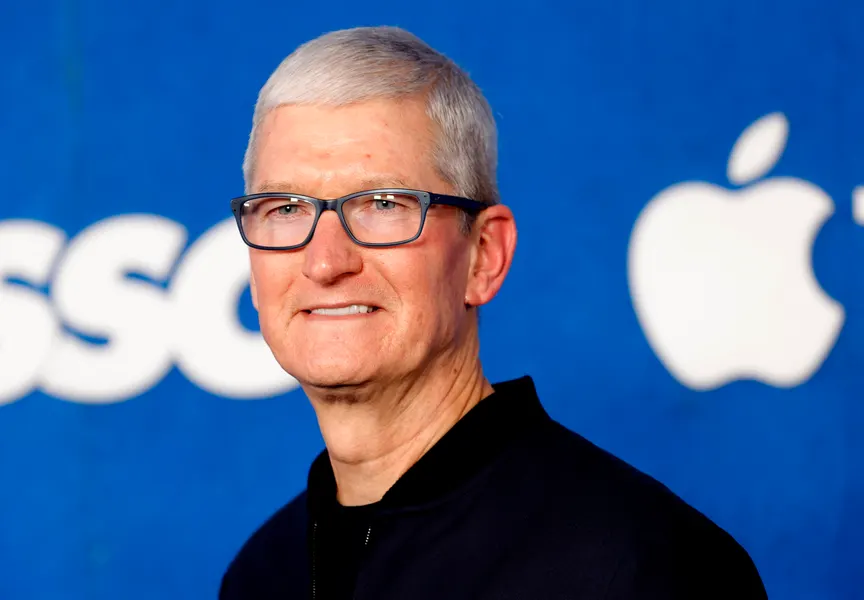
Tim Cook (Image via Getty)
Tim Cook’s Apple Share Ownership
Upon becoming CEO, Tim Cook was granted a large block of stock options, with portions vesting annually over a period of 10 years. Some of these shares were tied to Apple outperforming two-thirds of the S&P 500, a milestone Cook consistently met. In August 2020, he received his largest grant of approximately 560,000 shares, valued at $126 million at the time. Half of these shares were earmarked for taxes, while the other half was under Cook’s ownership. Prior to this, Cook owned 847,969 fully vested Apple shares, worth about $280 million at a price of $320 per share in February 2020, or $380 million when the stock reached $450 per share in August 2020. Tim Cook is Apple’s second-largest individual shareholder, owning roughly 0.02% of the company, following Board Chairman Arthur Levinson, who owns more than 1 million shares. In August 2021, Cook received his final installment of shares, which he subsequently sold for $750 million, marking his tenth year as CEO.
Tim Cook’s Path to Becoming a Billionaire
Tim Cook reached billionaire status in August 2020 after receiving his largest performance-based stock grant. This milestone was tied to Cook’s ability to meet stringent performance goals, a feat he consistently achieved over his tenure at Apple.
Tim Cook’s Early Life and Education
Tim Cook was born Timothy Donald Cook on November 1, 1960, in Mobile, Alabama. His father worked as a shipyard worker, and his mother was employed at a pharmacy. Tim was raised in Robertsdale, Alabama, and attended Robertsdale High School. After high school, Cook went on to Auburn University, where he earned a degree in Industrial Engineering in 1982. Later, Cook pursued his MBA at Duke University’s Fuqua School of Business, graduating in 1988 with honors and receiving the distinction of Fuqua Scholar for being in the top 10% of his class.
Tim Cook’s Early Career Journey
After completing his education, Tim Cook began his professional career at IBM, where he rose to become the company’s North American Fulfillment Director. In this role, he managed IBM’s manufacturing and distribution operations in North America and Latin America. Cook worked at IBM for 12 years before transitioning to Intelligent Electronics, where he served as the Chief Operating Officer of its Reseller Division. He later worked for Compaq as Vice President of Corporate Materials, focusing on purchasing and inventory management.
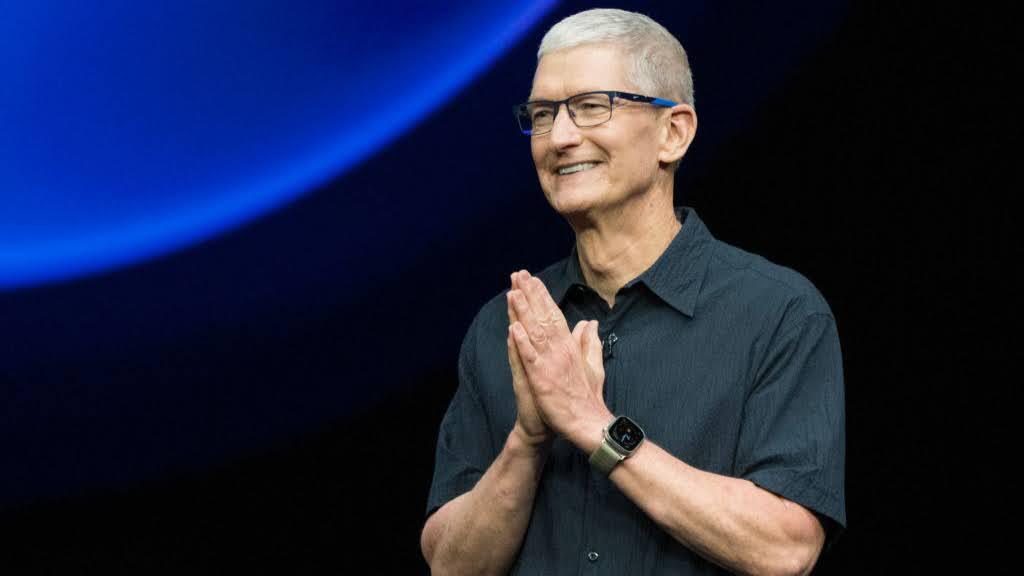
Tim Cook (Image via Getty)
Joining Apple and Rising to CEO
In 1998, Cook joined Apple as Senior Vice President for Worldwide Operations, a time when the company was struggling. At the time, Apple was in decline and lacked the groundbreaking products it would soon release, such as the iMac, iPod, iPhone, and iPad. Cook was tasked with managing operations globally and reducing costs, which he achieved by closing Apple’s factories and outsourcing production to contract manufacturers. His cost-cutting strategies helped the company shift from posting a $1 billion net loss to generating substantial profits.
As Apple’s operations leader, Cook made substantial investments, including a forward-thinking deal in flash memory. Cook’s leadership eventually led to his promotion to Chief Operating Officer in 2007, and in 2009, he became Apple’s interim CEO during Steve Jobs’ health-related absences. In August 2011, Jobs resigned, and Tim Cook officially became Apple’s CEO. Jobs passed away shortly afterward, but the partnership they had created helped Apple grow from less than $6 billion in revenue in 1998 to over $100 billion.
Cook’s Milestones and Innovations at Apple
Under Tim Cook’s leadership, Apple introduced a series of innovative products. In 2012, he was awarded one million shares by Apple’s board of directors. Cook also pledged to donate the entirety of his stock fortune to charity. Apple made its biggest acquisition in 2014 when it purchased Beats Music and Beats Electronics for $3 billion. Subsequent product releases included the iPhone 6 in 2015 and the Apple Watch in 2016. While some critics argued that innovation had slowed under Cook compared to Jobs’ era, Apple continued to release upgraded iPhone models annually, and in 2023, the Apple Vision Pro, an augmented and virtual reality headset.
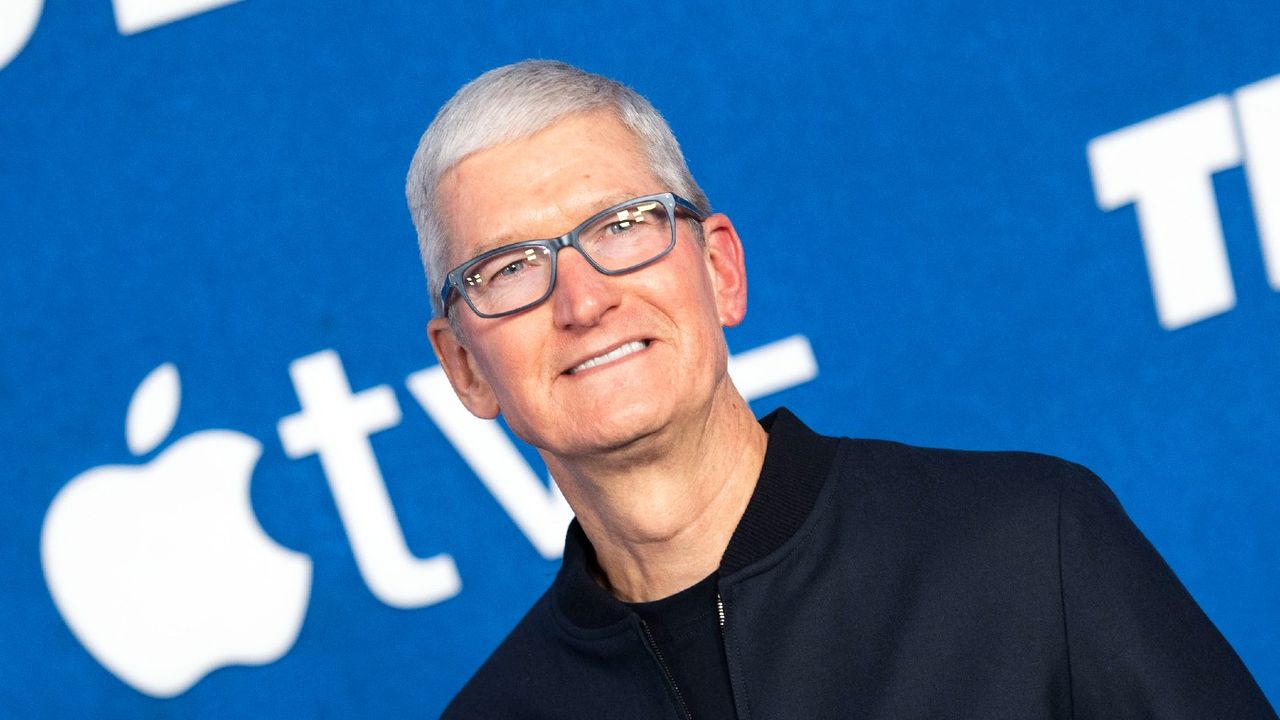
Tim Cook (Image via Getty)
Other Ventures and Advocacy
Outside of Apple, Tim Cook is known for his involvement in important social and political matters. In 2013, he participated in a private summit hosted by President Obama concerning surveillance and internet privacy. In 2015, during the aftermath of a terrorist attack in San Bernardino, California, the FBI asked Apple to assist in unlocking a phone used by one of the attackers. Cook publicly denounced the request, citing concerns about public privacy and safety.
In 2019, Cook was appointed chairman of the advisory board for Tsinghua University’s economics school for a three-year term. He has also served on the board of directors for Nike, Inc. and the National Football Foundation and owns $3.4 million worth of Nike shares.
Real Estate and Lifestyle
Despite his enormous wealth, Tim Cook lives modestly. He owns a 2,400-square-foot home in Palo Alto, California, which he purchased in 2010 for $1.9 million. Additionally, in 2018, Cook bought a 10,000-square-foot residence in the exclusive Madison Club community in La Quinta, California, for $10.1 million.
Cook’s Perspective on Money
Tim Cook is not motivated by money, stating, “I like to be reminded of where I came from, and putting myself in modest surroundings helps me do that. Money is not a motivator for me.” This quote reflects Cook’s modest nature despite his immense financial success.
