The finale of Shōgun brings the series to an unexpected yet satisfying conclusion, forgoing the anticipated climactic battle in favor of a peaceful resolution. Episode 10, titled “A Dream of a Dream,” reveals how Lord Yoshii Toranaga (Hiroyuki Sanada) secures his victory without engaging in a significant military conflict. The unexpected twist in the finale highlights Toranaga’s ability to achieve his goals through strategy and diplomacy rather than bloodshed.
Shōgun Ending Explained
Mariko’s (Anna Sawai) death at the hands of shinobi is a pivotal moment that shifts the balance of power. In Episode 9, she is killed while trying to fend off an attack orchestrated by Ishido (Takehiro Hira). Yabushige (Tadanobu Asano), who ordered the attack, insists the shinobi were only supposed to capture Mariko, not kill her. However, Mariko’s death has a profound impact, leading Toranaga’s consorts in Osaka to revolt against Ishido, which weakens his position.
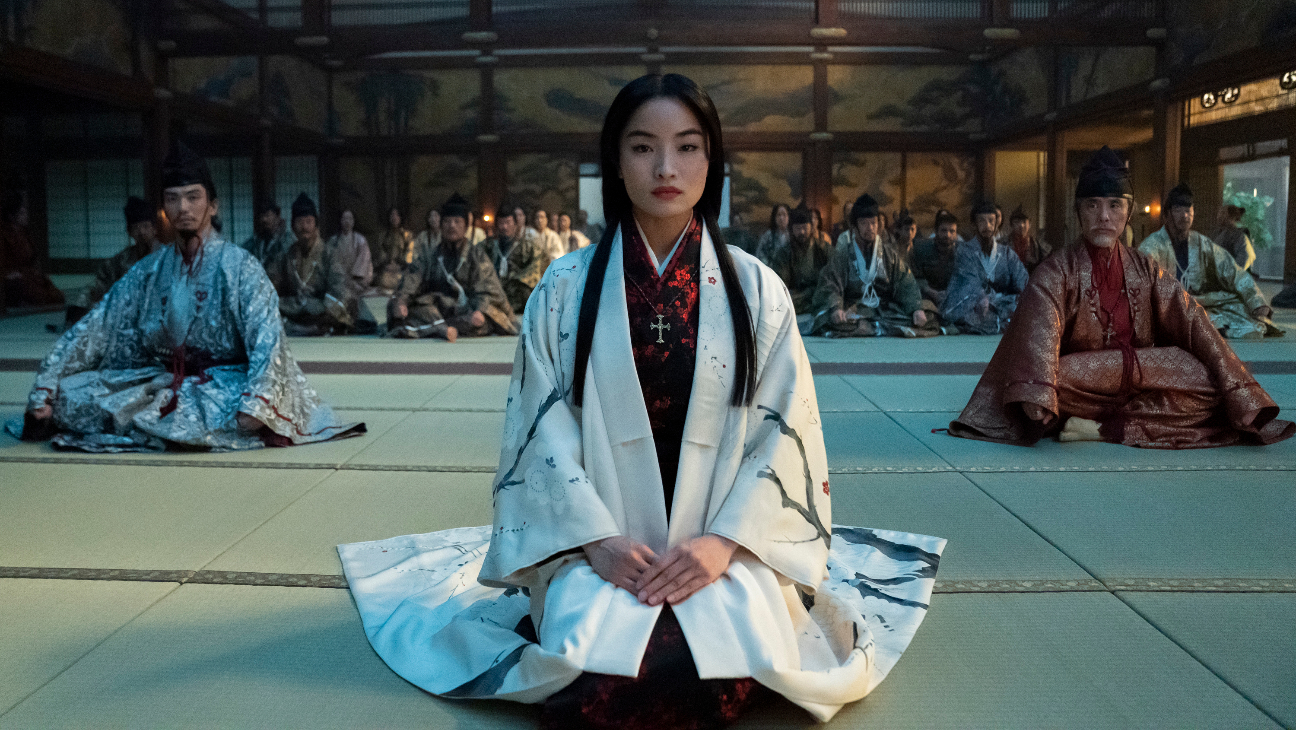
Mariko (Image via Getty)
Ishido’s plans for an immediate strike against Toranaga are thwarted when the Council of Regents demands Mariko be buried with due respect, a request echoed by Ochiba no Kata (Fumi Nikaido). Toranaga later reveals that the entire “Crimson Sky” strategy had been about Mariko. By faking his surrender and sending her to Osaka, Toranaga intended to destabilize Ishido’s alliances, particularly with the Christian lords on the Council and Ochiba. Mariko’s death indirectly helps to weaken Ishido’s grip on power.
The Hidden Strategy Behind Mariko’s Death
Although Toranaga may not have anticipated Mariko’s death in Osaka, it ultimately fits into his long-term strategy. Mariko’s role in the Council of Regents was crucial, as her presence and Catholic background gave her leverage over the Christian members. She also made an impact on Ochiba, who, despite being estranged from her, still held respect for Mariko. Mariko’s challenge, in the form of a poem, causes Ochiba to reevaluate her loyalty. After Mariko’s death, Ochiba promises in a secret letter to Toranaga that she will withhold the Heir’s army when the time comes, cementing the success of the Crimson Sky strategy without the need for war.
Toranaga’s deal with the Church to protect Blackthorne (Cosmo Jarvis) is another key element of his plan. The Church, while having its own interests, ultimately agrees to help protect Blackthorne, ensuring his survival and eventual return to Ajiro with Toranaga’s entourage. Even as a Protestant, Blackthorne was seen as a threat by the Catholics, but Toranaga’s careful maneuvering ensured his safe passage, confirming his role in Japan’s future.

Blackthorne (Image via Getty)
Blackthorne’s Personal Journey
Blackthorne also experiences significant character development in the finale. The episode begins with a vision of an elderly Blackthorne imagining himself dying in England, surrounded by his grandchildren. However, this vision fades as he reconsiders the life he once thought he wanted. Instead of succumbing to a passive, fading existence, Blackthorne takes control of his destiny.
Upon his return to Ajiro, Blackthorne is faced with the sight of his ship, the Erasmus, burned and sunk. Toranaga’s forces are pillaging the village in search of Christian saboteurs. However, Blackthorne realizes this was part of Mariko’s deal with the Church for his protection. In a powerful moment, Blackthorne offers his life in exchange for sparing the village, prepared to commit seppuku in protest. Toranaga stops him, revealing that the destruction of Blackthorne’s ship was a test to understand his true desires.
A New Beginning for Blackthorne
The culmination of Blackthorne’s journey is marked by his willingness to let go of the past. As he interacts with Usami Fuji (Moeka Hoshi), his former consort, he offers her a warm farewell, acknowledging her decision to take vows at a convent. Their parting is emotionally charged, as Blackthorne helps Fuji spread the ashes of her family into the sea, symbolizing their unity and closure. Blackthorne also bids farewell to Mariko’s cross, with Fuji helping him let go of the past, symbolizing his transition into a new phase of life.
Later, Blackthorne takes charge of rebuilding the Erasmus and constructing a new fleet, with the support of Toranaga’s people. Even as the physical labor begins, Blackthorne locks eyes with Toranaga from a distance, signaling that, despite the potential for future battles, Toranaga has already won the war. The two share a moment of understanding, as Toranaga’s victory is now secured.
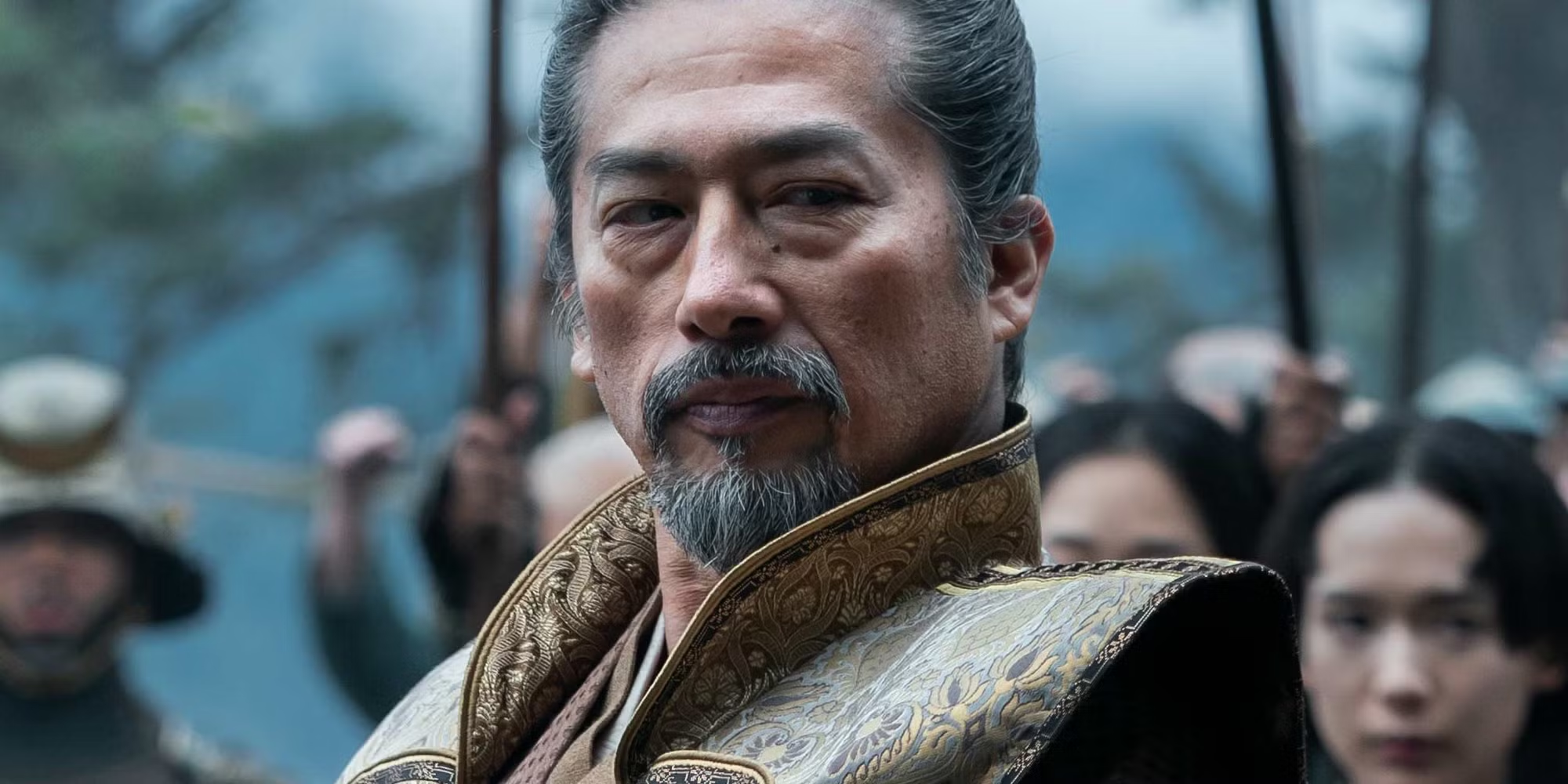
Toranaga (Image via Getty)
Toranaga’s Peaceful Victory
The heart of the Shōgun finale lies in Toranaga’s ability to secure victory without resorting to war. Yabushige’s (Tadanobu Asano) betrayal of Toranaga stems from his inability to understand his lord’s strategy. Throughout the series, Yabushige has questioned Toranaga’s tactics, even going so far as to act as a double agent for Ishido. In the finale, Toranaga reveals that his plan was never about controlling the wind or brute force. Instead, it was about studying the winds of change and using them to his advantage.
Toranaga’s final conversation with Yabushige is a poignant moment. Yabushige, who has always sought to understand Toranaga’s endgame, finally receives the answer. Toranaga explains that Mariko’s mission in Osaka was a turning point, leading the Council of Regents to turn against Ishido. With Ochiba pledging not to send the Heir’s army into battle, Ishido is left isolated, and the Council will no longer support him. Toranaga has effectively won the war without fighting a single battle.
The final moments of the episode show Toranaga’s dream of unifying Japan finally coming true. Rather than engaging in a bloody battle at Sekigahara, Toranaga’s peaceful resolution secures his position as shōgun. The sacrifices of Mariko, Blackthorne, and even Yabushige, all contribute to Toranaga’s triumph. With the kingdom at peace, Toranaga’s rule begins, solidifying his status as the new shōgun, though his journey is far from over.
Shōgun’s finale subverts expectations, bringing the story to a conclusion that prioritizes strategy over violence. The deaths, betrayals, and alliances that have shaped the series all come to fruition in a moment of political mastery by Toranaga. Without the need for a climactic battle, Toranaga secures his place as shōgun, bringing peace to Japan after years of strife. The series concludes on a note of quiet triumph, with Toranaga’s vision finally realized and the future of Japan secured.
Edge of Tomorrow , a film adapted from the Japanese novel All You Need is Kill by Hiroshi Sakurazaka, stars Tom Cruise as Major William Cage, a public relations officer turned soldier. Cage is thrust into an alien war with no prior combat experience. Facing an overwhelming enemy, he is killed during a military offensive. However, death is not the end, as Cage begins to relive the same day over and over, each time dying and waking up to face the same fate.
The narrative of Edge of Tomorrow blends complex time travel concepts with intense action. While the film introduces a compelling take on the time loop genre, it can be confusing to viewers unfamiliar with the mechanics of time loops or the underlying science fiction. To better understand the film’s narrative structure, time travel mechanics, and characters, it helps to break down the film’s key elements and plot progression.
Edge of Tomorrow Ending Explained

Edge of Tomorrow (Image via Getty)
The time loops in Edge of Tomorrow are set in motion when Major Cage encounters an alien called the “Alpha.” The opening of the film reveals Cage as a reluctant spokesperson for the military, unprepared for battle. After being forced into combat on the eve of a significant offensive against the Mimics—alien invaders—Cage is quickly killed in battle. The blood of a dying Alpha Mimic touches Cage, and in that moment, the time loop begins. Each time Cage dies, he wakes up 24 hours earlier, reliving the same disastrous day.
This time loop is not just a plot device, but also a critical element of the story. The alien Mimics, especially the Omega and Alpha creatures, have the ability to reset time, allowing them to adapt to human military strategies. The blood of the Alpha Mimic gives Cage the same power, setting him on a path to find a way to stop the Mimic invasion.
The Alien Forces: The Mimics, Omegas, and Alphas
In Edge of Tomorrow , the alien Mimics come in three distinct types: the Omega, the Alpha, and the regular Mimics. The Mimics are the worker drones, the grunts sent to fight the human forces. The Alpha Mimics act as high-ranking agents with a direct connection to the Omega, the brain of the Mimic collective. The Omega is an enormous, highly intelligent being that controls the Mimics and holds the power to reset time after the death of an Alpha.
The Mimics’ ability to control time allows them to anticipate human military movements and trap them in endless cycles. Each time an Alpha dies, the Omega resets the timeline, retaining the knowledge of prior events. This gives the Mimic forces an advantage, as they are constantly able to refine their strategy based on prior loops. Cage, through a twist of fate, becomes entangled in this time-resetting loop when he comes into contact with an Alpha’s blood.
Dr. Carter’s Plan to Defeat the Aliens
Dr. Carter, a physicist in the film, devises a plan to use Cage’s unique time-loop abilities to locate and destroy the Omega. The blood of the Alpha Mimic allows Cage to have visions of the Omega’s location, giving him a critical edge. However, Dr. Carter theorizes that only one creature can control the time loop at any given moment—either the Mimic or Cage. When Cage acquires the ability to reset time, it disrupts the Mimic collective, giving humanity a chance to stop the invasion.
Dr. Carter’s plan involves tracking the Omega using Cage’s visions. However, as the story unfolds, they realize that these visions are traps planted by the Omega to lure them into a false sense of security. The Mimics, having figured out Cage’s involvement, attempt to regain control by manipulating the time resets. Cage and Vrataski survive several of these traps but are forced to rethink their strategy in order to successfully defeat the Omega.
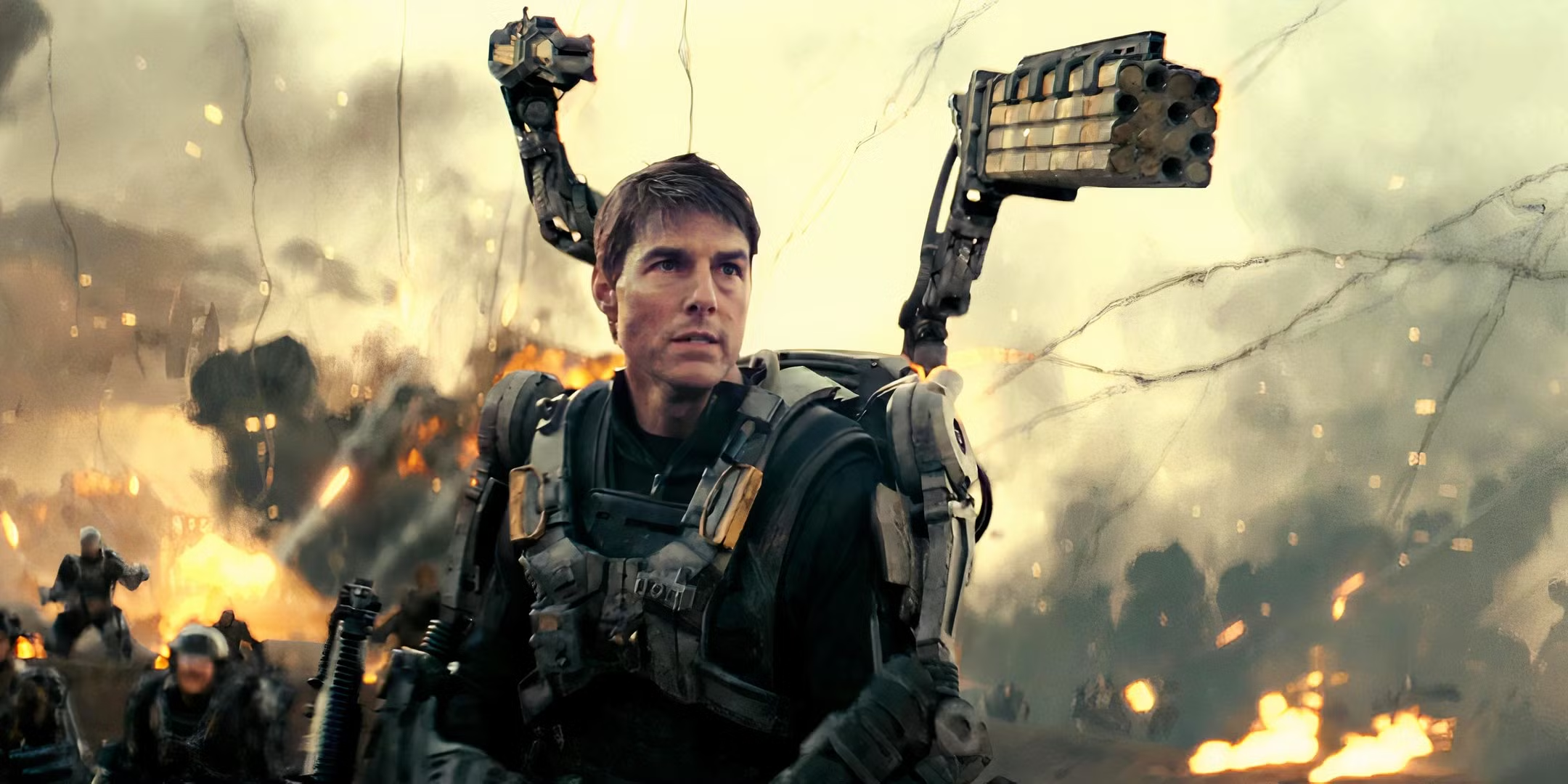
William Cage (Image via Getty)
Cage’s New Plan to Destroy the Omega
After surviving a trap set by the Omega, Cage turns to a piece of technology created by Dr. Carter—a device designed to track the Omega’s location using the Alpha’s connection. With this technology, Cage and Vrataski manage to track the Omega’s lair beneath the Louvre in Paris. However, their escape is thwarted, and Cage is injured. His ability to reset time is lost after he is injured, and control of the loop reverts to the Omega. Despite this, Cage and Vrataski push forward, seeking to destroy the Omega before the Mimic forces can reset time again.
The film takes a thrilling turn as Cage, now without his time-loop ability, has one final chance to kill the Omega. To succeed, they must avoid killing any Alpha Mimics, as this would cause the Omega to reset time once more, erasing everything they’ve achieved.
The Final Battle: How Cage Defeats the Omega
Cage and Vrataski, alongside J-Squad, launch on a mission to reach the Omega’s lair. Along the way, J-Squad is killed one by one, and Vrataski sacrifices herself to distract the Alpha guarding the entrance. Cage manages to reach the Omega’s lair, a flooded underground parking area. Despite being mortally wounded by an Alpha, Cage detonates grenades that destroy the Omega, killing it and halting the Mimic invasion.
With the Omega’s death, the Mimic collective is decimated, and the alien threat ends. However, as Cage dies from his injuries, something unexpected happens. The Omega’s blood, still present in the water, enters Cage’s wound, and he regains control of the time loop. He wakes up hours earlier than usual, in a timeline where the Mimics have been wiped out and his previous actions no longer exist in the world.

Rita Vrataski (Image via Getty)
The Timeline Reset in Edge of Tomorrow’s Ending
The final time reset in Edge of Tomorrow raises numerous questions. Cage, now with control over the loop once more, wakes up before he is ever arrested. This new timeline resets the events of the film, with Cage returning to his original position—one where he had not been involved in the invasion at all. However, certain memories and actions remain with Cage, while the others involved in the battle, such as Vrataski and J-Squad, are unaware of the previous timeline.
The reset is not fully explained, leaving room for speculation. Dr. Carter’s theories on time manipulation remain incomplete, and the film does not clarify how or why the final reset occurs the way it does. The paradox of Cage’s re-entry into the time loop remains unresolved, adding an element of ambiguity to the film’s ending.
Theories and Speculation on Edge of Tomorrow’s Ending
While Edge of Tomorrow does not provide a clear explanation for the final reset, several theories can help explain the ending. One possibility is that Omega’s time-altering ability exists outside the traditional constraints of time. This suggests that the Omega’s death, despite the reset, is a fixed event, and time adjusts to incorporate the changes after the reset.
Another theory proposes that the Omega’s blood may have granted Cage new abilities, allowing him to manipulate the timeline. This could explain why Cage wakes up at a different starting point, free from the Mimic invasion and reset. However, without more information, these theories remain speculative, and the film leaves room for interpretation.
