Netflix’s Dated and Related, which first appeared in 2022, is an engaging reality TV show. The title may sound strange, but the show is not what it seems. The main idea of Dated and Related is for pairs of siblings or other related contestants to assist each other in finding love.
The show’s host is Melinda Berry, known from Too Hot to Handle. In Season 1, pairs such as twins, brothers, and cousins worked together to find their ideal partners. Watching siblings, like Joey Roppo and Corrina Roppo, support each other and give advice was heartwarming, even if it meant witnessing personal moments.
Dated and Related brought a fresh and positive angle to reality TV. It is unusual to see siblings or cousins on the same dating competition show, making it a unique concept.
Despite the usual drama of contestants vying for the same partners and siblings stepping in, the show was refreshing in showing how family members support each other.
Kaz Bishop from Perfect Match Season 2 and his twin brother, Kieran Bishop, displayed genuine brotherhood, always supporting one another while searching for love. The show offers the same level of drama and entertainment as other dating shows, but it also highlights the importance of family.
‘Dated and Related’ is Good TV Show
Though only one season has aired, Dated and Related made a significant impact on reality TV. The idea of a cast composed entirely of family members looking for love while strengthening their family bonds is unprecedented.
Throughout Season 1, the show had a mix of happy, sad, loving, and dramatic moments. For instance, twins Diana and Nina Parsijanis fell for another set of twins, Kaz and Kieran Bishop.
These pairs of twins added drama to the show with their on-again, off-again relationships. The resulting tension in the villa, with other contestants interested in Kaz and Kieran, led to many arguments. Despite the conflicts, the twins’ loving support for each other was evident.
When Kieran shows other options, it was a tough moment for Diana, but she had her twin sister for comfort. The show provided the excitement of unpredictability while emphasizing the value of having supportive siblings.
‘Dated and Related’ Brings New Opportunities
Dated and Related shares similarities with Perfect Match. Both shows involve contestants searching for the right partner. Many contestants from Season 1 of Dated and Related got the chance to join Season 2 of Perfect Match.
Melinda Berry, the host of Dated and Related, also appeared in Perfect Match. Jason Cohen and Chris Hahn, cousins from Dated and Related, were more focused on Melinda than on finding their own matches. Chris tried to impress Melinda, but it didn’t work out.

Still from Dated and Related (Credit: Netflix)
Fan favorites Kaz and Nina from Dated and Related did not stay together. Kaz joined Season 2 of Perfect Match with Alara Taneri, Kieran’s ex.
Kaz and Alara remained throughout the season, paired with Micah Lussier and Stevan Ditter. Unfortunately, none of these pairs found a perfect match. Dated and Related provided its cast with new opportunities and could bring more stars to upcoming seasons of Perfect Match and other reality shows.
Family-Based Reality Shows
When Netflix announced Dated and Related, many reality TV fans were puzzled by the name and concept. Another unusual show, MILF Manor, also sparks curiosity.
It features women aged 40 to 60 looking for younger men, who happen to be their sons. This show adds a surprising twist similar to Dated and Related, where family members compete in dating shows, creating added drama and excitement.
Dated and Related deserves a second season because it offers a unique twist on reality TV. Siblings supporting each other and giving dating advice was a refreshing change.
It was touching to see an older brother comfort his younger sister and inspiring to witness the twins’ empowerment. While the show has its share of drama, it also highlights the significance of family. Dated and Related is available to stream on Netflix in the US.
When it comes to religious horror films, most stick to familiar themes. These films often feature demon possession, evil antichrist babies, and the devil influencing actions. However, few films address the actual fear of having faith in a religion, the uncertainty of believing in something possibly false, or the inner struggle of a crisis of faith.
“Heretic,” the latest film by Scott Beck and Bryan Woods, stands out by focusing more on religious aspects than traditional horror. This approach makes it unique within the genre.
Mr. Reed seems interested in their message. He welcomes them into his home, introduces them to his wife, who is baking a blueberry pie, and talks about his search for the true religion. However, once Mr. Reed leaves them alone, the two women begin to question their presence there.
They find no sign of Mrs. Reed, discover they are locked in the house, and realize that Mr. Reed seems to know more about their religion than they do. As they search for a way out, they must confront their faith and decide if they will leave with the same beliefs they had when they arrived.
Beck and Woods choose to focus on the religious questions in “Heretic” rather than on horror elements. At times, the film can feel like a basic introduction to religious issues, but it effectively addresses the hypocrisies within strict beliefs.
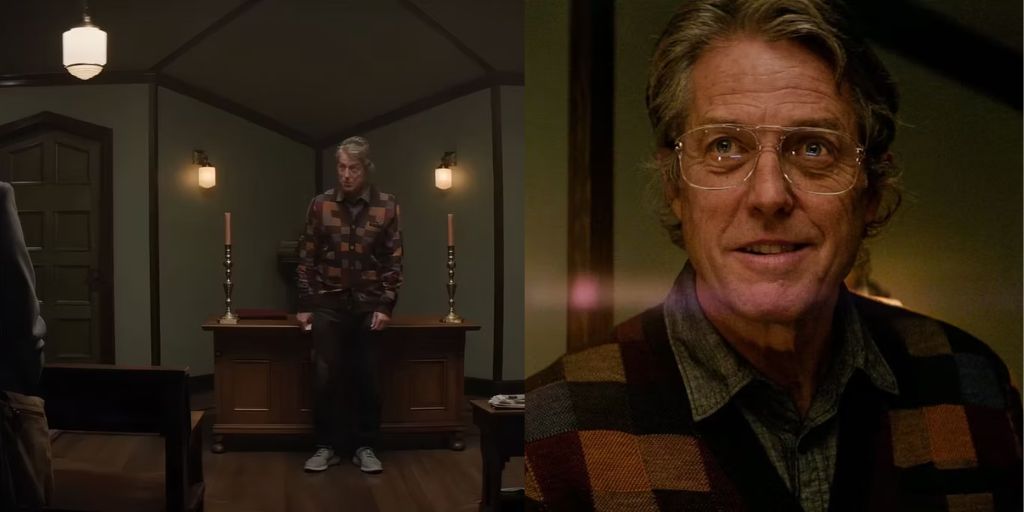
Still from the movie (YouTube)
The film seems more interested in challenging those with narrow viewpoints on “one true religion” rather than using jump scares or gruesome imagery. Beck and Woods also critique organized religion and those who believe they hold ultimate truths that others cannot understand. Mr. Reed presents his views from a position of authority, making it clear that he feels Barnes and Paxton cannot understand his perspective, though his own beliefs have flaws.
Hugh Grant, as Mr. Reed, gives a dynamic and unusual performance. He has recently excelled in villainous roles in “Paddington 2” and “Dungeons & Dragons: Honor Among Thieves,” and his role in “Heretic” is a strong addition. The film knows that with Grant’s talent, it just needs to let him perform.
Grant enjoys tearing down the beliefs of the two missionaries, pointing out logical flaws, and engaging in a lively dialogue about faith. The film shines when Grant delivers long monologues, uses Monopoly as a metaphor for religion, sings Radiohead songs, and does a Jar Jar Binks impression. This role showcases everything one would want from a villainous Grant performance.
Thatcher and East provide a good balance to Grant’s performance. Thatcher’s Sister Barnes joined the church later, while East’s Sister Paxton is more deeply invested in what she has learned. Thatcher effectively counters Grant’s criticisms, while East’s character shows an interesting development. The film initially focuses on Sister Barnes, but as it progresses, East’s character becomes more surprising and interesting in how she maintains her belief.
Unfortunately, as the film continues into Mr. Reed’s house, the narrative begins to weaken. Initially, “Heretic” centers on a conflict of faith, with Grant’s performance and the film’s direction being effective. However, as the film delves deeper into the house, it becomes less compelling.
Grant’s role diminishes, and the screenplay begins to find more concrete answers and possible miracles. What started as a thought-provoking discussion shifts to less engaging ideas and presentations of faith. The film’s appearance also loses some appeal, as the warm, welcoming feel of Mr. Reed’s home turns into dark, barely lit rooms. Cinematographer Chung Chung-hoon films these later scenes like a typical horror movie, which diminishes the story’s impact.
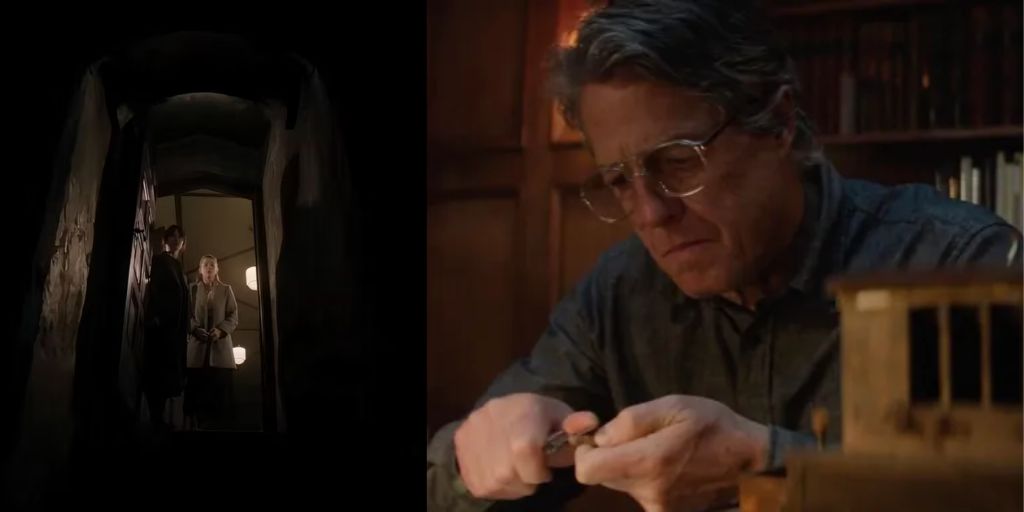
Still from the film (Catchlight Studios)
“Heretic” offers a clever twist on religious horror with strong performances, especially from Grant. Although the film loses some of its impact in the final third, Beck and Woods’ approach to the genre is refreshing, finding the hypocrisies of organized religion in a way that is rare in mainstream cinema. And yes, Grant’s Jar Jar Binks impression is a highlight.
In the end, “Heretic” presents a thought-provoking look at the complexities of faith and belief. It stands apart from traditional religious horror by focusing on the tension between doubt and faith, rather than relying solely on jump scares or supernatural elements.
Beck and Woods have crafted a film that challenges viewers to think about the nature of belief, the contradictions in organized religion, and the dangers of rigid thinking. The film shines in its early moments, particularly with Hugh Grant’s impressive performance as Mr. Reed, where his eccentric and charismatic character steals the show. His dialogue, full of witty observations and sharp criticisms, highlights the film’s exploration of faith in a unique and entertaining way.
However, as “Heretic” transitions into more standard horror territory, it loses some of its initial appeal. The deeper the narrative ventures into Mr. Reed’s house, the more it becomes a typical horror film, leaving behind the intriguing discussions about religion and faith that made it stand out in the first place.
Despite its weaker final act, “Heretic” is a refreshing addition to the religious horror genre. It raises questions that go beyond the usual scares, and its willingness to tackle these issues makes it worth watching for those seeking a different kind of horror experience.
