It has been nearly 18 months since Silo wrapped up its riveting first season. Fans of the Apple TV+ dystopian sci-fi drama have been eagerly awaiting its return, and Season 2 picks up right where the gripping story left off.
Only a few minutes have passed since the dramatic conclusion of Season 1, in which Juliette Nichols (Rebecca Ferguson), an engineer who reluctantly became sheriff, achieved the unthinkable.
Juliette made her way out of the crater surrounding the Silo and discovered one of its most tightly guarded secrets: Earth may be toxic, but the 10,000 residents of the Silo are not the only survivors of whatever disaster destroyed the world.
The shocking truth is that many other Silos—possibly even hundreds—exist. This revelation implies that the authoritarian Founders have concealed even more secrets from the Silo’s oppressed inhabitants.
A Failed Revolution Sets the Stage
The episode opens with a small yet symbolic image: a light piercing through darkness. A young boy named Tim, whom viewers have not met before, runs through the dark corridors of the Down Deep. Carrying a lit torch, he sprints past graffitied walls that scream defiance against the Founders. The words “liars” and “truth now” stand in stark contrast to a massive propaganda slogan, “Thank the Founders,” painted on the wall.
Tim reaches a gathering of adults and conveys an urgent message from the engineering team: the Silo’s generator will flood in 15 minutes. This group of rebels, desperate and running out of time, launches a final assault against the Silo’s upper-level leadership.
They face heavily armed security forces, and many of them are gunned down. However, the sheer determination of the rebels eventually forces the guards to surrender.
In a powerful display of triumph, the surviving civilians—including Tim—march out of the Silo and into the toxic world outside. They wave a victorious green flag, believing they have achieved freedom. But the harsh truth soon becomes apparent.
Juliette’s Perilous Journey
The prologue ends abruptly, and the focus shifts back to Juliette. She cautiously makes her way from her Silo to the closest neighboring one, trudging through the barren wasteland between them. Along the way, she notices the green flag from the earlier scene, battered by the elements, and confronts the haunting sight of thousands of skeletons scattered across the ground.
These remains belong to the rebels seen in the prologue, who died moments after leaving their Silo. Without functioning environmental suits, they succumbed to the toxic air almost immediately. The corridor leading into the neighboring Silo is so congested with corpses that Juliette must walk over them, the crunch of brittle bones echoing with each step.

Still from Silo (Credit: Apple TV)
Inside the neighboring Silo, Juliette encounters a chilling environment. Unlike her operational Silo, this one is abandoned, devoid of life, electricity, or sound. It feels more like a crypt than a place that once housed thousands of people. Her oxygen supply dwindles as she searches for answers. She tries to remove her helmet, but it won’t budge. In a moment of desperation, she shatters the glass with a crowbar, narrowly avoiding suffocation.
Overcoming Obstacles
Juliette hears a distant metallic clinking sound as she faces the desolate corridors. This raises her hopes of finding another survivor. She calls out but receives no response. Undeterred, she moves toward the noise, only to encounter a significant obstacle: a large section of the walkway is missing, leaving a gap too wide to cross.
Determined to keep going, Juliette spots a body hanging by a rope from a nearby railing. She pulls up both the rope and the body, repurposing the rope to create a makeshift harness. Tying one end to the railing and the other around her waist, she attempts to swing across the gap. Unfortunately, the rope snaps, sending her plunging into deep, murky water.
The water likely comes from the flooded generator mentioned in the prologue. Juliette struggles to drag herself back onto solid ground. Frustrated but alive, she lets out a primal scream, an unspoken acknowledgment of her isolation and the immense challenges she faces.
A Bold and Silent Approach
“The Engineer” stands out because of its reliance on visuals and atmosphere rather than dialogue. Most of the episode unfolds in silence, allowing viewers to immerse themselves in Juliette’s solitary and perilous journey. The absence of dialogue is a bold creative choice, and it underscores the oppressive nature of the Silo’s environment.
Rebecca Ferguson’s performance shines as she conveys Juliette’s resilience, fear, and determination without the need for words. Her portrayal captures the balance between raw resolve and profound loneliness. The episode’s production design also deserves praise for transforming the familiar Silo setting into a haunting, claustrophobic maze.
Flashbacks Offer Emotional Depth
Martha, who acts as a tough yet caring mentor, shares a story about her struggle with pneumonia. She recalls waking up alone in the middle of the night, panicked and terrified. Martha ran into the corridor and screamed for help, finding solace in the fact that her neighbors responded—even if they were annoyed by the disturbance.
Shirley recounts a traumatic childhood memory of being abandoned by friends in one of the Silo’s lowest levels. Left alone in complete darkness, she had to find her way back on her own. When Juliette asks how she managed it, Shirley replies, “I went really, really slowly. But I found my way.” These stories emphasize the importance of community and resilience, themes that resonate deeply with Juliette’s current situation.
A Chilling Revelation
Back in the present, Juliette crafts a solution to the missing walkway. Using a piece of metal and a rope pulley, she creates a makeshift bridge. Crossing it is a slow and nerve-wracking process. The bridge collapses as she nears the other side, forcing her to run and leap to safety. She barely manages to grab onto the opposite edge and pull herself up.
Inside the Silo’s office and housing areas, Juliette finally discovers the source of the clinking sound: an ID badge hitting the blades of an active desk fan.
This anticlimactic revelation is soon followed by something far more ominous. The sound of music—Audrey Hepburn’s “Moon River” from Breakfast at Tiffany’s—echoes through the Silo. The haunting melody leads Juliette to a massive metal vault door.
When Juliette tries to open the door, she is met with resistance. A voice speaks to her from behind the door, and a small metal eyehole slides open to reveal a pair of striking heterochromatic eyes. The stranger politely warns Juliette that attempting to enter again will result in her death. They close the slot, leaving Juliette stunned.
This brief encounter hints at the presence of another survivor, but it also reinforces Juliette’s isolation. Rather than finding solace in companionship, she faces yet another threat. The episode ends on this chilling note, teasing what lies ahead in Season 2.
A Promising Start to Season 2
“The Engineer” sets the tone for another intense season of Silo. The premiere combines suspenseful storytelling, emotional depth, and gripping performances to create an unforgettable episode. Juliette’s journey is fraught with danger, but her resilience and determination make her a compelling protagonist.
As the season unfolds, viewers can expect more revelations about the Silos, the Founders, and the mysterious disasters that shaped this dystopian world. With its focus on character-driven storytelling and its willingness to take creative risks, Silo Season 2 promises to be as attracting as its predecessor.
Conclusion
Season 2 of Silo begins with an episode that immediately pulls viewers back into its tense, dystopian atmosphere. “The Engineer” balances gripping suspense with deeply emotional moments, creating a strong foundation for the rest of the season.
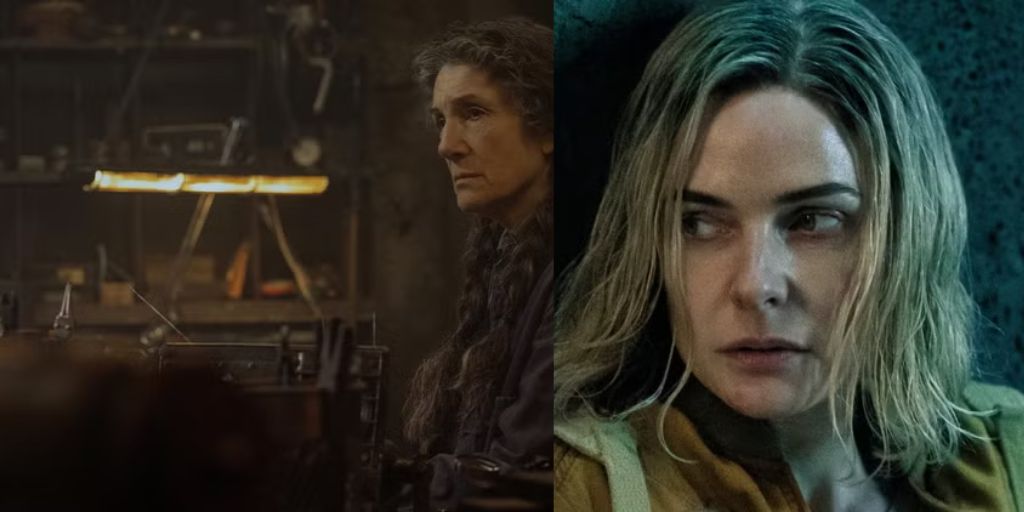
Still from Silo (Credit: Apple TV)
Juliette’s journey is both physically and emotionally challenging, with every step revealing more about the mysterious world she inhabits. Her struggles highlight themes of isolation, resilience, and the search for truth in a world built on lies.
The flashbacks provide valuable insight into her past, reinforcing the connections that have shaped her character while emphasizing the importance of human connection. The ominous encounter with the lone survivor adds an unsettling layer of mystery, setting the stage for further revelations.
With its compelling storytelling, atmospheric tension, and Rebecca Ferguson’s remarkable performance, Silo Season 2 promises to deliver another attracting chapter in this thought-provoking dystopian saga.
New episodes of Silo Season 2 are released every Friday, offering fans an exciting continuation of the gripping dystopian saga. Each episode is available to stream exclusively on Apple TV+, giving viewers a chance to experience the intense mysteries, suspense, and emotional depth of Juliette’s journey week by week.
In the high-pressure world of fine dining, chefs are celebrated for their culinary expertise, but it’s easy to forget the immense stress and chaos that come with running a top-tier restaurant.
Elsbeth Season 2, Episode 5, “Elsbeth Flips the Bird,” introduces us to the thrilling, sometimes brutal reality of the New York restaurant scene, where the stakes are high, and the pressure is even higher.
While the episode doesn’t stray far from the typical procedural comedy format, it shines a light on the cutthroat nature of the culinary world and, in particular, how the toxic work environment can drive people to extreme measures.
With its unique blend of dark humor and crime-solving, this episode also goes into the emotional and psychological burdens that come with managing such high expectations — all while Elsbeth (Carrie Preston) and Officer Kaya Blanke (Carra Patterson) try to solve a murder and perfect a duck recipe.
Setting the Scene: Chef Veev’s Restaurant Drama
The episode opens inside Chef Veev’s fine dining establishment, where Chef Genevieve “Veev” Hale (Pamela Adlon) preps her staff for another intense night of service. Running a high-end restaurant in New York is no easy feat, and Veev’s no-nonsense approach to leadership is evident from the get-go.
As she prepares for the arrival of a VIP guest, Mr. Montebello (a well-known figure in the luxury hospitality industry), tensions run high in the kitchen. Veev is a perfectionist, demanding the best from her team, but her tough exterior hides a lot of stress and frustration, especially when things don’t go as planned.
It’s clear early on that the restaurant’s reservation system is on the verge of collapse. One guest complains that his reservation has been lost despite booking weeks in advance, and soon, more and more customers begin to voice their concerns.
Veev’s irritation grows when her VIP guest, Mr. Montebello, walks in to find his table has been given away to a group of influencers. When Sam (Jack Davenport), the maître d’, tries to explain, he reveals a bizarre glitch in the reservation system: people are showing up with the same name, causing confusion.
The situation worsens when Veev confronts Jordan (Aaron Gonner), a prep cook, who’s caught texting on his phone instead of keeping track of the restaurant’s inventory. Her frustration boils over when she realizes that Jordan might be the one responsible for the reservation mix-ups.
However, instead of simply firing him, a heated confrontation ensues, culminating in Veev attacking Jordan with a meat tenderizer. While this might seem like the point where the episode veers into absurdity, it actually serves as a key turning point in the plot, setting up the dark twist to come.
Murder in the Kitchen: Chef Veev’s Dark Side
The next morning, Jordan is found dead, and it’s clear that someone has staged the crime scene to cover their tracks. Veev, who’s in a state of shock, claims that she was pushed down the stairs and doesn’t remember much, but her story doesn’t add up. Elsbeth and Blanke quickly realize that Veev is not as innocent as she appears.
The details of the crime are eerily meticulous: Veev has gone to great lengths to create a convincing scene of a brutal attack. She’s even gone as far as to knock herself unconscious and make it look like a struggle took place, all while making sure the duck recipe she’s been obsessing over is still in the oven when the police arrive.

Still from Elsbeth (Credit: CBS)
The investigation takes a more serious turn when Elsbeth and Blanke discover that Veev may have been involved in some questionable activities leading up to Jordan’s death. As they question Veev’s staff, it becomes clear that the chef has a reputation for being difficult to work with.
Staff members reveal that Veev has a history of anger issues, and her temper has often caused friction in the kitchen. However, things take an even stranger turn when Veev begins to suggest that her troubles with Jordan were connected to the “avocado cartel,” an absurd and seemingly comical term that, shockingly, turns out to be a real problem in fine dining.
The Avocado Cartel and the Murder Mystery
In what can only be described as one of the more bizarre plot twists, Captain Wagner (Wendell Pierce) informs Elsbeth and Blanke that the so-called “avocado cartels” are an actual threat to restaurants across the city. The cartels force chefs to use their product — typically avocados — by threatening violence.
While this could be written off as a joke, the episode adds an unexpected level of realism when Wagner confirms that several chefs have been attacked by these cartels, making the situation all the more pressing.
However, despite this revelation, Elsbeth and Blanke quickly rule out the avocado cartel as the cause of Jordan’s death, and the investigation focuses once again on Veev and her possible connection to the murder.
Veev’s own behavior is called into question when Elsbeth uncovers evidence that suggests Jordan had been selling restaurant reservations online. Elsbeth follows this lead back to a shady online marketplace called InsideTable, where Jordan had been making extra money by reselling hard-to-get reservations.
This raises a new possibility: Could Jordan’s illegal activities have led to his murder? Was he trying to expose Veev’s darker side by filming her temper tantrums for leverage? The pieces begin to fall into place, and Elsbeth becomes more convinced that Veev had a strong motive to kill Jordan, though she still lacks solid evidence.
A Star-Studded Dinner: Elsbeth Gets a Reservation
In typical Elsbeth fashion, the investigation continues with unexpected twists and turns. Elsbeth, determined to get closer to the truth, decides to book a reservation at Veev’s restaurant — but getting a seat proves to be a challenge.
After a few failed attempts, Elsbeth brings along supermodel Nadine Clay (Laura Benanti), and with her influence, Elsbeth finally secures a coveted spot at the counter.
During their meal, Elsbeth and Nadine engage in a candid conversation with Veev, where the chef reveals more about her troubled past and the difficult conditions she faced to get where she is. While Veev brushes off the idea that she may have had anything to do with Jordan’s death, Elsbeth continues to dig deeper, uncovering new leads in the process.
The conversation takes an intriguing turn when the subject of the legendary Parisian restaurant Chalet de Boeuf comes up. Malcolm, one of Veev’s staff members, reveals that Veev was once severely punished by her former head chef at Chalet de Boeuf for burning a soufflé — the chef reportedly beat her with a frozen swordfish.
The story highlights the toxic and abusive nature of the culinary world, further complicating Veev’s character. It’s clear that her journey to the top has been marred by hardship, and while she may have the talent to back it up, her anger issues have followed her throughout her career.
The Search for Answers: Elsbeth’s Intuition
Despite all the evidence pointing toward Veev as the prime suspect, Elsbeth isn’t ready to make her move just yet. In a pivotal moment, she recalls a past interview with Mr. Montebello, who had recently taken over a chain of luxury hotels and was in the process of selecting a chef to oversee his restaurant empire.
Montebello had made a reservation at Veev’s restaurant, and the timing of his visit — just before Jordan’s murder — begins to look more like a possible motive. If Veev had lost the chance to showcase her food to Montebello, it could have jeopardized her future prospects, especially since Montebello had been seeking to partner with top-tier chefs for his hotels.
Though the investigation continues to unfold, Elsbeth remains focused on finding the truth. The episode concludes with a surprising twist: Jordan’s girlfriend, Maddie (Emma McNulty), reveals that Jordan had planned to leave the toxic environment at Veev’s restaurant and had been gathering evidence of her abusive behavior. The final pieces of the puzzle come together, and Elsbeth is able to build a strong case against Veev.
The Unraveling of Veev’s Secrets
In the final moments of the episode, Elsbeth confronts Veev once more, acknowledging the chef’s struggles in a male-dominated industry. Veev, who has long carried the weight of sexism and mistreatment in her field, finally opens up about her past, including the abuse she suffered from her mentors.
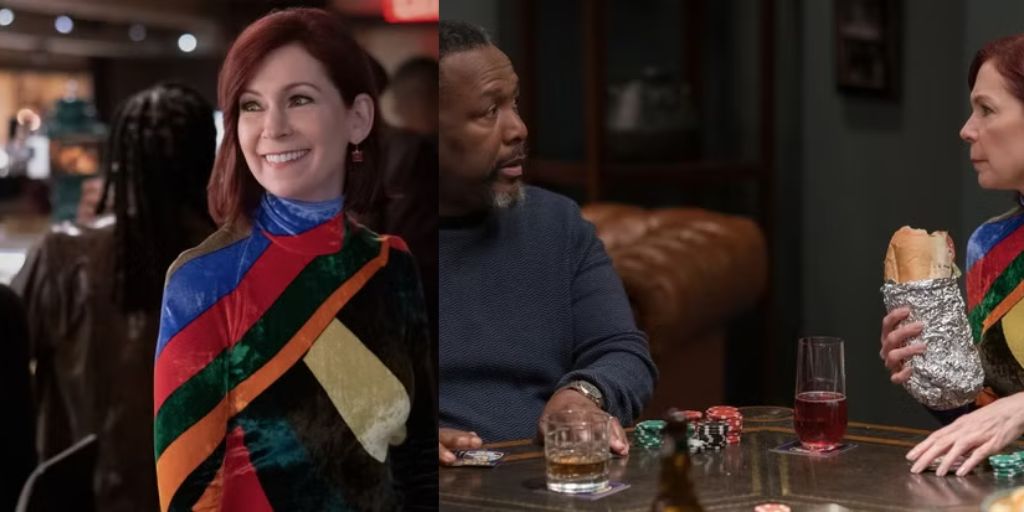
Still from Elsbeth (Credit: CBS)
Elsbeth’s empathy for Veev’s situation becomes clear, but she also recognizes that Veev’s anger and desire for control led her to murder. The episode ends on a somber note, with Veev’s dark side fully exposed, leaving viewers to reflect on the toll that ambition, abuse, and the pursuit of perfection can take on a person.
Final Thoughts
Elsbeth Season 2, Episode 5, “Elsbeth Flips the Bird,” is a darkly comedic and thought-provoking scheme of the fine dining world and its psychological toll on those who inhabit it. The episode deftly balances murder mystery with social commentary, examining issues of power, ambition, and survival in a high-stakes environment.
With its sharp writing, strong performances, and intriguing plot twists, this episode offers both a thrilling crime investigation and a nuanced look at the personal struggles faced by those in the culinary industry. It’s a perfect example of the show’s ability to blend humor with emotional depth, leaving viewers eagerly anticipating what comes next.
