Few recent action thrillers have left audiences as divided as “ Sisu: Road to Revenge .” Released this November to a wave of social media buzz and critical analysis, the Finnish action spectacle builds its mythos around Aatami Korpi, a lone prospector surviving against all odds in war-ravaged Lapland.
Yet, it’s the movie’s relentless, blood-soaked ending that has ignited heated debate online and offline. Viewers have flocked to Reddit threads and filmed podcasts, using the finale to dissect deeper themes of justice, trauma, and what audiences really want from their action heroes.
For much of its tense runtime, the film adheres to a formula familiar to fans of everything from “John Wick” to “Mad Max: Fury Road”: a battle-scarred loner unleashes his wrath on a seemingly endless wave of villains. But where most blockbusters opt for some shred of hope or moral awakening, “Sisu” takes a different path.
By the time the credits roll, Aatami stands victorious but alone, his vengeance complete yet his spirit battered. The brutal, almost wordless climax places the burden of interpretation on the viewer. Suddenly, every gunshot and act of defiance asks, “What has been won and at what cost?”
Resource-rich discussions on platforms like RogerEbert.com note how the film consciously rejects Hollywood’s tendency to redeem violence as a path to healing. As Aatami clings to his gold rather than seek connection or peace, it becomes clear that his victory is tainted by isolation and lingering pain.
Major entertainment outlets, including Vulture, have pointed to Sisu’s finale as an indictment of revenge narratives that glorify solitary triumph, suggesting that closure without healing yields only emptiness.
This reversal of audience expectation marks one of the year’s most provocative cinematic turns, encouraging fans to reflect on why we root for such broken heroes and whether we ever truly want their suffering resolved.
Social Outcry and Cultural Echoes: Does Sisu’s Revenge Go Too Far?
Beyond online film circles, “ Sisu: Road to Revenge ” has sparked conversations about contemporary violence and the cultural appetite for retribution. Mainstream critics, referencing coverage from IndieWire and The Guardian, note that the film’s gritty realism taps into broader worries about how revenge is represented in popular media.
In a cinematic climate increasingly defined by superheroes and antiheroes, Sisu’s unflinching display of violence tests both the boundaries of the genre and the sensibilities of mainstream audiences.
Social media has amplified calls for more responsible storytelling. Many argue that portraying Aatami’s relentless pursuit and the graphic consequences dealt to his tormentors risks normalizing endless cycles of vengeance.

Sisu: Road to Revenge (Credit: SF Film Finland)
A closer look at Letterboxd reviews reveals a generational split: younger viewers often praise the film’s aesthetic and practical effects, while older audiences question whether the sheer volume of carnage undermines any moral point.
In particular, the heroine’s minimal agency within the final act has drawn attention, fueling threads about gender roles and emotional stakes in otherwise formulaic revenge stories.
Academics responding in Film Comment and other journals suggest that Sisu’s ending ties into European folklore, where tales of solitary survival and vengeance often serve as both cautionary and empowering.
However, as the film meets a global audience bolstered by robust streaming and VOD sales per Variety’s recent box office breakdown, the ambiguity of its last moments grows only sharper.
Each viewer’s background, whether steeped in pessimism, pragmatism, or a hunger for catharsis, shapes how they interpret that barren, gold-strewn tundra where Aatami takes his leave.
Beyond the Bloody Field: How Sisu Changes the Game for Action Narratives
Industry observers predict that “ Sisu: Road to Revenge ” will influence the next wave of action cinema, pushing filmmakers to craft endings that resist easy answers.
As noted in Deadline’s fall preview, the film’s unapologetic tone, deeply rooted in post-war trauma and restless revenge, signals an appetite for riskier, more morally ambiguous storytelling.
Network analysis from the Hollywood Reporter confirmed that, following its release, “Sisu” inspired a surge of pitches and green-lighting of similar high-stakes dramas in both European and North American markets.
Of particular interest is the way the ending reframes not just Sisu’s personal story, but also the implicit contract between filmmakers and their audiences. No longer is the expectation that heroes emerge unscathed or somehow worthy of adoration.
Instead, producers and screenwriters now find growing support for protagonists who are fundamentally scarred, with narrative arcs that leave room for both empathy and discomfort.
This trend aligns with recent critical essays in Film Comment, which argue that genre filmmakers are pushing audiences to confront messy, unresolved feelings rather than comfort them with neat moral closure.
Sisu’s popularity might also encourage new conversations about the line between justification and glorification in cinematic violence. As studios respond to heightened demand for nuanced, challenging fare, further research is being conducted on how unresolved endings affect long-term viewer satisfaction.
Early data cited by Screen Rant shows that polarizing finales like Sisu’s consistently boost engagement on both social and streaming platforms, driving longer tail success well past initial theatrical runs.
Through its boundary-pushing climax, “Sisu: Road to Revenge” has become more than just a midnight-movie sensation.
It’s inviting an ongoing conversation about the cultural power of revenge stories, the complications of heroic mythmaking, and the evolving tastes of a generation who may be ready to leave traditional closure behind.
When the curtain finally dropped on the latest major run of Wicked , fans, analysts, and musical insiders instantly began speculating about what’s next for Oz, and the show’s clever, surprise-heavy finale deserves much of the credit.
Instead of tying up every loose thread, Wicked’s creators left certain questions hanging, a decision that not only fueled audience debate but also offered fertile ground for new stories on both stage and screen.
By challenging long-held assumptions about who Elphaba really is, the ending has invited both directors and writers to rethink the boundaries of the franchise.
On Broadway, this approach has generated massive buzz, with fans sharing theories across platforms like Playbill and BroadwayWorld about how Elphaba’s fate could inspire spin-offs, prequels, or even darker reinterpretations.
In interviews published in Variety, childhood memories and thematic depth are cited as core reasons for the musical’s enduring popularity, and the finale’s ambiguity is now being leveraged by producers and adaptors alike to create opportunities for innovation.
Some point to the recent surge in reboots, such as the hit revival of The Lion King, as evidence that audiences are ready for bold new perspectives grounded in beloved characters, but only if the storytelling maintains the original’s heart.
Industry voices, including those featured in The Hollywood Reporter, suggest that the unique ending has opened doors for exploring marginalized characters, unlikely antiheroes, and alternative histories within Oz.
Rather than locking future writers into a specific storyline, Wicked’s conclusion is celebrated for encouraging experimentation, a trend already visible in recent casting developments and screenplay drafts set to reimagine iconic scenes for cinematic releases.
Smart producers are aware that the emotional intensity of that final act is not simply fan service, it’s a calculated bet on long-term franchise development, rooted in audience engagement data now being tracked more closely than ever.
From a business perspective, the finale has proven significant in studio boardrooms. Executives at Universal, the studio leading the charge for Wicked’s multi-part film adaptation, reportedly reference the musical’s closing act in high-level strategy meetings, noting that the open-ended narrative naturally supports sequels, streaming series, and theme park tie-ins.
As reported by Deadline, franchise veteran Jon M. Chu explained that the inability to answer every question makes audience retention easier, since passionate viewers are likely to return for each new installment.
It’s a strategy reminiscent of other long-running musical film franchises, yet uniquely potent given Wicked’s loyal fanbase and the cross-generational appeal of Oz itself.
Audience Outcry, Creative Tensions, and the Challenge of Keeping Oz Fresh
No feature about Wicked’s ending and its future implications is complete without considering the impact on hardcore fans and the creative teams grappling with the weight of expectation. The closing moments have, in some circles, sparked significant debate.
Online forums and social media channels have overflowed with posts from viewers who felt the twist was either a stroke of genius or a subtle betrayal of the source material.
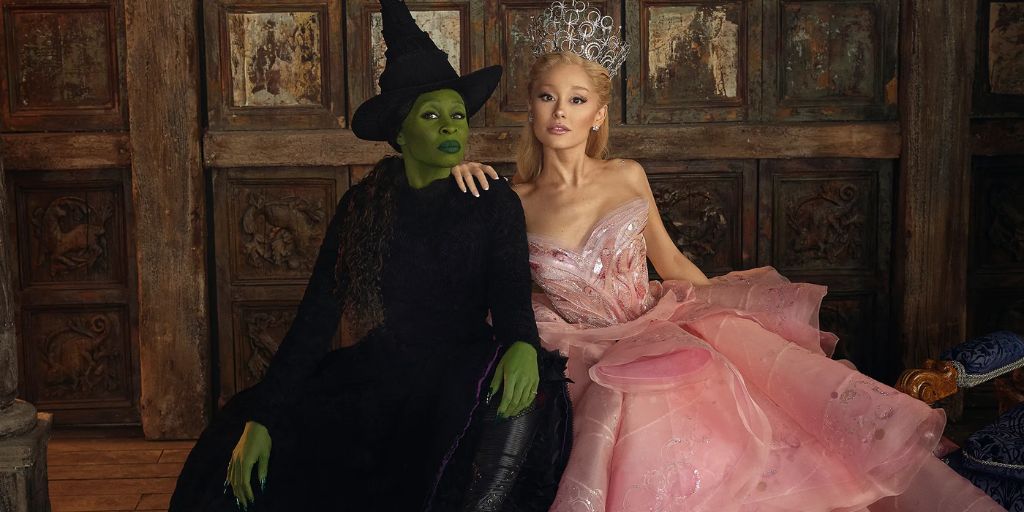
Wicked (Credit: Universal Pictures)
For many, the decision to subvert familiar fairy-tale endings brought much-needed complexity, but others worry it sets up adaptations that risk straying too far from what made the story special in the first place.
This tension is especially visible in early script drafts and story pitches making the rounds in Hollywood and London’s West End. Several leaked outlines posted on industry groups and covered by Entertainment Weekly show creative teams wrestling with how much of the original’s moral ambiguity to keep.
Some want to push boundaries by diving deeper into “what if” scenarios, exploring how an older, wiser Elphaba might change the politics of Oz, while others are calling for lighter touch-ups to appeal to younger or family-friendly audiences.
This creative push-pull has, in turn, influenced musical workshops and preview screenings, as well as merchandise design and marketing messaging for upcoming film releases.
Even actors are feeling the ripple effect. Interviews with cast members published across leading outlets such as Playbill and People highlight personal struggles with interpreting the final act’s themes and preparing for possible sequels or stage reboots.
Tony Award-winning performers have mentioned the challenge of staying true to their cherished roles while also embracing more contemporary or subversive character arcs.
It’s a complex balancing act, but one that both actors and fans seem willing to watch unfold, especially as writers continue experimenting with live events, interactive productions, and expanded universe tie-ins.
With a major movie adaptation now in full swing and rumors flying about animated prequels and immersive theme park experiences, the highest stakes involve studio decisions and the wider entertainment economy.
Universal’s move to split Wicked’s film story into two parts, as revealed in exclusive reporting by Variety and Deadline, is a direct nod to the stage musical’s open-ended finale. The gamble risks alienating some purists but energizes a much broader market hungry for extended storylines.
Streaming giants are weighing in, too, with Netflix and Max reportedly tracking engagement metrics around musical adaptations to identify new demographic targets and event programming.
Part of the draw is Wicked’s ability to unite families, rebels, and romantics across all ages. The finale sustains curiosity, assuring that both newcomers and longtime fans remain invested.
Recent box office estimates and pre-sale data published on Box Office Mojo and The Wall Street Journal suggest that anticipation for fresh Oz stories is at an all-time high, especially as new casting choices and cutting-edge visual effects become public knowledge.
If Universal and its creative partners succeed, Wicked may not just inspire follow-ups but also set the blueprint for how musicals can leverage ambiguous endings for maximum commercial and artistic advantage.
As the theater community debates, creative teams test new boundaries, and studios race to capture fan engagement, one thing remains certain: Wicked’s climactic act has forever altered how musicals shape their own futures. The magic in Oz endures, thanks to a finale willing to leave the door just slightly ajar.
